
The stock Market Crash of 1929 1920 s
- Slides: 21
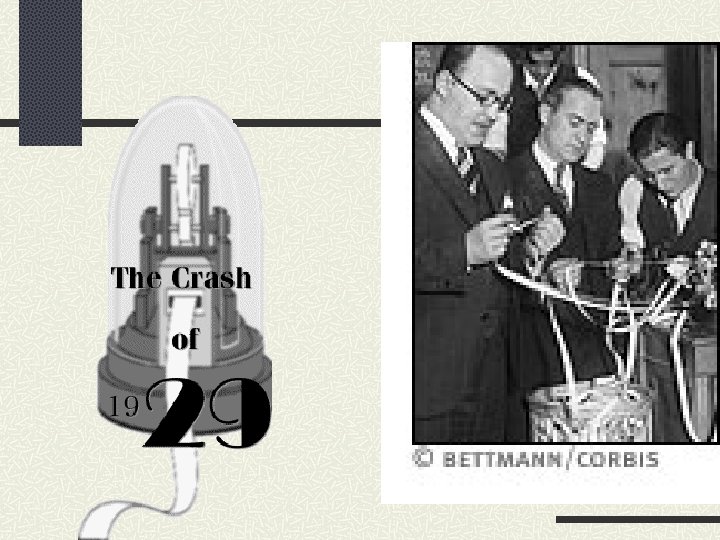
The stock Market Crash of 1929
1920 s Booming Economy Wages up 40% after WWI Stock Market was soaring Many people investing – get rich quick schemes n 1920 s fad – get into the market n America has emerged as a world economic, industrial, and military power
Economic Danger Signs 200 businesses control 50% of the economy? n Why is this dangerous? Too much industry overproduction - surplus goods not being purchased n Too many products not, enough consumers buying 80% of population has no savings
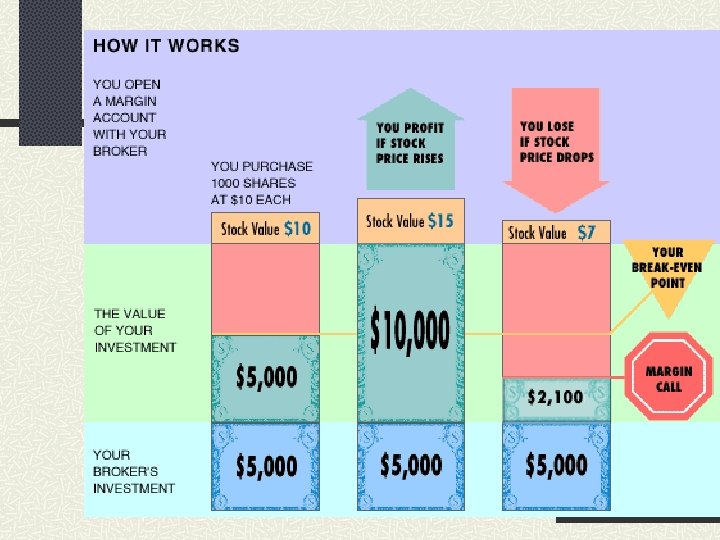
More Economic Danger Signs Banks are uninsured No gov. agencies monitor banks or the Stock Market – Laissez Faire/Republican Presidents n Market value based on borrowed $ and over speculation instead of real value Increase in personal debt – (Credit debt and installment plan debt) n Buying Stocks on Margin – borrowed money from Stock Broker to purchase Stocks
The Warning Sign Farm prices drastically fall after WWI n Farmers paid by gov. to make food for allies, creates a huge surplus Farmers unable to repay loans after gov. pulls WWI agricultural contracts 6, 000 banks close out West n What are the consequences? Pres. Hoover vetoes all bills to help farmers n Laissez-Faire
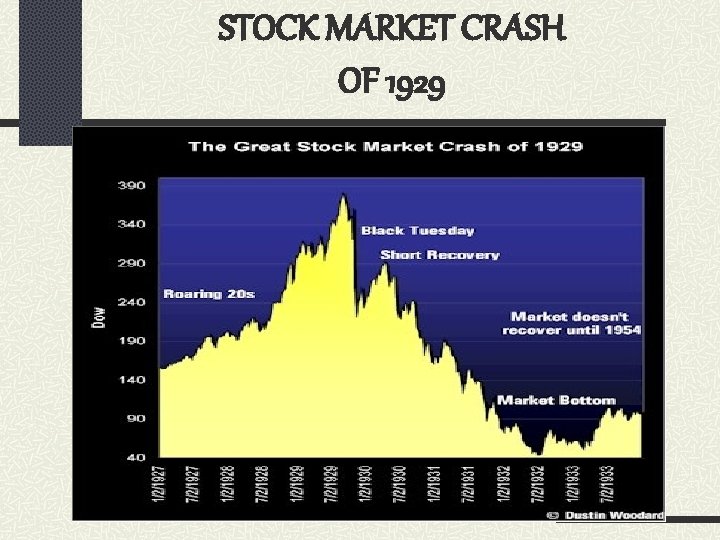
STOCK MARKET CRASH OF 1929
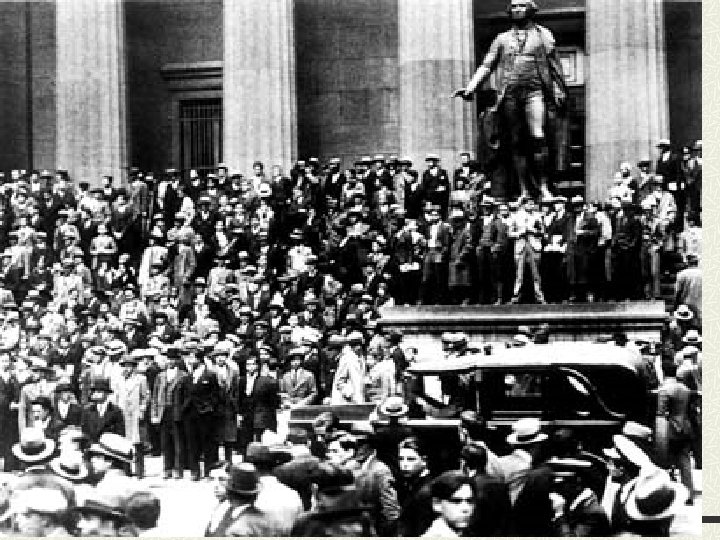
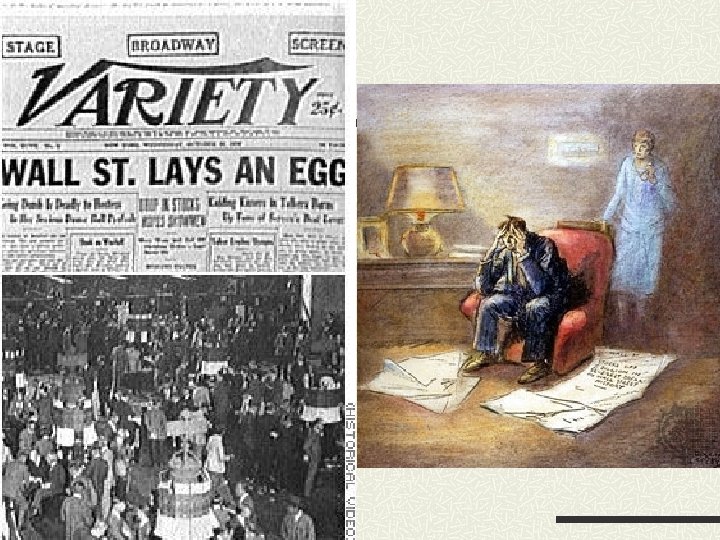
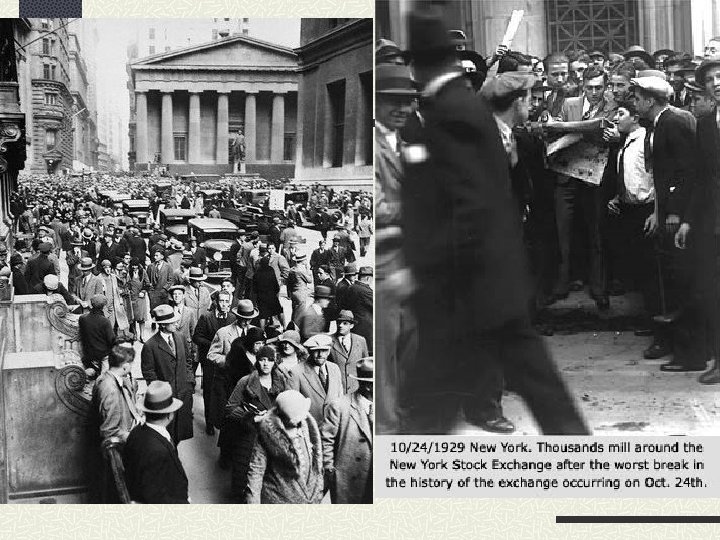
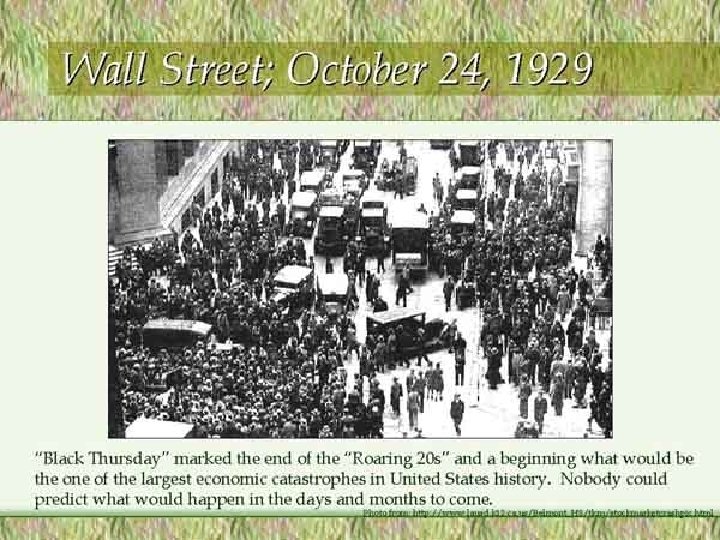
Black Thursday Oct. 24 th, 1929 - Stocks fall drastically - Brokers panic - GE falls from $400 a share to $283 a share - Brokers make margin calls – no one can pay
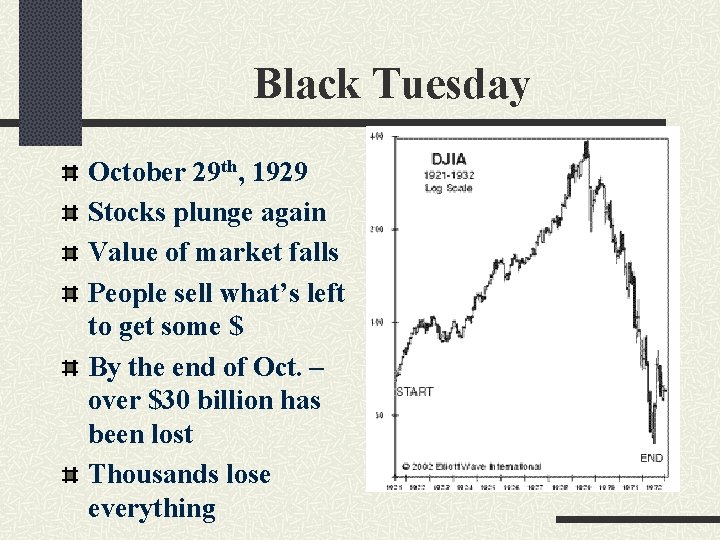
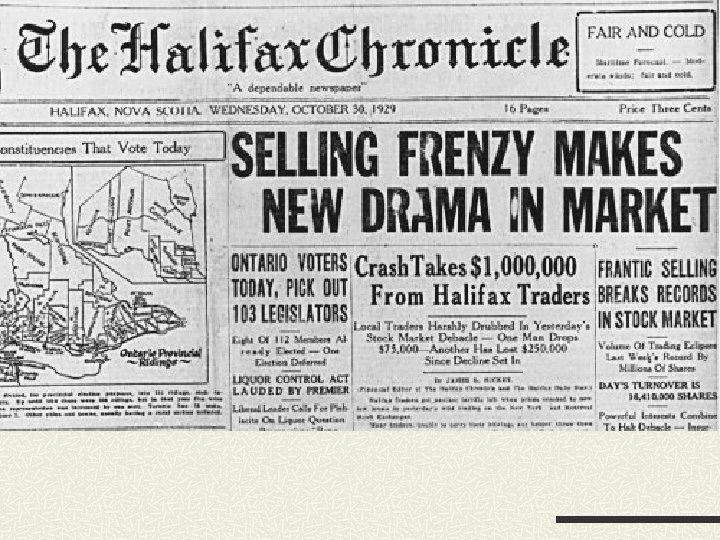
Black Tuesday October 29 th, 1929 Stocks plunge again Value of market falls People sell what’s left to get some $ By the end of Oct. – over $30 billion has been lost Thousands lose everything
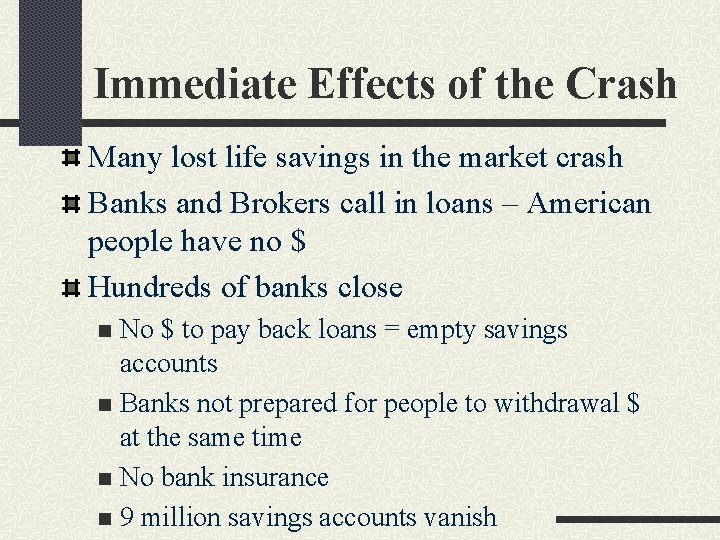
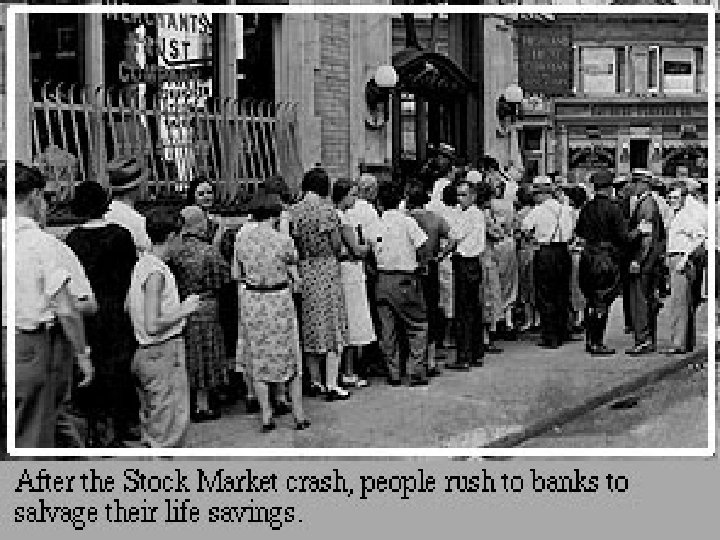
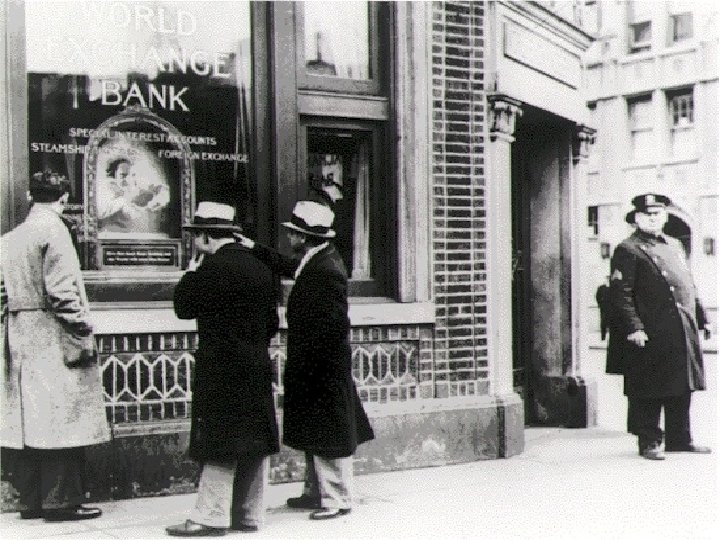
Immediate Effects of the Crash Many lost life savings in the market crash Banks and Brokers call in loans – American people have no $ Hundreds of banks close No $ to pay back loans = empty savings accounts n Banks not prepared for people to withdrawal $ at the same time n No bank insurance n 9 million savings accounts vanish n