
The Station Biologique de Roscoff A brief introduction
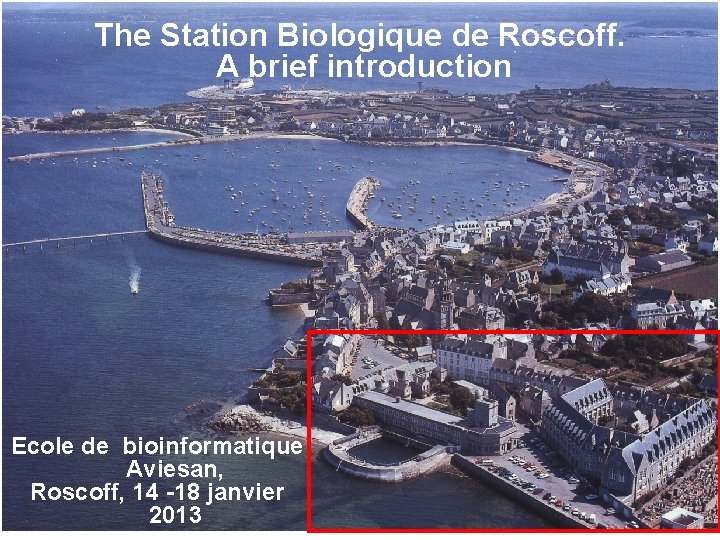
The Station Biologique de Roscoff. A brief introduction Ecole de bioinformatique Aviesan, Roscoff, 14 -18 janvier 2013
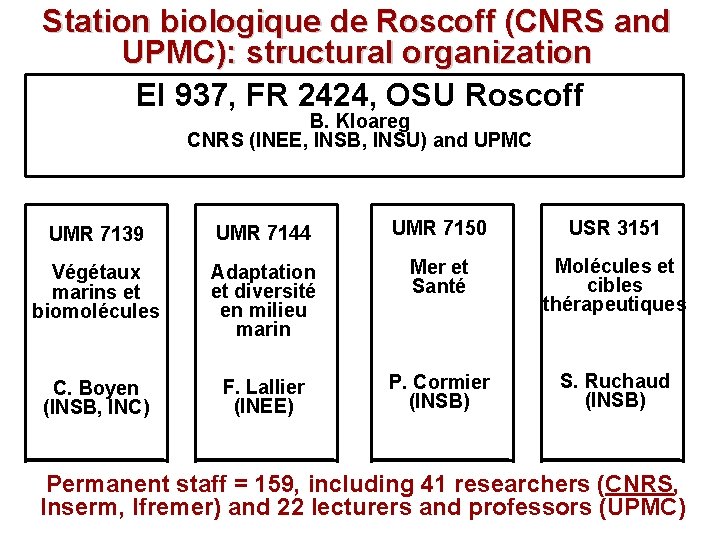
Station biologique de Roscoff (CNRS and UPMC): structural organization EI 937, FR 2424, OSU Roscoff B. Kloareg CNRS (INEE, INSB, INSU) and UPMC UMR 7139 UMR 7144 UMR 7150 USR 3151 Végétaux marins et biomolécules Adaptation et diversité en milieu marin Mer et Santé Molécules et cibles thérapeutiques C. Boyen (INSB, INC) F. Lallier (INEE) P. Cormier (INSB) S. Ruchaud (INSB) Permanent staff = 159, including 41 researchers (CNRS, Inserm, Ifremer) and 22 lecturers and professors (UPMC)
Main missions of SBR è Research in marine biology and ecology è Teaching, training and outreach è Long term monitoring of marine ecosystems è Host scientists and students, including for non-resident users è Contribute to territorial development
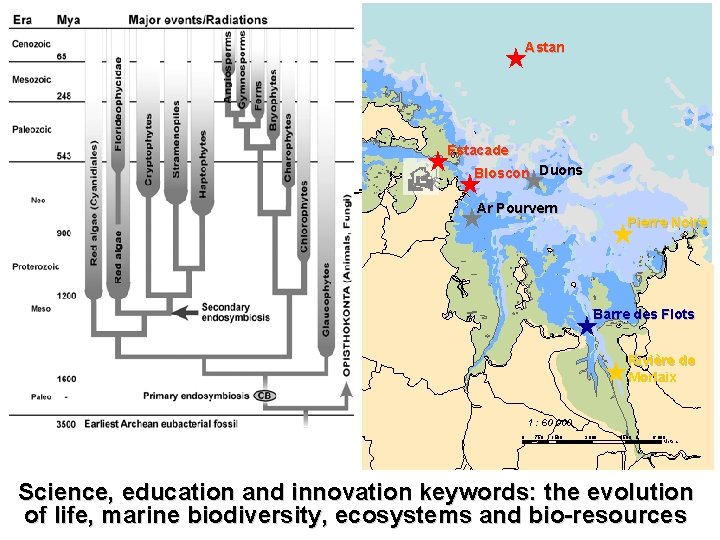
Astan Estacade Bloscon Duons Ar Pourvern Pierre Noire Barre des Flots Rivière de Morlaix 1 : 60 000 0 750 1 500 3 000 4 500 6 000 Meters Science, education and innovation keywords: the evolution of life, marine biodiversity, ecosystems and bio-resources

Many major lineages do not have terrestrial representatives Chromalveolates Archaeplastida apicomplexans green algae Stramenopiles dinoflagellates land plants red algae oomycetes diatoms Rhizaria haptophytes cryptophytes glaucophytes brown algae Excavata Amoebozoa fungi animals Ophistokonts Unikonts They are a major asset for evolutionary biology. They also feature unique primary or secundary metabolites
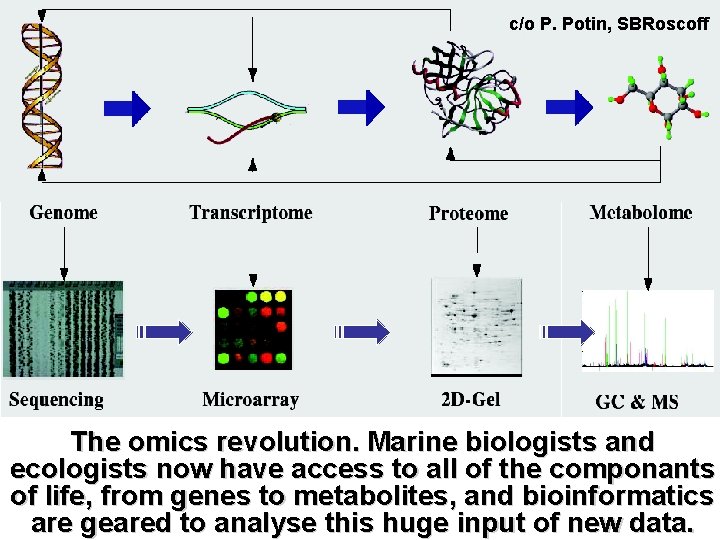
c/o P. Potin, SBRoscoff The omics revolution. Marine biologists and ecologists now have access to all of the componants of life, from genes to metabolites, and bioinformatics are geared to analyse this huge input of new data.
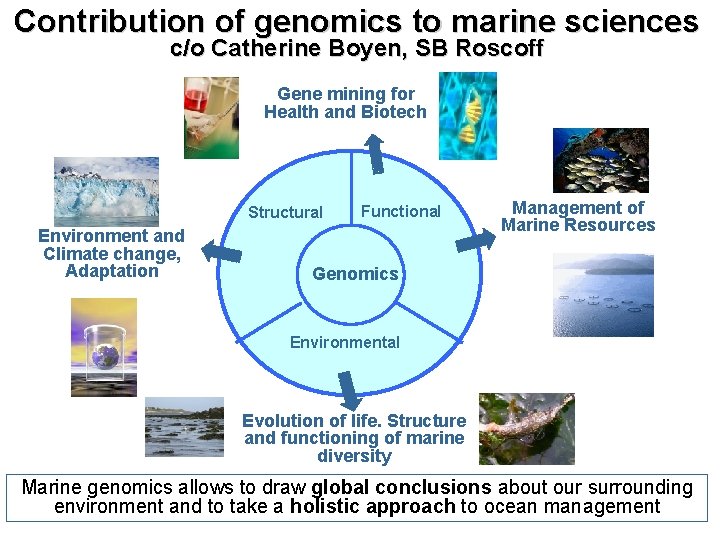
Contribution of genomics to marine sciences c/o Catherine Boyen, SB Roscoff Gene mining for Health and Biotech Structural Environment and Climate change, Adaptation Functional Management of Marine Resources Genomics Environmental Evolution of life. Structure and functioning of marine diversity Marine genomics allows to draw global conclusions about our surrounding environment and to take a holistic approach to ocean management
La Station biologique de Roscoff porte trois projets du Programme Investissements d’Avenir : - Centre National de Ressources Biologiques marines (EMBRC-France) : Infrastructure Nationale en Biologie-Santé et IR-TGIR - Idéalg : Biotechnologies et Bioressources - Océanomics : Biotechnologies et Bioressources. Elle est aussi associée à Green. Stars (IEED) et à l’Institut Français de Bioinformatique (INBS), ainsi qu’aux instruments d’excellence de l’UPMC (SATT Lu. Tech, Id. Ex Paris Sorbonne Universités).
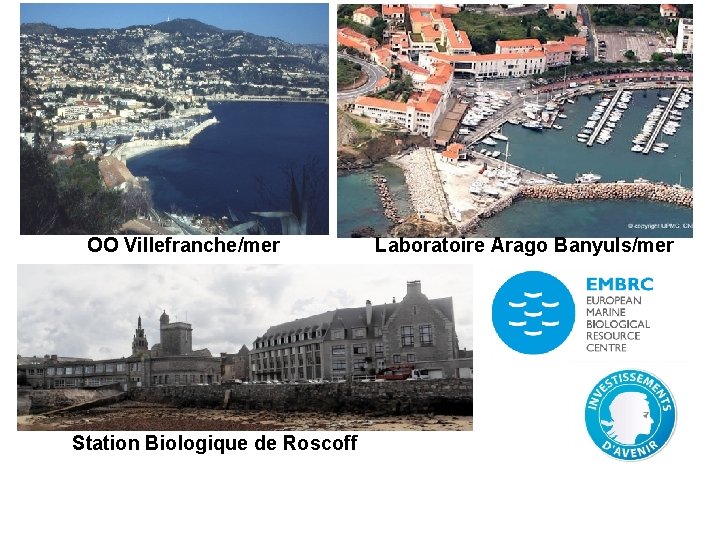
OO Villefranche/mer Station Biologique de Roscoff Laboratoire Arago Banyuls/mer
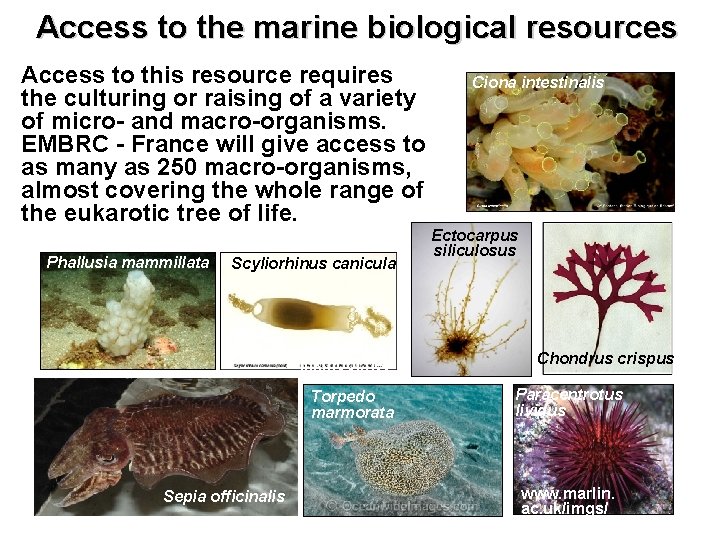
Access to the marine biological resources Access to this resource requires the culturing or raising of a variety of micro- and macro-organisms. EMBRC - France will give access to as many as 250 macro-organisms, almost covering the whole range of the eukarotic tree of life. Phallusia mammillata Scyliorhinus canicula www. natuur lijkmooi. net Torpedo marmorata Sepia officinalis Ciona intestinalis Ectocarpus siliculosus Chondrus crispus Paracentrotus lividus www. marlin. ac. uk/imgs/ o_parliv. jpg

EMBRC: Marine biological laboratories are now recognized as strategic research infrastructures in Europe (ESFRI) Bergen Tjärno-Kristineberg Oban St Andrews Plymouth Roscoff Bremen EMBL Villefranche Banyuls Faro Naples Heraklion De plus, implication de la SBR dans Elixir et dans EU-Openscreen
Une formation de haut niveau pour répondre aux défis de la recherche et de l’innovation en biologie et écologie. Licence Biologie-Mathématiques en partenariat avec Agrocampus Ouest 1600 heures d’enseignement, 1300 h SBR + 300 heures Agrocampus Ouest Promotions 2011 -2012 = 24 étudiants (L 2, 15 étudiants, L 2, 10 étudiants) à terme, promotions de 20 étudiants chacune Coordination : L 1 Pascal Riera, L 2 Arnaud Tanguy, L 3 Patrick Cormier et J. Y. Toullec
- Slides: 12