
The State of OA the Changing Publishing Landscape
The State of OA: the Changing Publishing Landscape and drivers for change Ginny Barbour Director, Australasian Open Access Strategy Group (AOASG) https: //orcid. org/0000 -0002 -2358 -2440 ginny. barbour@qut. edu. au @ginnybarbour @openaccess_anz www. aoasg. org. au
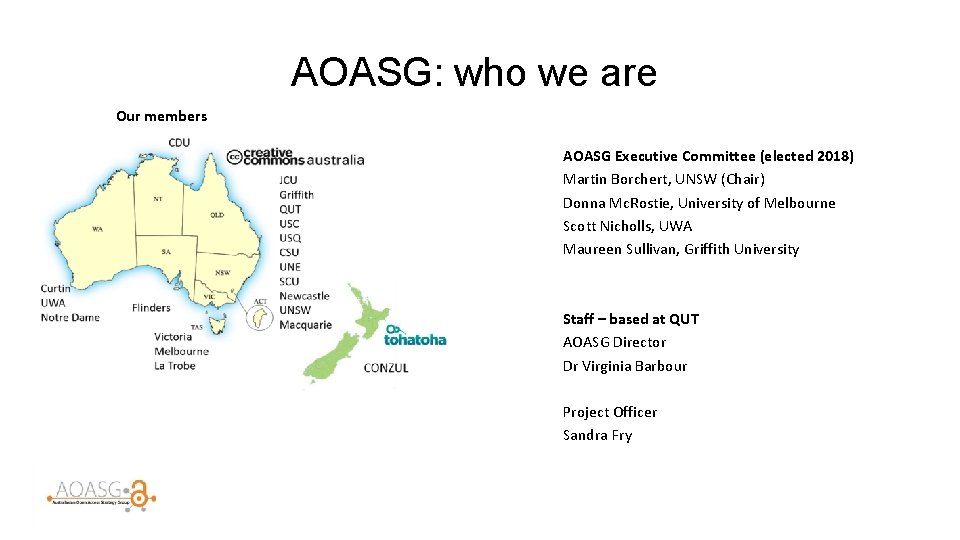
AOASG: who we are Our members AOASG Executive Committee (elected 2018) Martin Borchert, UNSW (Chair) Donna Mc. Rostie, University of Melbourne Scott Nicholls, UWA Maureen Sullivan, Griffith University Staff – based at QUT AOASG Director Dr Virginia Barbour Project Officer Sandra Fry
What we do: advocacy, collaboration (nationally and globally) raising awareness and capacity building for open & FAIR research in Australasia @openaccess_anz www. aoasg. org. au
AOASG work in 2019 Support CAUL projects Website review and digital resources New members / state roadshows + workshops Support work in NZ Respond to Plan S AU National approach to Open Scholarship
What is open access? “By "open access" to this literature, we mean its free availability on the public internet, permitting any users to read, download, copy, distribute, print, search, or link to the full texts of these articles, crawl them for indexing, pass them as data to software, or use them for any other lawful purpose, without financial, legal, or technical barriers other than those inseparable from gaining access to the internet itself. The only constraint on reproduction and distribution, and the only role for copyright in this domain, should be to give authors control over the integrity of their work and the right to be properly acknowledged and cited. ” https: //www. budapestopenaccessinitiative. org/read
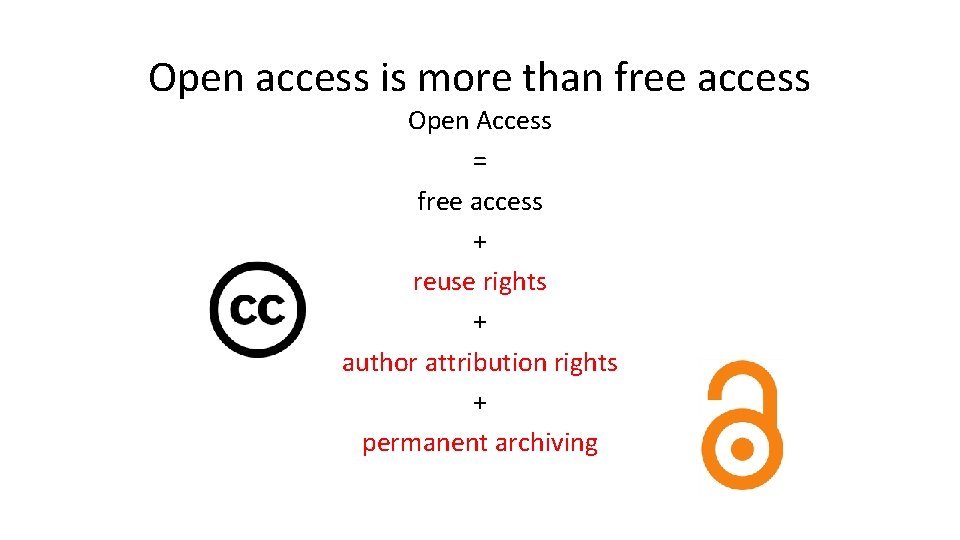
Open access is more than free access Open Access = free access + reuse rights + author attribution rights + permanent archiving
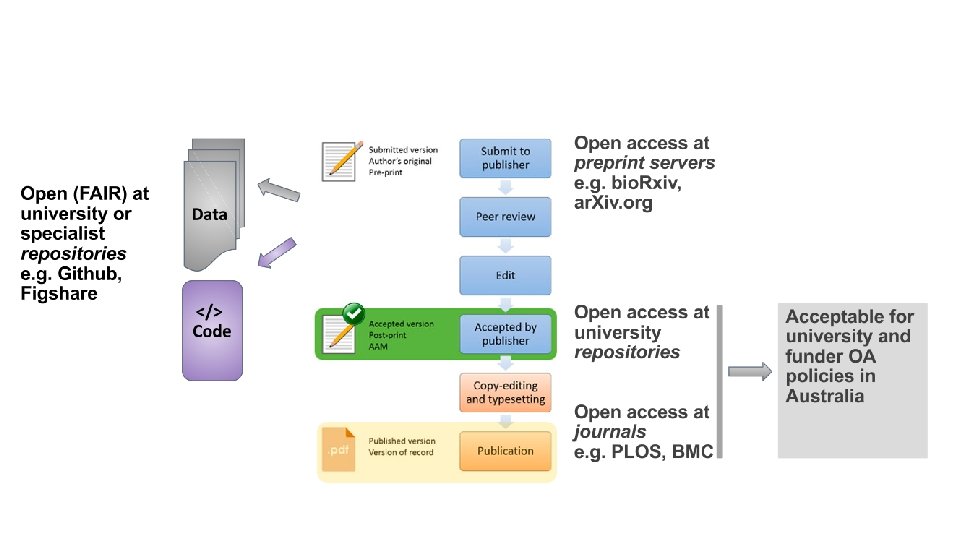
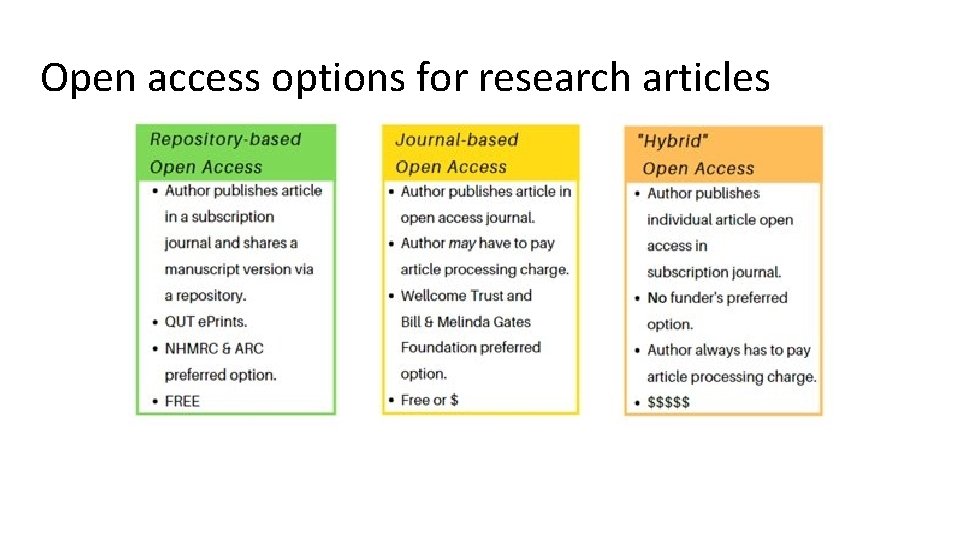
Open access options for research articles
Three ages of OA The age of innocence – up until 2003/4 “An old tradition and a new technology have converged to make possible an unprecedented public good. The old tradition is the willingness of scientists and scholars to publish the fruits of their research in scholarly journals without payment, for the sake of inquiry and knowledge. The new technology is the internet. ” Budapest Open Access Initiative Also “Open access publishing will not involve new expenses, nor will it place a financial burden on individual researchers. ” An OA publisher
Three ages of OA Trench warfare 2003/4 – 2014 “Open Access risks undermining public trust in the integrity of scientific publications that has been established over hundreds of years. ” A large publisher
Three ages of OA Urgency and a shift in focus: 2014 -? ? “Our vision is to finally and rapidly achieve the benefits of the open information environment conceived 15 years ago: the advancement of science powered by the full potential of our digital environment and barrier-free access to knowledge. ” OA 2020
Key emerging developments globally in open scholarship 1. Serious moves by funders – Plan S implementation by 2021 1. Continued expansion of new models – especially preprints 1. The publishing economy is not functioning – cost containment is critical 1. Increasing focus on the bigger picture of open scholarship – FAIR and related initiatives 1. More focus on support for an open ecosystem – initiatives for open infrastructure 1. Increasing focus on quality and integrity of academic research output – better reporting, data availability 1. Changing incentives - moving away from just journal based metrics
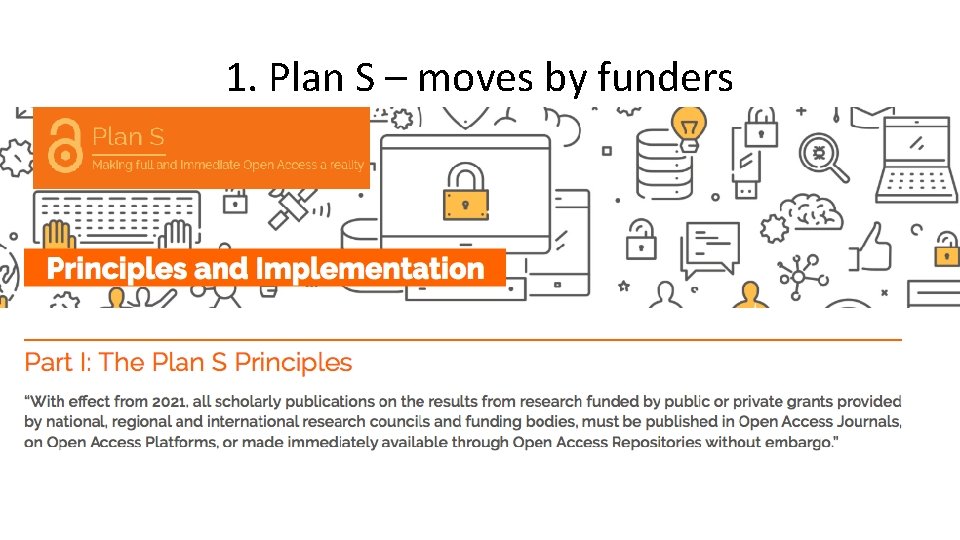
1. Plan S – moves by funders
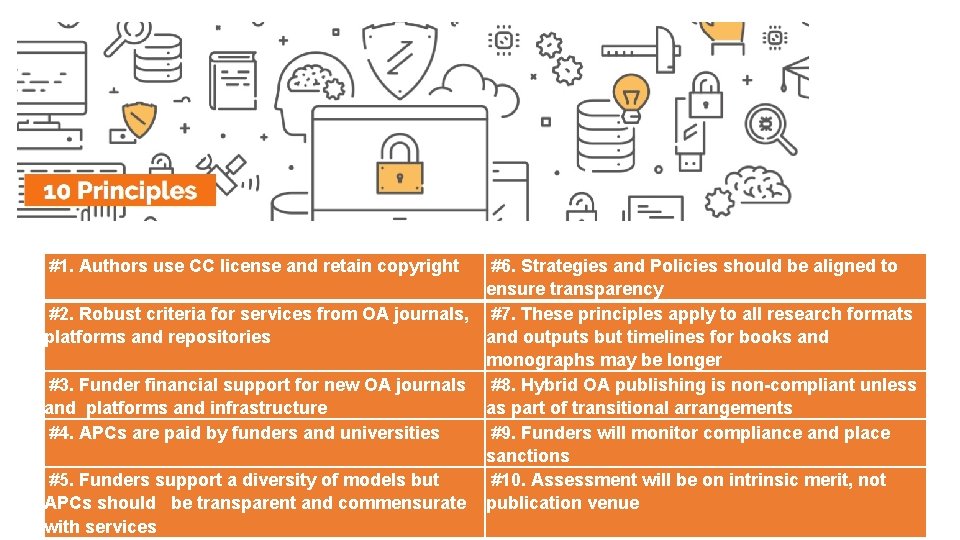
#1. Authors use CC license and retain copyright #6. Strategies and Policies should be aligned to ensure transparency #2. Robust criteria for services from OA journals, #7. These principles apply to all research formats platforms and repositories and outputs but timelines for books and monographs may be longer #3. Funder financial support for new OA journals #8. Hybrid OA publishing is non-compliant unless and platforms and infrastructure as part of transitional arrangements #4. APCs are paid by funders and universities #9. Funders will monitor compliance and place sanctions #5. Funders support a diversity of models but #10. Assessment will be on intrinsic merit, not APCs should be transparent and commensurate publication venue with services

Plan S: routes to compliance
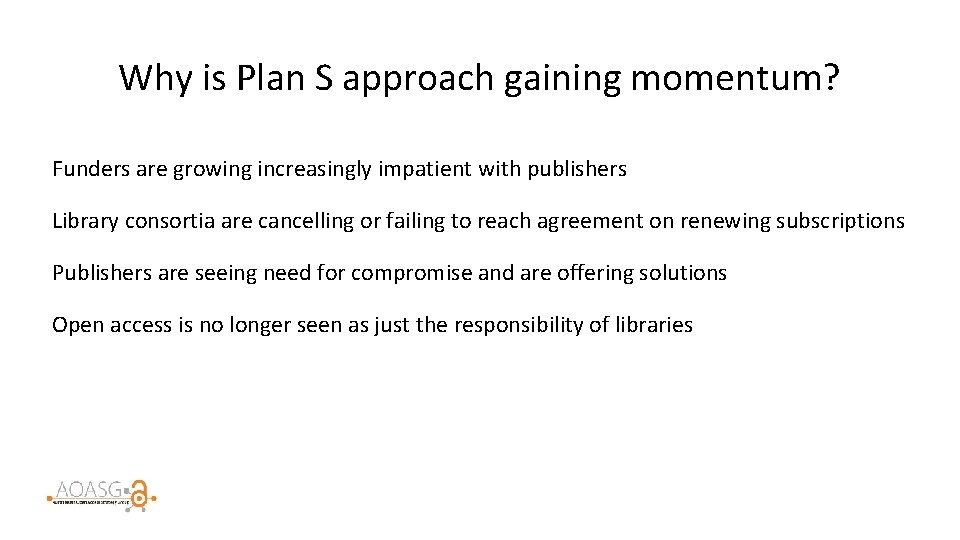
Why is Plan S approach gaining momentum? Funders are growing increasingly impatient with publishers Library consortia are cancelling or failing to reach agreement on renewing subscriptions Publishers are seeing need for compromise and are offering solutions Open access is no longer seen as just the responsibility of libraries
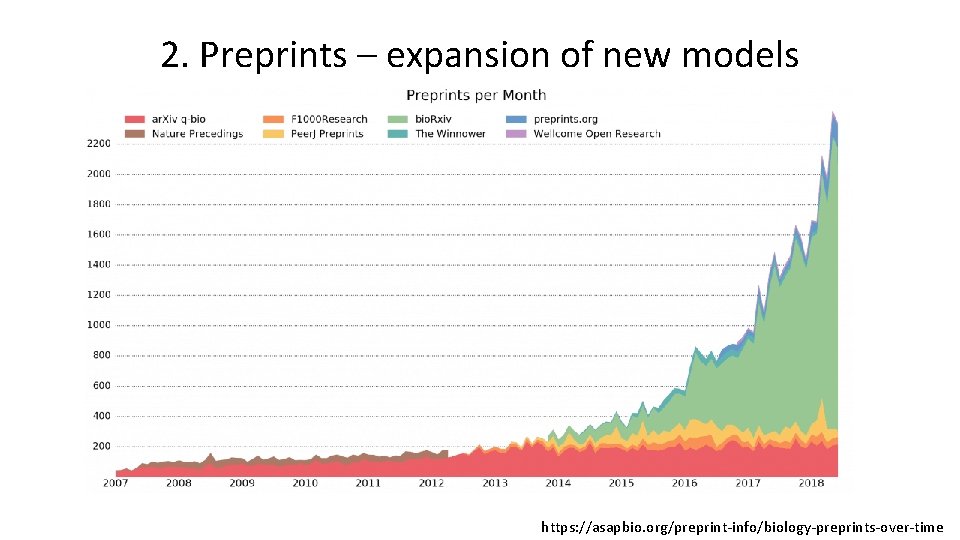
2. Preprints – expansion of new models https: //asapbio. org/preprint-info/biology-preprints-over-time
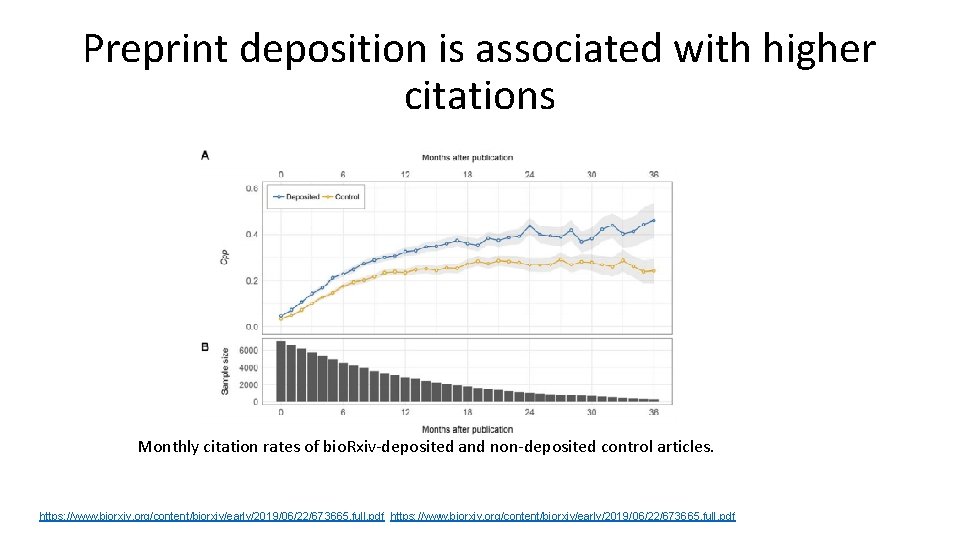
Preprint deposition is associated with higher citations Monthly citation rates of bio. Rxiv-deposited and non-deposited control articles. https: //www. biorxiv. org/content/biorxiv/early/2019/06/22/673665. full. pdf
3. Publishing economy is not functioning - cancellations and new agreements Cancellations Hungary – Elsevier Sweden – Elsevier Germany – Elsevier Uni California – Elsevier Finland – Taylor & Francis New Agreements Norway – Elsevier Finland – Elsevier Germany – Wiley UK – Springer Nature Netherland – Oxford Uni Press Moving subscriptions from Read only -> Transformative Publish & Read -> Publish only New models should only be “subscribing to open” https: //sparcopen. org/our-work/big-deal-cancellation-tracking/
4. Open Access is now part of a bigger vision of open scholarship An interconnected, equitable, global scholarly ecosystem of well-curated, interoperable, trusted research articles, data and software supported by a diversity of open publishing models.
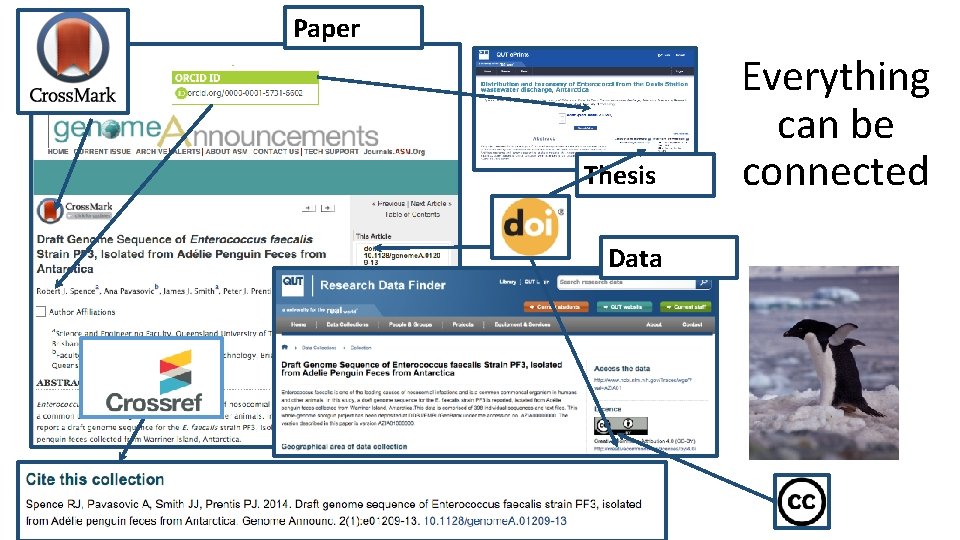
Paper Thesis Data Everything can be connected
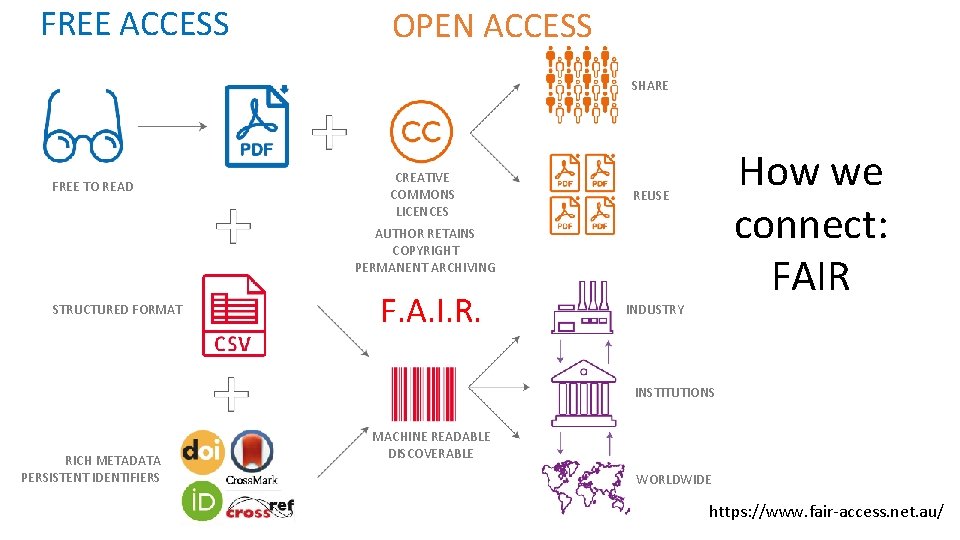
FREE ACCESS OPEN ACCESS SHARE FREE TO READ CREATIVE COMMONS LICENCES How we connect: FAIR REUSE AUTHOR RETAINS COPYRIGHT PERMANENT ARCHIVING STRUCTURED FORMAT F. A. I. R. INDUSTRY INSTITUTIONS RICH METADATA PERSISTENT IDENTIFIERS MACHINE READABLE DISCOVERABLE WORLDWIDE https: //www. fair-access. net. au/
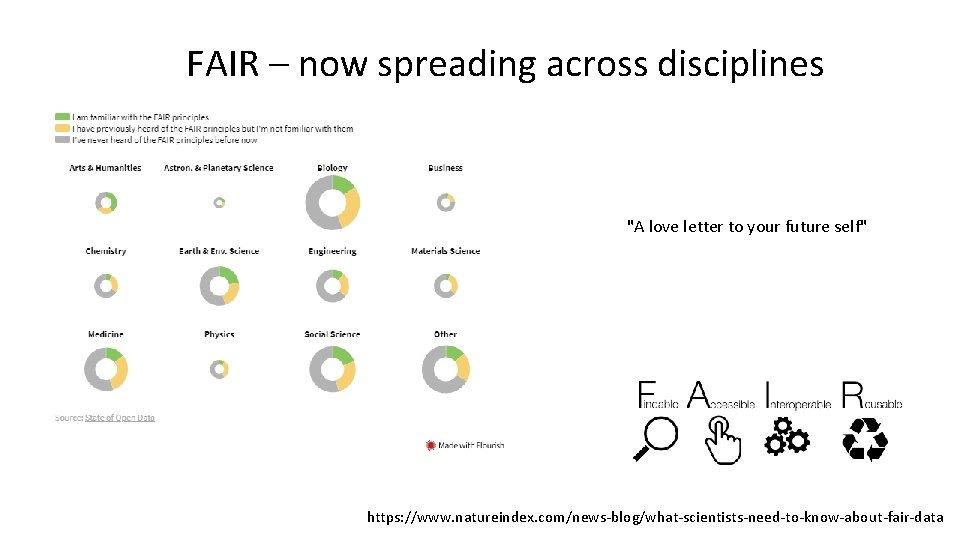
FAIR – now spreading across disciplines "A love letter to your future self" https: //www. natureindex. com/news-blog/what-scientists-need-to-know-about-fair-data
5. Developing open Infrastructure “the needs of today’s diverse scholarly communities are not being met by the existing largely uncoordinated scholarly infrastructure, which is dominated by vendor products that take ownership of the scholarly process and data…” “…We also need to reduce or even eliminate the unhealthy dependency on proprietary systems. ” http: //scoss. org/ https: //investinopen. org
6. Integrity – open scholarship at its core “Transparent, truthful, open science, including open access publications, following recommendations such as the FAIR Guiding Principles for scientific data management and stewardship and public communication are ways to optimize value to society and enhance research integrity. ” Also work on quality and integrity by Au funders and Chief Scientist
7. Changing incentives Key principles: • Do not use journal-based metrics, such as Journal Impact Factors, as a surrogate measure of the quality of individual research articles • Especially for early-stage investigators, the scientific content of a paper is much more important than publication metrics or the identity of the journal in which it was published • Consider the value and impact of all research outputs (including datasets and software)
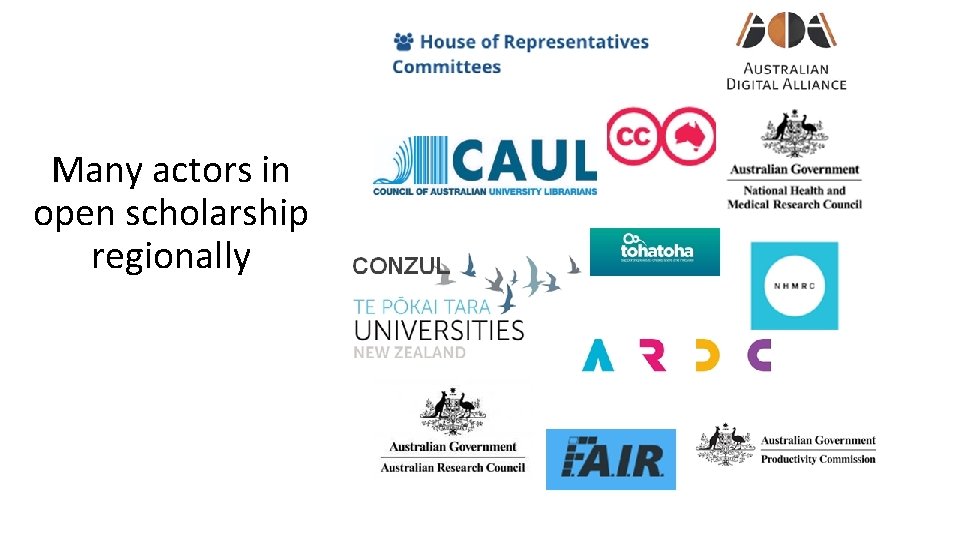
Many actors in open scholarship regionally
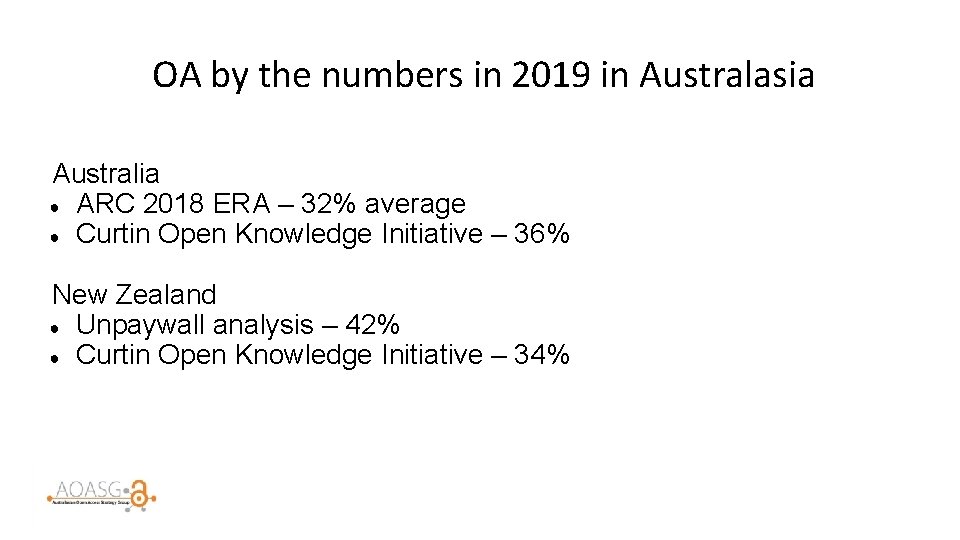
OA by the numbers in 2019 in Australasia Australia ● ARC 2018 ERA – 32% average ● Curtin Open Knowledge Initiative – 36% New Zealand ● Unpaywall analysis – 42% ● Curtin Open Knowledge Initiative – 34%
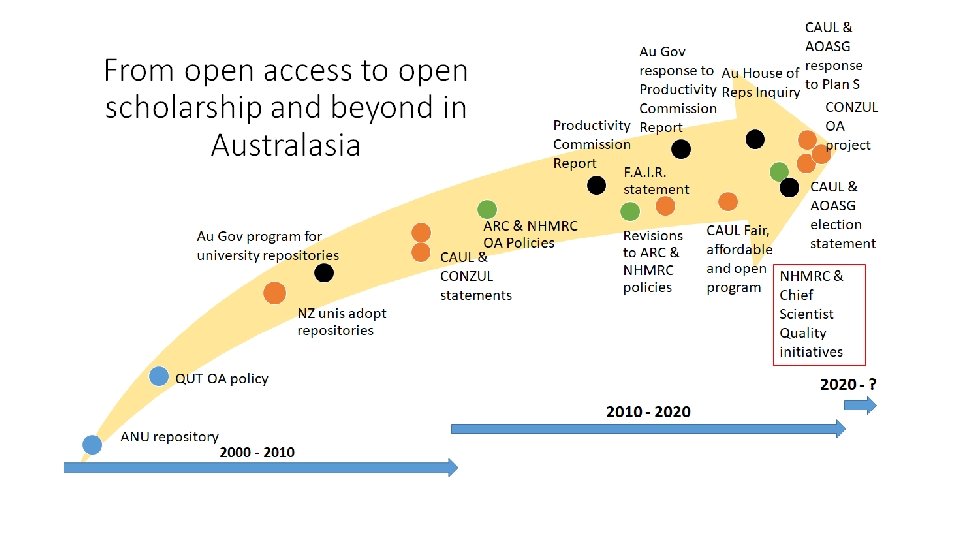

Are we really getting anywhere?
CAUL Fair, affordable & open access to knowledge 2017 - 2019 strategic plan • • • Retaining Rights to Research Publications Project Review of Australian Repository Infrastructure CAUL Statement on Open Scholarship Review Fair Use Advocacy Collection and Reporting of APC Information CONZUL • OA project group • Tohatoha OA project
The foundations of a national approach
The foundations of a national approach ARC and NHMRC (2012/3 and 2016/7): Any Research Output arising from Funded Research must be made Openly Accessible within a twelve month period from the Publication Date.
The foundations of a national approach ARC and NHMRC (2012/3 and 2016/7): Any Research Output arising from Funded Research must be made Openly Accessible within a twelve month period from the Publication Date. F. A. I. R. Statement (2016): "By 2020, Australian publicly funded researchers and research organisations will have in place policies, standards and practices to: Make publicly funded research outputs findable, accessible, interoperable and reusable. ”
The foundations of a national approach ARC and NHMRC (2012/3 and 2016/7): Any Research Output arising from Funded Research must be made Openly Accessible within a twelve month period from the Publication Date. F. A. I. R. Statement (2016): "By 2020, Australian publicly funded researchers and research organisations will have in place policies, standards and practices to: Make publicly funded research outputs findable, accessible, interoperable and reusable. ” Productivity Commission (2016): “The Australian, and State and Territory governments should implement an open access policy for publicly-funded research. The policy should provide free and open access arrangements for all publications funded by governments, directly or through university funding, within 12 months of publication.
The foundations of a national approach ARC and NHMRC (2012/3 and 2016/7): Any Research Output arising from Funded Research must be made Openly Accessible within a twelve month period from the Publication Date. F. A. I. R. Statement (2016): "By 2020, Australian publicly funded researchers and research organisations will have in place policies, standards and practices to: Make publicly funded research outputs findable, accessible, interoperable and reusable. ” Productivity Commission (2016): “The Australian, and State and Territory governments should implement an open access policy for publicly-funded research. The policy should provide free and open access arrangements for all publications funded by governments, directly or through university funding, within 12 months of publication. 2017 – the Government accepted this recommendation (but no action thus far…).
The foundations of a national approach ARC and NHMRC (2012/3 and 2016/7): Any Research Output arising from Funded Research must be made Openly Accessible within a twelve month period from the Publication Date. F. A. I. R. Statement (2016): "By 2020, Australian publicly funded researchers and research organisations will have in place policies, standards and practices to: Make publicly funded research outputs findable, accessible, interoperable and reusable. ” Productivity Commission (2016) “The Australian, and State and Territory governments should implement an open access policy for publicly-funded research. The policy should provide free and open access arrangements for all publications funded by governments, directly or through university funding, within 12 months of publication. 2017 – the Government accepted this recommendation (but no action thus far…) House of Reps Standing Committee on Employment, Education & Training (2018): “The Committee recommends that the Australian Government develop a more strategic approach to Australia’s open scholarship environment. ”
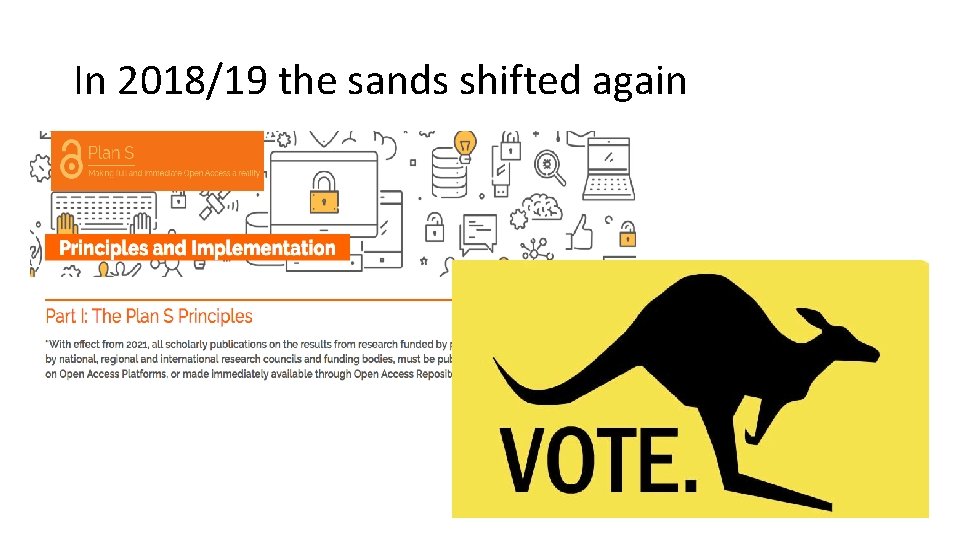
In 2018/19 the sands shifted again
CAUL and AOASG responded…
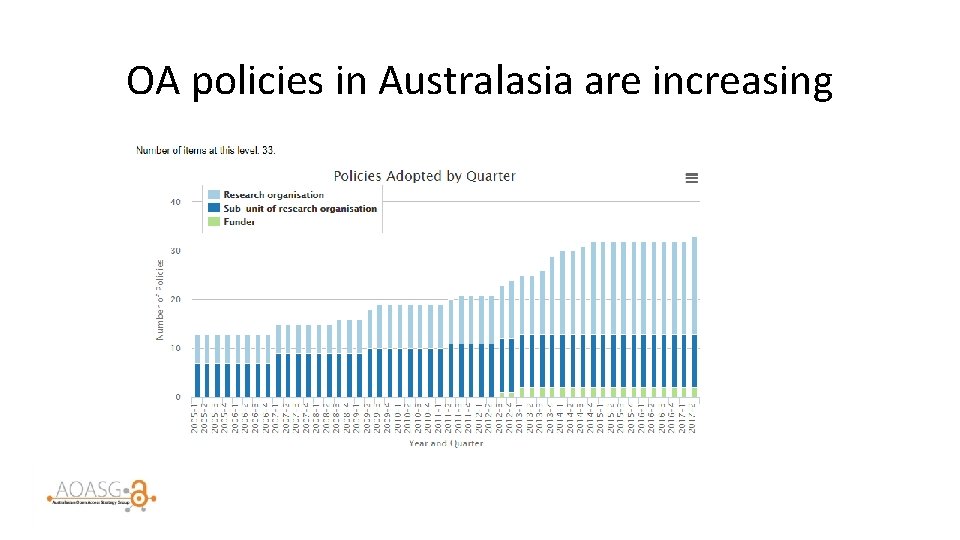
OA policies in Australasia are increasing
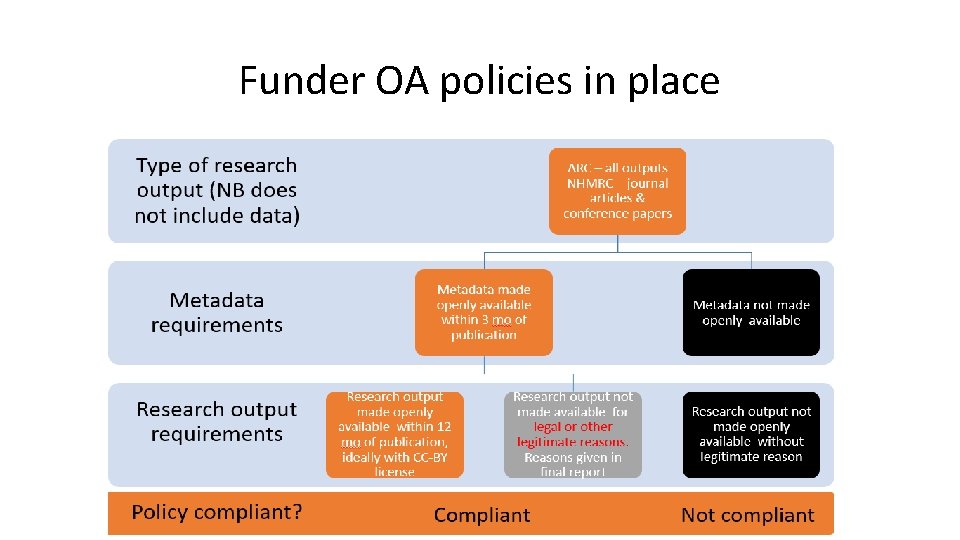
Funder OA policies in place
What about data? Australian Code for the Responsible Conduct of Research (the Code) • “Principle 3, ‘Transparency in declaring interests and reporting research methodology, data and findings’, which requires researchers to share and communicate research methodology, data and findings openly, responsibly and accurately. ” Management of Data and Information in Research • 2. 5 Access by interested parties Institutional policies should describe how to make research data, including the outputs of research, available to interested parties both within and outside of the institution, giving particular consideration to licensing and access arrangements. Institutional policies should address options for sharing data via open access and via mediated access (i. e. access to data or information with the assistance of a data custodian or other authorised person). https: //www. nhmrc. gov. au/about-us/publications/australian-code-responsible-conduct-research-2018
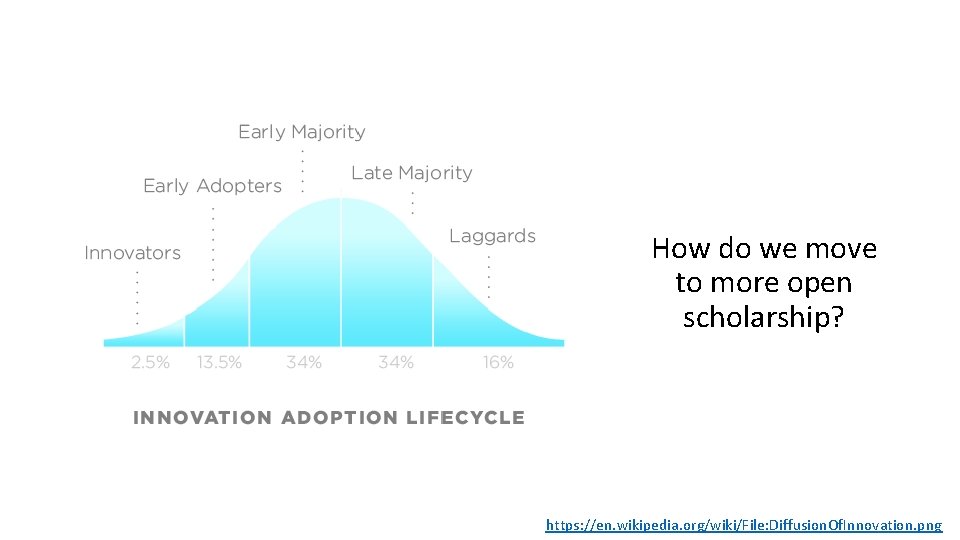
How do we move to more open scholarship? https: //en. wikipedia. org/wiki/File: Diffusion. Of. Innovation. png
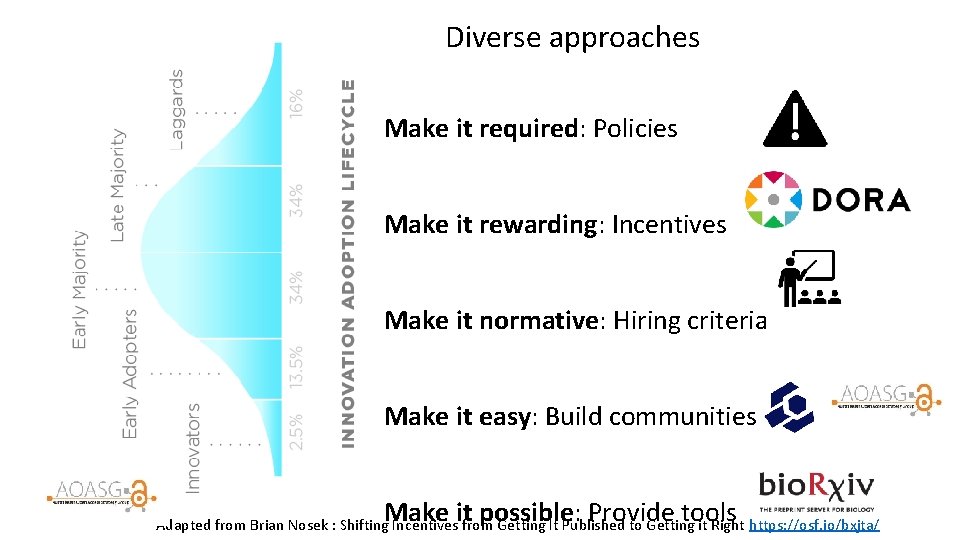
Diverse approaches Make it required: Policies Make it rewarding: Incentives Make it normative: Hiring criteria Make it easy: Build communities Make it possible: Provide tools Adapted from Brian Nosek : Shifting Incentives from Getting It Published to Getting it Right https: //osf. io/bxjta/
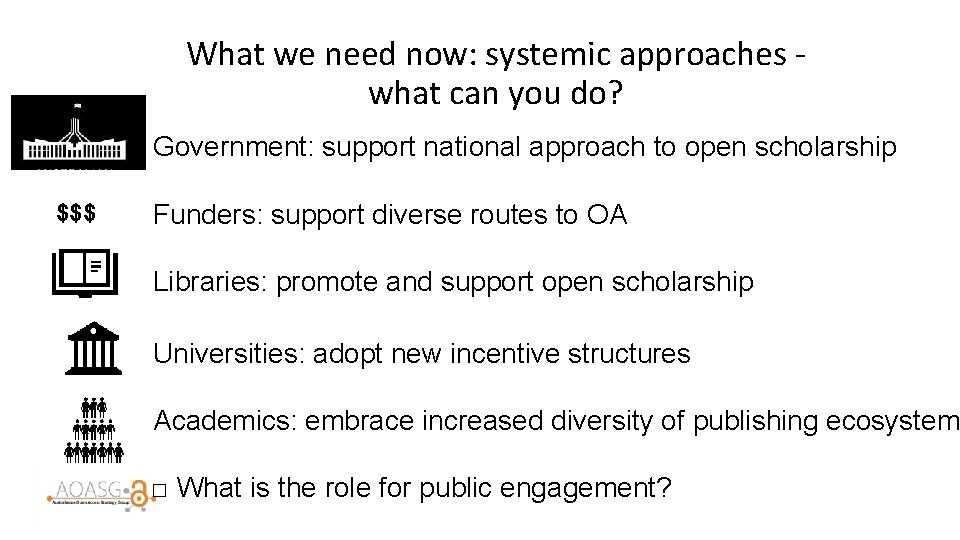
What we need now: systemic approaches - what can you do? Government: support national approach to open scholarship $$$ Funders: support diverse routes to OA Libraries: promote and support open scholarship Universities: adopt new incentive structures Academics: embrace increased diversity of publishing ecosystem � What is the role for public engagement?
Thanks for listening! Follow up welcome ginny. barbour@qut. edu. au @ginnybarbour @openaccess_anz
- Slides: 46