
The Standard Model of Cosmology Avishai Dekel HUJI


- Slides: 82
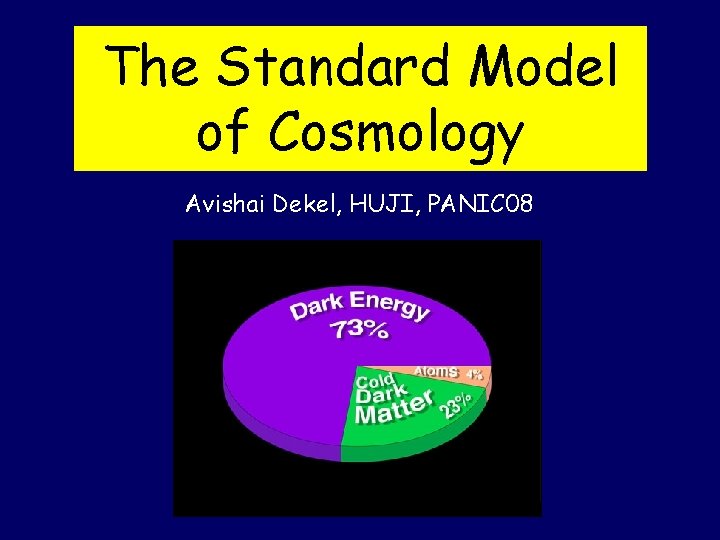
The Standard Model of Cosmology Avishai Dekel, HUJI, PANIC 08
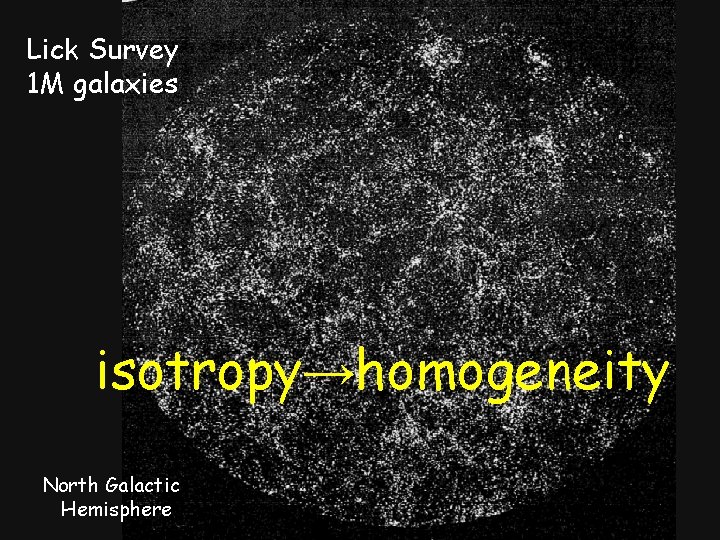
Lick Survey 1 M galaxies isotropy→homogeneity North Galactic Hemisphere
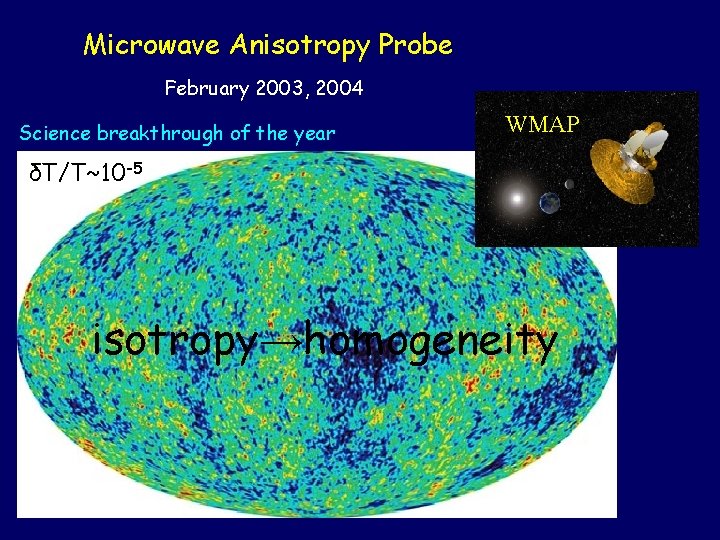
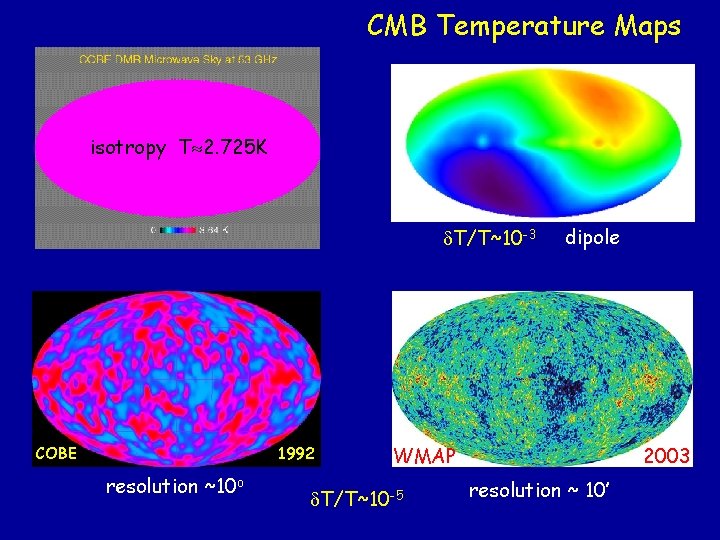
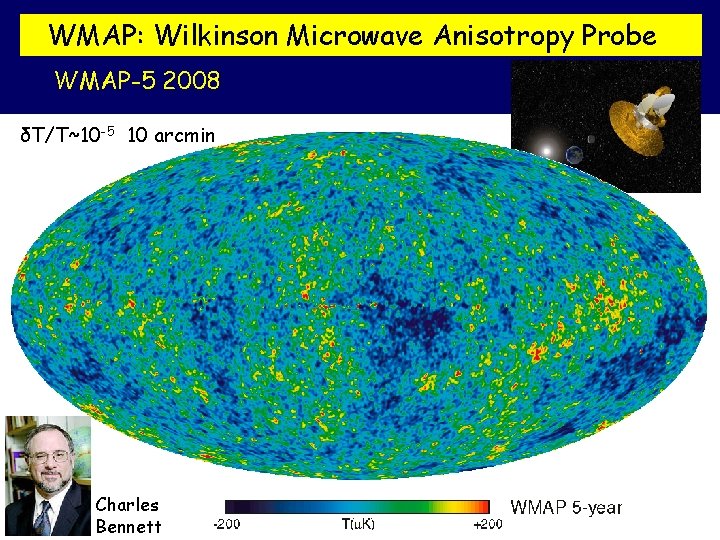
Microwave Anisotropy Probe February 2003, 2004 Science breakthrough of the year WMAP δT/T~10 -5 isotropy→homogeneity
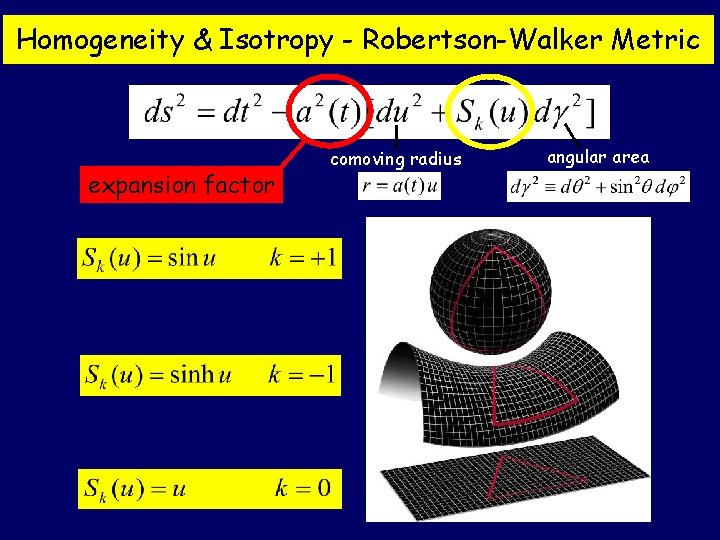
Homogeneity & Isotropy - Robertson-Walker Metric expansion factor comoving radius angular area
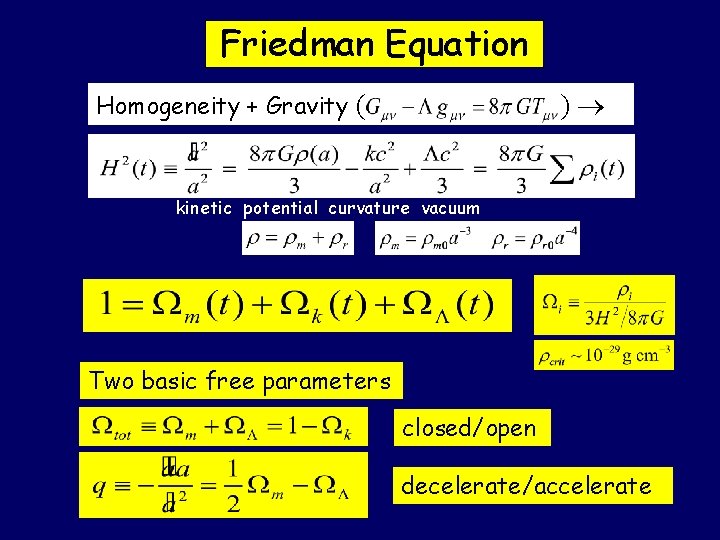
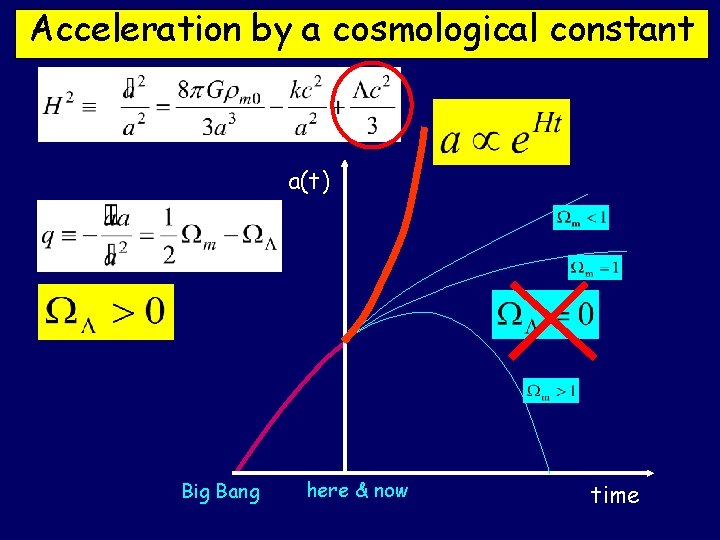
Friedman Equation ) Homogeneity + Gravity ( kinetic potential curvature vacuum Two basic free parameters closed/open decelerate/accelerate
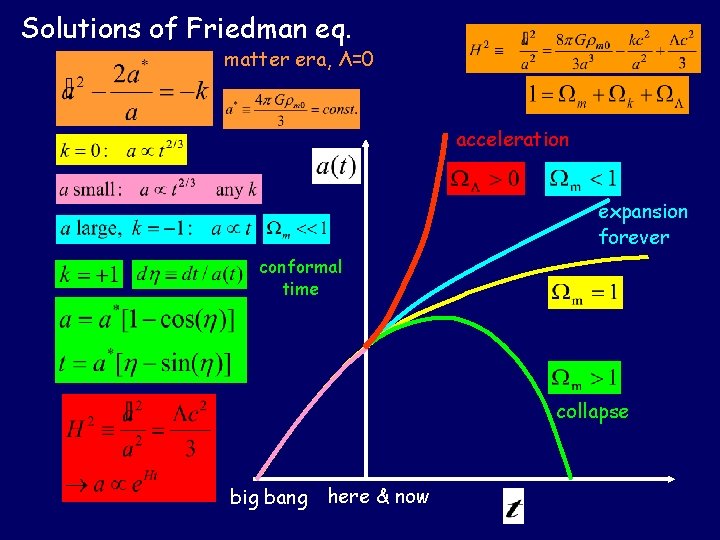
Solutions of Friedman eq. matter era, Λ=0 acceleration expansion forever conformal time collapse big bang here & now
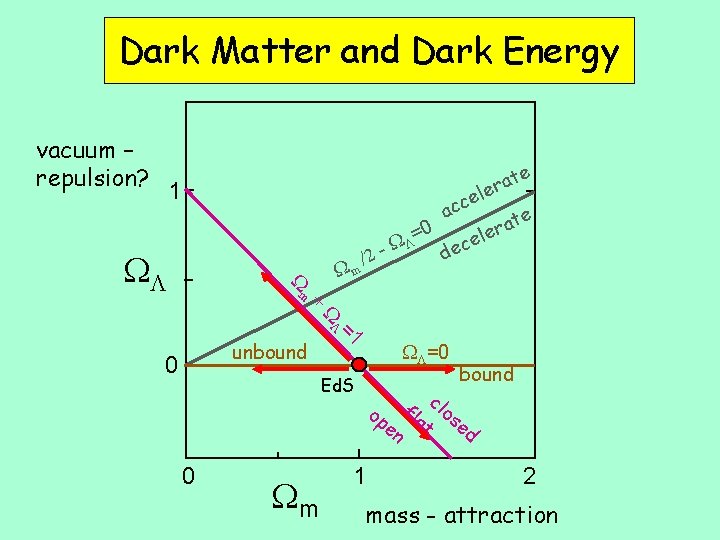
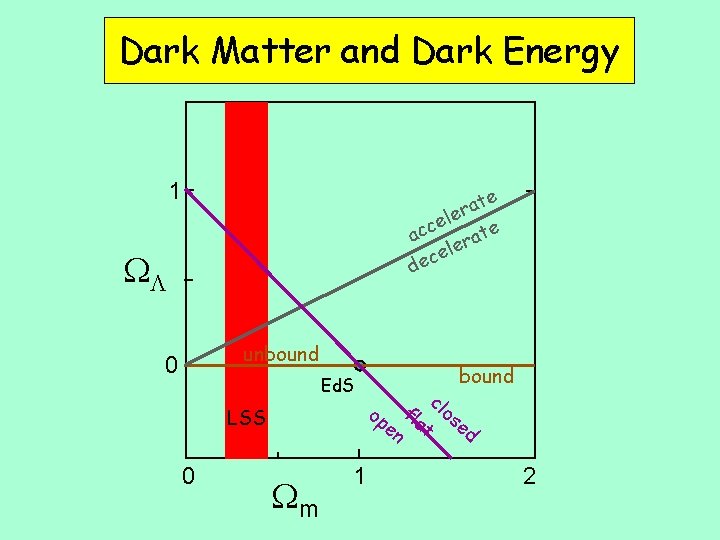
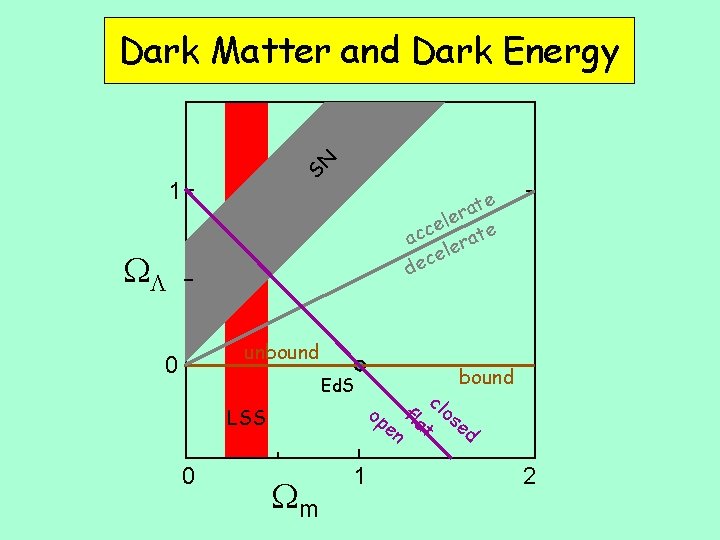
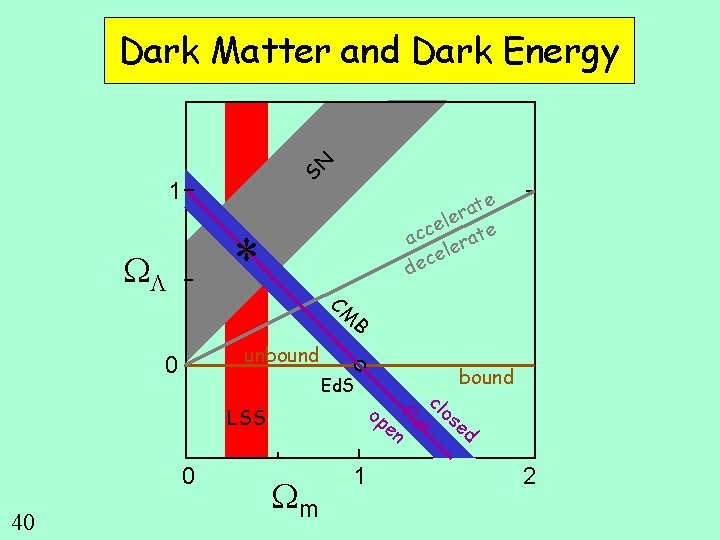
Dark Matter and Dark Energy vacuum – repulsion? 1 te a r le e =0 + m 0 =1 unbound m 2 / Ed. S 0 m acc te a r le e c e d =0 bound c op fla los en t ed 1 2 mass - attraction
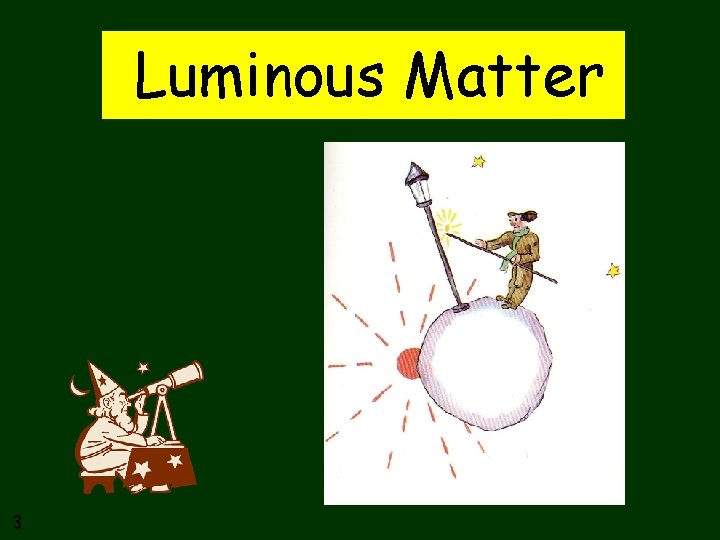
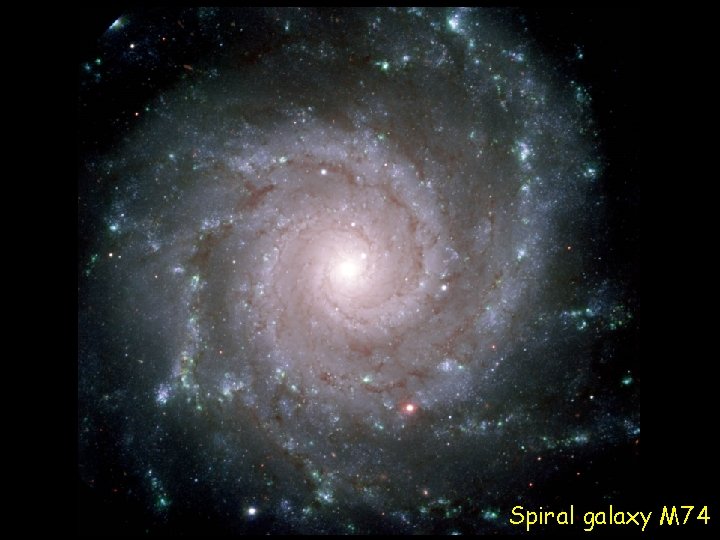
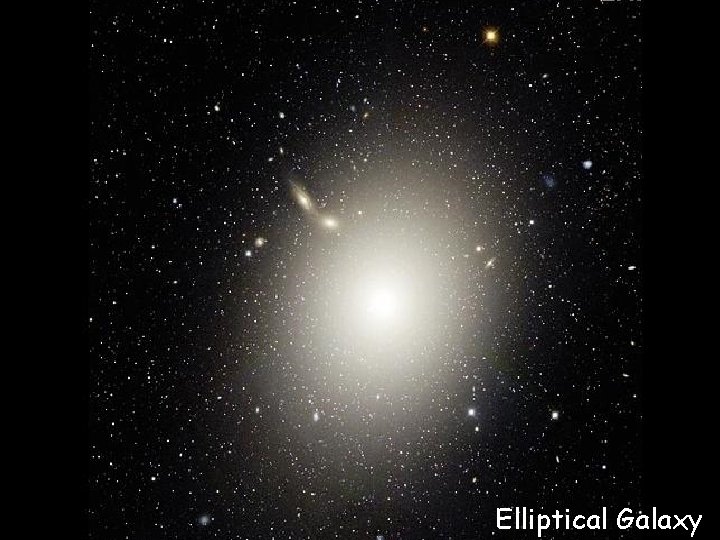
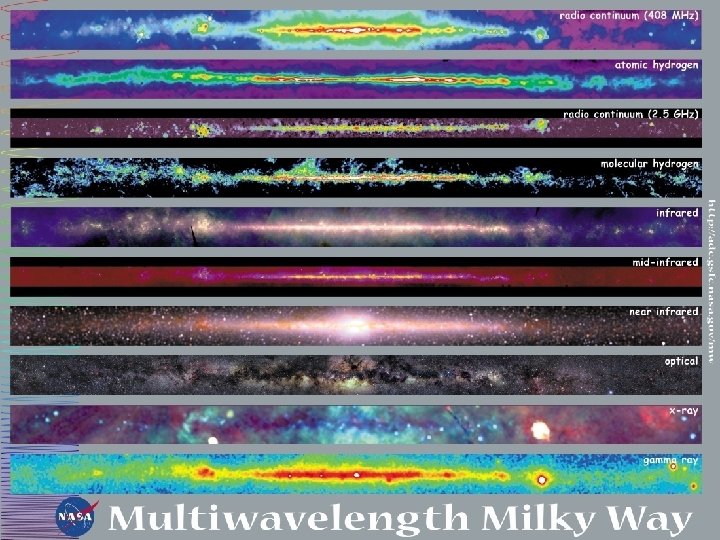
Luminous Matter 3
Spiral galaxy M 74
Elliptical Galaxy
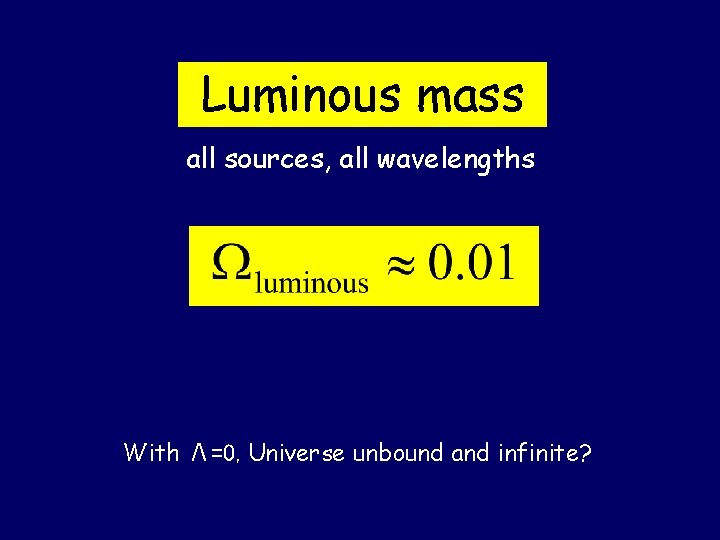
Luminous mass all sources, all wavelengths With Λ=0, Universe unbound and infinite?
Dark Matter 4
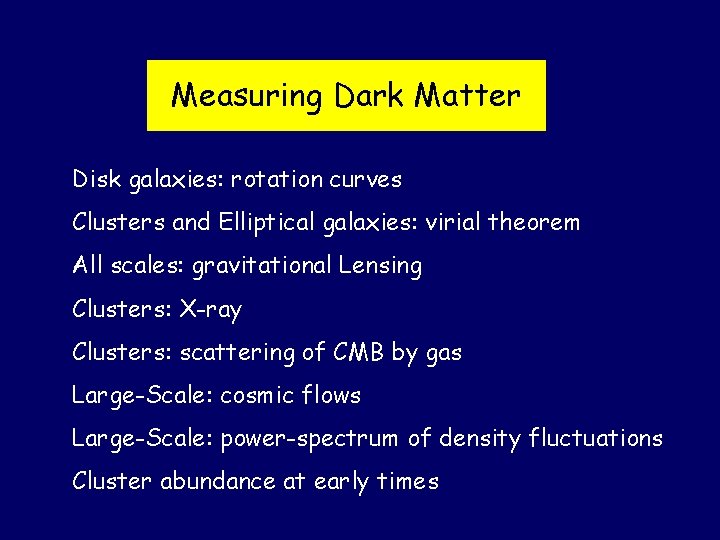
Measuring Dark Matter Disk galaxies: rotation curves Clusters and Elliptical galaxies: virial theorem All scales: gravitational Lensing Clusters: X-ray Clusters: scattering of CMB by gas Large-Scale: cosmic flows Large-Scale: power-spectrum of density fluctuations Cluster abundance at early times
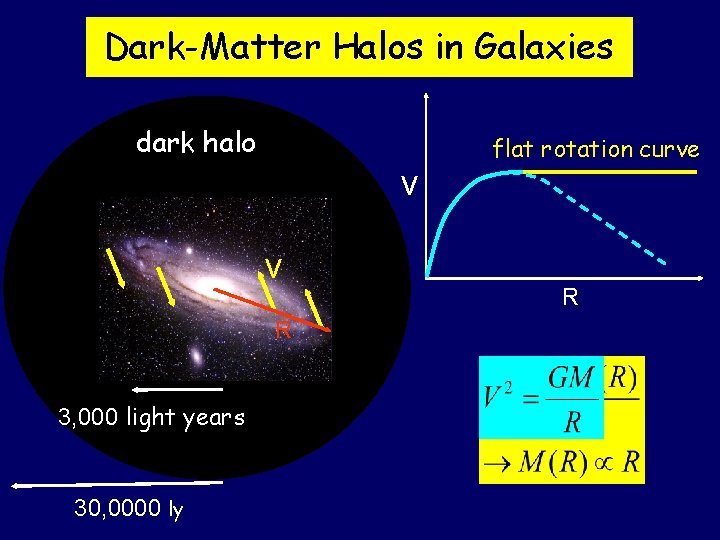
Dark-Matter Halos in Galaxies dark halo v v R 3, 000 light years 30, 0000 ly flat rotation curve R
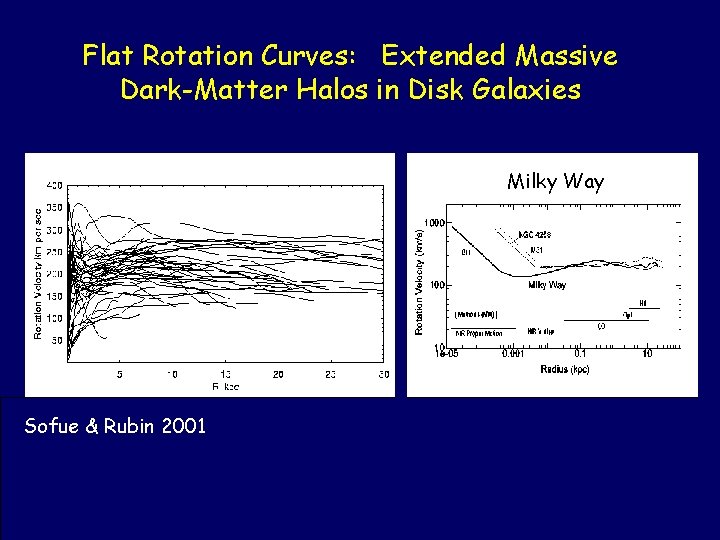
Flat Rotation Curves: Extended Massive Dark-Matter Halos in Disk Galaxies Milky Way Sofue & Rubin 2001
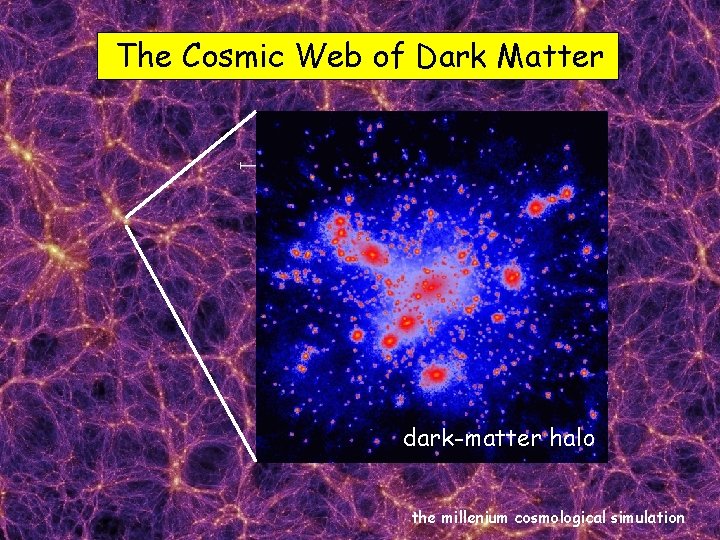
The Cosmic Web of Dark Matter dark-matter halo the millenium cosmological simulation
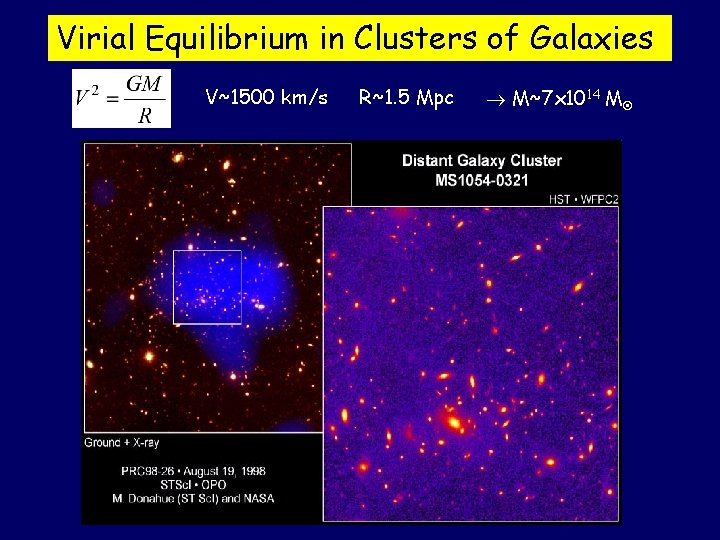
Virial Equilibrium in Clusters of Galaxies V~1500 km/s R~1. 5 Mpc M~7 x 10¹⁴ M
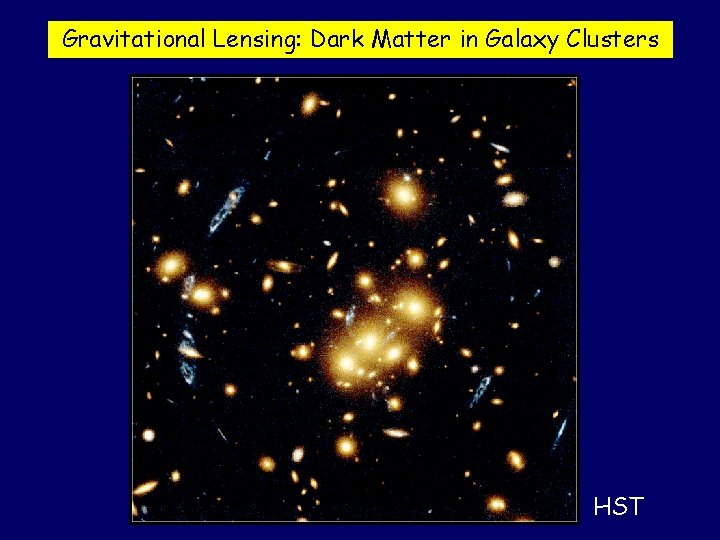
Gravitational Lensing: Dark Matter in Galaxy Clusters HST
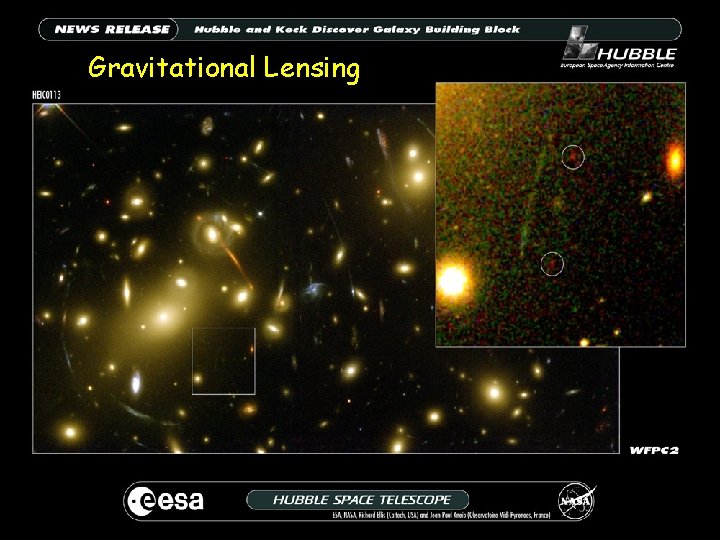
Gravitational Lensing
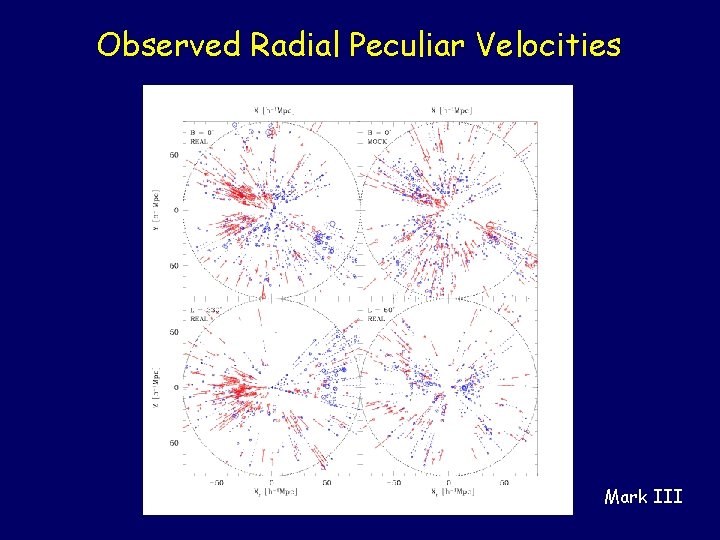
Observed Radial Peculiar Velocities Mark III
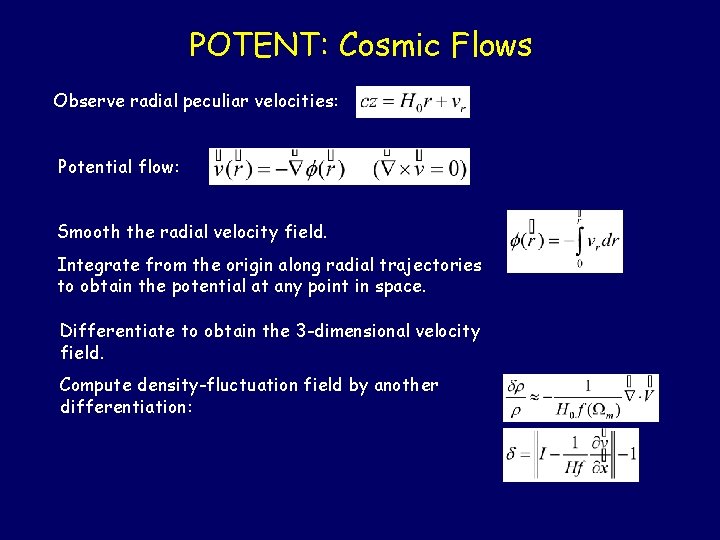
POTENT: Cosmic Flows Observe radial peculiar velocities: Potential flow: Smooth the radial velocity field. Integrate from the origin along radial trajectories to obtain the potential at any point in space. Differentiate to obtain the 3 -dimensional velocity field. Compute density-fluctuation field by another differentiation:
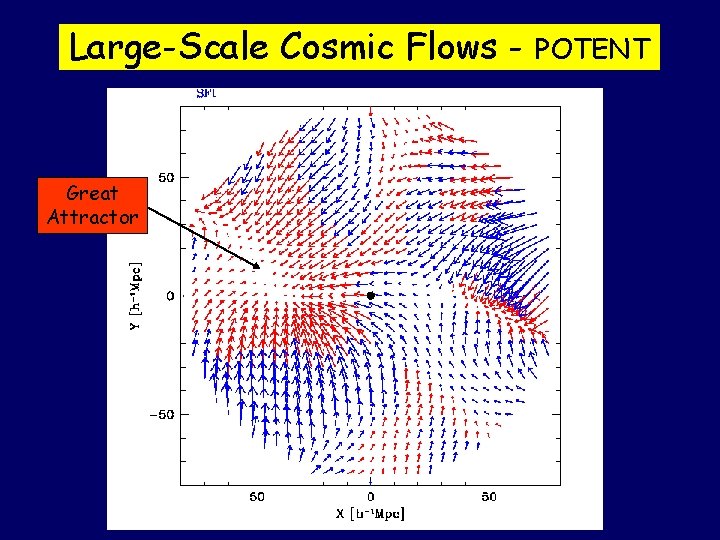
Large-Scale Cosmic Flows - Great Attractor POTENT
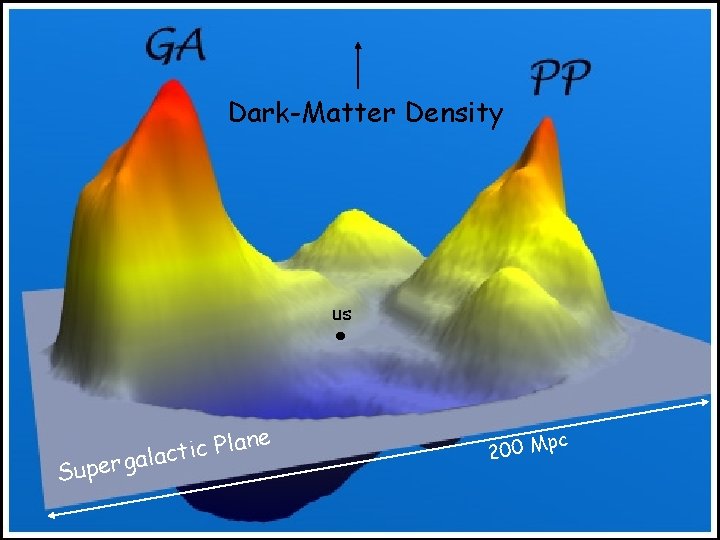
Dark-Matter Density us Super lan P c i t c gala e c p 200 M
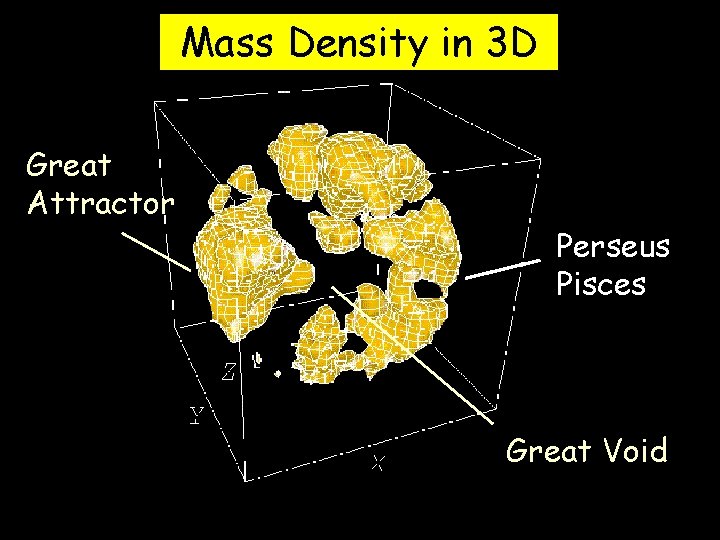
3 D dark-matter density Mass Density in 3 D Great Attractor Perseus Pisces Great Void
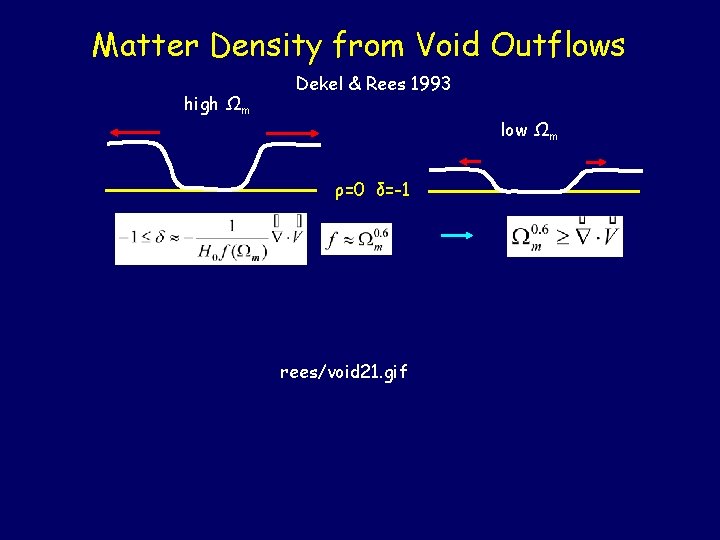
Matter Density from Void Outflows high Ωm Dekel & Rees 1993 low Ωm ρ=0 δ=-1 rees/void 21. gif
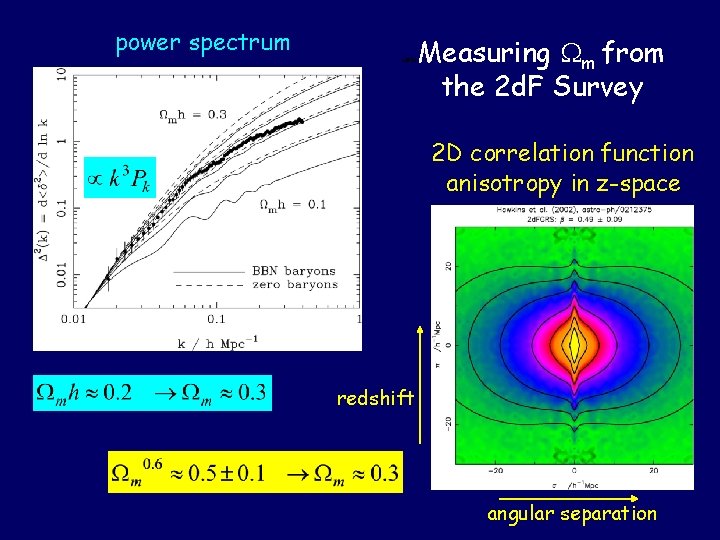
power spectrum 2 d. F Pk Measuring m from the 2 d. F Survey 2 D correlation function anisotropy in z-space redshift angular separation
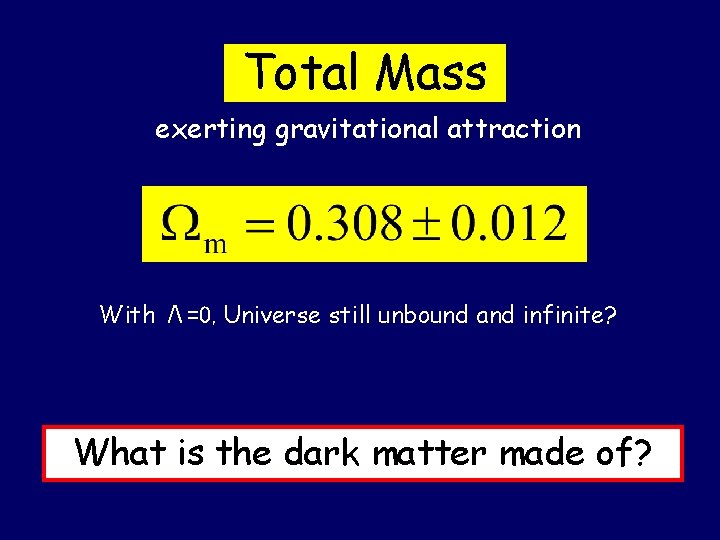
Total Mass exerting gravitational attraction With Λ=0, Universe still unbound and infinite? What is the dark matter made of?
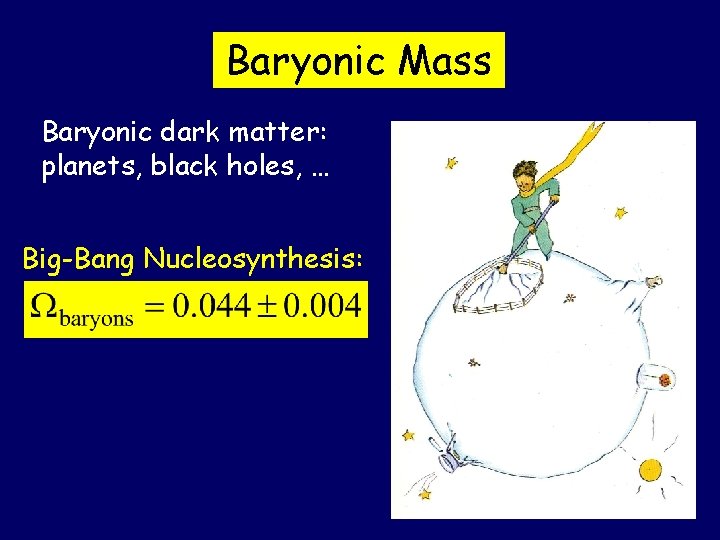
Baryonic Mass Baryonic dark matter: planets, black holes, … Big-Bang Nucleosynthesis:
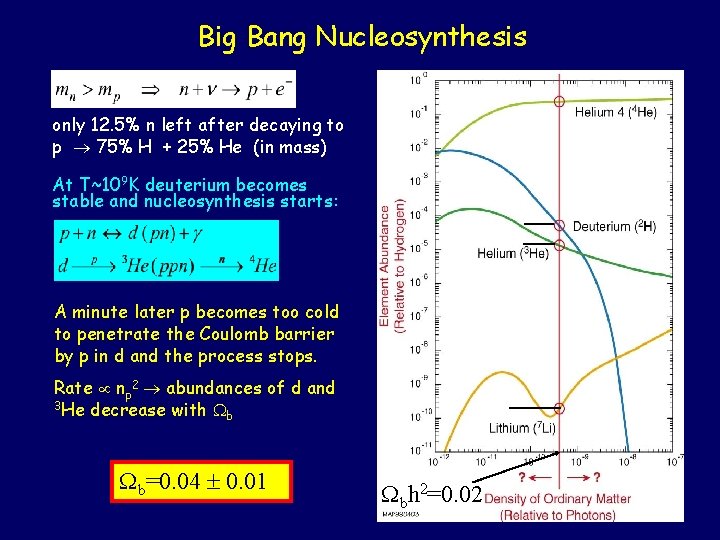
Big Bang Nucleosynthesis only 12. 5% n left after decaying to p 75% H + 25% He (in mass) At T~109 K deuterium becomes stable and nucleosynthesis starts: A minute later p becomes too cold to penetrate the Coulomb barrier by p in d and the process stops. Rate np 2 abundances of d and 3 He decrease with b b=0. 04 0. 01 bh 2=0. 02
Non-Baryonic Dark-Matter Particles Neutralinos, photinos, axions, . . . all those damn super-symmetric particles you can’t see… that’s what drove me to drink… but now I can see them!
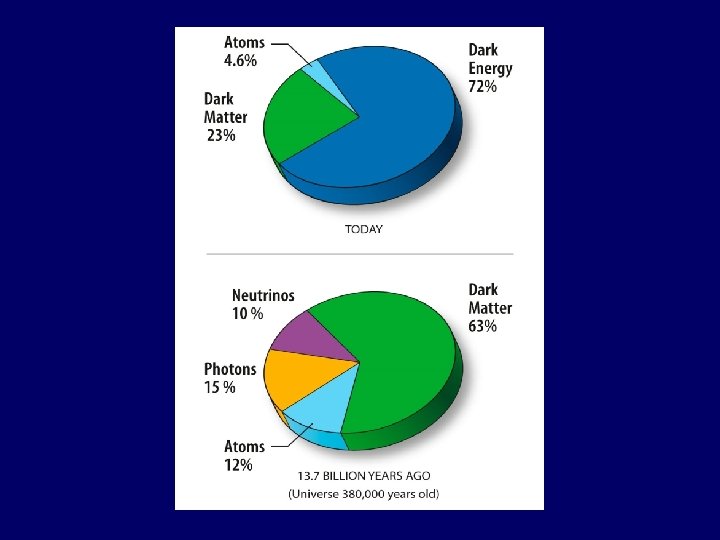
Dark Matter and Dark Energy 1 te a r le e c te ac a r le e c de unbound 0 Ed. S LSS 0 m 1 bound c op fla los en t ed 2
Dark Energy measure the expected deceleration under gravitational attraction 8
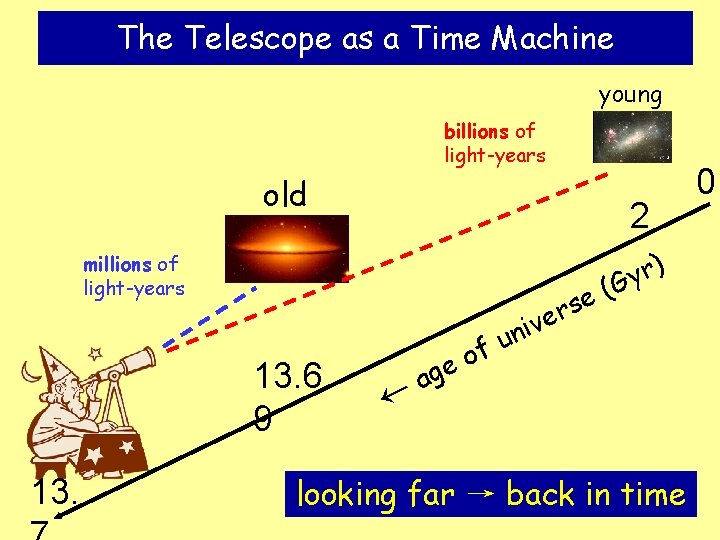
The Telescope as a Time Machine young billions of light-years old 2 millions of light-years 13. 6 9 13. ni u f e s r ve o e ag r) y (G looking far → back in time 0
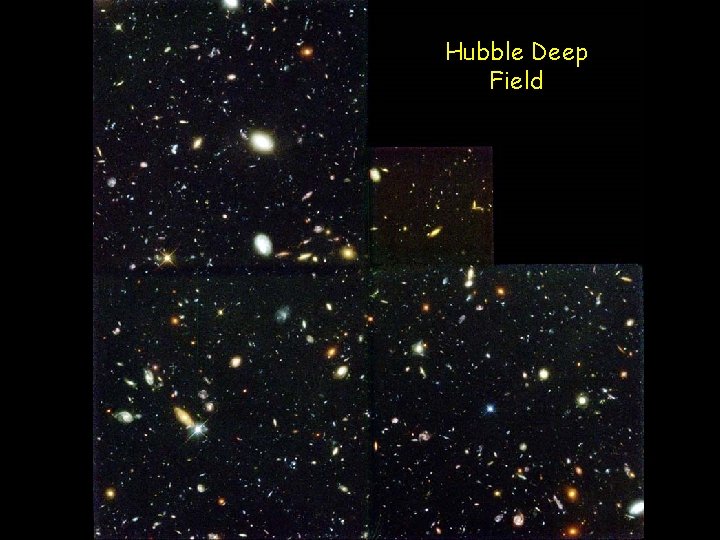
Hubble Deep Field
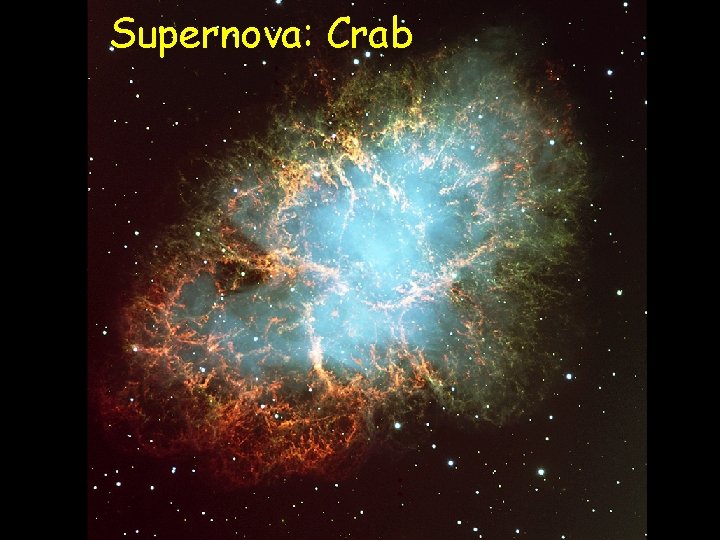
Supernova: Crab
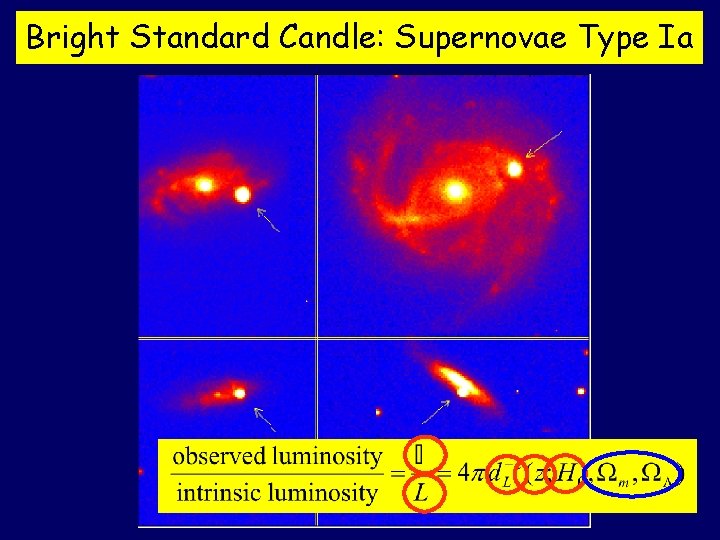
Bright Standard Candle: Supernovae Type Ia
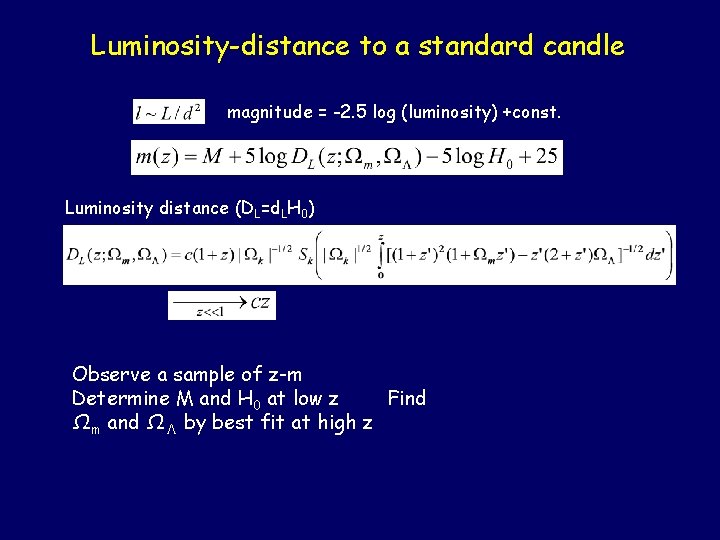
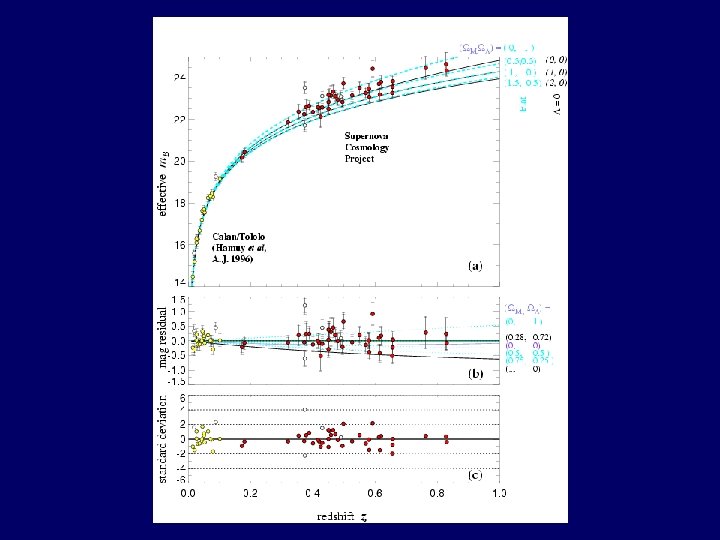
Luminosity-distance to a standard candle magnitude = -2. 5 log (luminosity) +const. Luminosity distance (DL=d. LH 0) Observe a sample of z-m Determine M and H 0 at low z Find Ωm and ΩΛ by best fit at high z
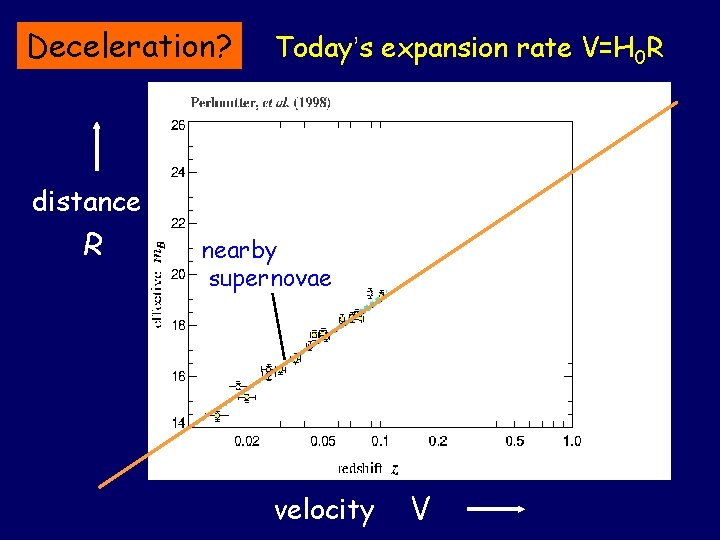
Deceleration? Today’s expansion rate V=H 0 R distance R nearby supernovae velocity רחוק V V היקום מאיץ
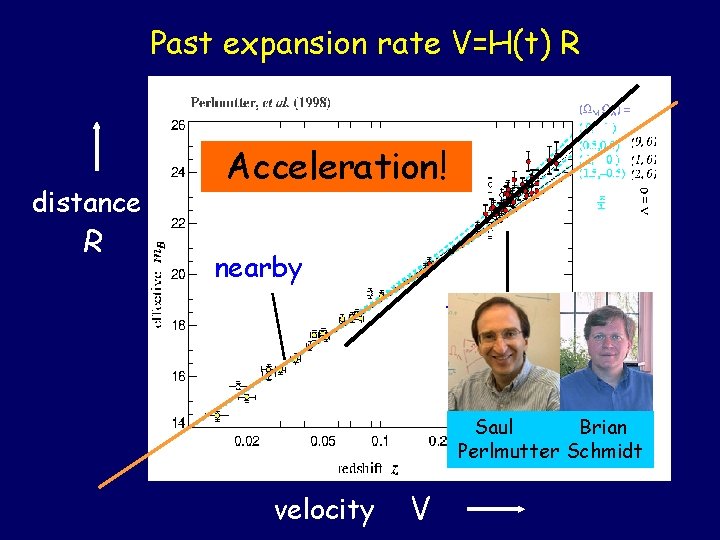
Past expansion rate V=H(t) R distance R Acceleration! nearby far away Saul Brian Perlmutter Schmidt velocity V היקום מאיץ
Acceleration by a cosmological constant a(t) Big Bang here & now time
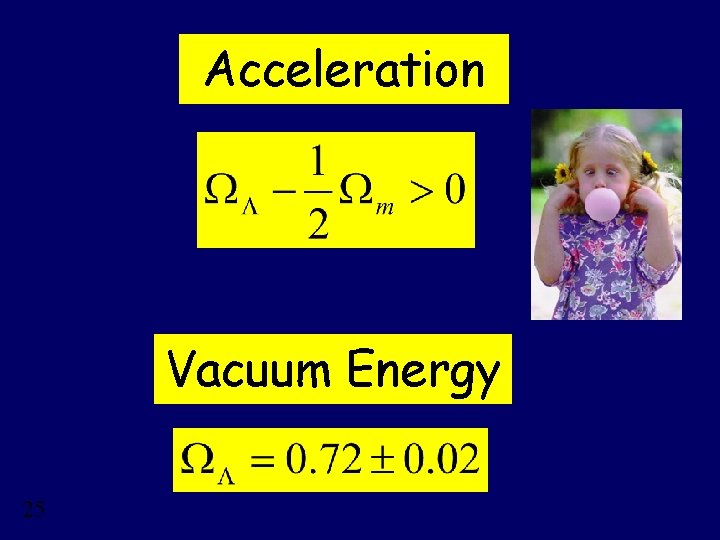
Acceleration Vacuum Energy 25
SN Dark Matter and Dark Energy 1 e t a er l e acc erate el c e d unbound 0 Ed. S LSS 0 m 1 bound c op fla los en t ed 2
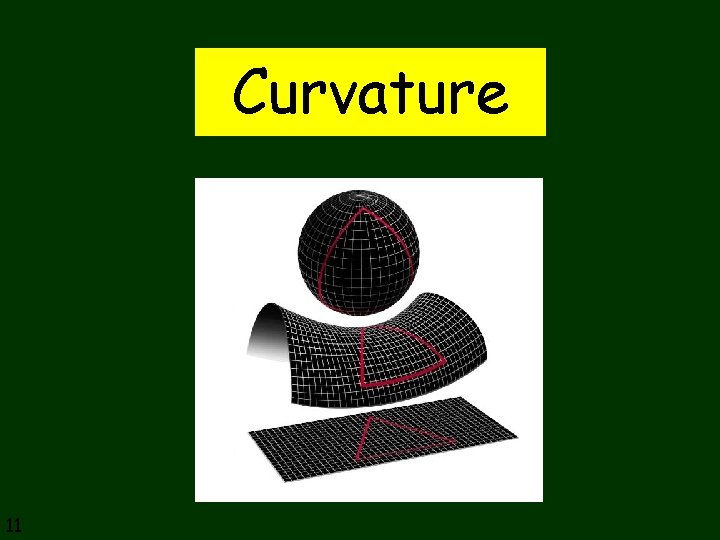
Curvature 11
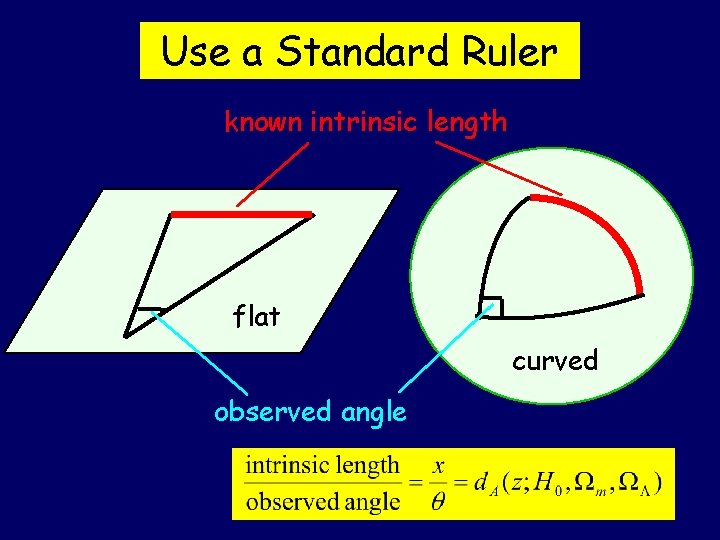
Use a Standard Ruler known intrinsic length flat curved observed angle
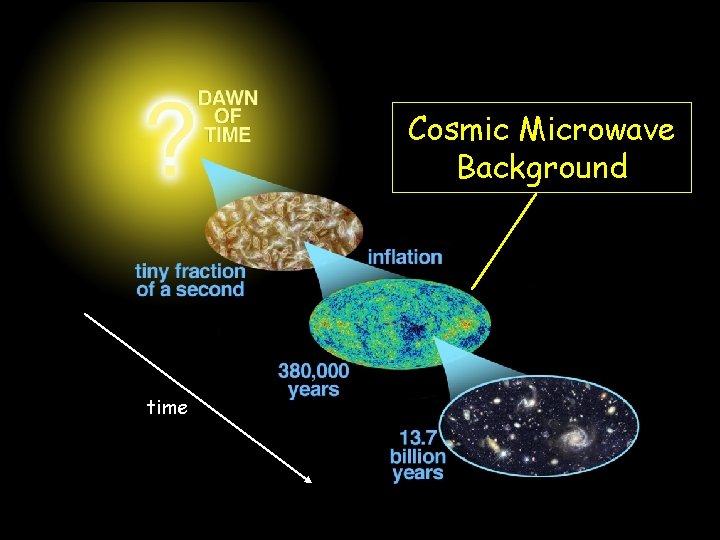
Cosmic Microwave Background time
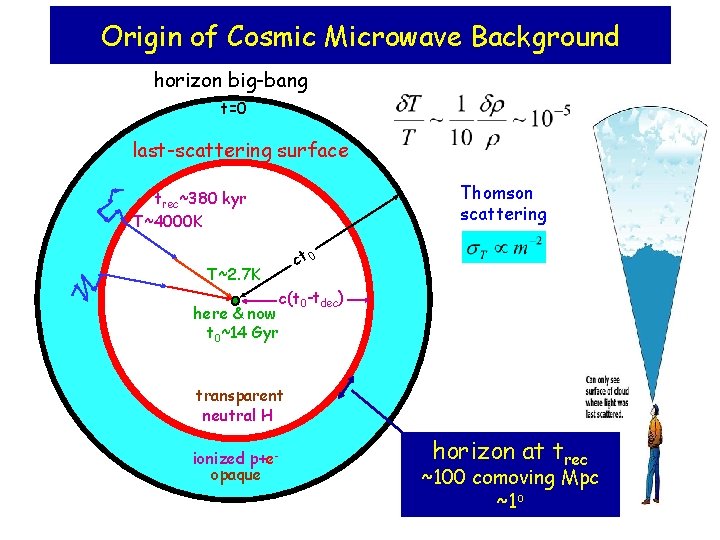
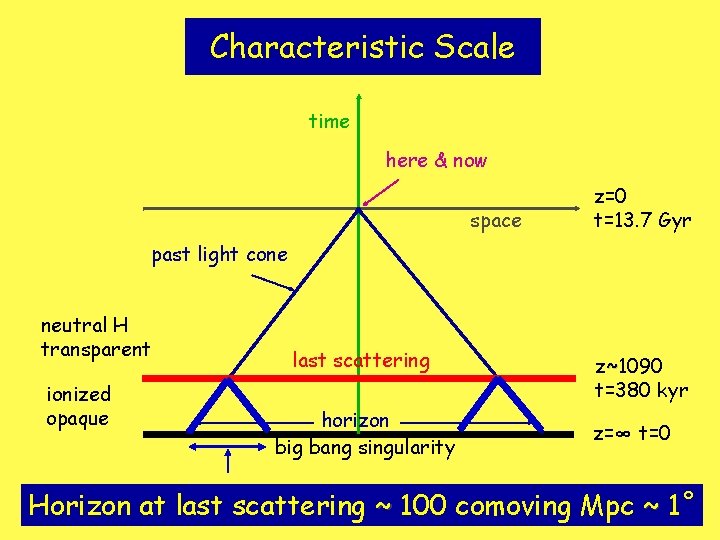
Origin of Cosmic Microwave Background horizon big-bang t=0 last-scattering surface Thomson scattering trec~380 kyr T~4000 K ct 0 T~2. 7 K c(t 0 -tdec) here & now t 0~14 Gyr transparent neutral H ionized p+eopaque horizon at trec ~100 comoving Mpc ~1 o
Characteristic Scale time here & now space z=0 t=13. 7 Gyr past light cone neutral H transparent ionized opaque last scattering horizon big bang singularity z~1090 t=380 kyr z=∞ t=0 Horizon at last scattering ~ 100 comoving Mpc ~ 1˚
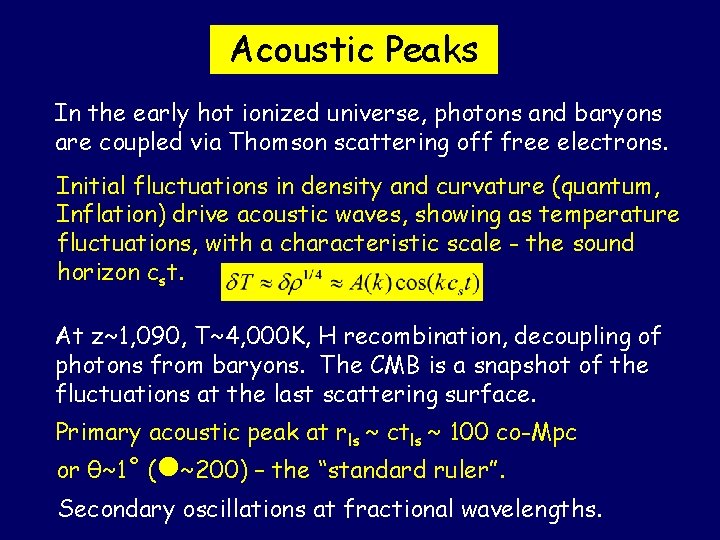
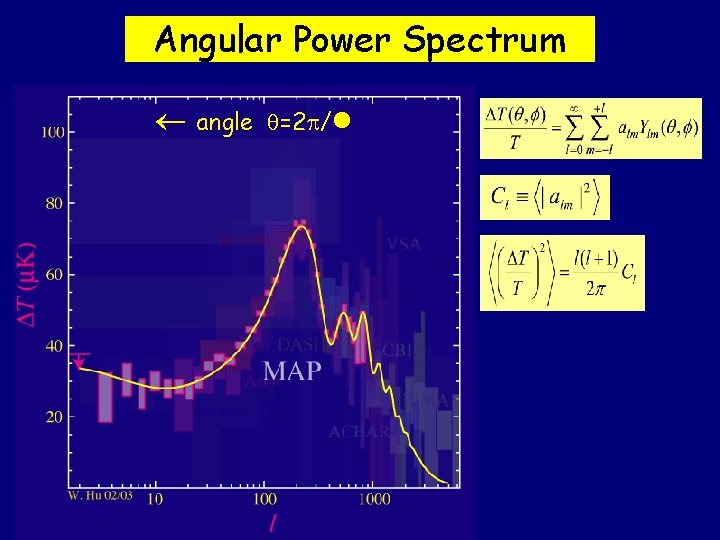
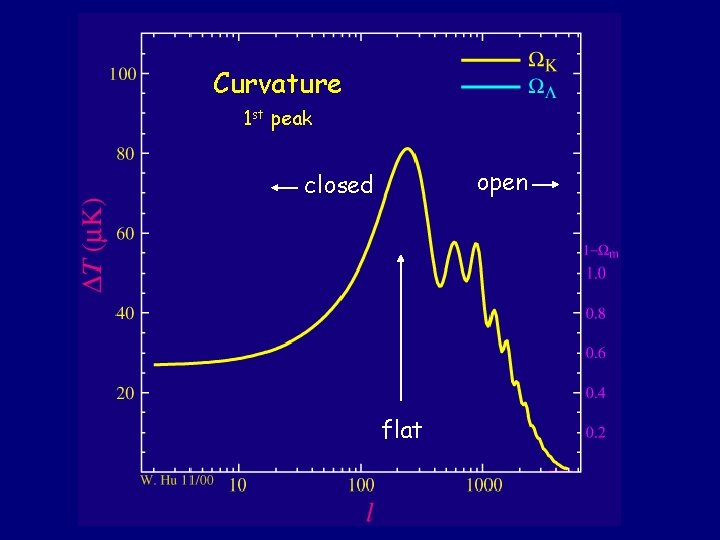
Acoustic Peaks In the early hot ionized universe, photons and baryons are coupled via Thomson scattering off free electrons. Initial fluctuations in density and curvature (quantum, Inflation) drive acoustic waves, showing as temperature fluctuations, with a characteristic scale - the sound horizon cst. At z~1, 090, T~4, 000 K, H recombination, decoupling of photons from baryons. The CMB is a snapshot of the fluctuations at the last scattering surface. Primary acoustic peak at rls ~ ctls ~ 100 co-Mpc or θ~1˚ ( ~200) – the “standard ruler”. Secondary oscillations at fractional wavelengths.
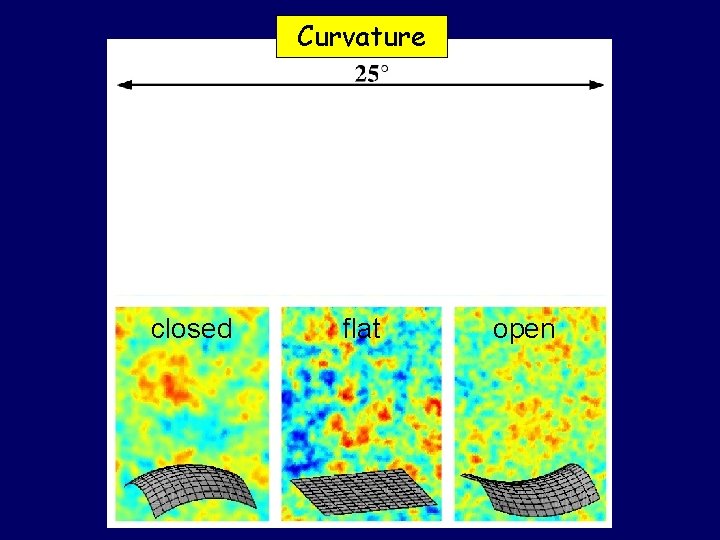
Curvature closed flat open
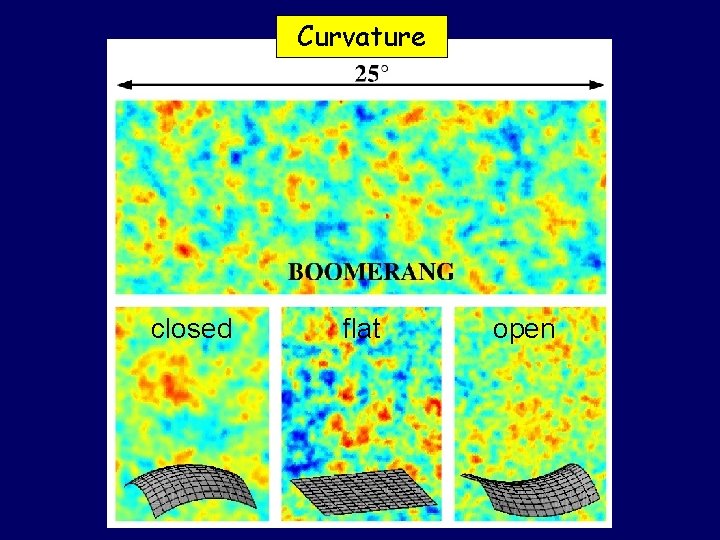
Curvature closed flat open
CMB Temperature Maps isotropy T 2. 725 K T/T~10 -3 COBE 1992 resolution ~10 o dipole WMAP T/T~10 -5 2003 resolution ~ 10’
WMAP: Wilkinson Microwave Anisotropy Probe WMAP-5 2008 δT/T~10 -5 10 arcmin Charles Bennett
Angular Power Spectrum angle =2 /
Curvature 1 st peak open closed flat
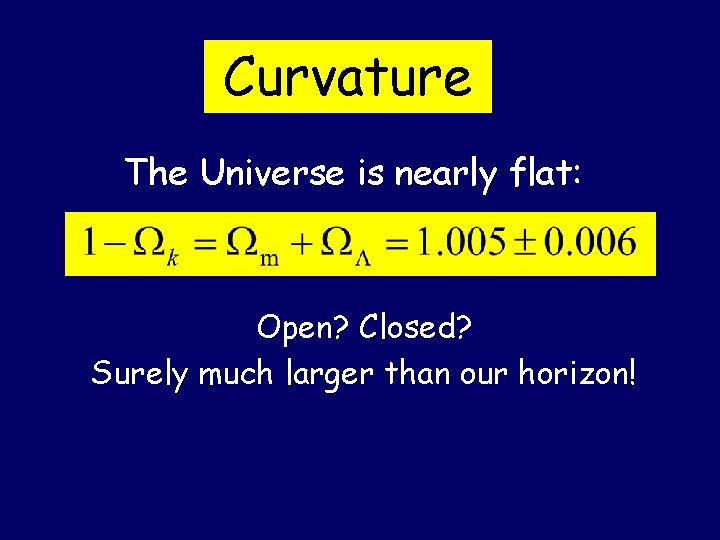
Curvature The Universe is nearly flat: Open? Closed? Surely much larger than our horizon!
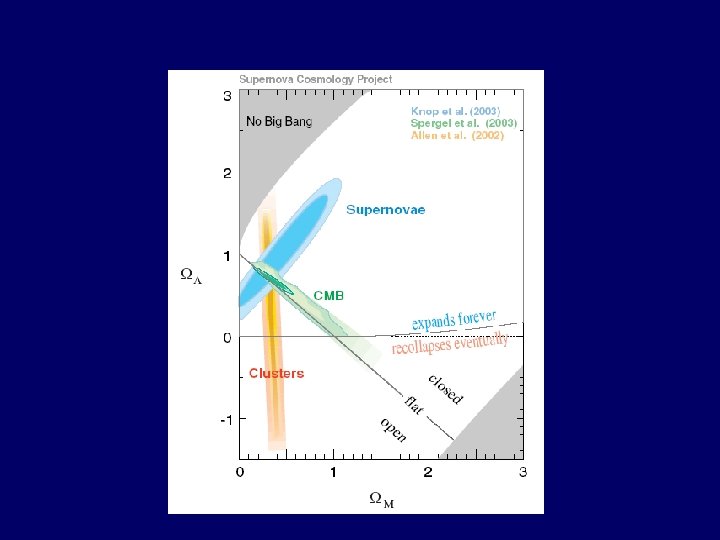
SN Dark Matter and Dark Energy 1 e t a er l e acc erate el c e d * CM B unbound 0 Ed. S LSS 0 40 m 1 bound c op fla los en t ed 2
Other Parameters: Baryons, Fluctuations
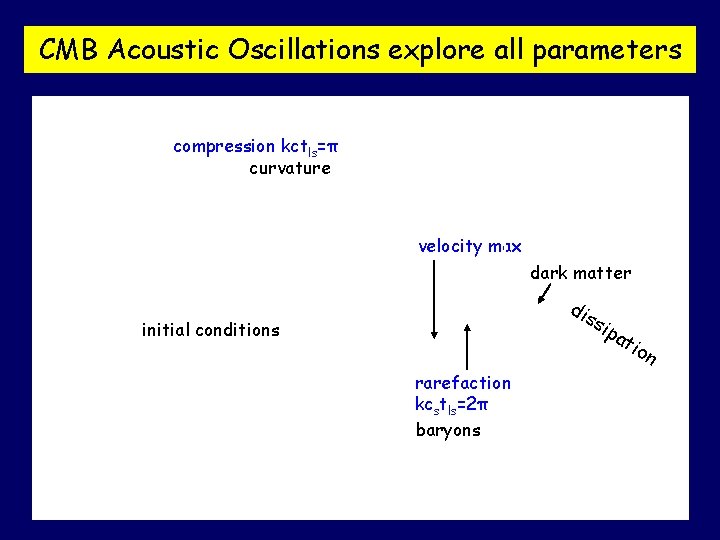
CMB Acoustic Oscillations explore all parameters compression kctls=π curvature velocity max dark matter dis sip initial conditions rarefaction kcstls=2π baryons at ion
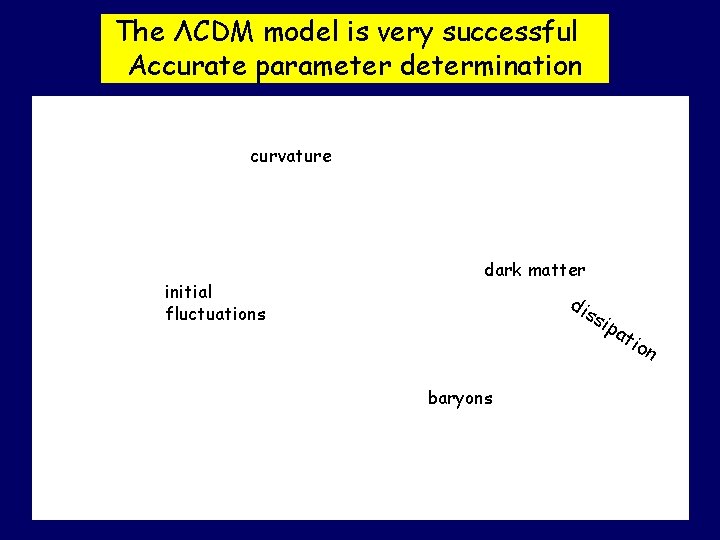
The ΛCDM model is very successful Accurate parameter determination curvature initial fluctuations dark matter dis sip baryons at ion
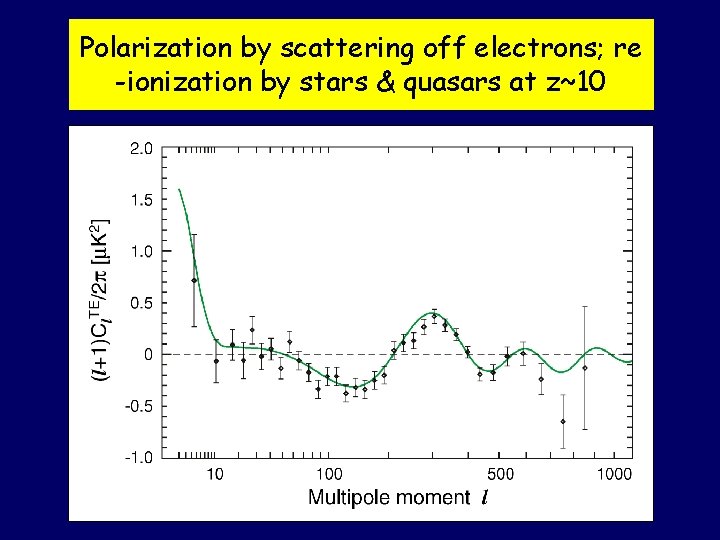
Polarization by scattering off electrons; re -ionization by stars & quasars at z~10
Cosmic History dark ages galaxy formation big bang last scattering t=380 kyr reionization t=430 Myr today t=13. 7 Gyr
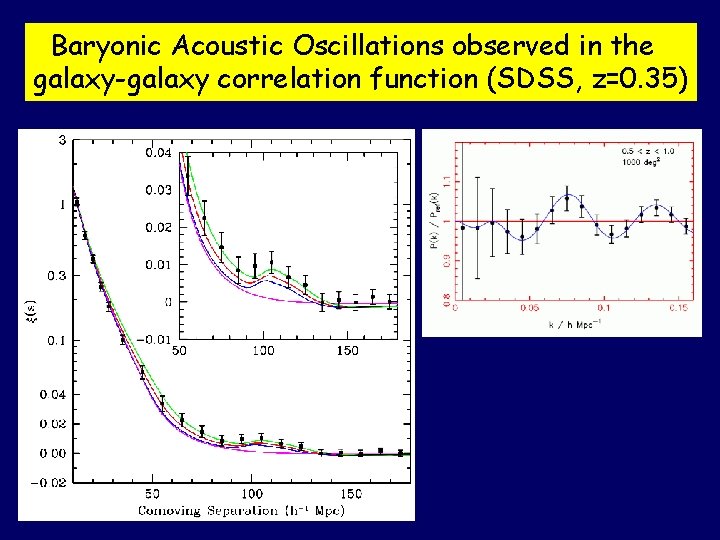
Baryonic Acoustic Oscillations observed in the galaxy-galaxy correlation function (SDSS, z=0. 35)
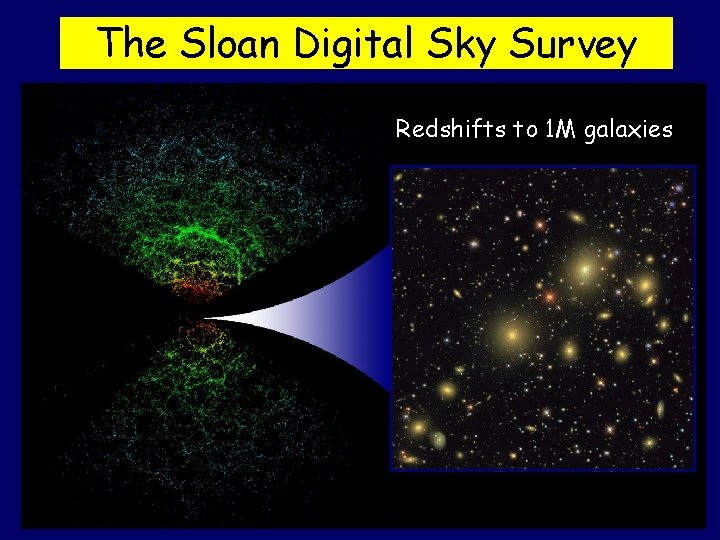
The Sloan Digital Sky Survey Redshifts to 1 M galaxies
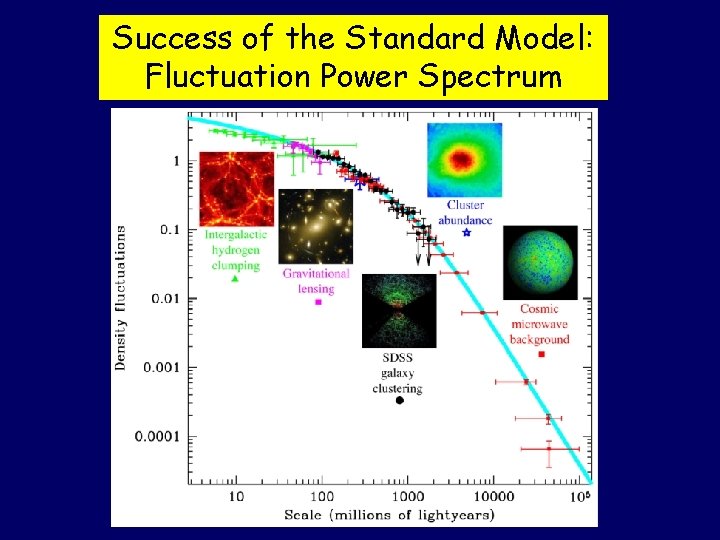
Success of the Standard Model: Fluctuation Power Spectrum
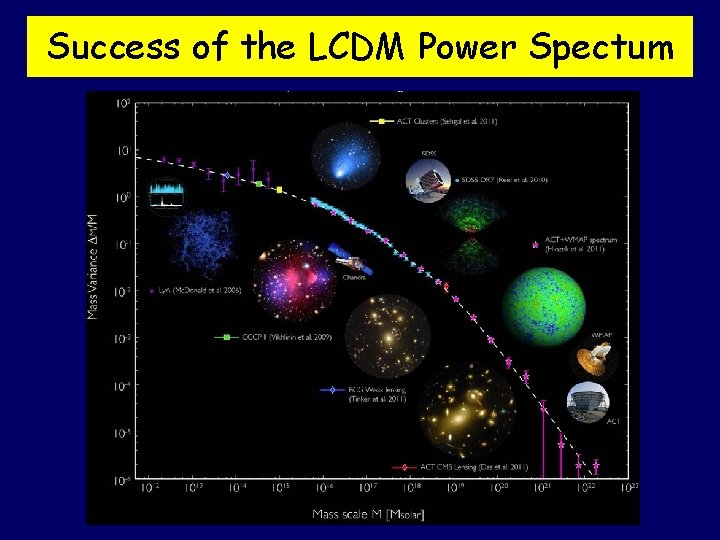
Success of the LCDM Power Spectum
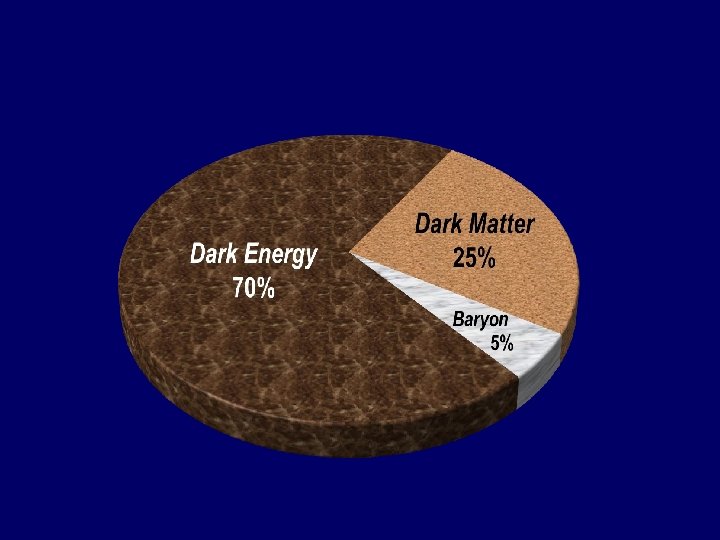
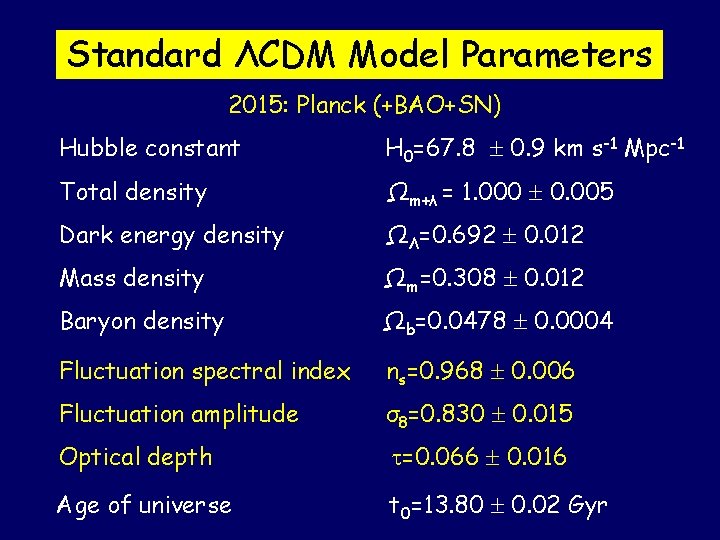
Standard ΛCDM Model Parameters 2015: Planck (+BAO+SN) Hubble constant H 0=67. 8 0. 9 km s-1 Mpc-1 Total density Ωm+λ = 1. 000 0. 005 Dark energy density ΩΛ=0. 692 0. 012 Mass density Ωm=0. 308 0. 012 Baryon density Ωb=0. 0478 0. 0004 Fluctuation spectral index ns=0. 968 0. 006 Fluctuation amplitude σ8=0. 830 0. 015 Optical depth =0. 066 0. 016 Age of universe t 0=13. 80 0. 02 Gyr
Beyond the Standard Model 20
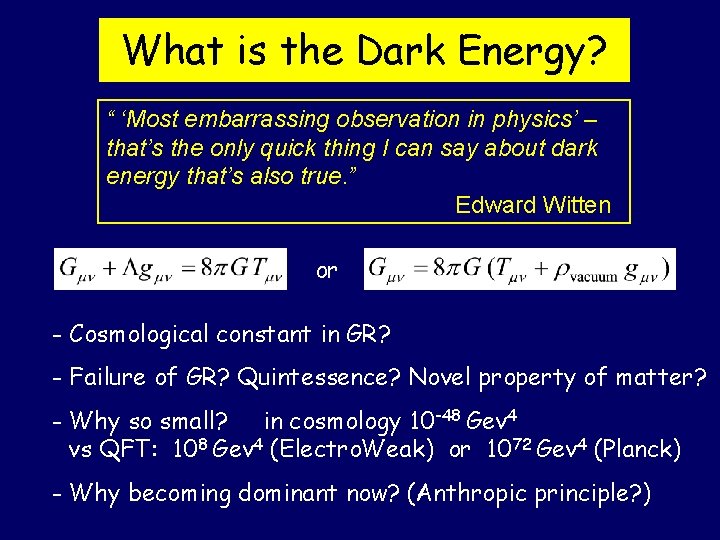
What is the Dark Energy? “ ‘Most embarrassing observation in physics’ – that’s the only quick thing I can say about dark energy that’s also true. ” …………………. . Edward Witten or - Cosmological constant in GR? - Failure of GR? Quintessence? Novel property of matter? - Why so small? in cosmology 10 -48 Gev 4 … …vs QFT: 108 Gev 4 (Electro. Weak) or 1072 Gev 4 (Planck) - Why becoming dominant now? (Anthropic principle? )
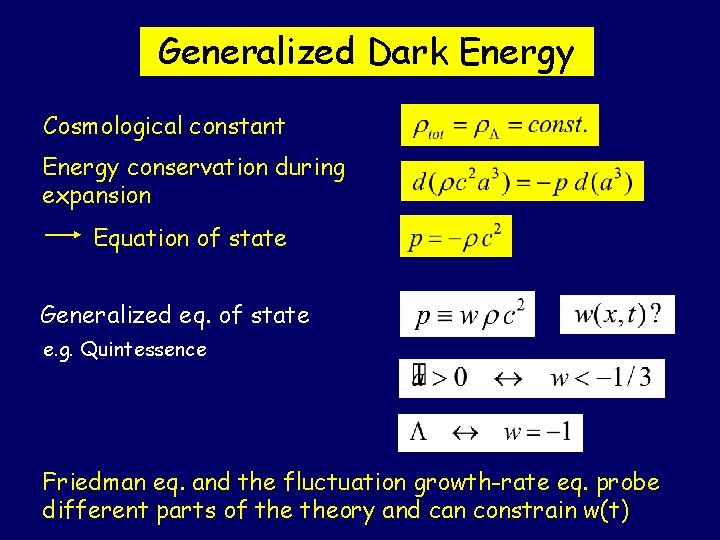
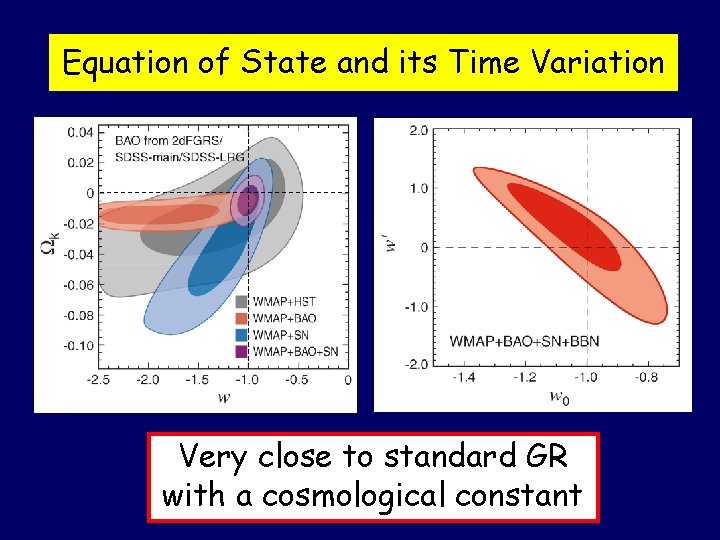
Generalized Dark Energy Cosmological constant Energy conservation during expansion Equation of state Generalized eq. of state e. g. Quintessence Friedman eq. and the fluctuation growth-rate eq. probe different parts of theory and can constrain w(t)
Equation of State and its Time Variation Very close to standard GR with a cosmological constant
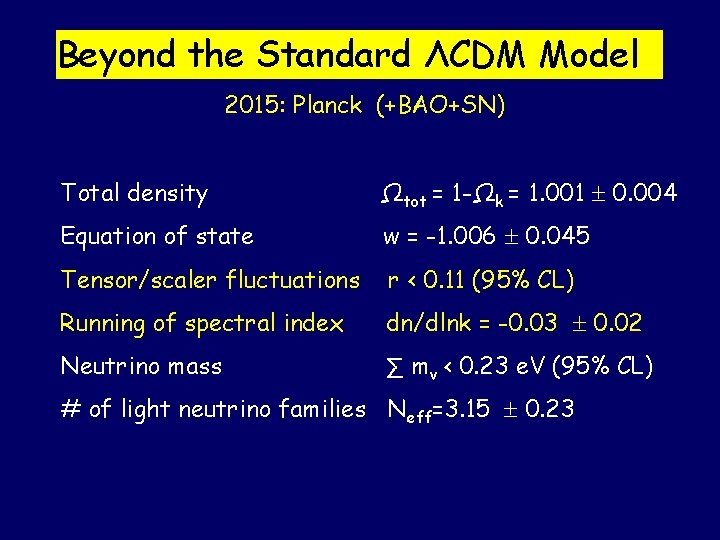
Beyond the Standard ΛCDM Model 2015: Planck (+BAO+SN) Total density Ωtot = 1 -Ωk = 1. 001 0. 004 Equation of state w = -1. 006 0. 045 Tensor/scaler fluctuations r < 0. 11 (95% CL) Running of spectral index dn/dlnk = -0. 03 0. 02 Neutrino mass ∑ mν < 0. 23 e. V (95% CL) # of light neutrino families Neff=3. 15 0. 23
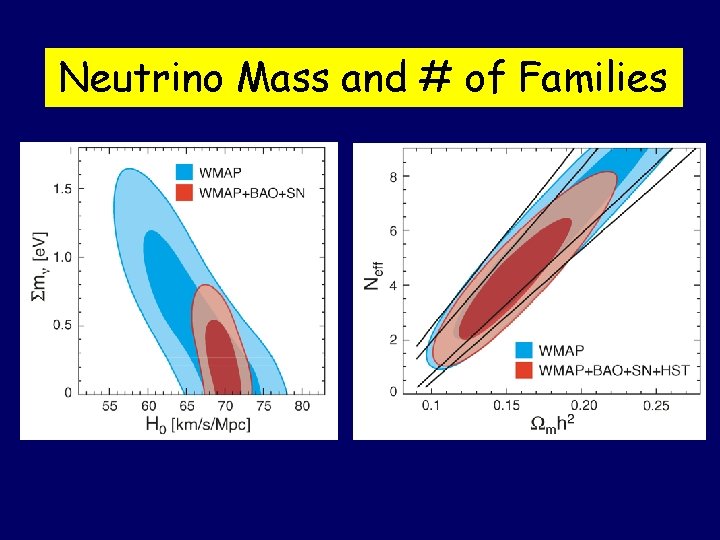
Neutrino Mass and # of Families
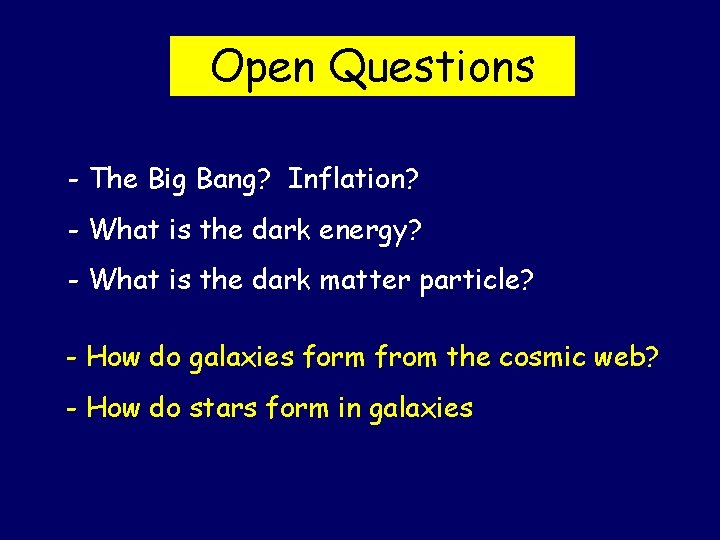
Open Questions - The Big Bang? Inflation? - What is the dark energy? - What is the dark matter particle? - How do galaxies form from the cosmic web? - How do stars form in galaxies
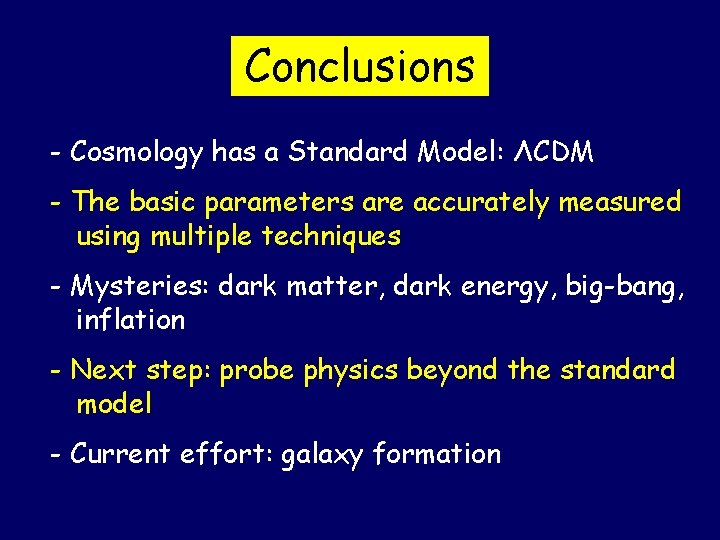
Conclusions - Cosmology has a Standard Model: ΛCDM - The basic parameters are accurately measured …. using multiple techniques - Mysteries: dark matter, dark energy, big-bang, …. inflation - Next step: probe physics beyond the standard …. model - Current effort: galaxy formation
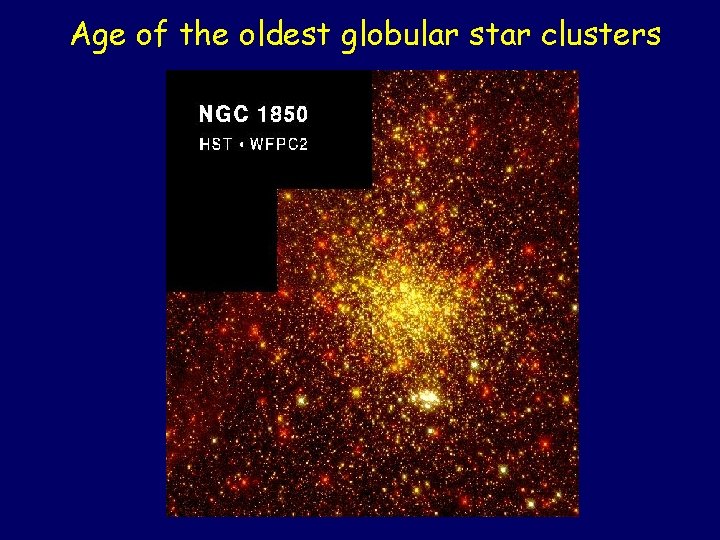
Age of the oldest globular star clusters
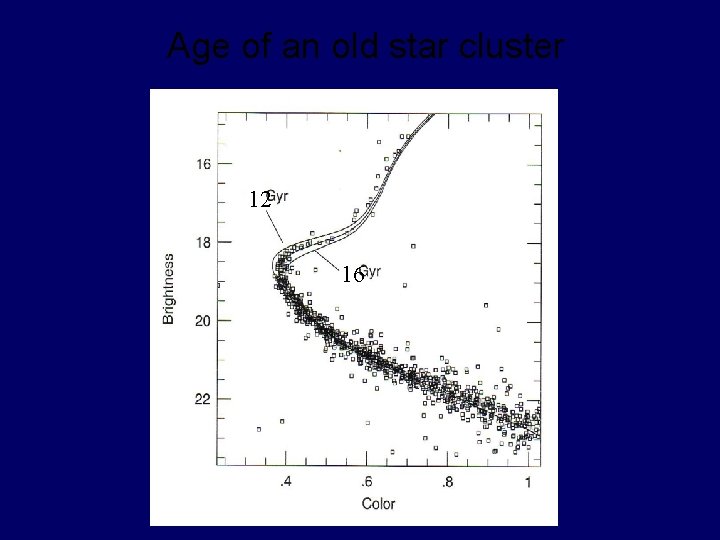
Age of an old star cluster 12 16
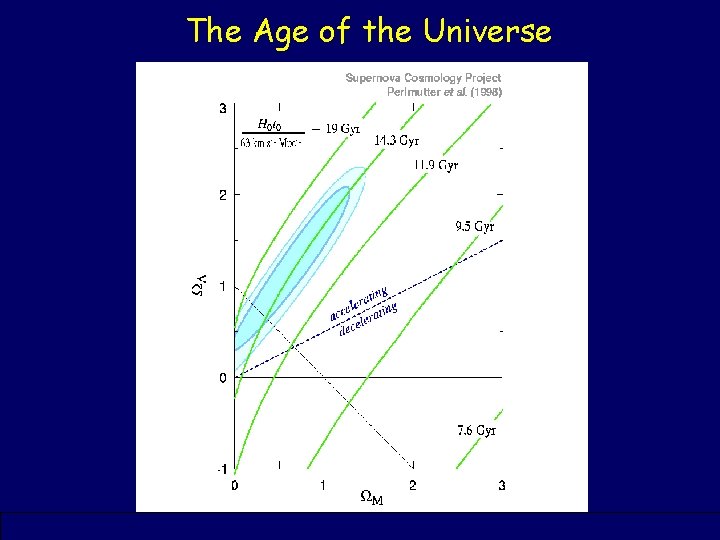
The Age of the Universe