
The Stages of Mitosis Humans begin as one
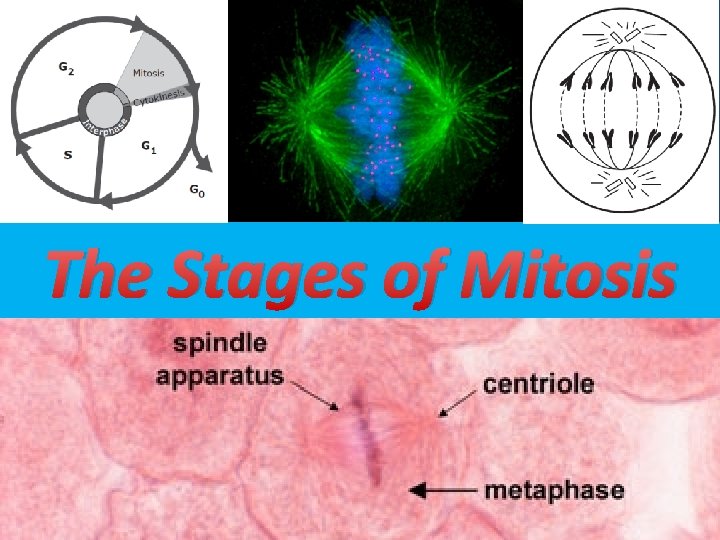
The Stages of Mitosis
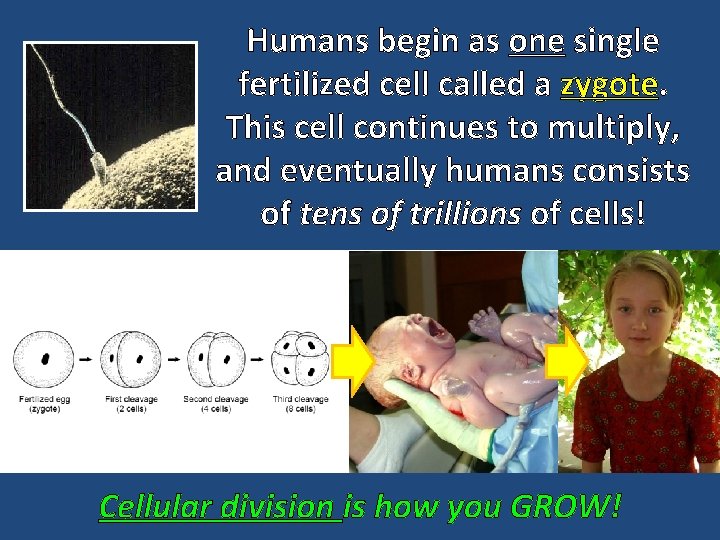
Humans begin as one single fertilized cell called a zygote. This cell continues to multiply, and eventually humans consists of tens of trillions of cells! Cellular division is how you GROW!
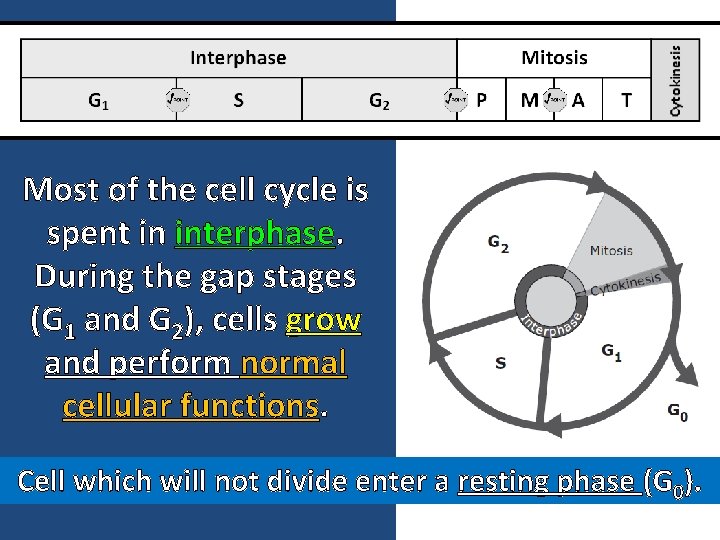
Most of the cell cycle is spent in interphase. During the gap stages (G 1 and G 2), cells grow and perform normal cellular functions. Cell which will not divide enter a resting phase (G 0).

Interphase During the synthesis or S stage of interphase DNA replication occurs. This creates two identical copies of chromosomes so that each new daughter cell will have a complete set.
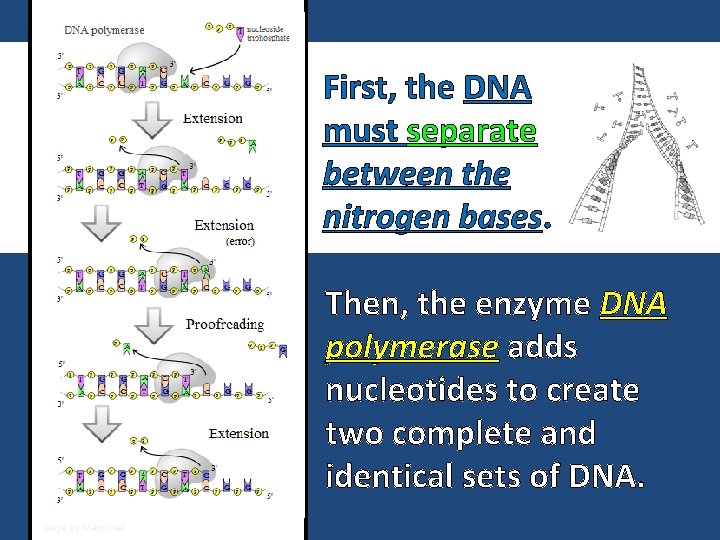
First, the DNA must separate between the nitrogen bases. Then, the enzyme DNA polymerase adds nucleotides to create two complete and identical sets of DNA. Image by Madprime

DNA Replication What does it mean to say DNA replication is a semi-conservative process? Each set of DNA contains 1 old strand 1 new strand.
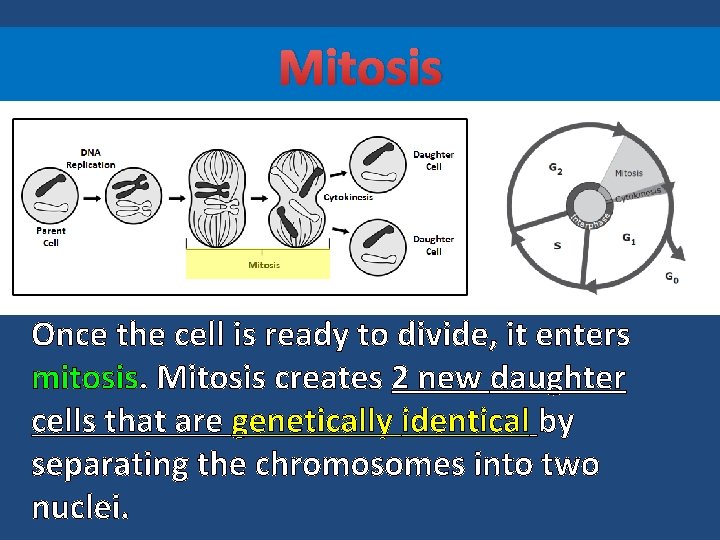
Mitosis Once the cell is ready to divide, it enters mitosis. Mitosis creates 2 new daughter cells that are genetically identical by separating the chromosomes into two nuclei.

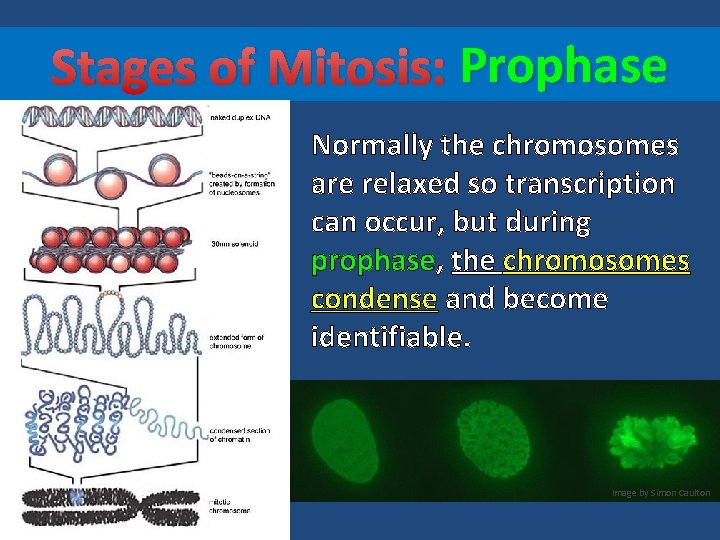
Stages of Mitosis: Prophase Normally the chromosomes are relaxed so transcription can occur, but during prophase, the chromosomes condense and become identifiable. Image by Simon Caulton
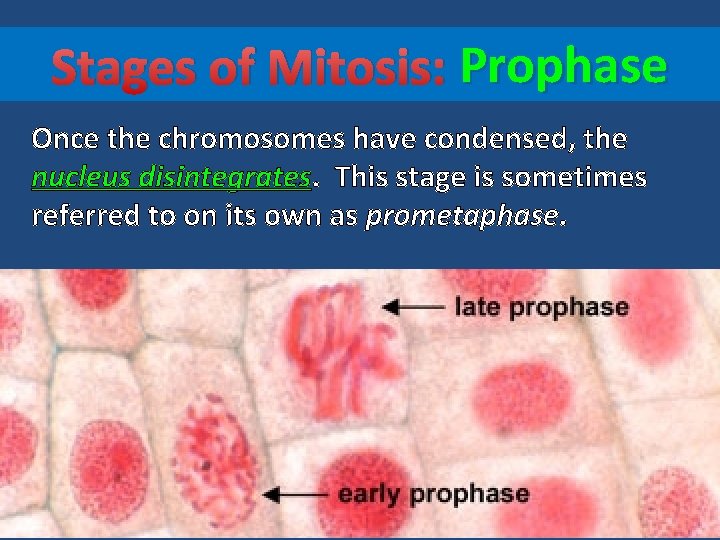
Stages of Mitosis: Prophase Once the chromosomes have condensed, the nucleus disintegrates. This stage is sometimes referred to on its own as prometaphase.
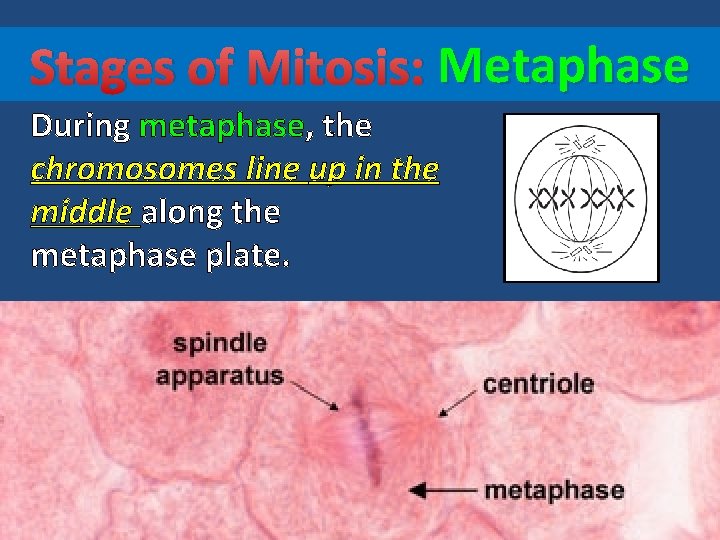
Stages of Mitosis: Metaphase During metaphase, the chromosomes line up in the middle along the metaphase plate.
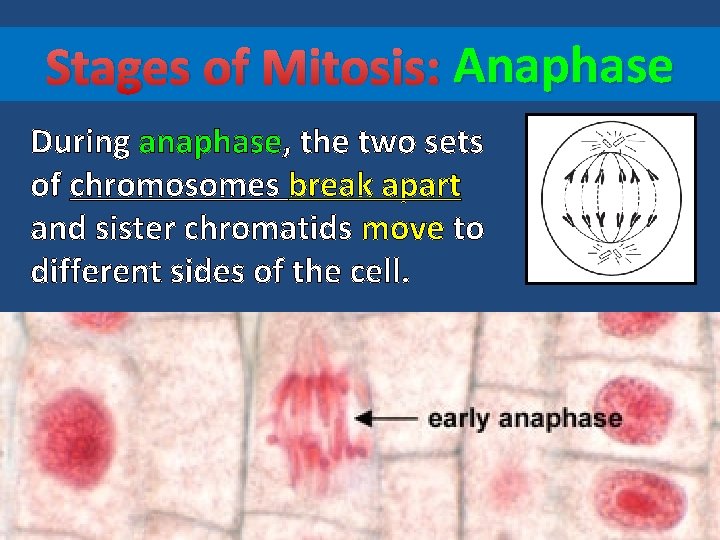
Stages of Mitosis: Anaphase During anaphase, the two sets of chromosomes break apart and sister chromatids move to different sides of the cell.
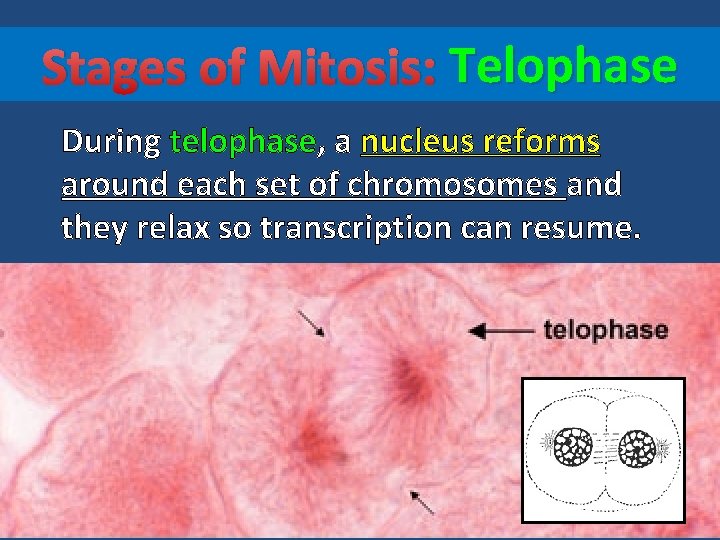
Stages of Mitosis: Telophase During telophase, a nucleus reforms around each set of chromosomes and they relax so transcription can resume.
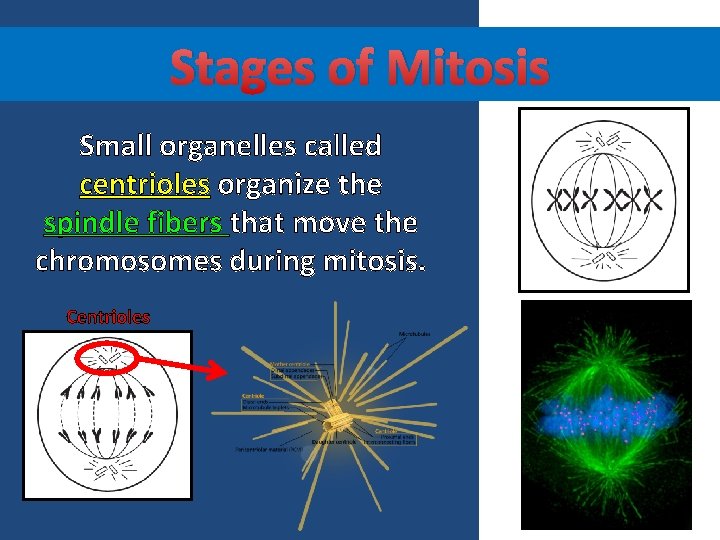
Stages of Mitosis Small organelles called centrioles organize the spindle fibers that move the chromosomes during mitosis. Centrioles
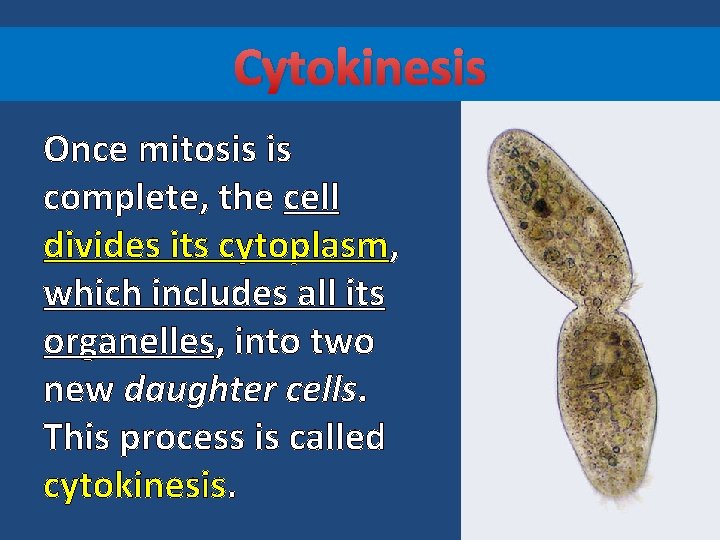
Cytokinesis Once mitosis is complete, the cell divides its cytoplasm, which includes all its organelles, into two new daughter cells. This process is called cytokinesis.
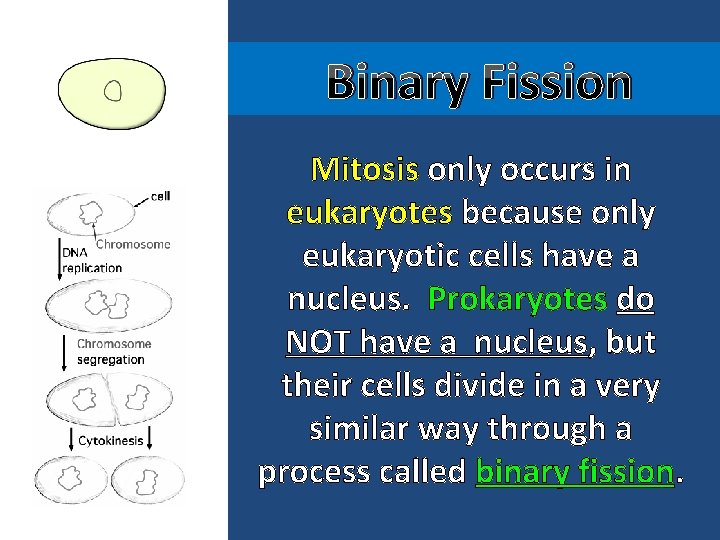
Binary Fission Mitosis only occurs in eukaryotes because only eukaryotic cells have a nucleus. Prokaryotes do NOT have a nucleus, but their cells divide in a very similar way through a process called binary fission.
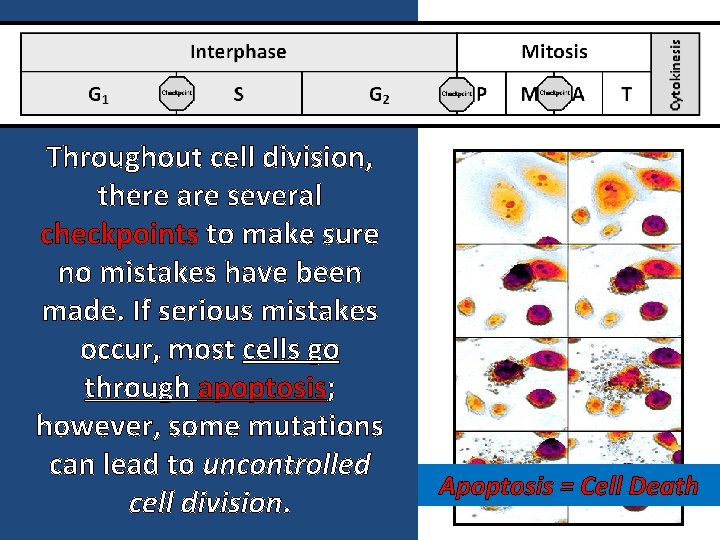
Throughout cell division, there are several checkpoints to make sure no mistakes have been made. If serious mistakes occur, most cells go through apoptosis; however, some mutations can lead to uncontrolled cell division. Apoptosis = Cell Death
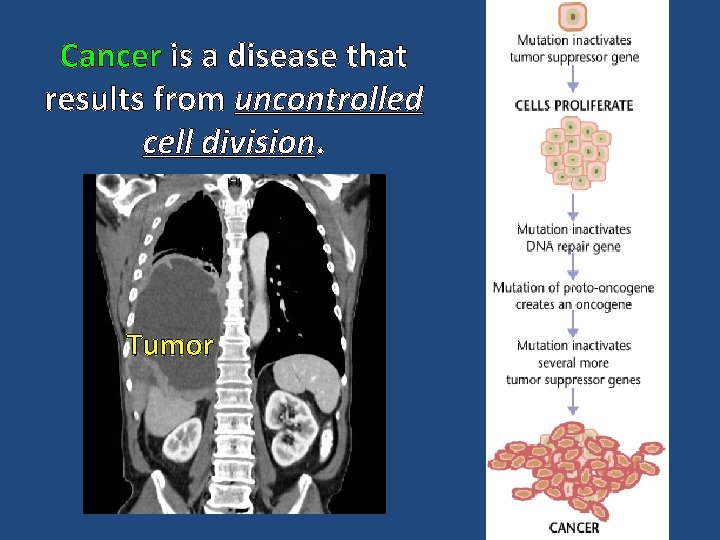
Cancer is a disease that results from uncontrolled cell division. Tumor
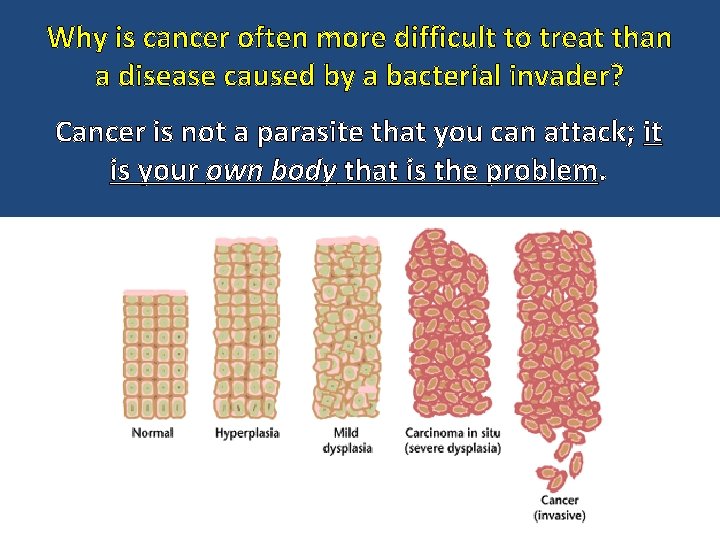
Why is cancer often more difficult to treat than a disease caused by a bacterial invader? Cancer is not a parasite that you can attack; it is your own body that is the problem.

Watch the short video over tumors.
- Slides: 20