
The Spine Components of vertebra Components of Vertebra
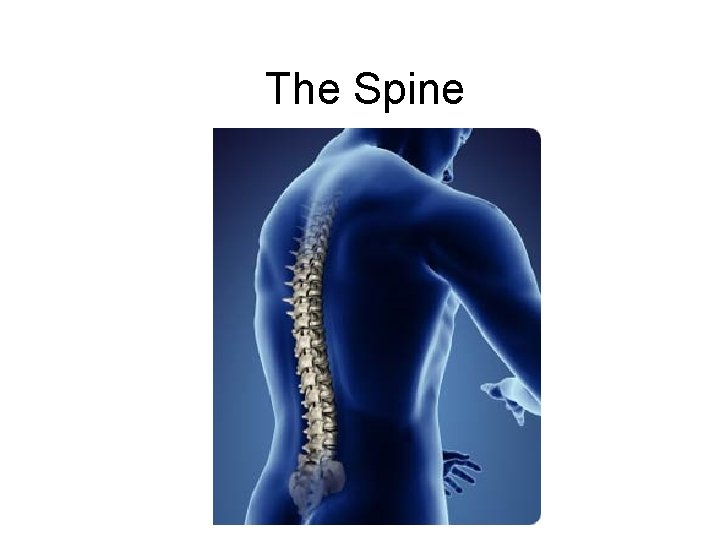
The Spine

Components of vertebra
Components of Vertebra • Body: • Vertebral Foreman: • Spinous Process: • Transverse Process: • Laminae: • Pedicles:
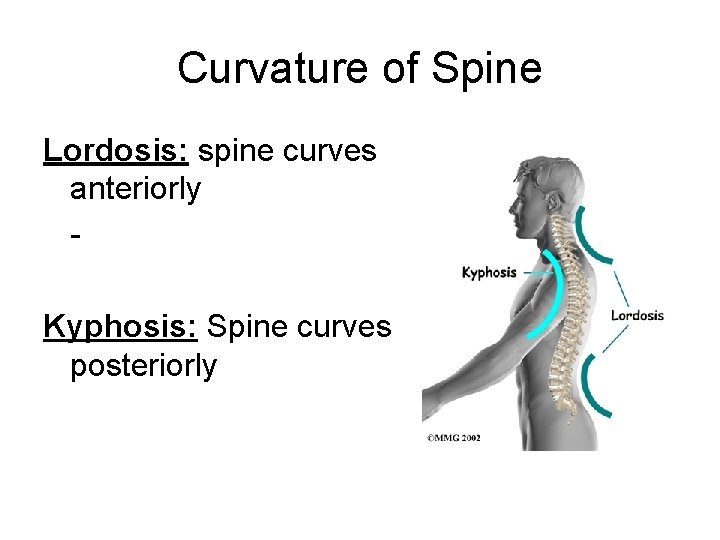
Curvature of Spine Lordosis: spine curves anteriorly Kyphosis: Spine curves posteriorly
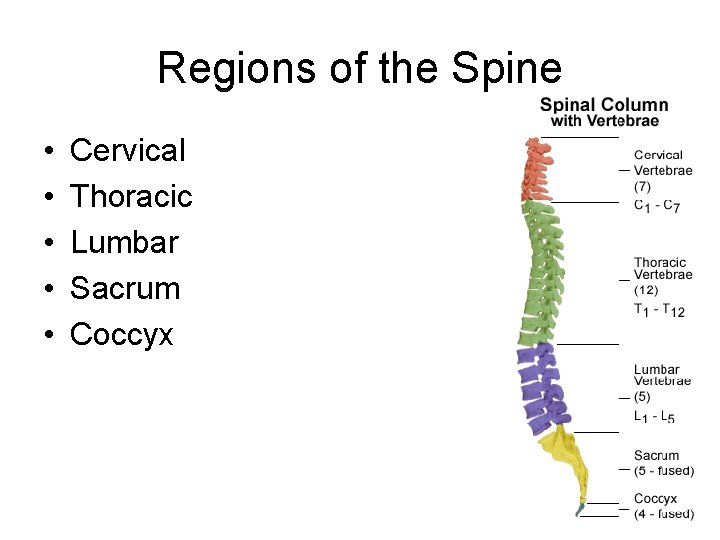
Regions of the Spine • • • Cervical Thoracic Lumbar Sacrum Coccyx
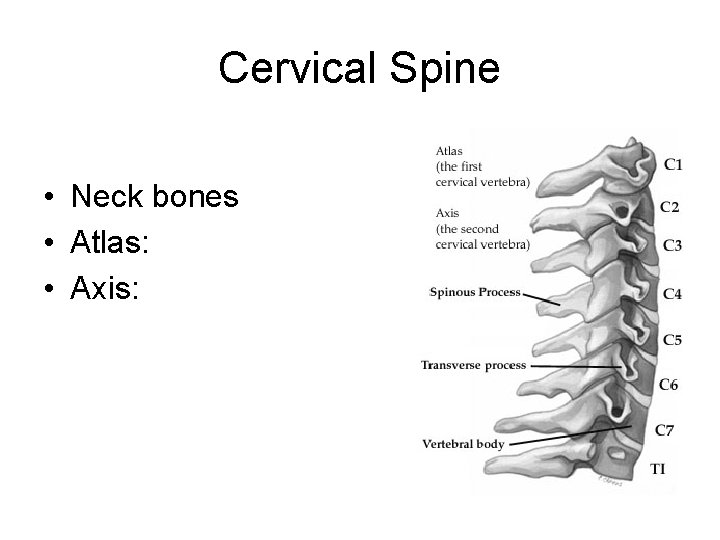
Cervical Spine • Neck bones • Atlas: • Axis:
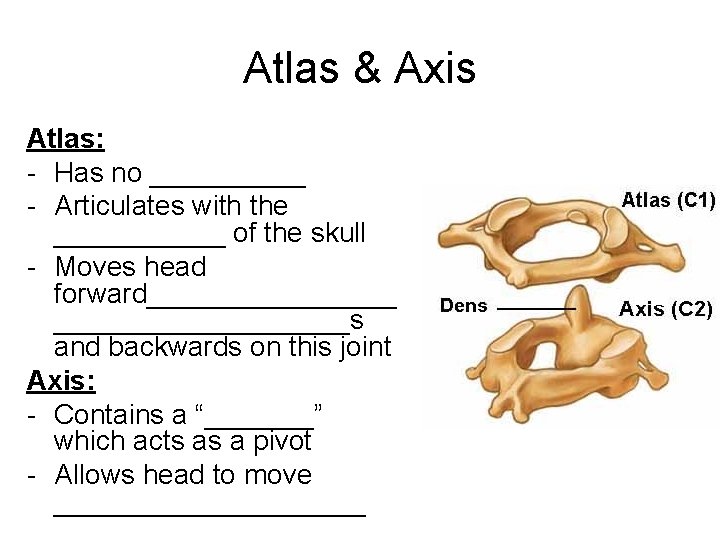
Atlas & Axis Atlas: - Has no _____ - Articulates with the ______ of the skull - Moves head forward__________s and backwards on this joint Axis: - Contains a “_______” which acts as a pivot - Allows head to move __________
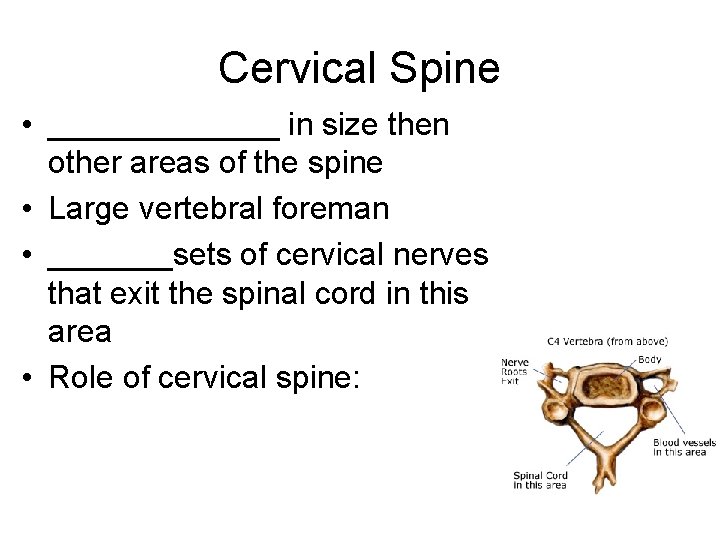
Cervical Spine • _______ in size then other areas of the spine • Large vertebral foreman • _______sets of cervical nerves that exit the spinal cord in this area • Role of cervical spine:
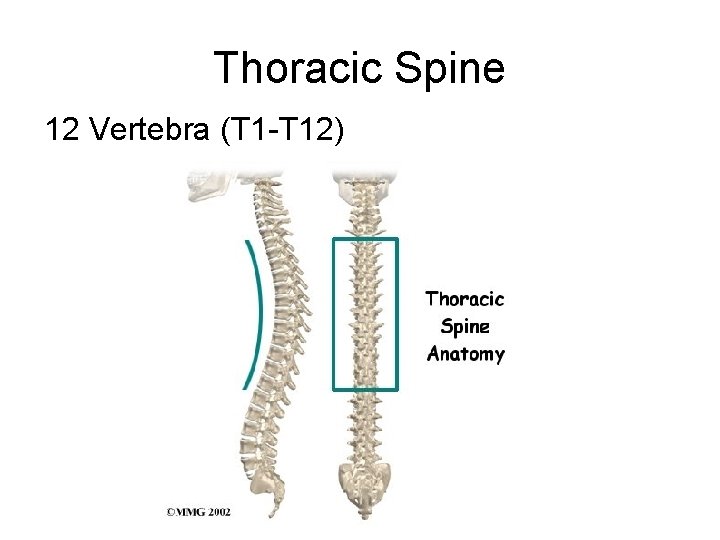
Thoracic Spine 12 Vertebra (T 1 -T 12)
Thoracic Spine • _______________ (12) • Transition between the cervical spine and lumbar spine
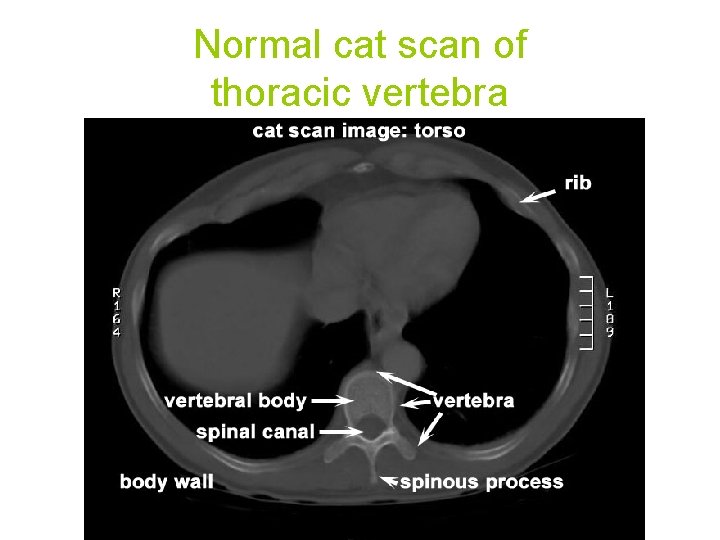
Normal cat scan of thoracic vertebra
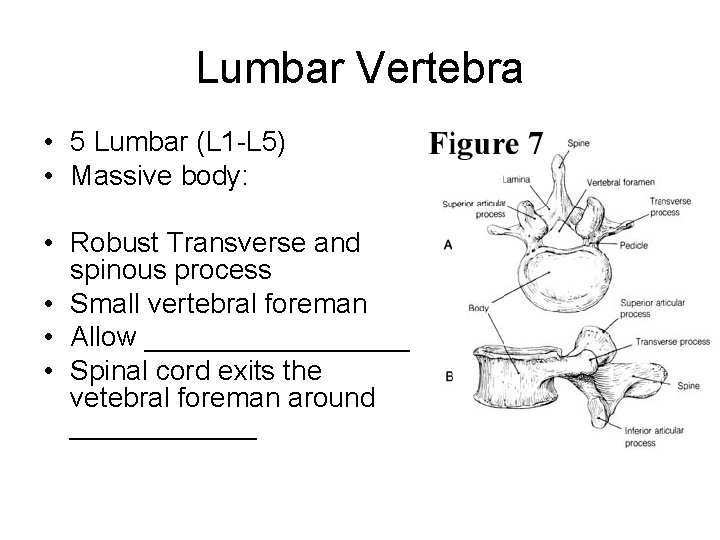
Lumbar Vertebra • 5 Lumbar (L 1 -L 5) • Massive body: • Robust Transverse and spinous process • Small vertebral foreman • Allow _________ • Spinal cord exits the vetebral foreman around ______
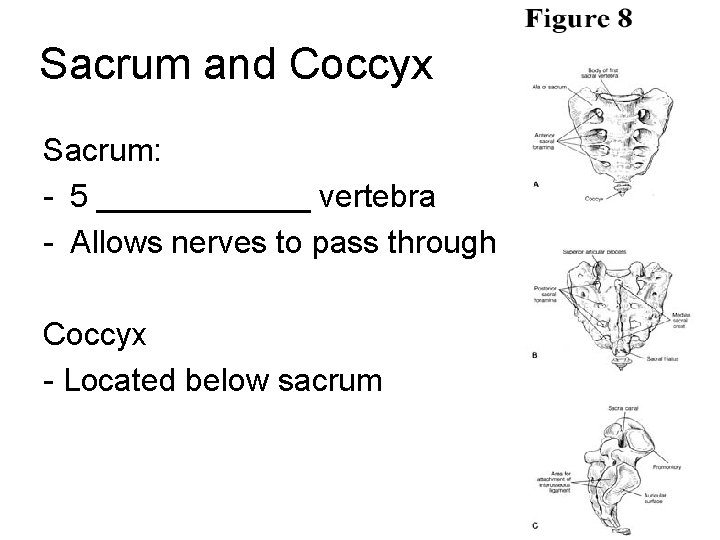
Sacrum and Coccyx Sacrum: - 5 ______ vertebra - Allows nerves to pass through Coccyx - Located below sacrum
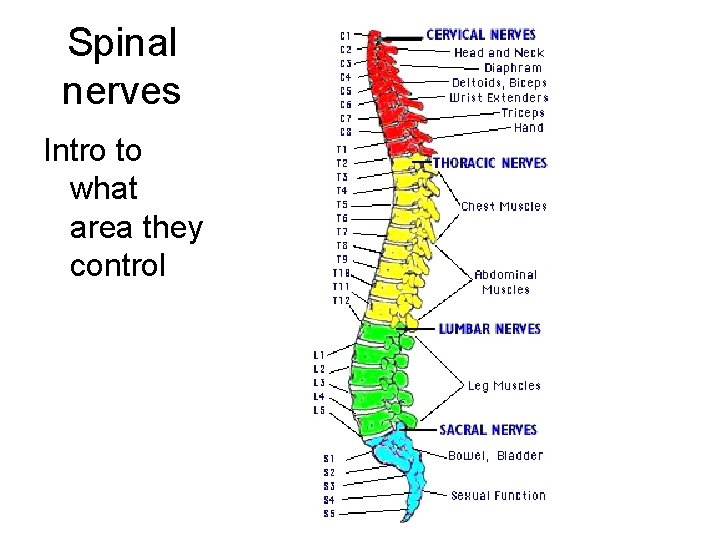
Spinal nerves Intro to what area they control
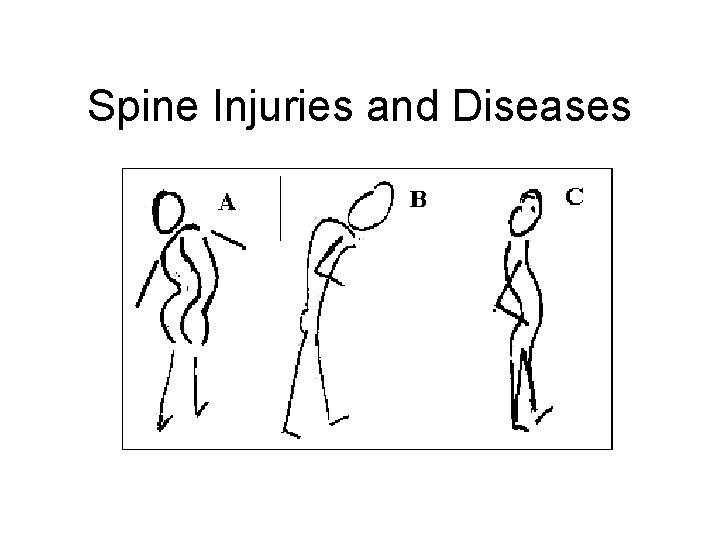
Spine Injuries and Diseases
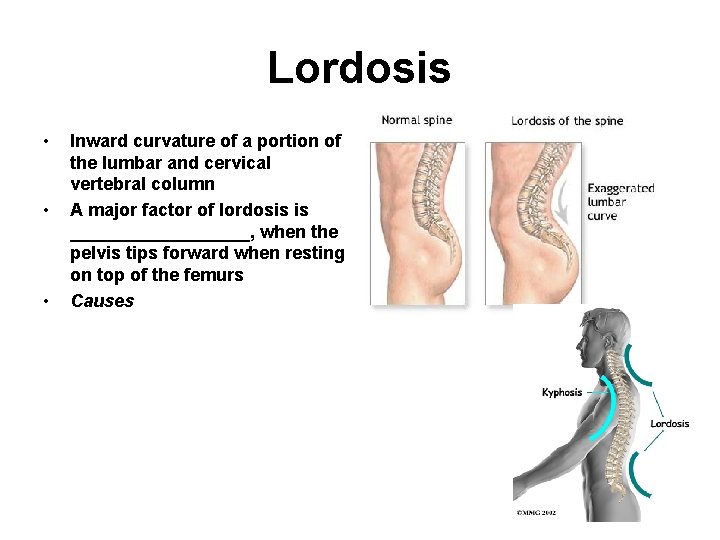
Lordosis • • • Inward curvature of a portion of the lumbar and cervical vertebral column A major factor of lordosis is _________, when the pelvis tips forward when resting on top of the femurs Causes
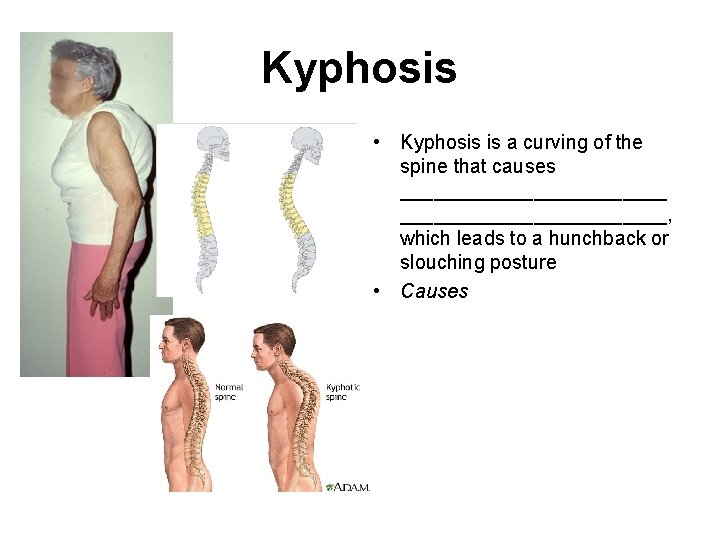
Kyphosis • Kyphosis is a curving of the spine that causes ________________________, which leads to a hunchback or slouching posture • Causes
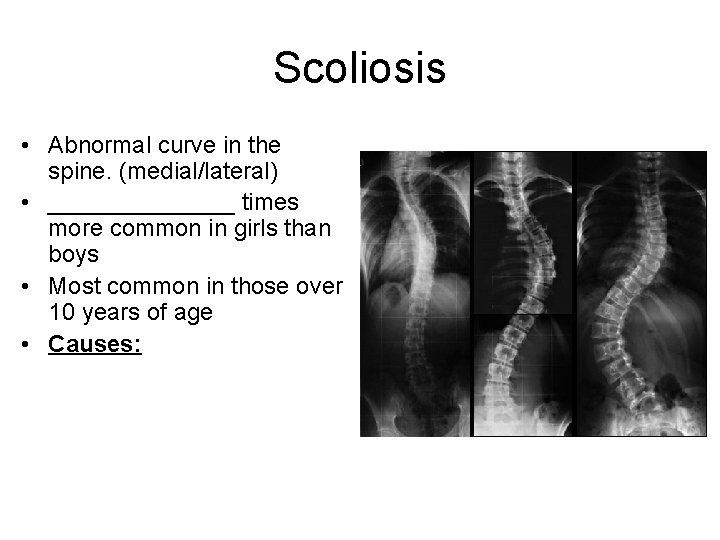
Scoliosis • Abnormal curve in the spine. (medial/lateral) • _______ times more common in girls than boys • Most common in those over 10 years of age • Causes:
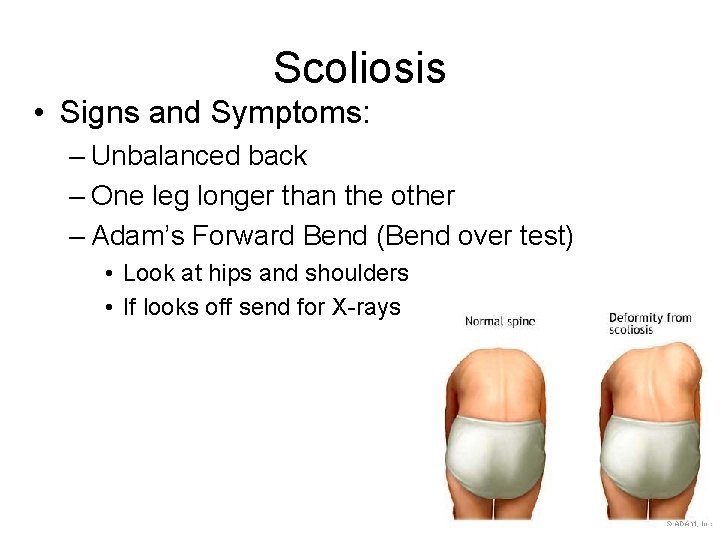
Scoliosis • Signs and Symptoms: – Unbalanced back – One leg longer than the other – Adam’s Forward Bend (Bend over test) • Look at hips and shoulders • If looks off send for X-rays
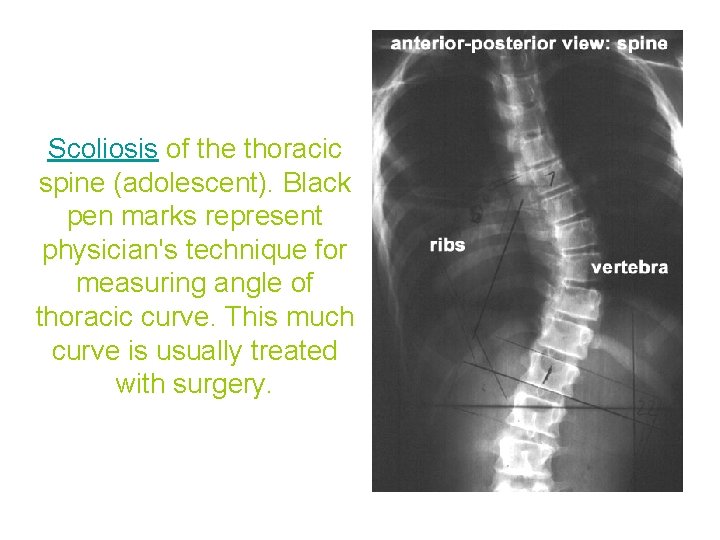
Scoliosis of the thoracic spine (adolescent). Black pen marks represent physician's technique for measuring angle of thoracic curve. This much curve is usually treated with surgery.
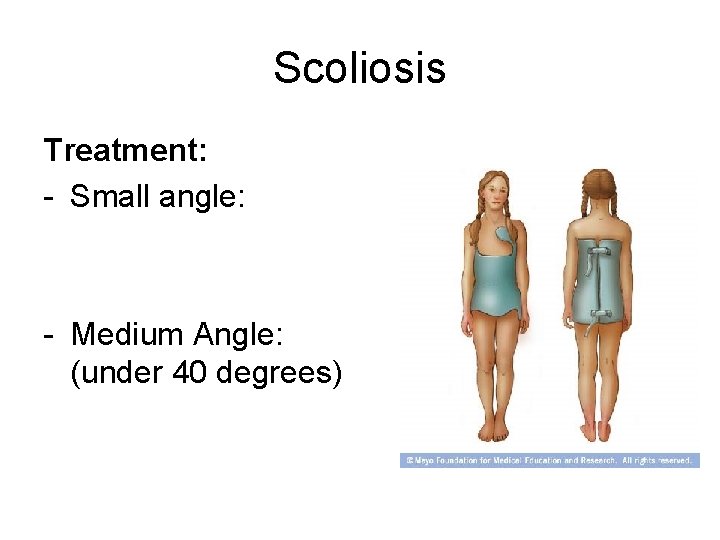
Scoliosis Treatment: - Small angle: - Medium Angle: (under 40 degrees)
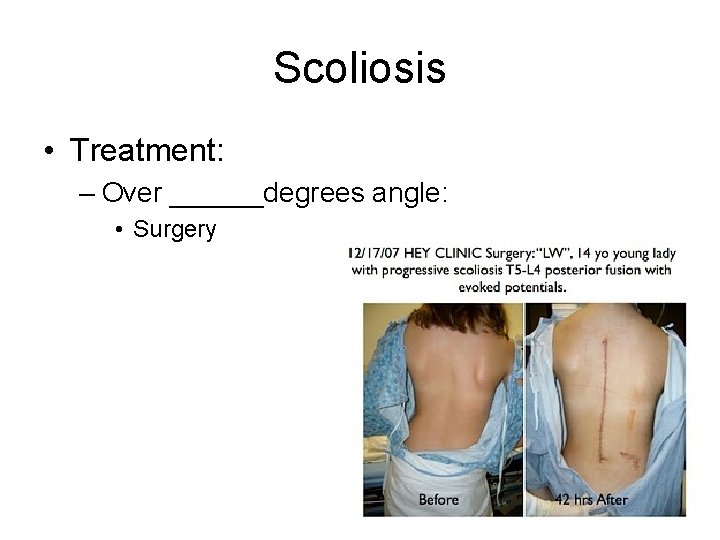
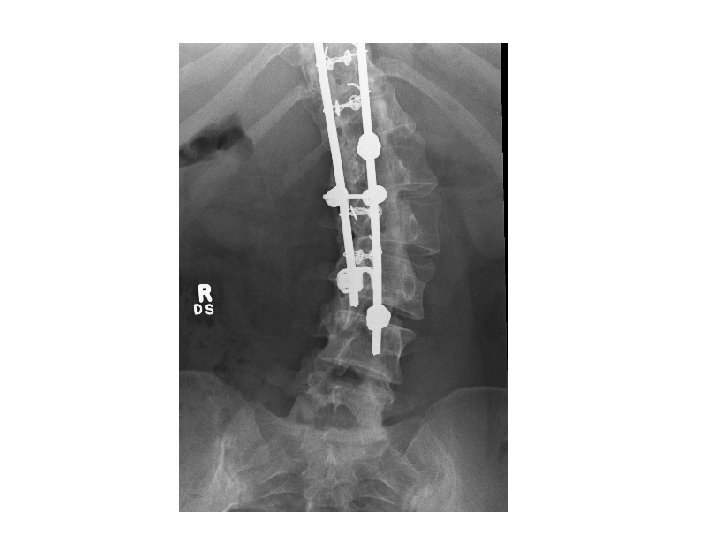
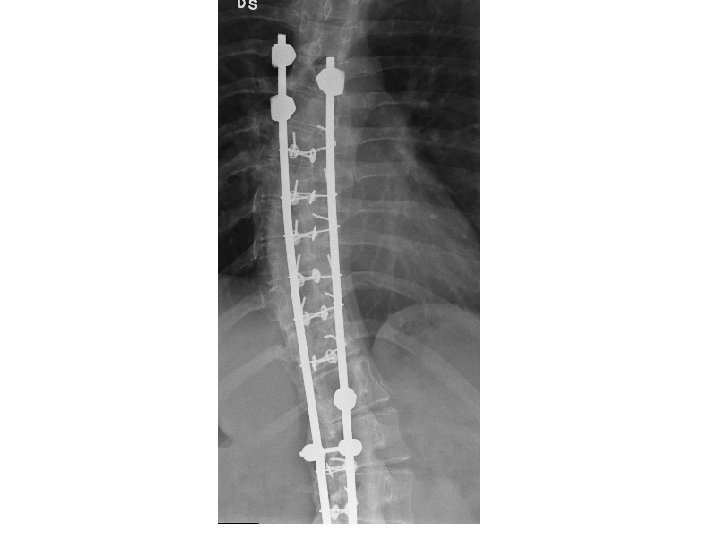
Scoliosis • Treatment: – Over ______degrees angle: • Surgery
- Slides: 24