
The Spinal Cord Injury Model System SCIMS Model


- Slides: 79
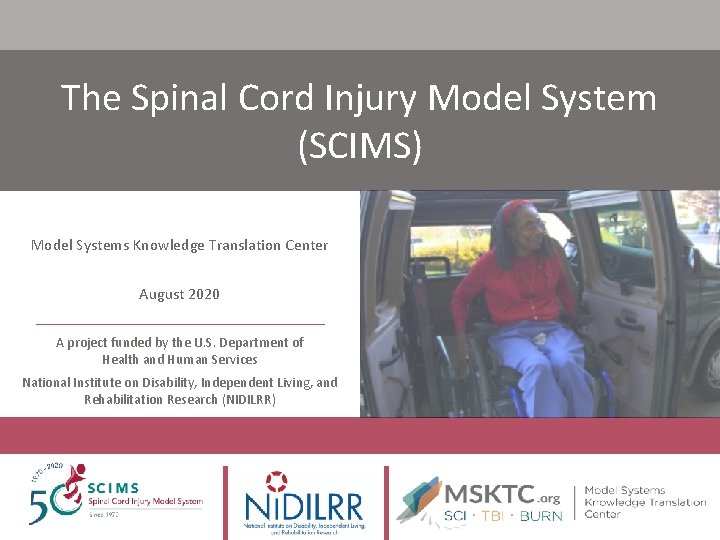
The Spinal Cord Injury Model System (SCIMS) Model Systems Knowledge Translation Center August 2020 A project funded by the U. S. Department of Health and Human Services National Institute on Disability, Independent Living, and Rehabilitation Research (NIDILRR)
Contents Topics 2 Slide Number SCIMS Background Information 3 Current SCI Model Systems 10 Formerly Funded Centers That Contributed to the National SCI Database 20 Model Systems Knowledge Translation Center 21 SCIMS Research Activity Areas 25 National SCI Database 38 National SCIMS Descriptive Data Summary 1973– 2019 65
Definition of Traumatic Spinal Cord Injury (SCI) • For the purposes of the SCIMS program, a case of SCI is defined as the occurrence of an acute traumatic lesion of neural elements in the spinal canal (spinal cord and cauda equina), resulting in temporary or permanent sensory and/or motor deficit. • The clinical definition of SCI excludes intervertebral disc disease, vertebral injuries in the absence of SCI, nerve root avulsions and injuries to nerve roots and peripheral nerves outside the spinal canal, cancer, spinal cord vascular disease, and other nontraumatic spinal cord diseases. 3
The Genesis of the SCIMS • Despite advances in understanding SCI, approaches to treatment remained largely fragmented, and comprehensive rehabilitation failed to become widely adopted in the Western hemisphere … until John Young (1919– 1990) resolved to correct this. • With the assistance of J. Paul Thomas, then Director of the Medical Sciences Program at the Rehabilitation Services Administration, John Young obtained a Federal grant in 1970 to demonstrate the superiority of comprehensive versus fragmented SCI care in Phoenix, Arizona … and called this demonstration a ‘‘Model System. ’’ 4
The Genesis of the SCIMS (continued) • ‘‘A Model System must be able to meet the needs of a person with SCI by competently treating the direct injury as well as all organ systems affected (of which there are many); the functional deficits that result, by providing training and equipment; the psychological adjustments that must be made; the vocational/avocational pursuits that must be changed; and the providing of long -term specialized care. — John Young Donovan, 2006 5
Project Design • The SCIMS program was established by the Rehabilitation Services Administration in 1970, funding Dr. Young’s vision of integrated SCI care. • Since its inception, a total of 31 centers have been funded by NIDILRR, 29 of which have contributed data to the national SCI database. • The SCI Model Systems are specialized programs of care in SCI that gather information and conduct research with the goal of improving long-term functional, vocational, cognitive, and quality-of-life outcomes for individuals with SCI. Stover, De. Vivo, & Go, 1999; Chen et al. , 2016 6
Project Design (continued) • The SCIMS grantees contribute patient records to a national database, maintained by a national statistical center, which tracks the long-term consequences of SCI and conducts research in the areas of medical rehabilitation, health and wellness, technology, service delivery, short- and long -term interventions, and systems research. • Each SCI Model System is charged with disseminating information and research findings to patients, family members, health care providers, educators, policymakers, and the general public. 7
Project Priorities: Priority One 2016– 2021 The SCIMS program is designed to generate new knowledge that can be used to improve outcomes of individuals with SCI. Each SCIMS Center must contribute to this goal by: a. Providing a multidisciplinary system of rehabilitation care, specifically designed to meet the needs of individuals with SCI; b. Continuing the assessment of long-term outcomes of individuals with SCI by enrolling at least 30 subjects per year into the SCIMS database, following established protocols for the collection of enrollment and follow-up data on subjects; c. Proposing and conducting at least one, but no more than two, site-specific research projects to test innovative approaches to improving outcomes of individuals with SCI or to assessing outcomes of individuals with SCI in one or more domains identified in the Plan: health and function, community living and participation, and employment; 8
Project Priorities: Priority One 2016– 2021 (continued) d. Participating as research collaborators in at least one module project; e. Addressing the needs of persons with disabilities, including individuals from traditionally underserved populations; f. Coordinating with the Model Systems Knowledge Translation Center (MSKTC) to provide scientific results and information for dissemination to clinical and consumer audiences; and g. Ensuring participation of persons with disabilities in conducting SCIMS research. 9
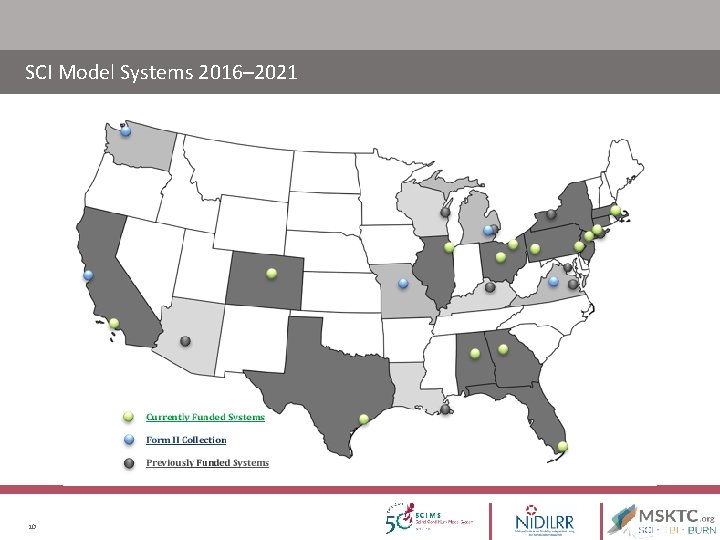
SCI Model Systems 2016– 2021 10
SCI Model Systems Coordinators Federal Program Management National Institute on Disability, Independent Living, and Rehabilitation Research, Administration for Community Living, U. S. Department of Health and Human Services (Washington, DC) Project Officer: Theresa San. Agustin, M. D. https: //acl. gov/about-acl/about-national-institute-disability-independent-livingand-rehabilitation-research National SCI Statistical Center (NSCISC) University of Alabama at Birmingham (Birmingham, AL) Principal Investigator: Yuying Chen, M. D. , Ph. D. https: //www. nscisc. uab. edu/ 11
SCI Model Systems Grantees (in alphabetical order by State) University of Alabama at Birmingham SCI Model System (UAB-SCIMS) University of Alabama at Birmingham (Birmingham, AL) Principal Investigator: Amie B. Mc. Lain, M. D. http: //www. uab. edu/medicine/sci/ Southern California Spinal Cord Injury Model System Ranchos Los Amigos National Rehabilitation Center (Downey, CA) Principal Investigator: Yaga Szlachcic, M. D. https: //www. ranchoresearch. org/ 12
SCI Model Systems Grantees (in alphabetical order by State, continued 2) 13
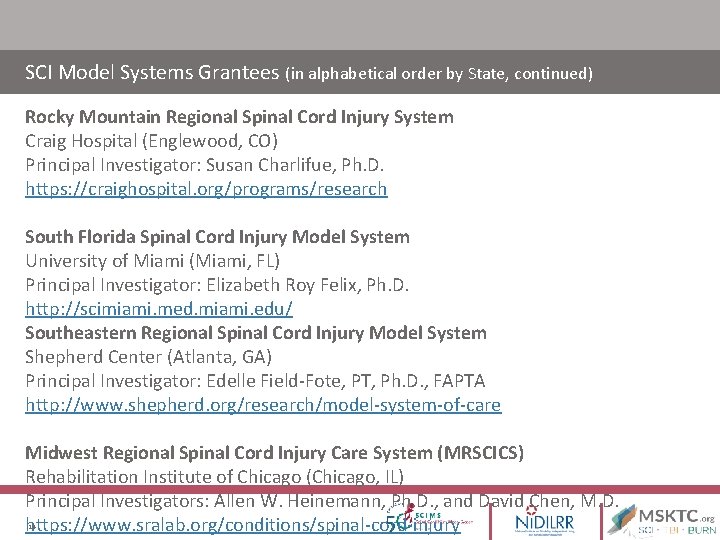
SCI Model Systems Grantees (in alphabetical order by State, continued) Rocky Mountain Regional Spinal Cord Injury System Craig Hospital (Englewood, CO) Principal Investigator: Susan Charlifue, Ph. D. https: //craighospital. org/programs/research South Florida Spinal Cord Injury Model System University of Miami (Miami, FL) Principal Investigator: Elizabeth Roy Felix, Ph. D. http: //scimiami. med. miami. edu/ Southeastern Regional Spinal Cord Injury Model System Shepherd Center (Atlanta, GA) Principal Investigator: Edelle Field-Fote, PT, Ph. D. , FAPTA http: //www. shepherd. org/research/model-system-of-care Midwest Regional Spinal Cord Injury Care System (MRSCICS) Rehabilitation Institute of Chicago (Chicago, IL) Principal Investigators: Allen W. Heinemann, Ph. D. , and David Chen, M. D. https: //www. sralab. org/conditions/spinal-cord-injury 14
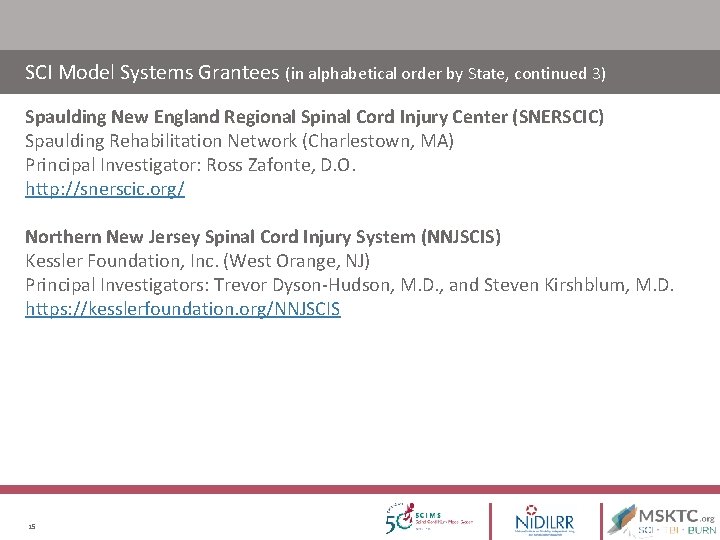
SCI Model Systems Grantees (in alphabetical order by State, continued 3) Spaulding New England Regional Spinal Cord Injury Center (SNERSCIC) Spaulding Rehabilitation Network (Charlestown, MA) Principal Investigator: Ross Zafonte, D. O. http: //snerscic. org/ Northern New Jersey Spinal Cord Injury System (NNJSCIS) Kessler Foundation, Inc. (West Orange, NJ) Principal Investigators: Trevor Dyson-Hudson, M. D. , and Steven Kirshblum, M. D. https: //kesslerfoundation. org/NNJSCIS 15
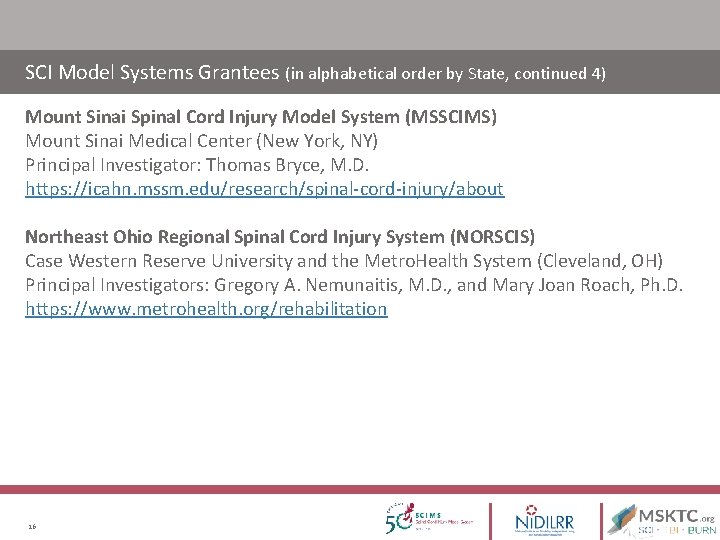
SCI Model Systems Grantees (in alphabetical order by State, continued 4) Mount Sinai Spinal Cord Injury Model System (MSSCIMS) Mount Sinai Medical Center (New York, NY) Principal Investigator: Thomas Bryce, M. D. https: //icahn. mssm. edu/research/spinal-cord-injury/about Northeast Ohio Regional Spinal Cord Injury System (NORSCIS) Case Western Reserve University and the Metro. Health System (Cleveland, OH) Principal Investigators: Gregory A. Nemunaitis, M. D. , and Mary Joan Roach, Ph. D. https: //www. metrohealth. org/rehabilitation 16
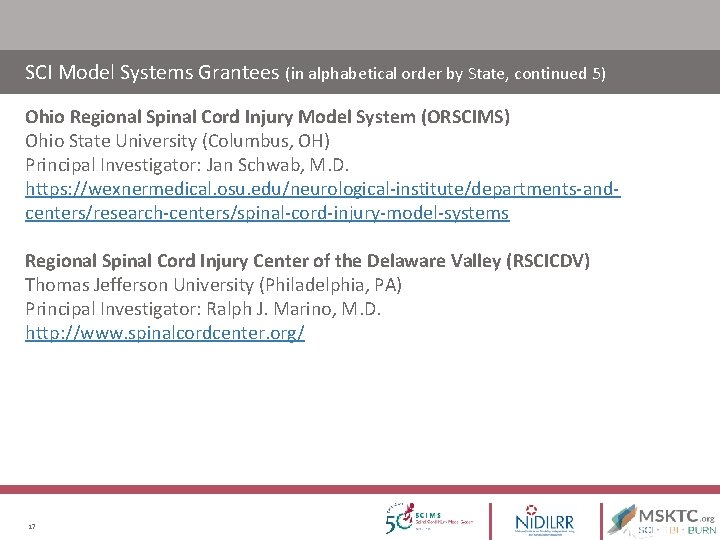
SCI Model Systems Grantees (in alphabetical order by State, continued 5) Ohio Regional Spinal Cord Injury Model System (ORSCIMS) Ohio State University (Columbus, OH) Principal Investigator: Jan Schwab, M. D. https: //wexnermedical. osu. edu/neurological-institute/departments-andcenters/research-centers/spinal-cord-injury-model-systems Regional Spinal Cord Injury Center of the Delaware Valley (RSCICDV) Thomas Jefferson University (Philadelphia, PA) Principal Investigator: Ralph J. Marino, M. D. http: //www. spinalcordcenter. org/ 17
SCI Model Systems Grantees (in alphabetical order by State, continued 6) University of Pittsburgh Model Center on Spinal Cord Injury (UPMC-SCI) University of Pittsburgh (Pittsburgh, PA) Principal Investigator: Michael L. Boninger, M. D. http: //www. upmc-sci. pitt. edu/ Texas Spinal Cord Injury Model System at TIRR Memorial Hermann (Houston, TX) Principal Investigators: Heather Taylor, Ph. D. , and Margaret Nosek, Ph. D. http: //tirr. memorialhermann. org/research/ 18
Form II Centers for Follow-Up Data Collection Subcontracts by NSCISC: 1. Santa Clara Valley Medical Center (San Jose, CA) – Principal Investigator: Kazuko Shem, M. D. 2. University of Michigan (Ann Arbor, MI) – Principal Investigator: Denise Tate, Ph. D. 3. University of Washington (Seattle, WA) – Principal Investigator: Jeanne Hoffman, Ph. D. Data collected by NSCISC: 4. University of Missouri (Columbia, MO) 5. Woodrow Wilson Rehabilitation Center (Fishersville, VA) 19
Formerly Funded Centers That Contributed to the National SCI Database • • • • 20 Arizona, Phoenix: 1973– 1985; 2006– 2011* California, San Jose: 1973– 1985; 1990– 2006; 2006– 2021* District of Columbia, Washington: 2006– 2011 Kentucky, Louisville: 2011– 2016 Louisiana, New Orleans: 1983– 1985 Massachusetts, BUMC: 1975– 1990; 1995– 2016; 2016– 2021** Michigan, Detroit: 1982– 2000 Michigan, Ann Arbor: 1985– 2016; 2016– 2021* Missouri, Columbia: 1979– 1981; 1995– 2006; 2006– 2021* New York, New York: 1973– 1990; 2006– 2011* New York, Rochester: 1982– 1990 Virginia, Fishersville: 1973– 1983; 1985– 1990; 2006– 2021* Virginia, Richmond: 1995– 2006; 2006– 2011* Washington, Seattle: 1974– 1985; 1990– 2016; 2016– 2021* Wisconsin, Milwaukee: 1995– 1999 *Form II center that collects follow-up data only. **Affiliated with Spaulding New England SCIMS.
Model Systems Knowledge Translation Center • Aims to enhance the relevance and visibility of Model Systems research and communicate Model Systems research effectively to stakeholders • Currently operated by the American Institutes for Research (AIR) (Washington, DC) in collaboration with WETA/Brainline (Arlington, VA) and George Mason University (Fairfax, VA) • Principal Investigators: Steven Garfinkel, Ph. D. , and Lynn Gerber, M. D. • Project Director: Xinsheng “Cindy” Cai, Ph. D. • Funded by National Institute on Disability, Independent Living, and Rehabilitation Research (Washington, DC) • Project Officer: Pimjai Sudsawad • http: //www. msktc. org/ 21
MSKTC Goals Three overarching goals guide the work of the MSKTC: • Goal 1: Enhance the understanding of the quality and relevance of knowledge among researchers and multiple users on the topics of SCI, traumatic brain injury (TBI), and burn injury (Burn). • Goal 2: Enhance the knowledge of advances in SCI, TBI, and Burn research among diverse audience members who need this information. • Goal 3: Create a centralized repository of empirical information and resources on research in SCI, TBI, and Burn areas and actively conduct outreach and dissemination activities to communicate this knowledge. 22
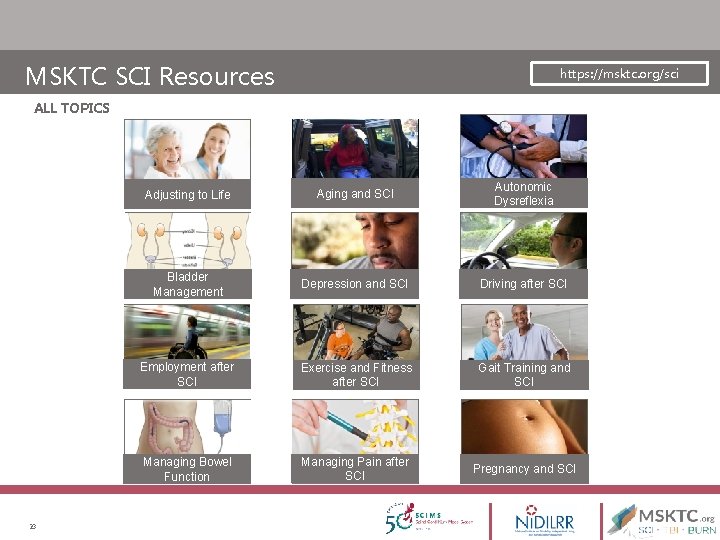
MSKTC SCI Resources https: //msktc. org/sci ALL TOPICS 23 Adjusting to Life Aging and SCI Autonomic Dysreflexia Bladder Management Depression and SCI Driving after SCI Employment after SCI Exercise and Fitness after SCI Gait Training and SCI Managing Bowel Function Managing Pain after SCI Pregnancy and SCI
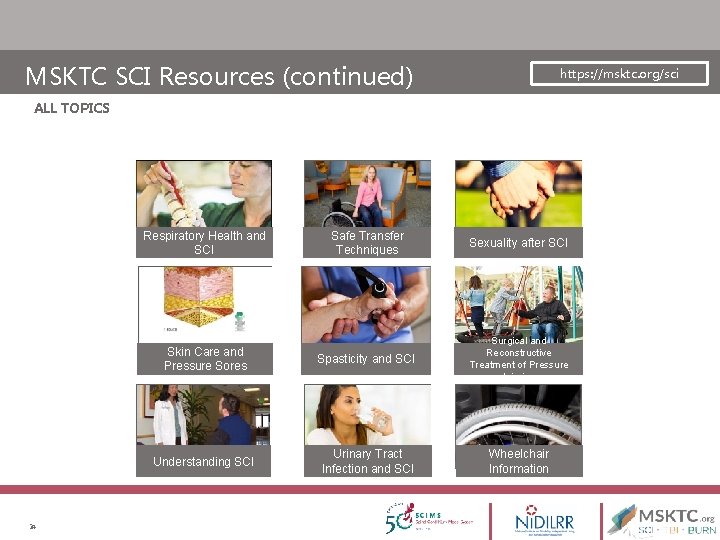
MSKTC SCI Resources (continued) https: //msktc. org/sci ALL TOPICS Respiratory Health and SCI 24 Safe Transfer Techniques Sexuality after SCI Skin Care and Pressure Sores Spasticity and SCI Surgical and Reconstructive Treatment of Pressure Injuries Understanding SCI Urinary Tract Infection and SCI Wheelchair Information
SCIMS Research Activity Areas Site-specific research projects • Research carried out within each center Module projects • Collaborative research involving several SCIMS centers Contributions to the National SCI Database • Enrollment of new inpatients • Follow-up of discharged patients 25
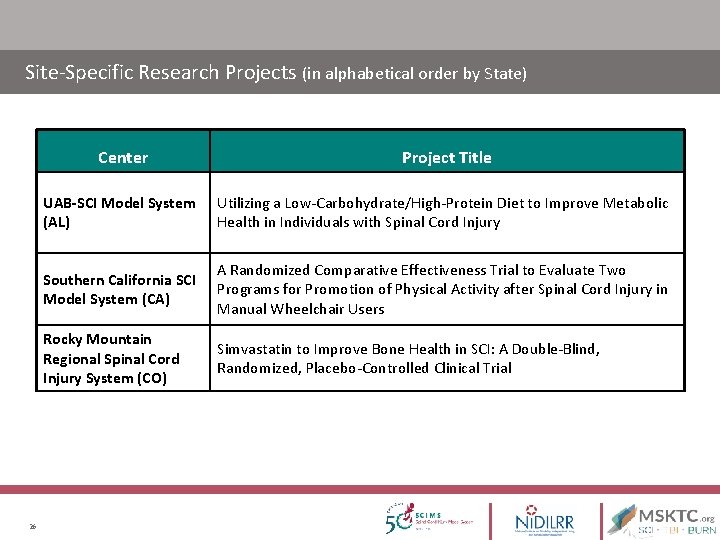
Site-Specific Research Projects (in alphabetical order by State) 26 Center Project Title UAB-SCI Model System (AL) Utilizing a Low-Carbohydrate/High-Protein Diet to Improve Metabolic Health in Individuals with Spinal Cord Injury Southern California SCI Model System (CA) A Randomized Comparative Effectiveness Trial to Evaluate Two Programs for Promotion of Physical Activity after Spinal Cord Injury in Manual Wheelchair Users Rocky Mountain Regional Spinal Cord Injury System (CO) Simvastatin to Improve Bone Health in SCI: A Double-Blind, Randomized, Placebo-Controlled Clinical Trial
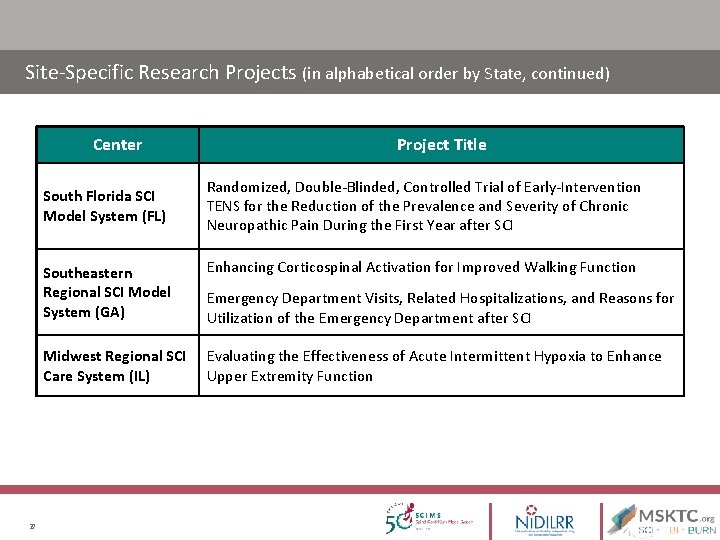
Site-Specific Research Projects (in alphabetical order by State, continued) Center South Florida SCI Model System (FL) 27 Project Title Randomized, Double-Blinded, Controlled Trial of Early-Intervention TENS for the Reduction of the Prevalence and Severity of Chronic Neuropathic Pain During the First Year after SCI Southeastern Regional SCI Model System (GA) Enhancing Corticospinal Activation for Improved Walking Function Midwest Regional SCI Care System (IL) Evaluating the Effectiveness of Acute Intermittent Hypoxia to Enhance Upper Extremity Function Emergency Department Visits, Related Hospitalizations, and Reasons for Utilization of the Emergency Department after SCI
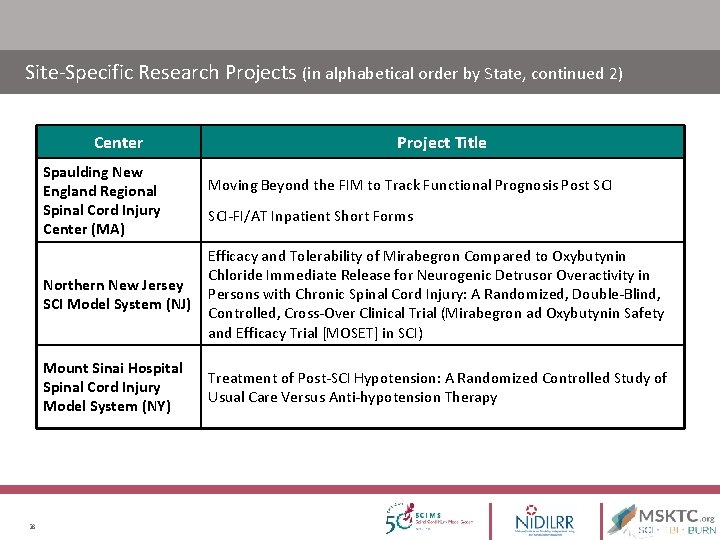
Site-Specific Research Projects (in alphabetical order by State, continued 2) Center Spaulding New England Regional Spinal Cord Injury Center (MA) 28 Project Title Moving Beyond the FIM to Track Functional Prognosis Post SCI-FI/AT Inpatient Short Forms Northern New Jersey SCI Model System (NJ) Efficacy and Tolerability of Mirabegron Compared to Oxybutynin Chloride Immediate Release for Neurogenic Detrusor Overactivity in Persons with Chronic Spinal Cord Injury: A Randomized, Double-Blind, Controlled, Cross-Over Clinical Trial (Mirabegron ad Oxybutynin Safety and Efficacy Trial [MOSET] in SCI) Mount Sinai Hospital Spinal Cord Injury Model System (NY) Treatment of Post-SCI Hypotension: A Randomized Controlled Study of Usual Care Versus Anti-hypotension Therapy
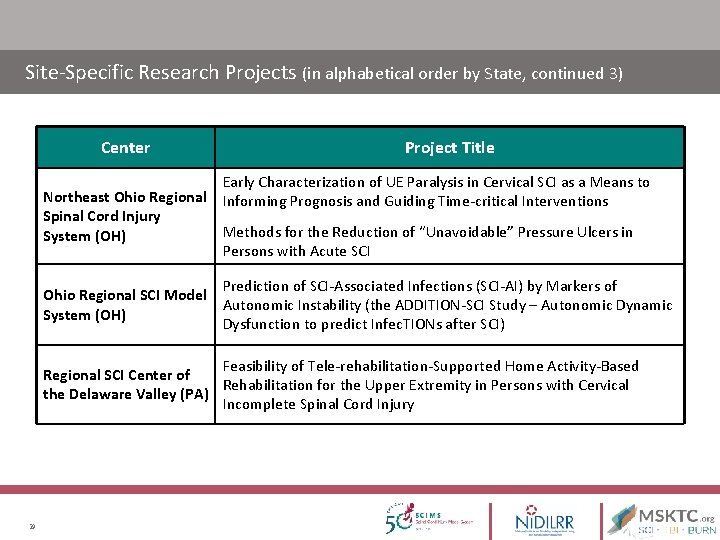
Site-Specific Research Projects (in alphabetical order by State, continued 3) Center Project Title Early Characterization of UE Paralysis in Cervical SCI as a Means to Northeast Ohio Regional Informing Prognosis and Guiding Time-critical Interventions Spinal Cord Injury Methods for the Reduction of “Unavoidable” Pressure Ulcers in System (OH) Persons with Acute SCI Prediction of SCI-Associated Infections (SCI-AI) by Markers of Ohio Regional SCI Model Autonomic Instability (the ADDITION-SCI Study – Autonomic Dynamic System (OH) Dysfunction to predict Infec. TIONs after SCI) Feasibility of Tele-rehabilitation-Supported Home Activity-Based Regional SCI Center of Rehabilitation for the Upper Extremity in Persons with Cervical the Delaware Valley (PA) Incomplete Spinal Cord Injury 29
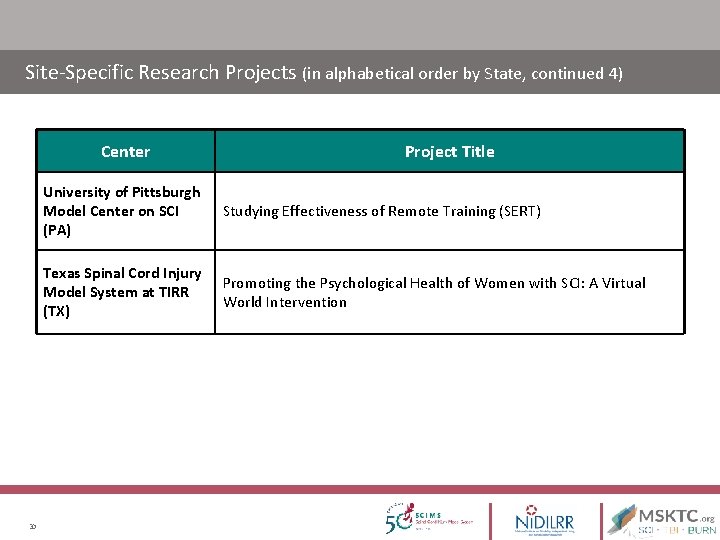
Site-Specific Research Projects (in alphabetical order by State, continued 4) Center 30 Project Title University of Pittsburgh Model Center on SCI (PA) Studying Effectiveness of Remote Training (SERT) Texas Spinal Cord Injury Model System at TIRR (TX) Promoting the Psychological Health of Women with SCI: A Virtual World Intervention
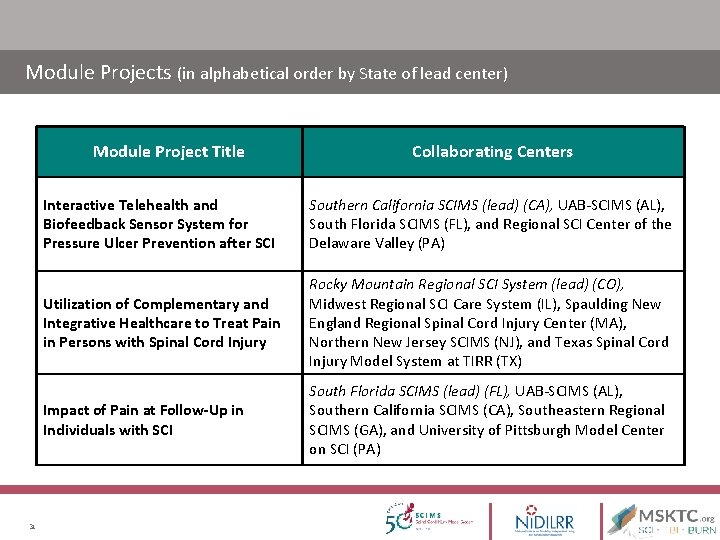
Module Projects (in alphabetical order by State of lead center) Module Project Title 31 Collaborating Centers Interactive Telehealth and Biofeedback Sensor System for Pressure Ulcer Prevention after SCI Southern California SCIMS (lead) (CA), UAB-SCIMS (AL), South Florida SCIMS (FL), and Regional SCI Center of the Delaware Valley (PA) Utilization of Complementary and Integrative Healthcare to Treat Pain in Persons with Spinal Cord Injury Rocky Mountain Regional SCI System (lead) (CO), Midwest Regional SCI Care System (IL), Spaulding New England Regional Spinal Cord Injury Center (MA), Northern New Jersey SCIMS (NJ), and Texas Spinal Cord Injury Model System at TIRR (TX) Impact of Pain at Follow-Up in Individuals with SCI South Florida SCIMS (lead) (FL), UAB-SCIMS (AL), Southern California SCIMS (CA), Southeastern Regional SCIMS (GA), and University of Pittsburgh Model Center on SCI (PA)
Module Projects (in alphabetical order by State of lead center, continued) Module Project Title 32 Collaborating Centers A Population Study of Persons with Chronic SCI Assessing Stakeholder Perceived and Objectively Measured Cardio-Endocrine Disease Risks, Their Change Over Time, and Effectiveness of Remediation South Florida SCIMS (lead) (FL), Southern California SCIMS (CA), Southeastern Regional SCIMS (GA), and University of Pittsburgh Model Center on SCI (PA) Characterizing the Experience of Spasticity after Spinal Cord Injury Southeastern Regional SCIMS (lead) (GA), South Florida SCIMS (FL), Midwest Regional SCI Care System (IL), Northern New Jersey SCI System (NJ), Regional SCI Center of the Delaware Valley (PA), and University of Pittsburgh Model Center on SCI (PA)
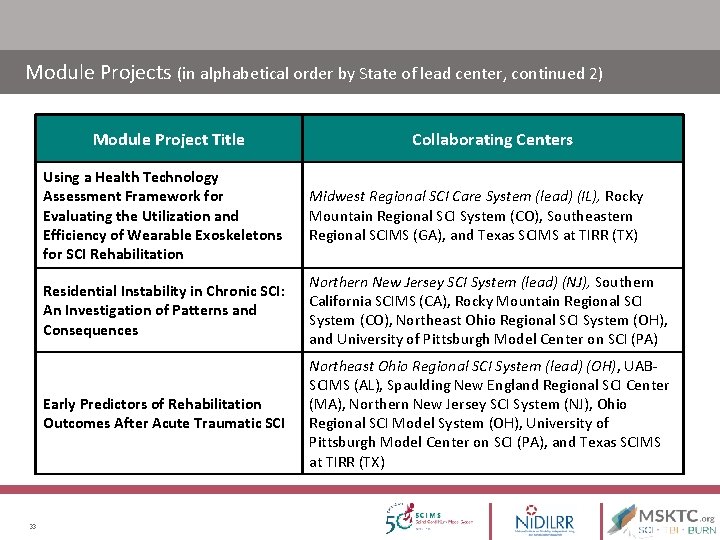
Module Projects (in alphabetical order by State of lead center, continued 2) Module Project Title 33 Collaborating Centers Using a Health Technology Assessment Framework for Evaluating the Utilization and Efficiency of Wearable Exoskeletons for SCI Rehabilitation Midwest Regional SCI Care System (lead) (IL), Rocky Mountain Regional SCI System (CO), Southeastern Regional SCIMS (GA), and Texas SCIMS at TIRR (TX) Residential Instability in Chronic SCI: An Investigation of Patterns and Consequences Northern New Jersey SCI System (lead) (NJ), Southern California SCIMS (CA), Rocky Mountain Regional SCI System (CO), Northeast Ohio Regional SCI System (OH), and University of Pittsburgh Model Center on SCI (PA) Early Predictors of Rehabilitation Outcomes After Acute Traumatic SCI Northeast Ohio Regional SCI System (lead) (OH), UABSCIMS (AL), Spaulding New England Regional SCI Center (MA), Northern New Jersey SCI System (NJ), Ohio Regional SCI Model System (OH), University of Pittsburgh Model Center on SCI (PA), and Texas SCIMS at TIRR (TX)
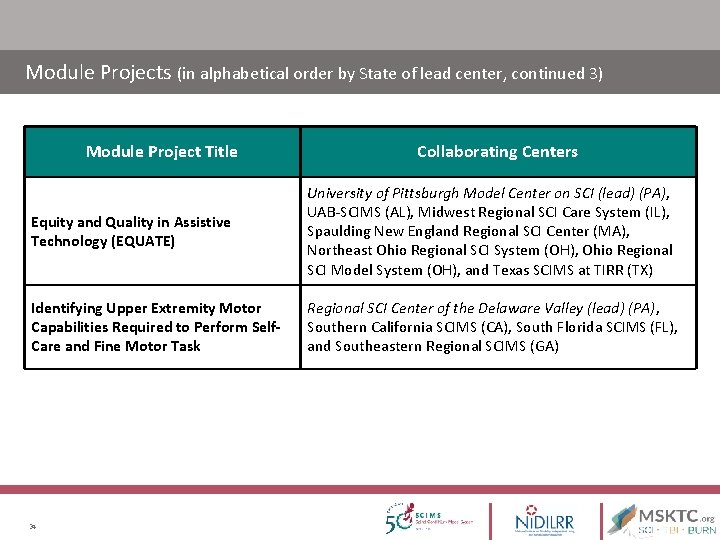
Module Projects (in alphabetical order by State of lead center, continued 3) Module Project Title Collaborating Centers Equity and Quality in Assistive Technology (EQUATE) University of Pittsburgh Model Center on SCI (lead) (PA), UAB-SCIMS (AL), Midwest Regional SCI Care System (IL), Spaulding New England Regional SCI Center (MA), Northeast Ohio Regional SCI System (OH), Ohio Regional SCI Model System (OH), and Texas SCIMS at TIRR (TX) Identifying Upper Extremity Motor Capabilities Required to Perform Self. Care and Fine Motor Task Regional SCI Center of the Delaware Valley (lead) (PA), Southern California SCIMS (CA), South Florida SCIMS (FL), and Southeastern Regional SCIMS (GA) 34
SCIMS Collaborative Projects 2017– 2022 • Collaborative projects are multisite research projects to conduct research that contributes to evidence-based rehabilitation interventions and clinical practice guidelines that improve the lives of individuals with SCI. Multisite research projects generally involve: – Three or more SCIMS centers (and may include non-SCIMS sites), and – Research to improve long-term outcomes to answer questions important to SCI rehabilitation. • SCIM Collaborative Projects are funded via a separate competition that takes place after SCIMS grants have been awarded. 35
Collaborative Project • A Multi-center Clinical Trial to Evaluate the Effectiveness of Intermittent Hypoxia Therapy in Individuals with SCI • Goal: To test whether daily acute intermittent hypoxia (AIH) improves upper-limb function in persons with incomplete cervical SCI. Investigators will evaluate training when AIH is used alone, in combination with task-specific traditional training, or using a sensorized robotic device (RAPAEL Smart Glove). • Lead Center, PI: Shirley Ryan, Ability. Lab (PI: William Z. Rymer, MD) – Collaborating Centers: » Northern New Jersey SCI Model System » South Florida SCI Model System » University of Chicago (not a model system) » University of Florida (not a model system) 36
National SCI Database • Began in 1975 – Data obtained retrospectively to 1973 and prospectively since 1975 • Currently captures approximately 6% of all new SCI occurring in the United States every year • National SCI Statistical Center (NSCISC) at the University of Alabama at Birmingham has managed the database since 1983 • As of September 2019 – Registry— 14, 467 participants (1987– 2019) – Form I— 34, 130 participants (1973– 2019) – Form II— 124, 188 records (1975– 2019) among 28, 463 participants, with the longest follow-up of 45 years post injury 37
National SCI Database Goals • Examine the longitudinal course of SCI • Evaluate trends over time – Etiology, demographics, injury characteristics, health services delivery, treatment outcomes, etc. • Establish rehabilitation outcomes standards • Facilitate other research – Generate research hypotheses – Identify study subjects 38
National SCI Database Data Sharing Policy SCIMS Center Requests • SCIMS centers are requested to share research proposals, using the National SCI Database, via email notification to avoid conflicts and invite collaboration • Comparing SCIMS centers is prohibited • A Data Use Agreement must be signed with National SCI Statistical Center • All publications must acknowledge NIDILRR 39
National SCI Database Data Sharing Policy (continued) External Independent Research Requests of Limited Data Set with a Data Agreement • Requestor must provide a proposal, outlining the study purpose and methods, commercial use/relationships, confidentiality protections, responsible party, data required, and proof of IRB (institutional review board) approval • The proposal must be reviewed by NSCISC; the final proposal is then forwarded to the SCIMS Project Directors and NIDILRR for approval • The decision to release data is made by a majority vote of the Project Directors • A Limited Data Set is stripped of all HIPAA-defined identifiers except age, dates, city, state or zip. • A copy of the manuscript must be sent to NSCISC for review before submitting it for publication • All publications must acknowledge NIDILRR and have an appropriate disclaimer 40
National SCI Database Data Sharing Policy (continued 2) Public Access to De-identified Data • De-identified Data collected before October 1, 2016 are freely available for download. • De-identified Data are stripped of all HIPAA-defined identifiers, including names, geographic subdivisions smaller than a state, elements of dates (except year) related to an individual, telephone numbers, fax numbers, email addresses, social security numbers, and medical record numbers. 41
Eligibility for the SCIMS • Presence of an external traumatic event that results in an SCI • Temporary or permanent loss of sensory and/or motor function as a result of the traumatic event • Admission to the system within 1 year of the injury • Discharge from the system as: – Inpatient acute rehabilitation is completed, – A neurologic status of normal or minimal deficit is achieved, or – When deceased • Must not have completed an organized rehabilitation program before admission to the system • Signed informed consent and Health Insurance Portability and Accountability Act (HIPAA) forms 42
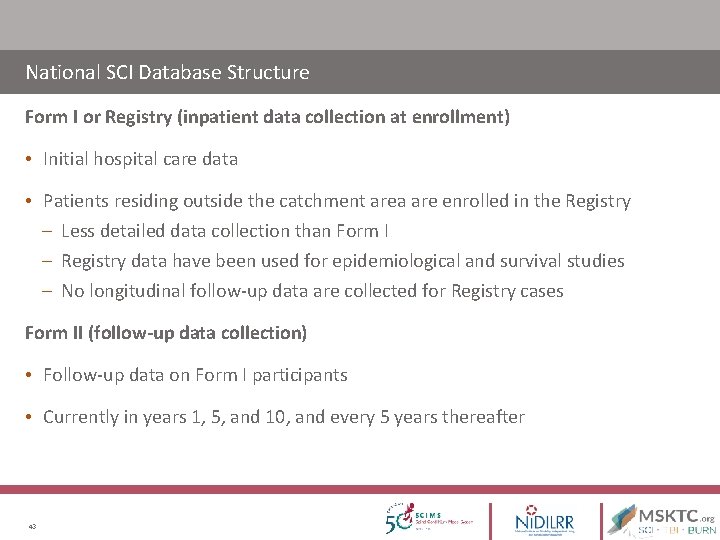
National SCI Database Structure Form I or Registry (inpatient data collection at enrollment) • Initial hospital care data • Patients residing outside the catchment area are enrolled in the Registry – Less detailed data collection than Form I – Registry data have been used for epidemiological and survival studies – No longitudinal follow-up data are collected for Registry cases Form II (follow-up data collection) • Follow-up data on Form I participants • Currently in years 1, 5, and 10, and every 5 years thereafter 43
Data Collection Sources • Medical record review – May be supplemented by site-specific data collection forms completed by clinicians or inpatient interview • Neurological examination – Typically conducted as part of routine SCI care • Patient interview – Telephone, mailed questionnaire, in-person interview • Death records 44
Follow-Up Guidelines • Find participants – Check the Social Security Death Index (SSDI), genealogy, or other death search site for record of death – Search system (hospital and clinical) records for recent activity and updated contact information – Conduct at least two free Internet searches and a fee-based search if available • Attempt to schedule a clinical follow-up visit • Call viable phone numbers at least six times at different times of the day and week • Mail a Form II survey to a viable address 45
National SCI Database Variables • Demographics • Injury characteristics (severity, etiology, associated injuries, spinal surgery, etc. ) • Hospitalizations • Medical, functional, and psychosocial outcomes measures • Use of assistive technology • Use of information/communication technology 46
Demographics (at the time of injury) • Age, sex, and race/ethnicity • English language ability • Health literacy • Marital status • Level of education • Occupational status and job census code • Primary insurance • Veteran status • Family income • Geographic identifiers (geocode) and ZIP code • Place of residence (at admission and discharge) 47
Injury Characteristics • Date of injury • Traumatic etiology • External cause of injury (ICD-10 -CM) • Work-related injury (yes/no) • Vertebral injury (yes/no) • Associated injuries (yes/no) • Spinal surgery (yes/no) 48
Neurological Exam • Collected at: – Initial system admission (for Day 1 admit patients only) – Admission to rehabilitation – Discharge from rehabilitation – First anniversary of injury • International Standards for Neurological Classification of SCI: – Date of exam – Motor scores (C 5 S 1) and motor levels – Presence of anal sensation and/or sphincter contraction – Sensory score (C 2 S 4/5) and sensory level – Level of neurological injury – Category of neurologic impairment – American Spinal Injury Association Impairment (AIS) Scale, A through E 49
Initial Hospitalization • Medical history: – – – – • • • 50 Diabetes Hypertension Hyperlipidemia Arthritis Pregnancy Depression Anxiety Alcohol use – Alcohol Use Disorders Identification Test (AUDIT) C Substance use – WHO ASSIST Length of stay in medical/surgical unit and rehabilitation Height and weight Bladder/bowel management and incontinence Use of mechanical ventilation (at rehabilitation admission and discharge)
Initial Hospitalization • Functional status – CARE tool (at rehabilitation admission and discharge) – Self-care, such as eating, oral hygiene, toileting hygiene, bathing, and dressing – Mobility, such as rolling, transferring, and locomotion • Functional status – SCI-Functional Index Assistive Technology (SCI-FI AT, at rehabilitation discharge) – Basic mobility – Self-care – Fine motor – Ambulation – Wheelchair mobility • Depression – Patient Health Questionnaire (PHQ-9) • Resilience – SCI-Qo. L Resilience short form 51
Follow-Up Data Collection • Current sociodemographic information – Marital status – Level of education – Occupational status and job census code – Place of residence – Geographic identifiers (geocode) and ZIP code – Primary insurance – Family income – Alcohol use – Alcohol Use Disorders Identification Test (AUDIT) C – Substance use – WHO ASSIST • Use of the VA Health System services (yes/no) 52
Follow-Up Data Collection (continued) • Neurological exam and use of mechanical ventilation (required for Year 1 only) • Method of bladder management and reason for change • Bowel management • Medical and secondary conditions – Pain – Urinary tract infection – Pressure ulcer – Diabetes – Hypertension – Hyperlipidemia – Arthritis – Pregnancy – Sleep difficulties – Falls 53
Follow-Up Data Collection (continued 2) • Rehospitalizations over the last 12 months – Length of stay – Reason • Functional status – SCI-FI AT • Height and weight • Ambulation 54
Follow-Up Data Collection (continued 3) • Self-perceived health status – two items from the Short Form [SF] 36, Health Survey – Health rating on a five-point scale, ranging from “Excellent” to “Poor” – Current health compared to 1 year ago • Satisfaction With Life Scale (SWLS) – Five-item self-report scale 55
Follow-Up Data Collection (continued 4) • Depression – Patient Health Questionnaire (PHQ-9) • Participation – Craig Handicap Assessment and Reporting Technique—Short Form (CHART-SF) – Physical independence – Mobility – Occupation – Social integration 56
Follow-Up Data Collection (continued 5) • Assistive technology use – Mobility aids for ambulation – Wheelchair or scooter use – Modified vehicle availability and use • Information/communication technology use – Computer – Internet/email – Mobile phone – Key information sources 57
Record Status • Vital status date – Date of death or date last known alive • Primary and secondary causes of death • Participant status: – Registry/Form I – Eligibility for future follow-up, such as neurological recovery, consent withdrawn, etc. • Participant Form II statistics: – Total Form IIs – Last Form II anniversary year and follow-up status 58
Data Quality • Standard operating procedures and policies • Data dictionary • Data collectors’ training conferences • Software quality control procedures – Range and legal value checks – Cross-variable and cross-record consistency • Supportive site visits to review system-specific procedures • Onsite quality assurance • Data collectors’ certification program 59
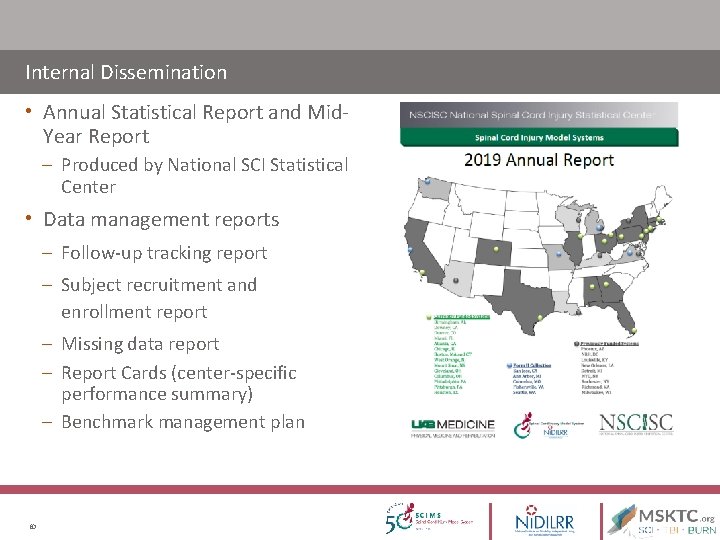
Internal Dissemination • Annual Statistical Report and Mid. Year Report – Produced by National SCI Statistical Center • Data management reports – Follow-up tracking report – Subject recruitment and enrollment report – Missing data report – Report Cards (center-specific performance summary) – Benchmark management plan 60
External Dissemination Online Data Collection Forms and Data Dictionary • https: //www. nscisc. uab. edu/Public_Pages/Database Facts and Figures at a Glance https: //www. nscisc. uab. edu/ • Published annually by the National SCI Statistical Center Annual Statistical Reports – Public Version • Published annually by National SCI Statistical Center • https: //www. nscisc. uab. edu/Public_Pages/Reports. Stats Slideshow to educate others about the SCIMS Quick Search Public Tools https: //www. nscisc. uab. edu/Public_Pages/Quick. Search. Tools – Leading Causes of SCI – Life Expectancy Calculator 61
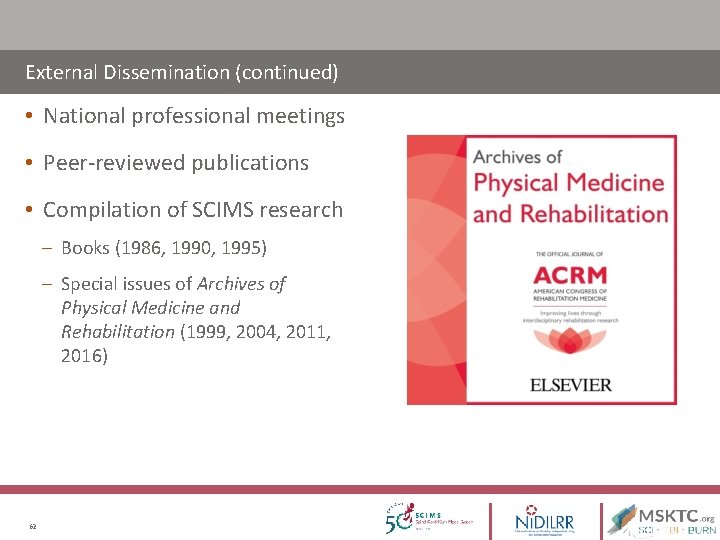
External Dissemination (continued) • National professional meetings • Peer-reviewed publications • Compilation of SCIMS research – Books (1986, 1990, 1995) – Special issues of Archives of Physical Medicine and Rehabilitation (1999, 2004, 2011, 2016) 62
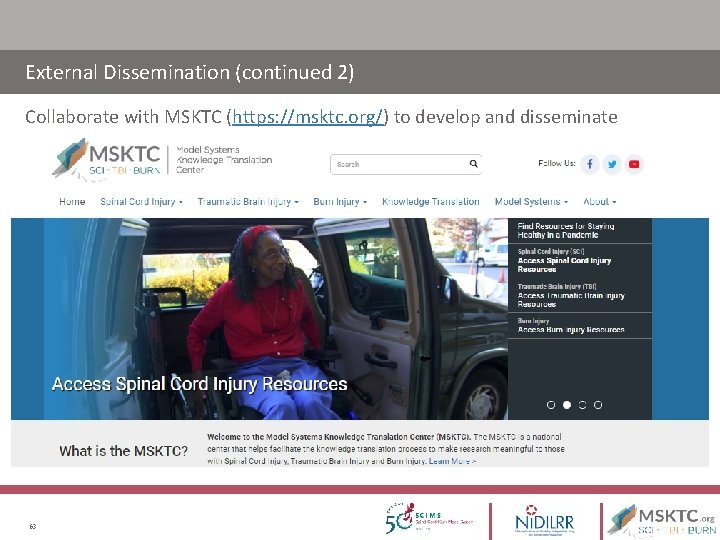
External Dissemination (continued 2) Collaborate with MSKTC (https: //msktc. org/) to develop and disseminate 63
National SCI Model System Descriptive Data Summary From 1973 to 2019 Source: The 2019 Annual Statistical Report for the SCI Model Systems National SCI Statistical Center, Birmingham, AL https: //www. nscisc. uab. edu/Public_Pages/Reports. Stats 64
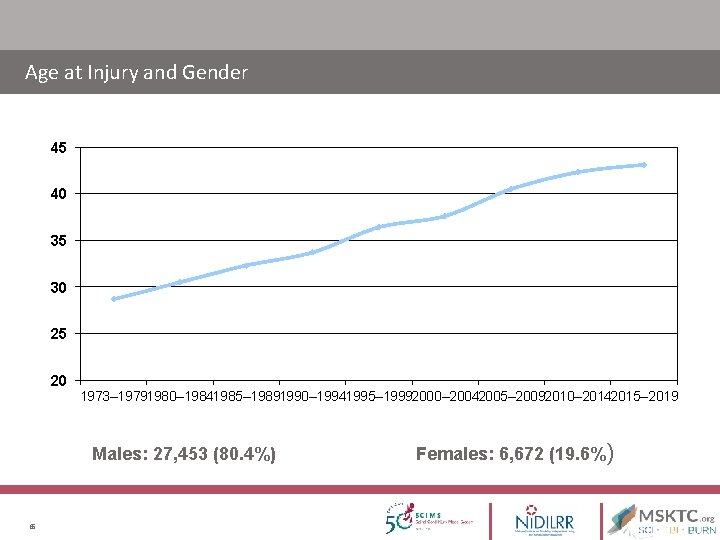
Age at Injury and Gender 45 40 35 30 25 20 1973– 19791980– 19841985– 19891990– 19941995– 19992000– 20042005– 20092010– 20142015– 2019 Males: 27, 453 (80. 4%) 65 Females: 6, 672 (19. 6%)
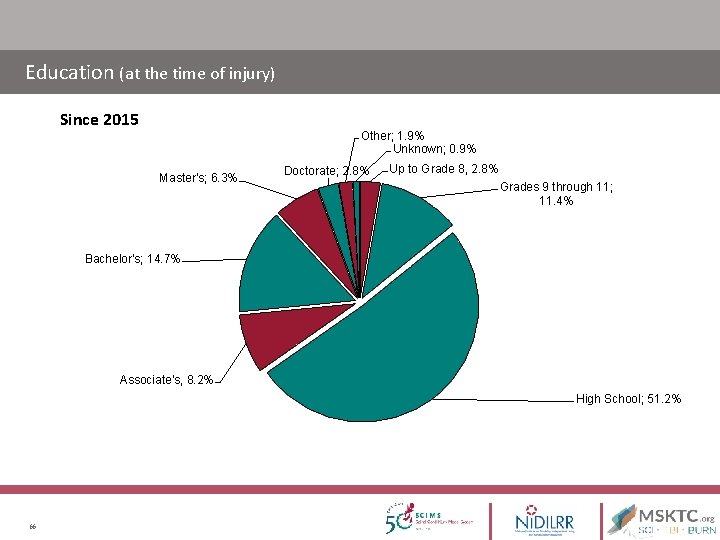
Education (at the time of injury) Since 2015 Other; 1. 9% Unknown; 0. 9% Master's; 6. 3% Doctorate; 2. 8% Up to Grade 8, 2. 8% Grades 9 through 11; 11. 4% Bachelor's; 14. 7% Associate’s, 8. 2% High School; 51. 2% 66
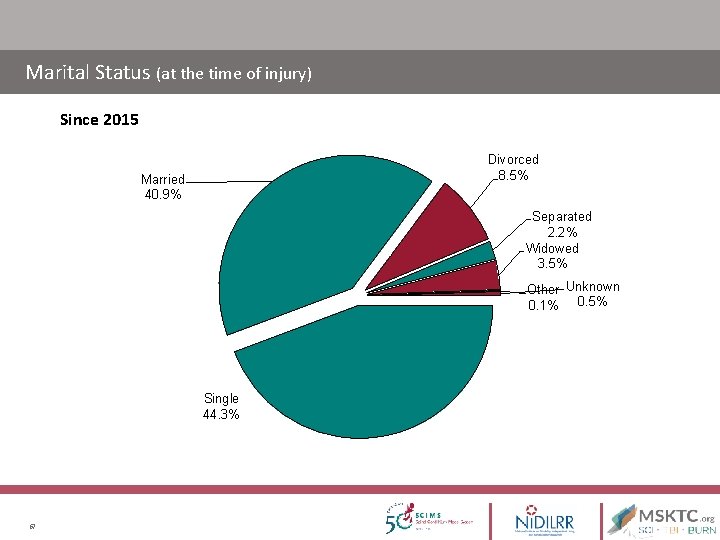
Marital Status (at the time of injury) Since 2015 Divorced 8. 5% Married 40. 9% Separated 2. 2% Widowed 3. 5% Other Unknown 0. 5% 0. 1% Single 44. 3% 67
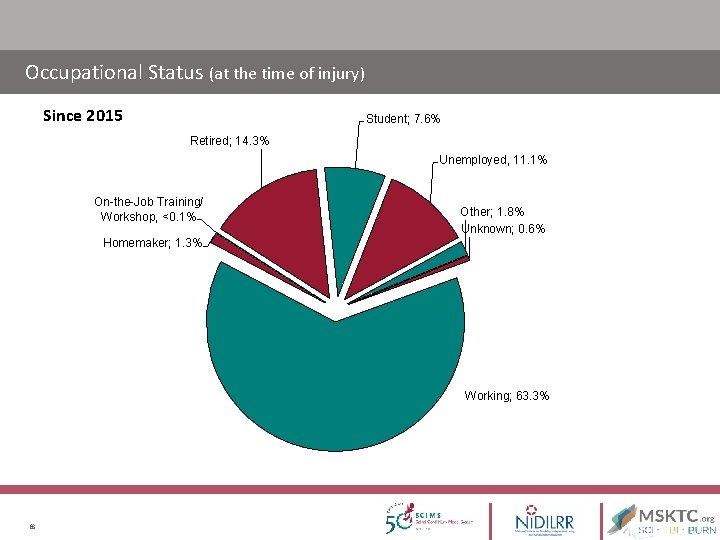
Occupational Status (at the time of injury) Since 2015 Student; 7. 6% Retired; 14. 3% Unemployed, 11. 1% On-the-Job Training/ Workshop, <0. 1% Other; 1. 8% Unknown; 0. 6% Homemaker; 1. 3% Working; 63. 3% 68
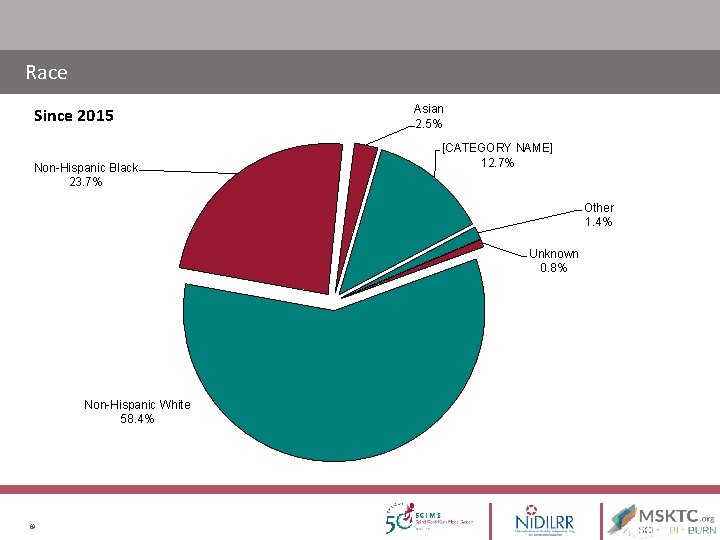
Race Since 2015 Non-Hispanic Black 23. 7% Asian 2. 5% [CATEGORY NAME] 12. 7% Other 1. 4% Unknown 0. 8% Non-Hispanic White 58. 4% 69
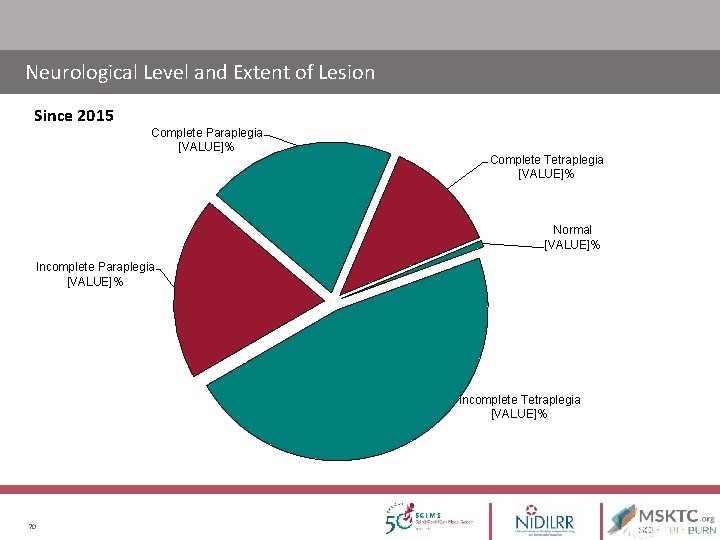
Neurological Level and Extent of Lesion Since 2015 Complete Paraplegia [VALUE]% Complete Tetraplegia [VALUE]% Normal [VALUE]% Incomplete Paraplegia [VALUE]% Incomplete Tetraplegia [VALUE]% 70
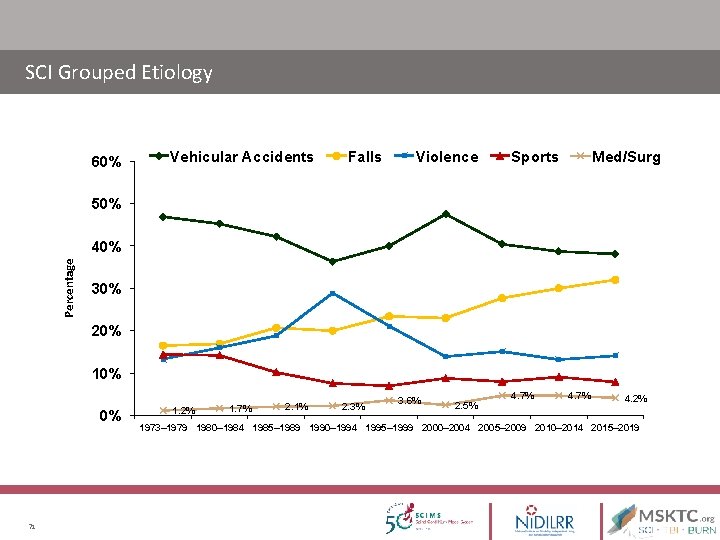
SCI Grouped Etiology 60% Vehicular Accidents Falls Violence Sports Med/Surg 50% Percentage 40% 30% 20% 10% 0% 71 1. 2% 1. 7% 2. 1% 2. 3% 3. 6% 2. 5% 4. 7% 4. 2% 1973– 1979 1980– 1984 1985– 1989 1990– 1994 1995– 1999 2000– 2004 2005– 2009 2010– 2014 2015– 2019
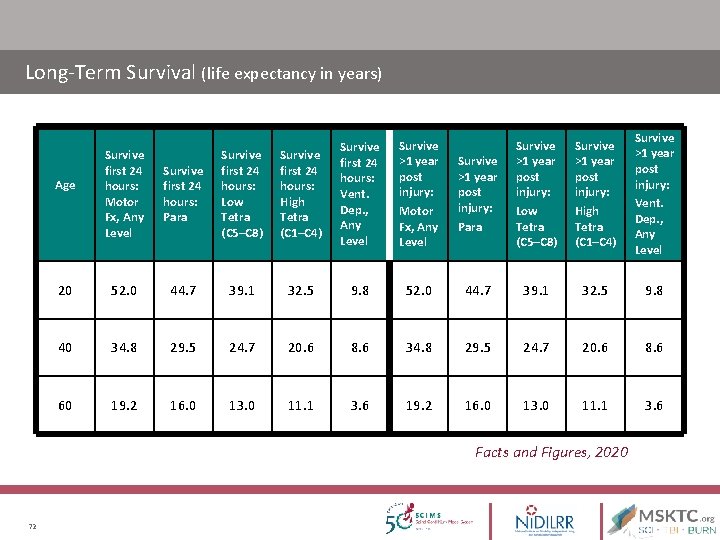
Long-Term Survival (life expectancy in years) Survive >1 year post injury: Motor Fx, Any Level Survive >1 year post injury: Para Survive >1 year post injury: Low Tetra (C 5–C 8) Survive >1 year post injury: High Tetra (C 1–C 4) Survive >1 year post injury: Vent. Dep. , Any Level Survive first 24 hours: Para Survive first 24 hours: Low Tetra (C 5–C 8) Survive first 24 hours: High Tetra (C 1–C 4) Survive first 24 hours: Vent. Dep. , Any Level 52. 0 44. 7 39. 1 32. 5 9. 8 40 34. 8 29. 5 24. 7 20. 6 8. 6 60 19. 2 16. 0 13. 0 11. 1 3. 6 Survive first 24 hours: Motor Fx, Any Level 20 Age Facts and Figures, 2020 72
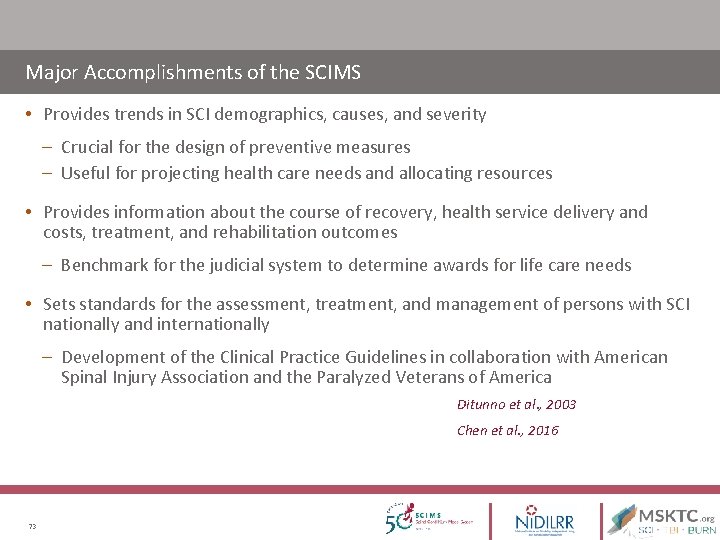
Major Accomplishments of the SCIMS • Provides trends in SCI demographics, causes, and severity – Crucial for the design of preventive measures – Useful for projecting health care needs and allocating resources • Provides information about the course of recovery, health service delivery and costs, treatment, and rehabilitation outcomes – Benchmark for the judicial system to determine awards for life care needs • Sets standards for the assessment, treatment, and management of persons with SCI nationally and internationally – Development of the Clinical Practice Guidelines in collaboration with American Spinal Injury Association and the Paralyzed Veterans of America Ditunno et al. , 2003 Chen et al. , 2016 73
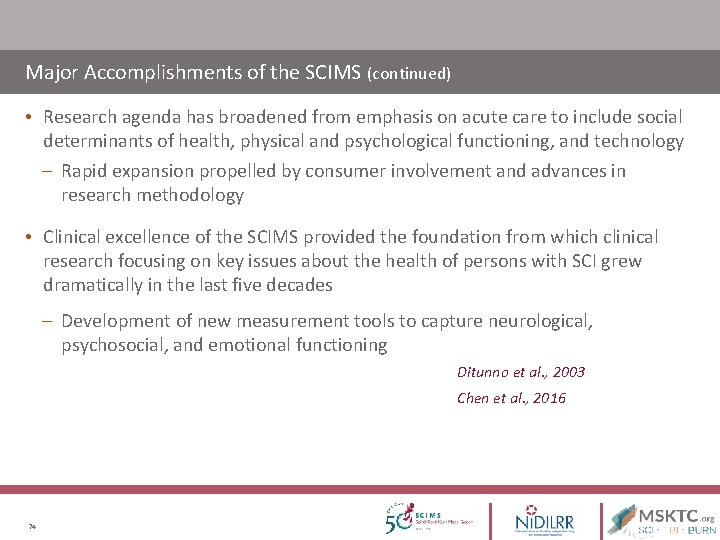
Major Accomplishments of the SCIMS (continued) • Research agenda has broadened from emphasis on acute care to include social determinants of health, physical and psychological functioning, and technology – Rapid expansion propelled by consumer involvement and advances in research methodology • Clinical excellence of the SCIMS provided the foundation from which clinical research focusing on key issues about the health of persons with SCI grew dramatically in the last five decades – Development of new measurement tools to capture neurological, psychosocial, and emotional functioning Ditunno et al. , 2003 Chen et al. , 2016 74
Major Accomplishments of the SCIMS (continued 2) • National SCI Database—the largest and longest in the world – The SCI statistics have been widely used and referenced » Google search for “SCI statistics”—NSCISC website ranked first • Produced specific life-expectancy estimates for court cases in the United States and also countries outside the United States, such as Canada, Australia, England, Scotland, Northern Ireland, and Hong Kong 75
Research Contributions of the SCIMS • Emergency and acute care outcomes • Trends in patient demographics and injury characteristics • Medical rehabilitation treatment outcomes • Development of classification systems (AIS Scale, pain) • Preexisting conditions and secondary complications • Psychosocial and vocational outcomes Tate & Forchheimer, 2002 76
Research Contributions of the SCIMS (continued) • • • Health care cost issues Functional independence outcomes Pain and sexuality Community integration and consumer involvement National priorities: health disparity, obesity, pain, substance use Assistive technology, wheelchair skills Technology use and quality of life Outcome measurements via computer-adapted testing (CAT) Community and neighborhood Big data modeling: artificial neural network and other techniques Tate & Forchheimer, 2002; Chen et al. , 2011; Chen & Heinemann, 2016 77
References • Chen, Y. , Deutsch, A. , De. Vivo, M. J. , Johnson, K. , Kalpakjian, C. , Nemunaitis, G. , … Tulsky, D. (2011). Current research outcomes from the Spinal Cord Injury Model Systems. Archives of Physical Medicine Rehabilitation, 92, 329– 331. • Chen, Y. , De. Vivo, M. J. , Richards, J. S. , & San. Agustin, T. B. (2016). Spinal Cord Injury Model Systems: Review of program and national database from 1970 to 2015. Archives of Physical Medicine Rehabilitation, 97, 1797– 1804. • Chen, Y. , & Heinemann, A. W. (2016). Current research outcomes from the Spinal Cord Injury Model Systems. Archives of Physical Medicine Rehabilitation, 97, 1607– 1609. • Ditunno, J. , Apple, D. , Burns, A. , Donovan, W. , Hagglund, K. , Lammertse, D. , … Tulsky, D. (2003). A view of the future model spinal cord injury system through the prism of past achievements and current challenges. Journal of Spinal Cord Medicine, 26(2), 110– 115. 78
References (continued) • Donovan, W. (2006). Donald Munro Lecture: Spinal cord injury—Past, present and future. Journal of Spinal Cord Medicine, 30, 85 100. • Stover, S. L. , De. Vivo, M. J. , & Go, B. K. (1999). History, implementation, and current status of the national spinal cord injury database. Archives of Physical Medicine and Rehabilitation, 80, 1365 1371. • Tate, D. G. , & Forchheimer, M. (2002). Contributions from the model systems programs to spinal cord injury research. Journal of Spinal Cord Medicine, 25(4), 316 330. 79