
The Spanish Perfect Tenses What is a perfect


- Slides: 32
The Spanish “Perfect Tenses”
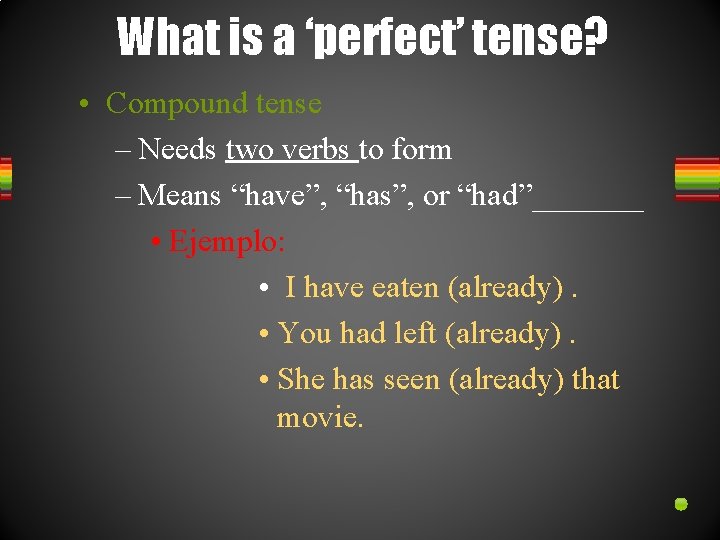
What is a ‘perfect’ tense? • Compound tense – Needs two verbs to form – Means “have”, “has”, or “had”_______ • Ejemplo: • I have eaten (already). • You had left (already). • She has seen (already) that movie.
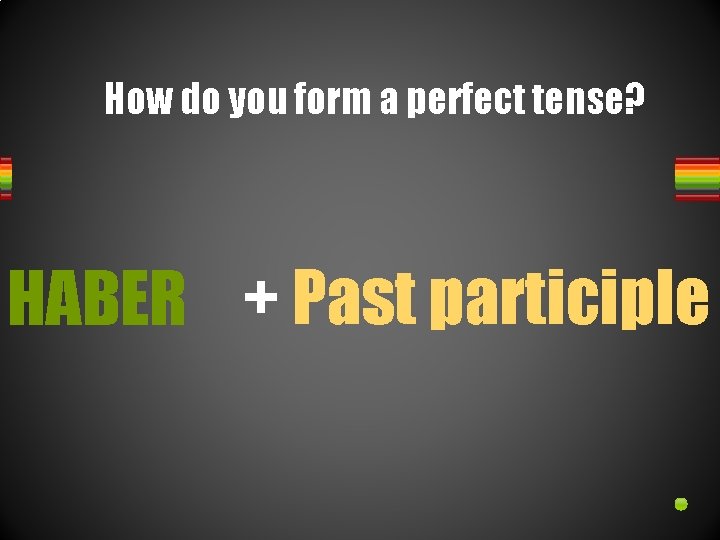
How do you form a perfect tense? HABER + Past participle
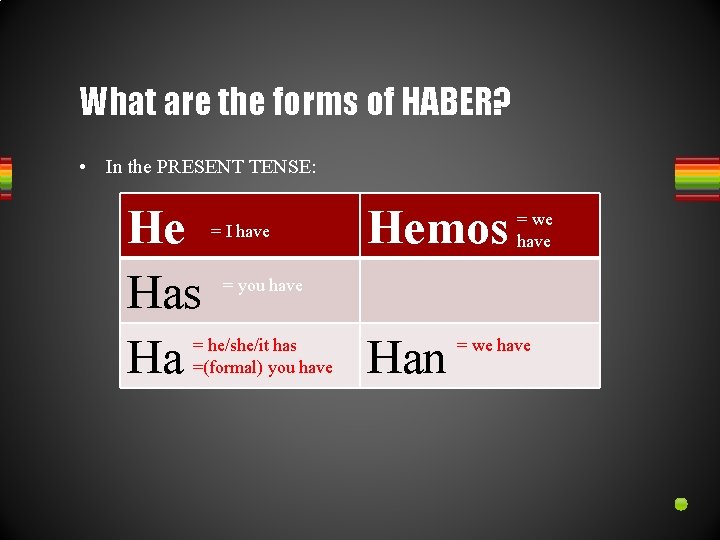
What are the forms of HABER? • In the PRESENT TENSE: He Has Ha = I have Hemos = we have = you have = he/she/it has =(formal) you have Han = we have
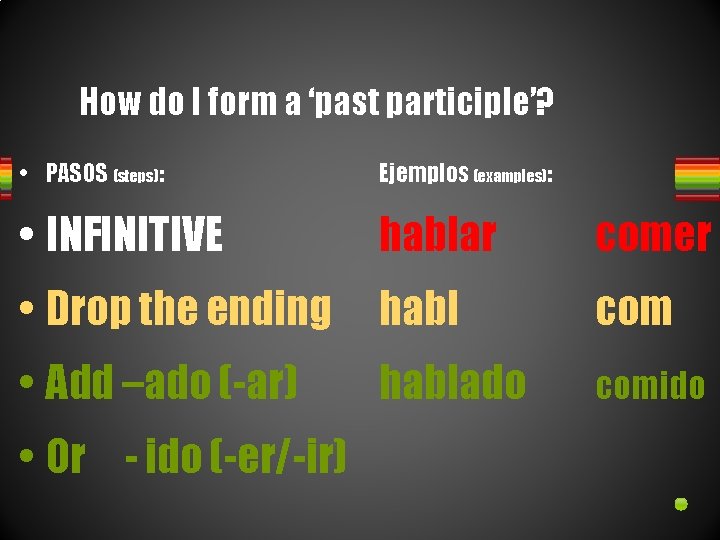
How do I form a ‘past participle’? • PASOS (steps): Ejemplos (examples): • INFINITIVE hablar comer • Drop the ending habl com • Add –ado (-ar) hablado comido • Or - ido (-er/-ir)
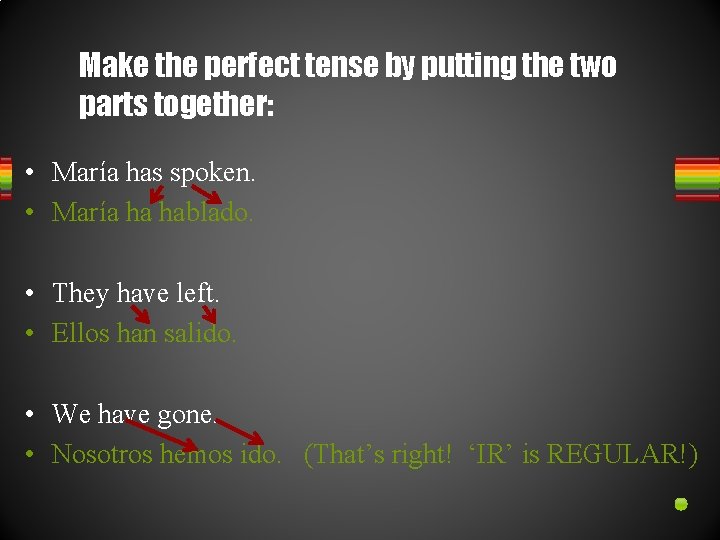
Make the perfect tense by putting the two parts together: • María has spoken. • María ha hablado. • They have left. • Ellos han salido. • We have gone. • Nosotros hemos ido. (That’s right! ‘IR’ is REGULAR!)
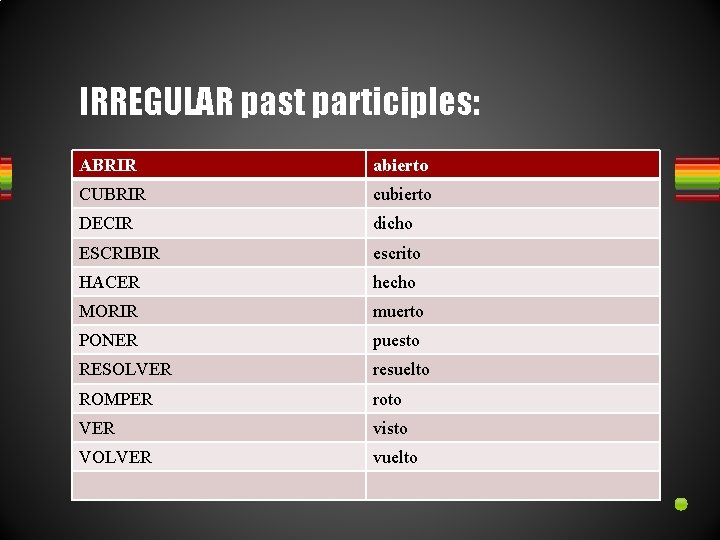
IRREGULAR past participles: ABRIR abierto CUBRIR cubierto DECIR dicho ESCRIBIR escrito HACER hecho MORIR muerto PONER puesto RESOLVER resuelto ROMPER roto VER visto VOLVER vuelto
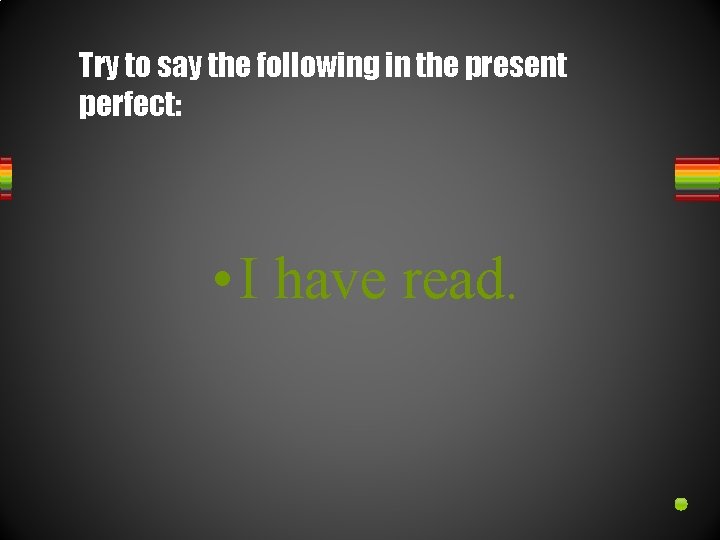
Try to say the following in the present perfect: • I have read.
Respuesta: • He leído
Práctica: We have studied.
Respuesta: Hemos estudiado.
Práctica: They have opened.
Repuesta: Han abierto.
You can make any perfect tense following this format: • To make the ‘future perfect’, simply use: HABER (future forms) + past participle (same as before)
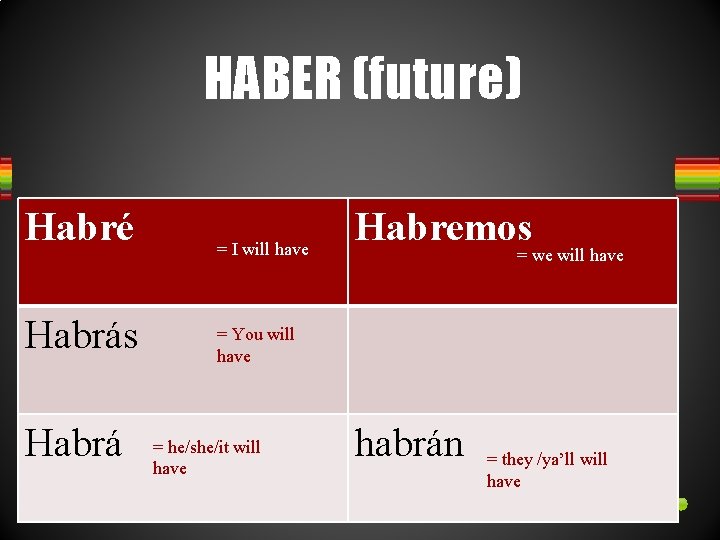
HABER (future) Habré Habrás Habrá = I will have Habremos = we will have = You will have = he/she/it will have habrán = they /ya’ll will have
Práctica: María will have left.
Respuesta: María habrá salido.
Práctica: I will have done the homework.
Respuesta: Yo habré hecho la tarea.
Conditional Perfect Simply needs a conditional form of HABER + past participle
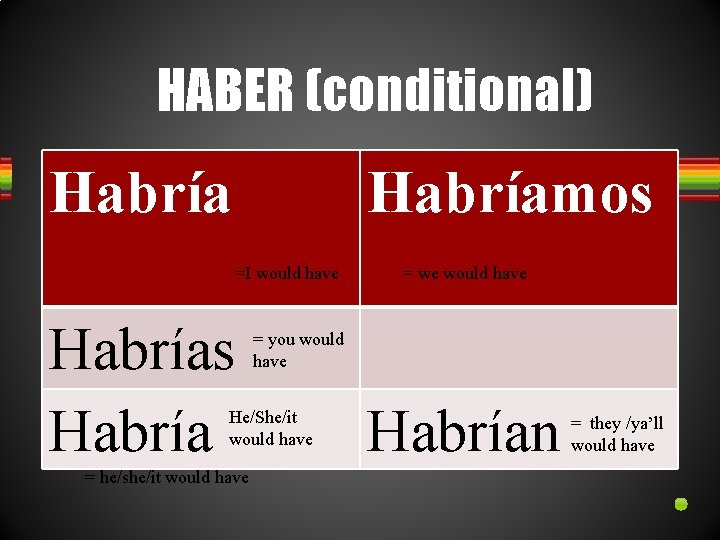
HABER (conditional) Habríamos =I would have Habrías Habría = you would have He/She/it would have = he/she/it would have = we would have Habrían = they /ya’ll would have
Práctica: I would have studied.
Respuesta: Yo habría estudiado.
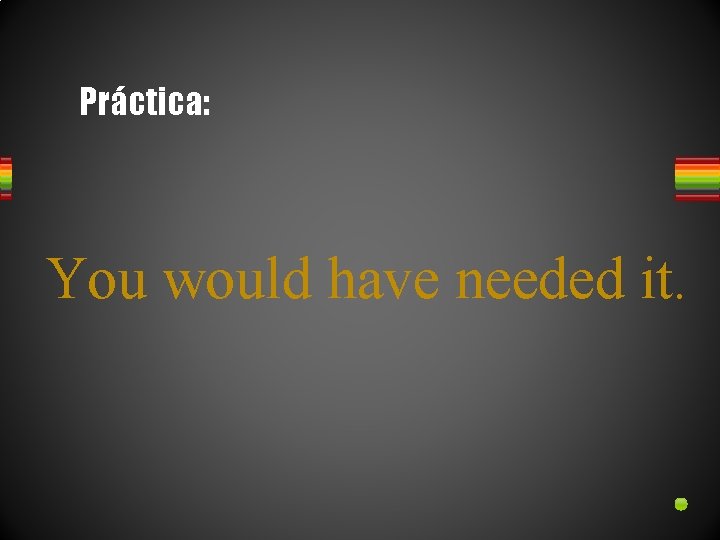
Práctica: You would have needed it.
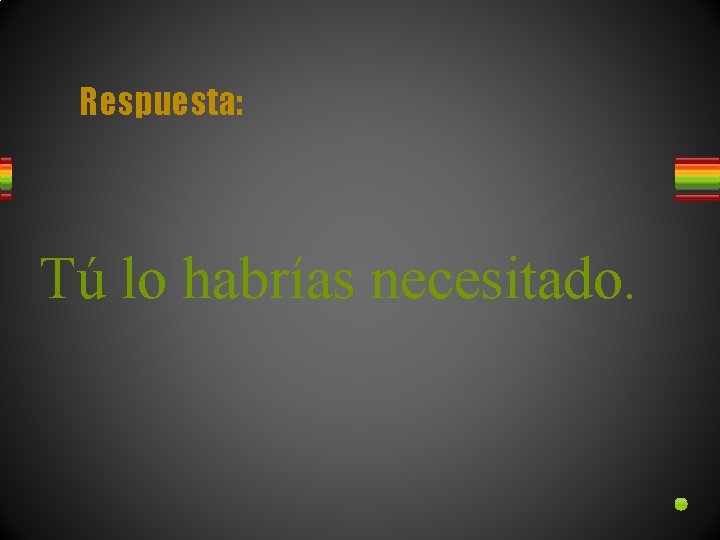
Respuesta: Tú lo habrías necesitado.
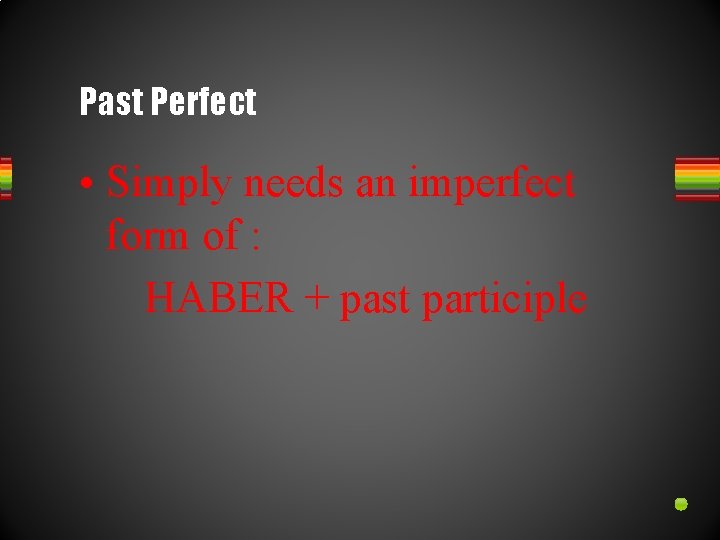
Past Perfect • Simply needs an imperfect form of : HABER + past participle
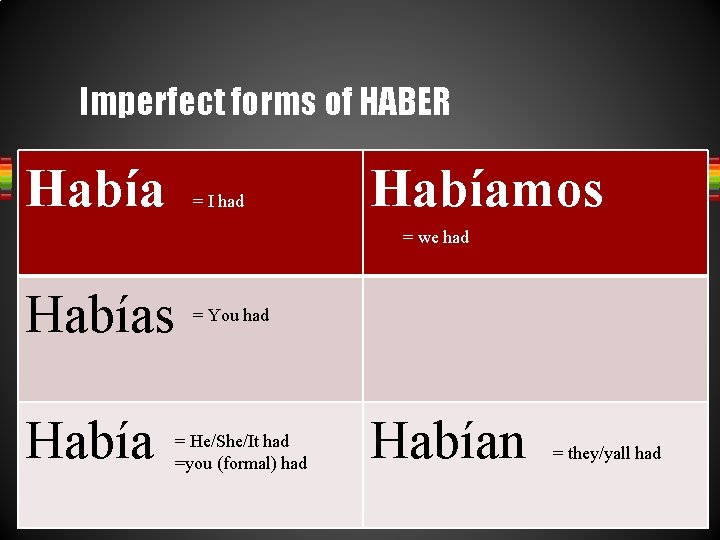
Imperfect forms of HABER Había = I had Habíamos = we had Habías Había = You had = He/She/It had =you (formal) had Habían = they/yall had
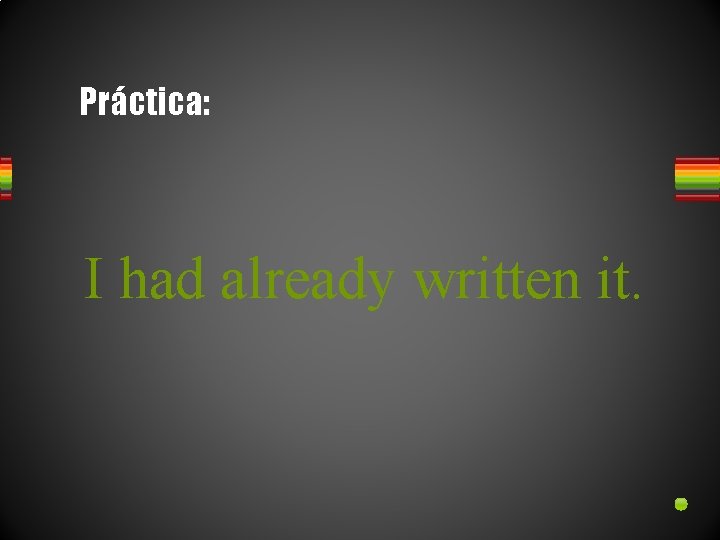
Práctica: I had already written it.
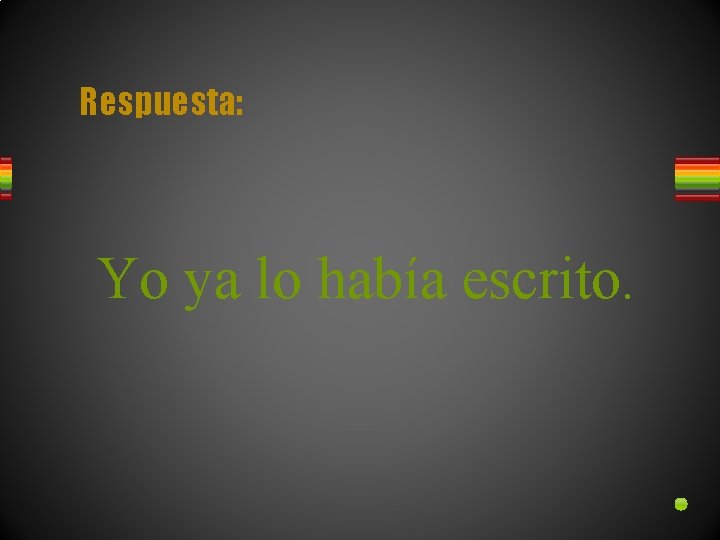
Respuesta: Yo ya lo había escrito.
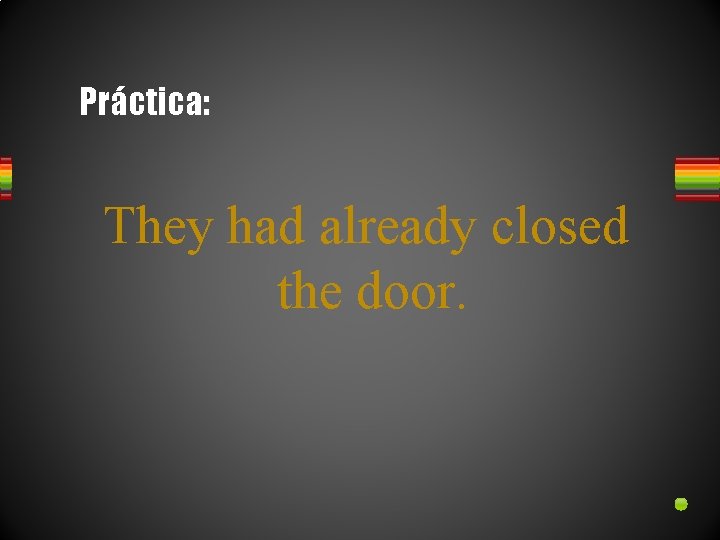
Práctica: They had already closed the door.
Respuesta: Ellos ya habían cerrado la puerta.
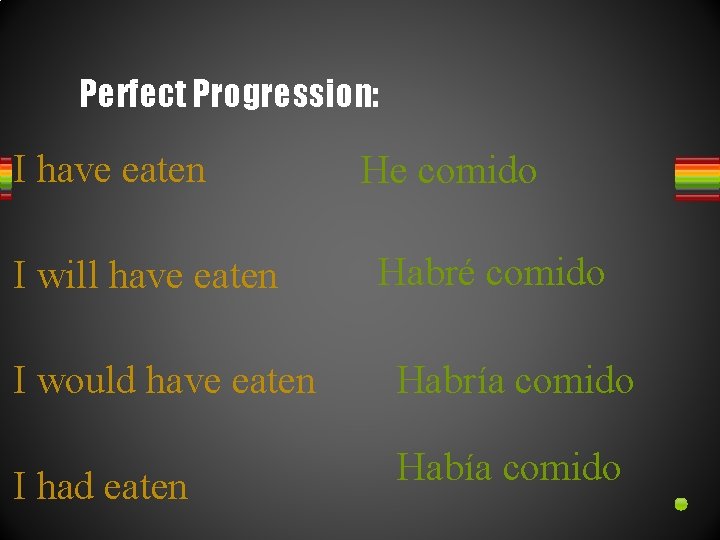
Perfect Progression: I have eaten I will have eaten He comido Habré comido I would have eaten Habría comido I had eaten Había comido