
The Space Environment II Characteristics of the Plasma
- Slides: 50
The Space Environment II: Characteristics of the Plasma and Radiation Environments Dr. Andrew Ketsdever MAE 5595 Lesson 5
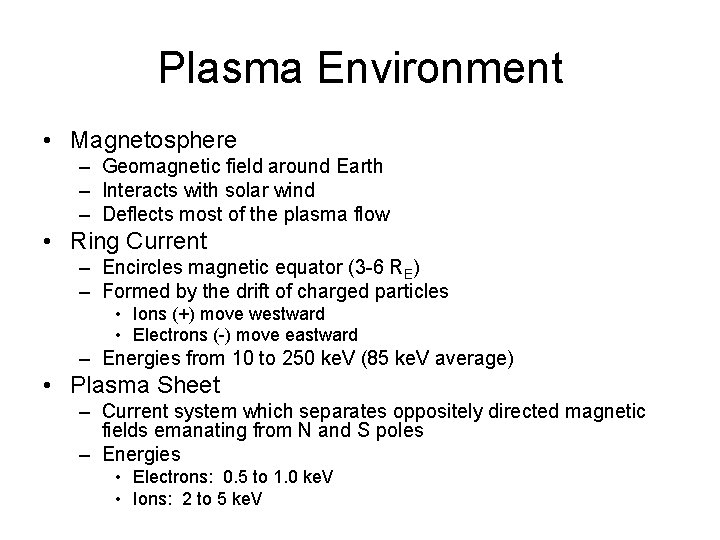
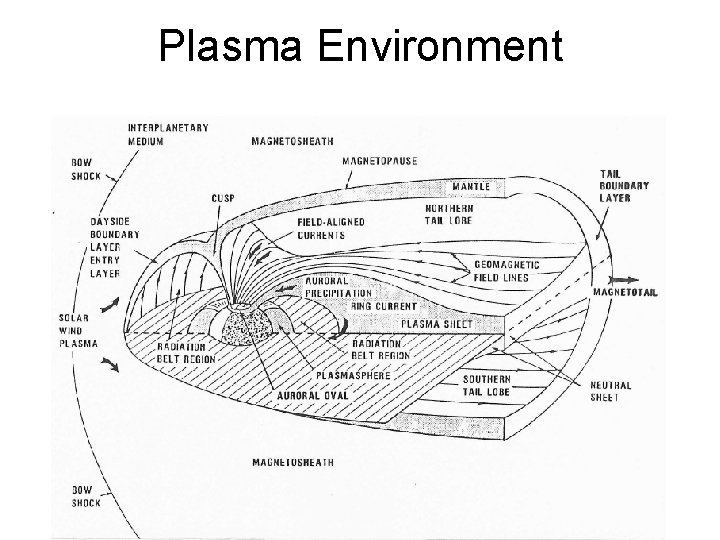
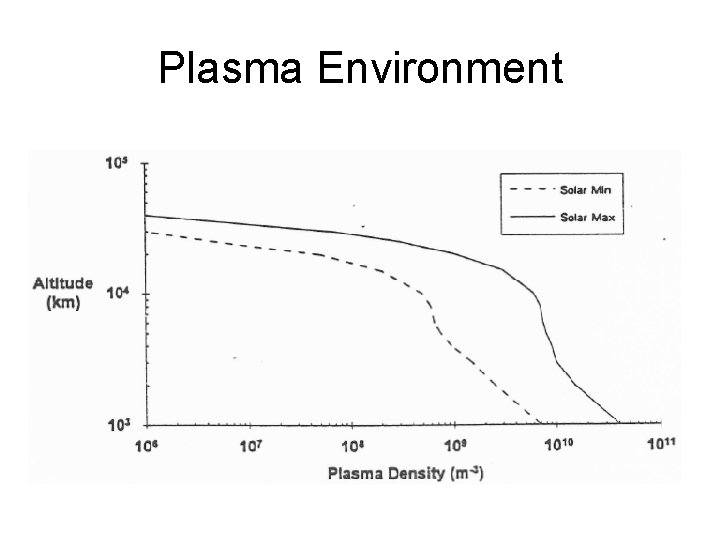
Plasma Environment • Magnetosphere – Geomagnetic field around Earth – Interacts with solar wind – Deflects most of the plasma flow • Ring Current – Encircles magnetic equator (3 -6 RE) – Formed by the drift of charged particles • Ions (+) move westward • Electrons (-) move eastward – Energies from 10 to 250 ke. V (85 ke. V average) • Plasma Sheet – Current system which separates oppositely directed magnetic fields emanating from N and S poles – Energies • Electrons: 0. 5 to 1. 0 ke. V • Ions: 2 to 5 ke. V
Plasma Environment
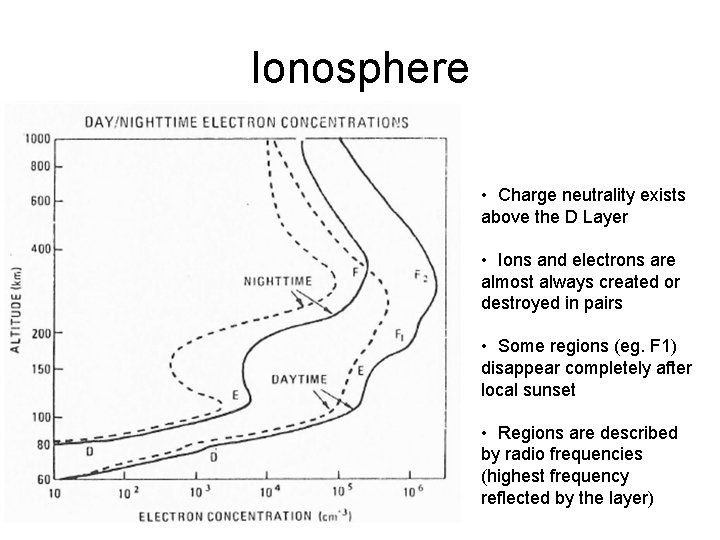
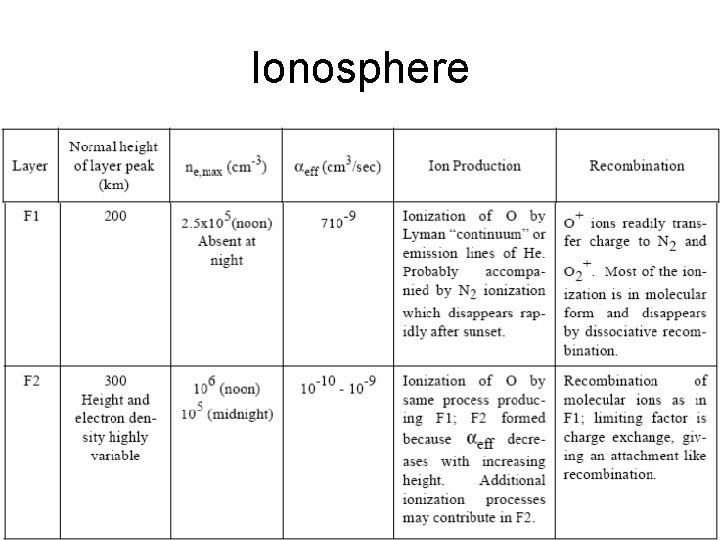
Ionosphere • Charge neutrality exists above the D Layer • Ions and electrons are almost always created or destroyed in pairs • Some regions (eg. F 1) disappear completely after local sunset • Regions are described by radio frequencies (highest frequency reflected by the layer)
Ionosphere
Plasma Environment
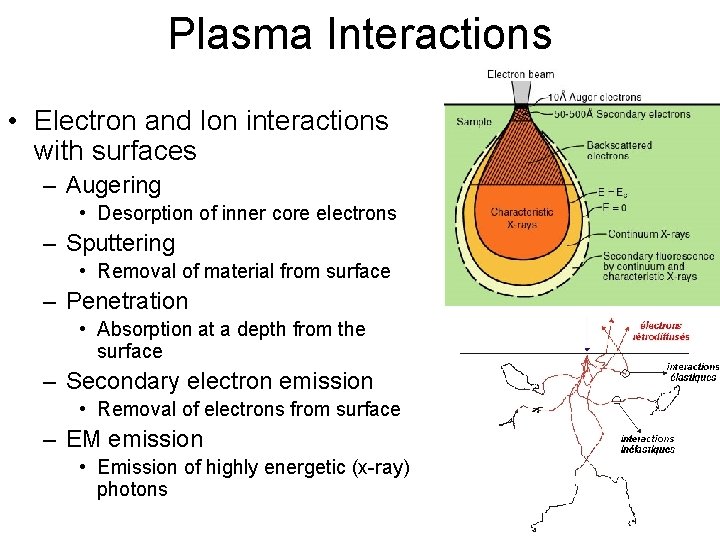
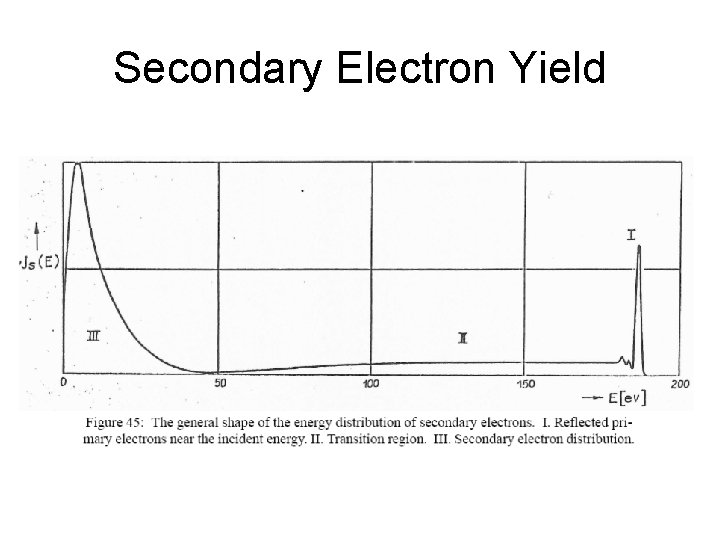
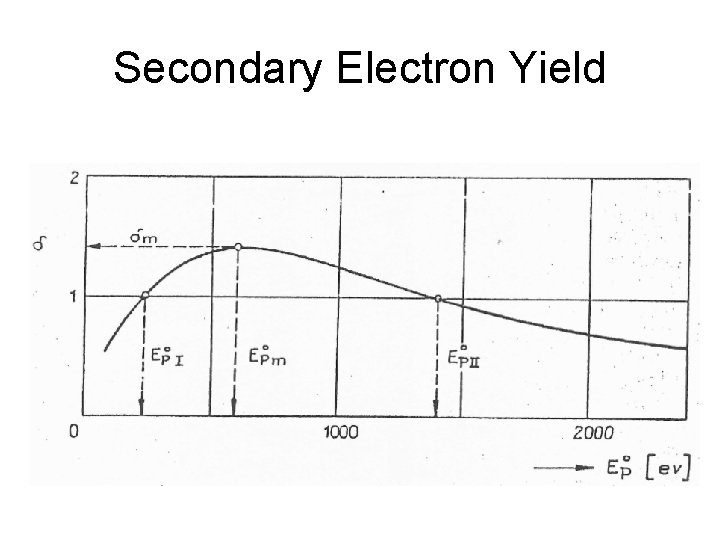
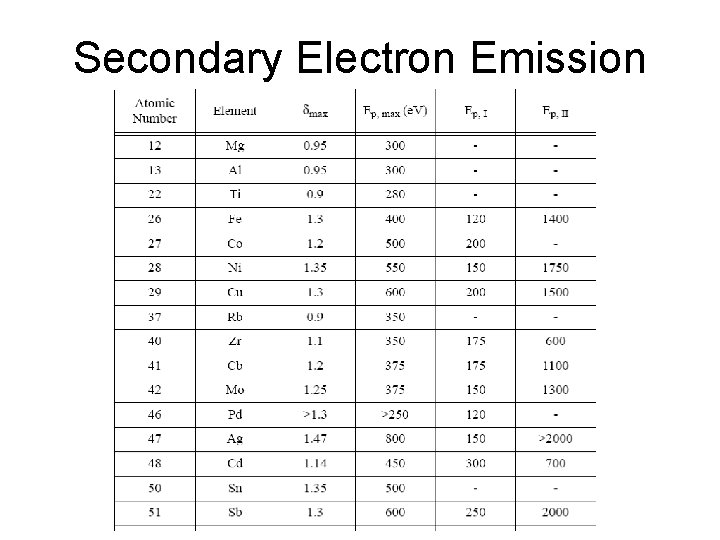
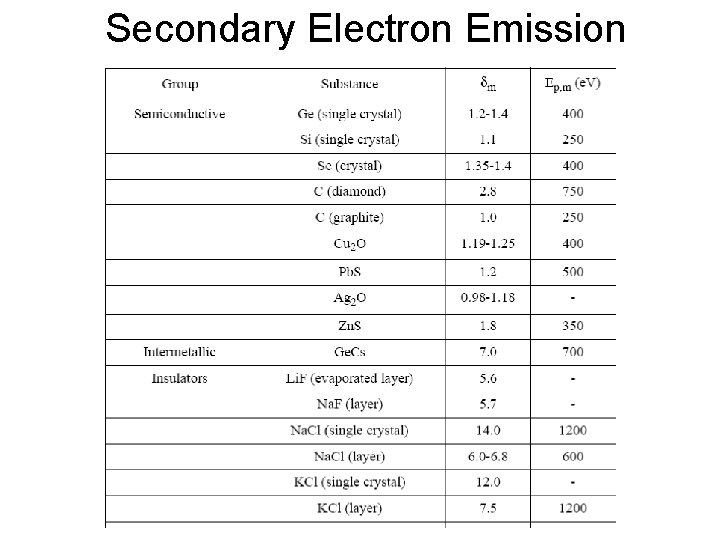
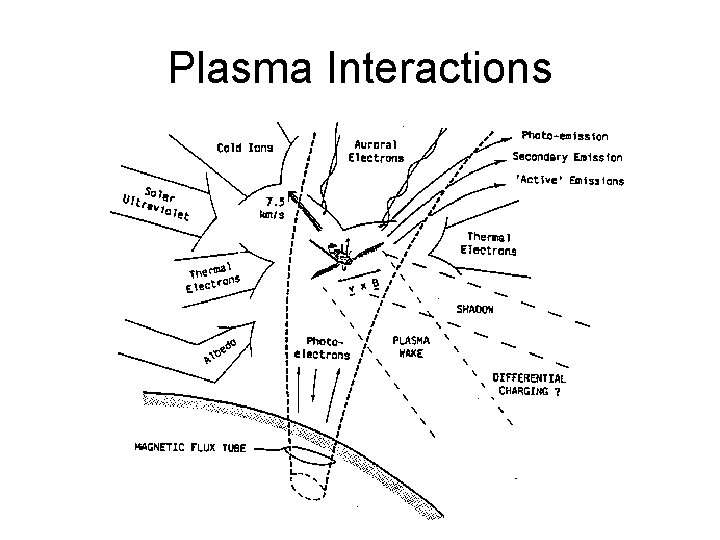
Plasma Interactions • Electron and Ion interactions with surfaces – Augering • Desorption of inner core electrons – Sputtering • Removal of material from surface – Penetration • Absorption at a depth from the surface – Secondary electron emission • Removal of electrons from surface – EM emission • Emission of highly energetic (x-ray) photons
Secondary Electron Yield
Secondary Electron Yield
Secondary Electron Emission
Secondary Electron Emission
Plasma Interactions
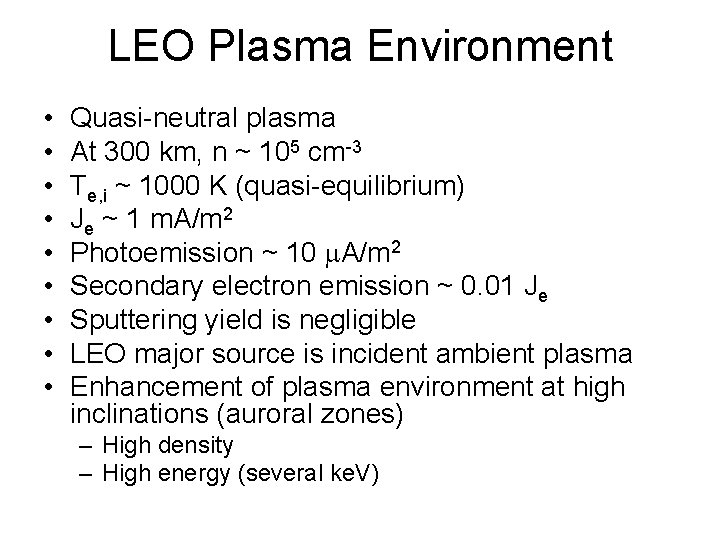
LEO Plasma Environment • • • Quasi-neutral plasma At 300 km, n ~ 105 cm-3 Te, i ~ 1000 K (quasi-equilibrium) Je ~ 1 m. A/m 2 Photoemission ~ 10 A/m 2 Secondary electron emission ~ 0. 01 Je Sputtering yield is negligible LEO major source is incident ambient plasma Enhancement of plasma environment at high inclinations (auroral zones) – High density – High energy (several ke. V)
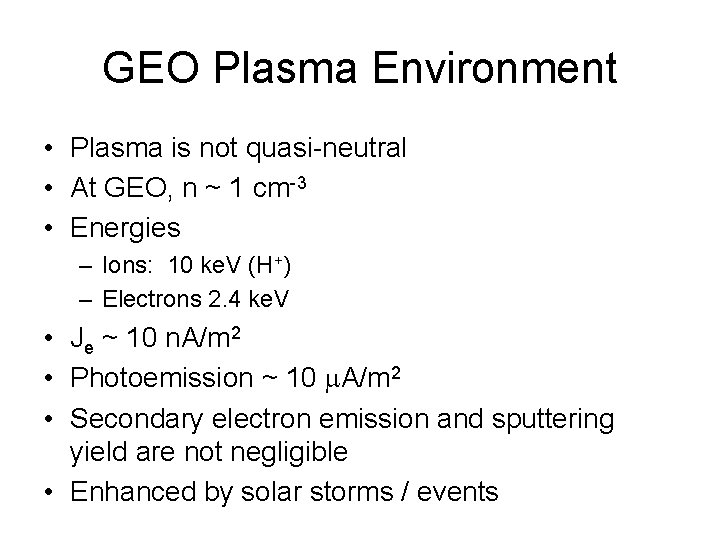
GEO Plasma Environment • Plasma is not quasi-neutral • At GEO, n ~ 1 cm-3 • Energies – Ions: 10 ke. V (H+) – Electrons 2. 4 ke. V • Je ~ 10 n. A/m 2 • Photoemission ~ 10 A/m 2 • Secondary electron emission and sputtering yield are not negligible • Enhanced by solar storms / events
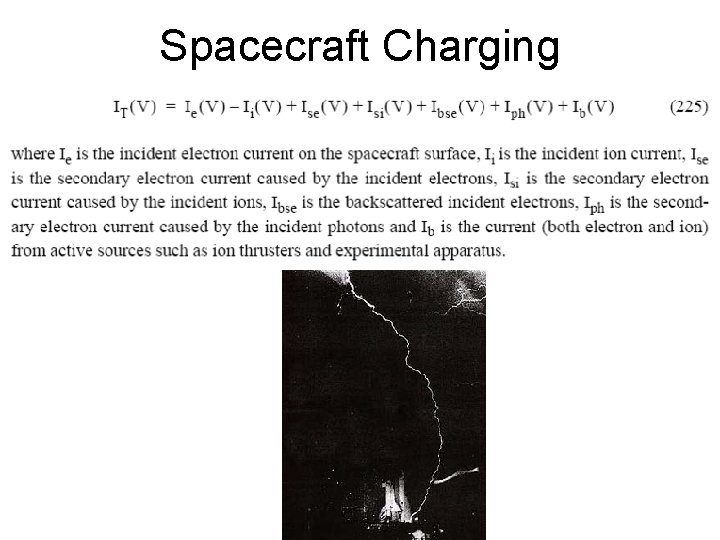
Spacecraft Charging
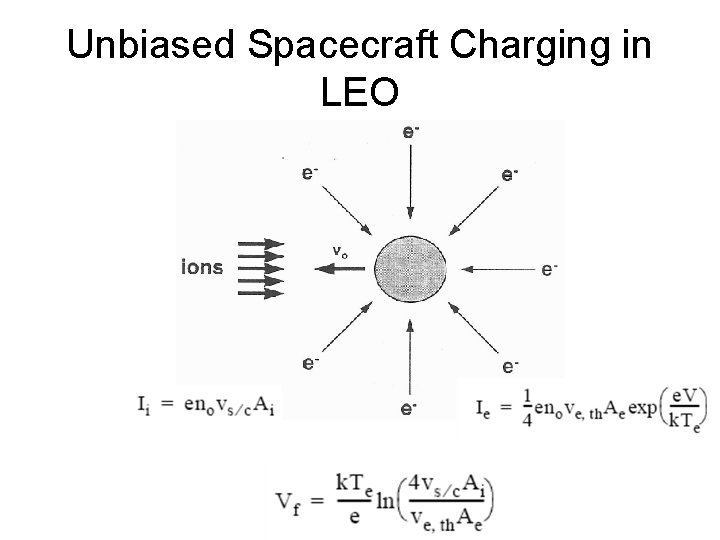
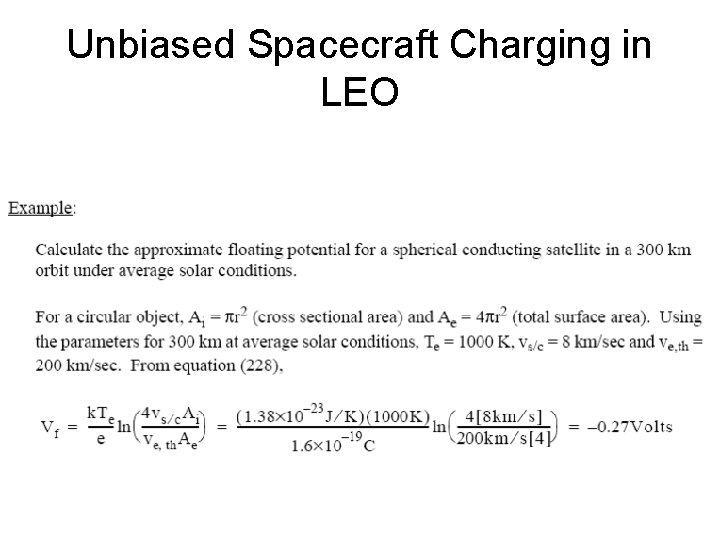
Unbiased Spacecraft Charging in LEO
Unbiased Spacecraft Charging in LEO
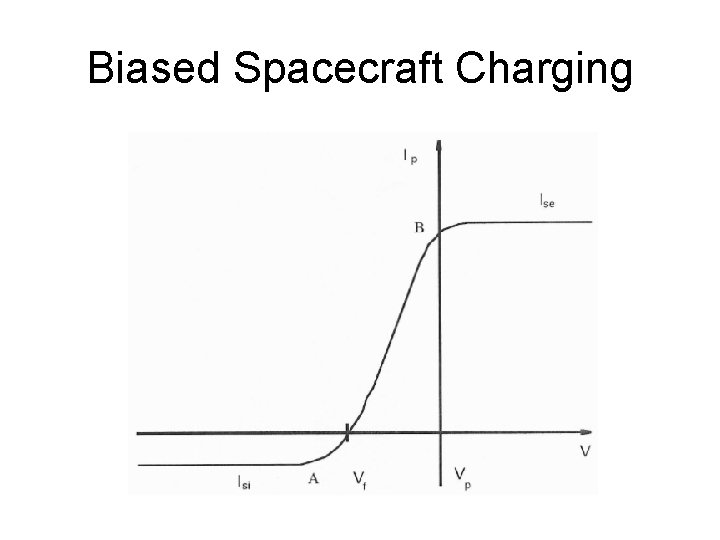
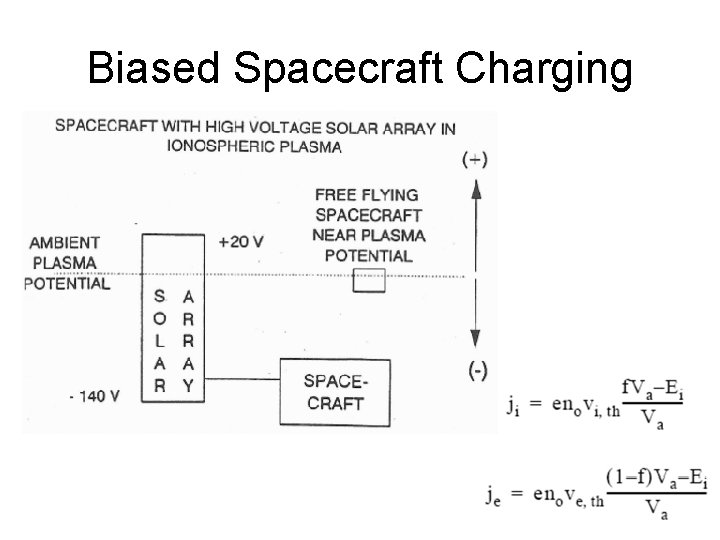
Biased Spacecraft Charging
Biased Spacecraft Charging
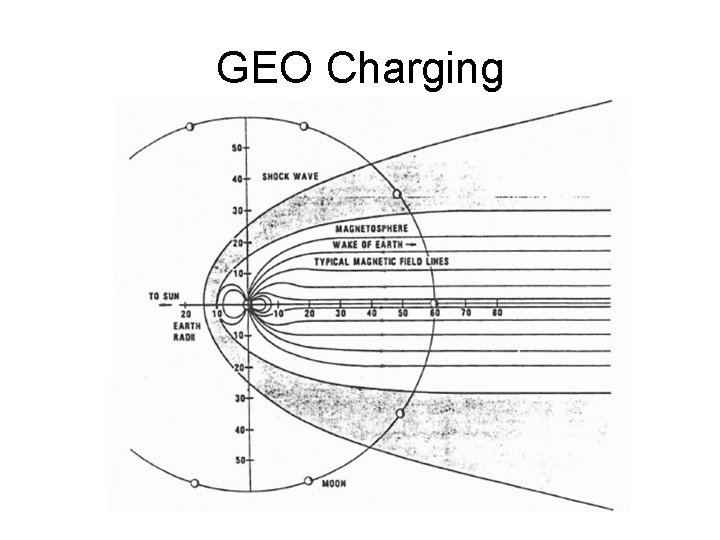
GEO Charging
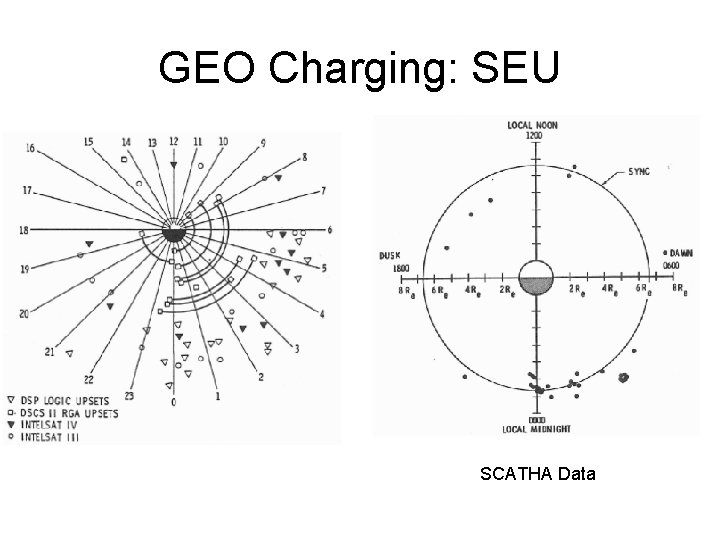
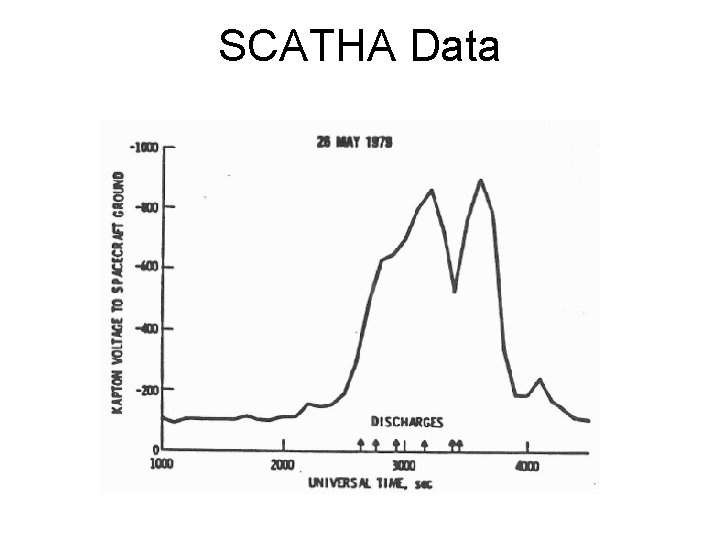
GEO Charging: SEU SCATHA Data
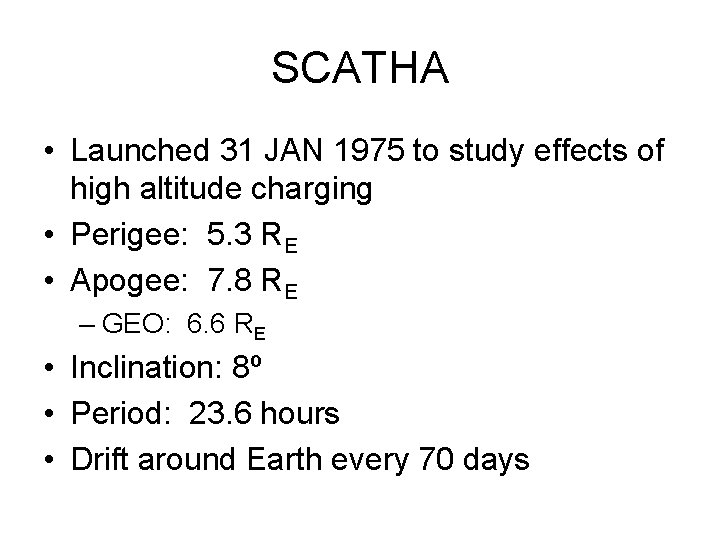
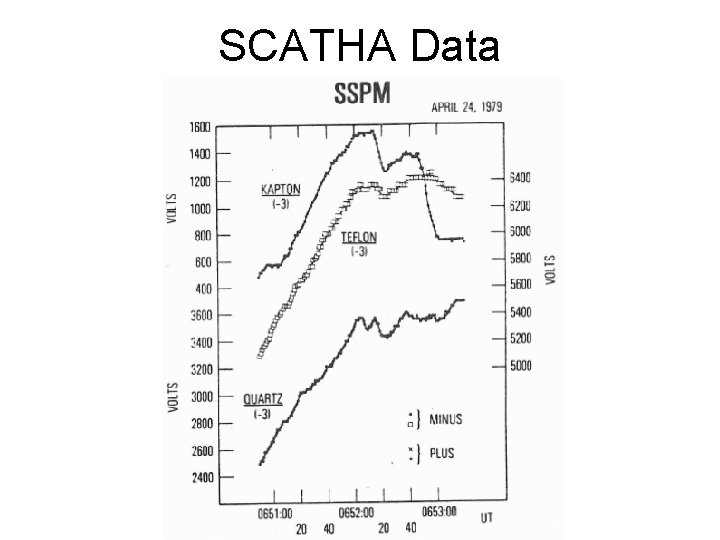
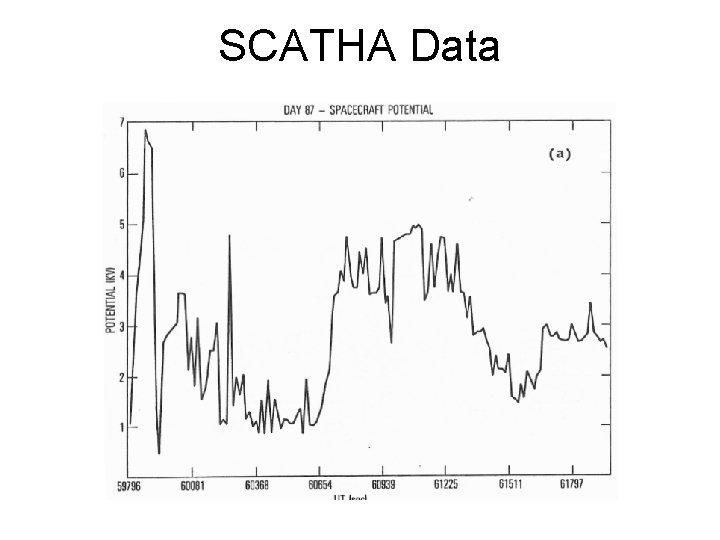
SCATHA • Launched 31 JAN 1975 to study effects of high altitude charging • Perigee: 5. 3 RE • Apogee: 7. 8 RE – GEO: 6. 6 RE • Inclination: 8º • Period: 23. 6 hours • Drift around Earth every 70 days
SCATHA Data
SCATHA Data
SCATHA Data
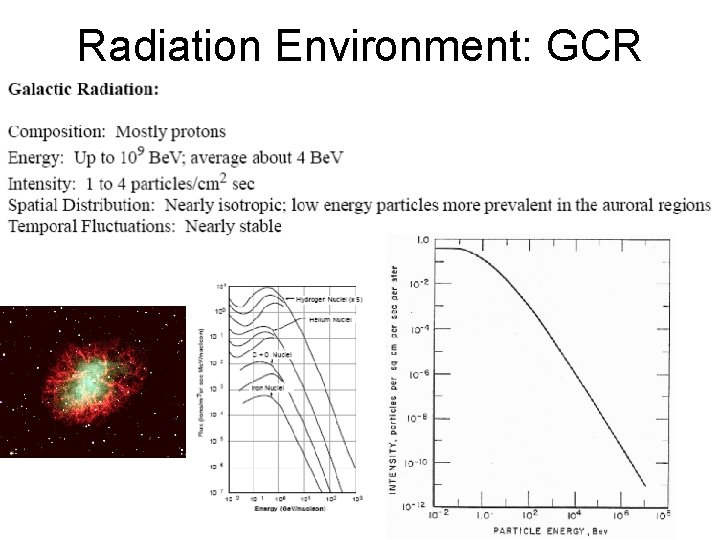
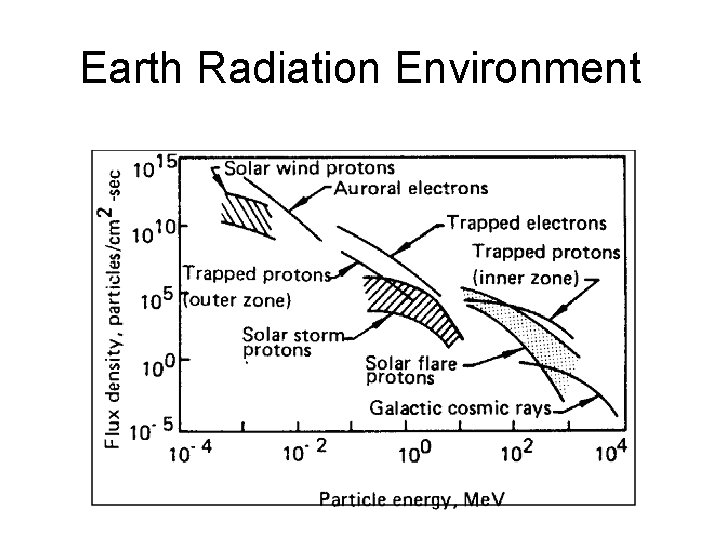
Radiation Environment: GCR
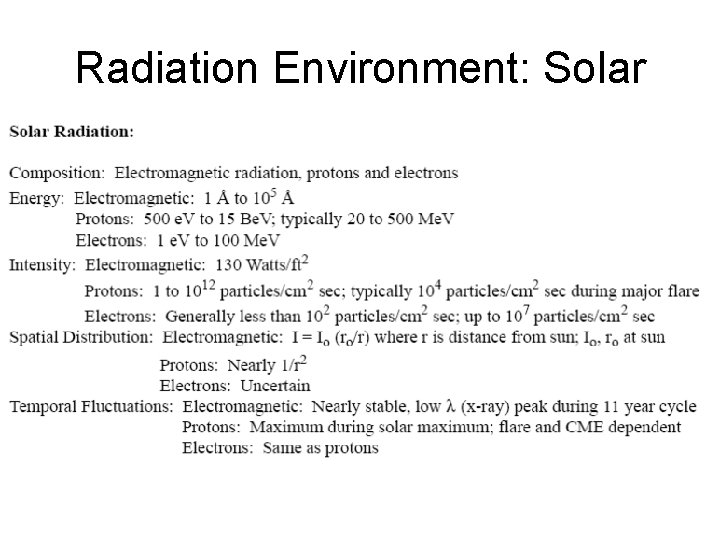
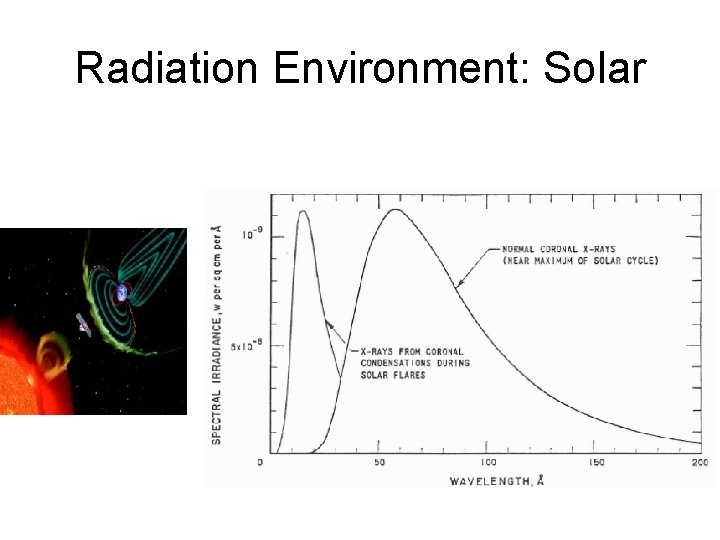
Radiation Environment: Solar
Radiation Environment: Solar
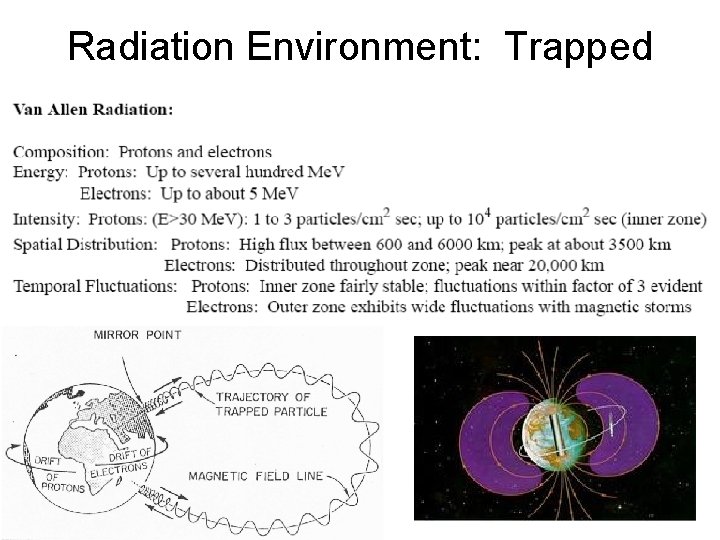
Radiation Environment: Trapped
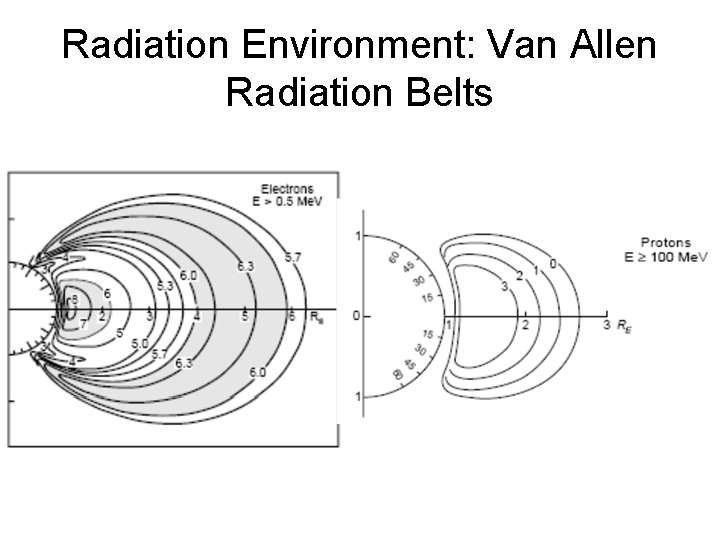
Radiation Environment: Van Allen Radiation Belts
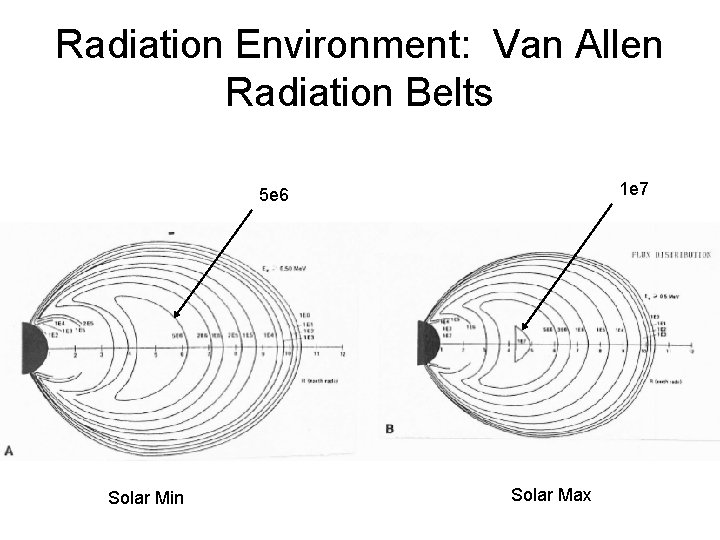
Radiation Environment: Van Allen Radiation Belts 1 e 7 5 e 6 Solar Min Solar Max
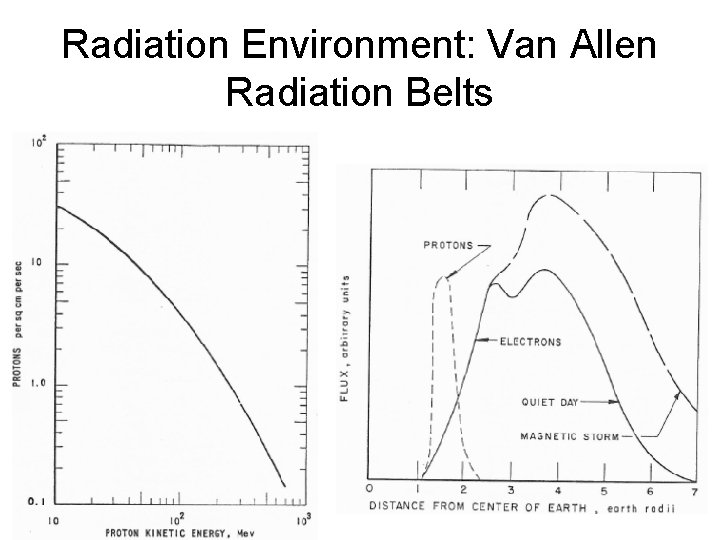
Radiation Environment: Van Allen Radiation Belts
Earth Radiation Environment
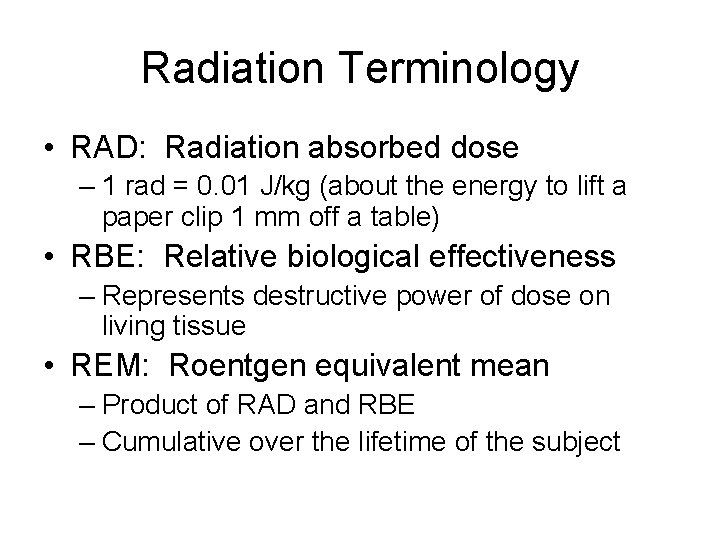
Radiation Terminology • RAD: Radiation absorbed dose – 1 rad = 0. 01 J/kg (about the energy to lift a paper clip 1 mm off a table) • RBE: Relative biological effectiveness – Represents destructive power of dose on living tissue • REM: Roentgen equivalent mean – Product of RAD and RBE – Cumulative over the lifetime of the subject
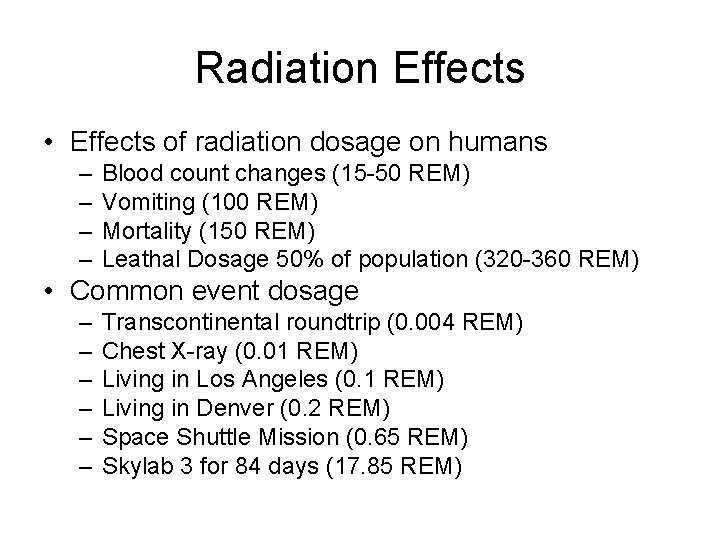
Radiation Effects • Effects of radiation dosage on humans – – Blood count changes (15 -50 REM) Vomiting (100 REM) Mortality (150 REM) Leathal Dosage 50% of population (320 -360 REM) • Common event dosage – – – Transcontinental roundtrip (0. 004 REM) Chest X-ray (0. 01 REM) Living in Los Angeles (0. 1 REM) Living in Denver (0. 2 REM) Space Shuttle Mission (0. 65 REM) Skylab 3 for 84 days (17. 85 REM)
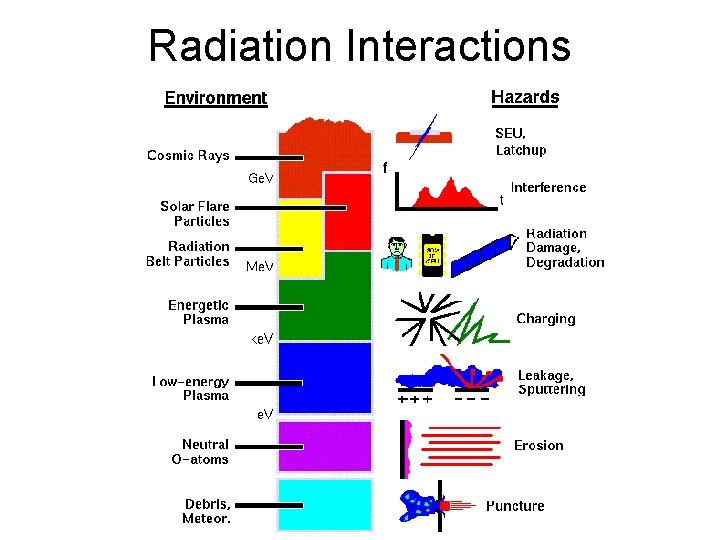
Radiation Interactions
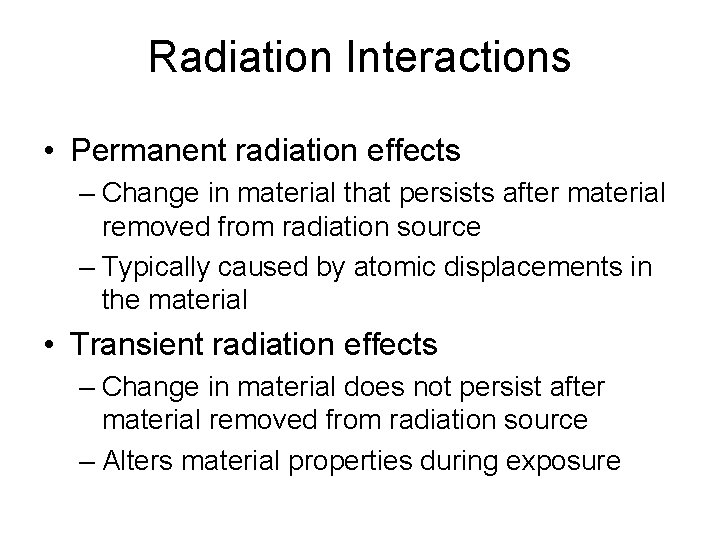
Radiation Interactions • Permanent radiation effects – Change in material that persists after material removed from radiation source – Typically caused by atomic displacements in the material • Transient radiation effects – Change in material does not persist after material removed from radiation source – Alters material properties during exposure
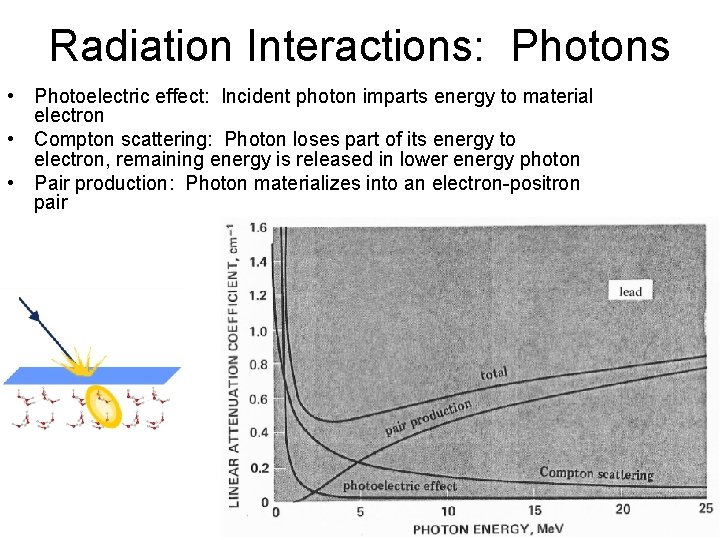
Radiation Interactions: Photons • Photoelectric effect: Incident photon imparts energy to material electron • Compton scattering: Photon loses part of its energy to electron, remaining energy is released in lower energy photon • Pair production: Photon materializes into an electron-positron pair
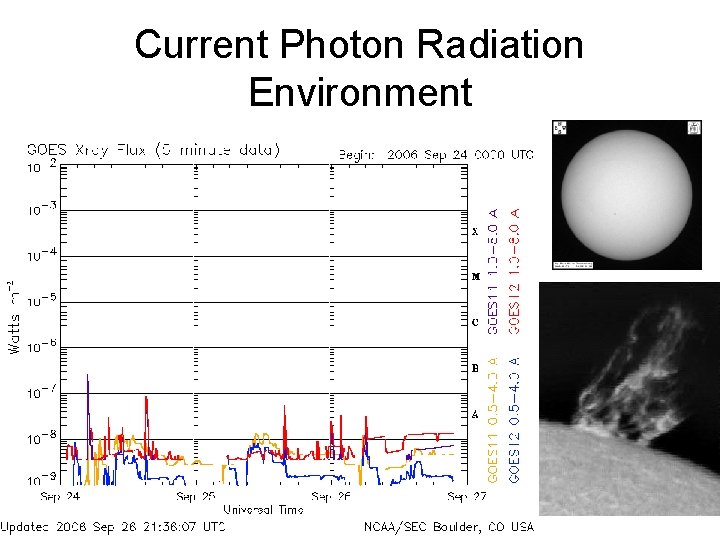
Current Photon Radiation Environment
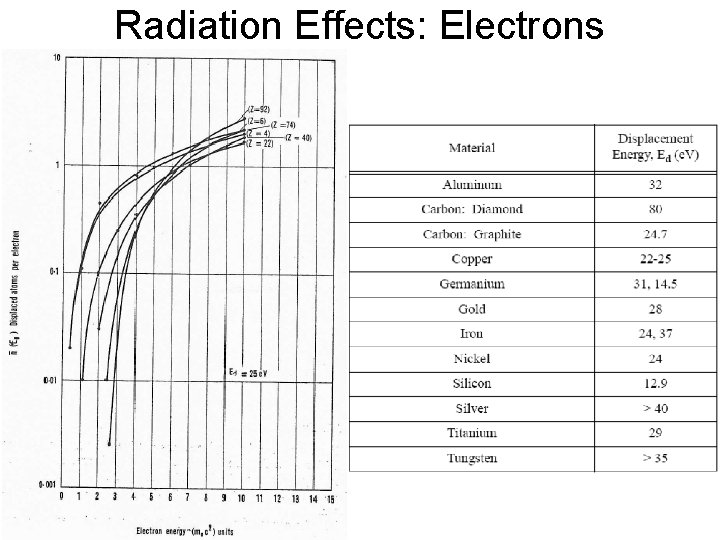
Radiation Effects: Electrons
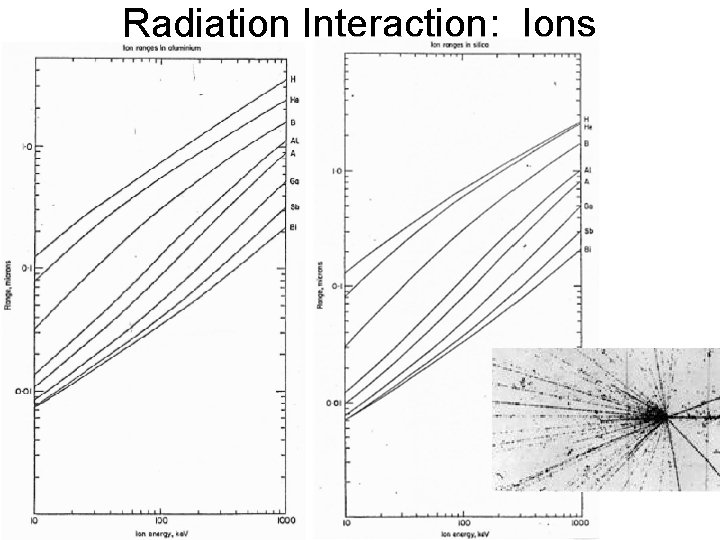
Radiation Interaction: Ions
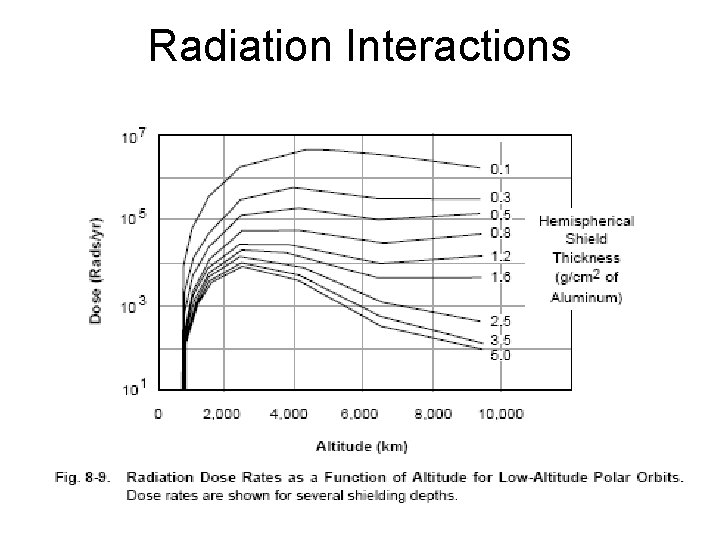
Radiation Interactions
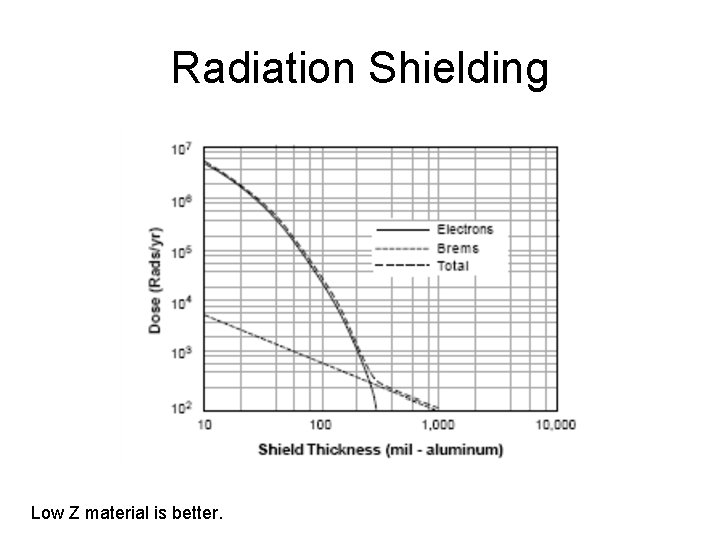
Radiation Shielding Low Z material is better.
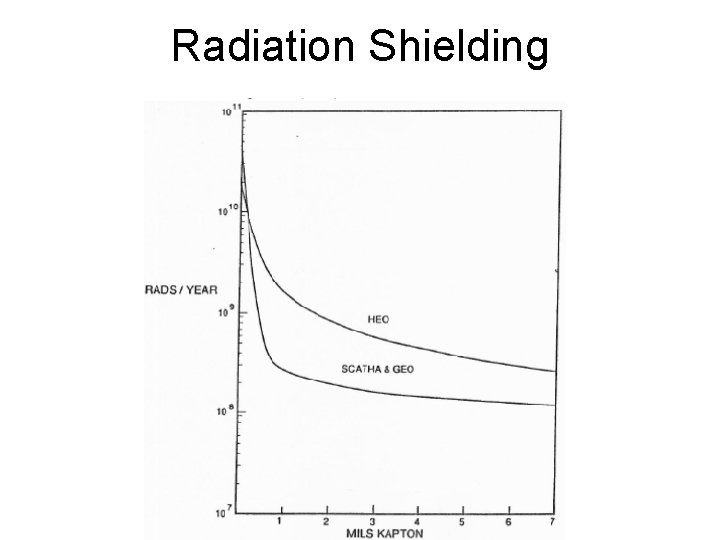
Radiation Shielding
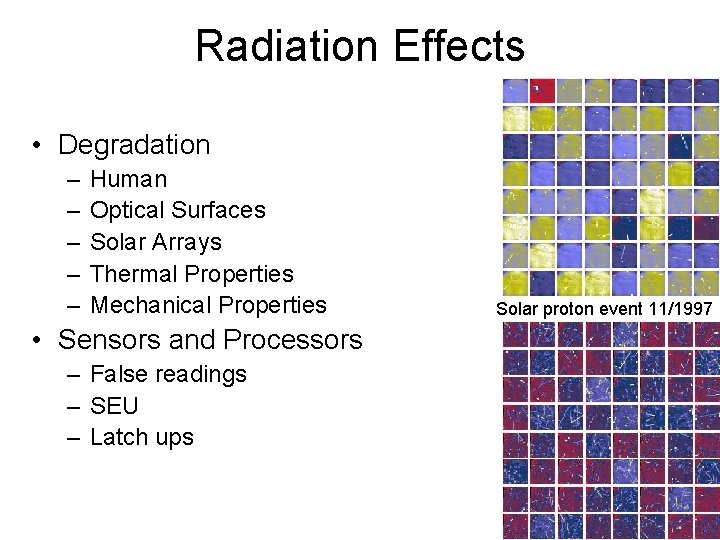
Radiation Effects • Degradation – – – Human Optical Surfaces Solar Arrays Thermal Properties Mechanical Properties • Sensors and Processors – False readings – SEU – Latch ups Solar proton event 11/1997
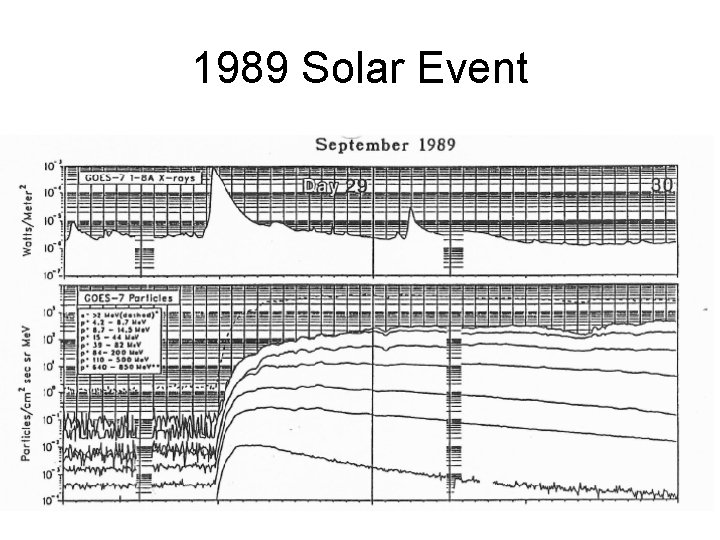
1989 Solar Event
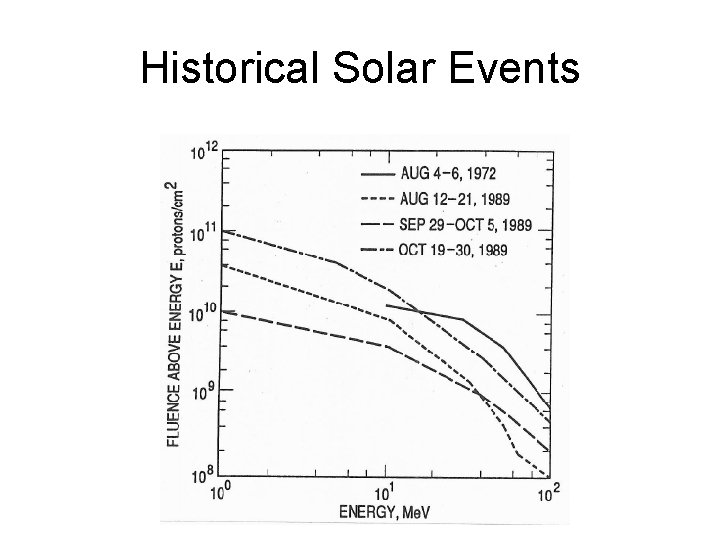
Historical Solar Events
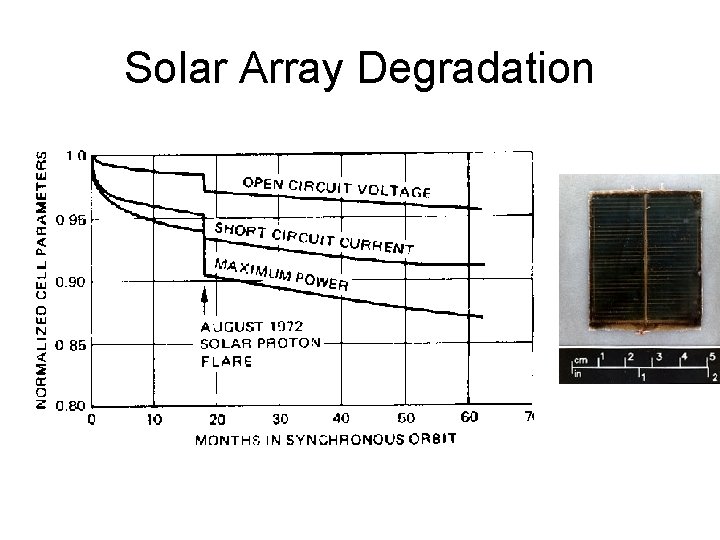
Solar Array Degradation
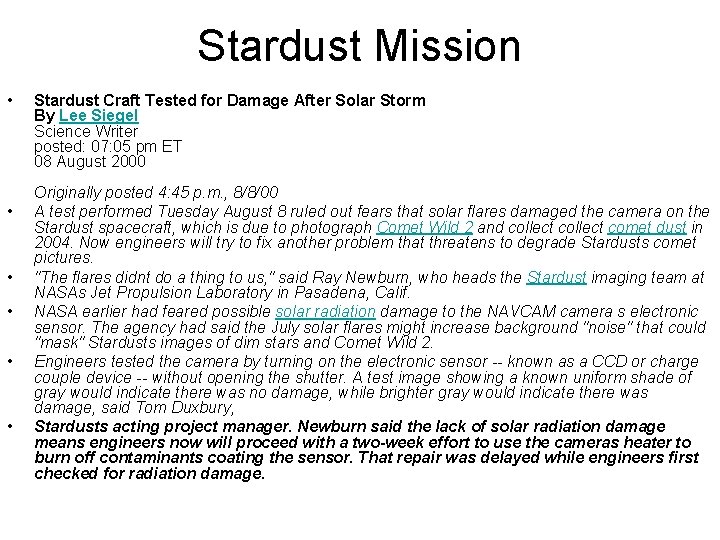
Stardust Mission • • • Stardust Craft Tested for Damage After Solar Storm By Lee Siegel Science Writer posted: 07: 05 pm ET 08 August 2000 Originally posted 4: 45 p. m. , 8/8/00 A test performed Tuesday August 8 ruled out fears that solar flares damaged the camera on the Stardust spacecraft, which is due to photograph Comet Wild 2 and collect comet dust in 2004. Now engineers will try to fix another problem that threatens to degrade Stardusts comet pictures. "The flares didnt do a thing to us, " said Ray Newburn, who heads the Stardust imaging team at NASAs Jet Propulsion Laboratory in Pasadena, Calif. NASA earlier had feared possible solar radiation damage to the NAVCAM camera s electronic sensor. The agency had said the July solar flares might increase background "noise" that could "mask" Stardusts images of dim stars and Comet Wild 2. Engineers tested the camera by turning on the electronic sensor -- known as a CCD or charge couple device -- without opening the shutter. A test image showing a known uniform shade of gray would indicate there was no damage, while brighter gray would indicate there was damage, said Tom Duxbury, Stardusts acting project manager. Newburn said the lack of solar radiation damage means engineers now will proceed with a two-week effort to use the cameras heater to burn off contaminants coating the sensor. That repair was delayed while engineers first checked for radiation damage.
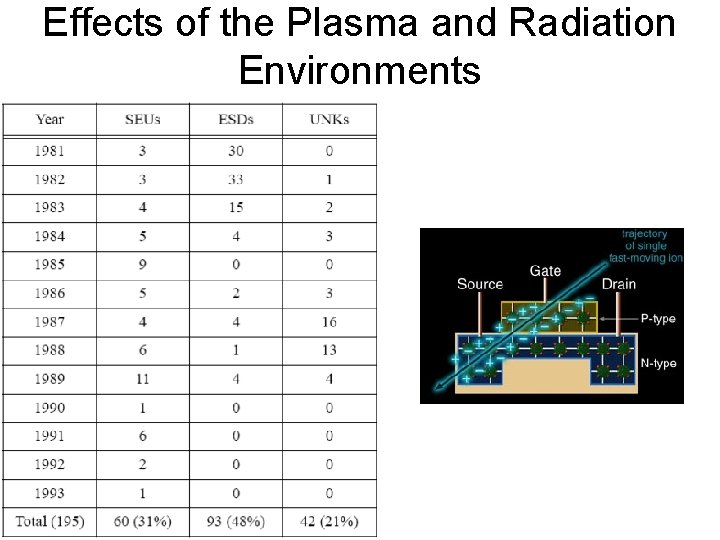
Effects of the Plasma and Radiation Environments