
THE SPACE AGE The Space Race 1957 1975
- Slides: 20
THE SPACE AGE
The Space Race (1957 -1975) • In the aftermath of World War II, the Soviet Union and the United States captured Germany rocketry, designs and personnel • World War to Cold War • Competition – Explore outer space with satellites – Send humans to space – Land humans on the Moon
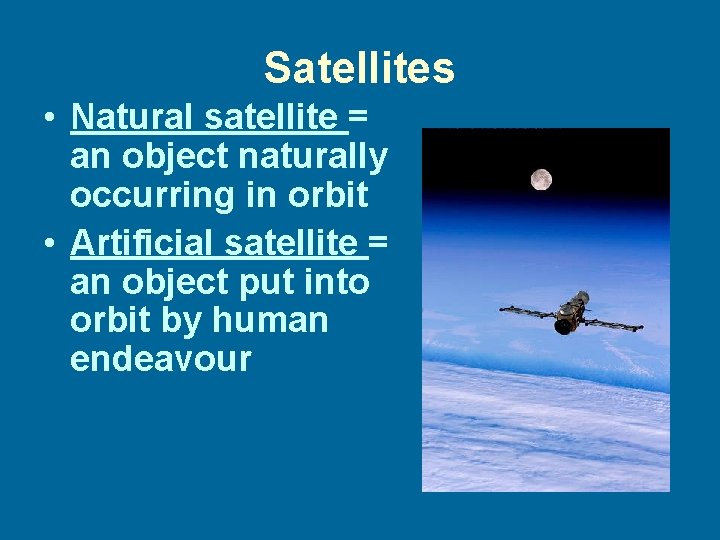
Satellites • Natural satellite = an object naturally occurring in orbit • Artificial satellite = an object put into orbit by human endeavour
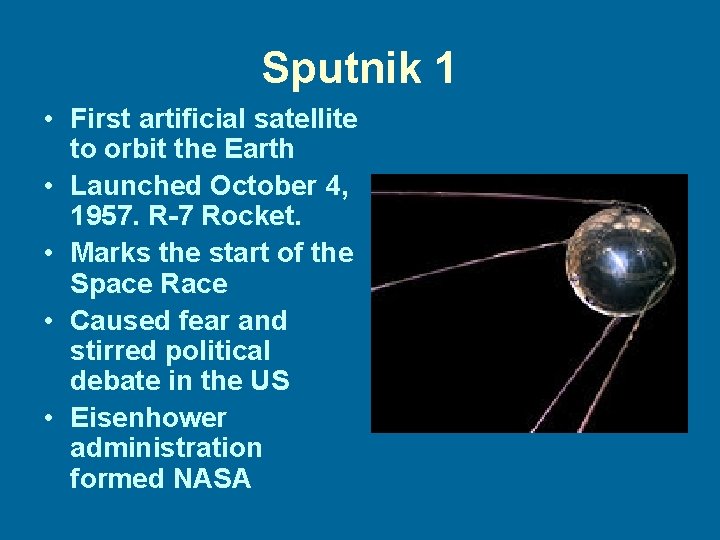
Sputnik 1 • First artificial satellite to orbit the Earth • Launched October 4, 1957. R-7 Rocket. • Marks the start of the Space Race • Caused fear and stirred political debate in the US • Eisenhower administration formed NASA
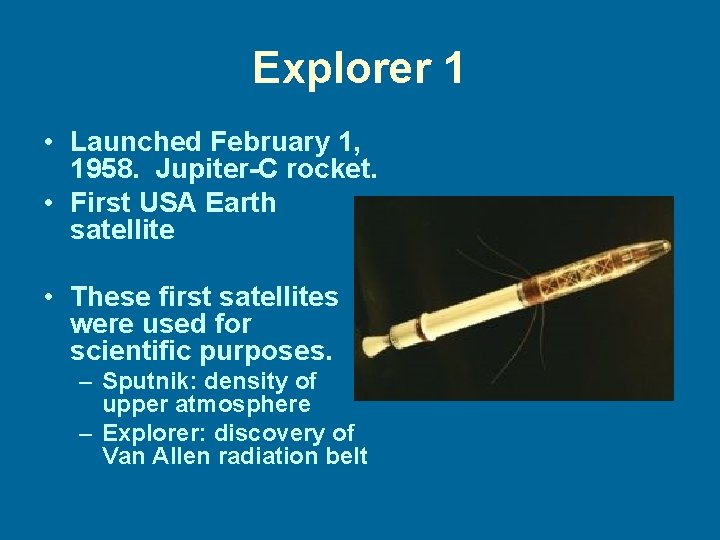
Explorer 1 • Launched February 1, 1958. Jupiter-C rocket. • First USA Earth satellite • These first satellites were used for scientific purposes. – Sputnik: density of upper atmosphere – Explorer: discovery of Van Allen radiation belt
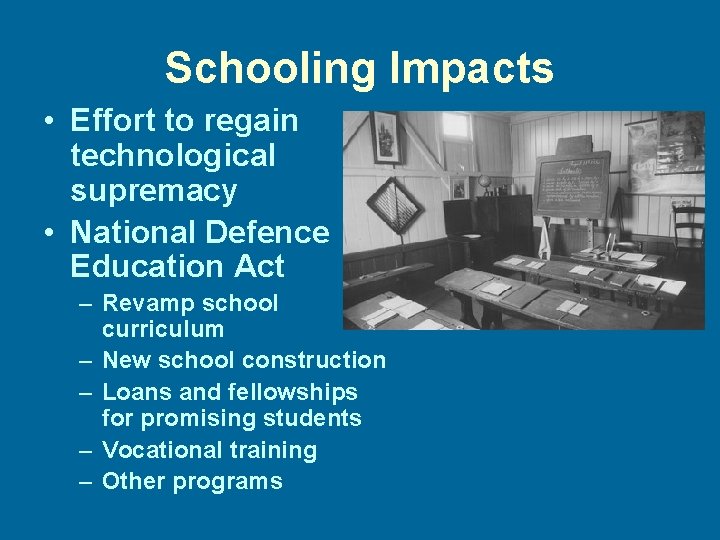
Schooling Impacts • Effort to regain technological supremacy • National Defence Education Act – Revamp school curriculum – New school construction – Loans and fellowships for promising students – Vocational training – Other programs
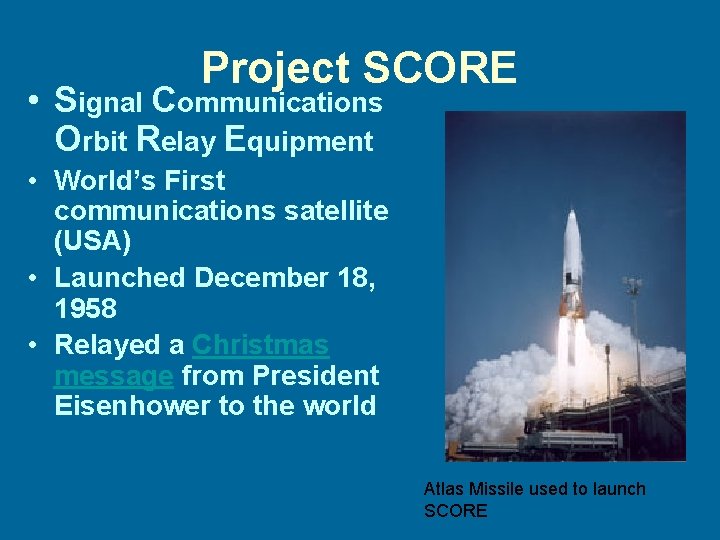
Project SCORE • Signal Communications Orbit Relay Equipment • World’s First communications satellite (USA) • Launched December 18, 1958 • Relayed a Christmas message from President Eisenhower to the world Atlas Missile used to launch SCORE
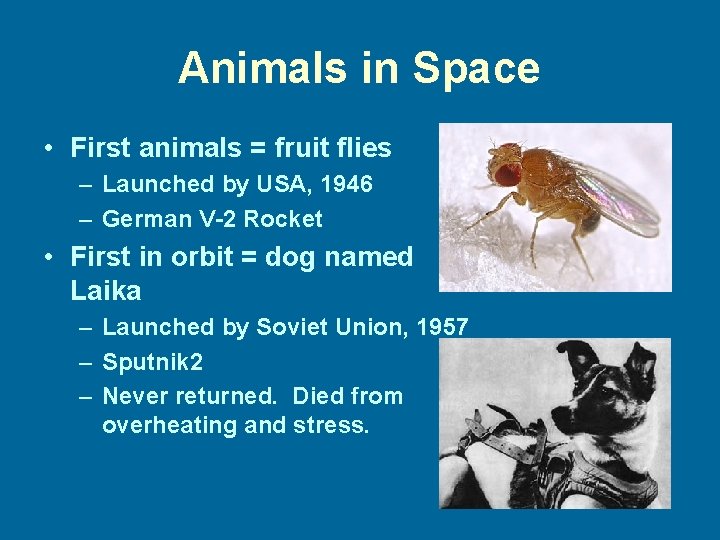
Animals in Space • First animals = fruit flies – Launched by USA, 1946 – German V-2 Rocket • First in orbit = dog named Laika – Launched by Soviet Union, 1957 – Sputnik 2 – Never returned. Died from overheating and stress.
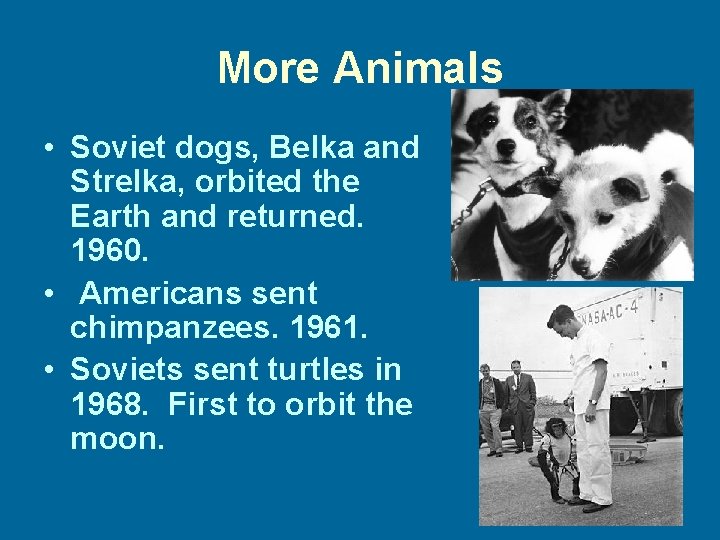
More Animals • Soviet dogs, Belka and Strelka, orbited the Earth and returned. 1960. • Americans sent chimpanzees. 1961. • Soviets sent turtles in 1968. First to orbit the moon.
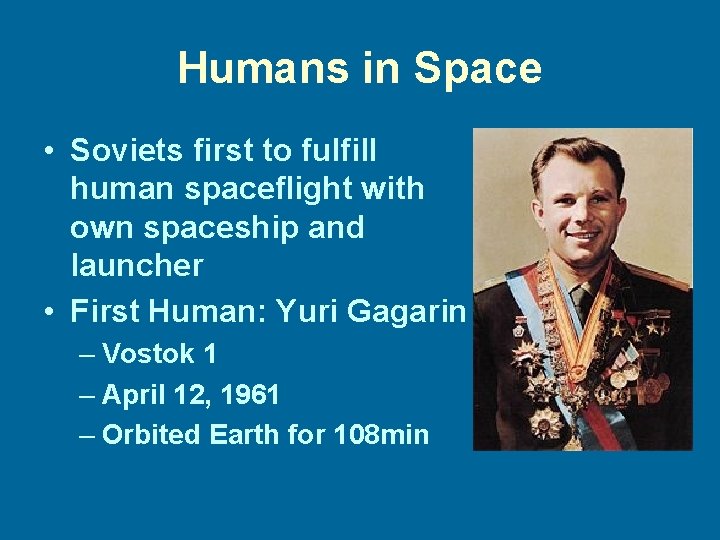
Humans in Space • Soviets first to fulfill human spaceflight with own spaceship and launcher • First Human: Yuri Gagarin – Vostok 1 – April 12, 1961 – Orbited Earth for 108 min
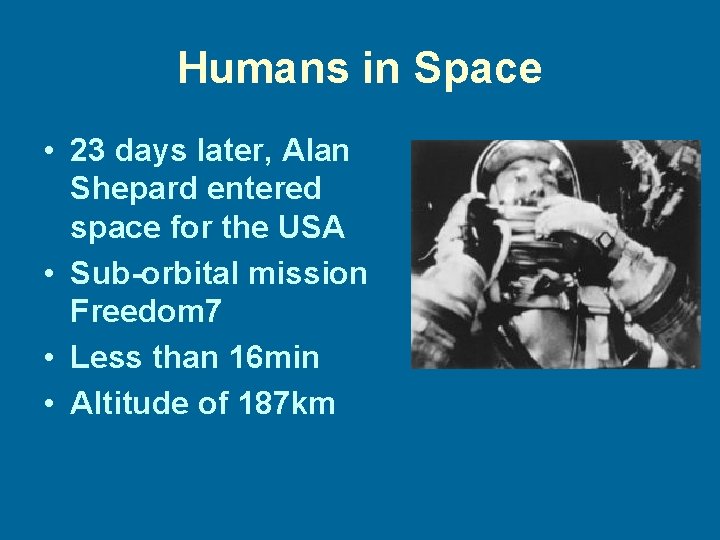
Humans in Space • 23 days later, Alan Shepard entered space for the USA • Sub-orbital mission Freedom 7 • Less than 16 min • Altitude of 187 km
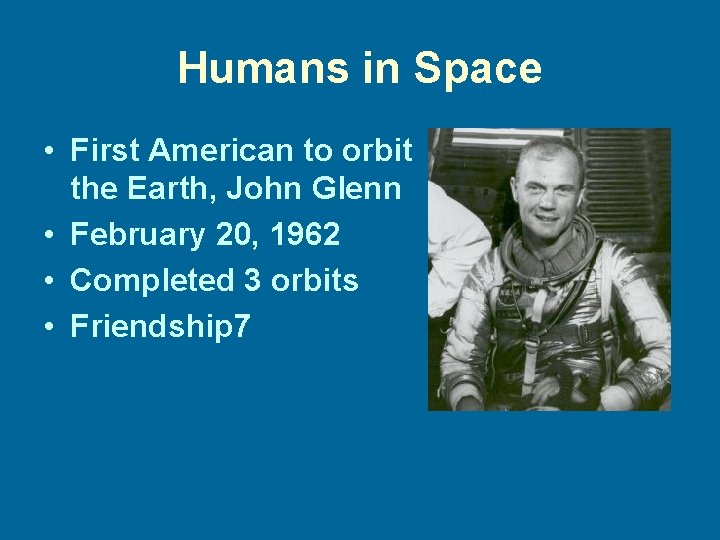
Humans in Space • First American to orbit the Earth, John Glenn • February 20, 1962 • Completed 3 orbits • Friendship 7
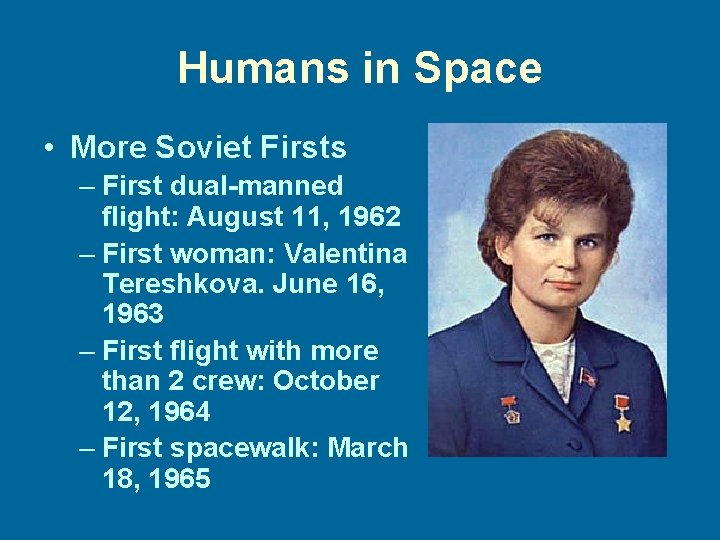
Humans in Space • More Soviet Firsts – First dual-manned flight: August 11, 1962 – First woman: Valentina Tereshkova. June 16, 1963 – First flight with more than 2 crew: October 12, 1964 – First spacewalk: March 18, 1965
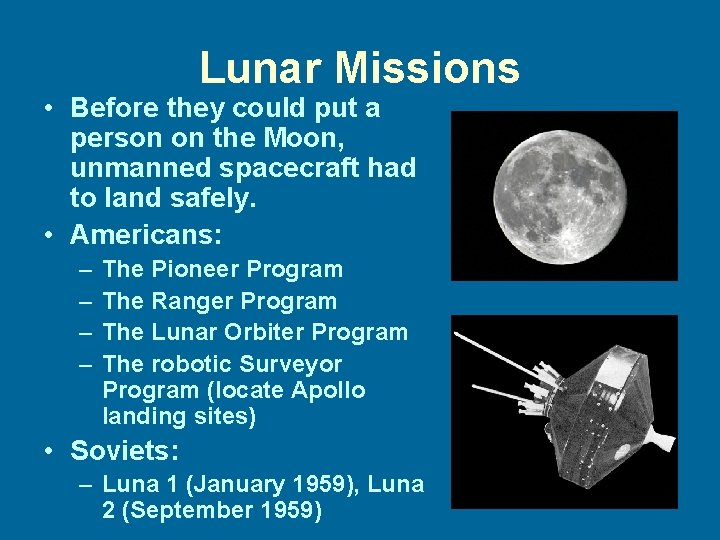
Lunar Missions • Before they could put a person on the Moon, unmanned spacecraft had to land safely. • Americans: – – The Pioneer Program The Ranger Program The Lunar Orbiter Program The robotic Surveyor Program (locate Apollo landing sites) • Soviets: – Luna 1 (January 1959), Luna 2 (September 1959)
The Apollo Program • Established in 1961 President Kennedy and V. P. Lyndon B. Johnson • Goal: manned moonlanding missions • December 21, 1968: James Lovell, Frank Borman and Bill Anders in Apollo 8 orbited the moon 10 times
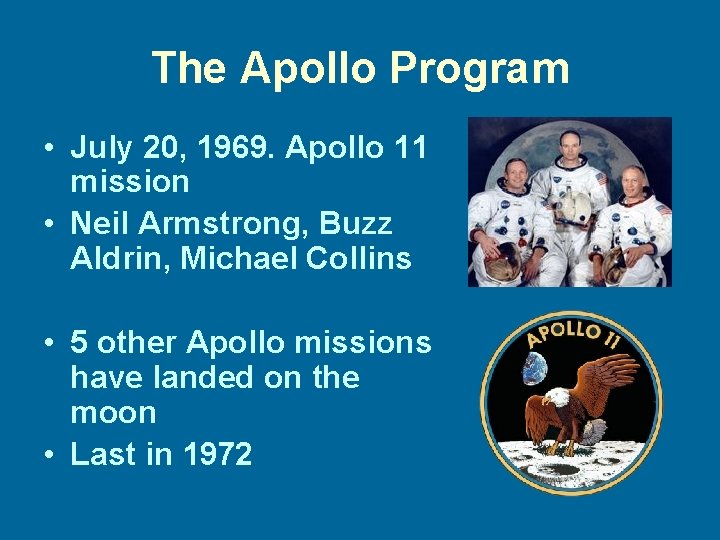
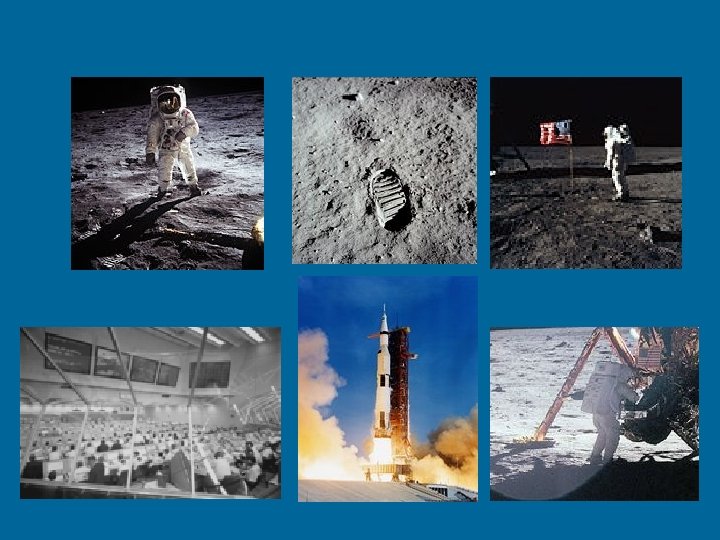
The Apollo Program • July 20, 1969. Apollo 11 mission • Neil Armstrong, Buzz Aldrin, Michael Collins • 5 other Apollo missions have landed on the moon • Last in 1972
Since the end of the Race • Science and math education in school • Thousands of artificial satellites • Food sterilization and packaging techniques • Stay dry clothing, anti-fog goggles, scratch resistant glasses, athletic shoes, cordless tools, CAT scans and MRI
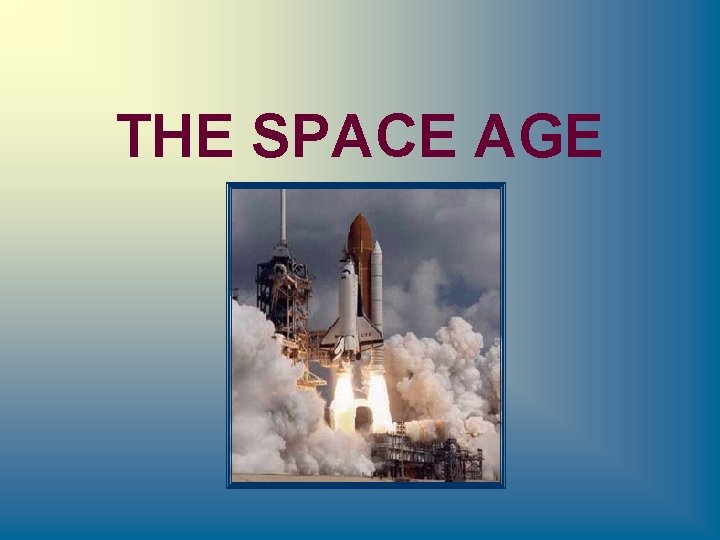
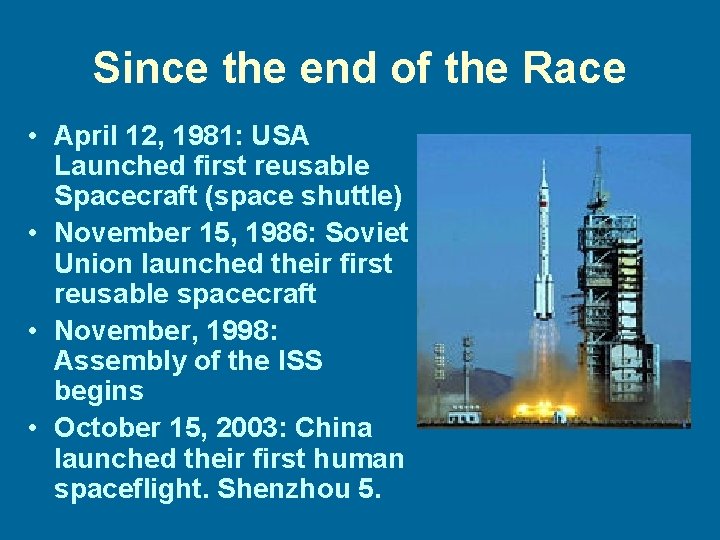
Since the end of the Race • April 12, 1981: USA Launched first reusable Spacecraft (space shuttle) • November 15, 1986: Soviet Union launched their first reusable spacecraft • November, 1998: Assembly of the ISS begins • October 15, 2003: China launched their first human spaceflight. Shenzhou 5.
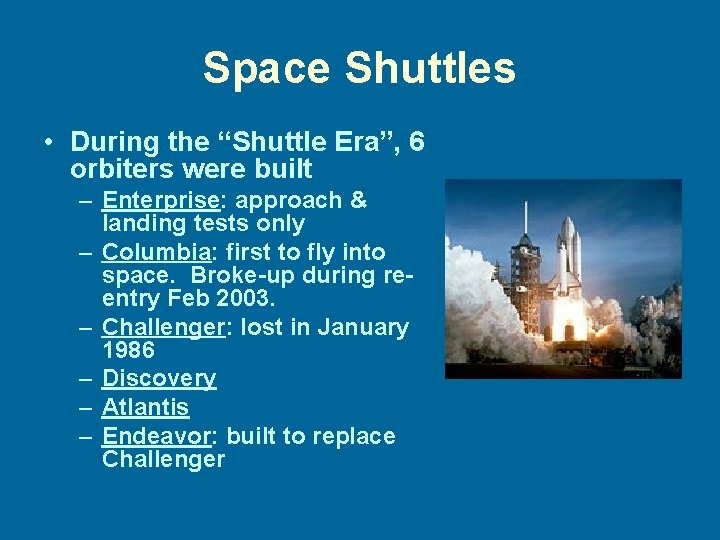
Space Shuttles • During the “Shuttle Era”, 6 orbiters were built – Enterprise: approach & landing tests only – Columbia: first to fly into space. Broke-up during reentry Feb 2003. – Challenger: lost in January 1986 – Discovery – Atlantis – Endeavor: built to replace Challenger