
The South African Cities Urban Safety Reference Group
The South African Cities’ Urban Safety Reference Group: A Model for Integrating Safety in National Urban Policies 0 AFUS Learning Exchange | Durban | 01 November 2017 Mr. Terence Smith, GIZ Violence & Crime Prevention Programme
OVERVIEW Background Evolution of the Urban Safety Reference Group 1. 2. 3. 4. USRG Convening Knowledge Generation Knowledge Application Support Capacity building & learning Key lessons 1
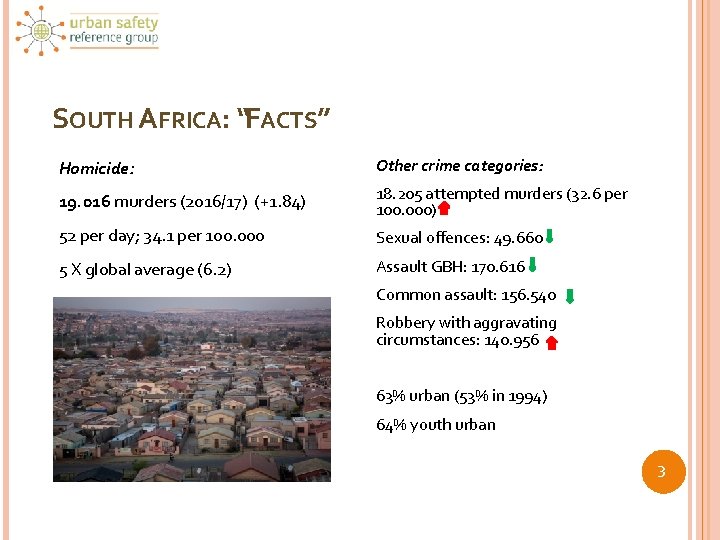
SOUTH AFRICA: “FACTS” Homicide: Other crime categories: 19. 016 murders (2016/17) (+1. 84) 18. 205 attempted murders (32. 6 per 100. 000) 52 per day; 34. 1 per 100. 000 Sexual offences: 49. 660 5 X global average (6. 2) Assault GBH: 170. 616 Common assault: 156. 540 Robbery with aggravating circumstances: 140. 956 63% urban (53% in 1994) 64% youth urban 3
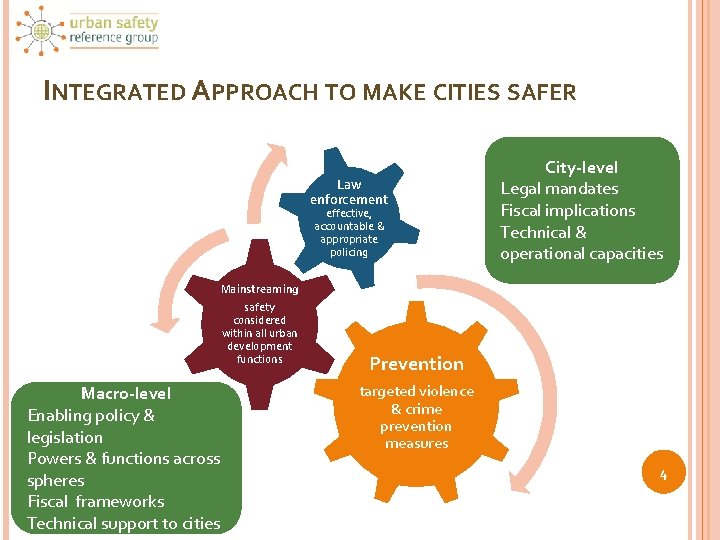
INTEGRATED APPROACH TO MAKE CITIES SAFER Law enforcement effective, accountable & appropriate policing Mainstreaming safety considered within all urban development functions Macro-level Enabling policy & legislation Powers & functions across spheres Fiscal frameworks Technical support to cities City-level Legal mandates Fiscal implications Technical & operational capacities Prevention targeted violence & crime prevention measures 4
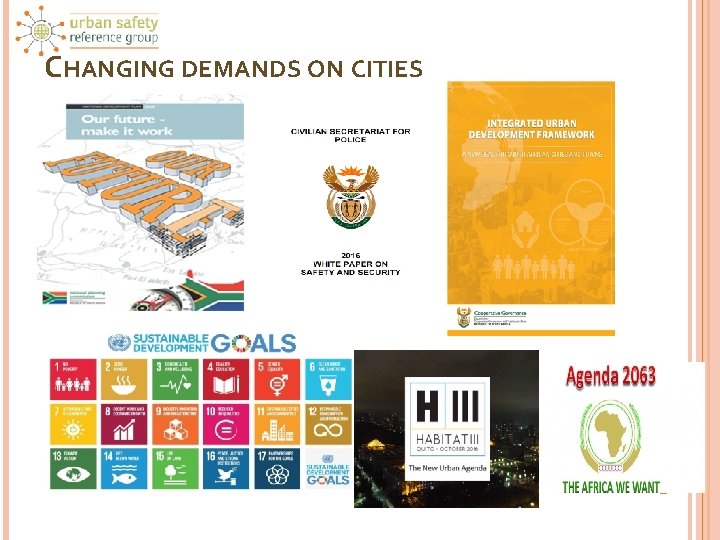
CHANGING DEMANDS ON CITIES 5
OBJECTIVES OF THE USRG Overall goal - Advancing the urban safety agenda in SA – to achieve greater policy, legislative, institutional & fiscal attention and evidence-based investment in violence and crime prevention Through: � Peer-to-Peer Learning amongst practitioners on urban safety � Knowledge Generation and Sharing among city practitioners and national departments � Capacity Building (e. g. first executive course on urban safety 2017) � Promoting Application of Innovative Approaches � Advocacy e. g. through contributions to relevant policies � South-South/ North-South Learning and Cooperation (e. g. AFUS, EFUS etc. ) 6
MEMBERS OF THE URBAN SAFETY REFERENCE GROUP City Level Safety managers and practitioners in 8 SACN member cities National Level South African Local Government Association (SALGA), Department of Cooperative Governance (DCOG), Department of Social Development (DSD), Civilian Secretariat for Police Service (CSPS), National Treasury - Neighbourhood Development Programme 7
Convened by the South African Cities Network Supported by the GIZ- Inclusive Violence and Crime Prevention Programme In partnership with the Institute for Safety Governance and Criminology at the University of Cape Town 8
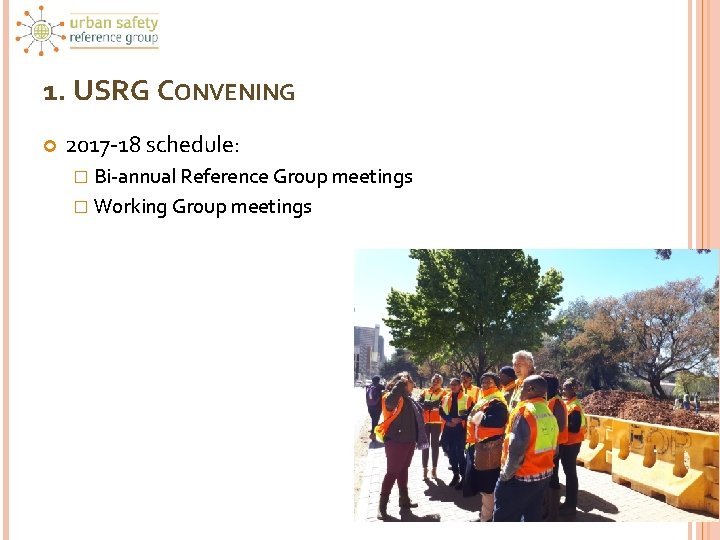
1. USRG CONVENING 2017 -18 schedule: � Bi-annual Reference Group meetings � Working Group meetings
2) KNOWLEDGE GENERATION Policy briefs State of Urban Safety in South Africa annual reporting Urban Safety Data & Indicators project � Annual Metro crime statistics & analytics � Indicators database � Crime and Fear Index Crime hotspots/perceptions research 10
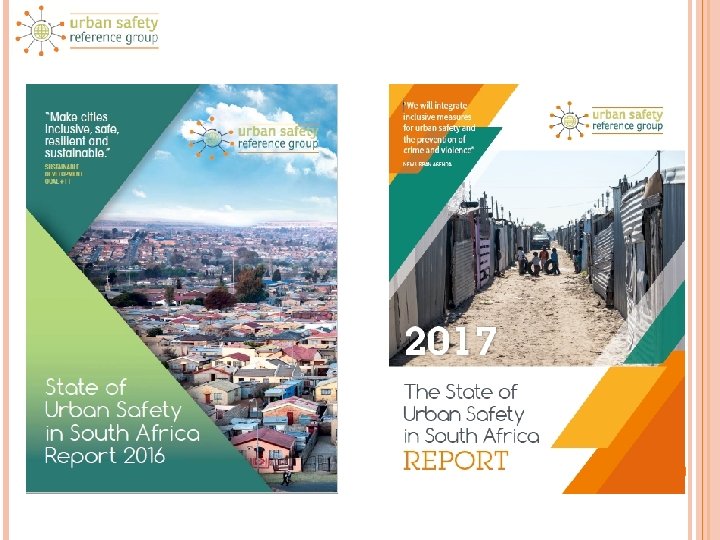
11
![POLICY BRIEFS Published so far: 1. 2. 3. 4. Series for 2017 -18 [PLANNED]:](http://slidetodoc.com/presentation_image_h2/7068b36a257da7105436a5ee81ab6053/image-12.jpg "POLICY BRIEFS Published so far: 1. 2. 3. 4. Series for 2017 -18 [PLANNED]:")
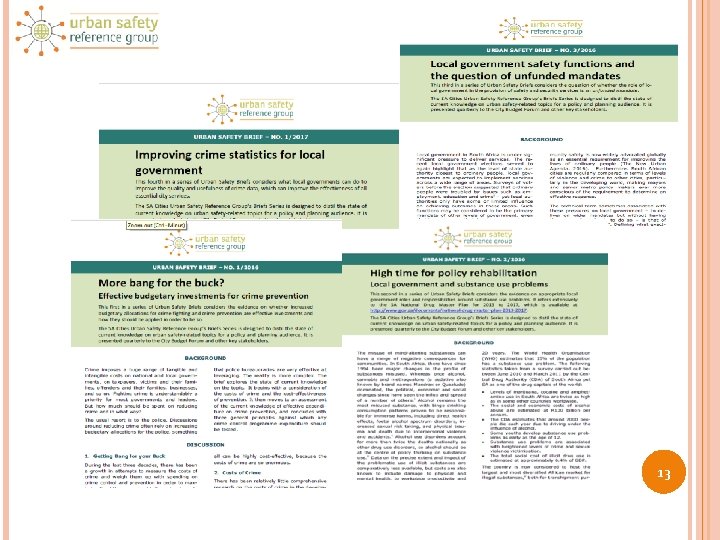
POLICY BRIEFS Published so far: 1. 2. 3. 4. Series for 2017 -18 [PLANNED]: 1. 2. 3. 4. Urban Safety Brief no. 1/2016: More bang for the buck? Effective budgetary investments for crime prevention Urban Safety Brief no. 2/2016: High time for policy rehabilitation. Local government and substance use problems Urban Safety Brief no. 3/2016: Local government safety functions and the question of unfunded mandates Urban Safety Brief no. 1/2017: Improving crime statistics for local government Public Open Space Urban Safety & Public Employment Programmes By-Laws City Safety Strategies Planning ahead for: � � � Improving formulation and tracking of policy recommendations Presentation to City Budget Forum Maximising dissemination / impact 12
13
3) KNOWLEDGE APPLICATION SUPPORT Crime hotspots/perception research � Workshopping (3 pilot cities) � Extension to additional cities Working Groups Identifying additional opportunities 14
4) CAPACITY BUILDING & LEARNING Indicators/data training Urban Safety Masterclass (20 -24 November 2017) Content support to seminars and conferences � Urban Conference (30 October) � AFUS Learning Exchange 2017 (1 – 3 November) � Civilian Secretariat for Police Service conference (2018) International/South-South exchange 15
SOME KEY LESSONS Building on existing institution (SACN) and format (reference groups) Dedicated secretariat with funding for activities Leveraging partnerships Membership (cities and national government) Start modestly Flexibility to evolve and adapt 16
THANK YOU 17
- Slides: 17