
The Sons of Colonists formed the First Liberty
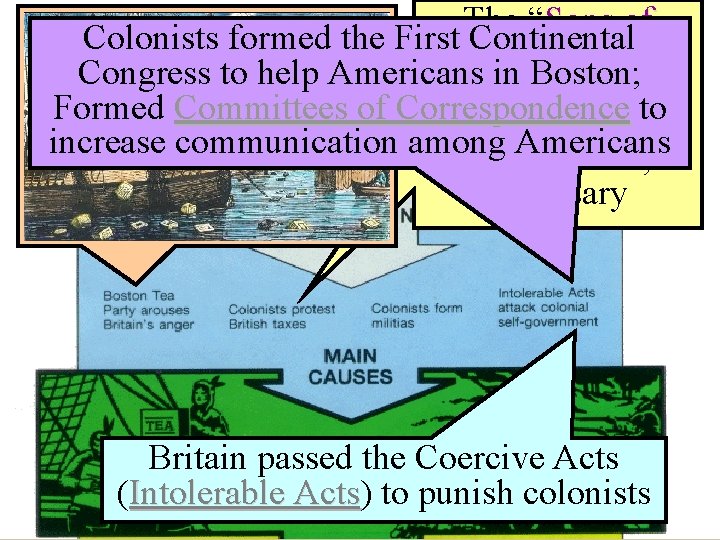
The “ Sons of Colonists formed the First. Liberty” Continental urged Liberty Congress to help Americans in Boston; colonial resistance Formed Committees of Correspondence to to the Stamp Act increase communication among Americans using violence, if necessary Britain passed the Coercive Acts (Intolerable Acts) Acts to punish colonists
The Enlightenment ■ The American Revolution was inspired by the Enlightenment: – John Locke—all men are born with natural rights & citizens can revolt from tyrannical gov’ts – Montesquieu—separation of powers; checks & balances – Thomas Paine’s Common Sense urged colonial independence
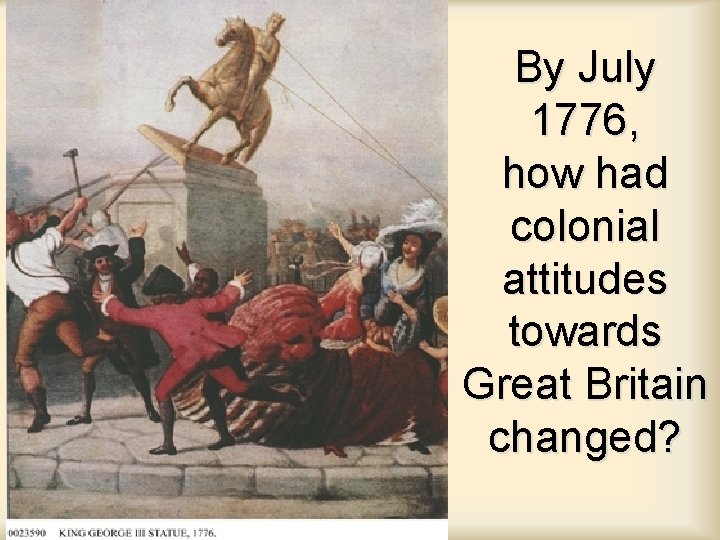
By July 1776, how had colonial attitudes towards Great Britain changed?
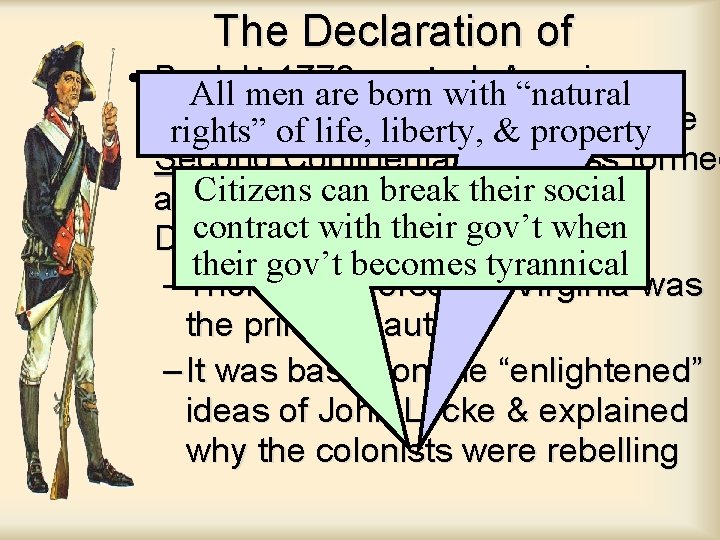
The Declaration of • By. All July 1776, enough Americans Independence men are born with “natural were “patriots” that members of the rights” of life, liberty, & property Second Continental Congress formed Citizens can break to their social a 5 -man committee draft a contract with their gov’t when Declaration of Independence: their gov’t becomes tyrannical – Thomas Jefferson of Virginia was the principal author – It was based on the “enlightened” ideas of John Locke & explained why the colonists were rebelling

Declaration of Independence (July 4, 1776) Committee to draft the Declaration: Thomas Jefferson, Jefferson Ben Franklin, John Adams, Robert Livingston, & Roger Sherman
Class Activity Examining Excerpts from the Declaration of Independence
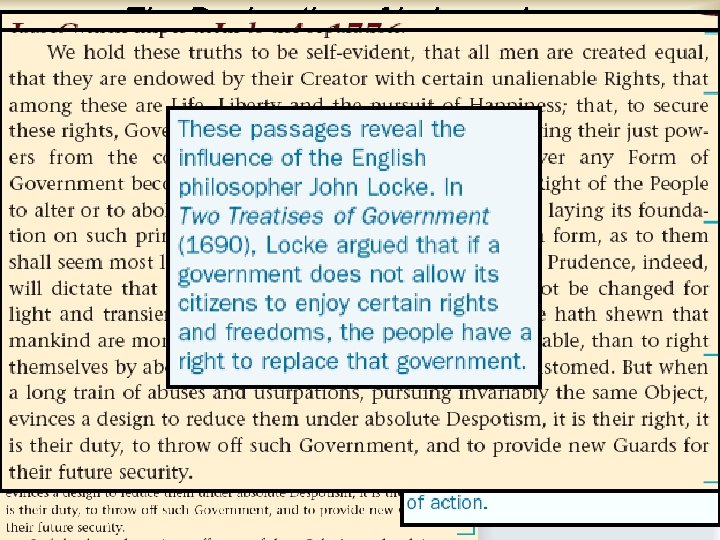
The Declaration of Independence & Influences from the Enlightenment

Independence Hall at the Second Continental Congress
■ Essential Question: – How did the American colonists defeat the British during the Revolutionary War? ■ Warm-Up Question: – What factors do you think enabled the Colonists, with a small & inexperienced army, to beat the enormous & powerful British?
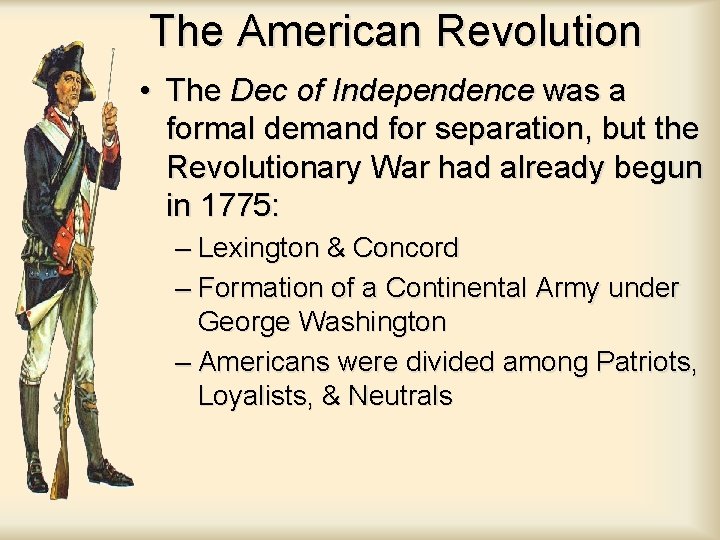
The American Revolution • The Dec of Independence was a formal demand for separation, but the Revolutionary War had already begun in 1775: – Lexington & Concord – Formation of a Continental Army under George Washington – Americans were divided among Patriots, Loyalists, & Neutrals
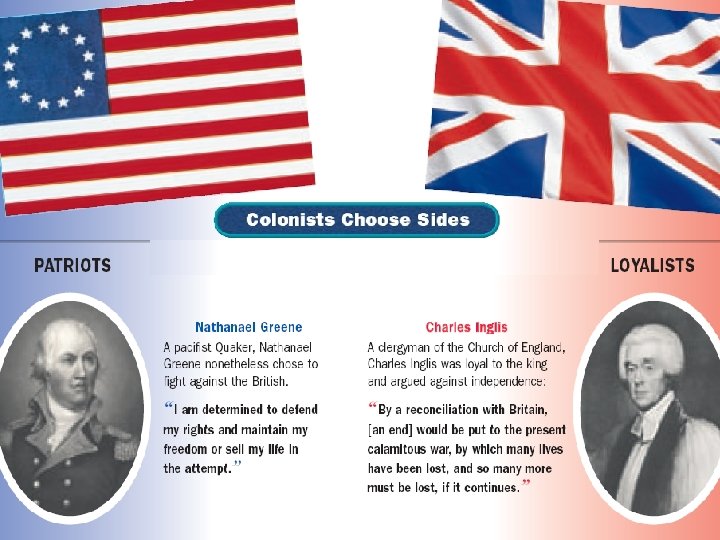
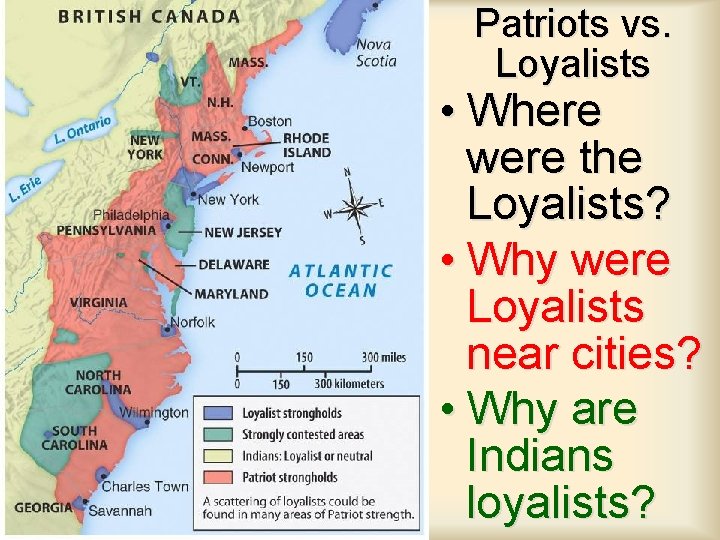
Patriots vs. Loyalists • Where were the Loyalists? • Why were Loyalists near cities? • Why are Indians loyalists?

Fighting the Revolutionary War
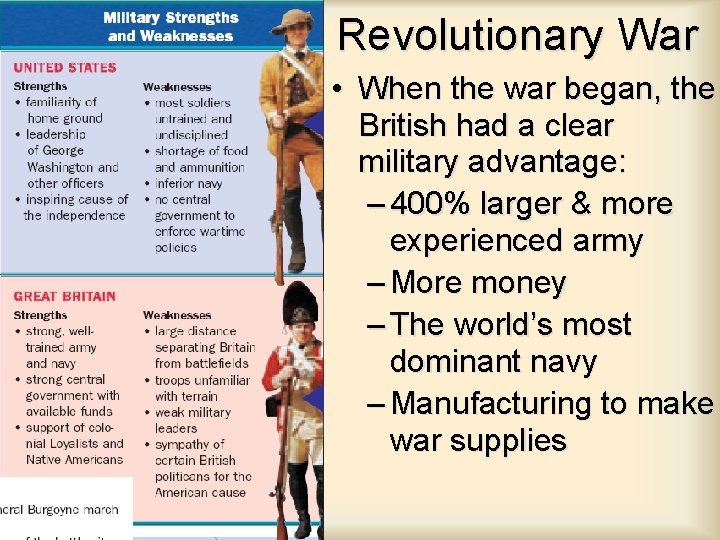
Revolutionary War • When the war began, the British had a clear military advantage: – 400% larger & more experienced army – More money – The world’s most dominant navy – Manufacturing to make war supplies
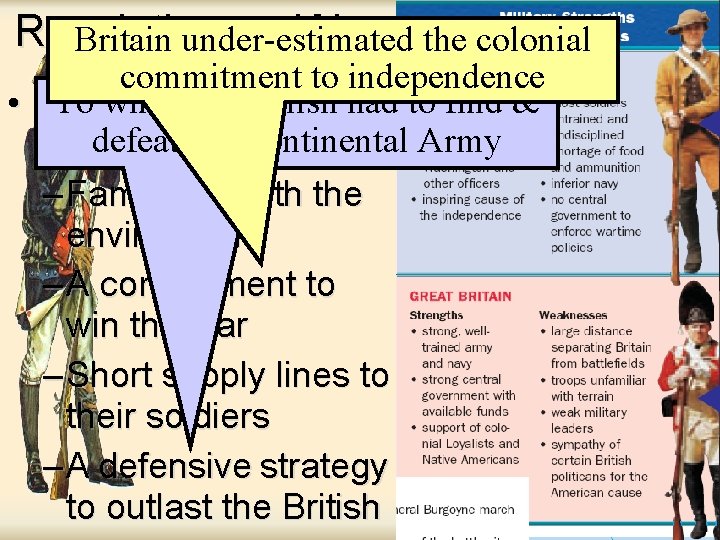
Revolutionary War the colonial Britain under-estimated commitment to independence To win, the English had to find & • But, the American defeat had: the Continental Army colonists – Familiarity with the environment – A commitment to win the war – Short supply lines to their soldiers – A defensive strategy to outlast the British
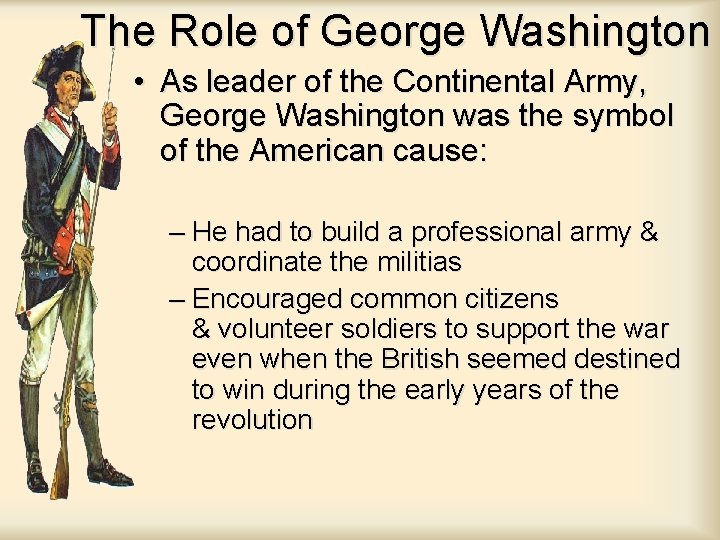
The Role of George Washington • As leader of the Continental Army, George Washington was the symbol of the American cause: – He had to build a professional army & coordinate the militias – Encouraged common citizens & volunteer soldiers to support the war even when the British seemed destined to win during the early years of the revolution
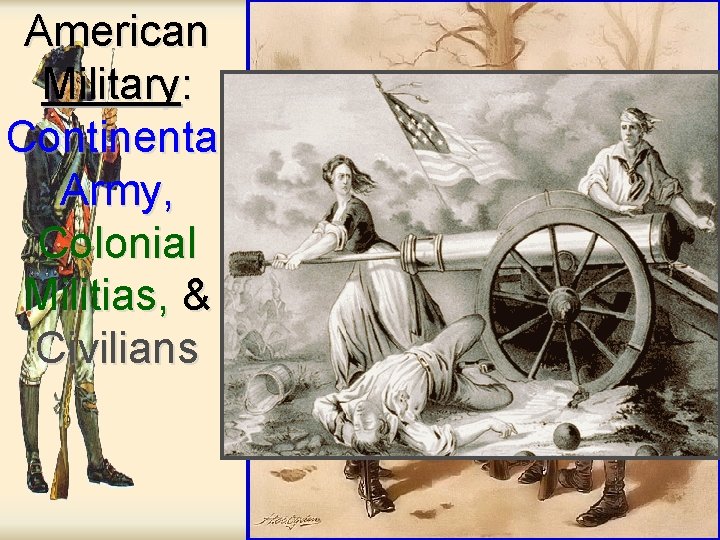
American Military: Continental Army, Colonial Militias, & Civilians
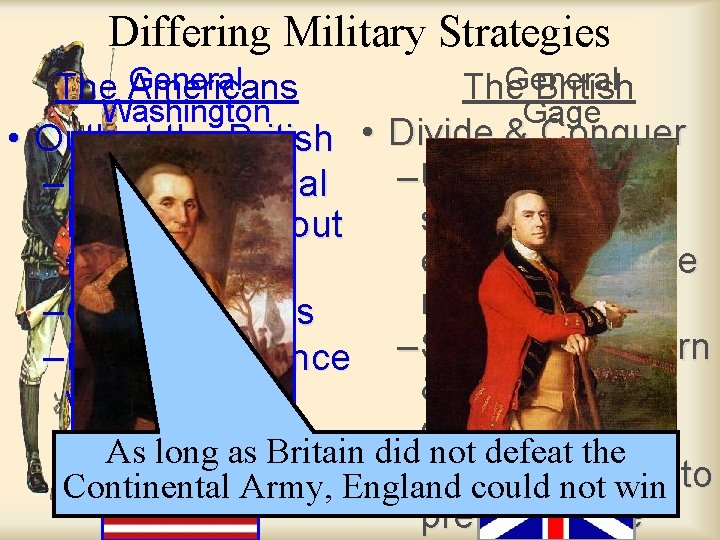
Differing Military Strategies General The Americans Washington • Outlast the British • –Defend colonial lands & drag out the war –Guerilla tactics –Make an alliance with France General The British Gage Divide & Conquer –Use Loyalists, seize property, encourage slave revolts –Split the Northern & Southern colonies As long as Britain did not defeat the –Blockade ports Continental Army, England could not win to prevent trade

The American Revolution began at Lexington & Concord
![Phase I: The Northern Campaign [1775 -1776]](http://slidetodoc.com/presentation_image_h2/7d4ef266a84c39a9fd63cb87f57e9a3e/image-21.jpg "Phase I: The Northern Campaign [1775 -1776]")
Phase I: The Northern Campaign [1775 -1776]
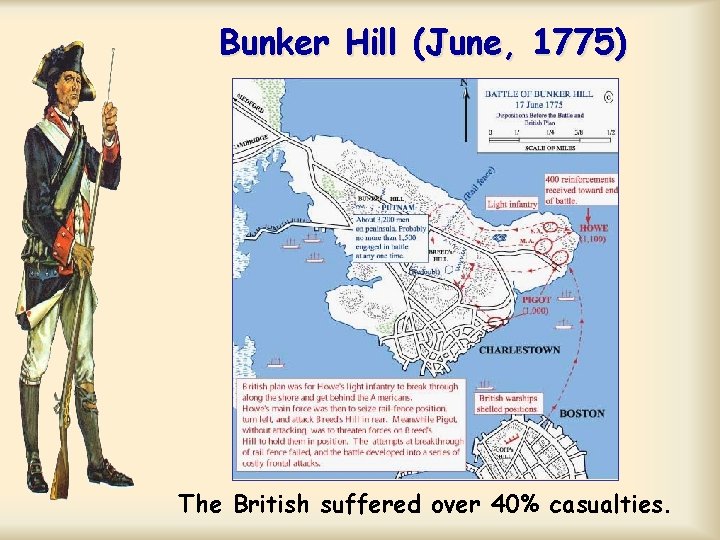
Bunker Hill (June, 1775) The British suffered over 40% casualties.
Bunker Hill (June, 1775) • Fought outside Boston. It is a fortified area on Breed’s Hill filled with several thousand colonists. • The battle shows that the colonists will fight if protected from British fire.
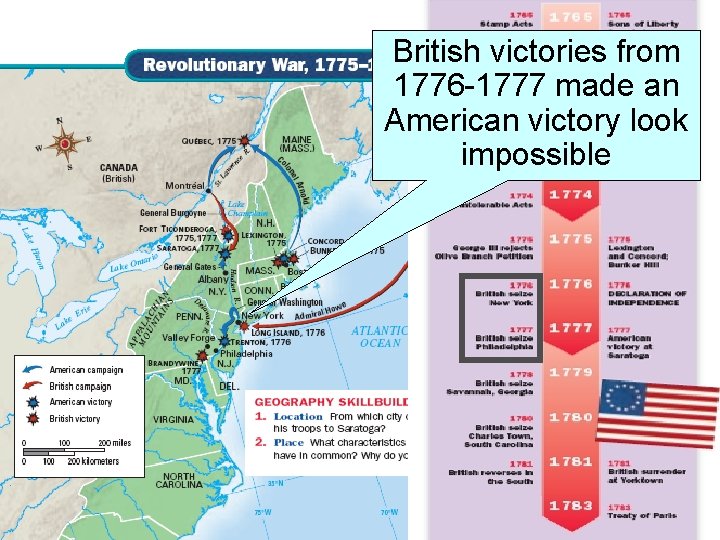
British victories from 1776 -1777 made an American victory look impossible
![Phase II: NY & PA [1777 -1778]](http://slidetodoc.com/presentation_image_h2/7d4ef266a84c39a9fd63cb87f57e9a3e/image-25.jpg "Phase II: NY & PA [1777 -1778]")
Phase II: NY & PA [1777 -1778]
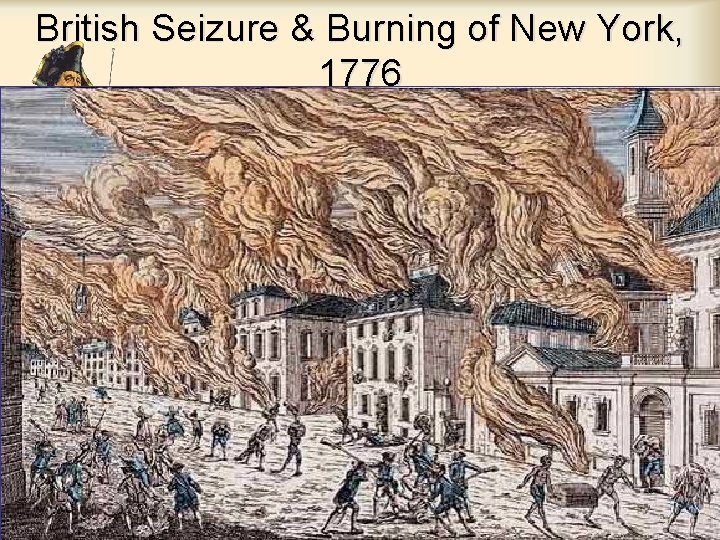
British Seizure & Burning of New York, 1776

On Christmas Eve 1776, Washington gave Americans hope by crossing the Delaware River & surprising British troops in Trenton, NJ
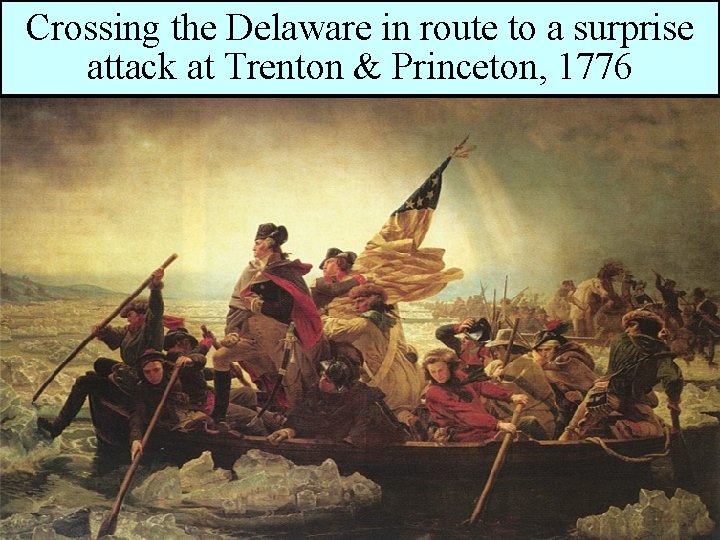
Crossing the Delaware in route to a surprise attack at Trenton & Princeton, 1776
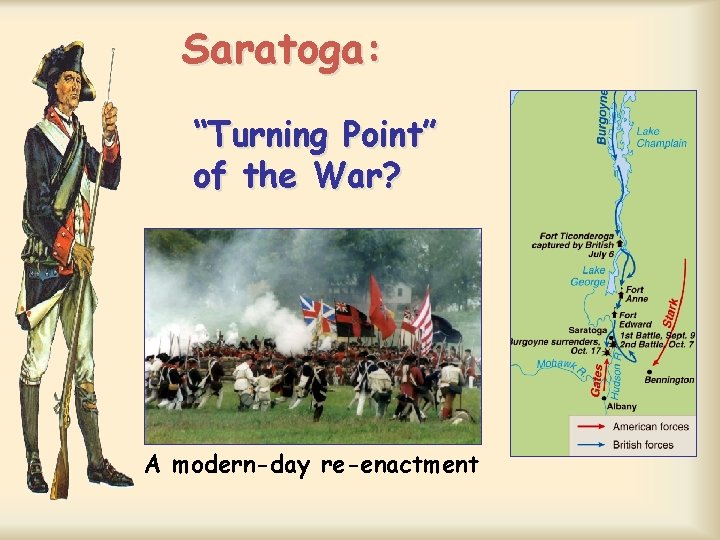
Saratoga: “Turning Point” of the War? A modern-day re-enactment
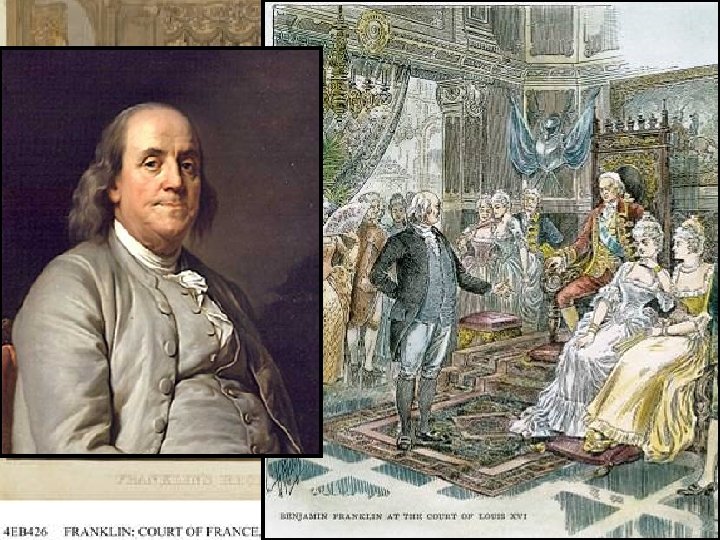
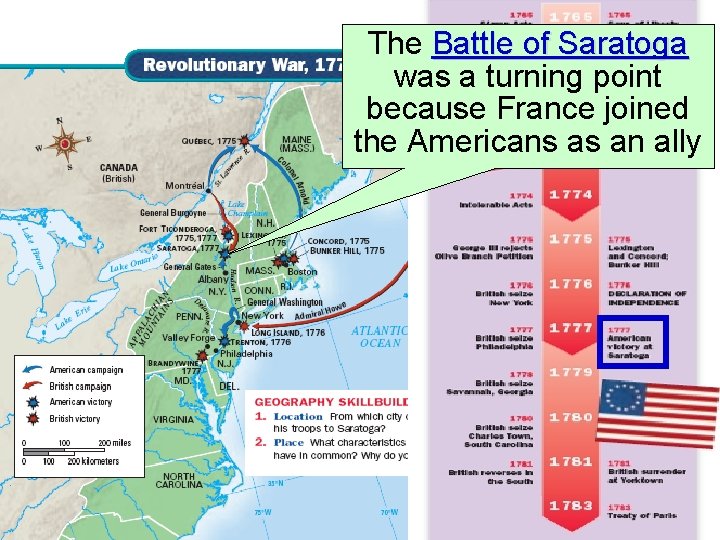
The Battle of Saratoga was a turning point because France joined the Americans as an ally
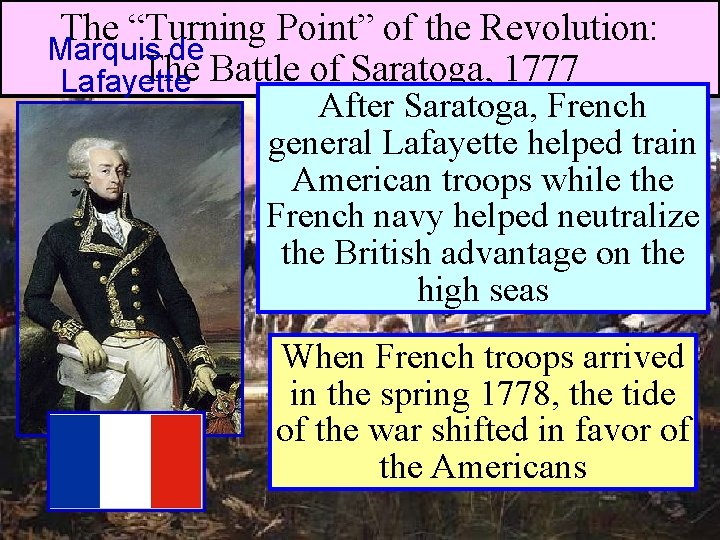
The “Turning Point” of the Revolution: Marquis de The Battle of Saratoga, 1777 Lafayette After Saratoga, French general Lafayette helped train American troops while the French navy helped neutralize the British advantage on the high seas When French troops arrived in the spring 1778, the tide of the war shifted in favor of the Americans
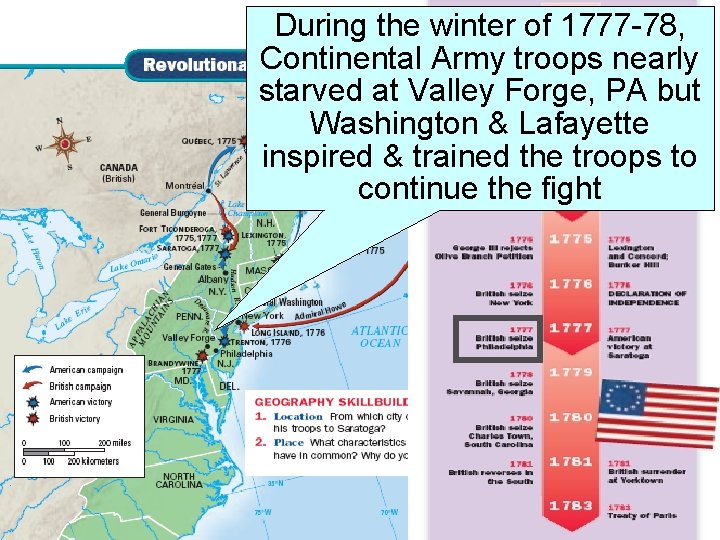
During the winter of 1777 -78, Continental Army troops nearly starved at Valley Forge, PA but Washington & Lafayette inspired & trained the troops to continue the fight
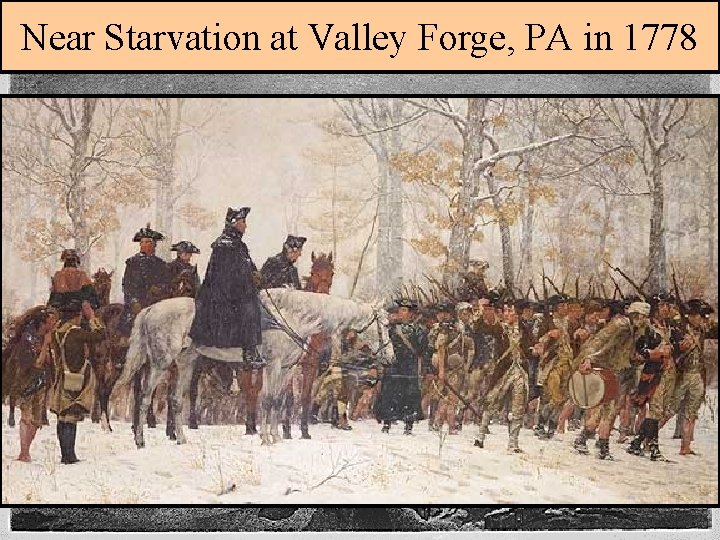
Near Starvation at Valley Forge, PA in 1778
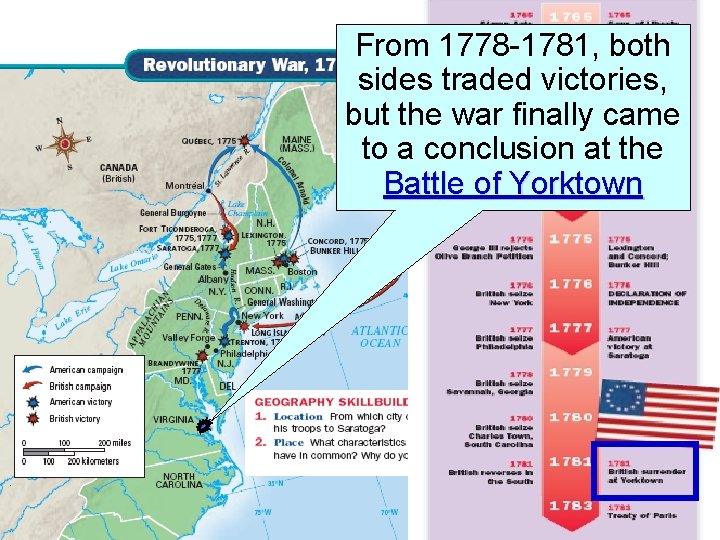
From 1778 -1781, both sides traded victories, but the war finally came to a conclusion at the Battle of Yorktown
![Phase III: The Southern Strategy [1780 -1781]](http://slidetodoc.com/presentation_image_h2/7d4ef266a84c39a9fd63cb87f57e9a3e/image-36.jpg "Phase III: The Southern Strategy [1780 -1781]")
Phase III: The Southern Strategy [1780 -1781]
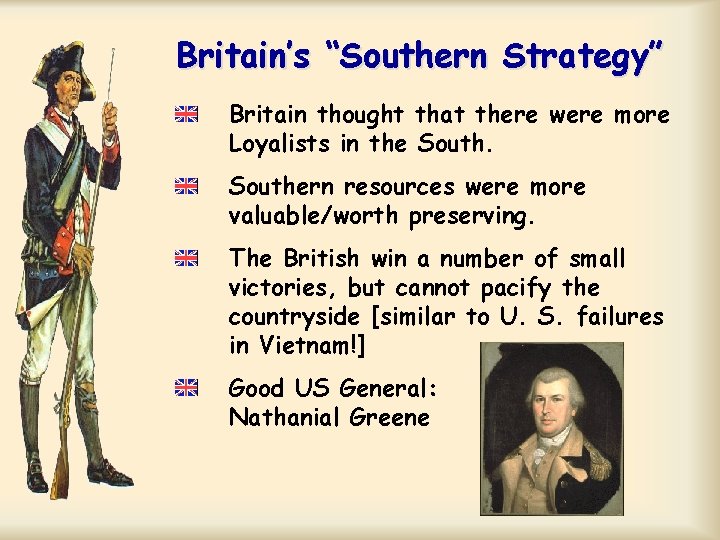
Britain’s “Southern Strategy” Britain thought that there were more Loyalists in the Southern resources were more valuable/worth preserving. The British win a number of small victories, but cannot pacify the countryside [similar to U. S. failures in Vietnam!] Good US General: Nathanial Greene
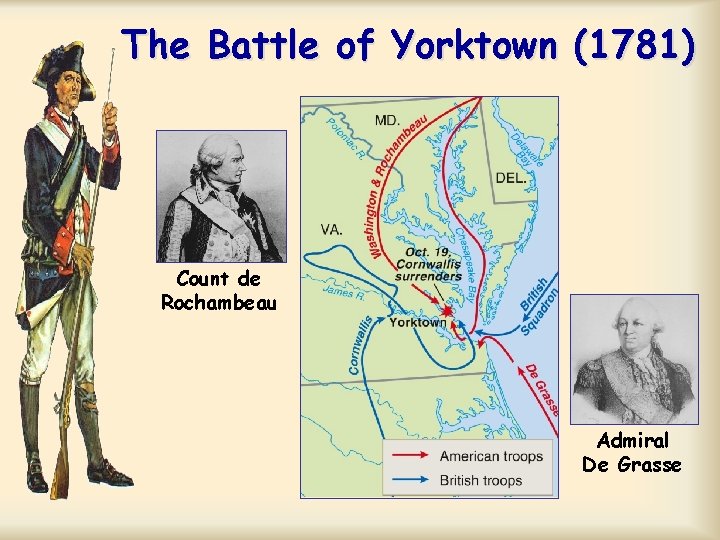
The Battle of Yorktown (1781) Count de Rochambeau Admiral De Grasse
The Battle of Yorktown (1781) • The French are helping the Continental Army with men, weapons and warships • The Americans and the French will corner the British on a small peninsula and bombard them with cannon fire.
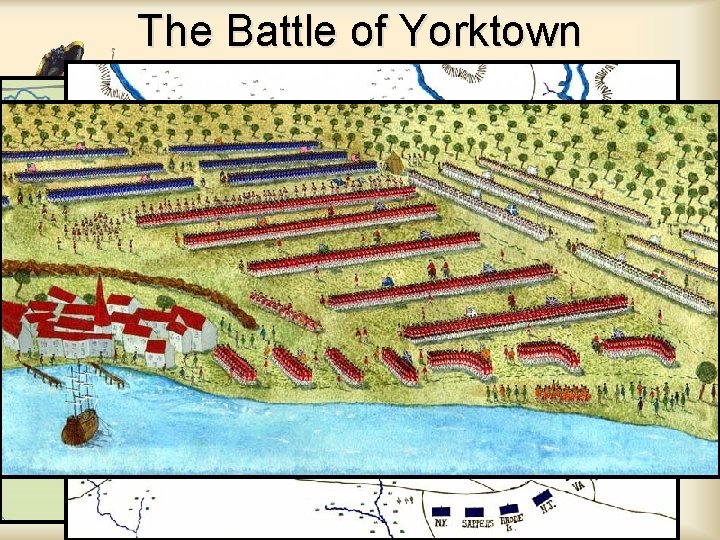
The Battle of Yorktown By 1781, Washington trapped the army of British General Cornwallis between the Continental Army & the French navy

General The Cornwallis surrendered to Washington Battle of Yorktown in 1781, ending the American Revolution Cornwallis’ surrender was the “day the world turned upside down”
Class Activity: Creating the terms of the Treaty of Paris, 1783 • In groups, consider the following: – What were American intentions when the war began? – Why did the French join? – Design a treaty that you feel would adequately satisfy the Americans at the end of the Revolutionary War
The Treaty of Paris (1783) • The Treaty of Paris in 1783 ended the American Revolution • The treaty gave America: – – – Full independence All territory east of Mississippi River, between Canada & FL The removal of the British army from U. S. claims in America
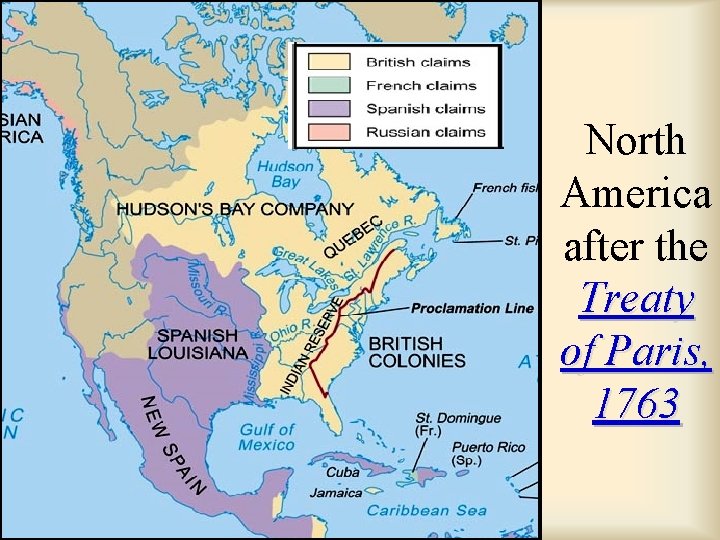
North America after the Treaty of Paris, 1763
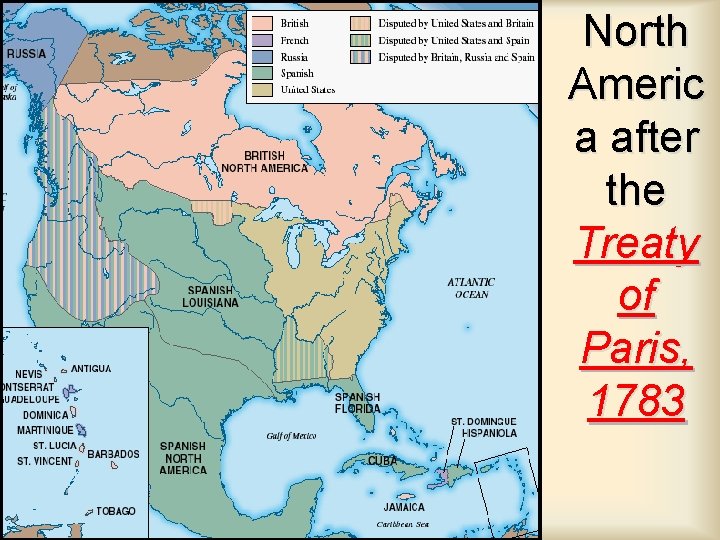
North Americ a after the Treaty of Paris, 1783
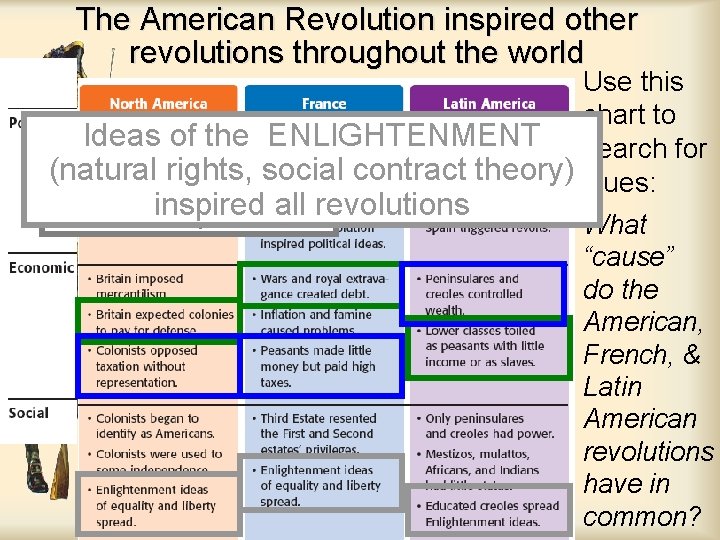
The American Revolution inspired other revolutions throughout the world Use this chart to Ideas of the ENLIGHTENMENT search for DEBTrights, was asocial (natural contract theory) clues: TAXES were a common problem inspired all revolutions common problem What “cause” do the American, French, & Latin American revolutions have in common?
- Slides: 46