
The Solar System Presentation B http www astro
The Solar System Presentation B http: //www. astro. ufl. edu/~lebo/. . . /Solar_System. ppt
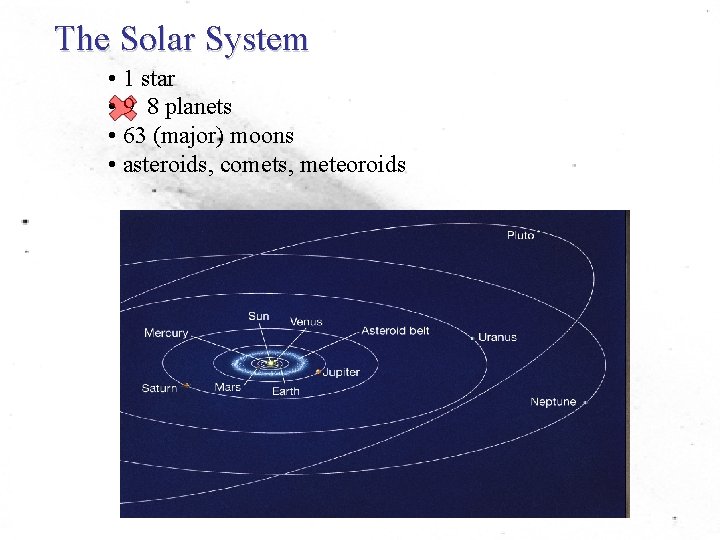
The Solar System • 1 star • 9 8 planets • 63 (major) moons • asteroids, comets, meteoroids
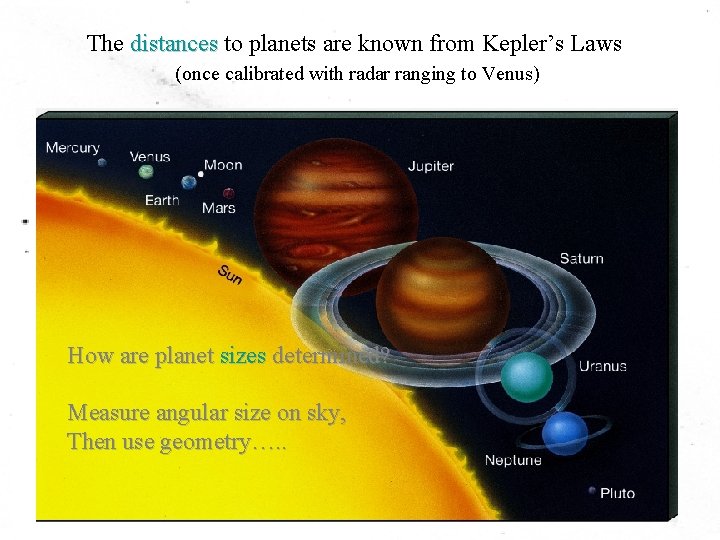
The distances to planets are known from Kepler’s Laws (once calibrated with radar ranging to Venus) How are planet sizes determined? Measure angular size on sky, Then use geometry…. .

Using angular size to get actual size
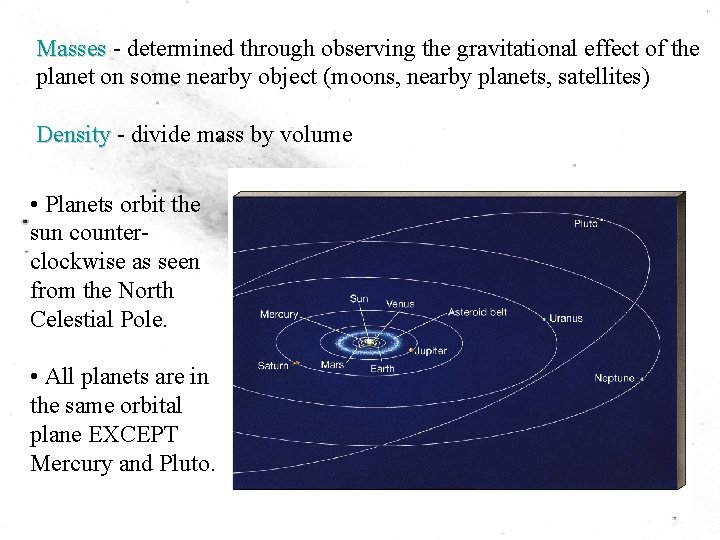
Masses - determined through observing the gravitational effect of the planet on some nearby object (moons, nearby planets, satellites) Density - divide mass by volume • Planets orbit the sun counterclockwise as seen from the North Celestial Pole. • All planets are in the same orbital plane EXCEPT Mercury and Pluto.
Terrestrial Planets • Mercury, Venus, Earth and Mars • Close to Sun • Small masses, radii • Rocky, solid surfaces • High densities • Slow rotation • Weak magnetic field • No rings • Few moons Jovian Planets • Jupiter, Saturn, Uranus, and Neptune • Far from Sun • Large masses and radii • Gaseous surface • Low densities • Fast rotation • Strong magnetic field • Many rings • Many moons
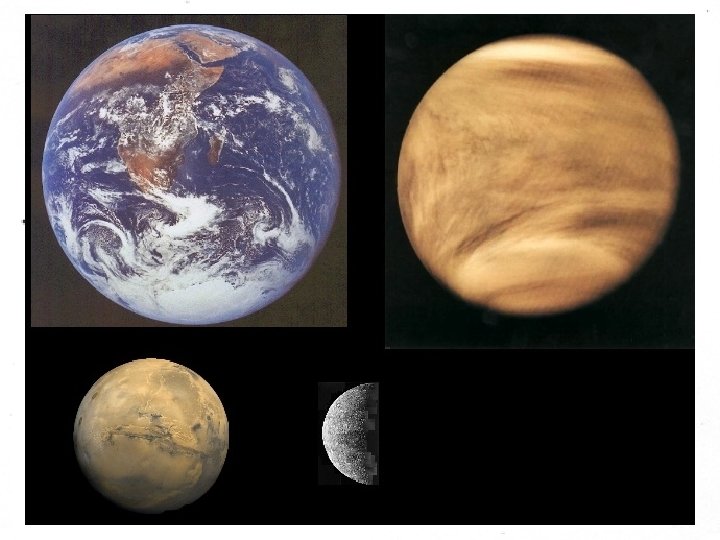
Terrestrial planets
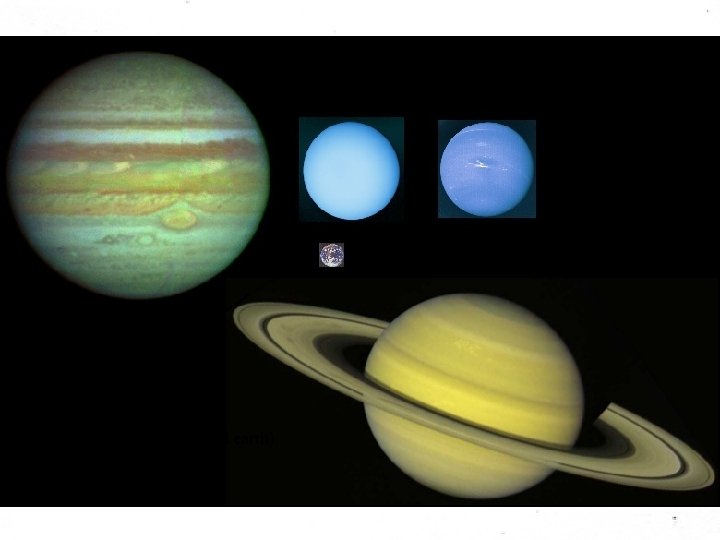
Jovian planets (and earth)
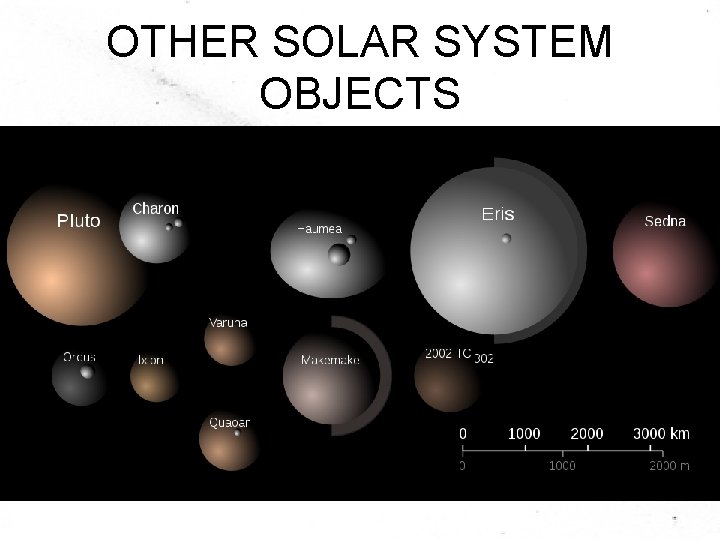
OTHER SOLAR SYSTEM OBJECTS
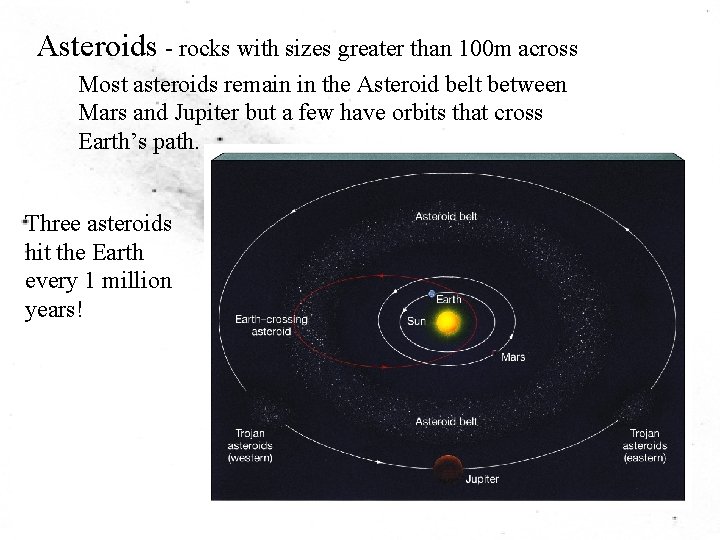
Asteroids - rocks with sizes greater than 100 m across Most asteroids remain in the Asteroid belt between Mars and Jupiter but a few have orbits that cross Earth’s path. Three asteroids hit the Earth every 1 million years!
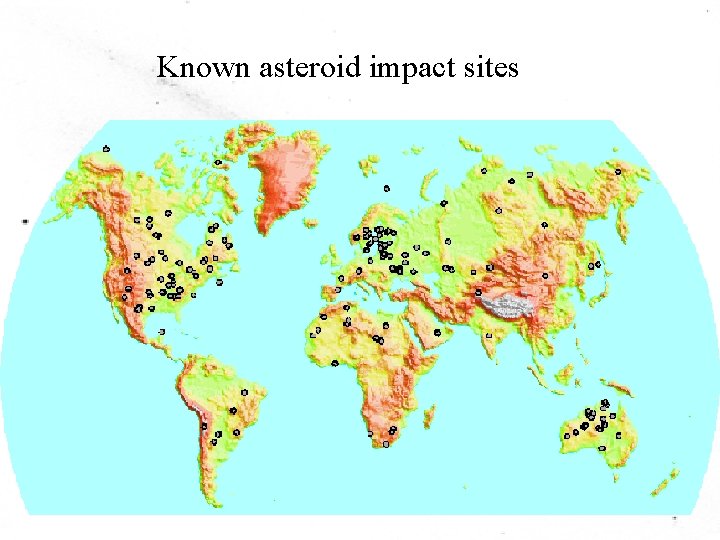
Known asteroid impact sites
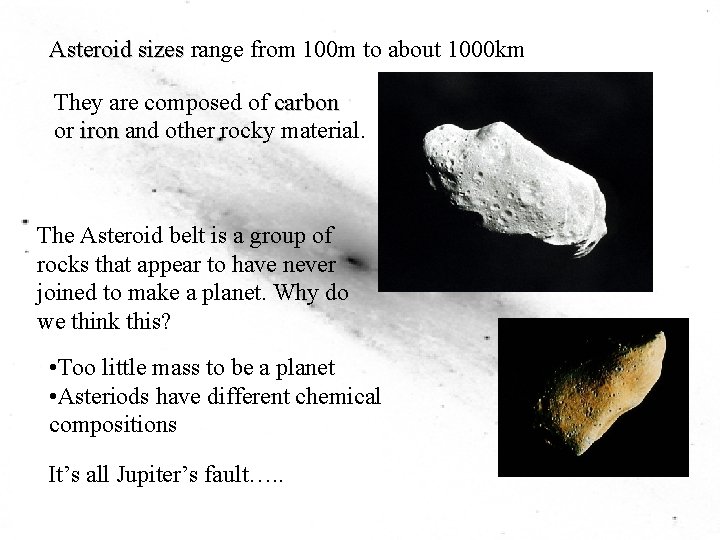
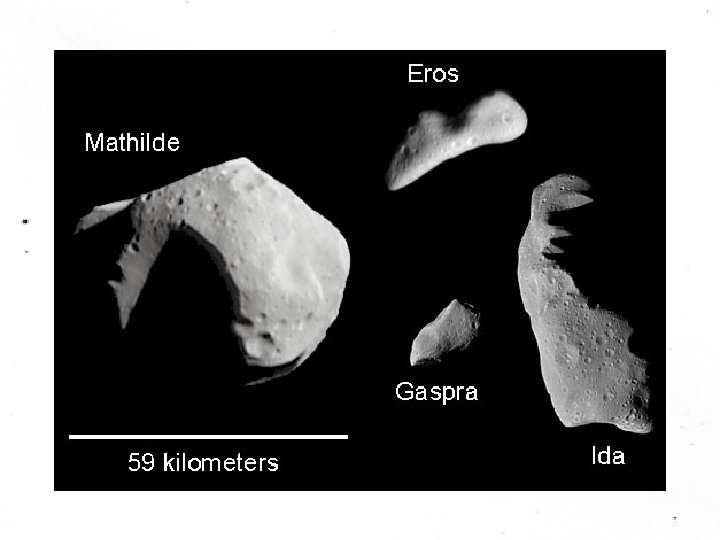
Asteroid sizes range from 100 m to about 1000 km They are composed of carbon or iron and other rocky material. The Asteroid belt is a group of rocks that appear to have never joined to make a planet. Why do we think this? • Too little mass to be a planet • Asteriods have different chemical compositions It’s all Jupiter’s fault…. .
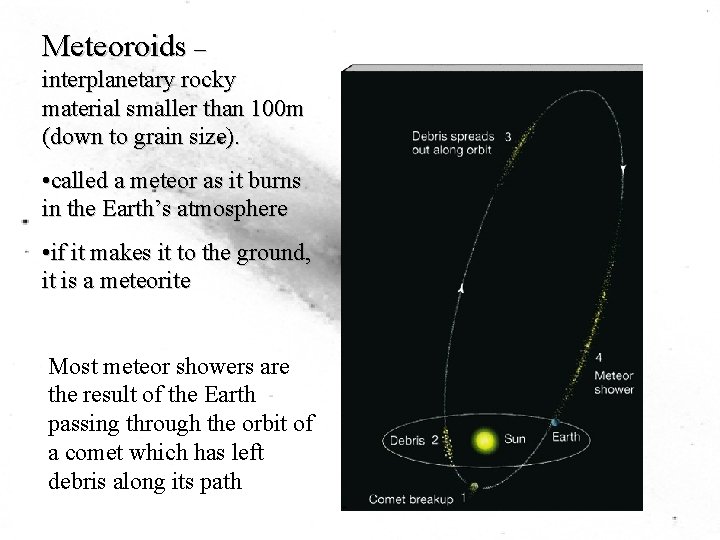
Meteoroids – interplanetary rocky material smaller than 100 m (down to grain size). • called a meteor as it burns in the Earth’s atmosphere • if it makes it to the ground, it is a meteorite Most meteor showers are the result of the Earth passing through the orbit of a comet which has left debris along its path
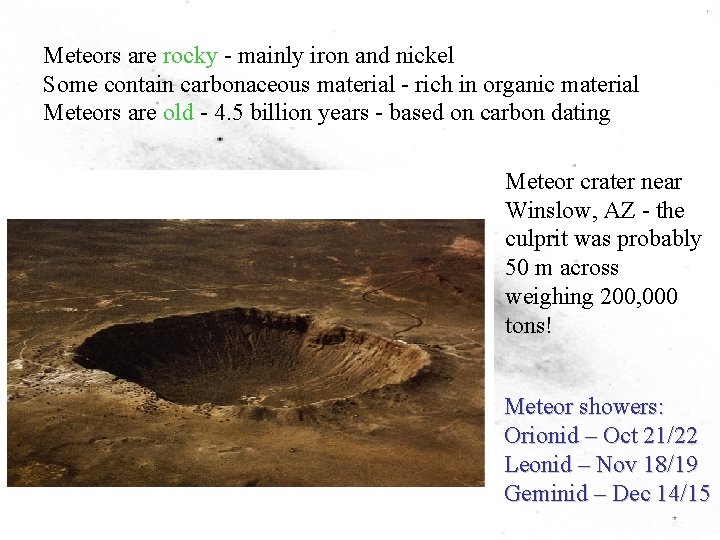
Meteors are rocky - mainly iron and nickel Some contain carbonaceous material - rich in organic material Meteors are old - 4. 5 billion years - based on carbon dating Meteor crater near Winslow, AZ - the culprit was probably 50 m across weighing 200, 000 tons! Meteor showers: Orionid – Oct 21/22 Leonid – Nov 18/19 Geminid – Dec 14/15
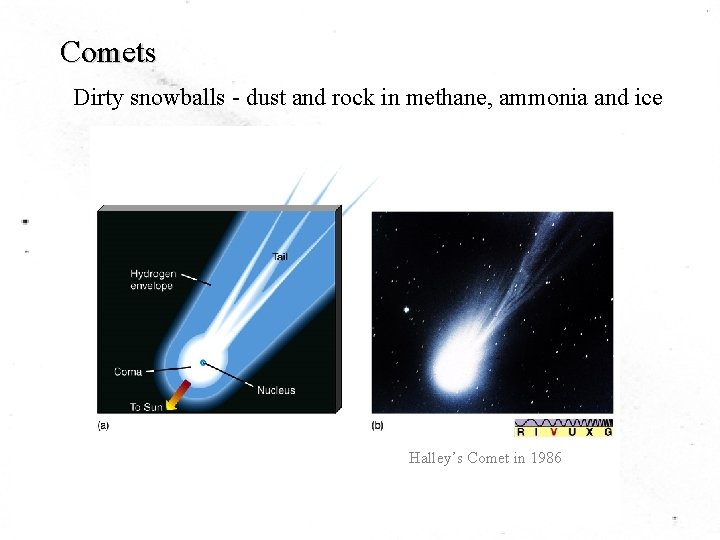
Comets Dirty snowballs - dust and rock in methane, ammonia and ice All light is reflected from the Sun - the comet makes no light of its own Halley’s Comet in 1986 The nucleus is a few km in diameter
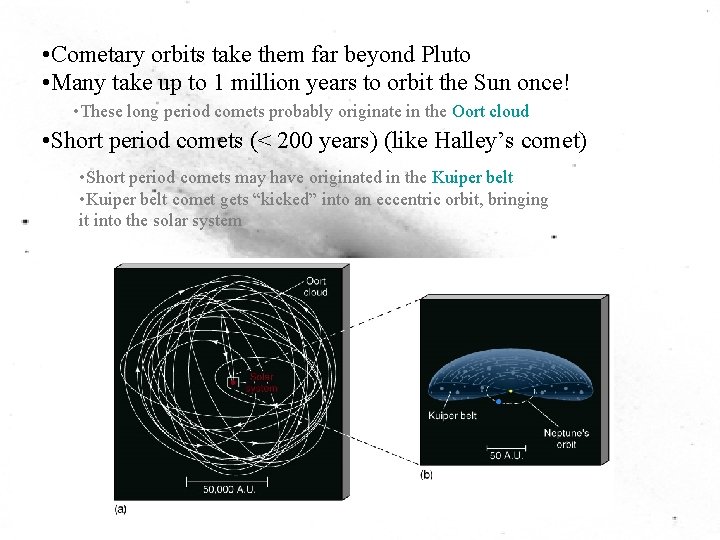
• Cometary orbits take them far beyond Pluto • Many take up to 1 million years to orbit the Sun once! • These long period comets probably originate in the Oort cloud • Short period comets (< 200 years) (like Halley’s comet) • Short period comets may have originated in the Kuiper belt • Kuiper belt comet gets “kicked” into an eccentric orbit, bringing it into the solar system
- Slides: 17