
THE SOLAR SYSTEM HAS 8 PLANETS AND 1
- Slides: 13
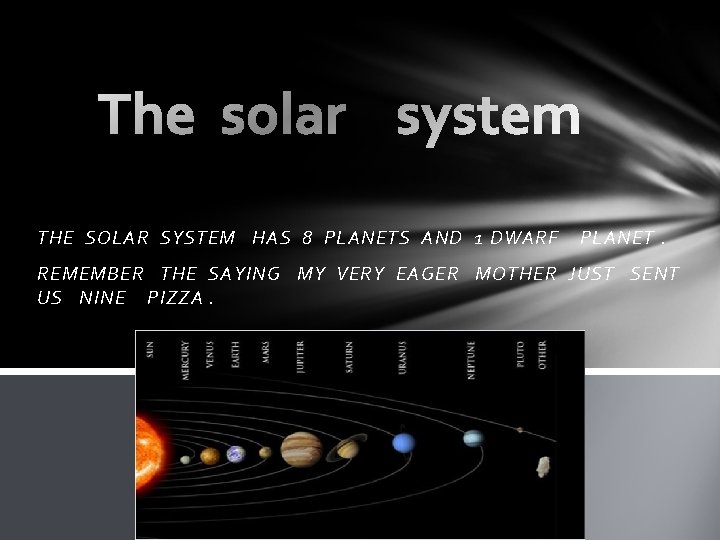
THE SOLAR SYSTEM HAS 8 PLANETS AND 1 DWARF PLANET. REMEMBER THE SAYING MY VERY EAGER MOTHER JUST SENT US NINE PIZZA.
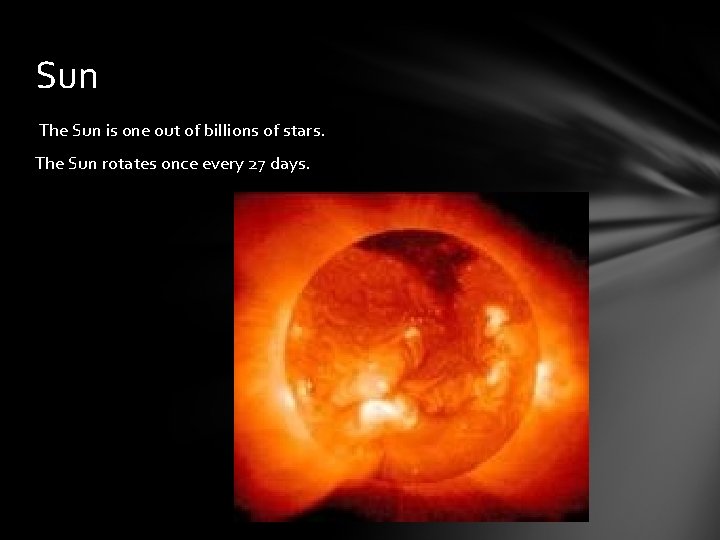
Sun The Sun is one out of billions of stars. The Sun rotates once every 27 days.
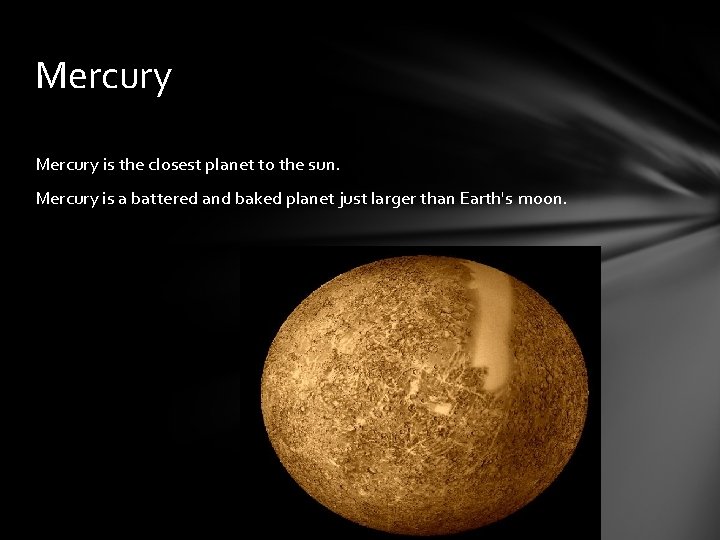
Mercury is the closest planet to the sun. Mercury is a battered and baked planet just larger than Earth's moon.
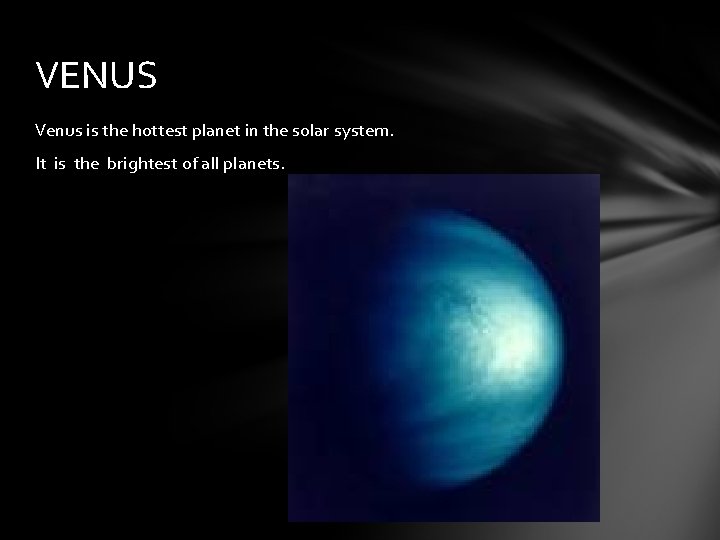
VENUS Venus is the hottest planet in the solar system. It is the brightest of all planets.
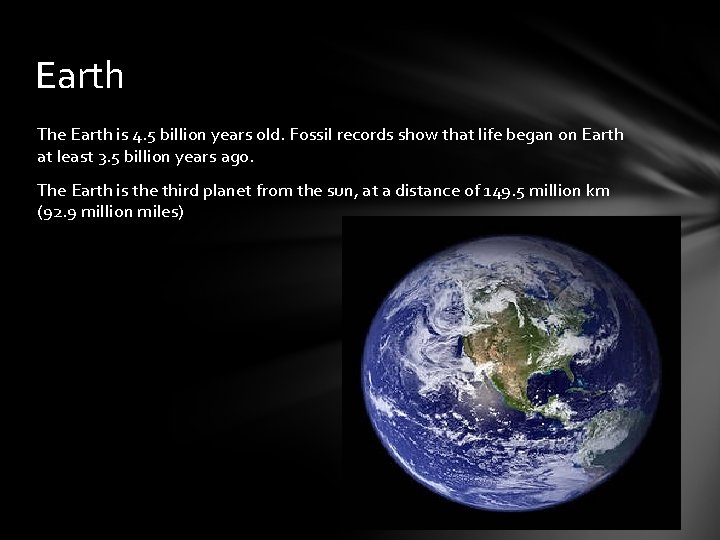
Earth The Earth is 4. 5 billion years old. Fossil records show that life began on Earth at least 3. 5 billion years ago. The Earth is the third planet from the sun, at a distance of 149. 5 million km (92. 9 million miles)
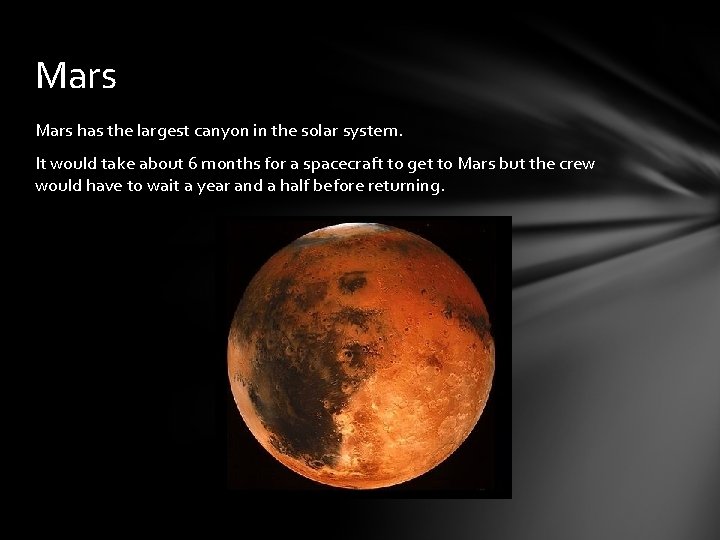
Mars has the largest canyon in the solar system. It would take about 6 months for a spacecraft to get to Mars but the crew would have to wait a year and a half before returning.
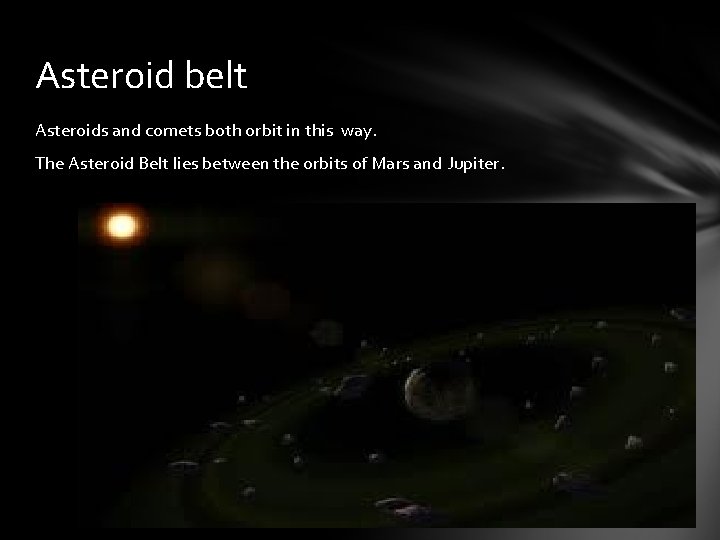
Asteroid belt Asteroids and comets both orbit in this way. The Asteroid Belt lies between the orbits of Mars and Jupiter.
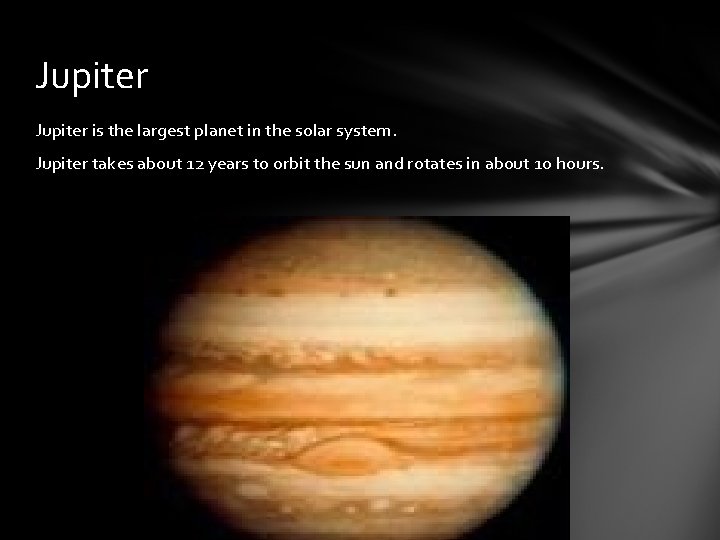
Jupiter is the largest planet in the solar system. Jupiter takes about 12 years to orbit the sun and rotates in about 10 hours.
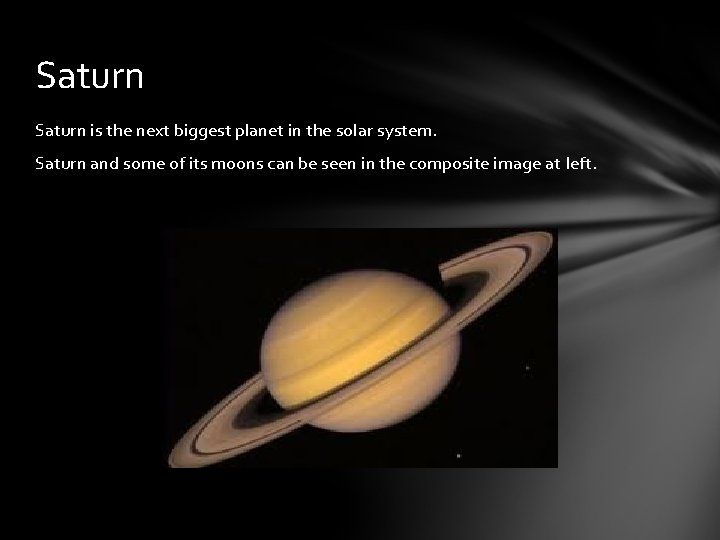
Saturn is the next biggest planet in the solar system. Saturn and some of its moons can be seen in the composite image at left.
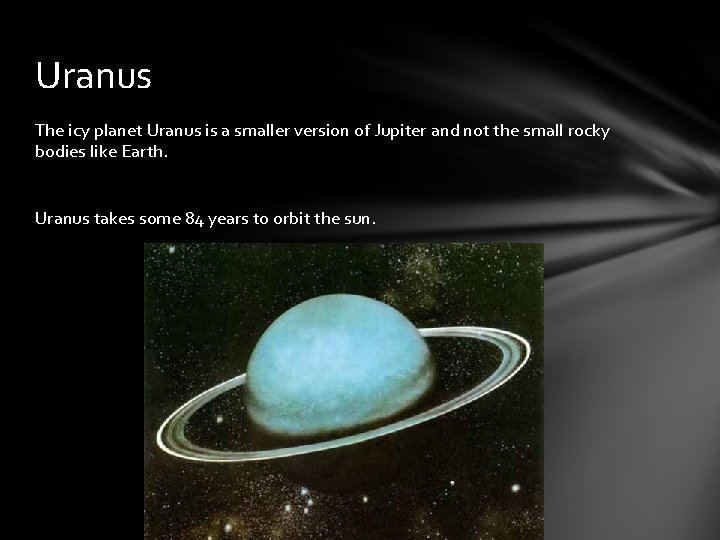
Uranus The icy planet Uranus is a smaller version of Jupiter and not the small rocky bodies like Earth. Uranus takes some 84 years to orbit the sun.
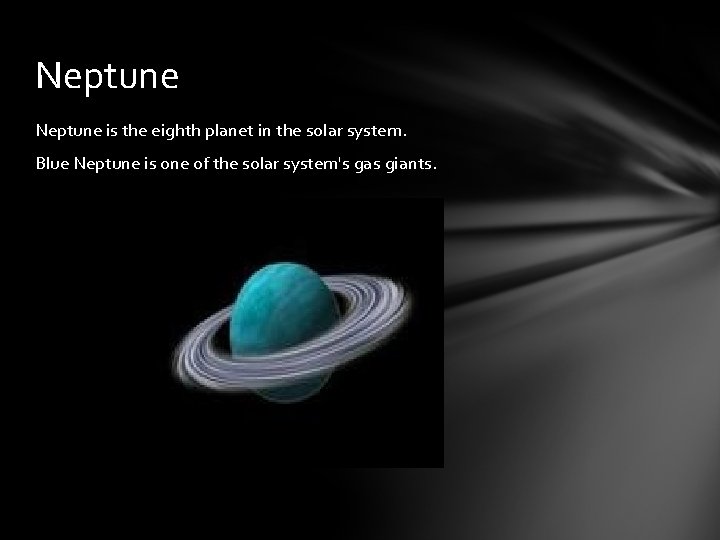
Neptune is the eighth planet in the solar system. Blue Neptune is one of the solar system's gas giants.
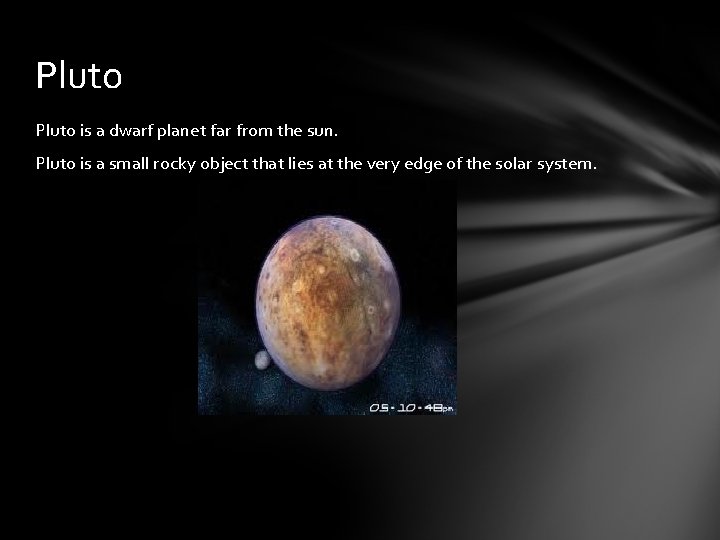
Pluto is a dwarf planet far from the sun. Pluto is a small rocky object that lies at the very edge of the solar system.
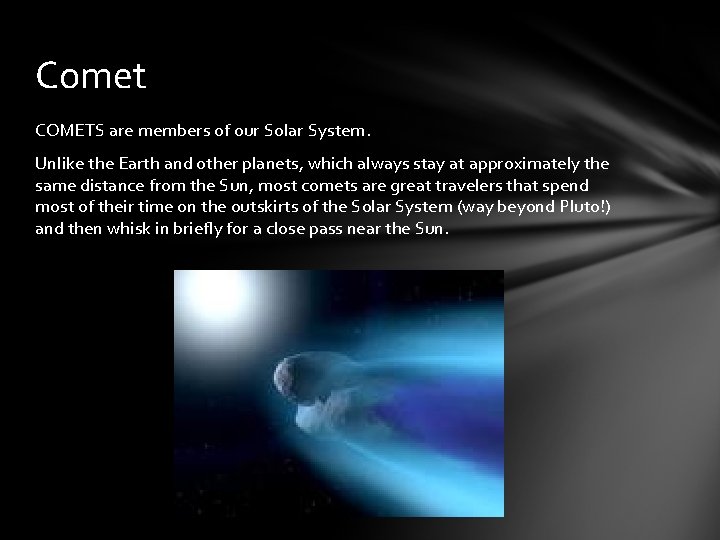
Comet COMETS are members of our Solar System. Unlike the Earth and other planets, which always stay at approximately the same distance from the Sun, most comets are great travelers that spend most of their time on the outskirts of the Solar System (way beyond Pluto!) and then whisk in briefly for a close pass near the Sun.