
The Solar System BY ELLI E HA NKI
The Solar System BY: ELLI E HA NKI N 12/16/1 5
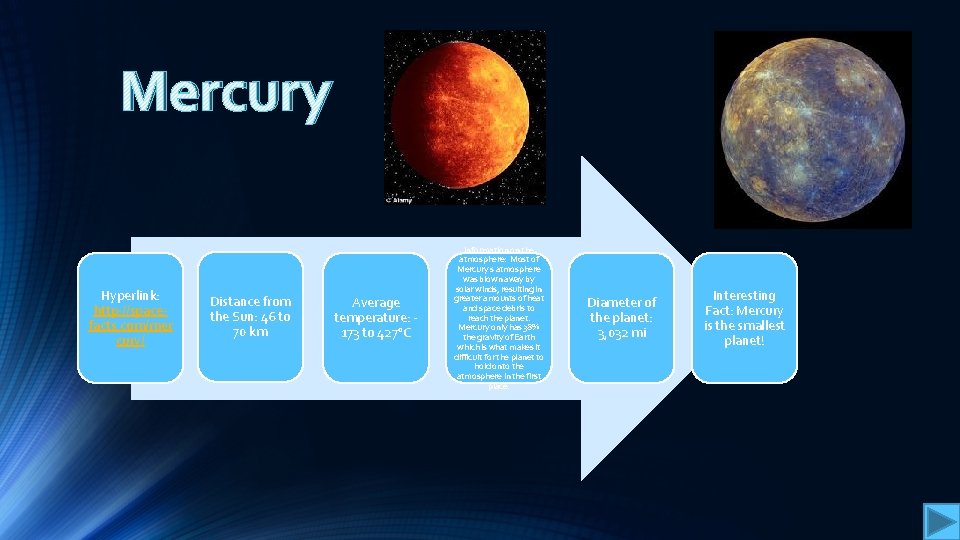
Mercury Hyperlink: http: //spacefacts. com/mer cury/ Distance from the Sun: 46 to 70 km Average temperature: 173 to 427°C Information on the atmosphere: Most of Mercury’s atmosphere was blown away by solar winds, resulting in greater amounts of heat and space debris to reach the planet. Mercury only has 38% the gravity of Earth which is what makes it difficult for the planet to hold onto the atmosphere in the first place. Diameter of the planet: 3, 032 mi Interesting Fact: Mercury is the smallest planet!

Venus • Hyperlink: http: //nineplanets. org/venus. html • Distance from the Sun: 108, 208, 930 km • Average temperature: 465 degrees Celcius • Information on the atmosphere: Venus’s atmosphere contains large amounts of carbon dioxide and sulfuric acid clouds. • Diameter of the planet: 12, 104 km • Interesting Fact: Venus has the heaviest atmosphere which means its surface pressure is 90 x Earth’s.
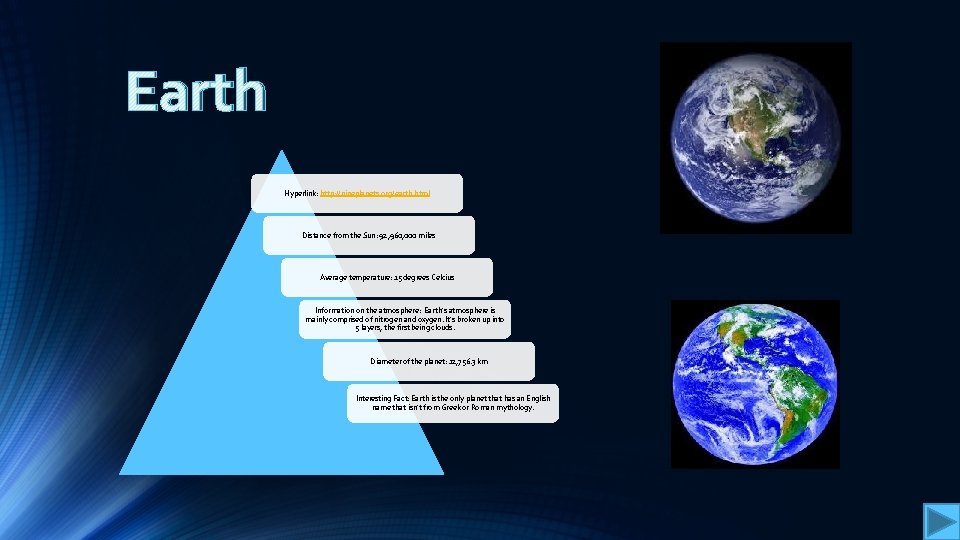
Earth Hyperlink: http: //nineplanets. org/earth. html Distance from the Sun: 92, 960, 000 miles Average temperature: 15 degrees Celcius Information on the atmosphere: Earth’s atmosphere is mainly comprised of nitrogen and oxygen. It’s broken up into 5 layers, the first being clouds. Diameter of the planet: 12, 756. 3 km Interesting Fact: Earth is the only planet that has an English name that isn’t from Greek or Roman mythology.

Mars • Hyperlink: http: //theplanets. org/mars/ • Distance from the Sun: 142 million miles • Average temperature: -87 to -5 °C • Atmosphere: Mars’s atmosphere is 100 times thinner than Earth's, and is 95 percent carbon dioxide. • Diameter of the planet: 4, 212 mi • Interesting Fact: Mars is also known as the ‘Red Planet’ • Video about Mars: https: //www. youtube. com/watch? v=F 6 h. WQNnax. GI

Jupiter Hyperlink: http: //nineplanets. org/jupiter. html Interesting Fact: Jupiter has been known since prehistoric times as a bright "wandering star". Distance from the Sun: 483, 800, 000 miles Diameter of the planet: 142, 984 km Average temperature: 234 degrees Fahrenheit Information on the atmosphere: Within the regions of gas, the temperature varies in the layers of Jupiter's atmosphere. The temperature tends to decrease dramatically as you get closer to the surface.
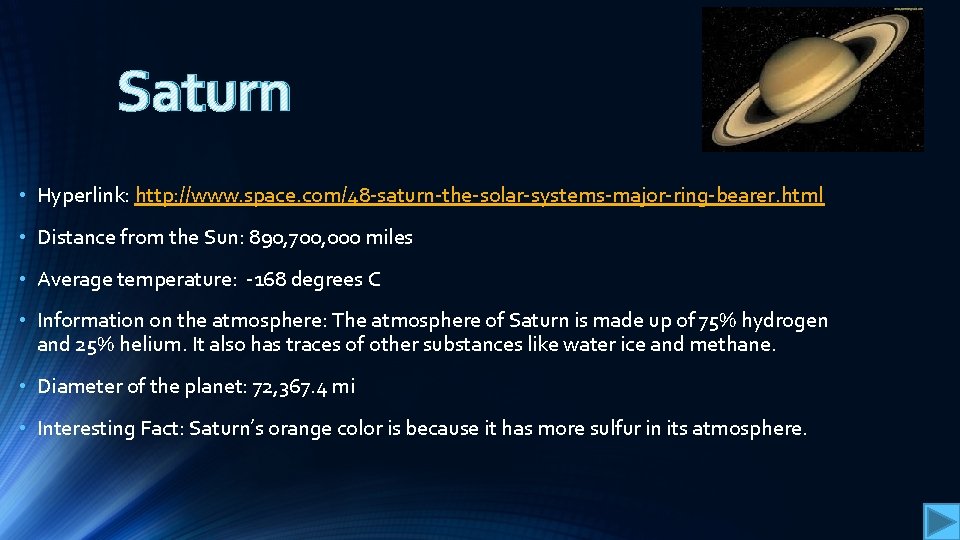
Saturn • Hyperlink: http: //www. space. com/48 -saturn-the-solar-systems-major-ring-bearer. html • Distance from the Sun: 890, 700, 000 miles • Average temperature: -168 degrees C • Information on the atmosphere: The atmosphere of Saturn is made up of 75% hydrogen and 25% helium. It also has traces of other substances like water ice and methane. • Diameter of the planet: 72, 367. 4 mi • Interesting Fact: Saturn’s orange color is because it has more sulfur in its atmosphere.
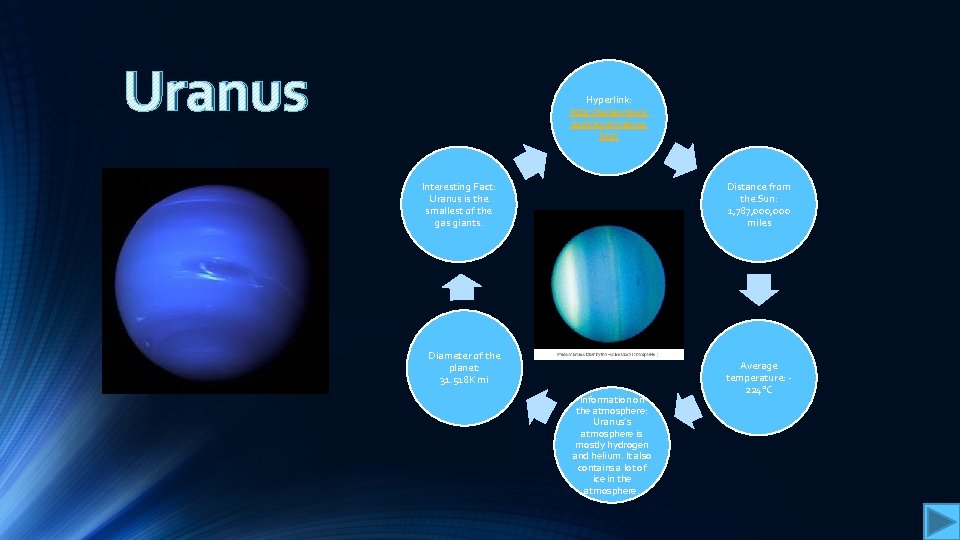
Uranus Hyperlink: http: //solarviews. com/eng/uranus. htm Interesting Fact: Uranus is the smallest of the gas giants. Distance from the Sun: 1, 787, 000 miles Diameter of the planet: 31. 518 K mi Information on the atmosphere: Uranus’s atmosphere is mostly hydrogen and helium. It also contains a lot of ice in the atmosphere. Average temperature: 224°C
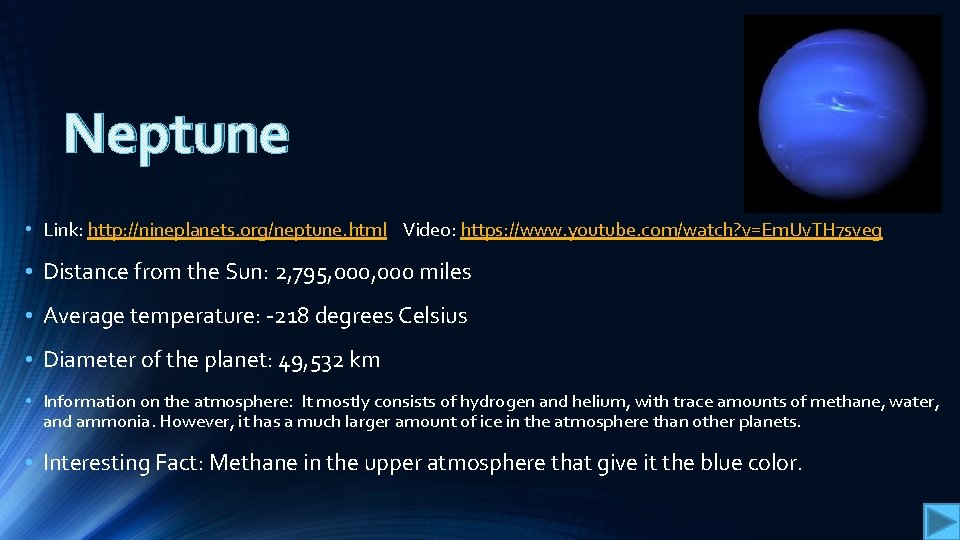
Neptune • Link: http: //nineplanets. org/neptune. html Video: https: //www. youtube. com/watch? v=Em. Uv. TH 7 sveg • Distance from the Sun: 2, 795, 000 miles • Average temperature: -218 degrees Celsius • Diameter of the planet: 49, 532 km • Information on the atmosphere: It mostly consists of hydrogen and helium, with trace amounts of methane, water, and ammonia. However, it has a much larger amount of ice in the atmosphere than other planets. • Interesting Fact: Methane in the upper atmosphere that give it the blue color.
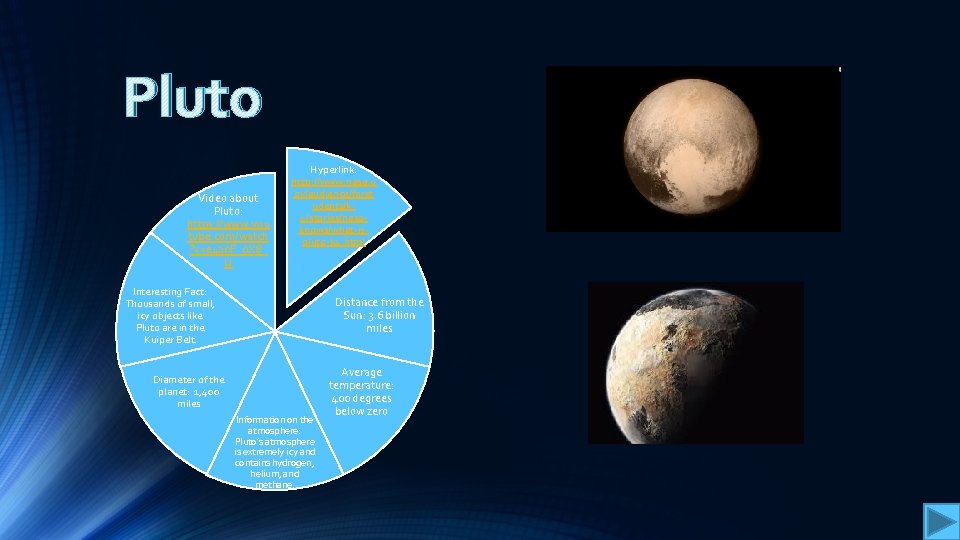
Pluto Video about Pluto: https: //www. you tube. com/watch ? v=e 4 a 0 F_0 X 8_ U Hyperlink: http: //www. nasa. g ov/audience/forst udents/k 4/stories/nasaknows/what-ispluto-k 4. html Interesting Fact: Thousands of small, icy objects like Pluto are in the Kuiper Belt. Distance from the Sun: 3. 6 billion miles Diameter of the planet: 1, 400 miles Information on the atmosphere: Pluto’s atmosphere is extremely icy and contains hydrogen, helium, and methane. Average temperature: 400 degrees below zero
Works Cited/ Reference Slide • Dunbar, Brian. NASA, n. d. Web. 18 Dec. 2015. • "Neptune. " Neptune. N. p. , n. d. Web. 18 Dec. 2015. • "Mars Planet Facts News & Images | NASA Mars Rover + Mission Web. 18 Dec. 2015. Info. " Mars Planet Facts News & Images. N. p. , n. d. • "All About Mars. " All About Mars. N. p. , n. d. Web. 18 Dec. 2015. • "Venus - Overview | Planets - NASA Solar System Exploration. " NASA Solar Dec. 2015. System Exploration. N. p. , n. d. Web. 18 • "Earth Facts. " Earth. N. p. , n. d. Web. 18 Dec. 2015. • "Mercury. " Mercury. N. p. , n. d. Web. 18 Dec. 2015. • NASA, n. d. Web. 18 Dec. 2015. • "Uranus Facts: Interesting Facts about Planet Uranus • The Planets. " The Planets. N. p. , n. d. Web. 18 Dec. 2015. • Choi, Charles Q. "Planet Uranus: Facts About Its Name, Moons and Orbit | Space. com. " N. p. , n. d. Web. 18 Dec. 2015.
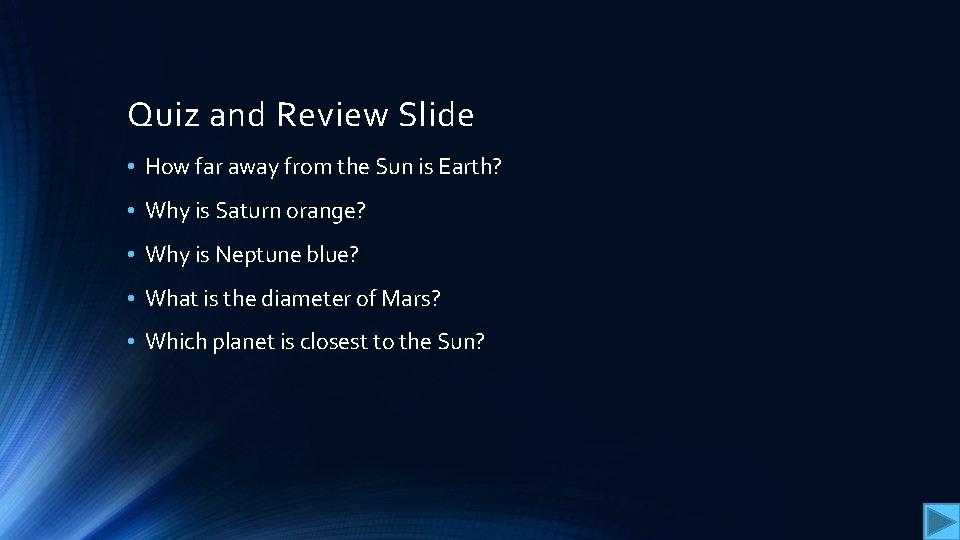
Quiz and Review Slide • How far away from the Sun is Earth? • Why is Saturn orange? • Why is Neptune blue? • What is the diameter of Mars? • Which planet is closest to the Sun?
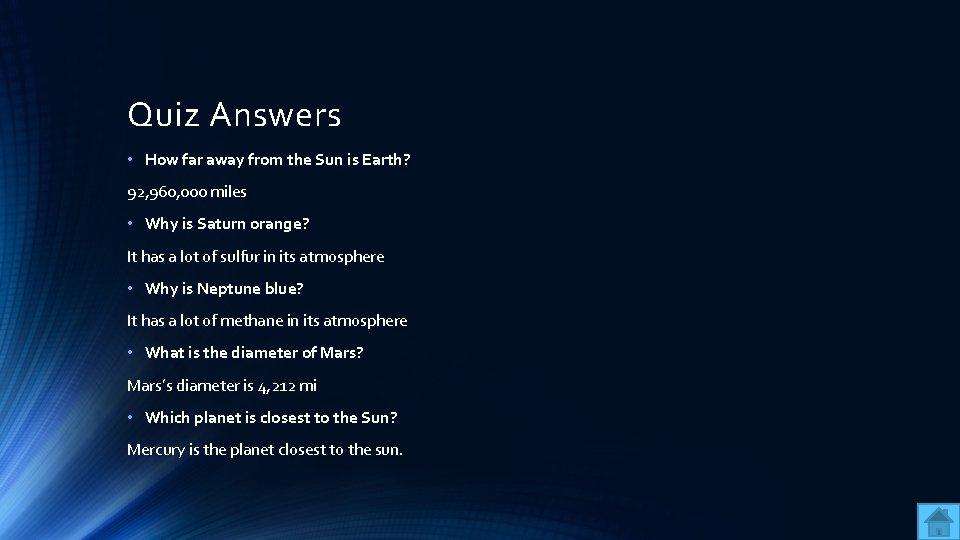
Quiz Answers • How far away from the Sun is Earth? 92, 960, 000 miles • Why is Saturn orange? It has a lot of sulfur in its atmosphere • Why is Neptune blue? It has a lot of methane in its atmosphere • What is the diameter of Mars? Mars’s diameter is 4, 212 mi • Which planet is closest to the Sun? Mercury is the planet closest to the sun.
- Slides: 13