
The Solar System A Fifth Grade Science Introduction
- Slides: 20
The Solar System A Fifth Grade Science
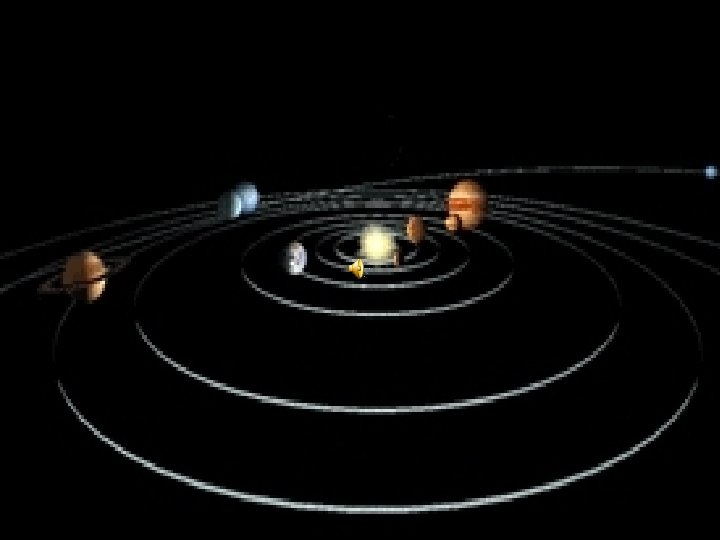
Introduction • A solar system consists of a star and objects that revolve around it. • Our Solar System consists of the Sun and nine known planets and the moons that orbit those planets. • The force of gravity keeps planets in orbit around the sun.
The Sun • It is over one million times larger than Earth. • It is eight light minutes away from Earth or 92, 957, 000 miles. • The temperature is 15 million degrees K. One K = 13 -25 million degrees!
The Eight Known Planets The Inner Planets • • Mercury Venus Earth Mars The Outer Planets • • Jupiter Saturn Uranus Neptune
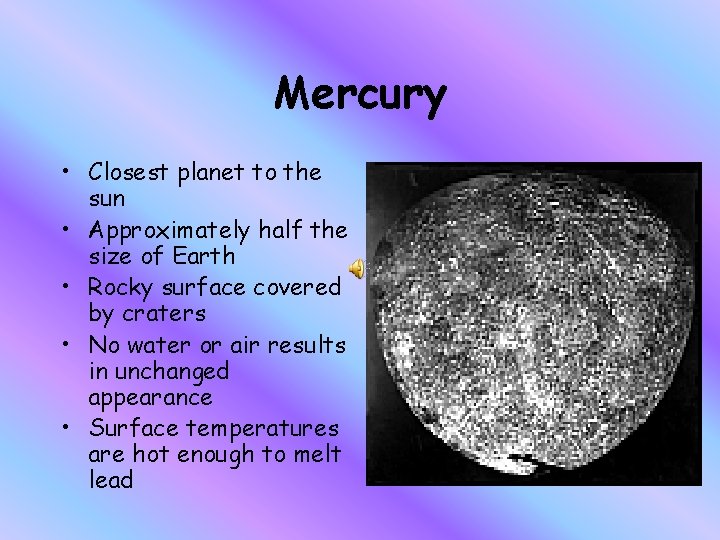
Mercury • Closest planet to the sun • Approximately half the size of Earth • Rocky surface covered by craters • No water or air results in unchanged appearance • Surface temperatures are hot enough to melt lead
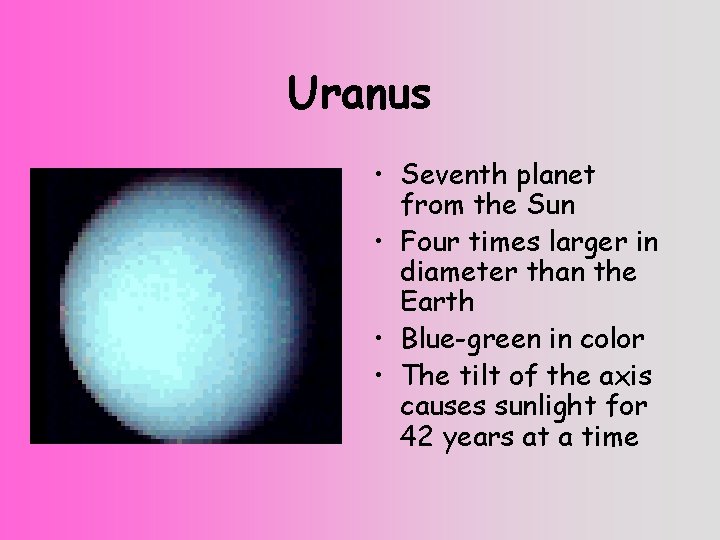
Uranus • Seventh planet from the Sun • Four times larger in diameter than the Earth • Blue-green in color • The tilt of the axis causes sunlight for 42 years at a time
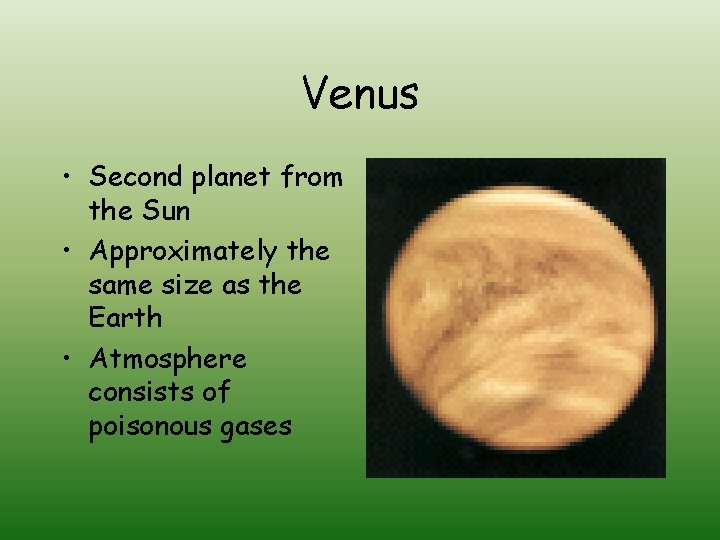
Venus • Second planet from the Sun • Approximately the same size as the Earth • Atmosphere consists of poisonous gases
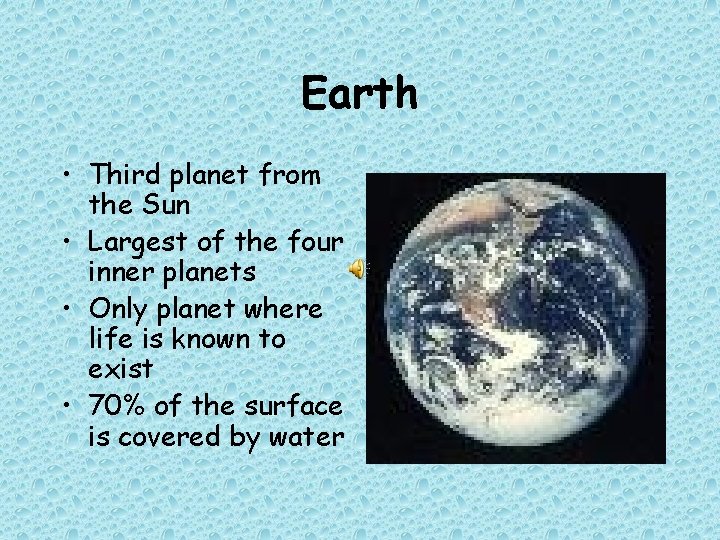
Earth • Third planet from the Sun • Largest of the four inner planets • Only planet where life is known to exist • 70% of the surface is covered by water
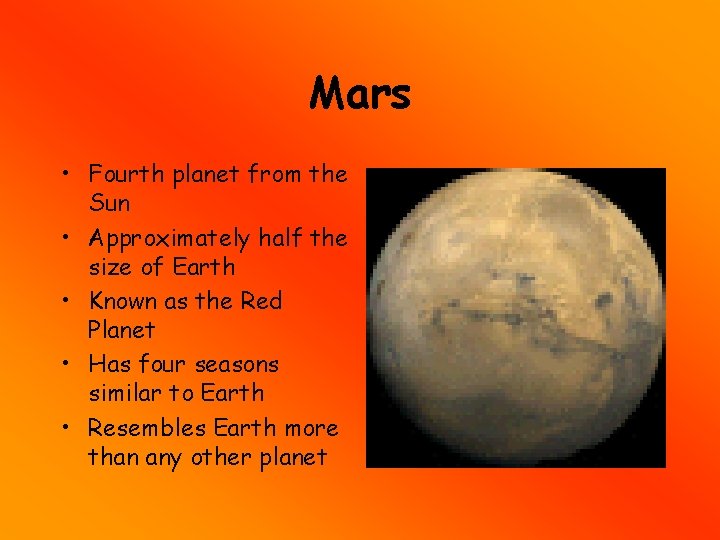
Mars • Fourth planet from the Sun • Approximately half the size of Earth • Known as the Red Planet • Has four seasons similar to Earth • Resembles Earth more than any other planet
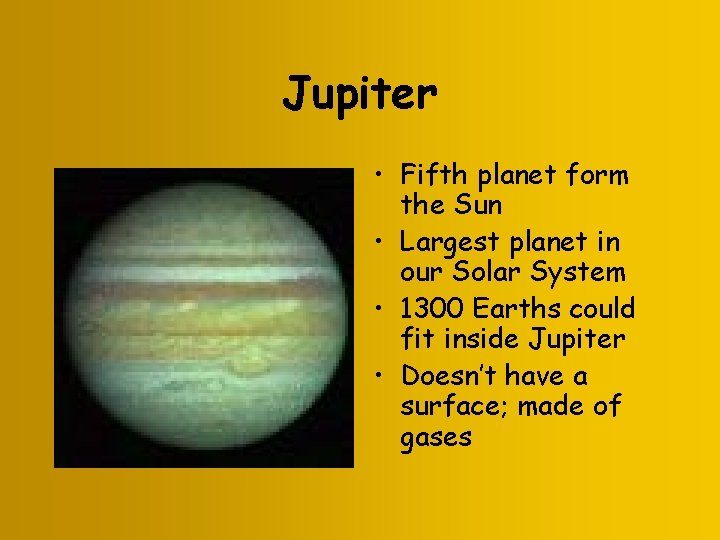
Jupiter • Fifth planet form the Sun • Largest planet in our Solar System • 1300 Earths could fit inside Jupiter • Doesn’t have a surface; made of gases
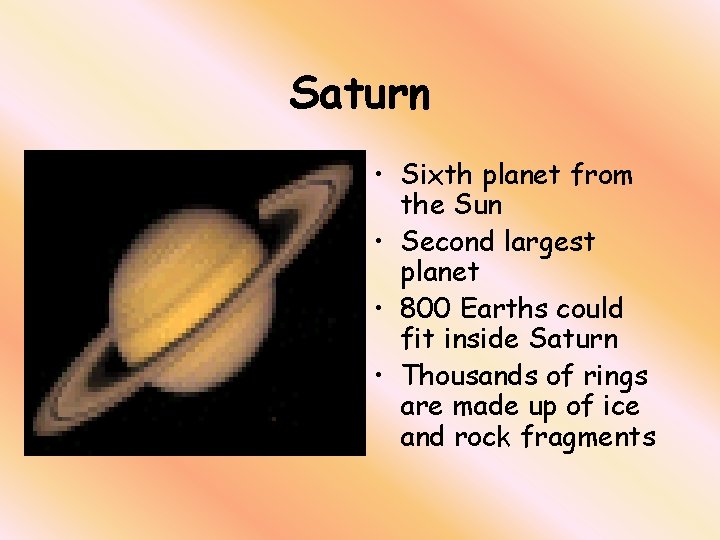
Saturn • Sixth planet from the Sun • Second largest planet • 800 Earths could fit inside Saturn • Thousands of rings are made up of ice and rock fragments
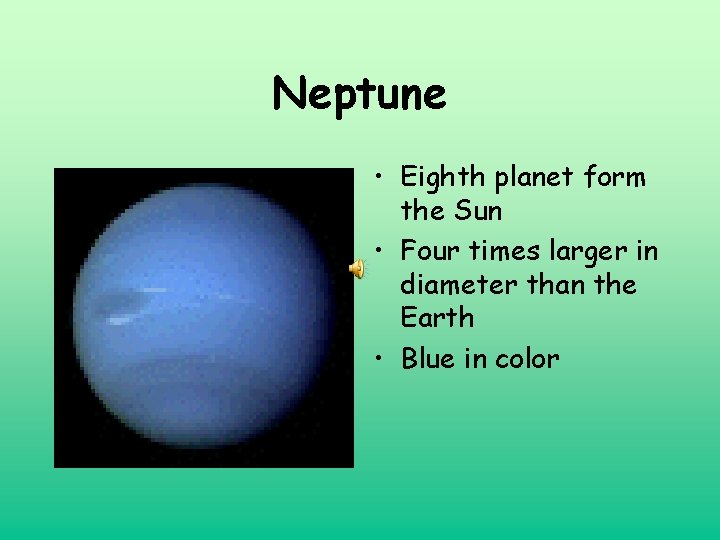
Neptune • Eighth planet form the Sun • Four times larger in diameter than the Earth • Blue in color
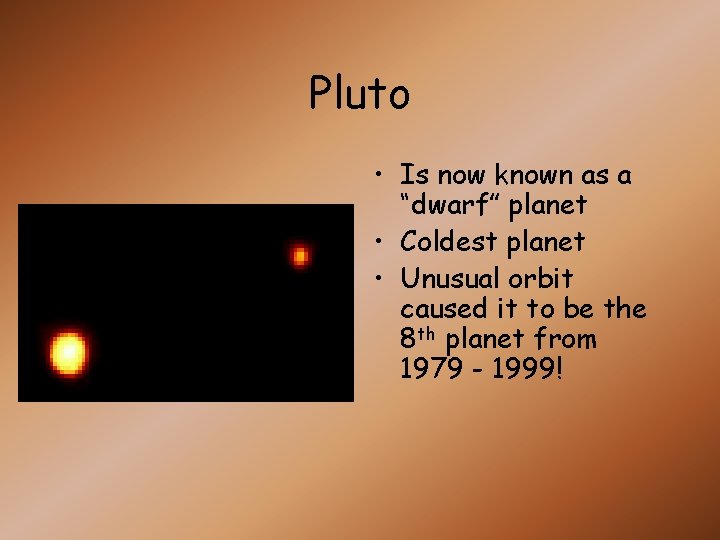
Pluto • Is now known as a “dwarf” planet • Coldest planet • Unusual orbit caused it to be the 8 th planet from 1979 - 1999!
Let’s compare the planets to Earth
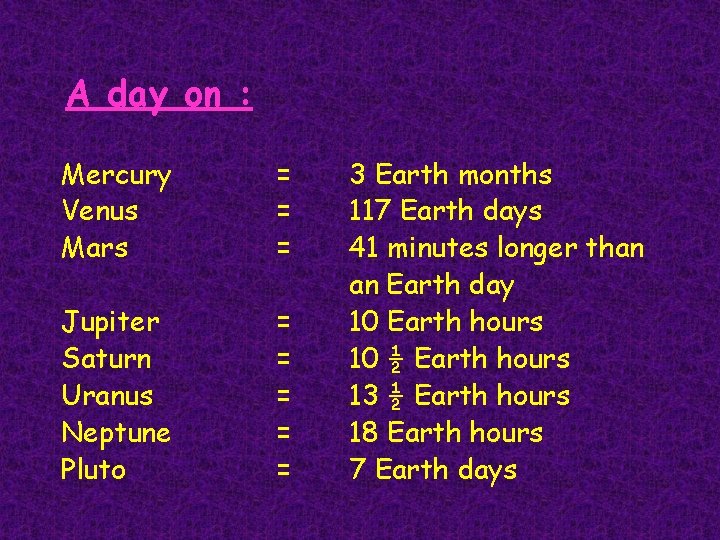
A day on : Mercury Venus Mars = = = Jupiter Saturn Uranus Neptune Pluto = = = 3 Earth months 117 Earth days 41 minutes longer than an Earth day 10 Earth hours 10 ½ Earth hours 13 ½ Earth hours 18 Earth hours 7 Earth days
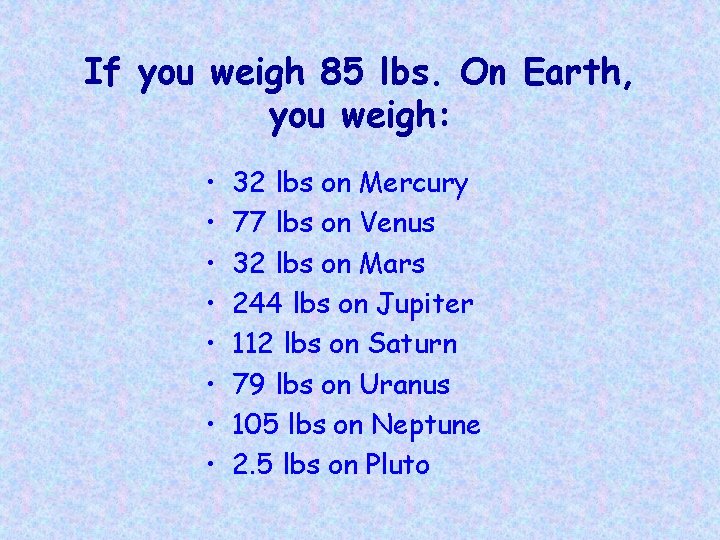
If you weigh 85 lbs. On Earth, you weigh: • • 32 lbs on Mercury 77 lbs on Venus 32 lbs on Mars 244 lbs on Jupiter 112 lbs on Saturn 79 lbs on Uranus 105 lbs on Neptune 2. 5 lbs on Pluto
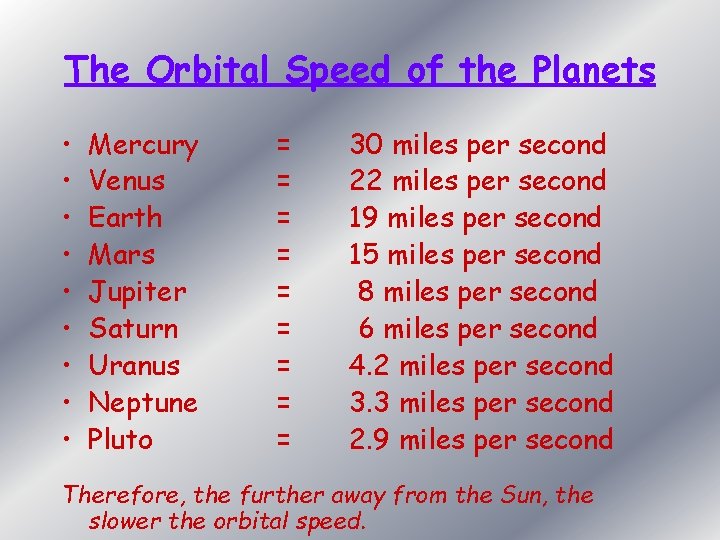
The Orbital Speed of the Planets • • • Mercury Venus Earth Mars Jupiter Saturn Uranus Neptune Pluto = = = = = 30 miles per second 22 miles per second 19 miles per second 15 miles per second 8 miles per second 6 miles per second 4. 2 miles per second 3. 3 miles per second 2. 9 miles per second Therefore, the further away from the Sun, the slower the orbital speed.
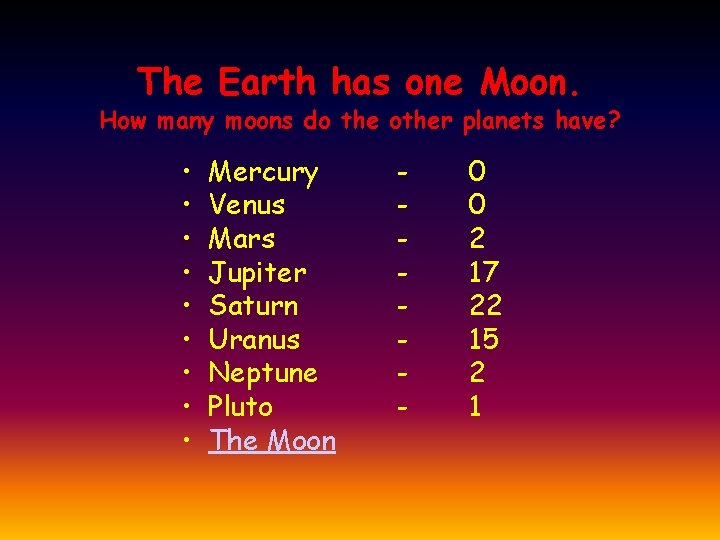
The Earth has one Moon. How many moons do the other planets have? • • • Mercury Venus Mars Jupiter Saturn Uranus Neptune Pluto The Moon - 0 0 2 17 22 15 2 1
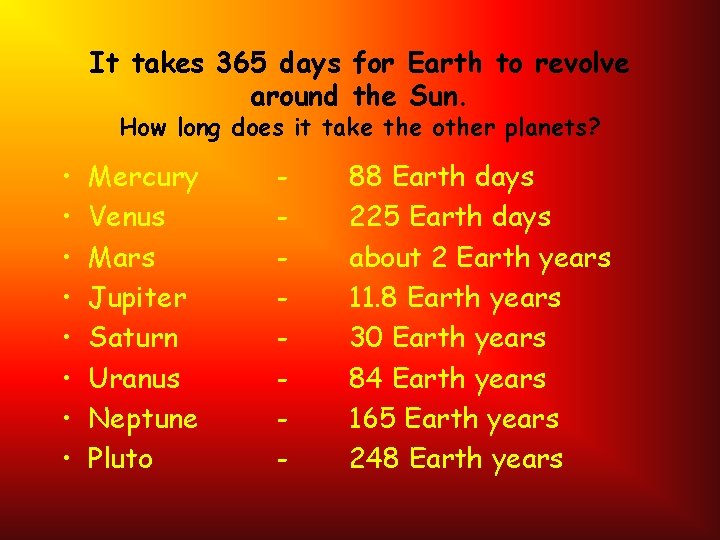
It takes 365 days for Earth to revolve around the Sun. How long does it take the other planets? • • Mercury Venus Mars Jupiter Saturn Uranus Neptune Pluto - 88 Earth days 225 Earth days about 2 Earth years 11. 8 Earth years 30 Earth years 84 Earth years 165 Earth years 248 Earth years