
The softtissue injury a high priority consideration AO
- Slides: 44
The (soft-tissue) injury— a high priority consideration AO Trauma Basic Principles Course
Learning objectives • Describe the role of soft tissue in fracture healing • Prioritize the management of soft-tissue injuries • Apply the management options for fractures with different degrees of soft-tissue injuries • Outline the etiology, diagnosis, and treatment of compartment syndrome
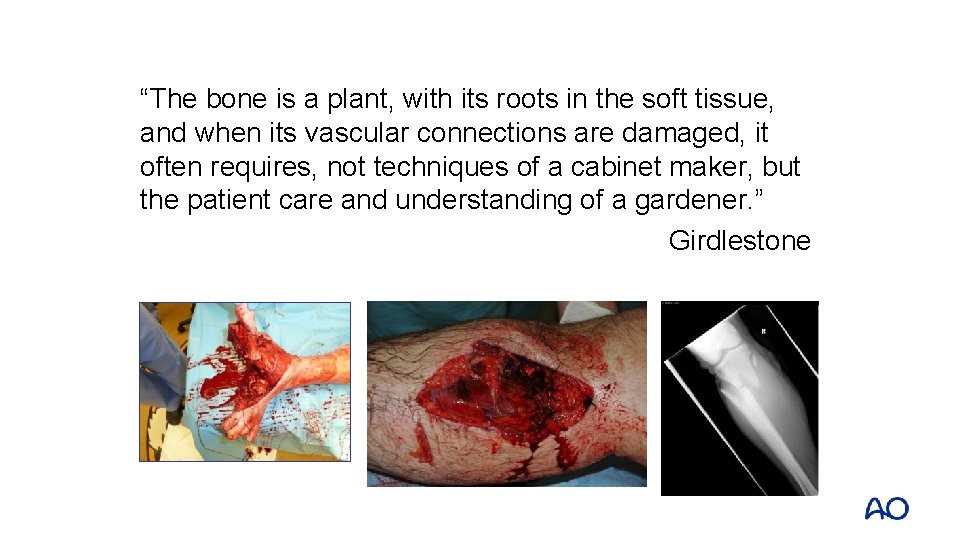
“The bone is a plant, with its roots in the soft tissue, and when its vascular connections are damaged, it often requires, not techniques of a cabinet maker, but the patient care and understanding of a gardener. ” Girdlestone
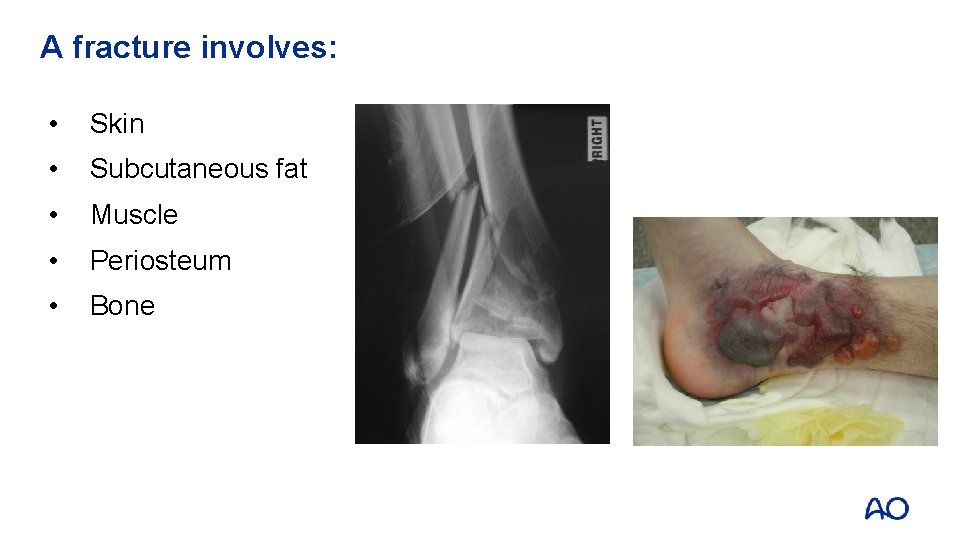
A fracture involves: • Skin • Subcutaneous fat • Muscle • Periosteum • Bone
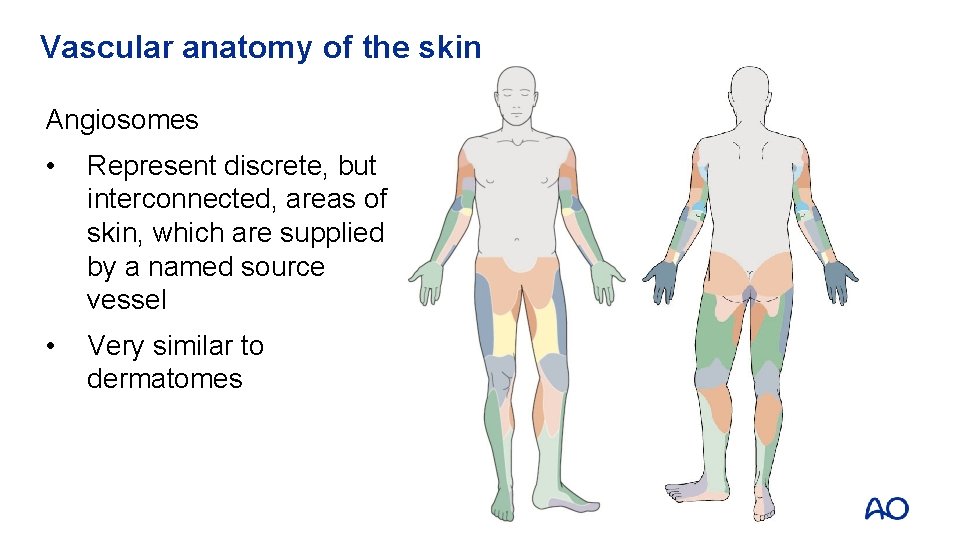
Vascular anatomy of the skin Angiosomes • Represent discrete, but interconnected, areas of skin, which are supplied by a named source vessel • Very similar to dermatomes
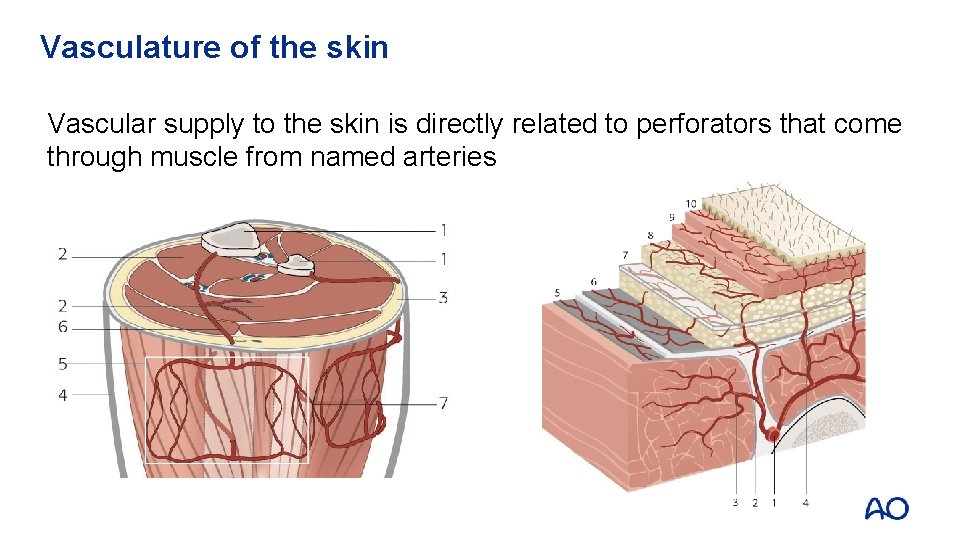
Vasculature of the skin Vascular supply to the skin is directly related to perforators that come through muscle from named arteries
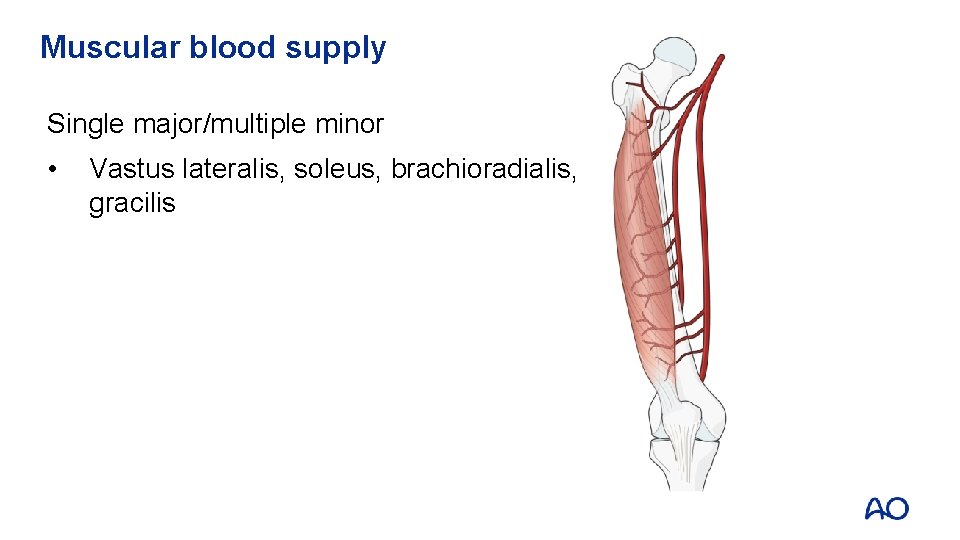
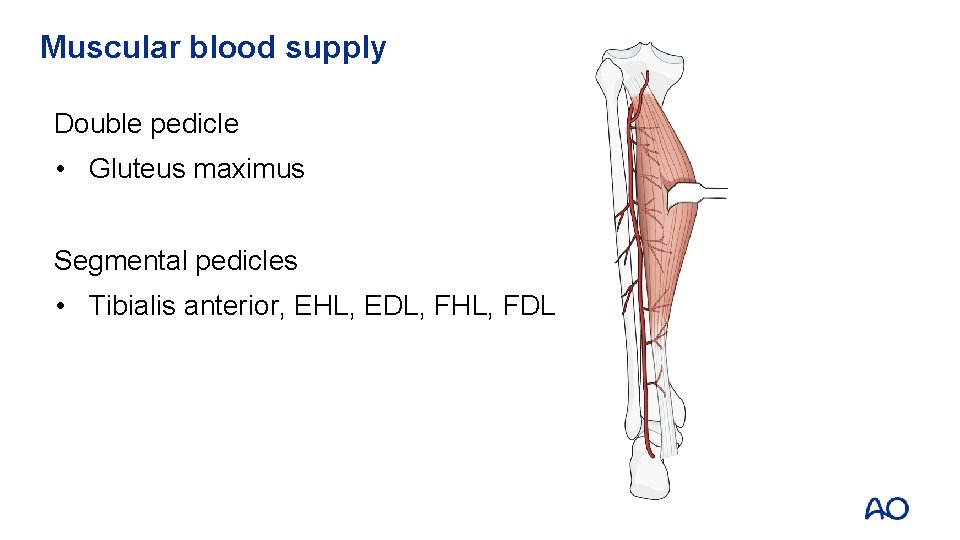
Blood supply to muscle • Usually comes from named vessels • Various patterns of vascular supply • Single pedicle (proximal) • Dominant pedicle and multiple minor pedicles • Two dominant pedicles • Segmental pedicles
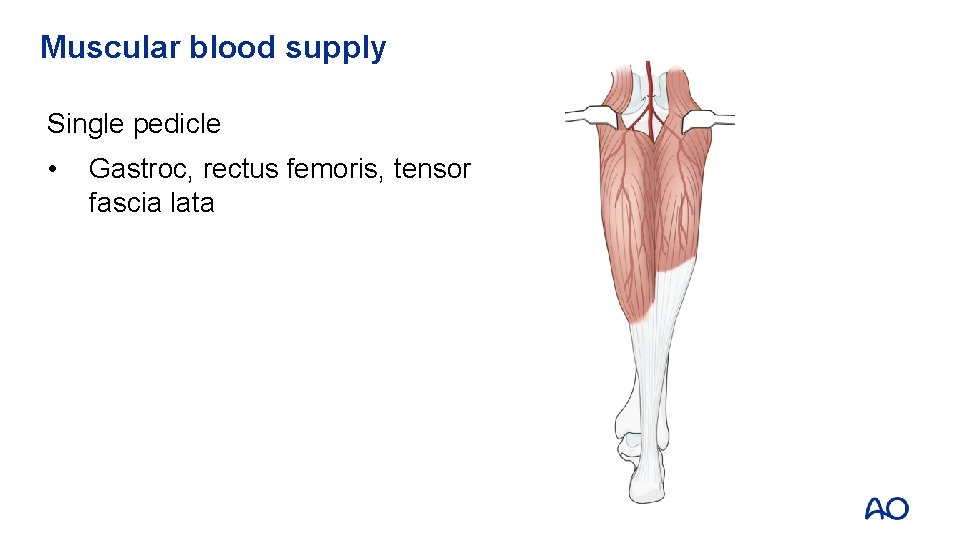
Muscular blood supply Single pedicle • Gastroc, rectus femoris, tensor fascia lata
Muscular blood supply Single major/multiple minor • Vastus lateralis, soleus, brachioradialis, gracilis
Muscular blood supply Double pedicle • Gluteus maximus Segmental pedicles • Tibialis anterior, EHL, EDL, FHL, FDL
Blood supply to bone Outer 1/3 of bone • Supplied by periosteal vessels that arise from named arteries which enter only at the sites of ligamentous or heavy fascial attachment • However, all of these vessels are thin-walled and probably represent venules or capillaries
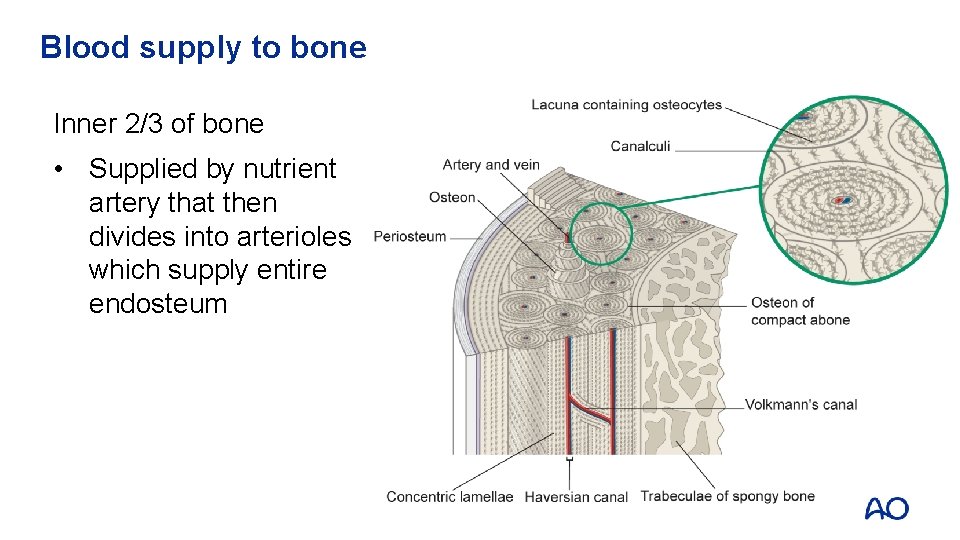
Blood supply to bone Inner 2/3 of bone • Supplied by nutrient artery that then divides into arterioles which supply entire endosteum
Extraosseus blood supply • In fractures, the blood supply to the callus forms from the ruptured periosteal capillaries (where they exist) and torn muscle capillaries in the vicinity of the fracture • Endosteal blood supply reconstitutes from endosteal arterioles • Persists until medullary circulation regenerates • May easily be disrupted by lack of stability at the fracture • Cannot replace the intramedullary circulation
Role of soft tissue • Skin is the primary barrier to infection • Muscle • Provides blood supply to skin • Functions to provide locomotion • Improves blood drainage from dependent areas • Periosteum • Provides blood supply to bone (outer 1/3) • Provides osteoprogenitor cells to bone
How do we assess soft-tissue injuries? Degree of bone injury implies level of injury to soft tissue • Uncommon for severe fracture to have little soft-tissue injury • Not uncommon for severe soft-tissue injury to have innocuous bone injury
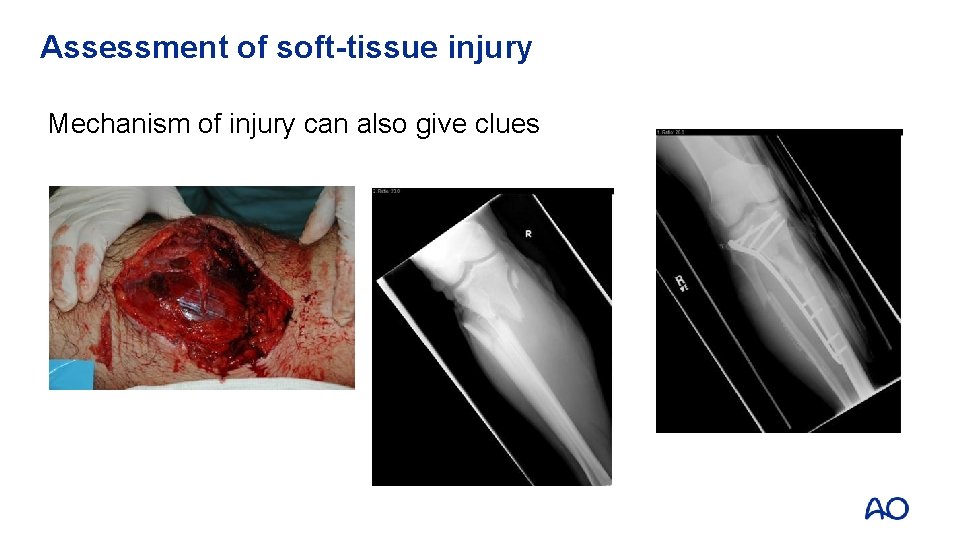
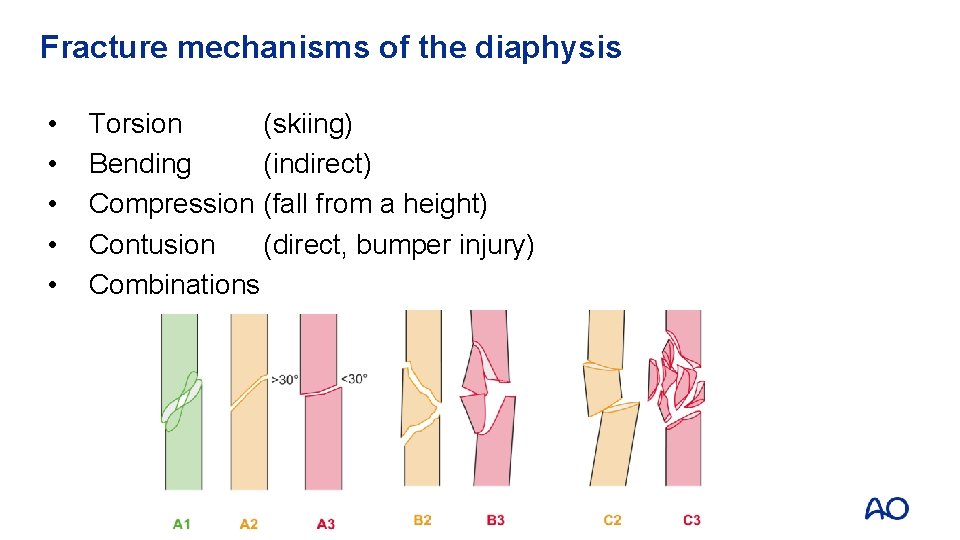
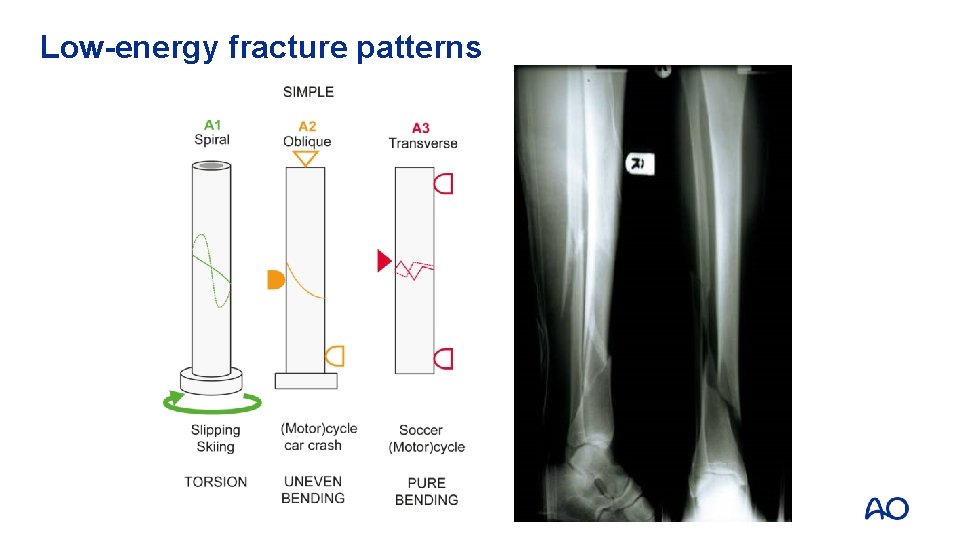
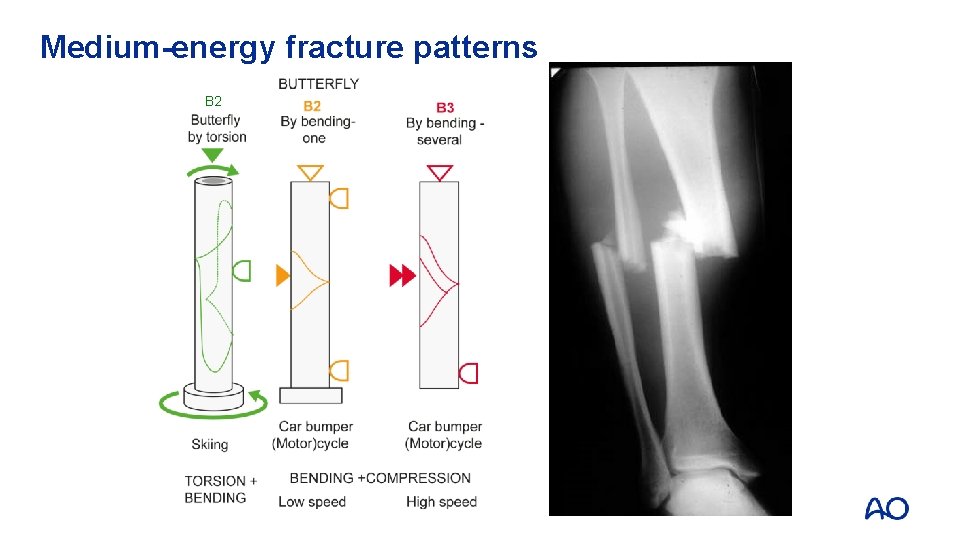
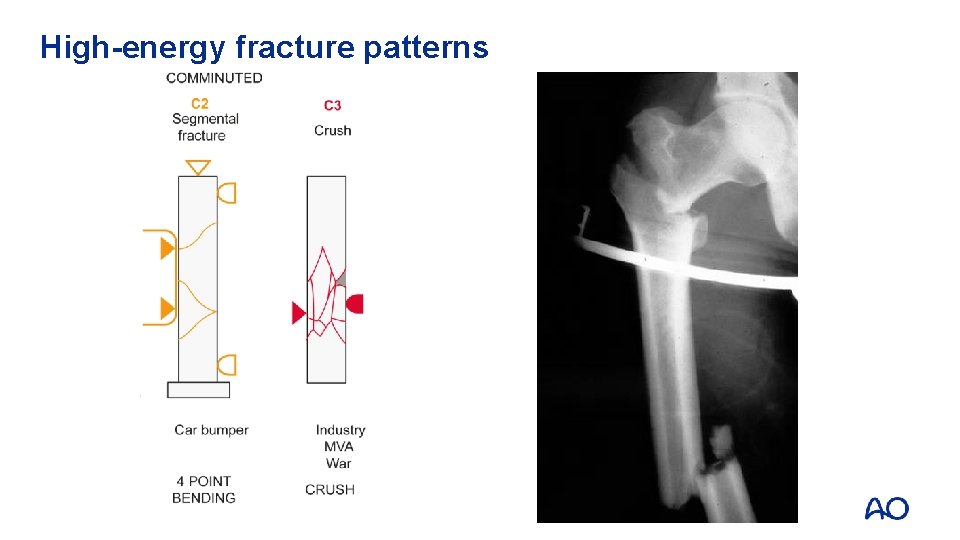
Assessment of soft-tissue injury Mechanism of injury can also give clues
Fracture mechanisms of the diaphysis • • • Torsion (skiing) Bending (indirect) Compression (fall from a height) Contusion (direct, bumper injury) Combinations
Low-energy fracture patterns
Medium-energy fracture patterns B 2
High-energy fracture patterns
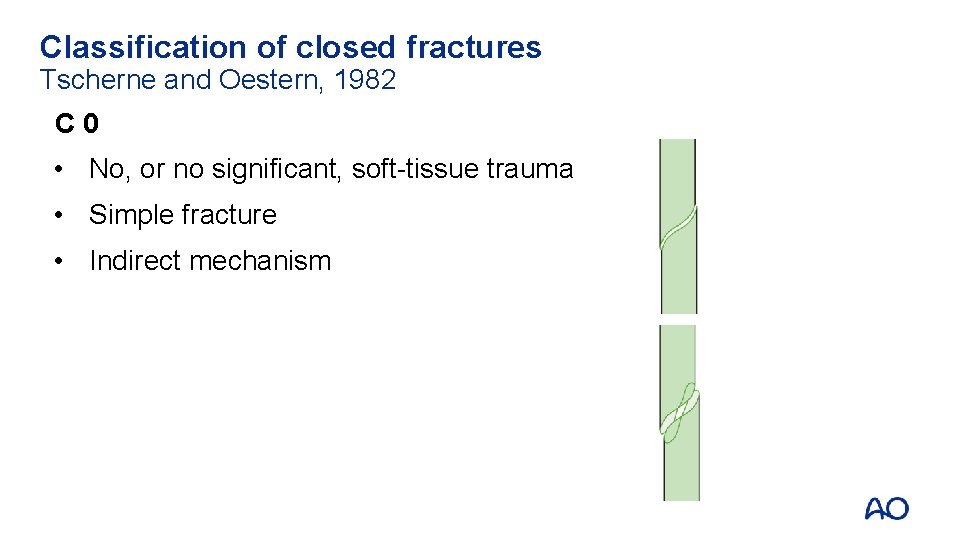
Classification of closed fractures Tscherne and Oestern, 1982 C 0 • No, or no significant, soft-tissue trauma • Simple fracture • Indirect mechanism
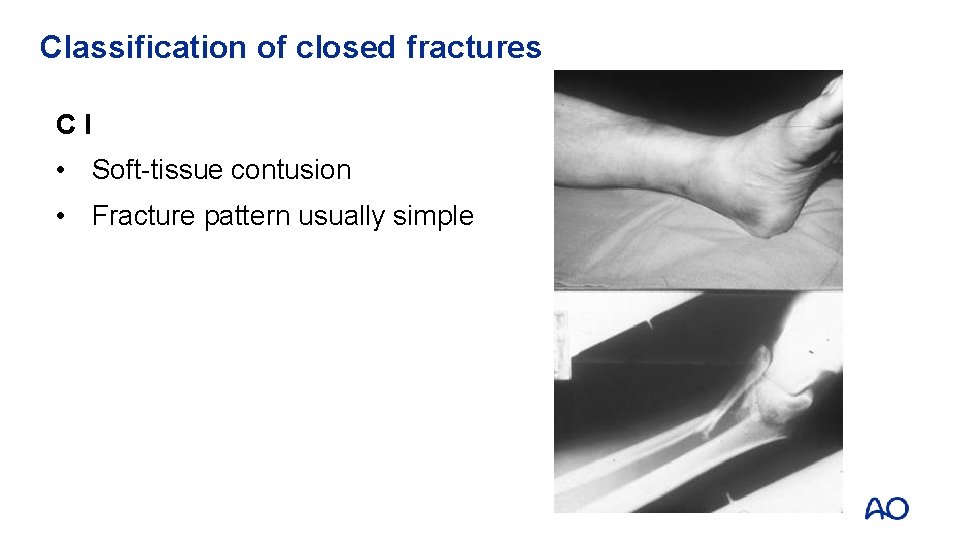
Classification of closed fractures CI • Soft-tissue contusion • Fracture pattern usually simple
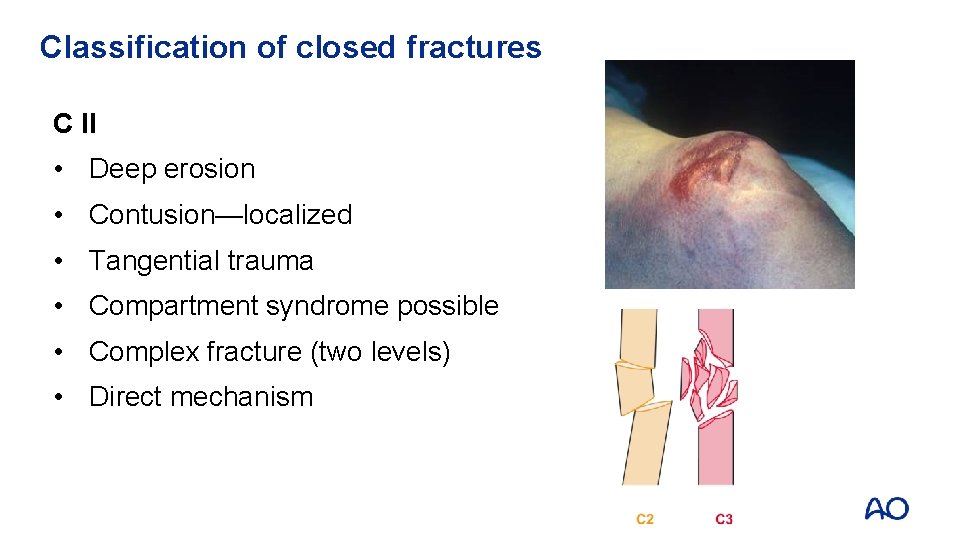
Classification of closed fractures C II • Deep erosion • Contusion—localized • Tangential trauma • Compartment syndrome possible • Complex fracture (two levels) • Direct mechanism
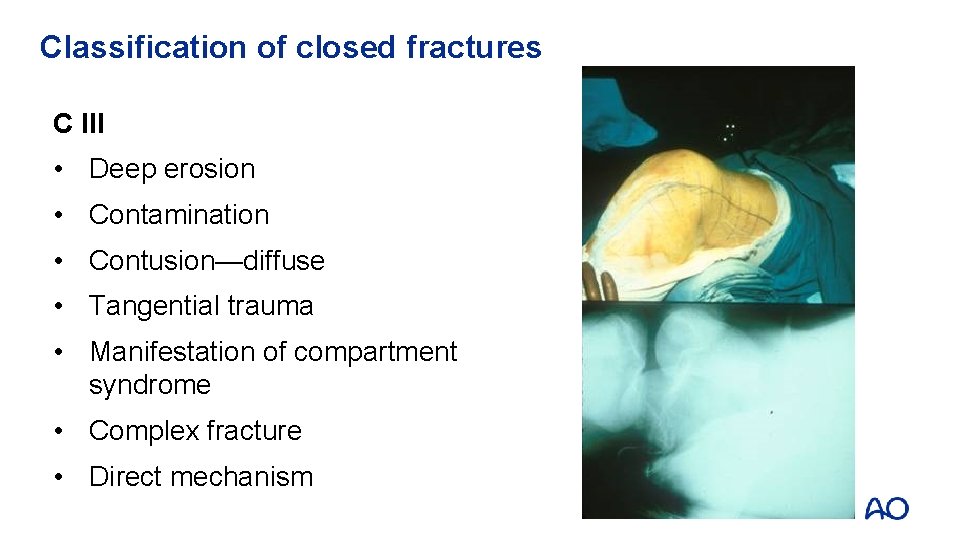
Classification of closed fractures C III • Deep erosion • Contamination • Contusion—diffuse • Tangential trauma • Manifestation of compartment syndrome • Complex fracture • Direct mechanism
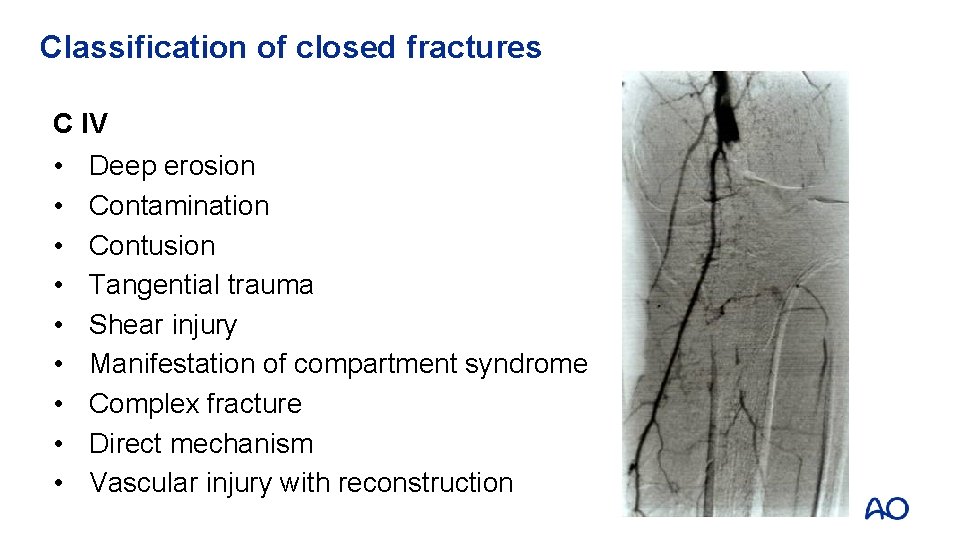
Classification of closed fractures C IV • • • Deep erosion Contamination Contusion Tangential trauma Shear injury Manifestation of compartment syndrome Complex fracture Direct mechanism Vascular injury with reconstruction
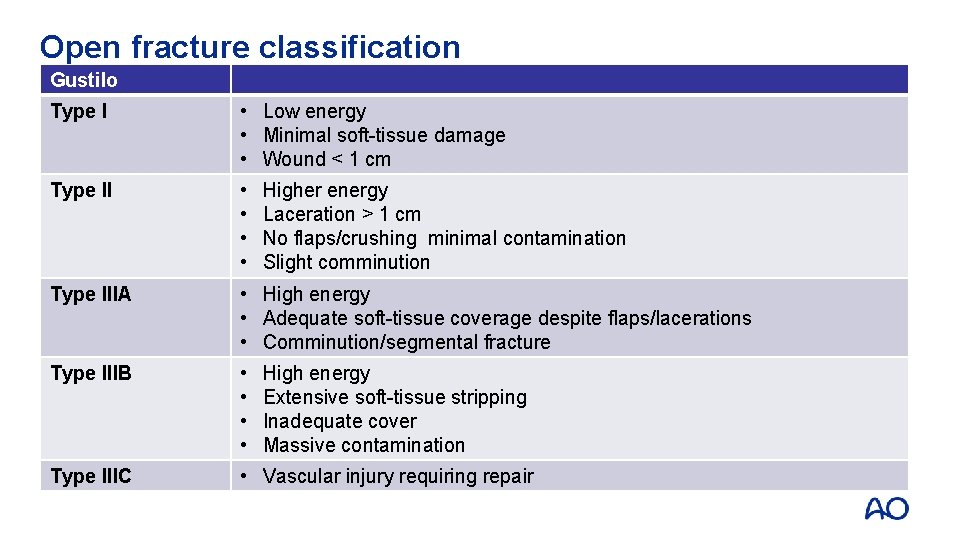
Open fracture classification Gustilo Type I • Low energy • Minimal soft-tissue damage • Wound < 1 cm Type II • • Type IIIA • High energy • Adequate soft-tissue coverage despite flaps/lacerations • Comminution/segmental fracture Type IIIB • • Type IIIC • Vascular injury requiring repair Higher energy Laceration > 1 cm No flaps/crushing minimal contamination Slight comminution High energy Extensive soft-tissue stripping Inadequate cover Massive contamination
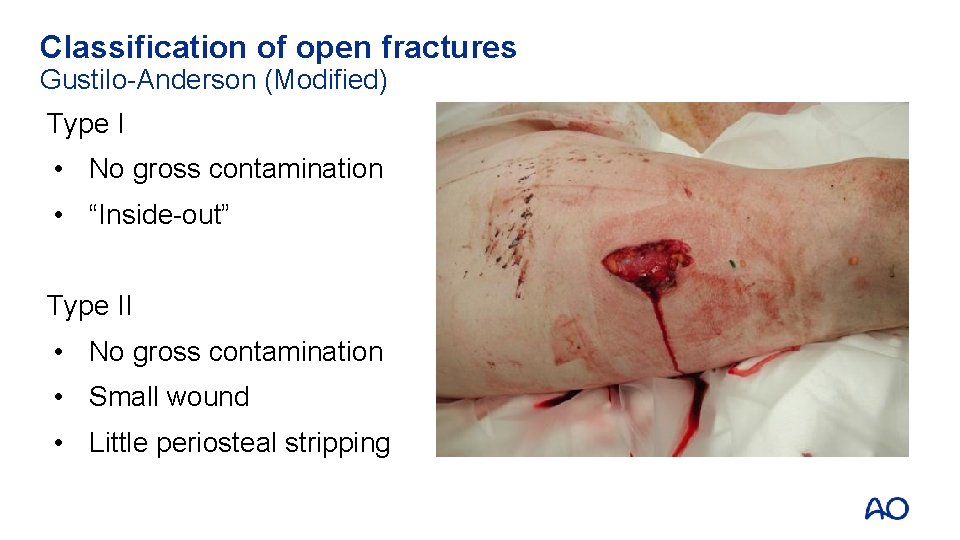
Classification of open fractures Gustilo-Anderson (Modified) Type I • No gross contamination • “Inside-out” Type II • No gross contamination • Small wound • Little periosteal stripping
Classification of open fractures Gustilo-Anderson (Modified) Type III • Large skin defect • Skin defect that requires coverage (type IIIB) • Large amount of periosteal stripping • Vascular injury that requires repair (type IIIC) • Gross contamination or prolonged delay in removing contamination (> 6 hours) • Shotgun, high-energy ballistic injury, most blast injuries, farmyard injury
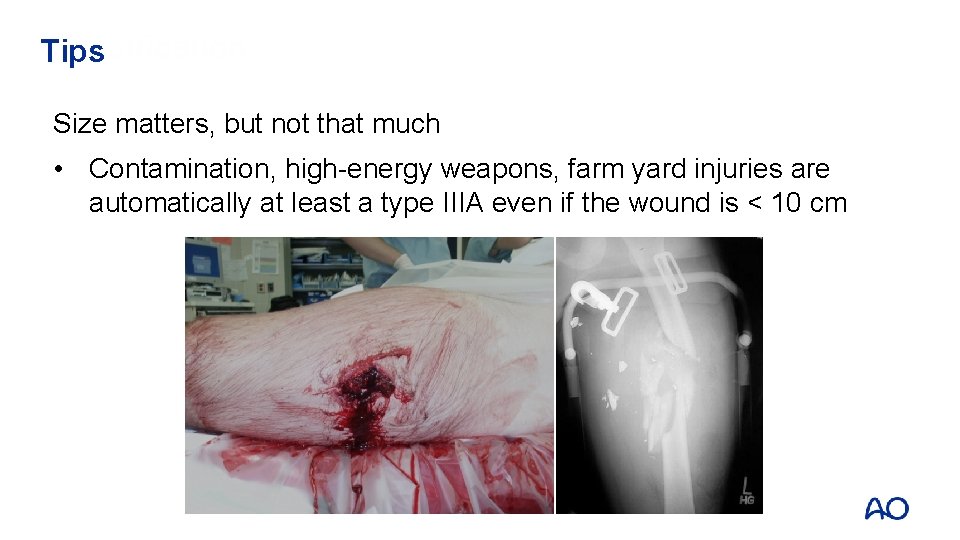
Classification Tips Size matters, but not that much • Contamination, high-energy weapons, farm yard injuries are automatically at least a type IIIA even if the wound is < 10 cm
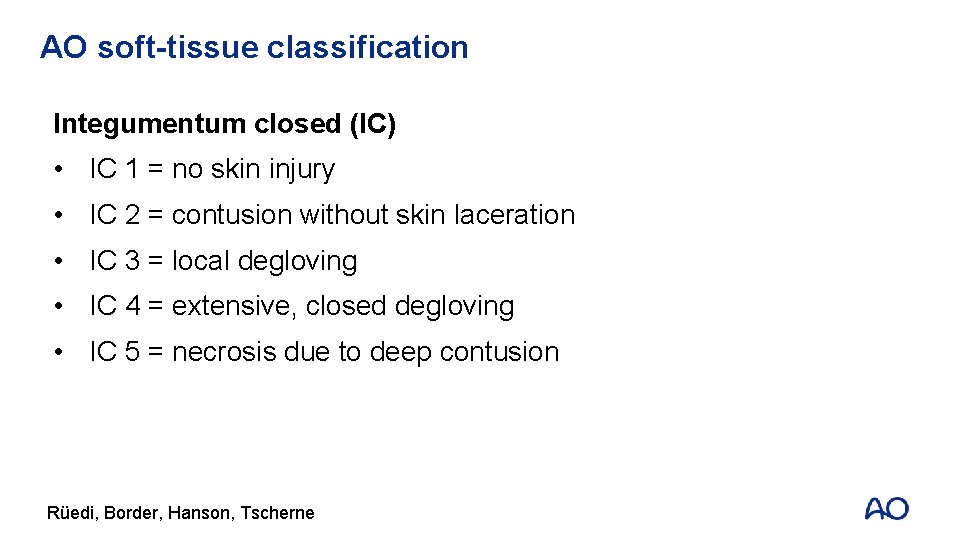
AO soft-tissue classification Integumentum closed (IC) • IC 1 = no skin injury • IC 2 = contusion without skin laceration • IC 3 = local degloving • IC 4 = extensive, closed degloving • IC 5 = necrosis due to deep contusion Rüedi, Border, Hanson, Tscherne
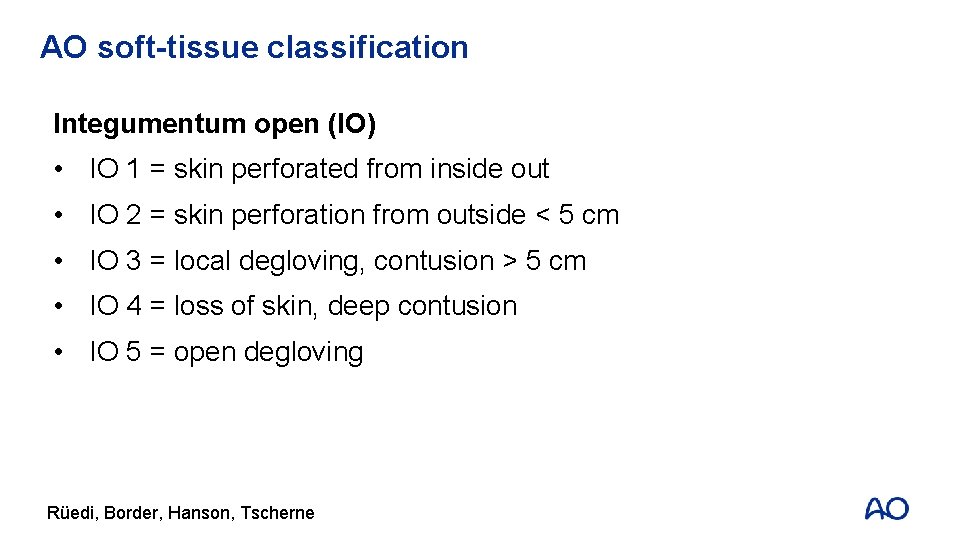
AO soft-tissue classification Integumentum open (IO) • IO 1 = skin perforated from inside out • IO 2 = skin perforation from outside < 5 cm • IO 3 = local degloving, contusion > 5 cm • IO 4 = loss of skin, deep contusion • IO 5 = open degloving Rüedi, Border, Hanson, Tscherne
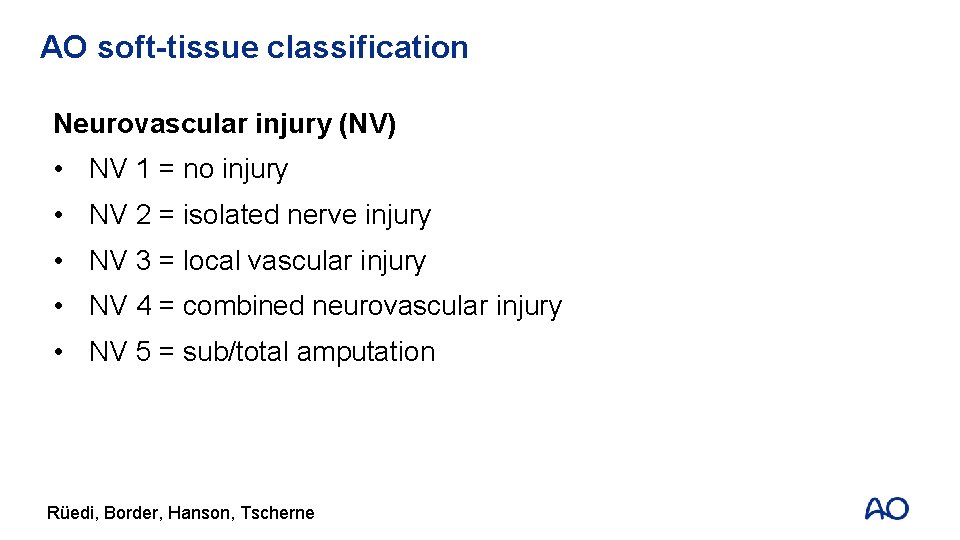
AO soft-tissue classification Neurovascular injury (NV) • NV 1 = no injury • NV 2 = isolated nerve injury • NV 3 = local vascular injury • NV 4 = combined neurovascular injury • NV 5 = sub/total amputation Rüedi, Border, Hanson, Tscherne
AO soft-tissue classification Muscle and tendon injury (MT) • MT 1 = no injury • MT 2 = isolated (one group) • MT 3 = two or more groups • MT 4 = loss of muscle groups, tendon • MT 5 = compartment/crush syndrome Rüedi, Border, Hanson, Tscherne
Compartment syndrome • Increasing volume in a nonexpandable space • Increasing pressure > arteriolar pressure • Hypoxia • (Muscle) necrosis • Critical pressure Pdiast - Pcomp < 30 mm Hg • Decreasing arteriovenous difference • Reperfusion can occur (AMP to hypoxanthine)
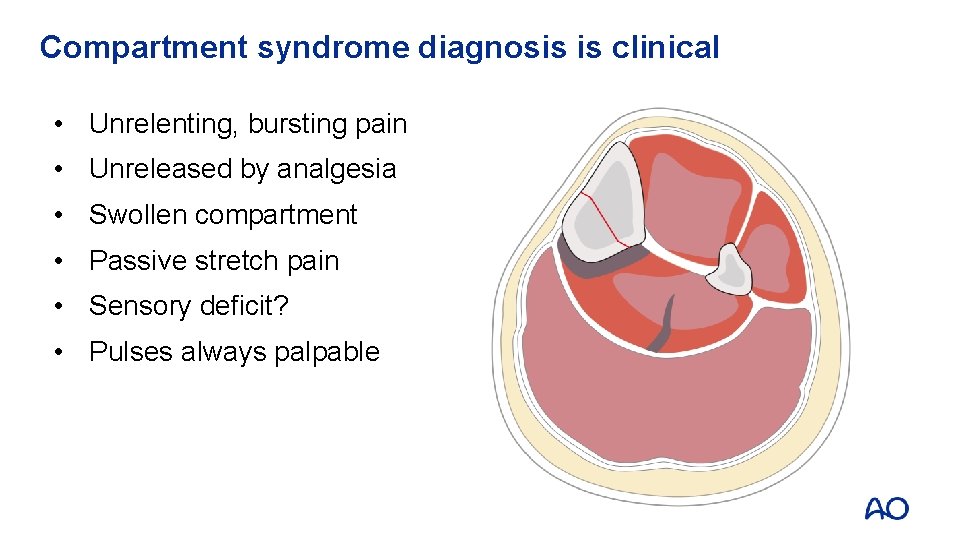
Compartment syndrome diagnosis is clinical • Unrelenting, bursting pain • Unreleased by analgesia • Swollen compartment • Passive stretch pain • Sensory deficit? • Pulses always palpable
Compartment pressure measurement • Critical measurement is the difference between compartment pressure and patient’s systolic pressure • Invaluable in unconscious or anesthetized patients • Trends are more useful than single readings • NOT a substitute for clinical diagnosis
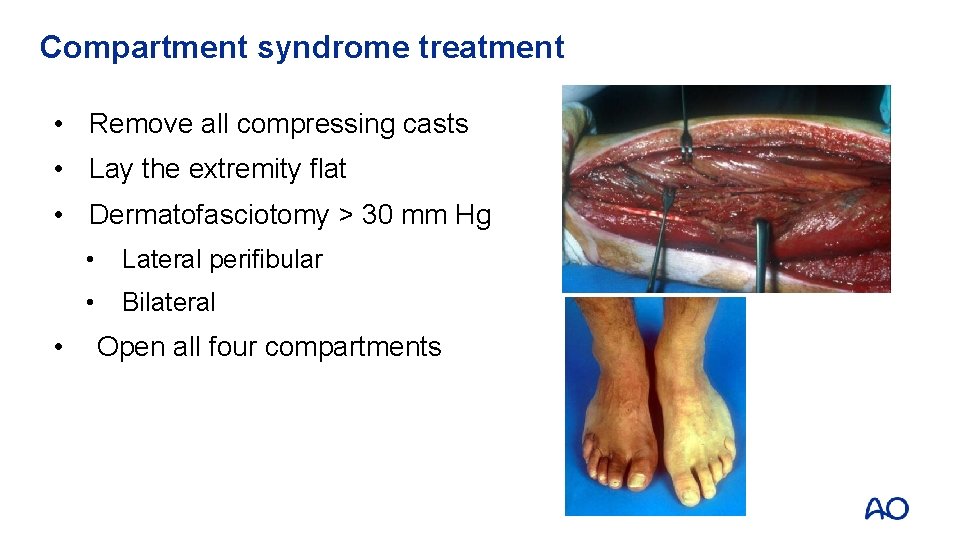
Compartment syndrome treatment • Remove all compressing casts • Lay the extremity flat • Dermatofasciotomy > 30 mm Hg • • Lateral perifibular • Bilateral Open all four compartments
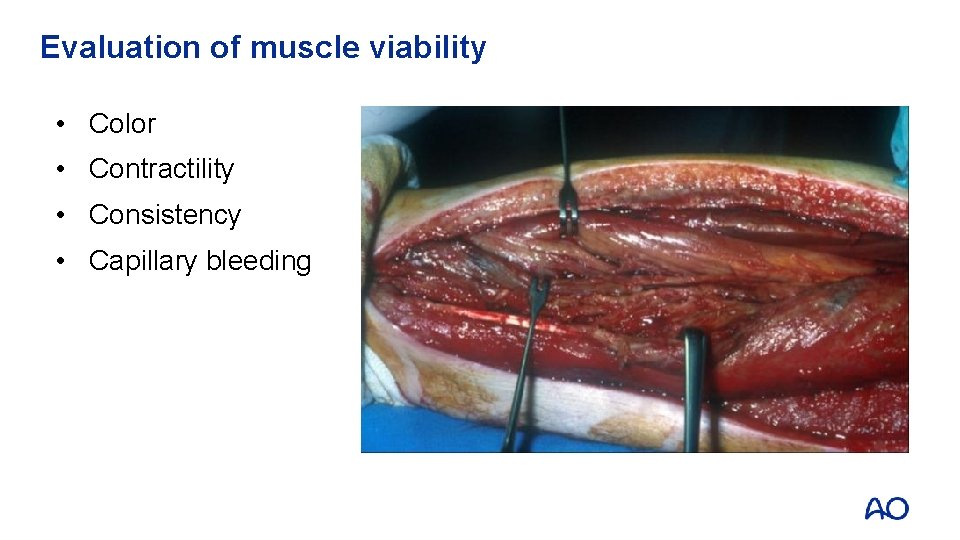
Evaluation of muscle viability • Color • Contractility • Consistency • Capillary bleeding
Techniques for soft-tissue handling Incisions • “Minimally invasive” ≠ small incision • If small incision does not allow adequate visualization, excessive retraction is often used • Proper placement of incision is more critical when using small incisions • Small incisions do not ensure that the surgeon does not strip the bone • Do not skive the skin—incise the skin perpendicular to the skin
Techniques for soft-tissue handling Retraction • Avoid retracting more than required to provide visualization • Relax retraction whenever not needed • Avoid self-retaining retractors when possible because they are easily set and forgotten
Techniques for soft-tissue handling Forceps • Use a very gentle touch—do not squeeze tissue • Use as a retractor • Avoid the use of large forceps (eg, Smith-Peterson) on the skin
Techniques for soft-tissue handling Dissection • Avoid horizontal dissection planes whenever possible (especially between the subcutaneous tissue and fascia) • Gentle pressure on the skin edge may allow visualization of bleeders which may then be specifically cauterized • Sharp dissection with a knife should be used when possible (rather than cutting with scissors which crushes soft tissues) • Avoid multiple passes with scissors or scalpel through tissues
Techniques for soft-tissue handling Bone exposure • Preserve periosteum whenever possible • Use least aggressive bone holding clamps as possible • Pay attention
Take-home messages • Soft tissue plays a critical role in preventing infection, supplying vasculature to bone, and in function • Soft-tissue injury must be appreciated when deciding how to approach a fracture • Soft tissue must not be further injured by careless surgical dissection • Compartment syndrome is a surgical emergency • A high index of suspicion and early diagnosis is key to successful treatment