
The Sociology of Deviance Crime Part 1 What








- Slides: 66
The Sociology of Deviance & Crime
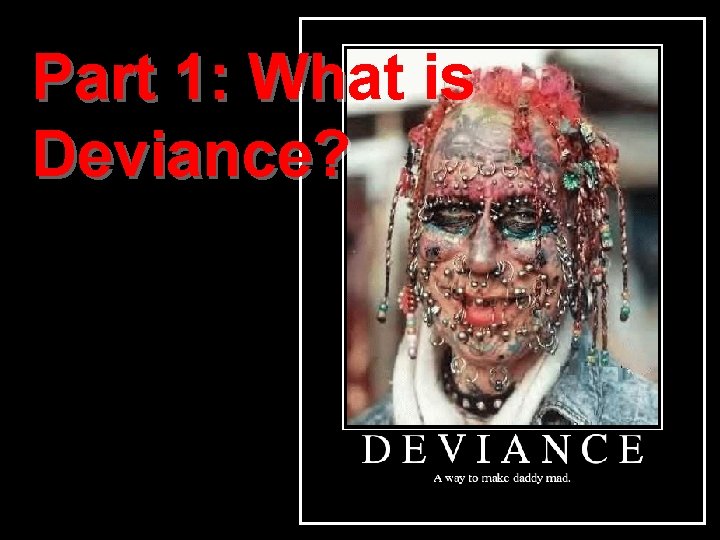
Part 1: What is Deviance?
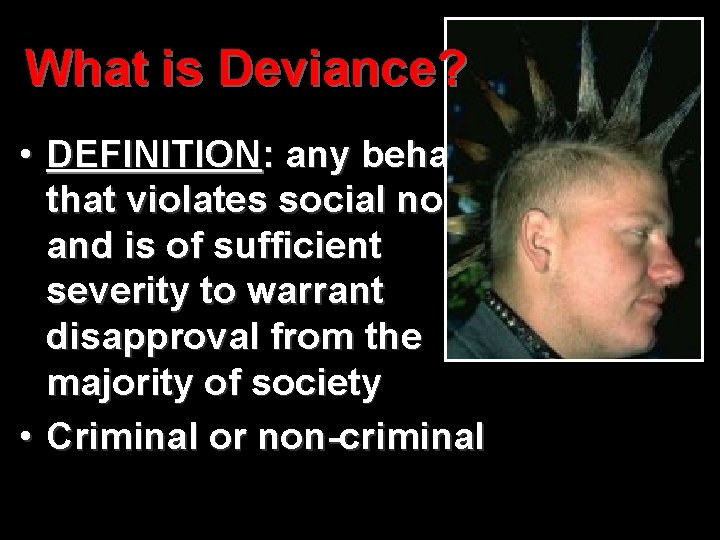
What is Deviance? • DEFINITION: any behavior that violates social norms, and is of sufficient severity to warrant disapproval from the majority of society • Criminal or non-criminal
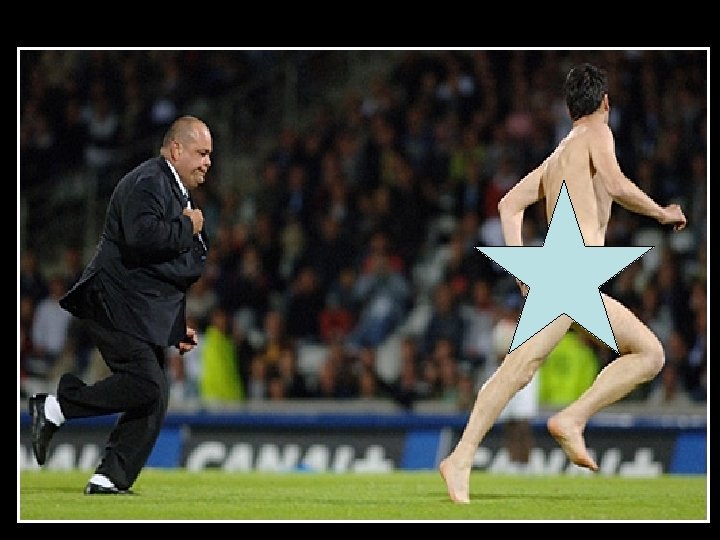
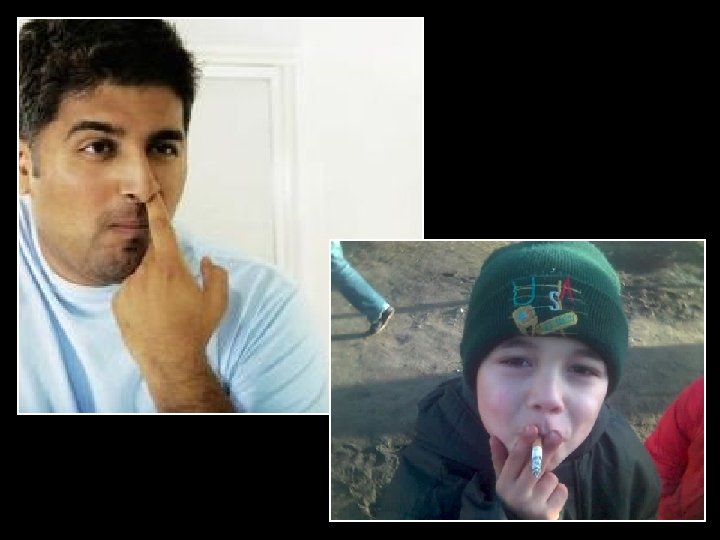
What is Deviance? • No act is inherently deviant • For something to be deviant it has to be judged by the larger culture as so • Deviance is socially constructed
Cultural Implications • Considerable variation of norms across groups, time & place; therefore, definitions of deviance may vary • EXAMPLES: • Female circumcision v. genital mutilation • Taking someone’s life
The Deviant • Two components: • Person must be detected committing a deviant act • Person must be stigmatized by society • Stigma: mark of social disgrace that sets the deviant apart from the rest of society
The Deviant
Part 2: The Social Functions of Deviance
Social Functions of Deviance • In The Rules of Sociological Method, Durkheim observed that deviance has some uses in social life…
Social Functions of Deviance • Clarifies cultural norms • Defines boundaries of acceptable behavior • http: //www. youtube. com/watch? v=o Ovp. Mj. RPp 6 Q • Promotes social unity • Draws the line between conforming members & “outsiders” • Reinforces sense of community &
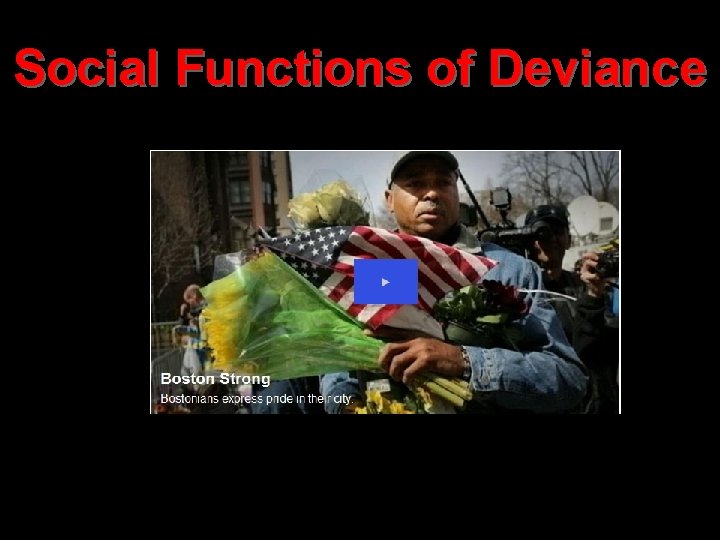
Social Functions of Deviance
Social Functions of Deviance • Diffuses social tension • When people are unhappy with social conditions, may strike out at society • Minor acts of deviance serve as a safety valve
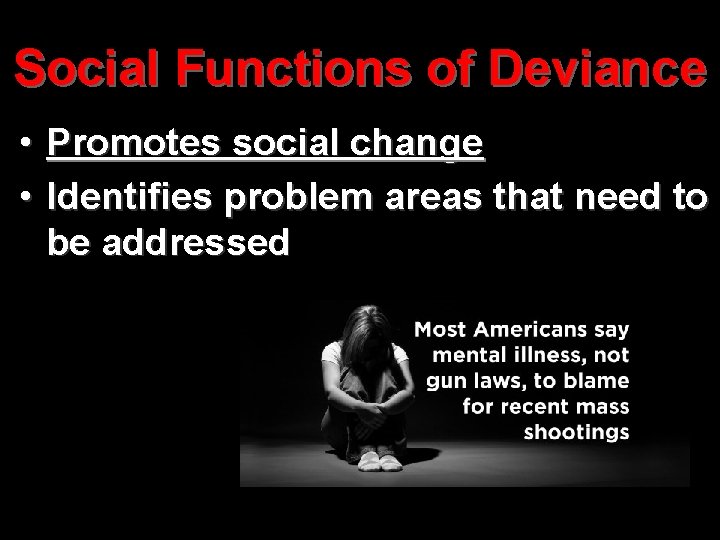
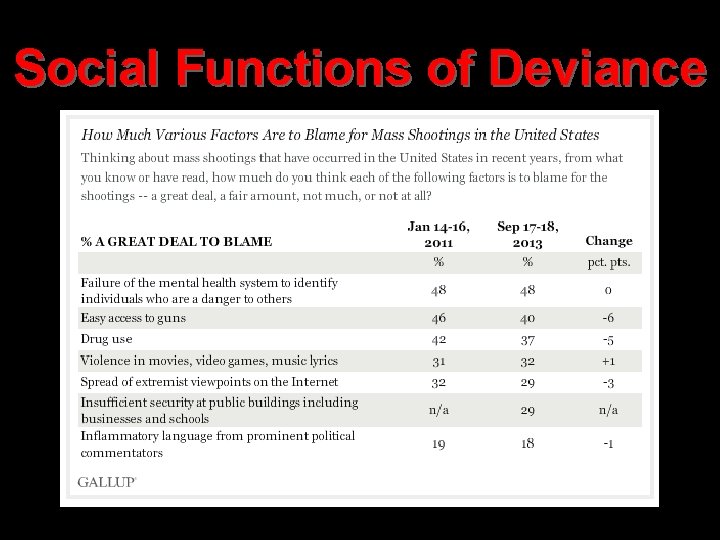
Social Functions of Deviance • Promotes social change • Identifies problem areas that need to be addressed
Social Functions of Deviance
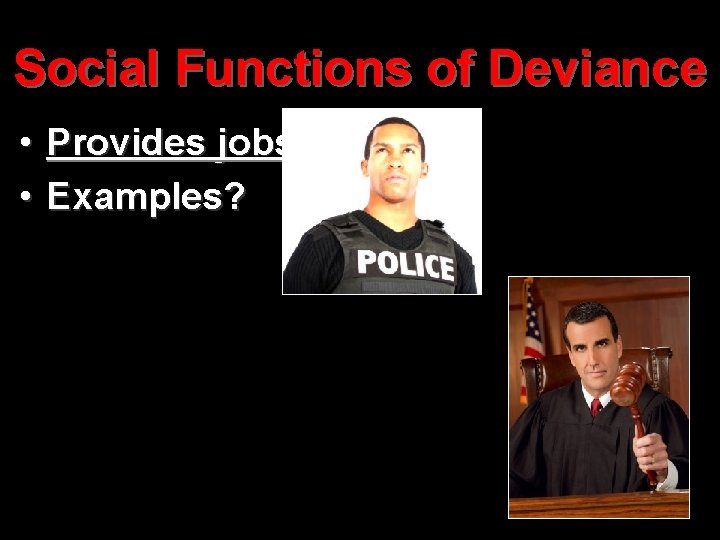
Social Functions of Deviance • Provides jobs • Examples?
Part 3: Explaining Deviance - Theories
Structural-Functionalist Analysis
R. Merton: Strain Theory • Deviance is a natural outgrowth of the values, norms, beliefs & structure of society • BIG QUESTION: • How do individuals respond to culturally approved goals & the means of achieving those goals?
R. Merton: Strain Theory • Not everyone has legitimate means to achieve societal goals; the strain of incompatible goals & means leads to anomie • Anomie: • Situation that arises when the norms of society are unclear or no longer applicable
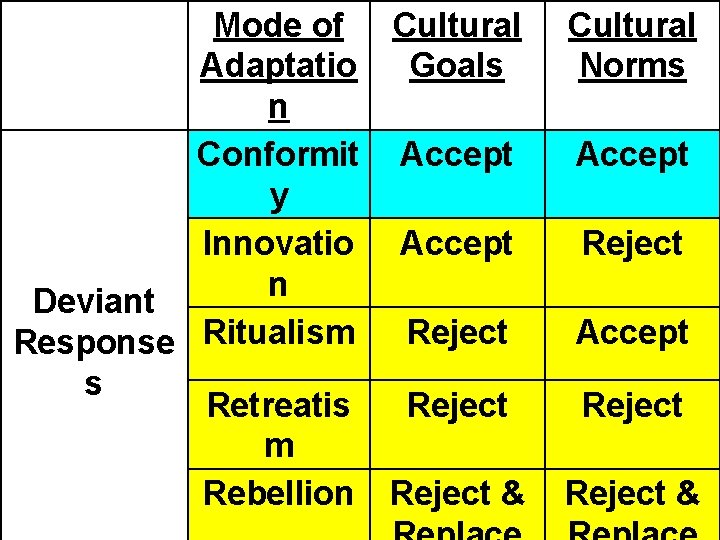
Mode of Cultural Adaptatio Goals n Conformit Accept y Innovatio Accept n Deviant Reject Response Ritualism s Retreatis Reject m Rebellion Reject & Cultural Norms Accept Reject &
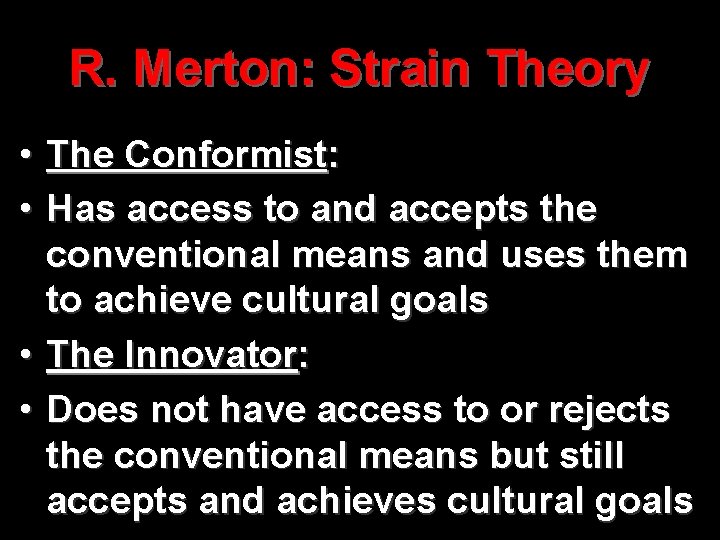
R. Merton: Strain Theory • The Conformist: • Has access to and accepts the conventional means and uses them to achieve cultural goals • The Innovator: • Does not have access to or rejects the conventional means but still accepts and achieves cultural goals
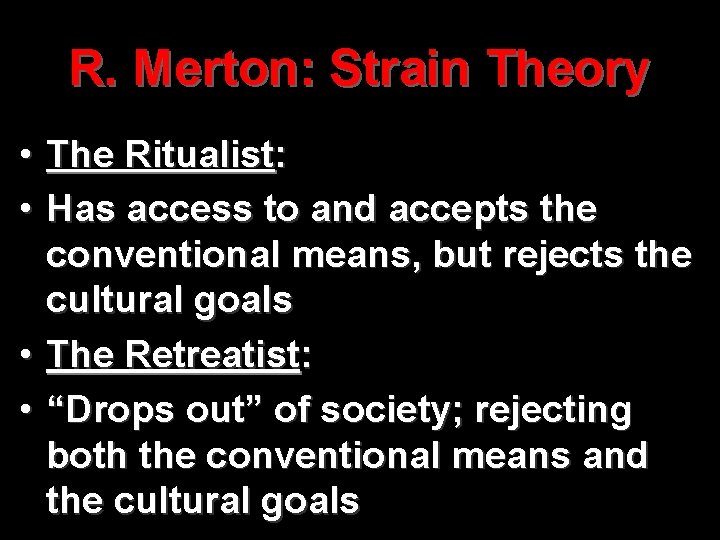
R. Merton: Strain Theory • The Ritualist: • Has access to and accepts the conventional means, but rejects the cultural goals • The Retreatist: • “Drops out” of society; rejecting both the conventional means and the cultural goals
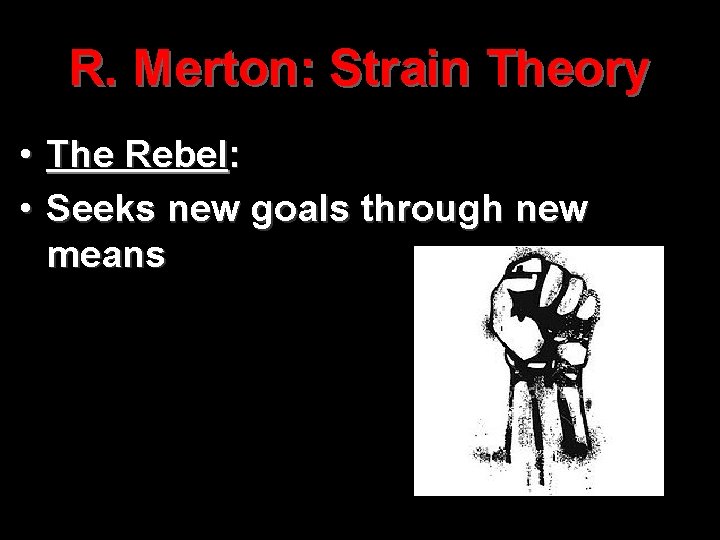
R. Merton: Strain Theory • The Rebel: • Seeks new goals through new means
Conflict Theory
R. Quinney: Conflict Theory • Competition & social inequality lead to deviance • Why are people deviant? • To maintain position • To obtain economic reward • Low self-esteem & feelings of powerlessness • RATES OF DEVIANCE MISLEADING
Symbolic-Interactionist Analysis
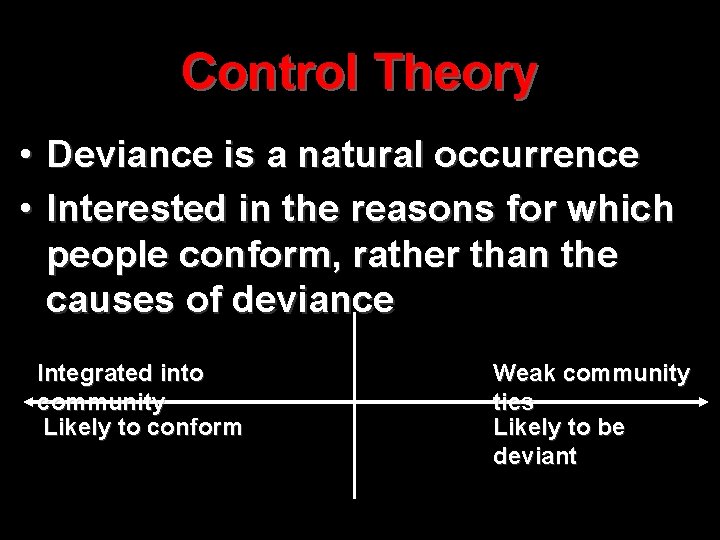
Control Theory • Deviance is a natural occurrence • Interested in the reasons for which people conform, rather than the causes of deviance Integrated into community Likely to conform Weak community ties Likely to be deviant
Control Theory • • • Develop social bonds in 4 ways: Attachment Belief Commitment Involvement
Techniques of Neutralization • Some people, despite strong ties to the community, still perform deviant acts • Suspend moral beliefs in order to do so • HOW?
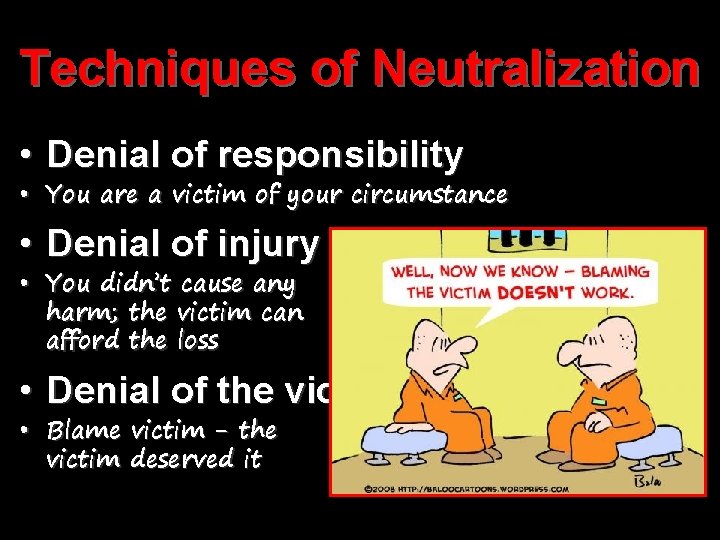
Techniques of Neutralization • Denial of responsibility • You are a victim of your circumstance • Denial of injury • You didn’t cause any harm; the victim can afford the loss • Denial of the victim • Blame victim - the victim deserved it
Techniques of Neutralization • Condemnation of the authorities • Shift blame – “corrupt cops” • Appeal to higher loyalties • Rules of society take a back seat to loyalty • “protect my family” – “help my friend”
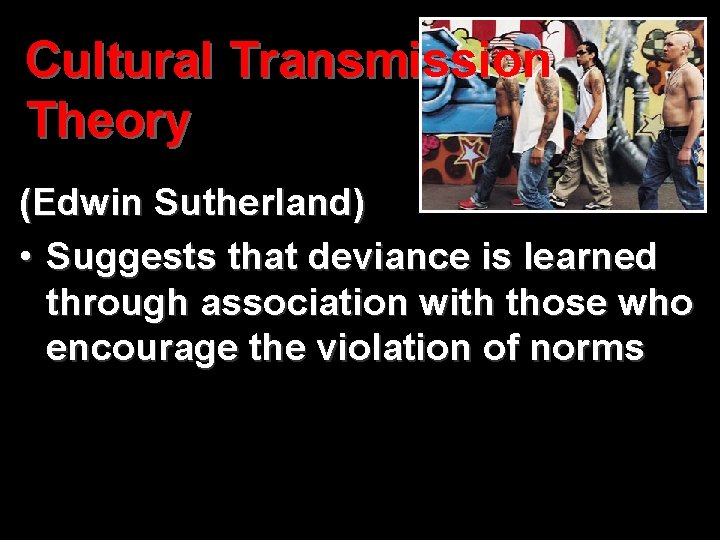
Cultural Transmission Theory (Edwin Sutherland) • Suggests that deviance is learned through association with those who encourage the violation of norms
Cultural Transmission Theory • Differential association: If the majority of a person’s interactions are with deviant individuals, the person is likely to be socialized into patterns of deviant behavior • Generally occurs in primary groups
Labeling Theory • Focuses on how individuals come to be identified as deviant, rather than why people perform deviant acts • ALL people commit deviant acts; not everyone is labeled as deviant
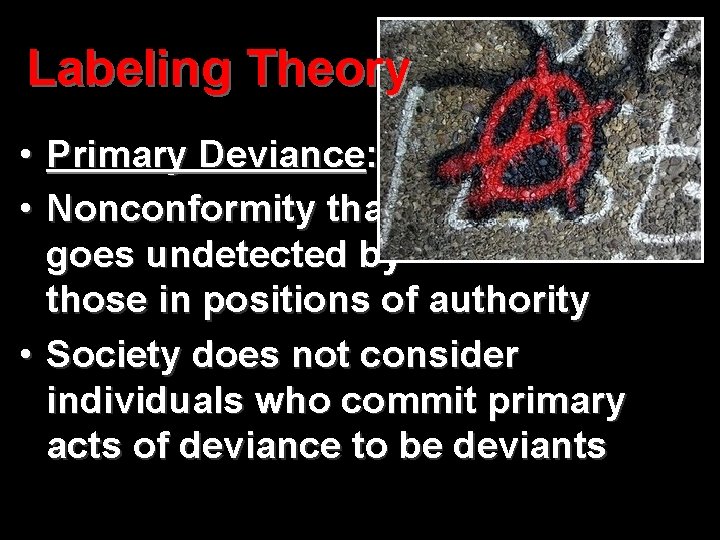
Labeling Theory • Primary Deviance: • Nonconformity that goes undetected by those in positions of authority • Society does not consider individuals who commit primary acts of deviance to be deviants
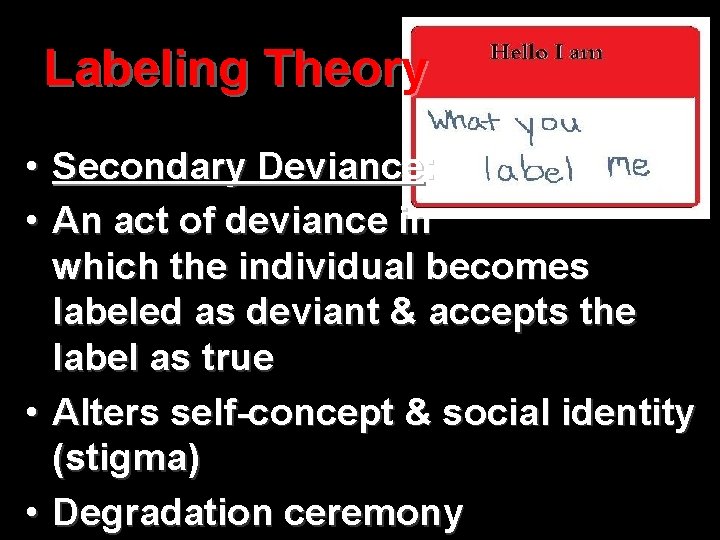
Labeling Theory • Secondary Deviance: • An act of deviance in which the individual becomes labeled as deviant & accepts the label as true • Alters self-concept & social identity (stigma) • Degradation ceremony
Part 4: Crime
Types of Crime • FBI defines 5 broad categories: • Violent crimes • Crimes against property • Victimless crimes • White-collar crime • Organized crime
Types of Crime • Violent crimes: murder, forcible rape, robbery, aggravated assault • Crimes against property: burglary, larceny, motor vehicle theft, arson • Victimless crimes: prostitution, illegal gambling, illegal drug use, vagrancy • White-collar crime: Fraud, tax evasion, embezzlement, insider trading, forgery • Organized crime: “business” – drug
Statistical Limitations • Individuals are less likely to report a crime if their friends or family are involved • Members of the upper classes are more likely to file formal reports; police are more likely to follow through • Some crimes are less likely to be
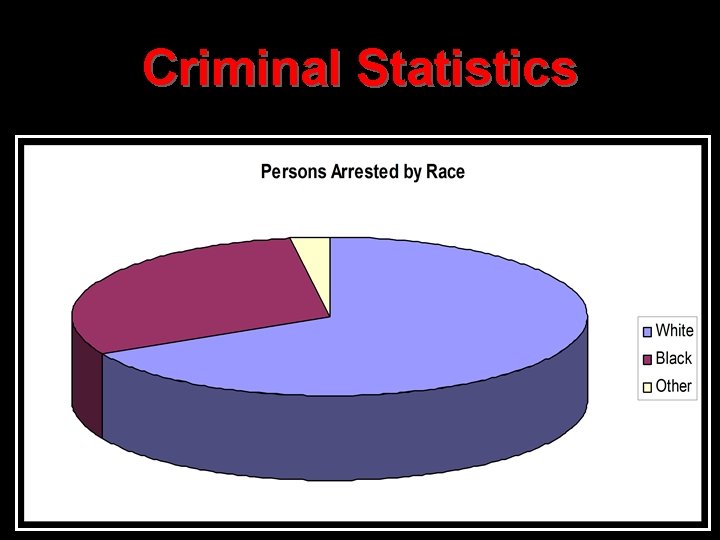
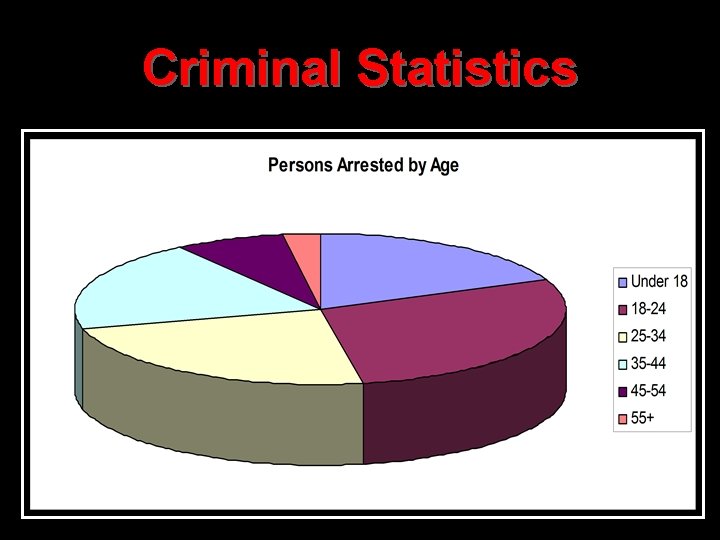
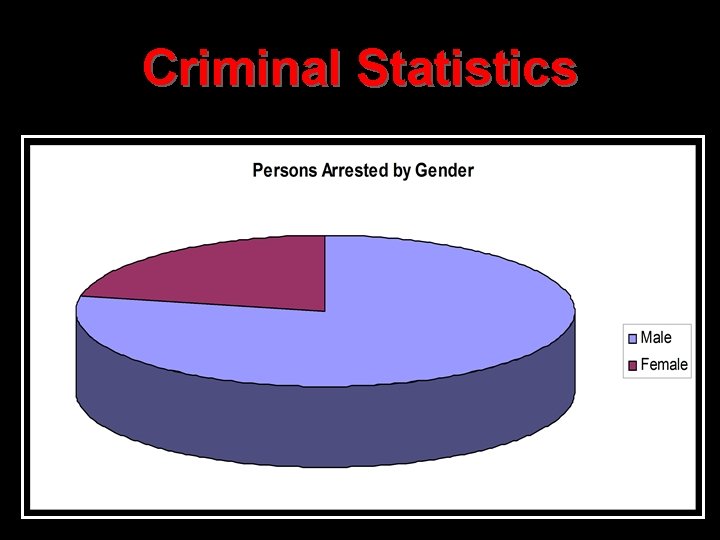
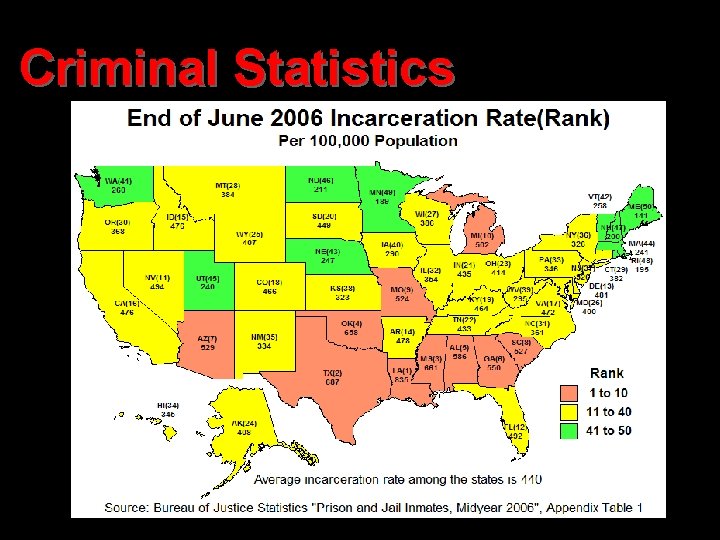
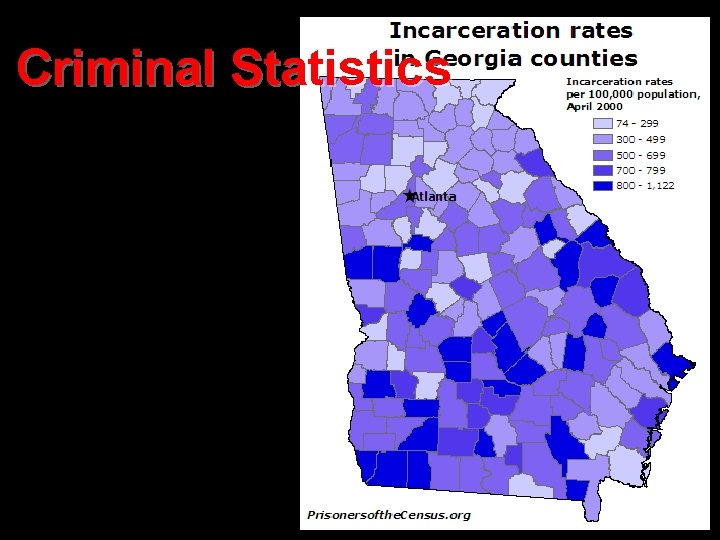
Criminal Statistics
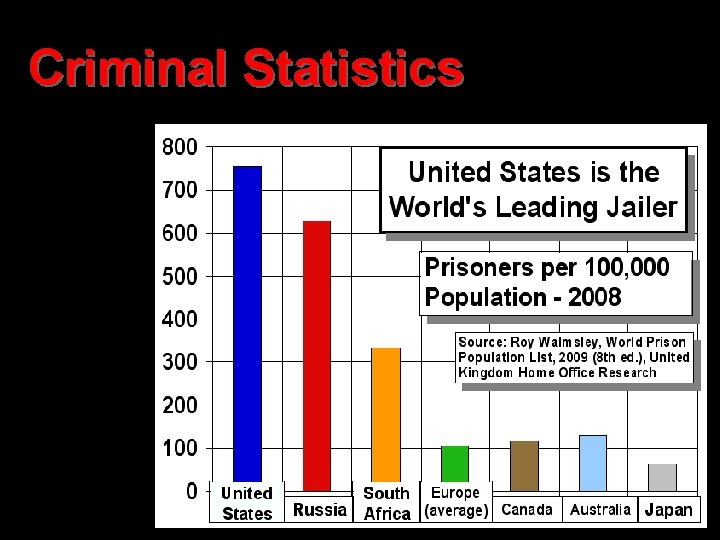
Criminal Statistics
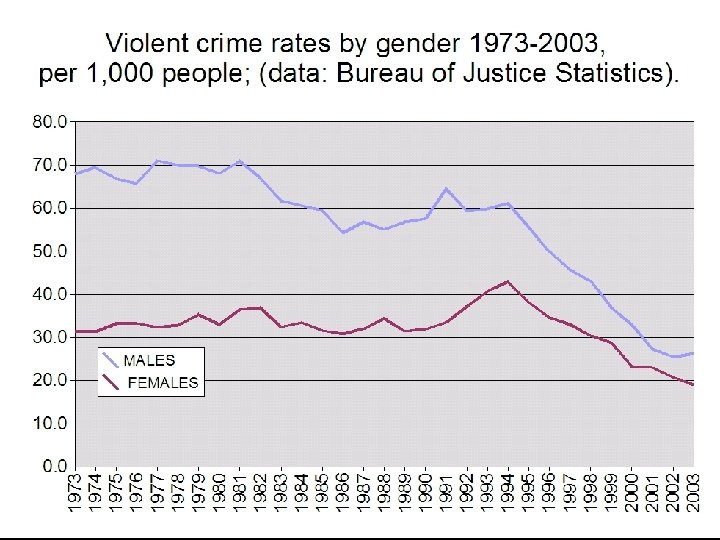
Criminal Statistics
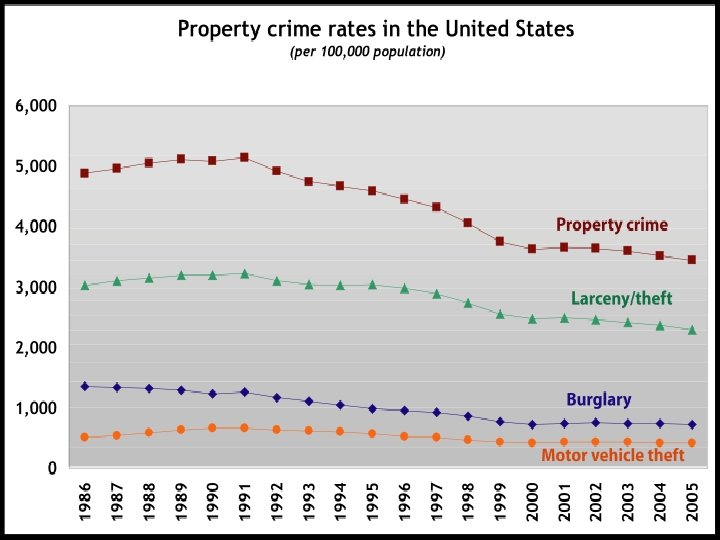
Criminal Statistics
Criminal Statistics
Criminal Statistics
Part 6: Juvenile Delinquency
Minor v. Juvenile • Minor: • Anyone who is under the age of 18; not all minors are considered “juvenile” in terms of criminal responsibility
Minor v. Juvenile • Juvenile: • Anyone who has not yet reached the “age of majority” (threshold of adulthood) • Juvenile status is defined by age, but varies by jurisdiction
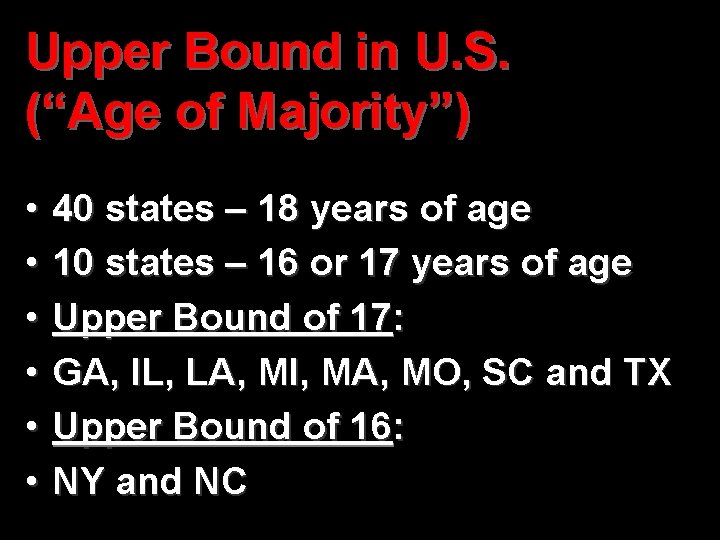
Upper Bound in U. S. (“Age of Majority”) • • • 40 states – 18 years of age 10 states – 16 or 17 years of age Upper Bound of 17: GA, IL, LA, MI, MA, MO, SC and TX Upper Bound of 16: NY and NC
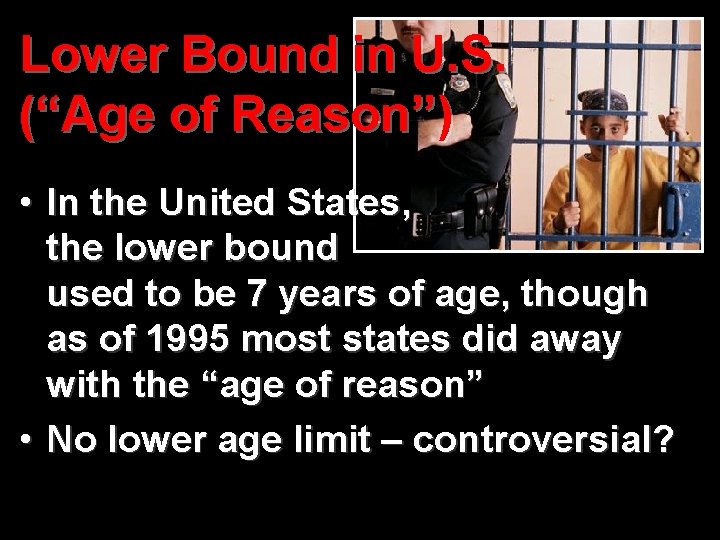
Lower Bound in U. S. (“Age of Reason”) • In the United States, the lower bound used to be 7 years of age, though as of 1995 most states did away with the “age of reason” • No lower age limit – controversial?
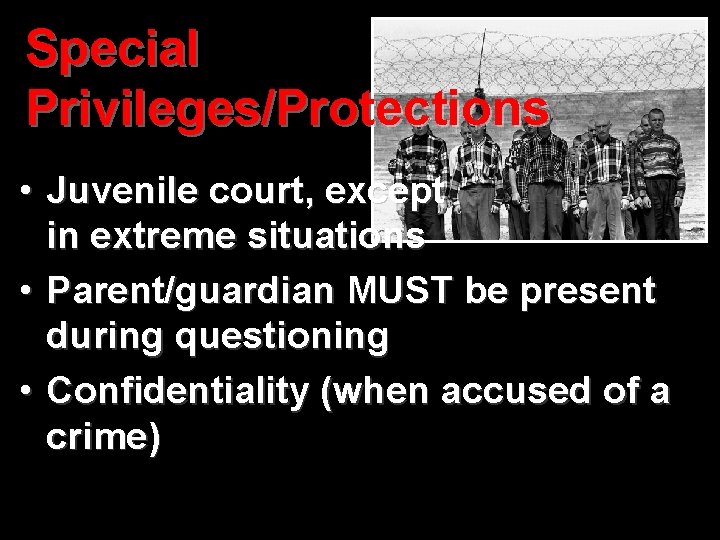
Special Privileges/Protections • Juvenile court, except in extreme situations • Parent/guardian MUST be present during questioning • Confidentiality (when accused of a crime)
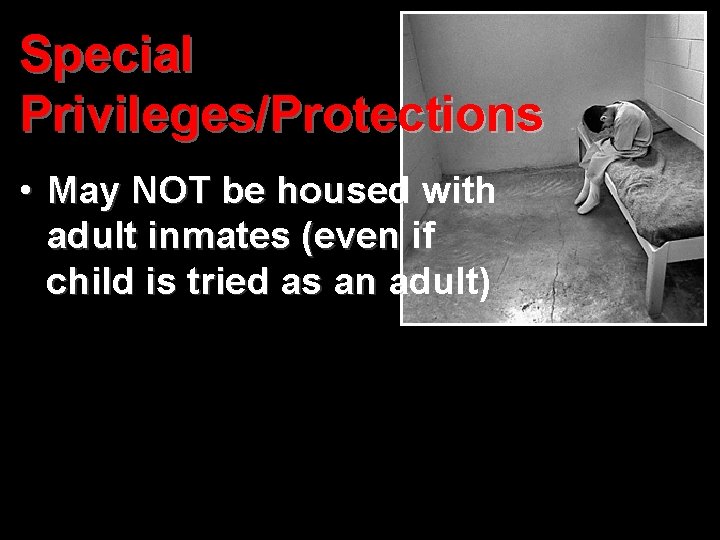
Special Privileges/Protections • May NOT be housed with adult inmates (even if child is tried as an adult)
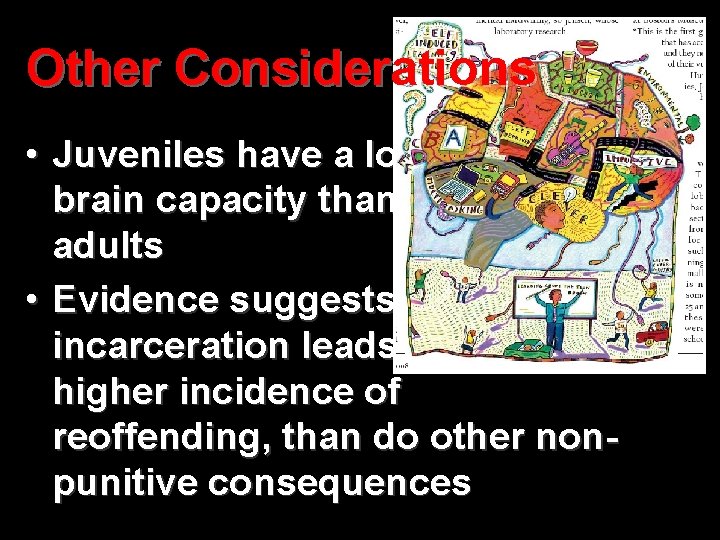
Other Considerations • Juveniles have a lower brain capacity than adults • Evidence suggests that incarceration leads to a higher incidence of reoffending, than do other nonpunitive consequences
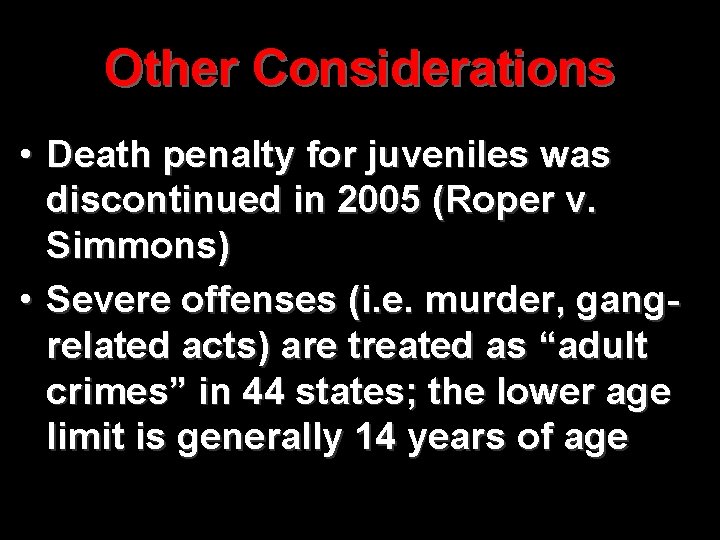
Other Considerations • Death penalty for juveniles was discontinued in 2005 (Roper v. Simmons) • Severe offenses (i. e. murder, gangrelated acts) are treated as “adult crimes” in 44 states; the lower age limit is generally 14 years of age