
The social construction of crime and deviance What

- Slides: 37
The social construction of crime and deviance
What are the questions about? • How social reality is constructed in our minds and does not exist externally • How society defines certain acts as deviant and acts on these • How society can make deviance greater rather than reduce it • How deviance is not caused by external social forces, ie)culture/poverty etc
Areas of focus: • The origins of labelling theory • How society defines what is deviant? (Deviance as a relative concept) • Rule creation • The Process of labelling (how it happens) • The effects of labelling • The role of the media (deviance amplification) • Methodological issues • Evaluation
Concepts you need to know… • • Selective policing Master status Societal reaction Primary/secondary deviance Labels Self concept Self fulfilling prophecy • • • Stigma Sensitisation Deviance amplification Relative deviance Folk devils & moral panics
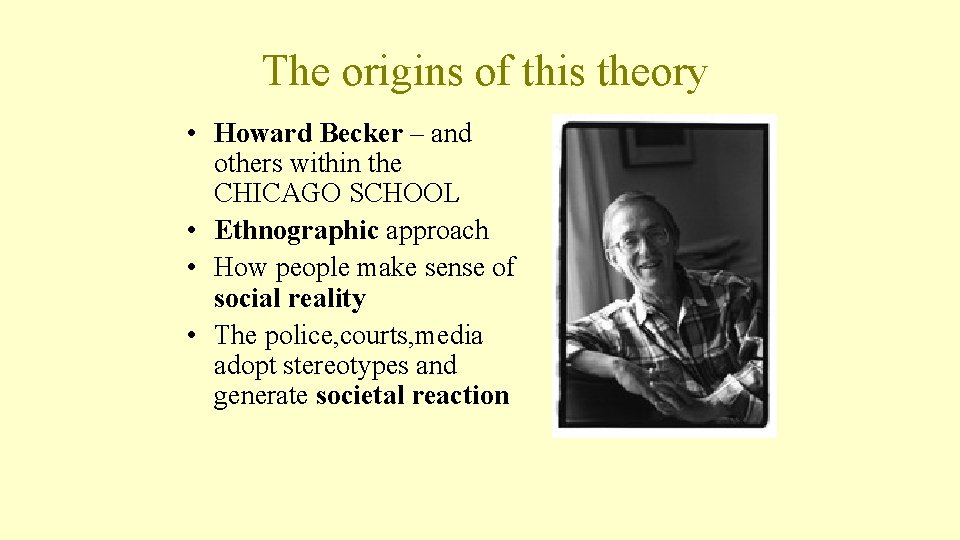
The origins of this theory • Howard Becker – and others within the CHICAGO SCHOOL • Ethnographic approach • How people make sense of social reality • The police, courts, media adopt stereotypes and generate societal reaction
Becker had his fingers in a lot of social constructionist pies… • • Ø Ø Ø Ø Most famous book ‘OUTSIDERS’ (1955) Issues he discusses… Rule creation Moral entrepreneurs and crusades Relative deviance Societal reaction Selective policing Deviant careers Master status
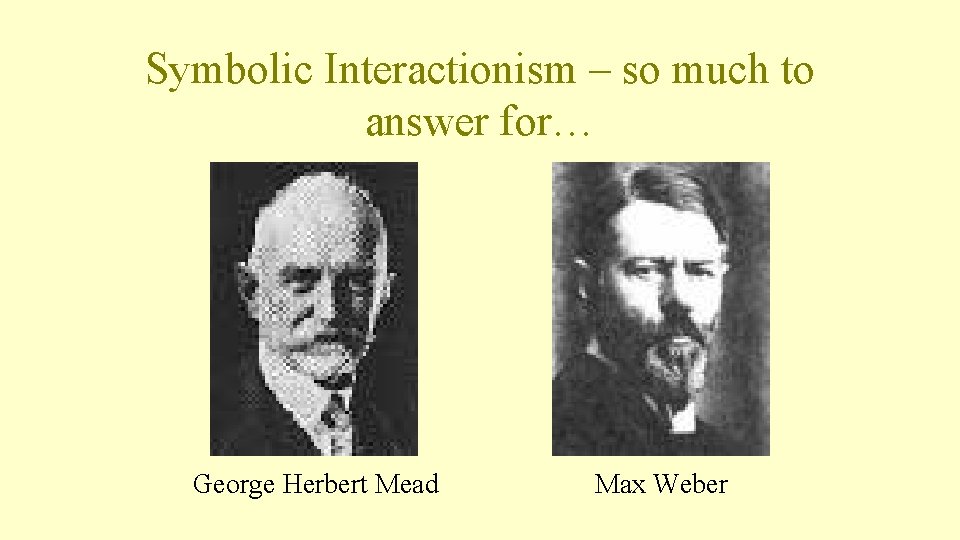
Symbolic Interactionism – so much to answer for… George Herbert Mead Max Weber
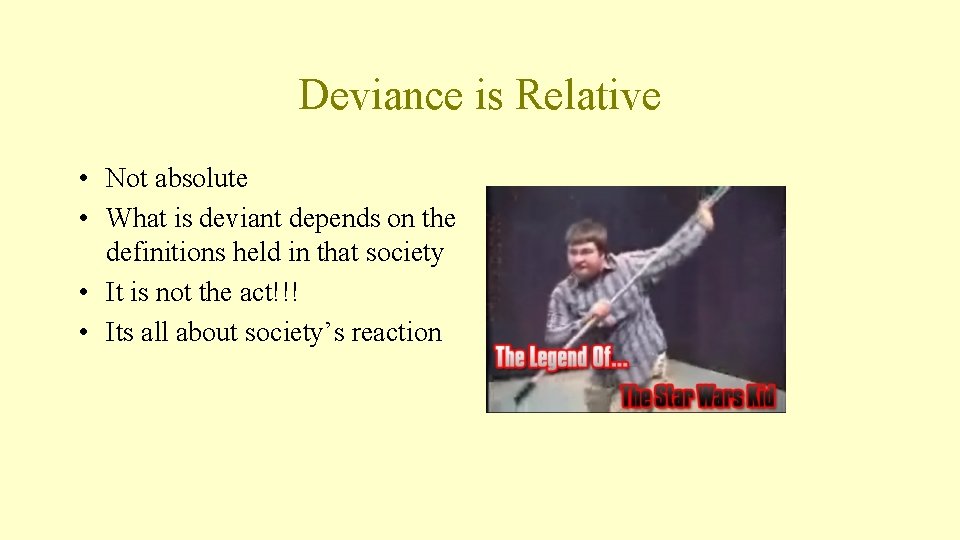
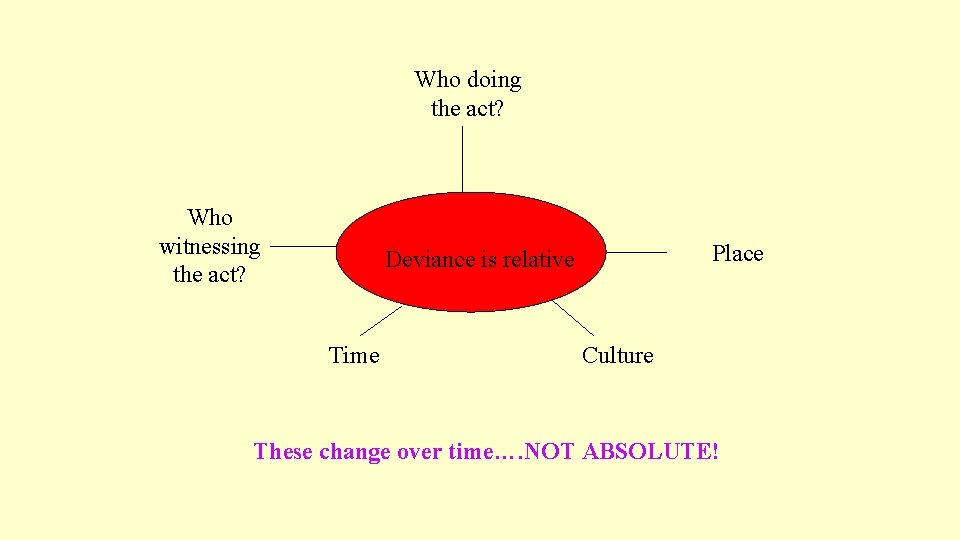
Deviance is Relative • Not absolute • What is deviant depends on the definitions held in that society • It is not the act!!! • Its all about society’s reaction
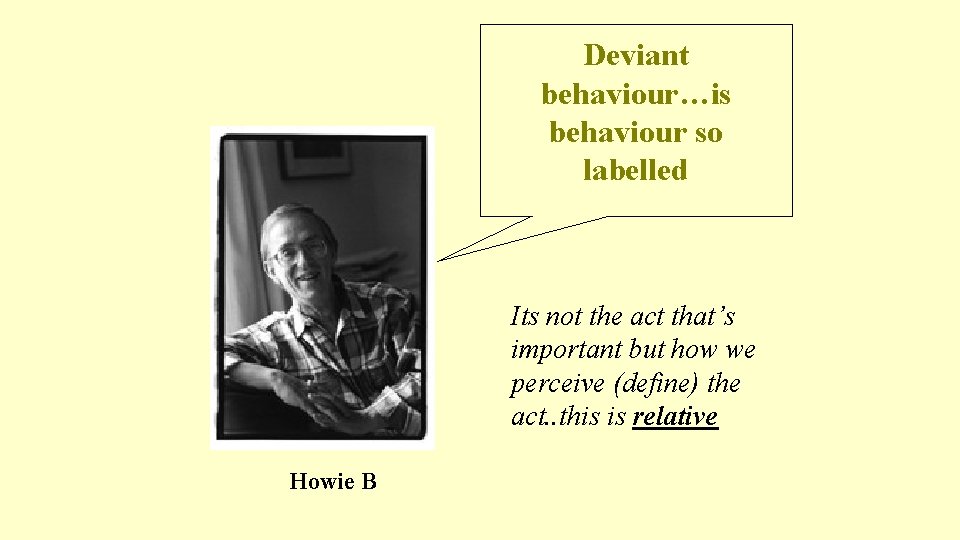
Deviant behaviour…is behaviour so labelled Its not the act that’s important but how we perceive (define) the act. . this is relative Howie B
Who doing the act? Who witnessing the act? Place Deviance is relative Time Culture These change over time…. NOT ABSOLUTE!
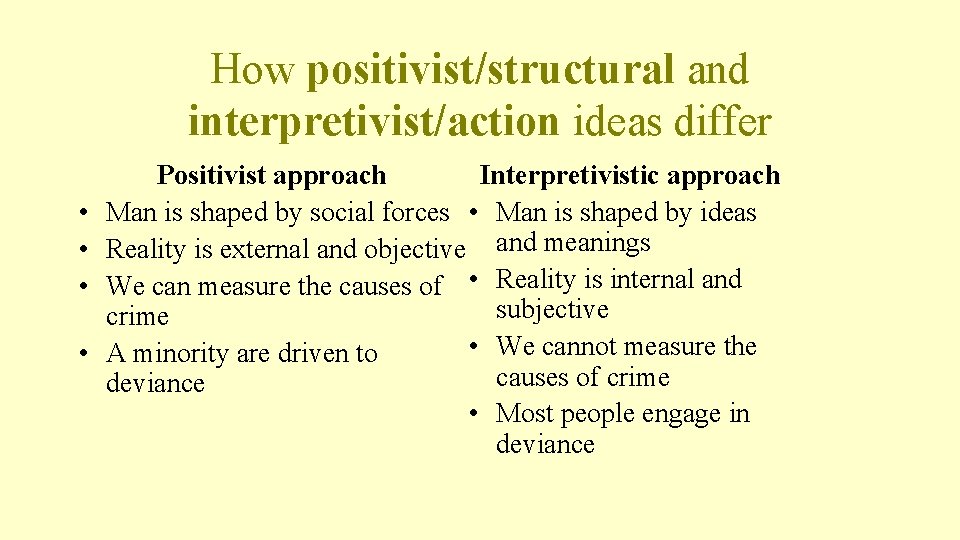
How positivist/structural and interpretivist/action ideas differ • • Positivist approach Interpretivistic approach Man is shaped by social forces • Man is shaped by ideas Reality is external and objective and meanings We can measure the causes of • Reality is internal and subjective crime • We cannot measure the A minority are driven to causes of crime deviance • Most people engage in deviance
Laws are social constructs • Moral entrepreneurs • Moral panics • Moral crusades BECKER on Rule Creation
Examples of relative deviance/rule creation • • • Marijuana Tax Act 1930 s Prohibition 1920 s Decriminalisation of homosexuality USA (1974) Decriminalisation of suicide 1960 s Children outside marriage (moral imbecility)
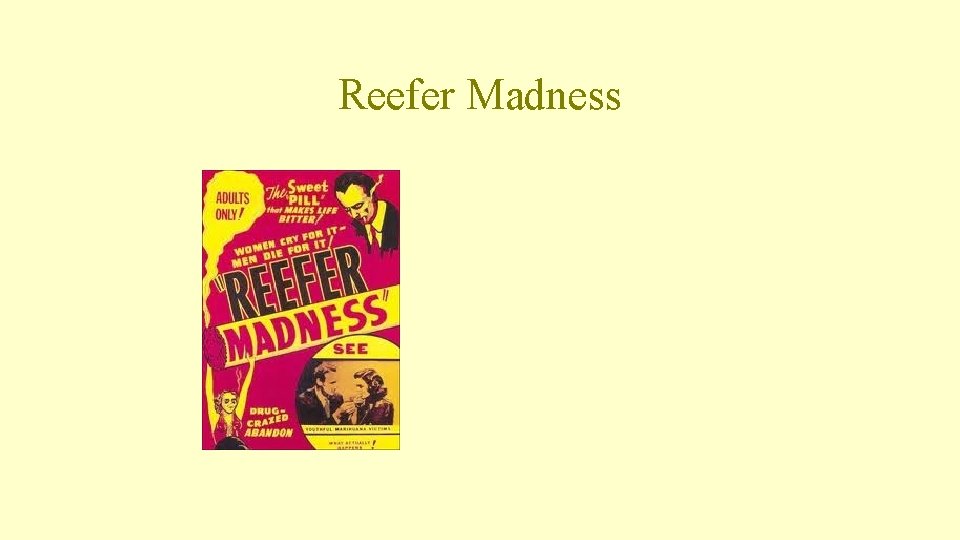
Reefer Madness
The process of labelling • Stereotypical criminal/deviant • Sensitisation • Selective policing – Lambert/Sutherland/Becker/ Cicourel/Kalven and Zaesel
Homeworks in chase! Name Saba Linda Lilly Josh Holly S Subcultural essay Received X X X New right essay X X X
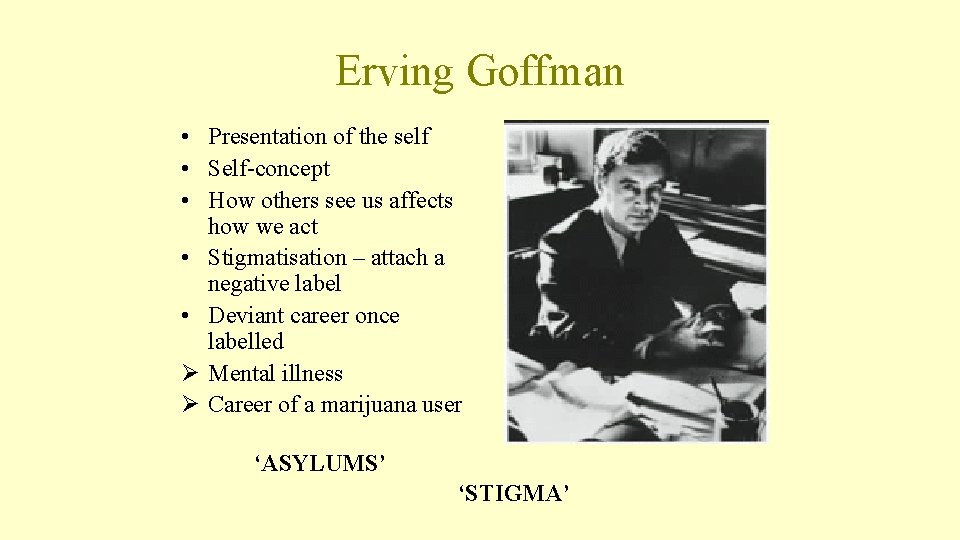
Erving Goffman • Presentation of the self • Self-concept • How others see us affects how we act • Stigmatisation – attach a negative label • Deviant career once labelled Ø Mental illness Ø Career of a marijuana user ‘ASYLUMS’ ‘STIGMA’
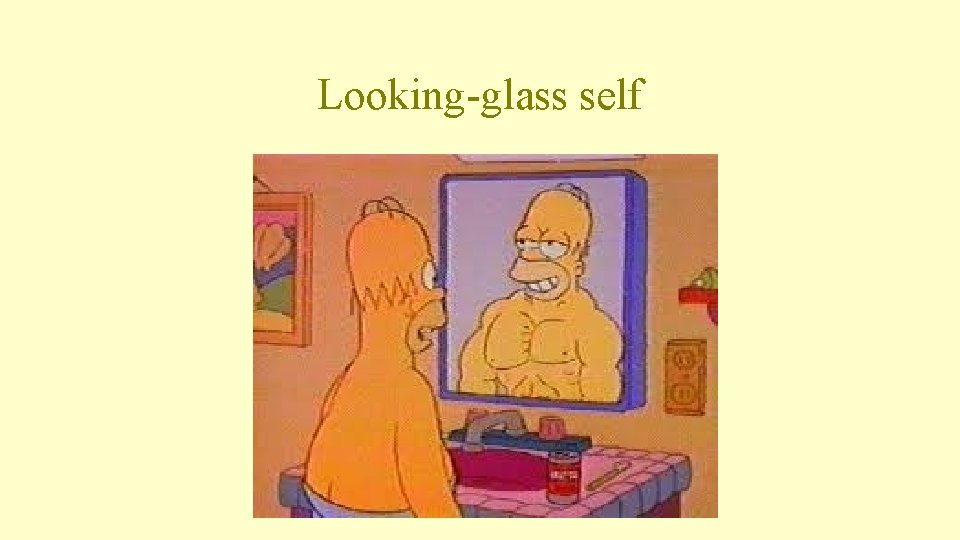
Looking-glass self
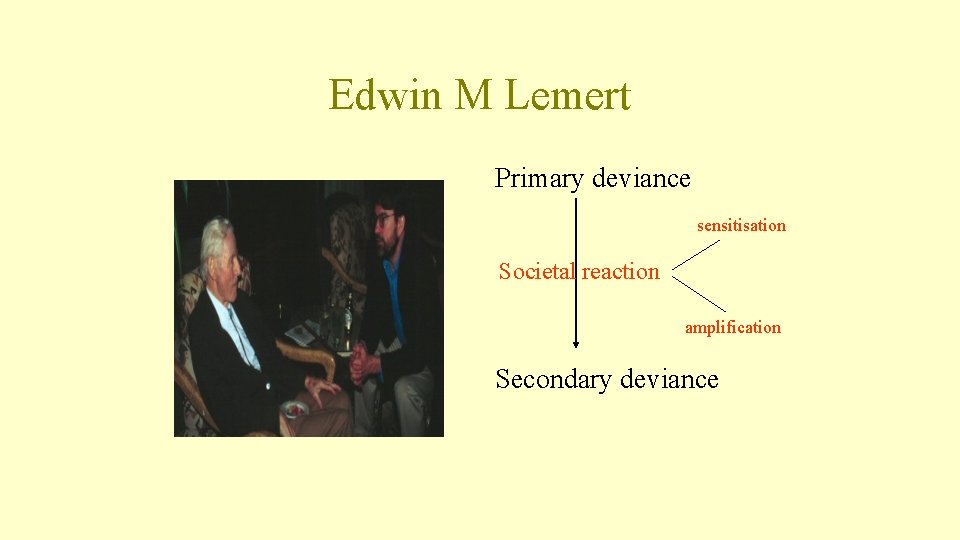
Edwin M Lemert Primary deviance sensitisation Societal reaction amplification Secondary deviance
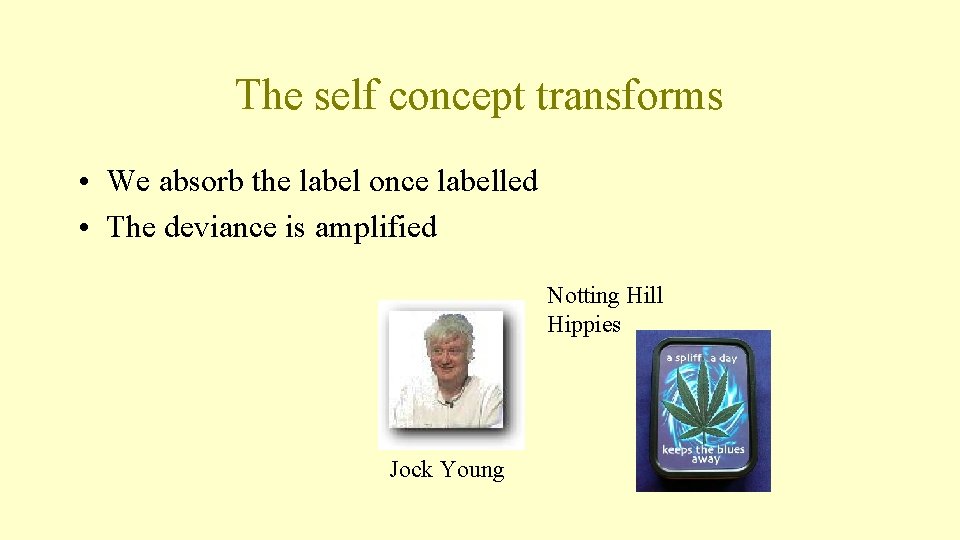
The self concept transforms • We absorb the label once labelled • The deviance is amplified Notting Hill Hippies Jock Young
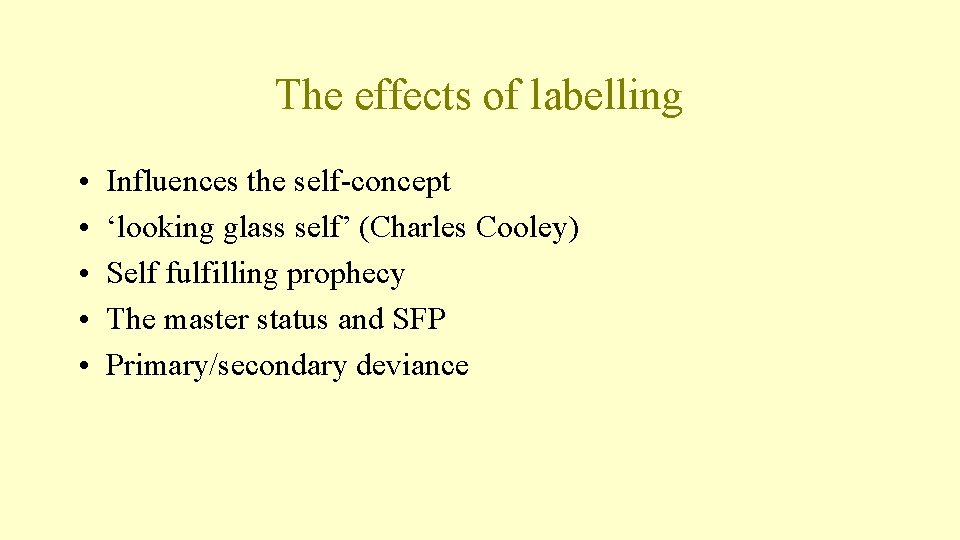
The effects of labelling • • • Influences the self-concept ‘looking glass self’ (Charles Cooley) Self fulfilling prophecy The master status and SFP Primary/secondary deviance
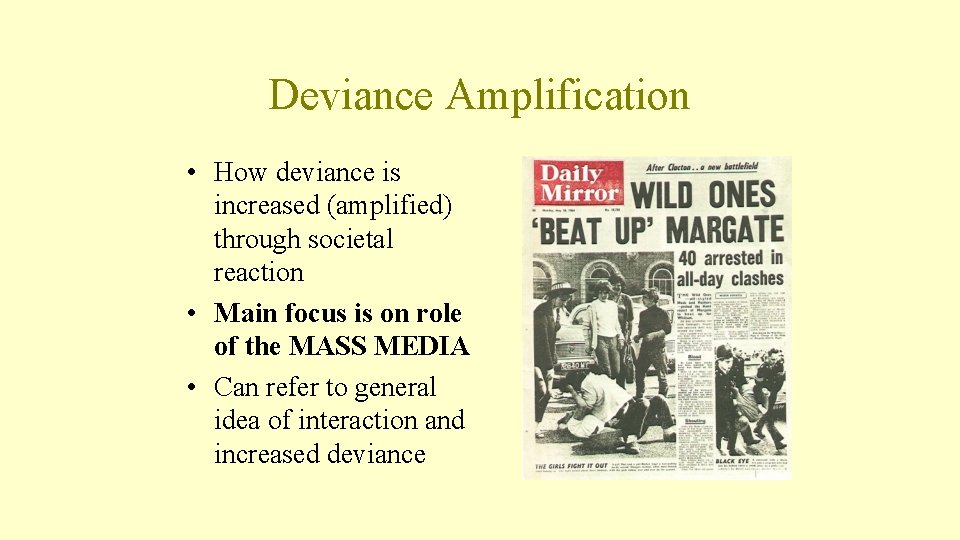
Deviance Amplification • How deviance is increased (amplified) through societal reaction • Main focus is on role of the MASS MEDIA • Can refer to general idea of interaction and increased deviance
The implications of the deviance amplification idea • • Society creates greater levels of deviance The mass media are a problem The mass media are not neutral and they sensationalise The mass media influences public opinion, the role of police, courts and politicians • The mass media affects an individual’s self concept • The individual deviant is not to blame – there are no single causes like poverty, socialisation etc
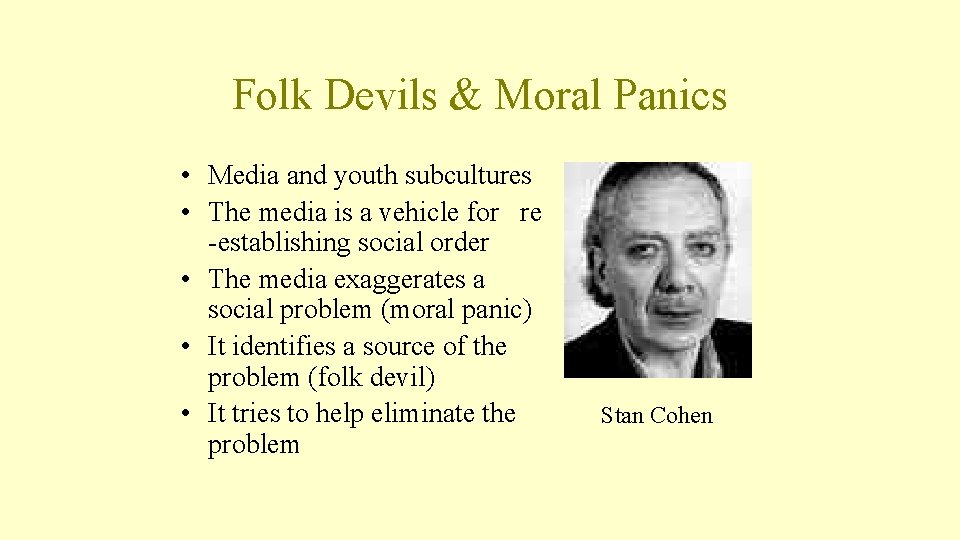
Folk Devils & Moral Panics • Media and youth subcultures • The media is a vehicle for re -establishing social order • The media exaggerates a social problem (moral panic) • It identifies a source of the problem (folk devil) • It tries to help eliminate the problem Stan Cohen
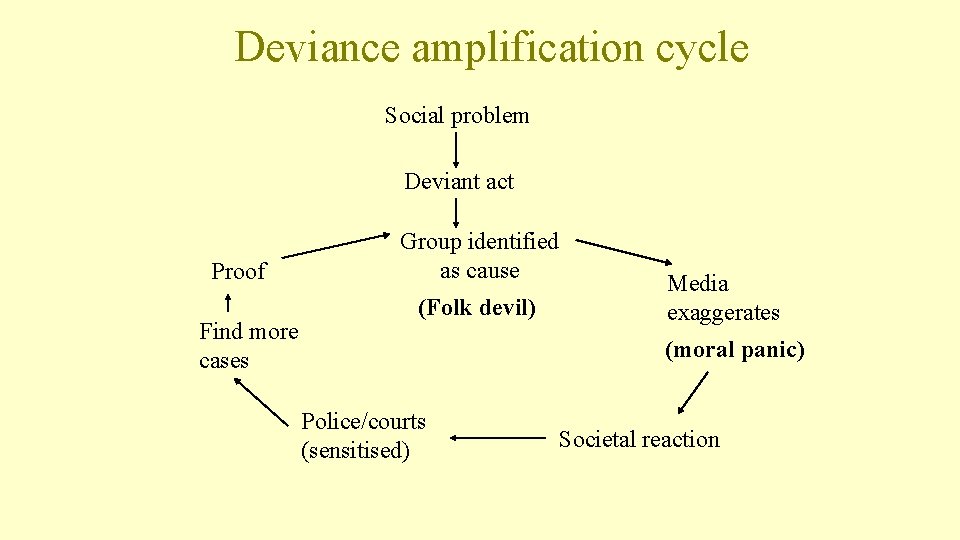
Deviance amplification cycle Social problem Deviant act Proof Find more cases Group identified as cause (Folk devil) Media exaggerates (moral panic) Police/courts (sensitised) Societal reaction
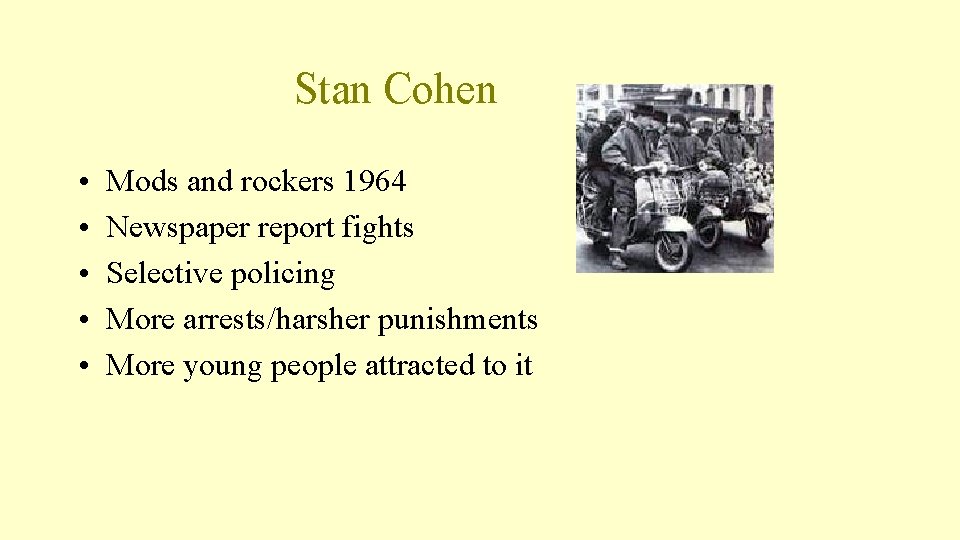
Stan Cohen • • • Mods and rockers 1964 Newspaper report fights Selective policing More arrests/harsher punishments More young people attracted to it
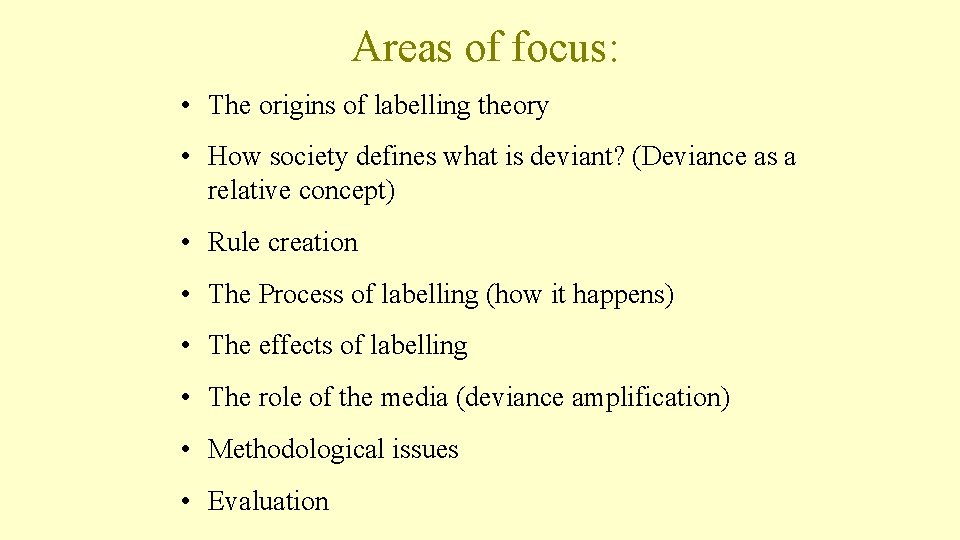
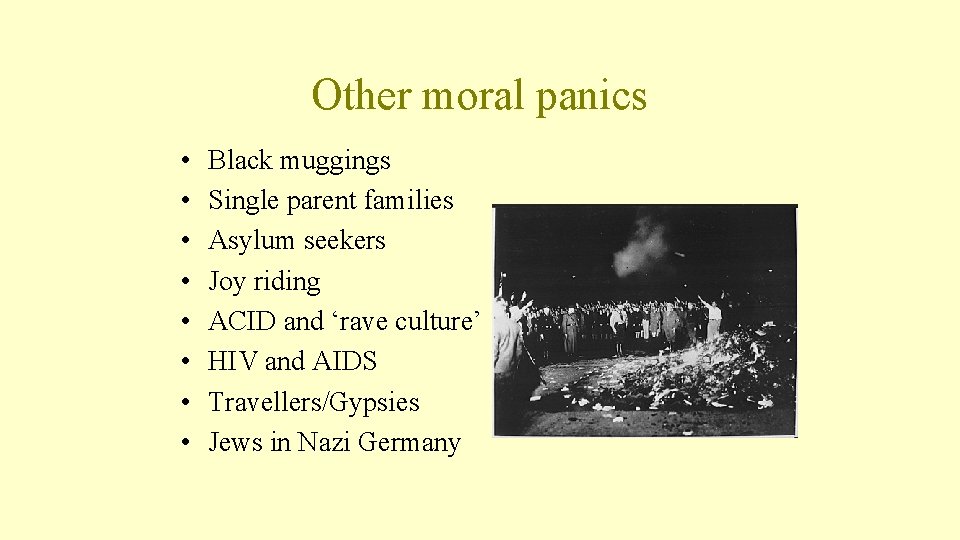
Other moral panics • • Black muggings Single parent families Asylum seekers Joy riding ACID and ‘rave culture’ HIV and AIDS Travellers/Gypsies Jews in Nazi Germany
Consolidation Using material from the previous ppt slides show your understanding of the deviance amplification process. Focus on: • Societal reaction/sensitisation • Stereotyping/expectations • Effects on self-concept of young people • How the media ‘amplified’ deviance • The effect of the media on the public, police, politicians and courts • The way that ‘subcultures’ are created and reinforced • Use examples from the modern day as well as the Mods and Rockers
Further studies • Armstrong and Fishman – Glasgow election • Fishman – New York Muggings • Stuart Hall – Policing the Crisis
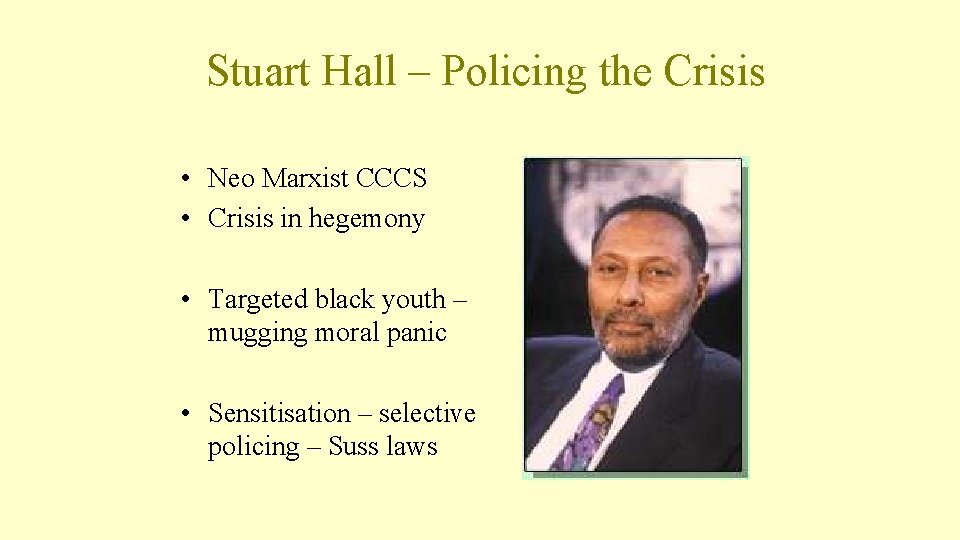
Stuart Hall – Policing the Crisis • Neo Marxist CCCS • Crisis in hegemony • Targeted black youth – mugging moral panic • Sensitisation – selective policing – Suss laws
Advantages of Labelling Theory • It does not treat official statistics as fact • It rejects the idea that deviants are different to ‘normal’ people • It questions the effectiveness of policing, the courts and punishment • It raises the issue of power • It considers the impact of the mass media • It highlights the bias in law enforcement • It considers societal reaction and the effects on individuals
Disadvantages of Labelling Theory • • • Its over-romantic Too much focus on exotic deviance Ignores the origins of deviant acts There is absolute deviance It uses labelling in a deterministic way More attention needed on the behaviour that produced the label • Deviants can adopt identity without being labelled • Not explore fully capitalism and economic power
What other theories say… • Functionalism etc Ø Challenge the idea Ø Absolute deviance – set normal standards Ø Media must dramatise and make public deviance to reinforce common values Ø Police and courts are neutral Ø Law making is neutral – reflects shared values Ø There are causes of deviance that can be measured
Marxism • Share idea of biased laws and selective policing • Much overlap in Neo-marxism (New Criminology/CCCS) • Traditional Marxism is though more structural and deterministic • More attention on the economy (capitalism) needed
Synoptic – education Labelling in the classroom – SFP Stereotypes in resources – affects on self concept Whose curriculum? Who shapes it?
Synoptic links - family • Gender socialisation • Politics of the family health) • Single parent families • Gay households • Social construction of childhood and old age (Laing and mental
Question…. “ Evaluate the claim that both the nature and extent of deviance is socially constructed”