
THE SOCIAL AND ECONOMIC IMPLICATIONS OF HUMAN TRAFFICKING

- Slides: 35
THE SOCIAL AND ECONOMIC IMPLICATIONS OF HUMAN TRAFFICKING IN NIGERIA: NAPTIP IN FOCUS 6 TH PRESENTATION AT THE ANNUAL INTERDISCIPLINARY CONFERENCE ON HUMAN TRAFFICKING LINCOLN, NEBRASKA, OCTOBER 9 TH – 11 TH, 2014 Dr. Mrs. Eunice I. Anuforom, (Ag. Director) Counselling and Rehabilitation Department, NAPTIP, Abuja, Nigeria 1
OUTLINE • INTRODUCTION • CONTEXT OF HUMAN TRAFFICKING IN NIGERIA • HUMAN TRAFFICKING AS VIOLATION ON HUMAN RIGHTS • IMPLICATIONS OF THE HUMAN RIGHTS VIOLATIONS • NAPTIP AND RESPONSIBILITIES • CHALLENGES • WAY FORWARD • CONCLUSION 2
INTRODUCTION • Advent of the oil boom in Nigeria in the 1970 s, and economic down turns of 1980 s • Advent of the modern day slavery called human trafficking or trafficking in persons (TIP) • Illegal migrations of youth and women to Europe, North Africa, Saudi Arabia, etc in search of alternative means of survival - prostitution and commercial sex • Formation of cartels, use of deception, false promises of legitimate jobs, signing agreement , oaths of secrecy (voodoo priests) • Violations of human rights, excruciating conditions that make them physically, socially, mentally and emotionally traumatized. • Implications on society, Government and involvement of NAPTIP • NAPTIP and integration of victims 3
What is Human Trafficking • Article 3 of the Palermo Convention • NAPTIP Act (2005 as ammended) • Lay man’s language, human trafficking is the illegal movement of person/s from their environments or homes to other places or environments to work in exploitative conditions, like prostitution, domestic/child labour or other forms of exploitative works. 4
Dimensions of Human Trafficking • Multi dimensional, associated with human rights violations, gender imbalance • Globally 27 million estimated to live in slavery engendered by trafficking • Generates about US$32 billion and can be as high as $67, 200 per victim per year • U. S. Department of State’s 2007 TIP Report, projects 80% of transnational victims are women and girls • Polaris Project, 2013, two thirds of victims are women and 79% of the victims were subject to sexual exploitation • 60% are young girls and children who are trafficked into Western Europe, mostly to work as prostitutes, and usually against their will 5
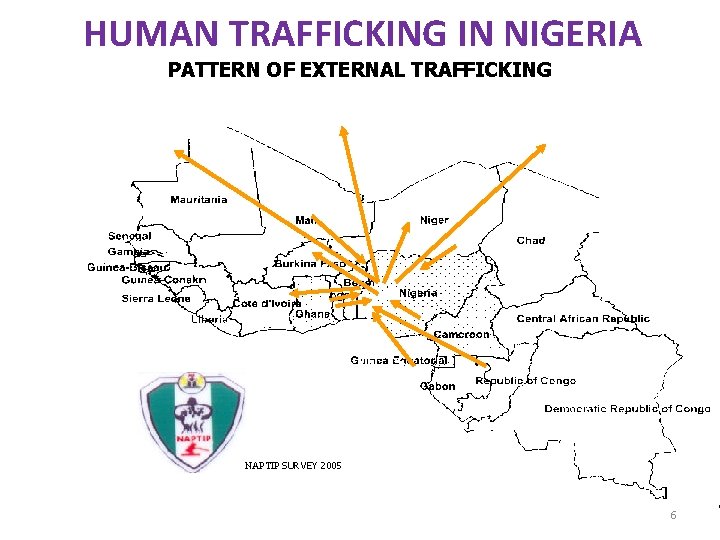
HUMAN TRAFFICKING IN NIGERIA PATTERN OF EXTERNAL TRAFFICKING NAPTIP SURVEY 2005 6
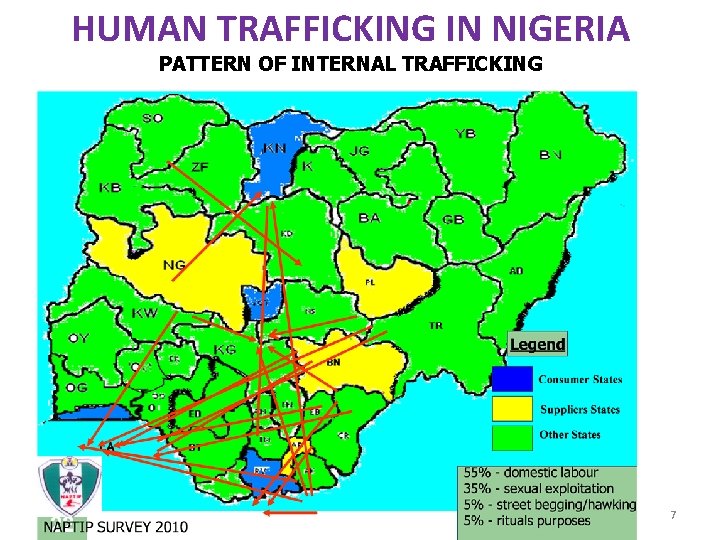
HUMAN TRAFFICKING IN NIGERIA PATTERN OF INTERNAL TRAFFICKING 7
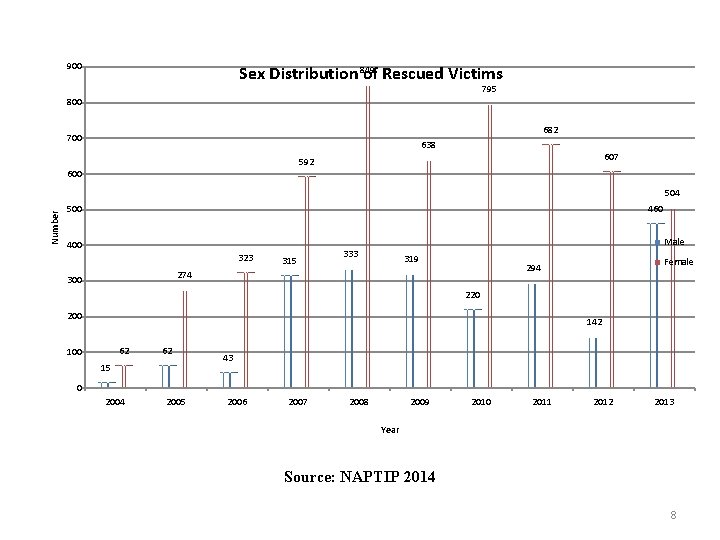
900 Sex Distribution 849 of Rescued Victims 795 800 682 700 638 607 592 600 Number 504 500 460 Male 400 323 315 333 319 300 Female 294 274 220 200 142 62 100 62 15 43 0 2004 2005 2006 2007 2008 2009 2010 2011 2012 2013 Year Source: NAPTIP 2014 8
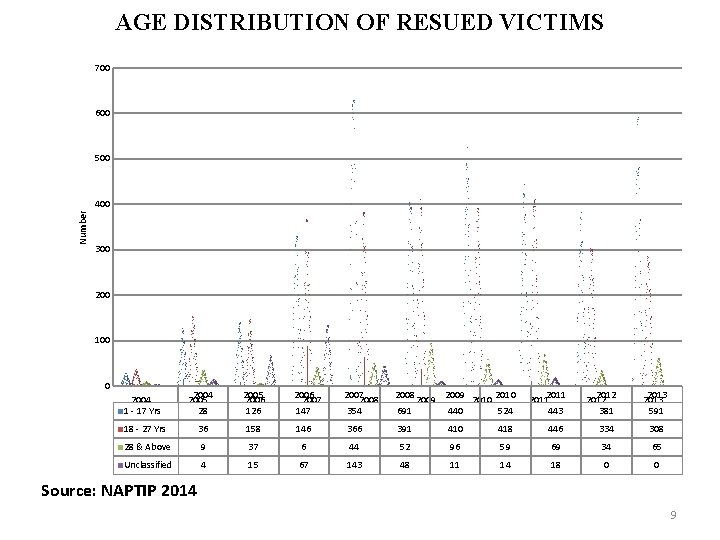
AGE DISTRIBUTION OF RESUED VICTIMS 700 600 500 Number 400 300 200 100 0 2004 1 - 17 Yrs 2004 2005 28 2005 2006 126 2007 147 2008 354 2008 2009 2010 691 440 524 2011 443 2012 381 2013 591 18 - 27 Yrs 36 158 146 366 391 410 418 446 334 308 28 & Above 9 37 6 44 52 96 59 69 34 65 Unclassified 4 15 67 143 48 11 14 18 0 0 Source: NAPTIP 2014 9
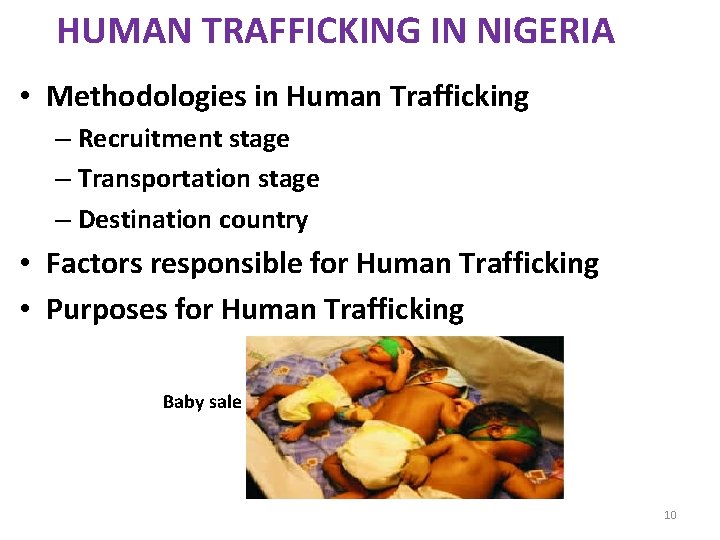
HUMAN TRAFFICKING IN NIGERIA • Methodologies in Human Trafficking – Recruitment stage – Transportation stage – Destination country • Factors responsible for Human Trafficking • Purposes for Human Trafficking Baby sale 10
THE RIGHTS OF VICTIMS Palermo Protocol, 2000; UDHR, 1948; CEDAW, 1979; CRC, 1979 etc. • Right to life, liberty and security of person • Right to rest and leisure, including reasonable limitation of working hours and periodic holidays • Right to favorable working conditions, appropriate wage, working hours/conditions/ compensation • Right to bodily integrity • Freedom from torture or to cruel, inhuman or degrading treatment or punishment • Right to freedom of movement and expression • Right to a standard of living adequate for the health and well-being including food, clothing, housing and medical care and necessary social services 11
THE RIGHTS OF VICTIMS • Right to education. Education shall be free and compulsory at least in the elementary and fundamental stages • Right to work, to free choice of employment, to just and appropriate wage /conditions of work • Freedom from discrimination and right to equal pay for equal work • Right to participate in the social, cultural and economic life of the community • Freedom from forced labour and slavery or servitude 12
HUMAN TRAFFICKING AS VIOLATION OF THE RIGHTS OF VICTIMS Human rights violations occur at the stages of the trafficking cycle. • At recruitment • In transit, • At destination countries, Others • Females are Commodified, generates about US$32 billion annually • Gender-based domination, violence against women and girls • Desecrates the human body • Withhold food, shelter and other basic human needs, if victims resist prostitution • Restricted freedom of movement and held in slavery or servitude • Exposure to serious health hazards and illnesses due to unsafe and unhealthy working conditions • Exposed to serious psychological, physical, emotional, social hazards 13
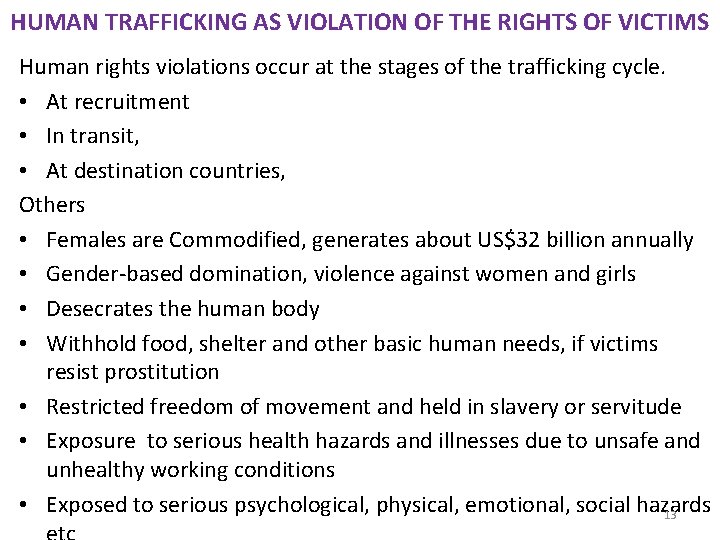
IMPLICATIONS OF THE HUMAN RIGHTS VIOLATIONS • Victims’ health 14
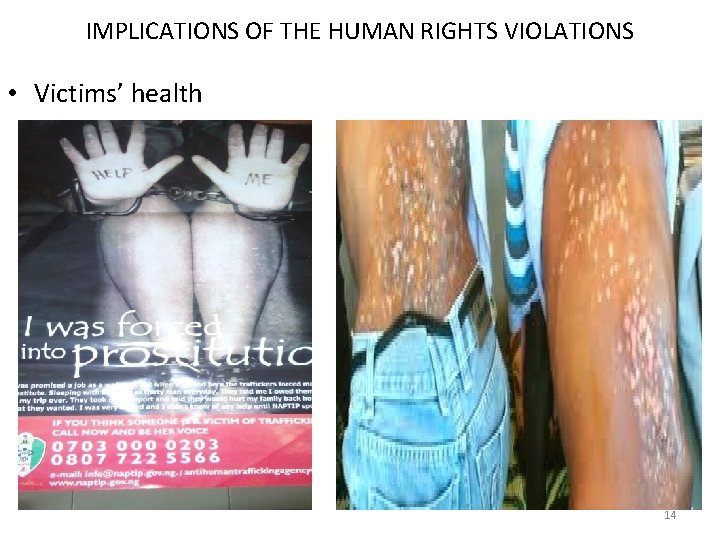
IMPLICATIONS OF THE HUMAN RIGHTS VIOLATIONSVictims’ physical body; Laceration, death 15
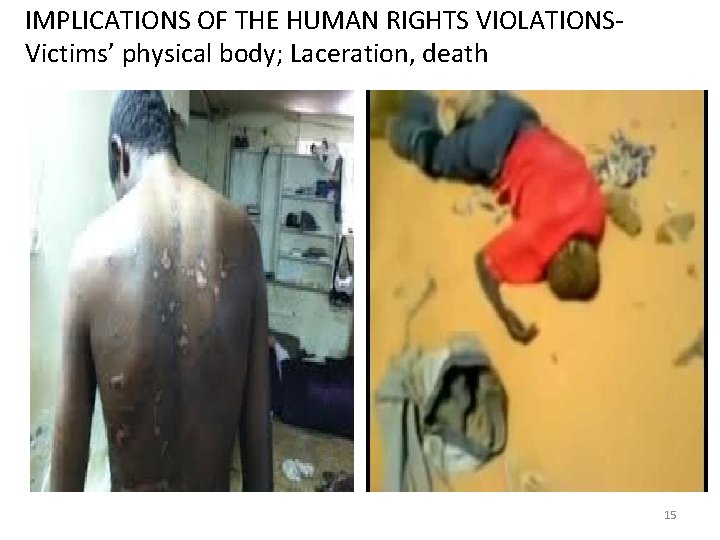
IMPLICATIONS OF THE HUMAN RIGHTS VIOLATIONS • Victims’ social life -Drugs abuse 16
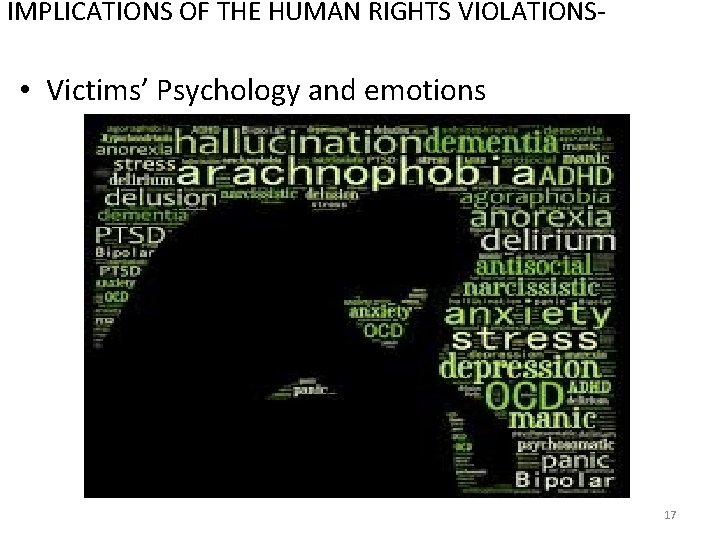
IMPLICATIONS OF THE HUMAN RIGHTS VIOLATIONS- • Victims’ Psychology and emotions 17
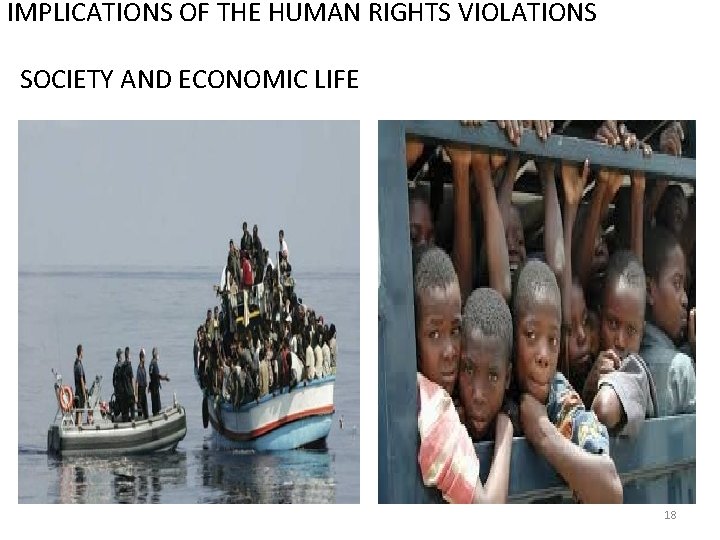
IMPLICATIONS OF THE HUMAN RIGHTS VIOLATIONS SOCIETY AND ECONOMIC LIFE 18
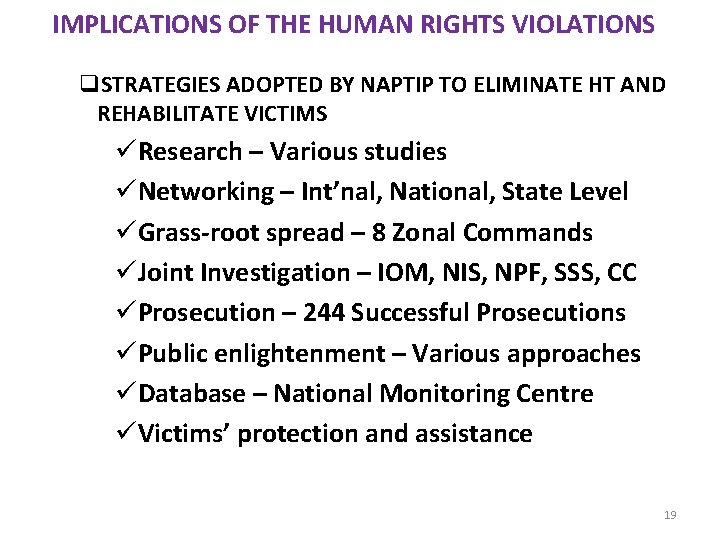
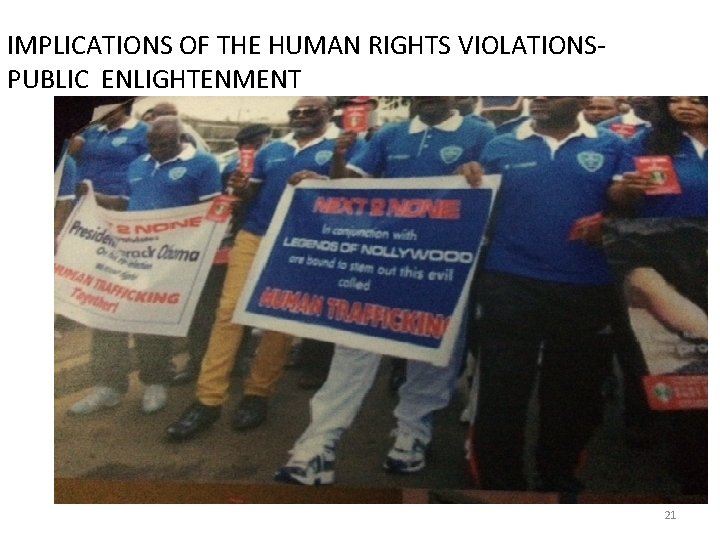
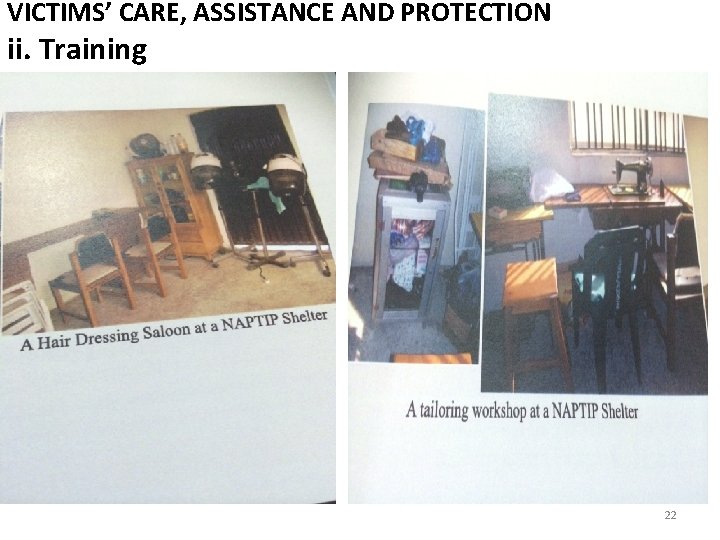
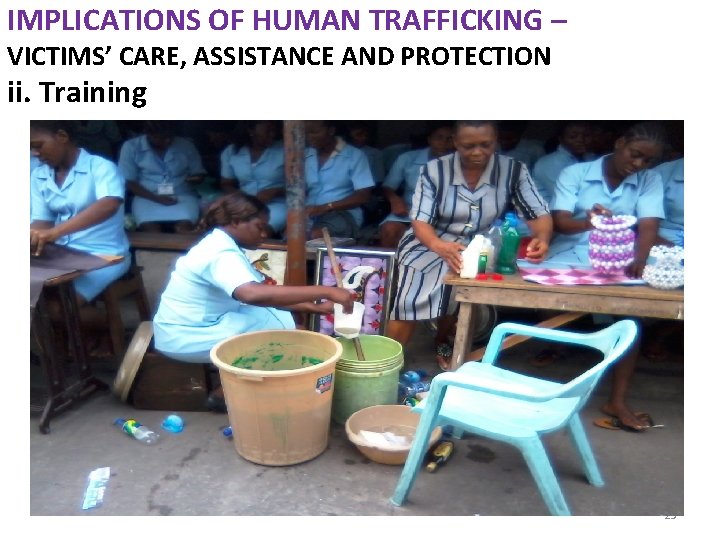
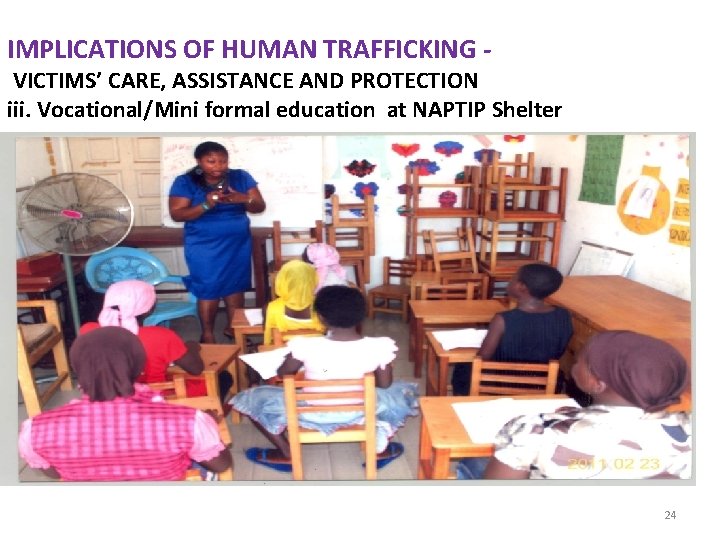
IMPLICATIONS OF THE HUMAN RIGHTS VIOLATIONS q. STRATEGIES ADOPTED BY NAPTIP TO ELIMINATE HT AND REHABILITATE VICTIMS üResearch – Various studies üNetworking – Int’nal, National, State Level üGrass-root spread – 8 Zonal Commands üJoint Investigation – IOM, NIS, NPF, SSS, CC üProsecution – 244 Successful Prosecutions üPublic enlightenment – Various approaches üDatabase – National Monitoring Centre üVictims’ protection and assistance 19
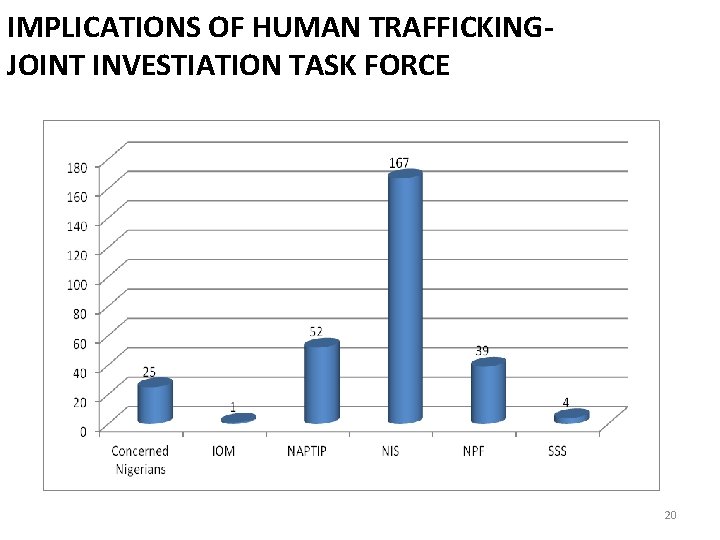
IMPLICATIONS OF HUMAN TRAFFICKINGJOINT INVESTIATION TASK FORCE 20
IMPLICATIONS OF THE HUMAN RIGHTS VIOLATIONSPUBLIC ENLIGHTENMENT 21
VICTIMS’ CARE, ASSISTANCE AND PROTECTION ii. Training 22
IMPLICATIONS OF HUMAN TRAFFICKING – VICTIMS’ CARE, ASSISTANCE AND PROTECTION ii. Training 23
IMPLICATIONS OF HUMAN TRAFFICKING - VICTIMS’ CARE, ASSISTANCE AND PROTECTION iii. Vocational/Mini formal education at NAPTIP Shelter 24
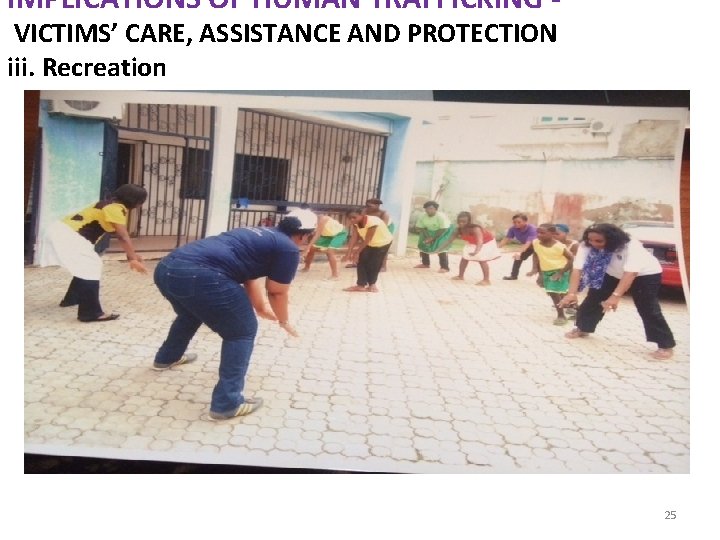
IMPLICATIONS OF HUMAN TRAFFICKING VICTIMS’ CARE, ASSISTANCE AND PROTECTION iii. Recreation 25
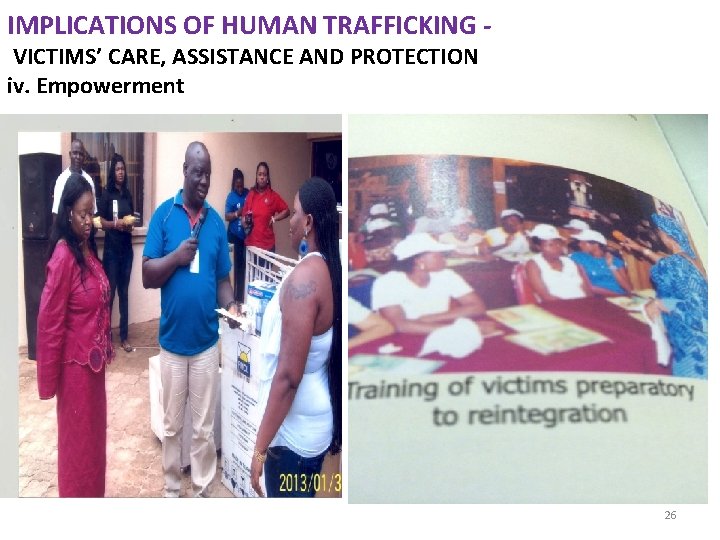
IMPLICATIONS OF HUMAN TRAFFICKING VICTIMS’ CARE, ASSISTANCE AND PROTECTION iv. Empowerment 26
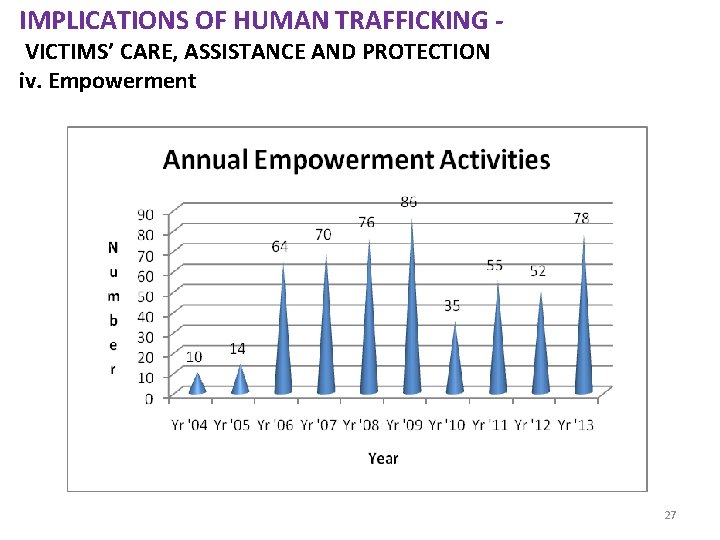
IMPLICATIONS OF HUMAN TRAFFICKING VICTIMS’ CARE, ASSISTANCE AND PROTECTION iv. Empowerment 27
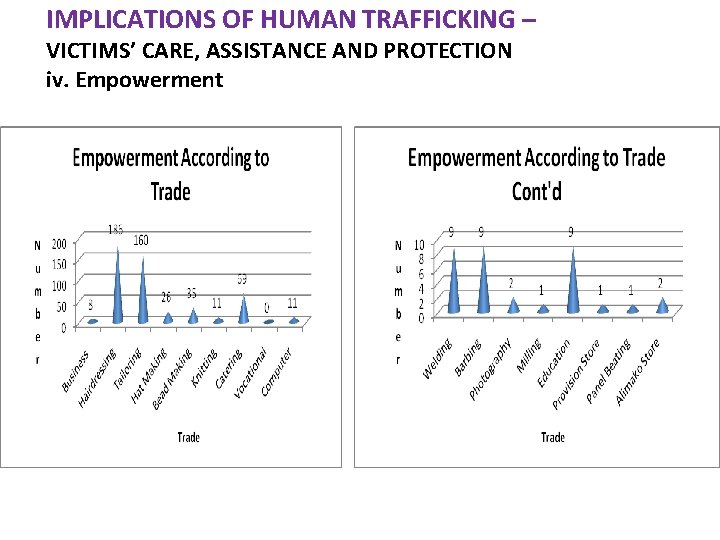
IMPLICATIONS OF HUMAN TRAFFICKING – VICTIMS’ CARE, ASSISTANCE AND PROTECTION iv. Empowerment
IMPLICATIONS OF HUMAN TRAFFICKING VICTIMS’ CARE, ASSISTANCE AND PROTECTION iv. Empowerment • Development of National Policy for the Protection and Assistance to Trafficked Persons and other complementary documents for effective and efficient rehabilitation of victims such as; – The Strategic Implementation Framework and other complementary `documents (with UNFPA) – Guide for Protection of Children in Formal Care (with UNICEF. ) – National Guide for Referral Mechanism ( with UNODC) – Operational Guide for Monitoring and Evaluating Protection and Assistance Services for Trafficked Persons in Nigeria (with UNFPA) – Development of Victims Manual – Establishment of Victims’ Trust Fund – Collaboration 29
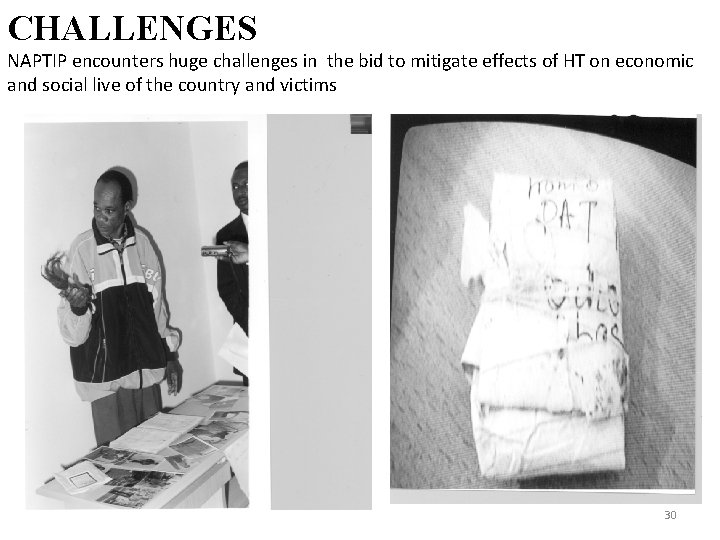
CHALLENGES NAPTIP encounters huge challenges in the bid to mitigate effects of HT on economic and social live of the country and victims 30
CHALLENGES • Traffickers establish mafia-like organizations and cartels with well connected networks that are difficult and risky to infiltrate • Their clandestine operations make investigation and prosecution difficult • Traffickers usually retaliate against trafficked persons and their families • Victims are usually not willing to talk or give witnesses to prosecute traffickers due to Oath of Secrecy and reprisal attacks • Exploiters (Madams) in destination countries in Europe require international cooperation to be investigated and still deceive young girls in villages • Victims are deported from destination countries without their property and proper investigations • Insufficient budgetary allocations to match the responsibilities of fighting human trafficking and the rehabilitation of victims. • Operation of close shelter system by NAPTIP and victims refusal to stay in shelters • Porous national/international borders • Inadequate statistics on trafficked persons for research purposes and planning 31
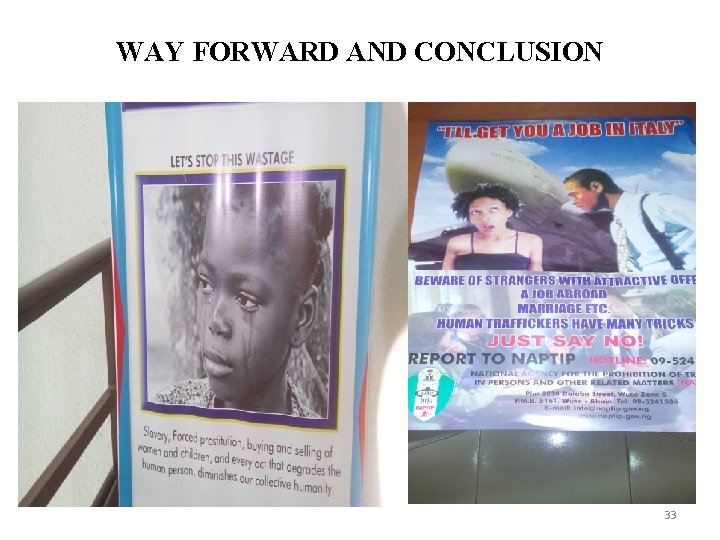
WAY FORWARD • Aggressive campaigns, conferences and documentaries to educate on ills of HT • Abolition of Gender inequality, bias and discriminations against the girl child • Greater commitments by Countries of origin, transit and destination through domestication of Conventions and Protocols on Transnational Organized Crimes • Review of NAPTIP Act • Stiffer penalties on convicts • Build capacity of NAPTIP staff and other law enforcement officers on crime detection, prevention and arrests (through use of modernized and computerized surveillance equipment for crime detection and control) and victims’ care • Effective implementation of Programmes addressing poverty /unemployment issues • Adequate budgetary provision to sustain rehabilitation measures • Increased security at border posts/commitment by state parties 32
WAY FORWARD AND CONCLUSION 33
CONCLUSION • Undoubtedly, human trafficking works against the dignity of human life with its attendant consequences. It is on record that large number of victims have died in transit or in the hands of their traffickers. These are set backs to human resource and economic development of the nation. The Federal Government of Nigerian on its part, has made visible efforts to curb these huge lost engendered by human trafficking via establishment of NAPTIP believes the fight against human trafficking will make greater impact through social change and value re-orientation of the citizenry. Education is a veritable tool in this stance. Mainstreaming human trafficking into school curricular at all levels is envisaged to equip children at the basic education level with necessary information to reject deceptions from traffickers. Aside these, NAPTIP also believes in holistic approach in fighting the scourge and avert further damage on the socio-economic live of the nation. 34
• THANK YOU FOR YOUR ATTENTION 35