
The Snitching Project A Brief History and Current
The Snitching Project: A Brief History and Current Research
What is the Snitching Project? � Started in 2007 - Applied Psychology course at CCP. � Aims to understand the stop-snitching phenomenon, and to facilitate community discussion
The Snitching Project �Student driven research �Other community topics: • corporal punishment • gun violence Sponsor Fox Rothschild Center for Law and Society
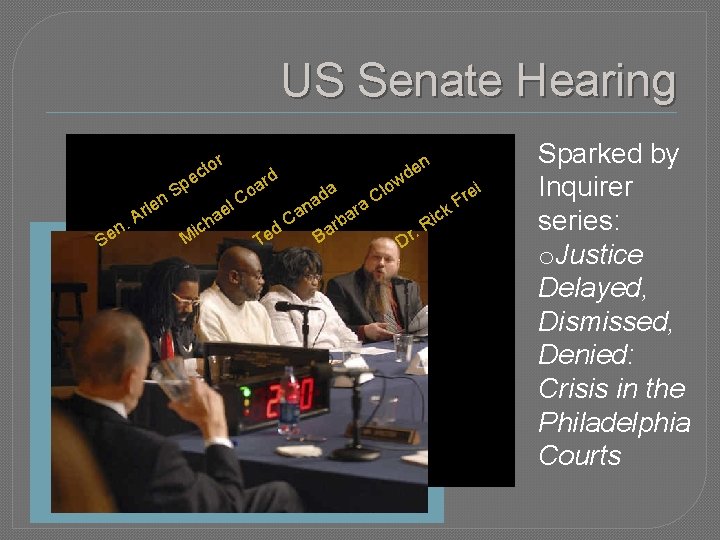
US Senate Hearing r cto len S en r. A e Sp c Mi e ha r oa d l. C Te a C d na da n de ra ba r Ba ow l C ic R. Dr i re F k Sparked by Inquirer series: o. Justice Delayed, Dismissed, Denied: Crisis in the Philadelphia Courts
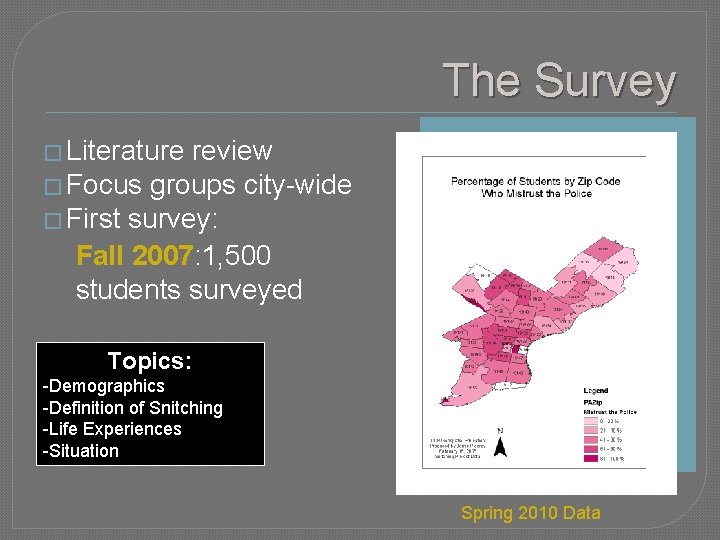
The Survey � Literature review � Focus groups city-wide � First survey: Fall 2007: 1, 500 students surveyed Topics: -Demographics -Definition of Snitching -Life Experiences -Situation Spring 2010 Data
Survey Topics � Demographics age, race, marital status, sex, ZIP Code � Definition of snitching aiding, cooperating, ratting, tattling � Life experiences police, criminal activity, religiosity, music � Situational variables the crime, perpetrator, victim, outcome
Definitions of Snitching �Webster’s definition �Tattling �Wet snitching vs. Dry snitching �Urban slang definition
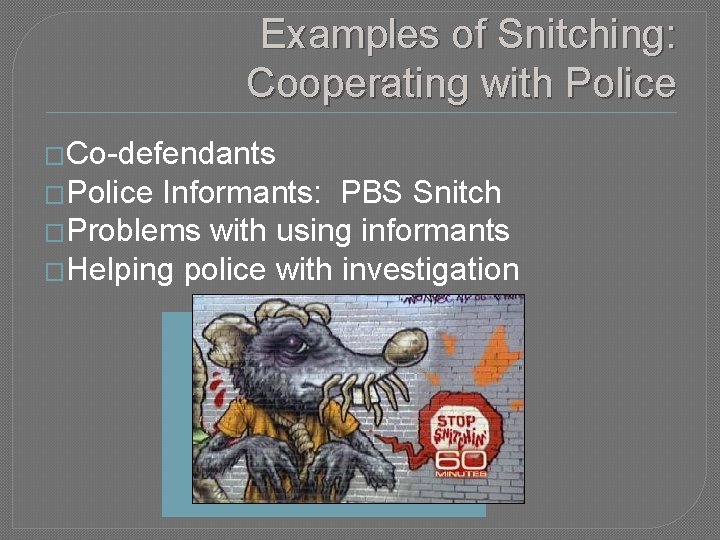
Examples of Snitching: Cooperating with Police �Co-defendants �Police Informants: PBS Snitch �Problems with using informants �Helping police with investigation
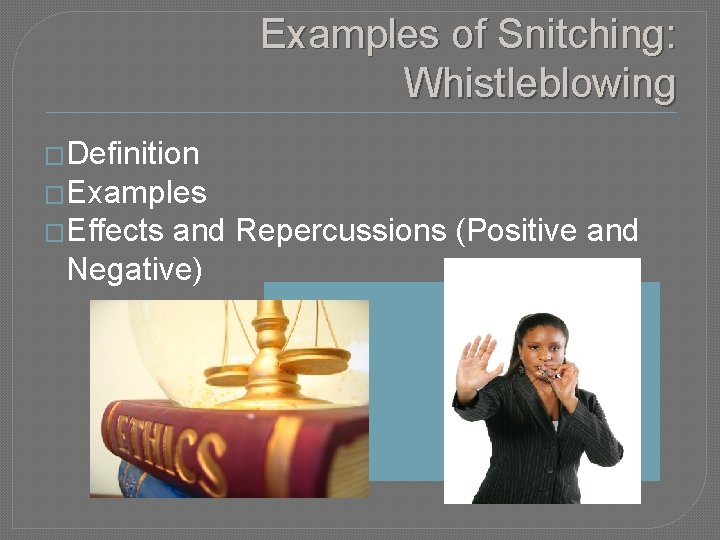
Examples of Snitching: Whistleblowing �Definition �Examples �Effects and Repercussions (Positive and Negative)
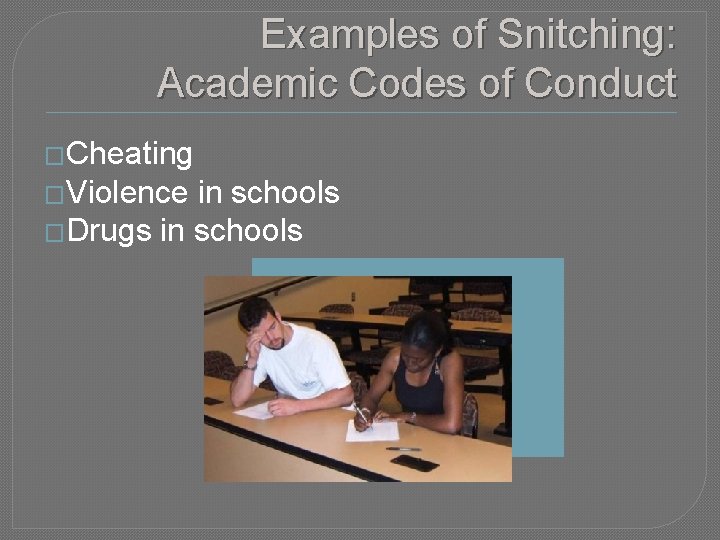
Examples of Snitching: Academic Codes of Conduct �Cheating �Violence in schools �Drugs in schools
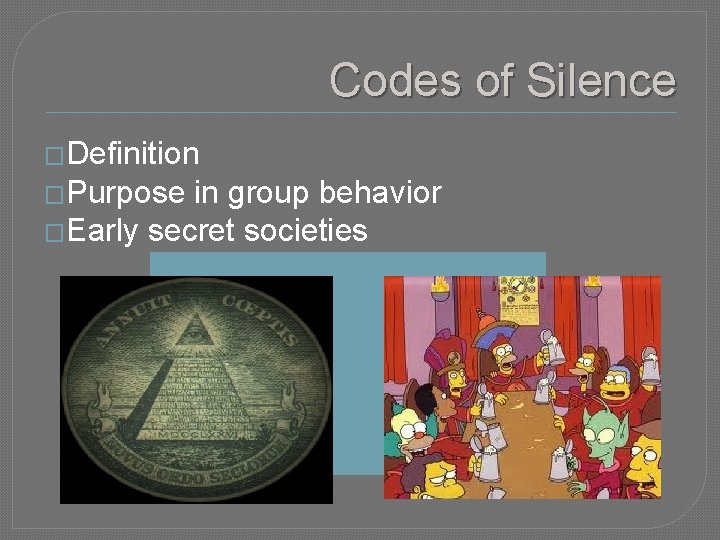
Codes of Silence �Definition �Purpose in group behavior �Early secret societies
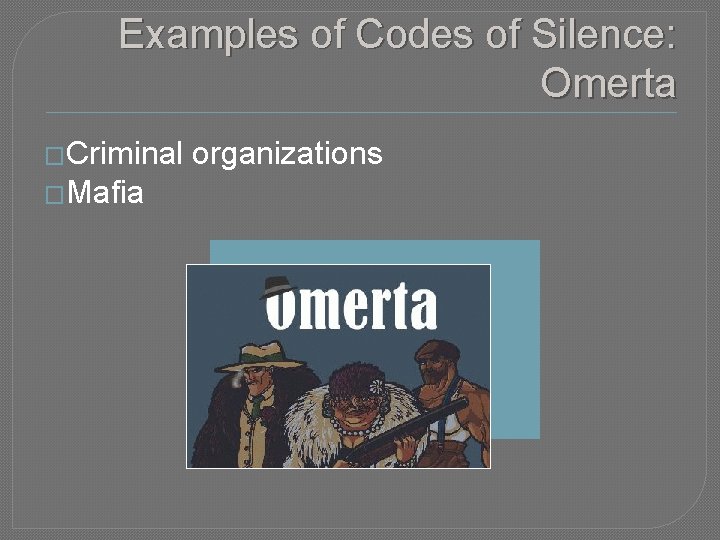
Examples of Codes of Silence: Omerta �Criminal �Mafia organizations
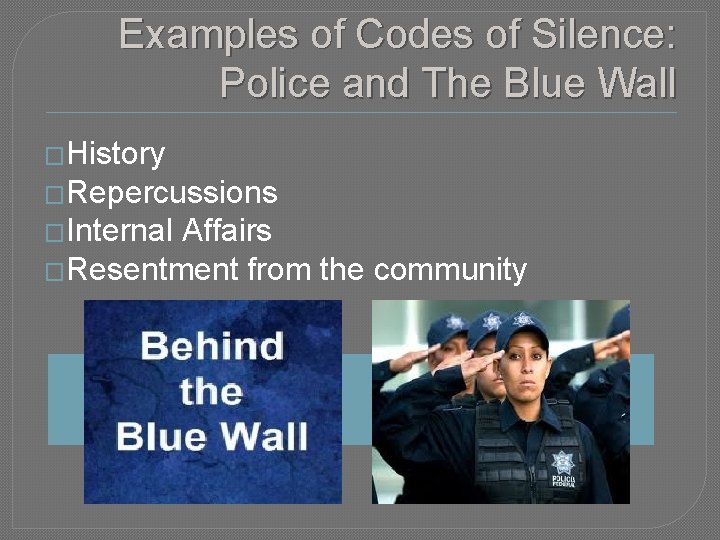
Examples of Codes of Silence: Police and The Blue Wall �History �Repercussions �Internal Affairs �Resentment from the community
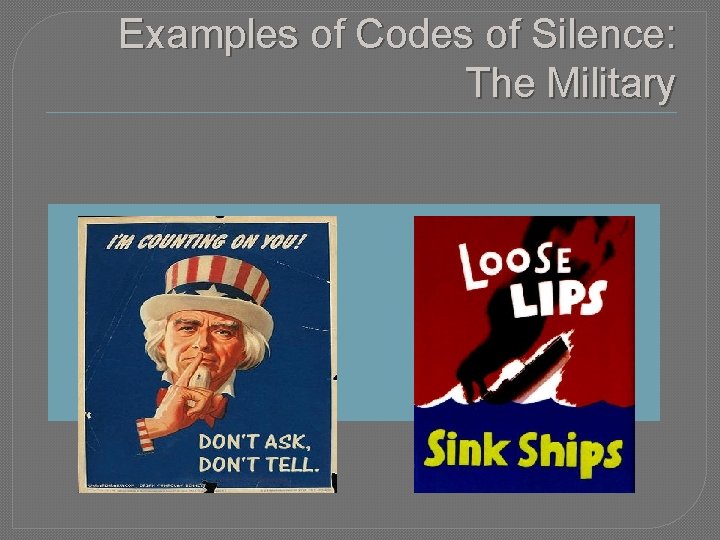
Examples of Codes of Silence: The Military
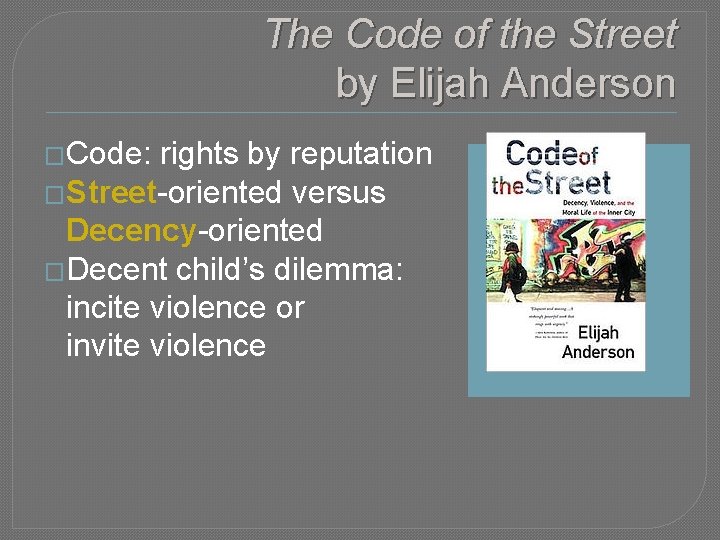
The Code of the Street by Elijah Anderson �Code: rights by reputation �Street-oriented versus Decency-oriented �Decent child’s dilemma: incite violence or invite violence
Reputation �What is it? �Obtainability �Sustainability
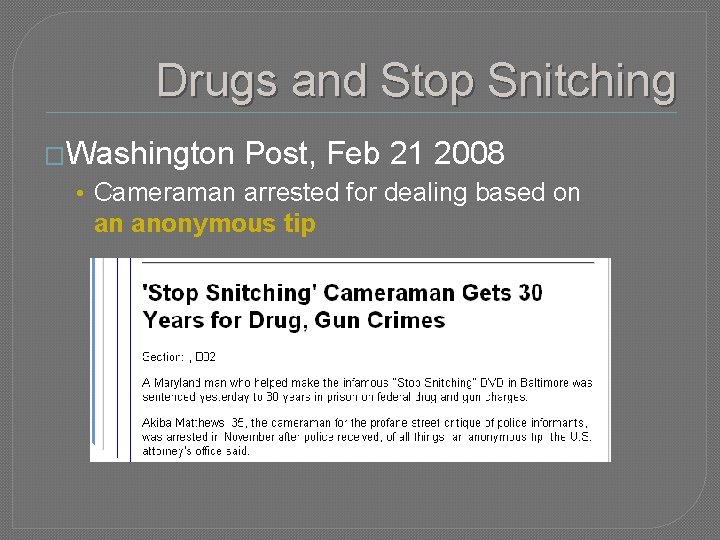
Drugs and Stop Snitching �Washington Post, Feb 21 2008 • Cameraman arrested for dealing based on an anonymous tip
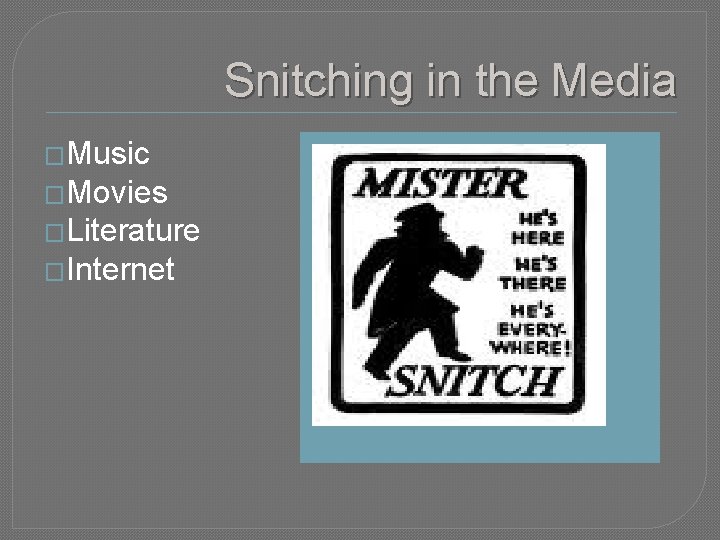
Snitching in the Media �Music �Movies �Literature �Internet
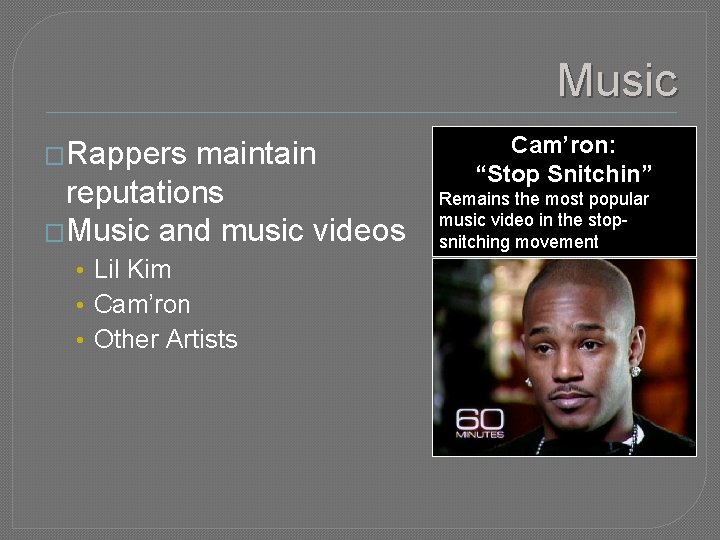
Music �Rappers maintain reputations �Music and music videos • Lil Kim • Cam’ron • Other Artists Cam’ron: “Stop Snitchin” Remains the most popular music video in the stopsnitching movement
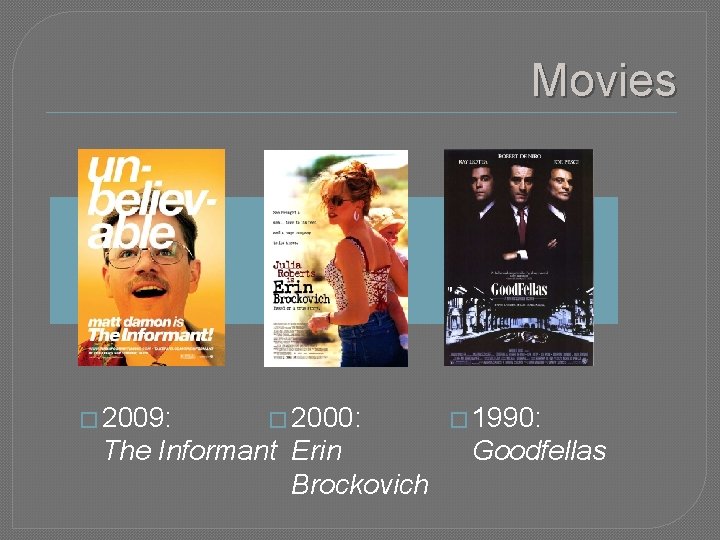
Movies � 2009: � 2000: The Informant Erin Brockovich � 1990: Goodfellas
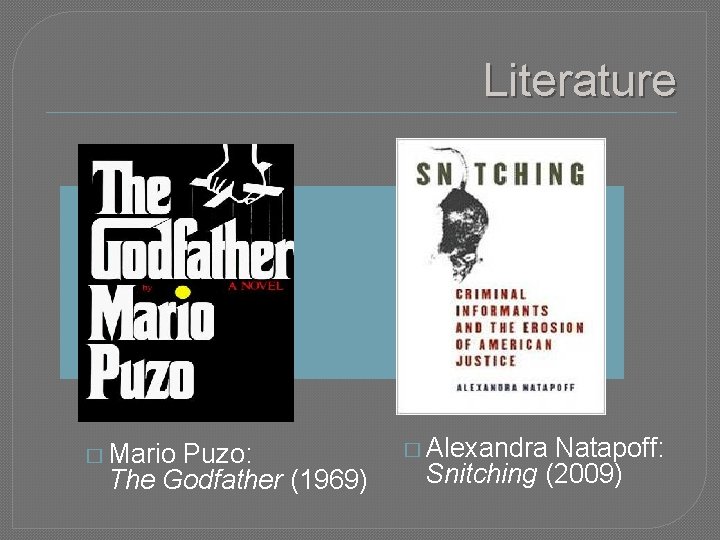
Literature � Mario Puzo: The Godfather (1969) � Alexandra Natapoff: Snitching (2009)
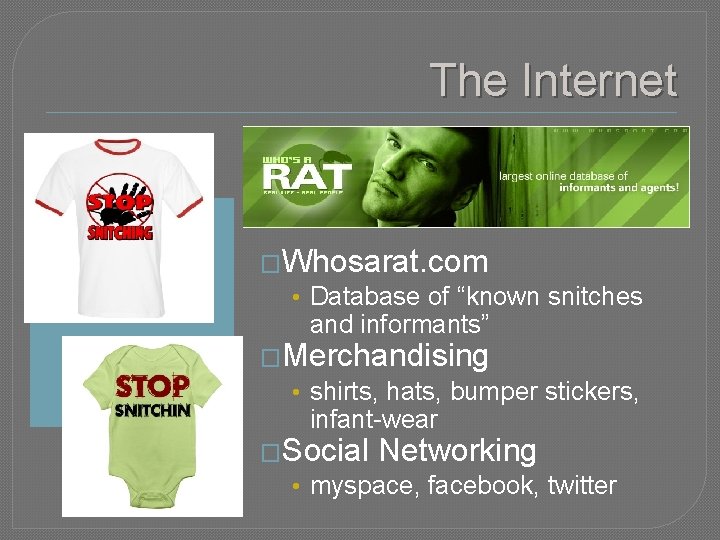
The Internet �Whosarat. com • Database of “known snitches and informants” �Merchandising • shirts, hats, bumper stickers, infant-wear �Social Networking • myspace, facebook, twitter
Getting People to Come Forward Limitations: � Witness Protection witnesses fear retaliation � Tom -Subjectivity of witness -Trust in the system; could refuse to “snitch” Tyler (NYU) Policing in Black and White: Ethnic Group Differences in Trust and Confidence in the Police � Public perceptions • Justice system ineffective • Police procedures unfair
History of Witness Protection United States - WITSEC (Witness Security Program) � 1970: Organized Crime Control Act � Federal and State branches � • protection of Key witnesses • relocation and security Protection: -U. S. Marshalls (1789) -Present during high-risk times for witness Relocation: -OCR (1996) -Areas secured by OIG
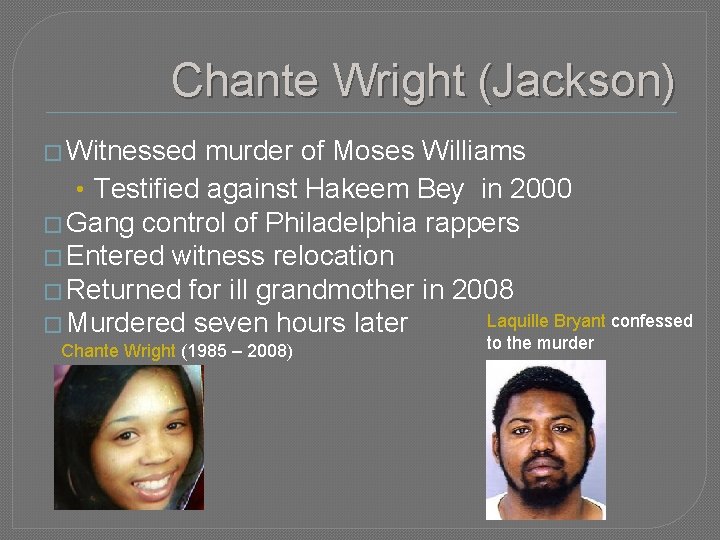
Chante Wright (Jackson) � Witnessed murder of Moses Williams • Testified against Hakeem Bey in 2000 � Gang control of Philadelphia rappers � Entered witness relocation � Returned for ill grandmother in 2008 Laquille Bryant confessed � Murdered seven hours later Chante Wright (1985 – 2008) to the murder
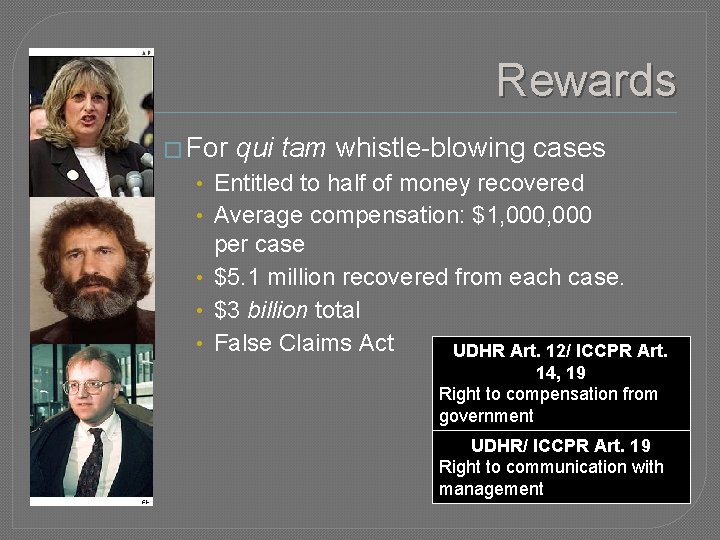
Rewards � For qui tam whistle-blowing cases • Entitled to half of money recovered • Average compensation: $1, 000 per case • $5. 1 million recovered from each case. • $3 billion total • False Claims Act UDHR Art. 12/ ICCPR Art. 14, 19 Right to compensation from government UDHR/ ICCPR Art. 19 Right to communication with management
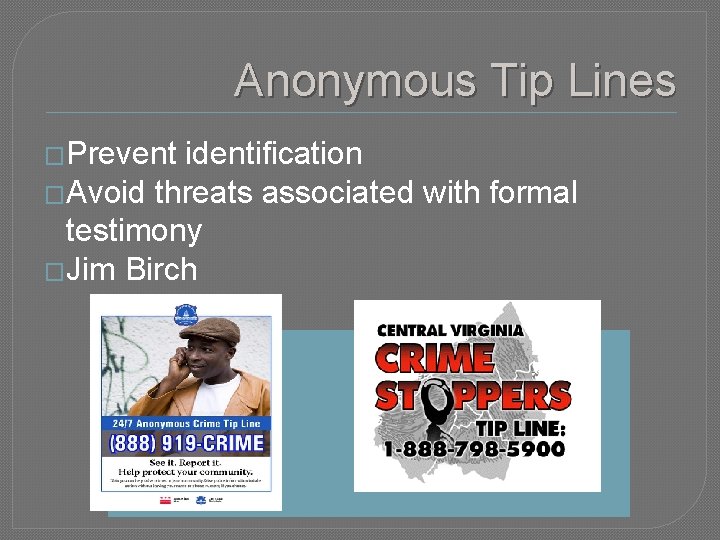
Anonymous Tip Lines �Prevent identification �Avoid threats associated with formal testimony �Jim Birch
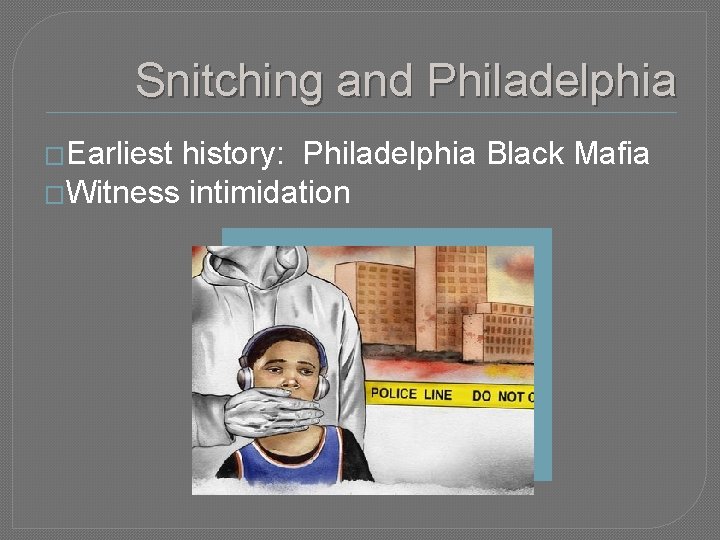
Snitching and Philadelphia �Earliest history: Philadelphia Black Mafia �Witness intimidation
Philadelphia’s Black Mafia �Formed by black muslims �Known for executing witnesses: • • 1971: Velma Green 1974: Charles Price 1976: Louis Gruby 1980: Barry Kelly
Justice Delayed, Denied �Philadelphia Inquirer Series �Issues regarding rampant witness intimidation �Limitations with our court system � 12: 30 Dylan Purcell
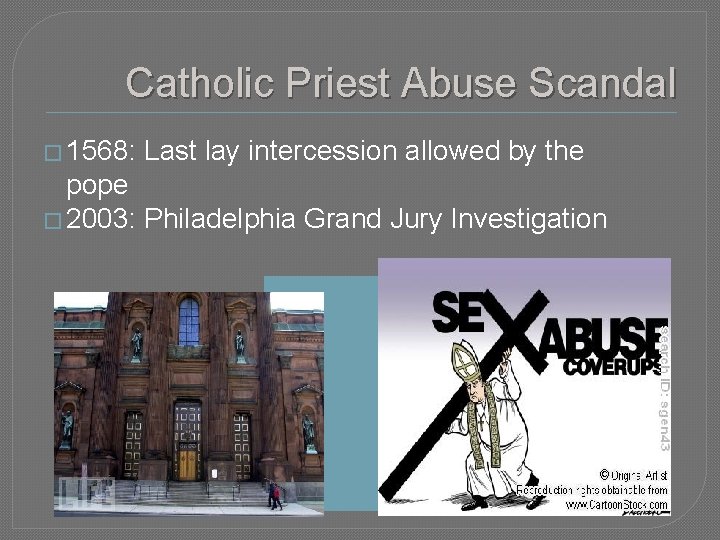
Catholic Priest Abuse Scandal � 1568: Last lay intercession allowed by the pope � 2003: Philadelphia Grand Jury Investigation
Current Study � Students conducted extensive literature search on the topic of snitching, exposure to violence, and other life experiences that may be related to attitudes towards snitching � Administered survey in classes at CCP in Spring 2010
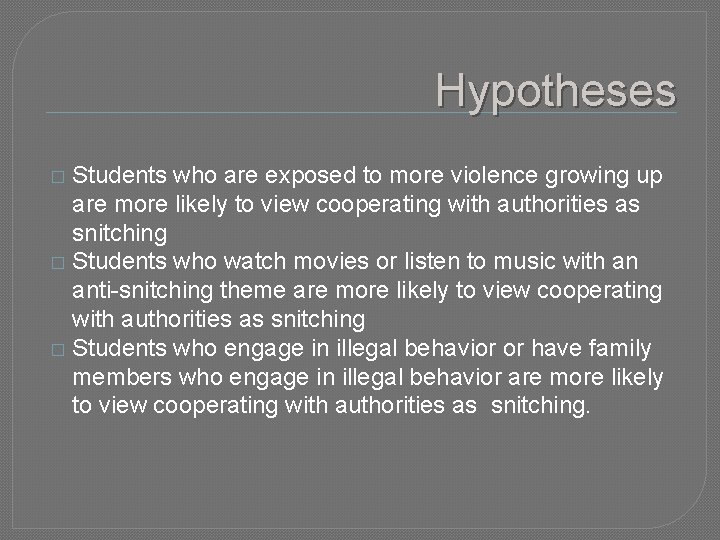
Hypotheses Students who are exposed to more violence growing up are more likely to view cooperating with authorities as snitching � Students who watch movies or listen to music with an anti-snitching theme are more likely to view cooperating with authorities as snitching � Students who engage in illegal behavior or have family members who engage in illegal behavior are more likely to view cooperating with authorities as snitching. �
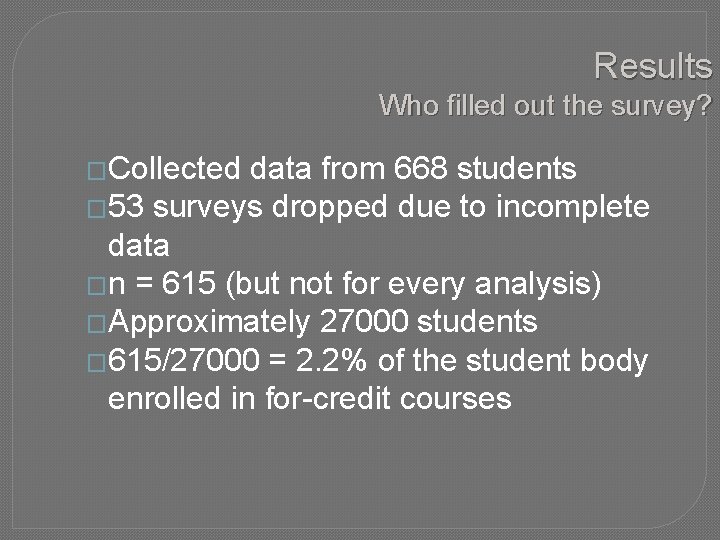
Results Who filled out the survey? �Collected data from 668 students � 53 surveys dropped due to incomplete data �n = 615 (but not for every analysis) �Approximately 27000 students � 615/27000 = 2. 2% of the student body enrolled in for-credit courses
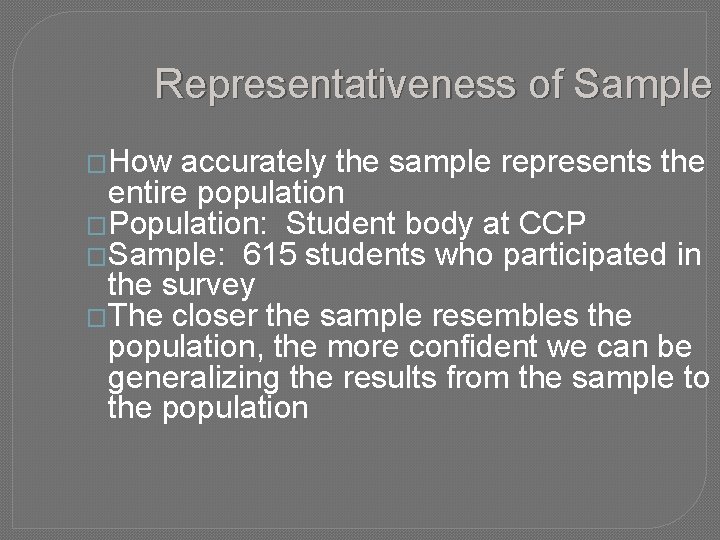
Representativeness of Sample �How accurately the sample represents the entire population �Population: Student body at CCP �Sample: 615 students who participated in the survey �The closer the sample resembles the population, the more confident we can be generalizing the results from the sample to the population
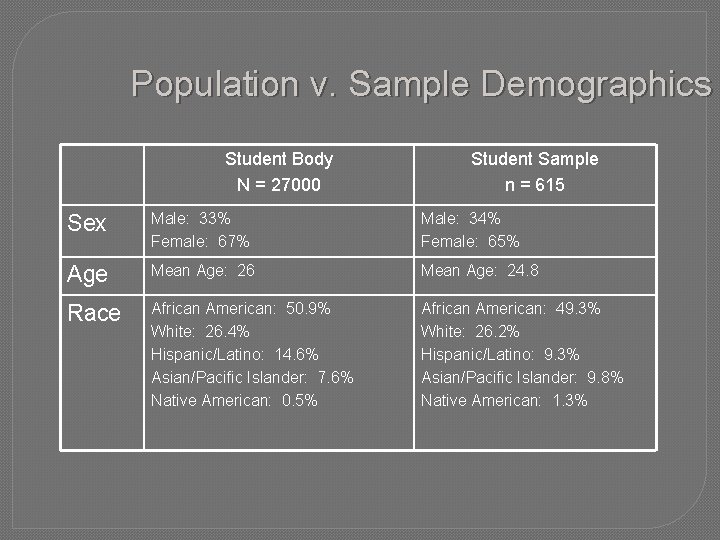
Population v. Sample Demographics Student Body N = 27000 Student Sample n = 615 Sex Male: 33% Female: 67% Male: 34% Female: 65% Age Mean Age: 26 Mean Age: 24. 8 Race African American: 50. 9% White: 26. 4% Hispanic/Latino: 14. 6% Asian/Pacific Islander: 7. 6% Native American: 0. 5% African American: 49. 3% White: 26. 2% Hispanic/Latino: 9. 3% Asian/Pacific Islander: 9. 8% Native American: 1. 3%
Additional Demographics �Are you a parent? • Yes: 27. 6% • No: 70. 4%
Life Experiences � 21 yes/no questions �Questions about family drug history, prior experience with police and crime, parents’ and siblings’ attitudes about snitching, preference for movies/music with an antisnitching theme
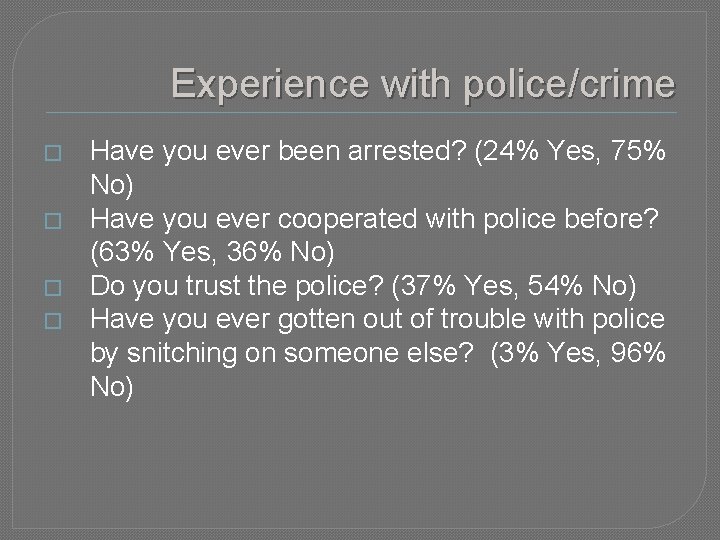
Experience with police/crime � � Have you ever been arrested? (24% Yes, 75% No) Have you ever cooperated with police before? (63% Yes, 36% No) Do you trust the police? (37% Yes, 54% No) Have you ever gotten out of trouble with police by snitching on someone else? (3% Yes, 96% No)
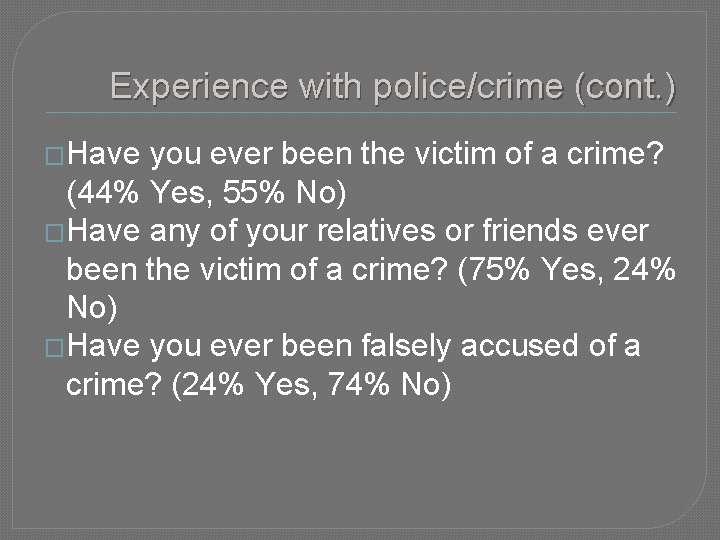
Experience with police/crime (cont. ) �Have you ever been the victim of a crime? (44% Yes, 55% No) �Have any of your relatives or friends ever been the victim of a crime? (75% Yes, 24% No) �Have you ever been falsely accused of a crime? (24% Yes, 74% No)
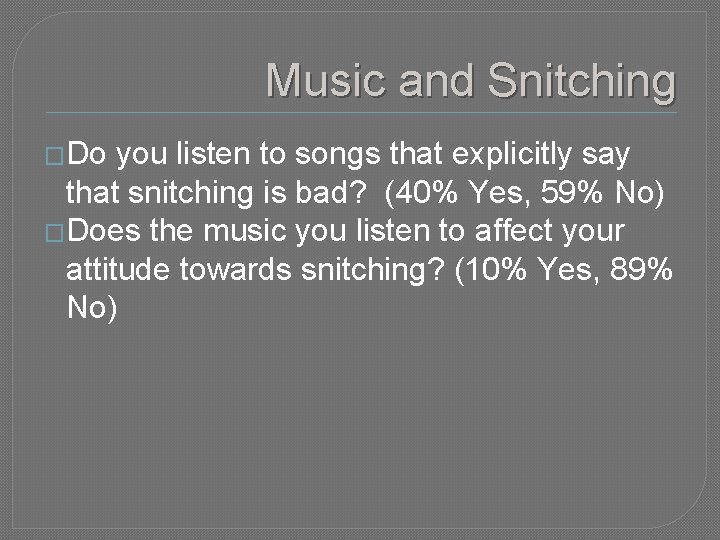
Music and Snitching �Do you listen to songs that explicitly say that snitching is bad? (40% Yes, 59% No) �Does the music you listen to affect your attitude towards snitching? (10% Yes, 89% No)
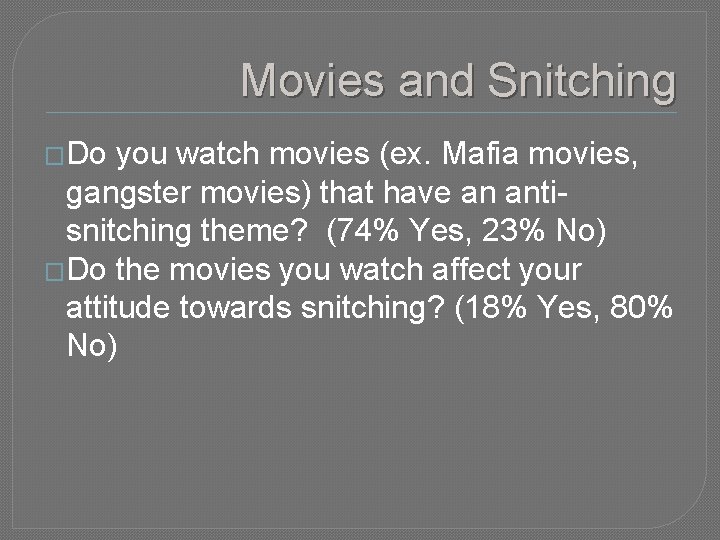
Movies and Snitching �Do you watch movies (ex. Mafia movies, gangster movies) that have an antisnitching theme? (74% Yes, 23% No) �Do the movies you watch affect your attitude towards snitching? (18% Yes, 80% No)
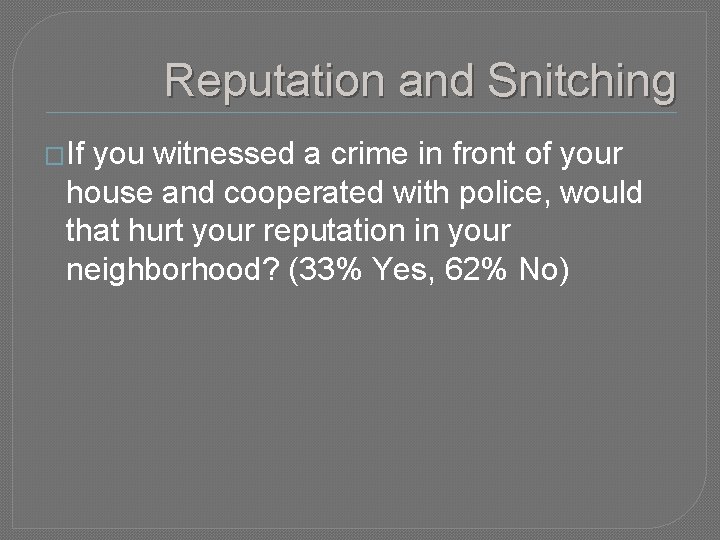
Reputation and Snitching �If you witnessed a crime in front of your house and cooperated with police, would that hurt your reputation in your neighborhood? (33% Yes, 62% No)
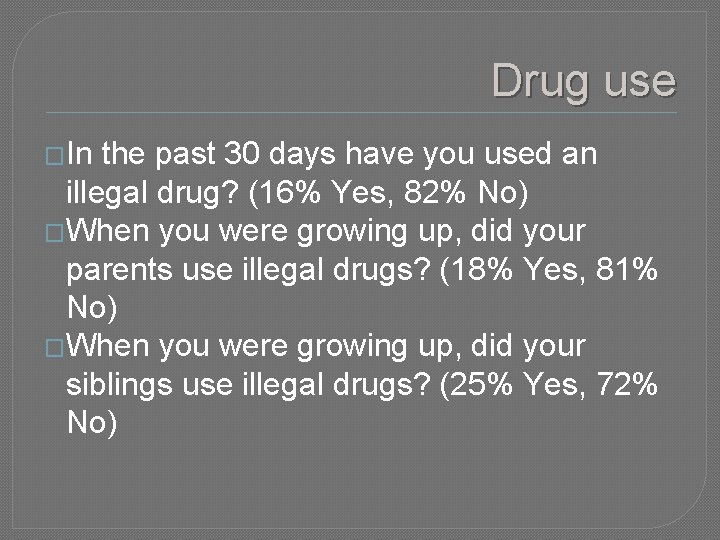
Drug use �In the past 30 days have you used an illegal drug? (16% Yes, 82% No) �When you were growing up, did your parents use illegal drugs? (18% Yes, 81% No) �When you were growing up, did your siblings use illegal drugs? (25% Yes, 72% No)
Exposure to Violence Growing Up � � � Neighborhood violence/shootings Parents/guardians beat you Brothers/sisters beat you Bullying Violent video games Violent TV shows/movies � � � Parents/Guardians beat you Gang violence Drug-related violence Police shootings Toy guns/violent toys Cruelty to animals
Exposure to Violence (EV) Score � An overall EV score was computed for each respondent. For each type of violence, respondents were assigned points according to frequency (Never = 0, rarely = 1, sometimes = 2, frequently = 3).
Exposure to Violence (EV) Score (cont. ) � There were twelve types of violence included in the survey, so respondents’ EV scores could range from 0 (no exposure to violence) to 36 (all twelve types of violence were experienced frequently). Higher scores indicate more exposure to violence. � Mean: 12. 5, Standard Deviation: 6. 8
What is snitching? � � Eleven brief scenarios describing a person who cooperates with authorities “A person calls an anonymous tip line to report a person selling drugs outside of his house. ” “A person witnesses a coworker stealing money and reports it to the boss. ” “A student witnesses someone cheating on an exam and reports it to the teacher. ”
Snitching (S) Score � An overall S score was computed for each respondent. For each scenario, respondents were assigned points according to frequency (This is definitely not an example of snitching = 0, This is probably not an example of snitching = 1, This is probably an example of snitching = 2, This is definitely an example of snitching = 3).
Snitching (S) Score (cont. ) � There were eleven scenarios included in the survey, so respondents’ S scores could range from 0 (none of the scenarios were rated as definitely not examples of snitching) to 33 (all of the scenarios were definitely examples of snitching). Higher scores indicate you are more likely to view cooperating with authorities as snitching. � Mean: 17. 5, Standard Deviation: 8. 4
Is there a relationship between exposure to violence (EV) and snitching (S)? � Correlation: Number that summarizes the strength of a relationship between two things. � Correlation between exposure to violence and attitude towards snitching. 28* � The more violence you were exposed to growing up, the more likely you are to view cooperating with authorities as snitching. * p >. 01
Is there a relationship between snitching and life experiences? �In the past 30 days, have you used an illegal drug? Yes: X = 20. 3 No: X = 16. 3* * Means significantly different, p >. 01
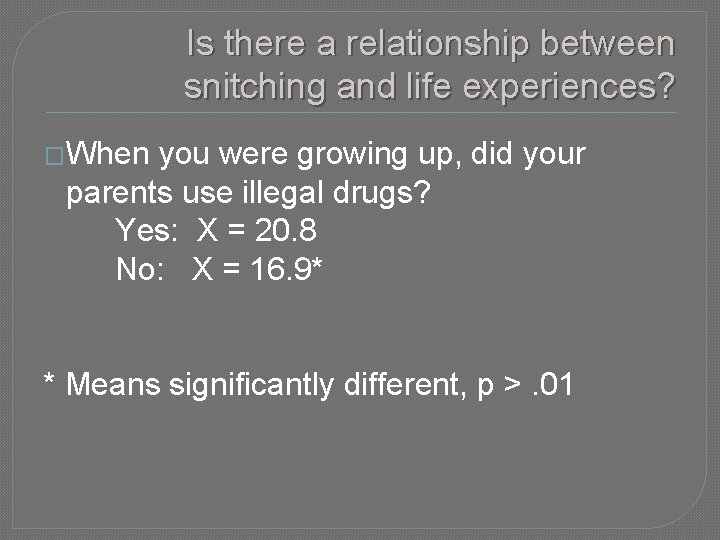
Is there a relationship between snitching and life experiences? �When you were growing up, did your parents use illegal drugs? Yes: X = 20. 8 No: X = 16. 9* * Means significantly different, p >. 01
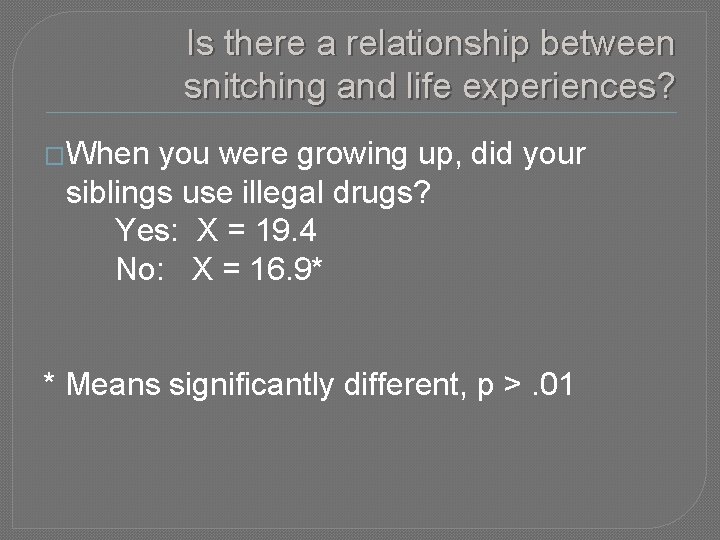
Is there a relationship between snitching and life experiences? �When you were growing up, did your siblings use illegal drugs? Yes: X = 19. 4 No: X = 16. 9* * Means significantly different, p >. 01
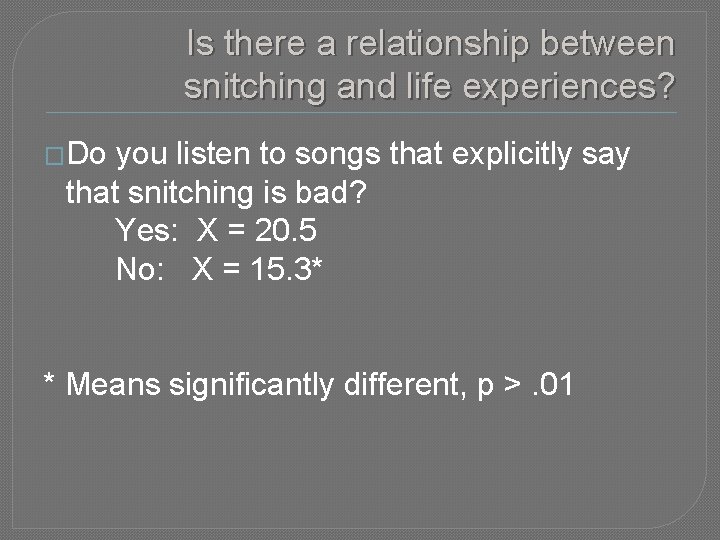
Is there a relationship between snitching and life experiences? �Do you listen to songs that explicitly say that snitching is bad? Yes: X = 20. 5 No: X = 15. 3* * Means significantly different, p >. 01
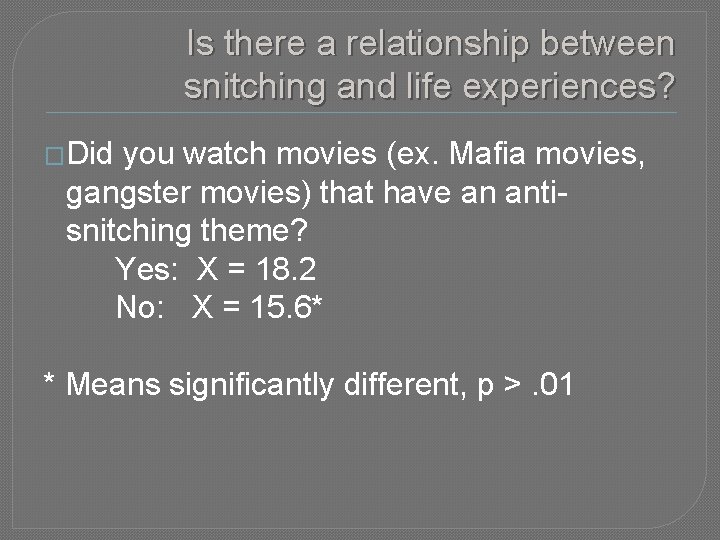
Is there a relationship between snitching and life experiences? �Did you watch movies (ex. Mafia movies, gangster movies) that have an antisnitching theme? Yes: X = 18. 2 No: X = 15. 6* * Means significantly different, p >. 01
Is there a relationship between snitching and life experiences? �Did you watch movies (ex. Mafia movies, gangster movies) that have an antisnitching theme? Yes: X = 13. 8 No: X = 8. 7* * Means significantly different, p >. 01
Conclusions � Students who were exposed to more violence growing up were more likely to view cooperating with authorities as snitching. � Attitudes about snitching are also associated with personal and family drug use � Students who watched movies or listened to music with anti-snitching themes were more likely to view cooperating with authorities as snitching.
- Slides: 58