
The Smart Thermostat Using Occupancy Sensors to Save
- Slides: 22
The Smart Thermostat: Using Occupancy Sensors to Save Energy in Homes Jiakang Lu, Tamim Sookoor, Vijay Srinivasan, Ge Gao, Brian Holben, John Stankovic, Eric Field, Kamin Whitehouse Sen. Sys 2010 Zurich, Switzerland
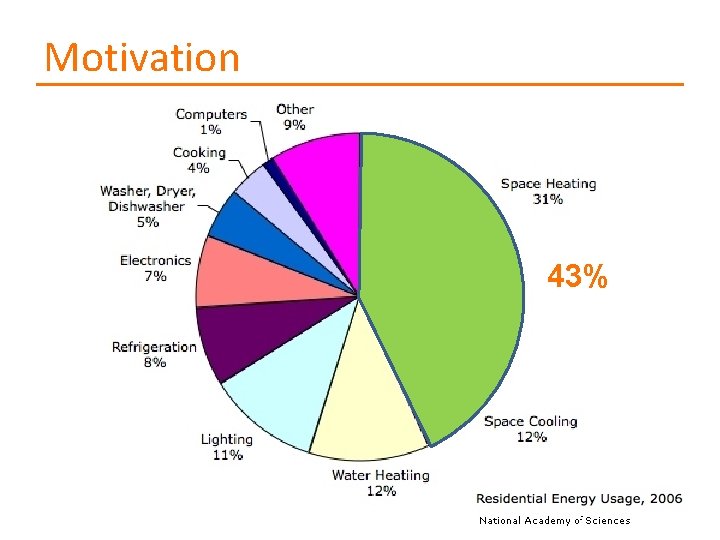
Motivation 43% 1
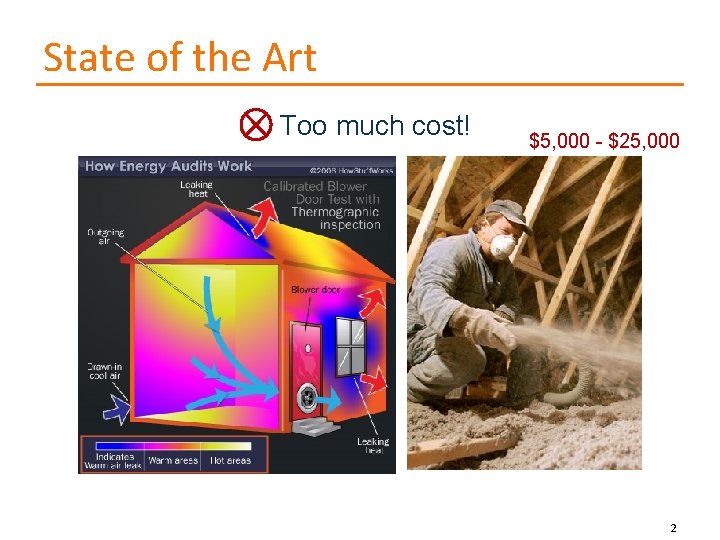
State of the Art Too much cost! $5, 000 - $25, 000 2
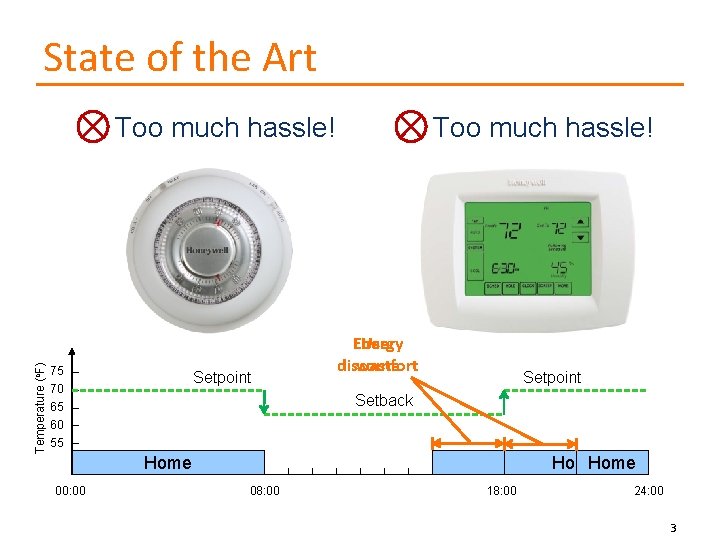
State of the Art Temperature (o. F) Too much hassle! 75 70 65 60 55 Setpoint Energy User waste discomfort Setpoint Setback Home 00: 00 Too much hassle! Home 08: 00 18: 00 24: 00 3
“How much energy can be saved with occupancy sensors? ” 4
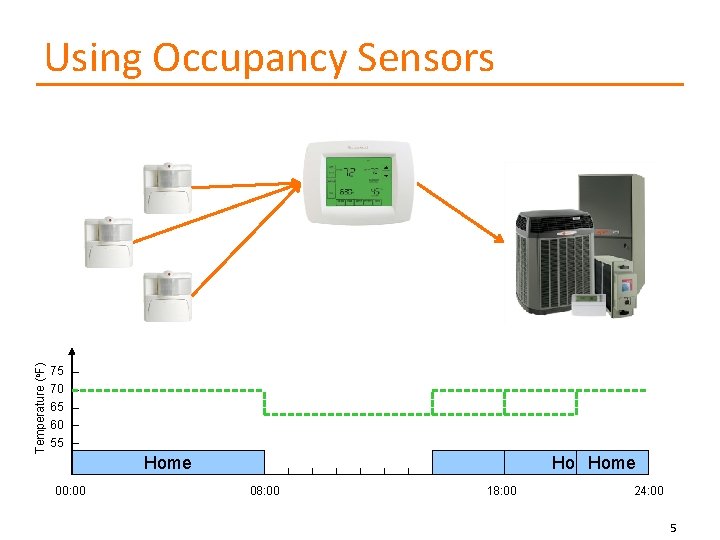
Temperature (o. F) Using Occupancy Sensors 75 70 65 60 55 Home 00: 00 Home 08: 00 18: 00 24: 00 5
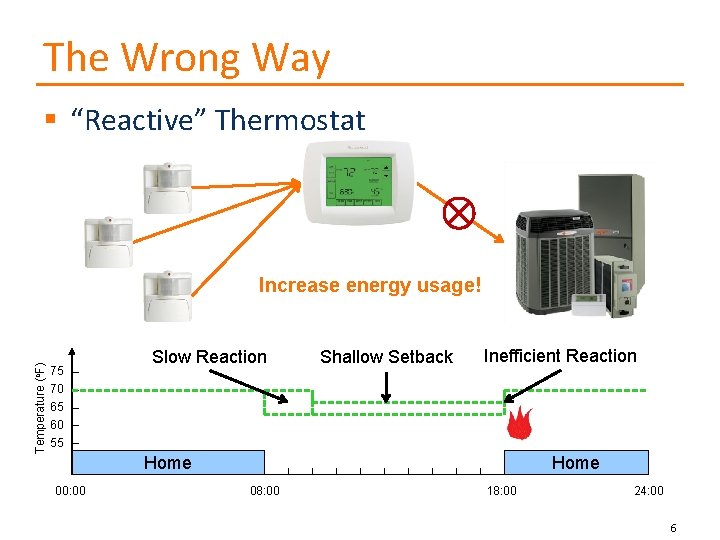
The Wrong Way § “Reactive” Thermostat Temperature (o. F) Increase energy usage! 75 70 65 60 55 Slow Reaction Shallow Setback Inefficient Reaction Home 00: 00 Home 08: 00 18: 00 24: 00 6
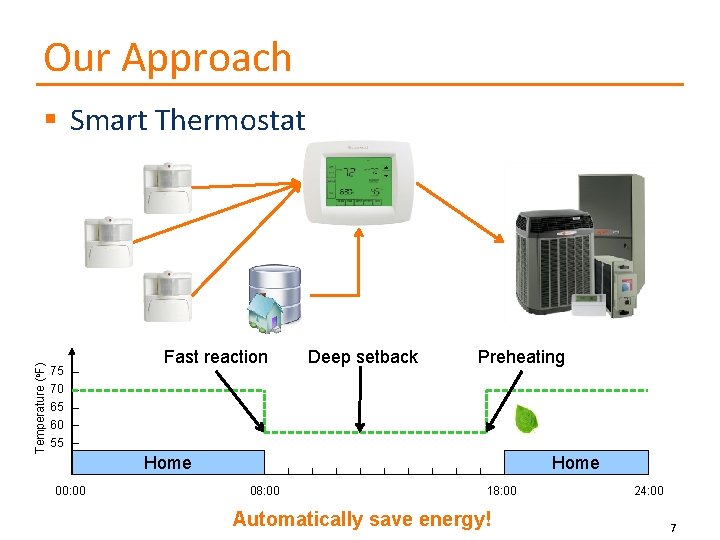
Our Approach Temperature (o. F) § Smart Thermostat 75 70 65 60 55 Fast reaction Deep setback Preheating Home 00: 00 Home 08: 00 18: 00 Automatically save energy! 24: 00 7
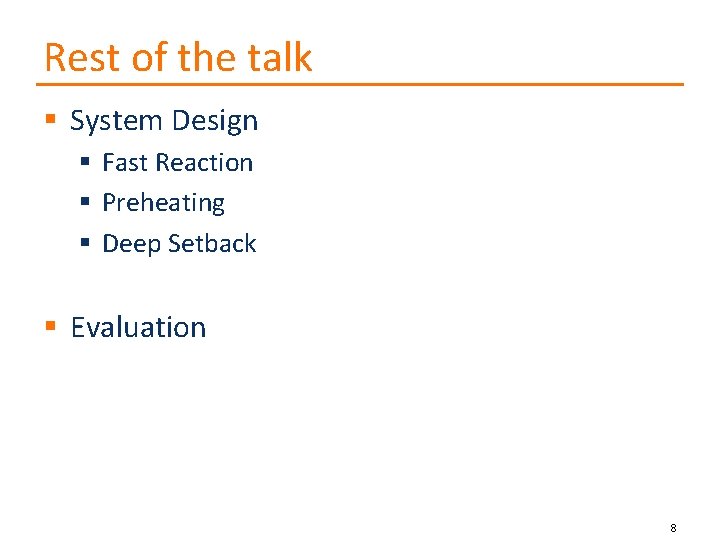
Rest of the talk § System Design § Fast Reaction § Preheating § Deep Setback § Evaluation 8
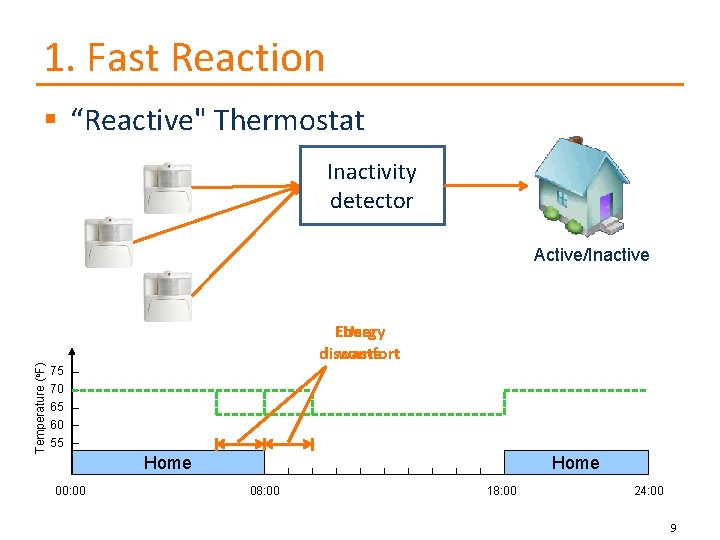
1. Fast Reaction § “Reactive" Thermostat Inactivity detector Temperature (o. F) Active/Inactive Energy User discomfort waste 75 70 65 60 55 Home 00: 00 Home 08: 00 18: 00 24: 00 9
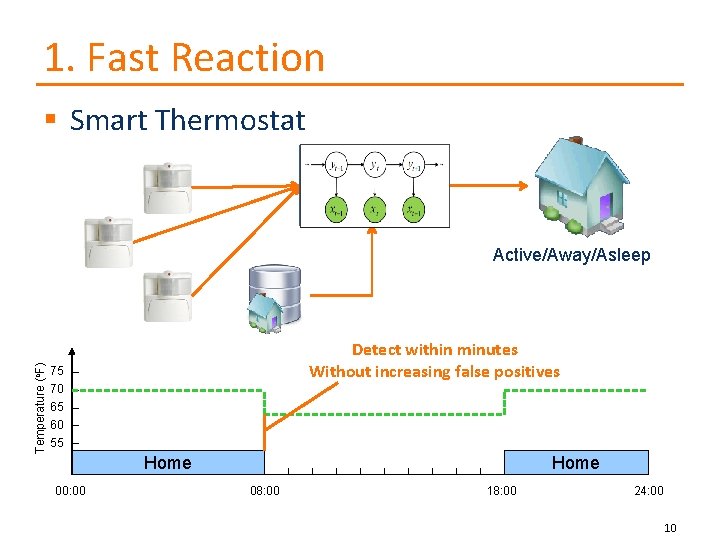
1. Fast Reaction § Smart Thermostat Pattern detector Temperature (o. F) Active/Away/Asleep Detect within minutes Without increasing false positives 75 70 65 60 55 Home 00: 00 Home 08: 00 18: 00 24: 00 10
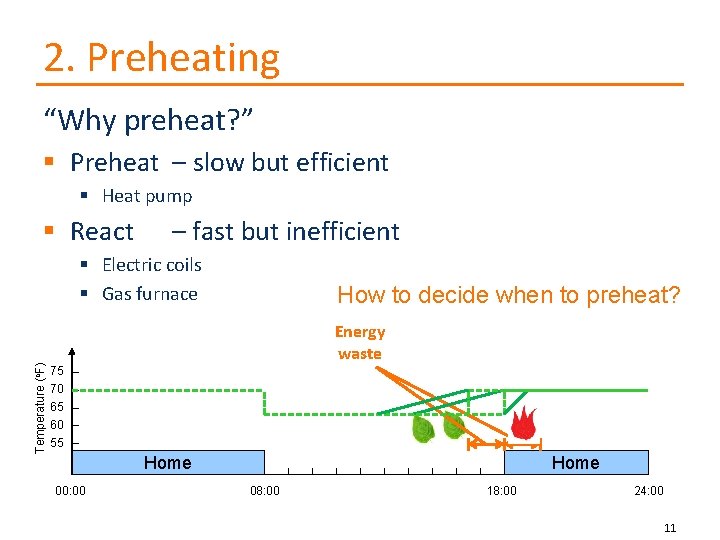
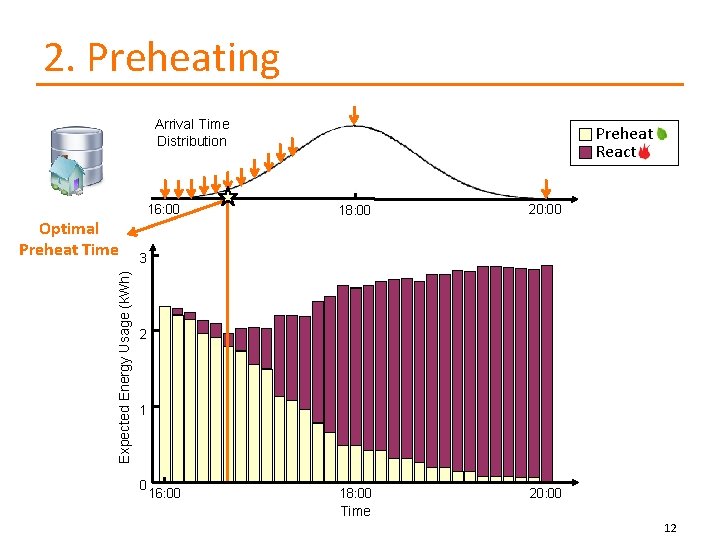
2. Preheating “Why preheat? ” § Preheat – slow but efficient § Heat pump § React – fast but inefficient Temperature (o. F) § Electric coils § Gas furnace How to decide when to preheat? Energy waste 75 70 65 60 55 Home 00: 00 Home 08: 00 18: 00 24: 00 11
2. Preheating Arrival Time Distribution Expected Energy Usage (k. Wh) Optimal Preheat Time Preheat React 16: 00 18: 00 20: 00 3 2 1 0 Time 12
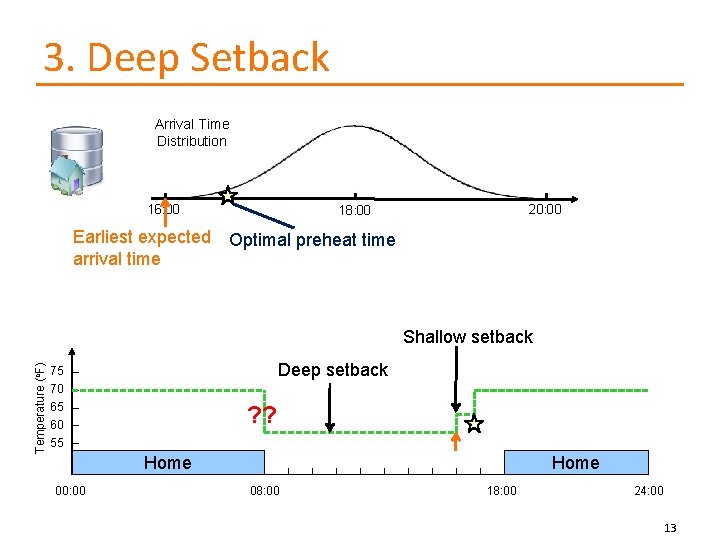
3. Deep Setback Arrival Time Distribution 16: 00 Earliest expected arrival time 20: 00 18: 00 Optimal preheat time Temperature (o. F) Shallow setback Deep setback 75 70 65 60 55 ? ? Home 00: 00 Home 08: 00 18: 00 24: 00 13
Rest of the talk § System Design § Fast Reaction § Preheating § Deep Setback § Evaluation 14
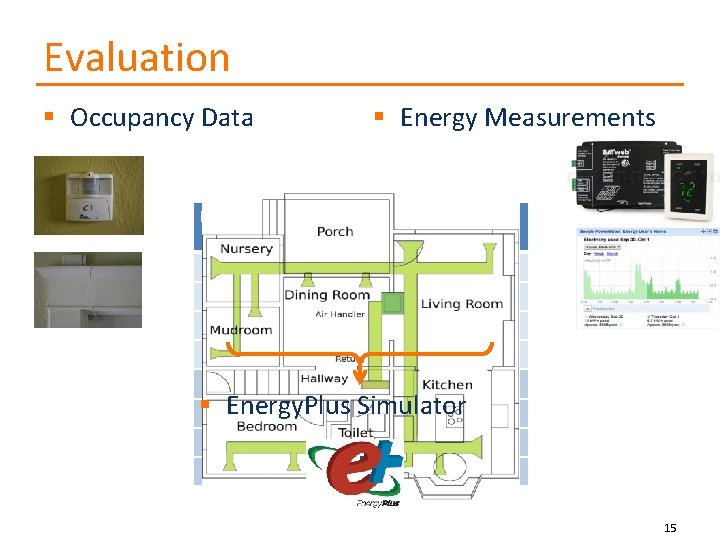
Evaluation § Occupancy Data § Energy Measurements Home #Residents # Motion Sensors #Door Sensors A 1 7 3 B 1 3 2 C 1 4 1 D 1 4 1 E 2 5 1 § FEnergy. Plus Simulator 3 5 2 G 3 4 1 H 2 5 2 15
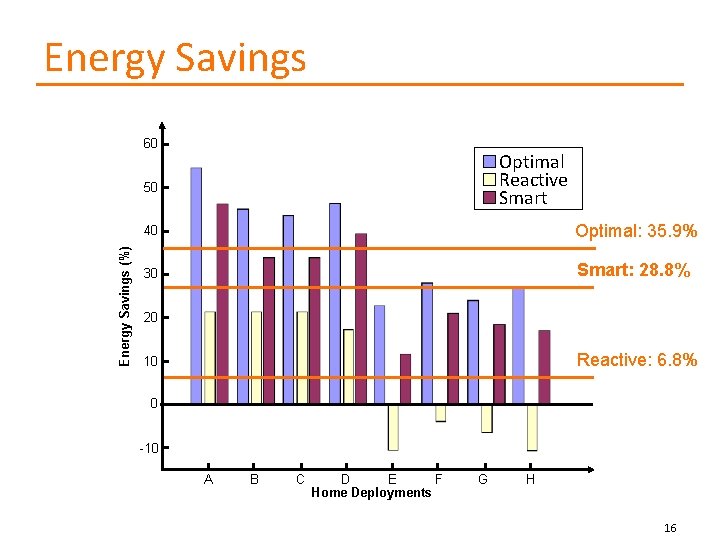
Energy Savings 60 Optimal Reactive Smart Energy Savings (%) 50 40 Optimal: 35. 9% 30 Smart: 28. 8% 20 Reactive: 6. 8% 10 0 -10 A B C D E F Home Deployments G H 16
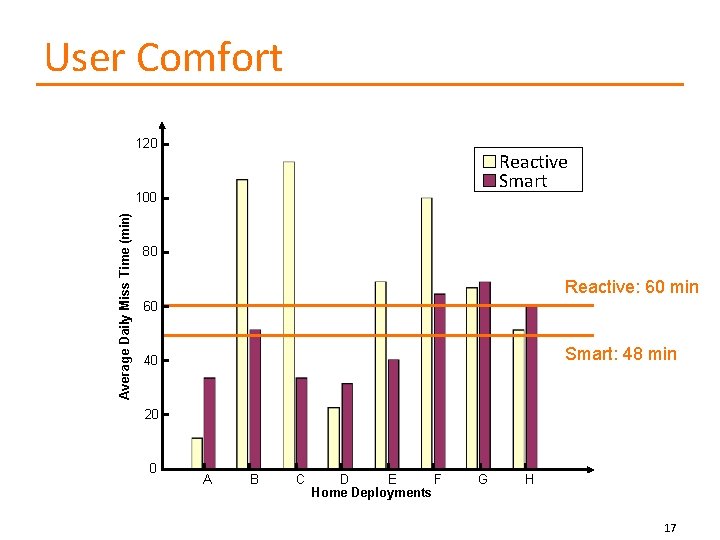
User Comfort 120 Reactive Smart Average Daily Miss Time (min) 100 80 Reactive: 60 min 60 Smart: 48 min 40 20 0 A B C D E F Home Deployments G H 17
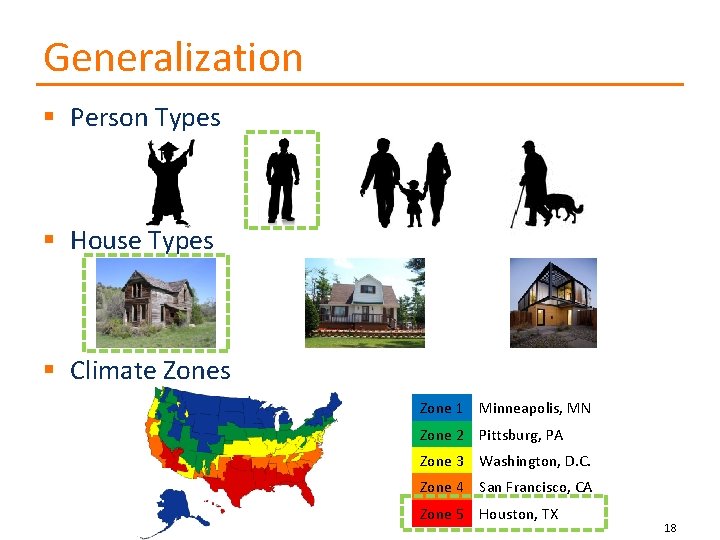
Generalization § Person Types § House Types § Climate Zones Zone 1 Minneapolis, MN Zone 2 Pittsburg, PA Zone 3 Washington, D. C. Zone 4 San Francisco, CA Zone 5 Houston, TX 18
Impact § Nationwide Savings § save over 100 billion k. Wh per year § prevent 1. 12 billion tons of air pollutants § “Bang for the buck” § $5 billion for weatherization § Our technique is ~$25 in sensors per home 19
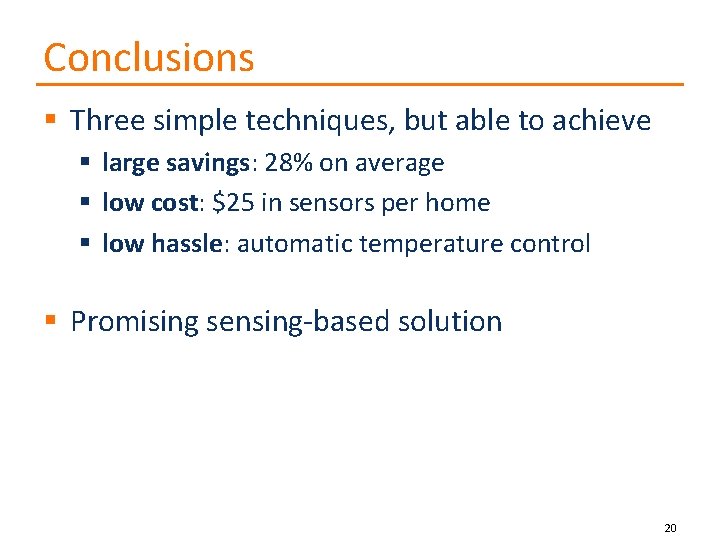
Conclusions § Three simple techniques, but able to achieve § large savings: 28% on average § low cost: $25 in sensors per home § low hassle: automatic temperature control § Promising sensing-based solution 20
Q&A Thank you! 21