
THE SMART READINESS INDICATOR HELLO I am Laura

- Slides: 21
THE SMART READINESS INDICATOR
HELLO! I am Laura Remes Doctoral Candidate Smart Building Technologies and Services laura. remes@aalto. fi 2
CONTENT SRI in General ❏ ❏ WHY smart building technology is needed? WHAT could smart readiness for buildings mean? HOW smart readiness could be assessed? WHICH aspects should be taken into consideration? SRI Case Studies ❑ The common residential home: 60’s rowhouse ❑ The modern educational building: Väre ❑ The highest scoring building: Sello 3
1. Smart Readiness Indicator (SRI) Questions: why, what, how, & which? 4
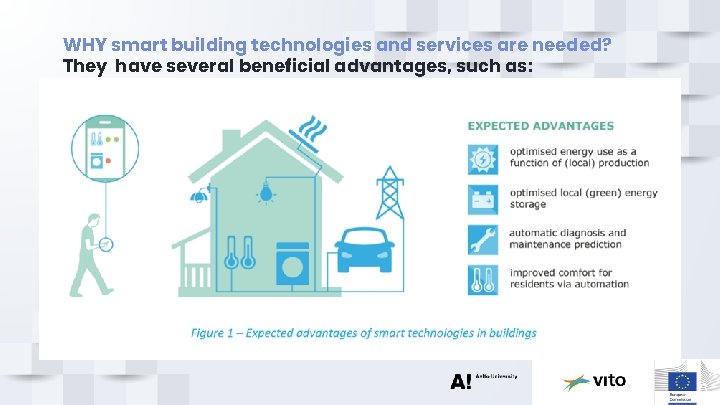
WHY smart building technologies and services are needed? They have several beneficial advantages, such as: 5
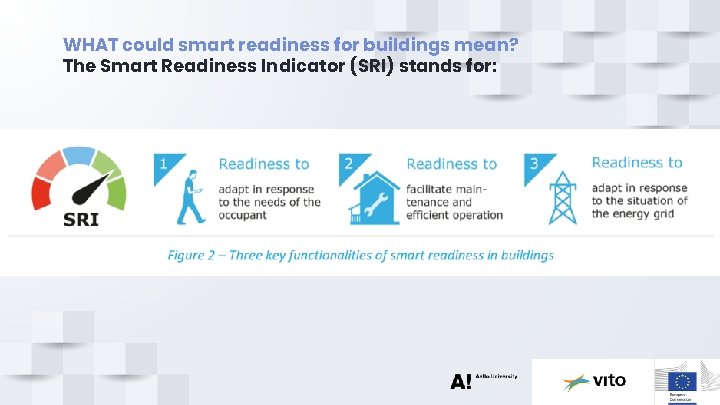
WHAT could smart readiness for buildings mean? The Smart Readiness Indicator (SRI) stands for: 6
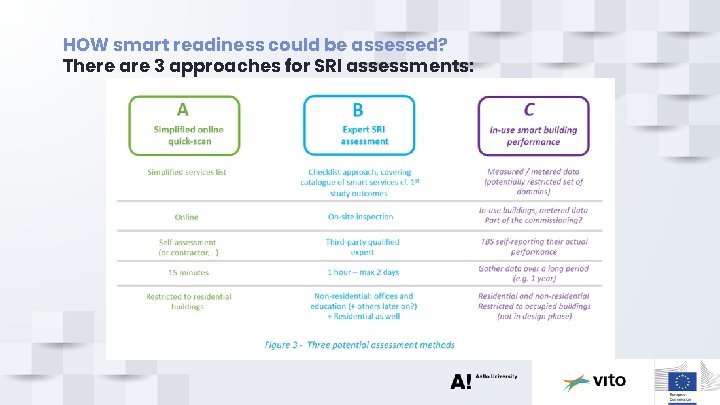
HOW smart readiness could be assessed? There are 3 approaches for SRI assessments: 7
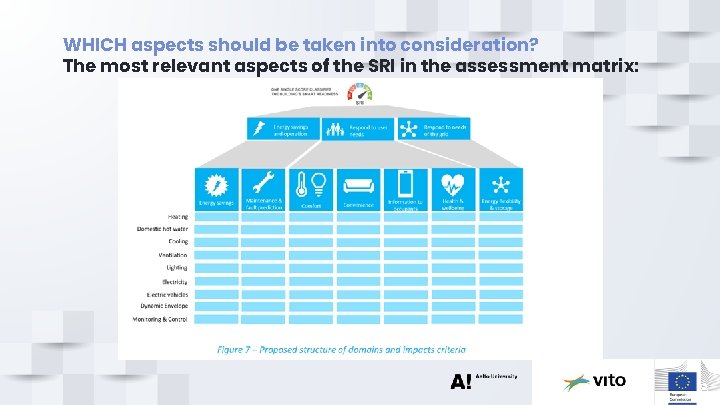
WHICH aspects should be taken into consideration? The most relevant aspects of the SRI in the assessment matrix: 8
2. SRI case studies 3 different case studies: 60’s rowhouse, Väre, & Sello 9
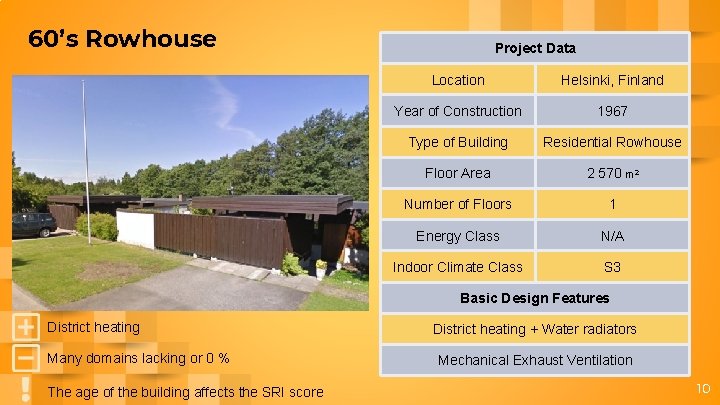
60’s Rowhouse Project Data Location Helsinki, Finland Year of Construction 1967 Type of Building Residential Rowhouse Floor Area 2 570 m 2 Number of Floors 1 Energy Class N/A Indoor Climate Class S 3 Basic Design Features District heating Many domains lacking or 0 % The age of the building affects the SRI score District heating + Water radiators Mechanical Exhaust Ventilation 10
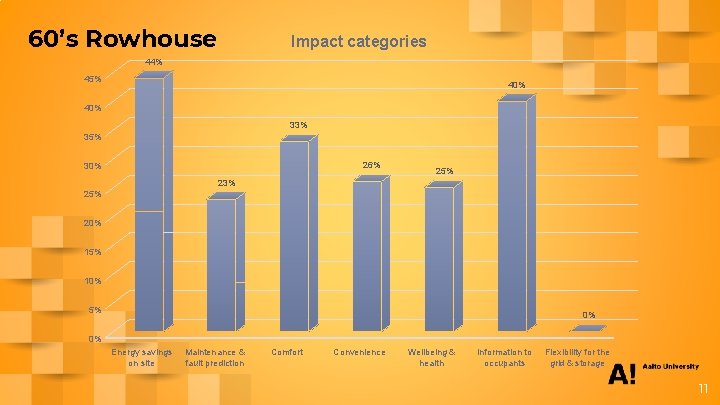
60’s Rowhouse Impact categories 44% 45% 40% 33% 35% 26% 30% 25% 23% 25% 20% 15% 10% 5% 0% 0% Energy savings on site Maintenance & fault prediction Comfort Convenience Wellbeing & health Information to occupants Flexibility for the grid & storage 11
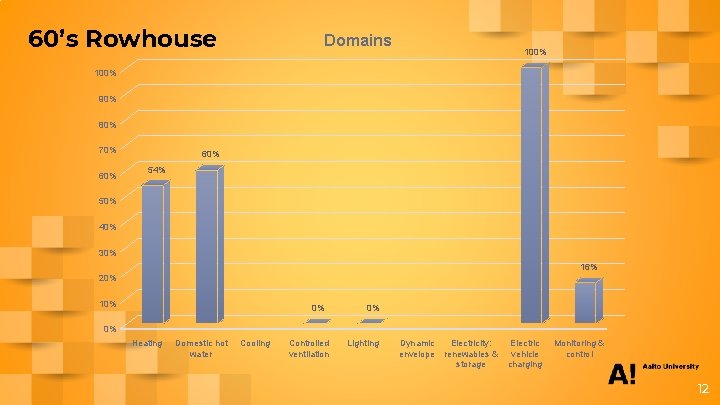
60’s Rowhouse Domains 100% 90% 80% 70% 60% 54% 50% 40% 30% 16% 20% 10% 0% Heating Domestic hot water Cooling Controlled ventilation Lighting Dynamic Electricity: envelope renewables & storage Electric vehicle charging Monitoring & control 12
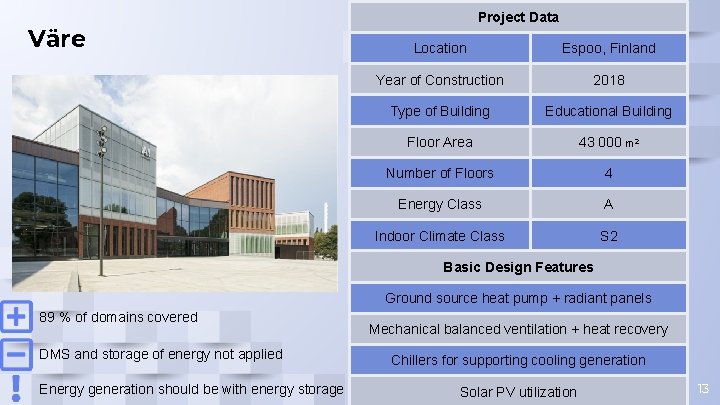
Väre Project Data Location Espoo, Finland Year of Construction 2018 Type of Building Educational Building Floor Area 43 000 m 2 Number of Floors 4 Energy Class A Indoor Climate Class S 2 Basic Design Features Ground source heat pump + radiant panels 89 % of domains covered DMS and storage of energy not applied Energy generation should be with energy storage Mechanical balanced ventilation + heat recovery Chillers for supporting cooling generation Solar PV utilization 13
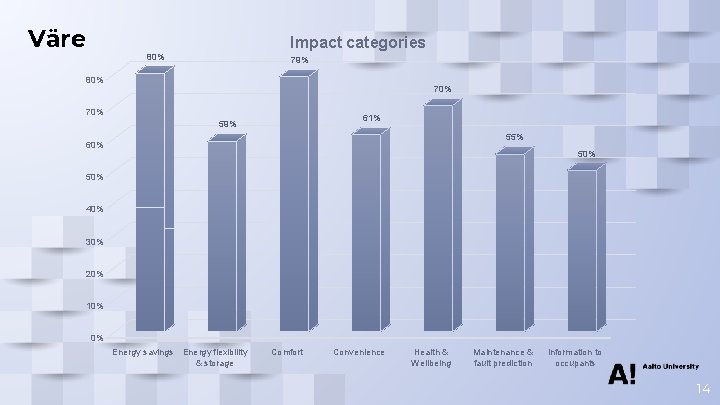
Väre Impact categories 80% 79% 80% 70% 61% 59% 55% 60% 50% 40% 30% 20% 10% 0% Energy savings Energy flexibility & storage Comfort Convenience Health & Wellbeing Maintenance & fault prediction Information to occupants 14
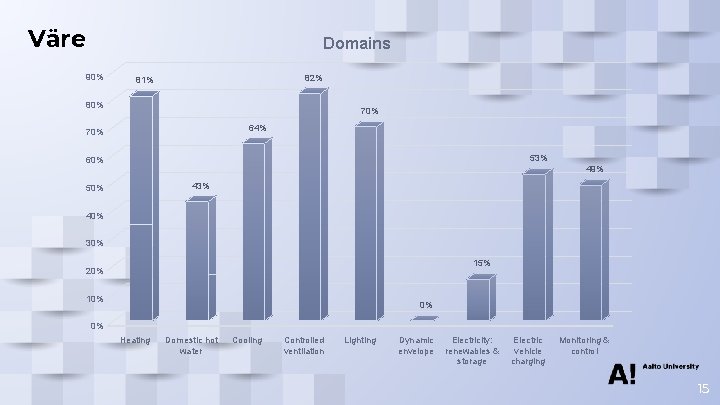
Väre Domains 90% 82% 81% 80% 70% 64% 70% 53% 60% 49% 43% 50% 40% 30% 15% 20% 10% 0% 0% Heating Domestic hot water Cooling Controlled ventilation Lighting Dynamic envelope Electricity: renewables & storage Electric vehicle charging Monitoring & control 15
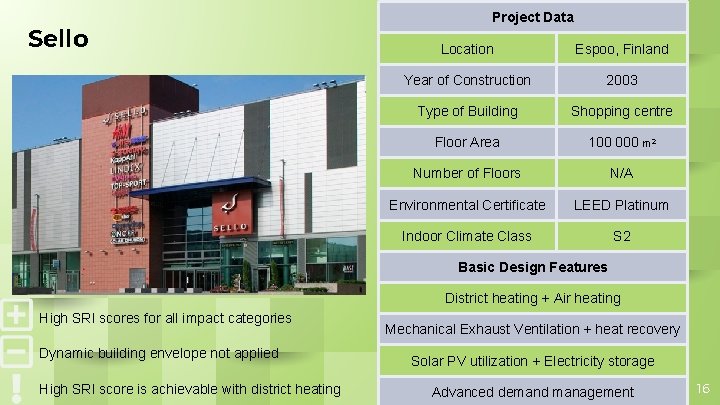
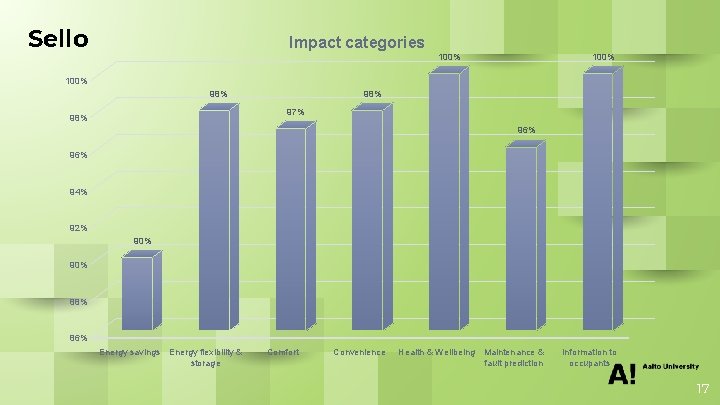
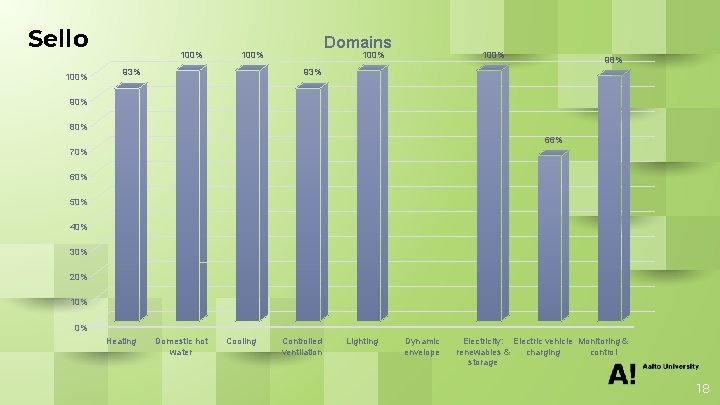
Sello Project Data Location Espoo, Finland Year of Construction 2003 Type of Building Shopping centre Floor Area 100 000 m 2 Number of Floors N/A Environmental Certificate LEED Platinum Indoor Climate Class S 2 Basic Design Features District heating + Air heating High SRI scores for all impact categories Dynamic building envelope not applied High SRI score is achievable with district heating Mechanical Exhaust Ventilation + heat recovery Solar PV utilization + Electricity storage Advanced demand management 16
Sello Impact categories 100% 98% 97% 98% 96% 94% 92% 90% 88% 86% Energy savings Energy flexibility & storage Comfort Convenience Health & Wellbeing Maintenance & fault prediction Information to occupants 17
Sello 100% Domains 100% 93% 100% 98% 93% 90% 80% 66% 70% 60% 50% 40% 30% 20% 10% 0% Heating Domestic hot water Cooling Controlled ventilation Lighting Dynamic envelope Electricity: Electric vehicle Monitoring & renewables & charging control storage 18
SUMMARY ❏ The SRI is created for advancing sustainable building solutions, which also promote occupants wellbeing. ❏ Currently there are 2 different qualitative methods for the SRI assessment and in the future there are going to be a quantitative method. The SRI assessment is still evolving. ❏ Based on our case studies, the SRI takes properly into consideration the age and the technical service level of the building. Thus, it is a valid method for assessing the smart readiness level of the building. 19
Thank you! Questions? 20
CREDITS ❑ SRI project group members ❑ https: //smartreadinessindicator. eu/ ❑ Free presentation template by Slides. Carnival 21