
The smallest part of an element that can
- Slides: 4
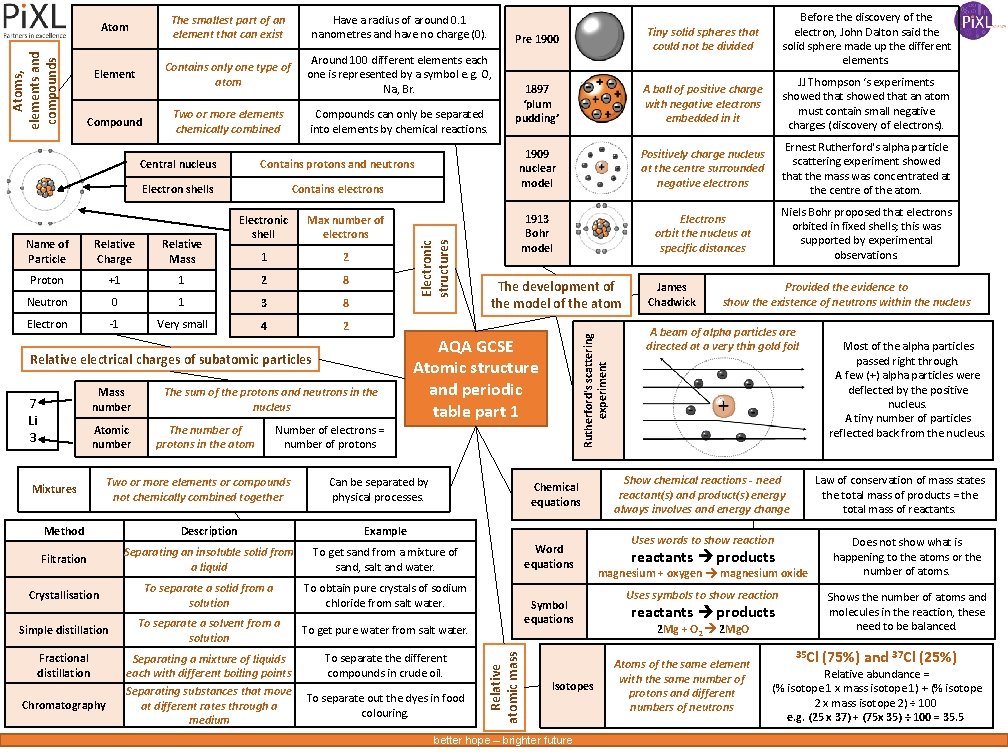
The smallest part of an element that can exist Have a radius of around 0. 1 nanometres and have no charge (0). Element Contains only one type of atom Around 100 different elements each one is represented by a symbol e. g. O, Na, Br. Two or more elements chemically combined Compounds can only be separated into elements by chemical reactions. Contains protons and neutrons Electron shells Contains electrons Electronic shell Max number of electrons 1 2 Name of Particle Relative Charge Relative Mass Proton +1 1 2 8 Neutron 0 1 3 8 Electron -1 Very small 4 2 Relative electrical charges of subatomic particles Mass number 7 Li 3 Atomic number Mixtures The sum of the protons and neutrons in the nucleus The number of protons in the atom 1897 ‘plum pudding’ A ball of positive charge with negative electrons embedded in it JJ Thompson ‘s experiments showed that an atom must contain small negative charges (discovery of electrons). 1909 nuclear model Positively charge nucleus at the centre surrounded negative electrons Ernest Rutherford's alpha particle scattering experiment showed that the mass was concentrated at the centre of the atom. 1913 Bohr model Electrons orbit the nucleus at specific distances Niels Bohr proposed that electrons orbited in fixed shells; this was supported by experimental observations. The development of the model of the atom AQA GCSE Atomic structure and periodic table part 1 Number of electrons = number of protons Two or more elements or compounds not chemically combined together Method Before the discovery of the electron, John Dalton said the solid sphere made up the different elements. Rutherford's scattering experiment Central nucleus Pre 1900 Tiny solid spheres that could not be divided Description Can be separated by physical processes. Chemical equations Example Filtration Separating an insoluble solid from a liquid To get sand from a mixture of sand, salt and water. Crystallisation To separate a solid from a solution To obtain pure crystals of sodium chloride from salt water. Simple distillation To separate a solvent from a solution To get pure water from salt water. Fractional distillation Separating a mixture of liquids each with different boiling points To separate the different compounds in crude oil. Chromatography Separating substances that move at different rates through a medium To separate out the dyes in food colouring. Word equations Symbol equations Relative atomic mass Compound Electronic structures Atoms, elements and compounds Atom Isotopes better hope – brighter future James Chadwick Provided the evidence to show the existence of neutrons within the nucleus A beam of alpha particles are directed at a very thin gold foil Show chemical reactions - need reactant(s) and product(s) energy always involves and energy change Most of the alpha particles passed right through. A few (+) alpha particles were deflected by the positive nucleus. A tiny number of particles reflected back from the nucleus. Law of conservation of mass states the total mass of products = the total mass of reactants. Uses words to show reaction reactants products magnesium + oxygen magnesium oxide Uses symbols to show reaction Shows the number of atoms and molecules in the reaction, these need to be balanced. reactants products 2 Mg + O 2 2 Mg. O Atoms of the same element with the same number of protons and different numbers of neutrons Does not show what is happening to the atoms or the number of atoms. 35 Cl (75%) and 37 Cl (25%) Relative abundance = (% isotope 1 x mass isotope 1) + (% isotope 2 x mass isotope 2) ÷ 100 e. g. (25 x 37) + (75 x 35) ÷ 100 = 35. 5
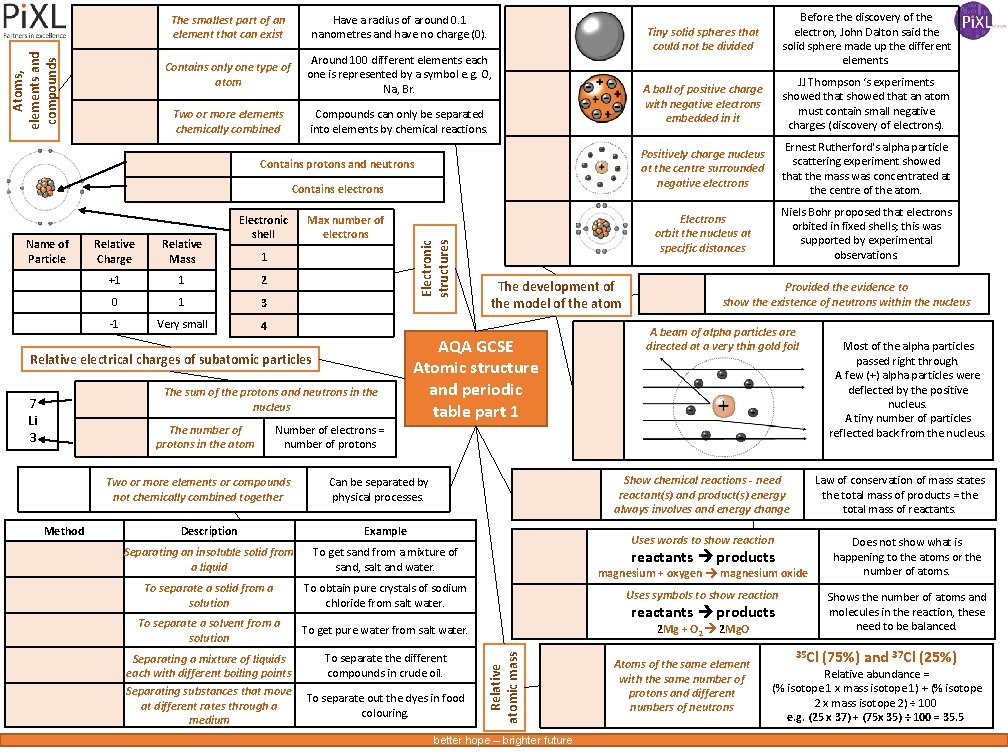
Atoms, elements and compounds The smallest part of an element that can exist Have a radius of around 0. 1 nanometres and have no charge (0). Contains only one type of atom Around 100 different elements each one is represented by a symbol e. g. O, Na, Br. Two or more elements chemically combined Compounds can only be separated into elements by chemical reactions. Contains protons and neutrons Relative Charge Relative Mass +1 1 2 0 1 3 -1 Very small 4 Max number of electrons 1 Relative electrical charges of subatomic particles The sum of the protons and neutrons in the nucleus 7 Li 3 The number of protons in the atom AQA GCSE Atomic structure and periodic table part 1 Before the discovery of the electron, John Dalton said the solid sphere made up the different elements. A ball of positive charge with negative electrons embedded in it JJ Thompson ‘s experiments showed that an atom must contain small negative charges (discovery of electrons). Positively charge nucleus at the centre surrounded negative electrons Ernest Rutherford's alpha particle scattering experiment showed that the mass was concentrated at the centre of the atom. Electrons orbit the nucleus at specific distances Niels Bohr proposed that electrons orbited in fixed shells; this was supported by experimental observations. Provided the evidence to show the existence of neutrons within the nucleus A beam of alpha particles are directed at a very thin gold foil Most of the alpha particles passed right through. A few (+) alpha particles were deflected by the positive nucleus. A tiny number of particles reflected back from the nucleus. Number of electrons = number of protons Two or more elements or compounds not chemically combined together Method The development of the model of the atom Show chemical reactions - need reactant(s) and product(s) energy always involves and energy change Can be separated by physical processes. Description Example Separating an insoluble solid from a liquid To get sand from a mixture of sand, salt and water. To separate a solid from a solution To obtain pure crystals of sodium chloride from salt water. Uses symbols to show reaction To separate a solvent from a solution To get pure water from salt water. 2 Mg + O 2 2 Mg. O Separating a mixture of liquids each with different boiling points To separate the different compounds in crude oil. Separating substances that move at different rates through a medium To separate out the dyes in food colouring. Law of conservation of mass states the total mass of products = the total mass of reactants. Uses words to show reaction reactants products magnesium + oxygen magnesium oxide better hope – brighter future Atoms of the same element with the same number of protons and different numbers of neutrons Does not show what is happening to the atoms or the number of atoms. Shows the number of atoms and molecules in the reaction, these need to be balanced. reactants products Relative atomic mass Name of Particle Electronic shell Electronic structures Contains electrons Tiny solid spheres that could not be divided 35 Cl (75%) and 37 Cl (25%) Relative abundance = (% isotope 1 x mass isotope 1) + (% isotope 2 x mass isotope 2) ÷ 100 e. g. (25 x 37) + (75 x 35) ÷ 100 = 35. 5
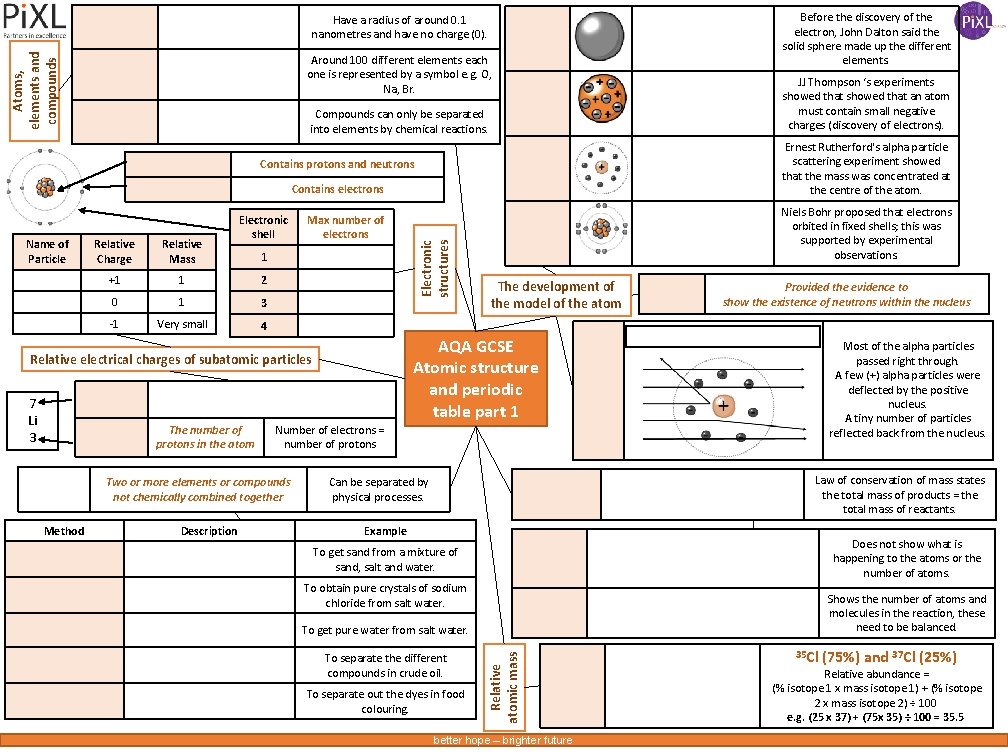
Atoms, elements and compounds Have a radius of around 0. 1 nanometres and have no charge (0). Around 100 different elements each one is represented by a symbol e. g. O, Na, Br. Compounds can only be separated into elements by chemical reactions. Relative Charge Relative Mass +1 1 2 0 1 3 -1 Very small 4 1 The number of protons in the atom Description Provided the evidence to show the existence of neutrons within the nucleus Most of the alpha particles passed right through. A few (+) alpha particles were deflected by the positive nucleus. A tiny number of particles reflected back from the nucleus. Number of electrons = number of protons Two or more elements or compounds not chemically combined together Method The development of the model of the atom AQA GCSE Atomic structure and periodic table part 1 Relative electrical charges of subatomic particles 7 Li 3 Niels Bohr proposed that electrons orbited in fixed shells; this was supported by experimental observations. Law of conservation of mass states the total mass of products = the total mass of reactants. Can be separated by physical processes. Example Does not show what is happening to the atoms or the number of atoms. To get sand from a mixture of sand, salt and water. To obtain pure crystals of sodium chloride from salt water. Shows the number of atoms and molecules in the reaction, these need to be balanced. To get pure water from salt water. To separate the different compounds in crude oil. To separate out the dyes in food colouring. Relative atomic mass Name of Particle Electronic structures Contains electrons Max number of electrons JJ Thompson ‘s experiments showed that an atom must contain small negative charges (discovery of electrons). Ernest Rutherford's alpha particle scattering experiment showed that the mass was concentrated at the centre of the atom. Contains protons and neutrons Electronic shell Before the discovery of the electron, John Dalton said the solid sphere made up the different elements. better hope – brighter future 35 Cl (75%) and 37 Cl (25%) Relative abundance = (% isotope 1 x mass isotope 1) + (% isotope 2 x mass isotope 2) ÷ 100 e. g. (25 x 37) + (75 x 35) ÷ 100 = 35. 5
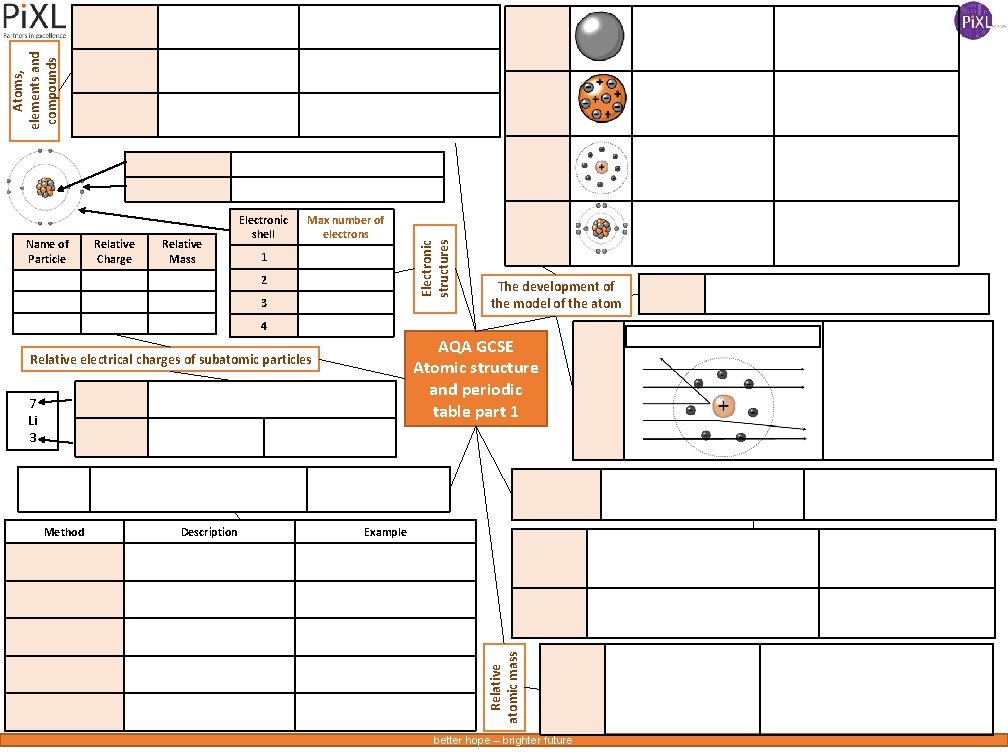
Relative Charge Relative Mass Max number of electrons 1 2 3 Electronic structures Atoms, elements and compounds Name of Particle Electronic shell The development of the model of the atom 4 AQA GCSE Atomic structure and periodic table part 1 Relative electrical charges of subatomic particles 7 Li 3 Description Example Relative atomic mass Method better hope – brighter future