
The Small World Phenomenon An Algorithmic Perspective Introduction
- Slides: 22
The Small World Phenomenon An Algorithmic Perspective
Introduction • The six degrees of separation • The two degrees of separation in Zürich • Anecdotal evidence?
Two Questions to answer: Are we separated by only 6 links to any other person in the world? Could we efficiently construct such a short route to any other person?
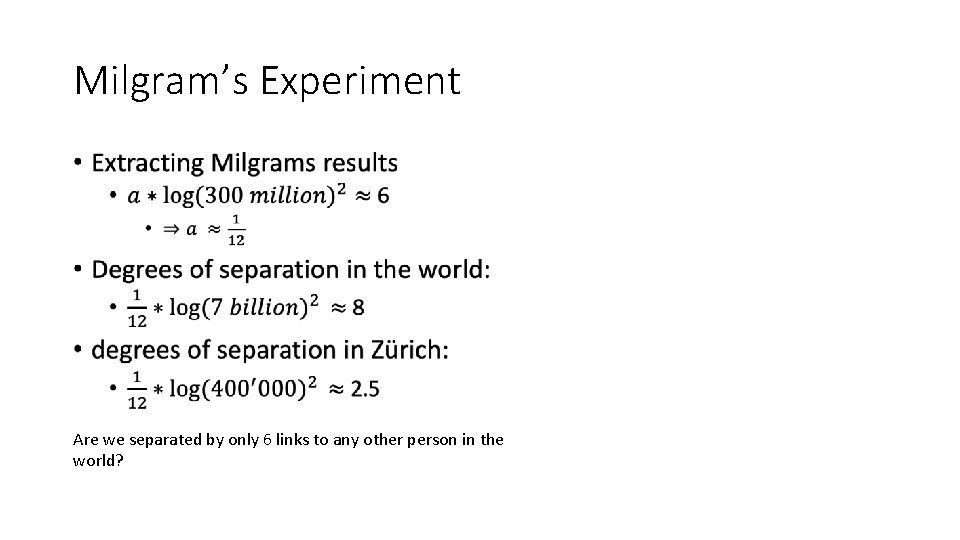
Milgram’s Experiment • Deliver a letter to a random other person => only within USA • Average count of steps was around 6 • It seems… • These shorts paths do not only exist, but they are efficiently constructable by humans. Could we efficiently construct such a short route to any other person?
Milgram’s Experiment • Are we separated by only 6 links to any other person in the world?
Construction of Graph • Why a graph? • Mix of Close and Long range contacts seems optimal
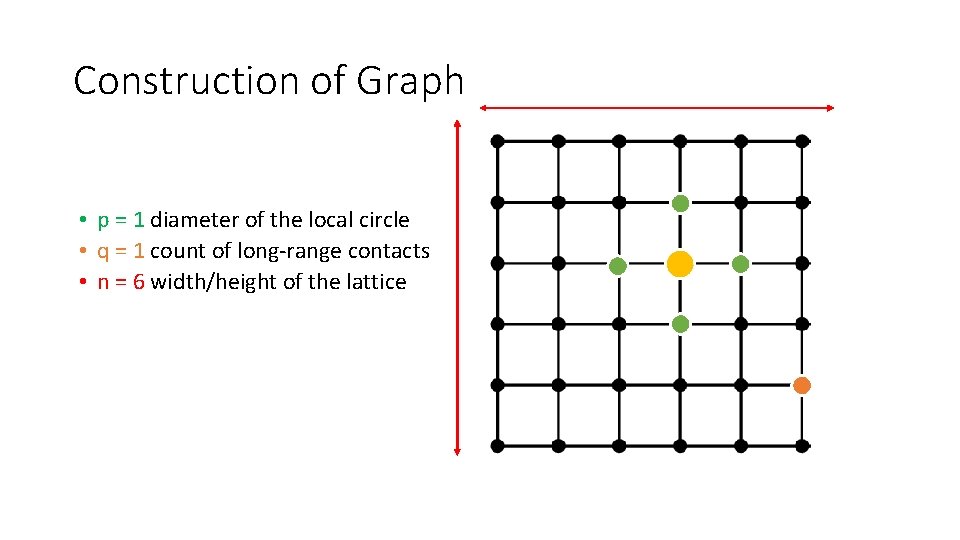
Construction of Graph • p = 1 diameter of the local circle • q = 1 count of long-range contacts • n = 6 width/height of the lattice
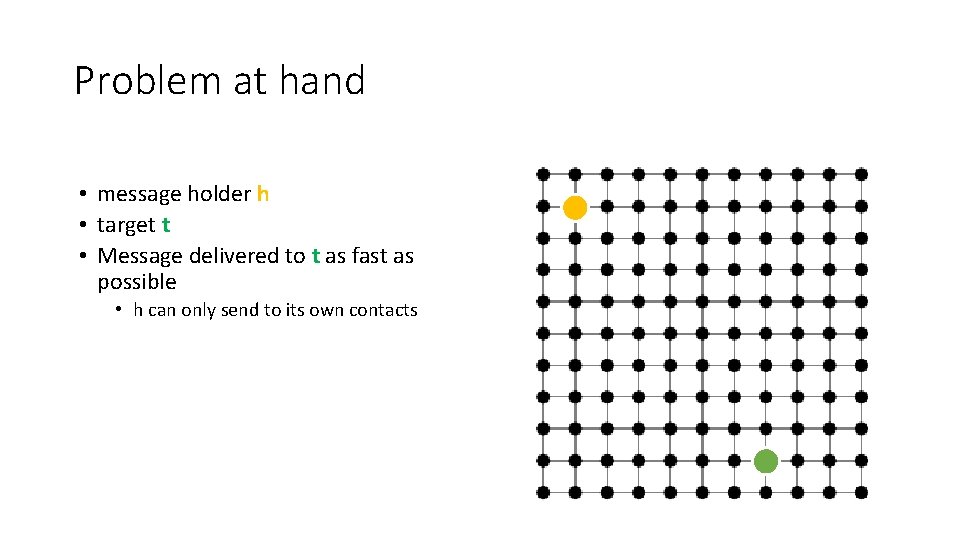
Problem at hand • message holder h • target t • Message delivered to t as fast as possible • h can only send to its own contacts
The two (three) things h knows • the set of local contacts among all nodes (i. e. the underlying grid structure); • the location, on the lattice, of the target t; and • the locations and long-range contacts of all nodes that have come in contact with the message.
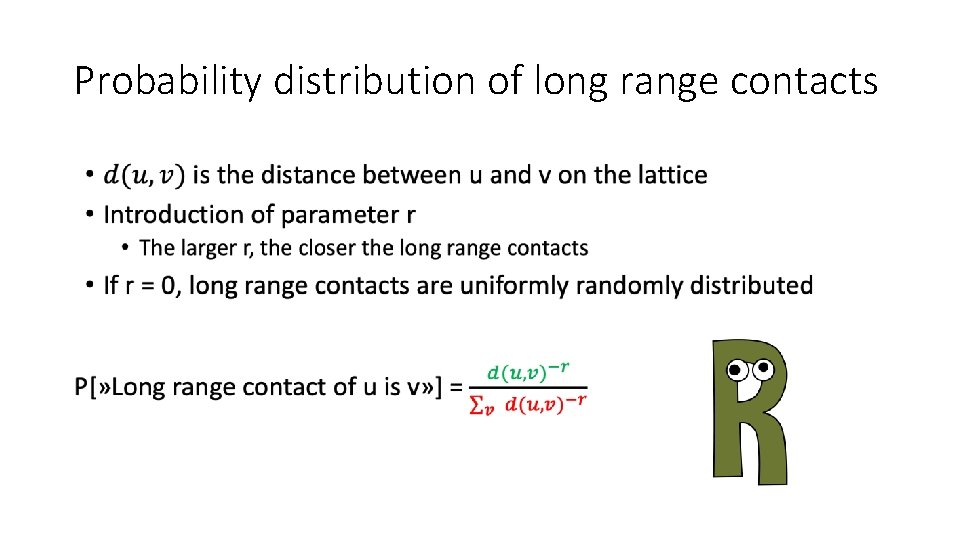
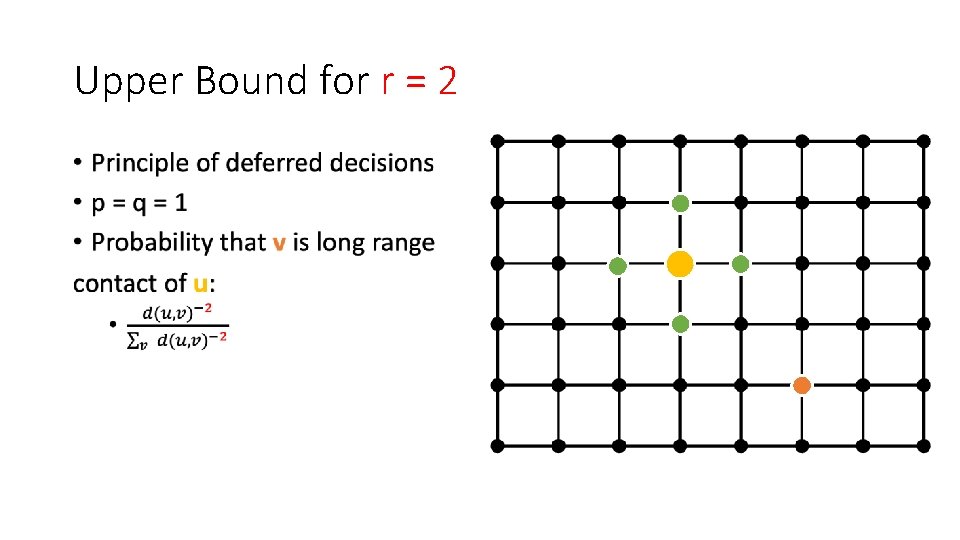
Probability distribution of long range contacts
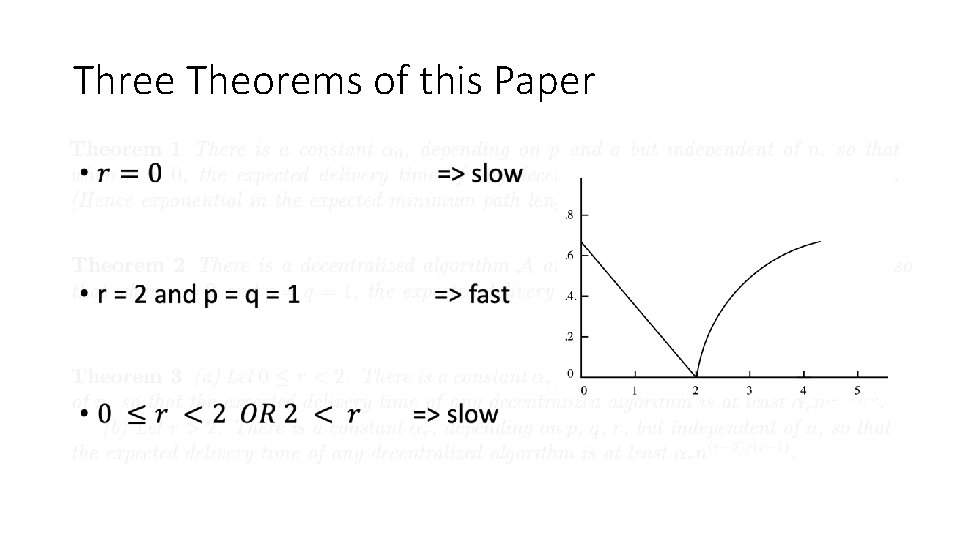
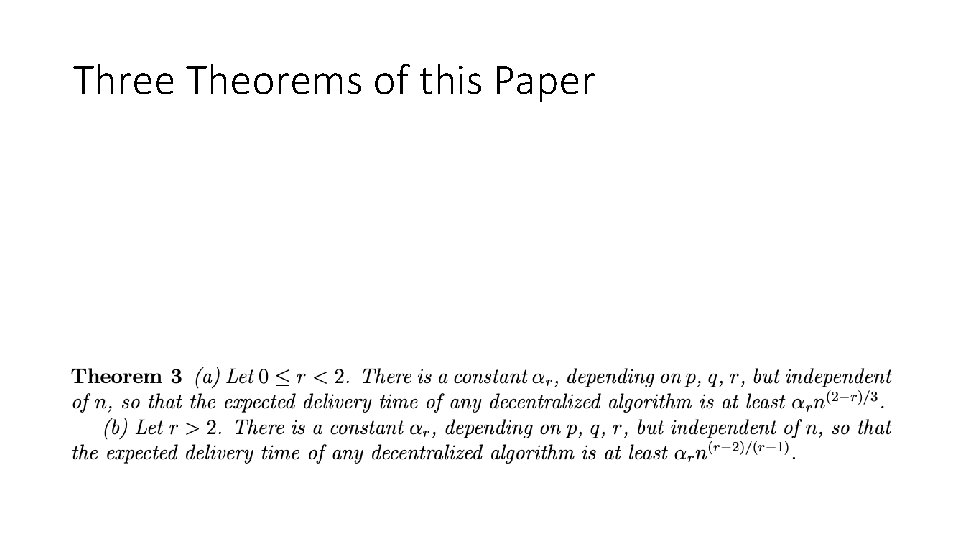
Three Theorems of this Paper
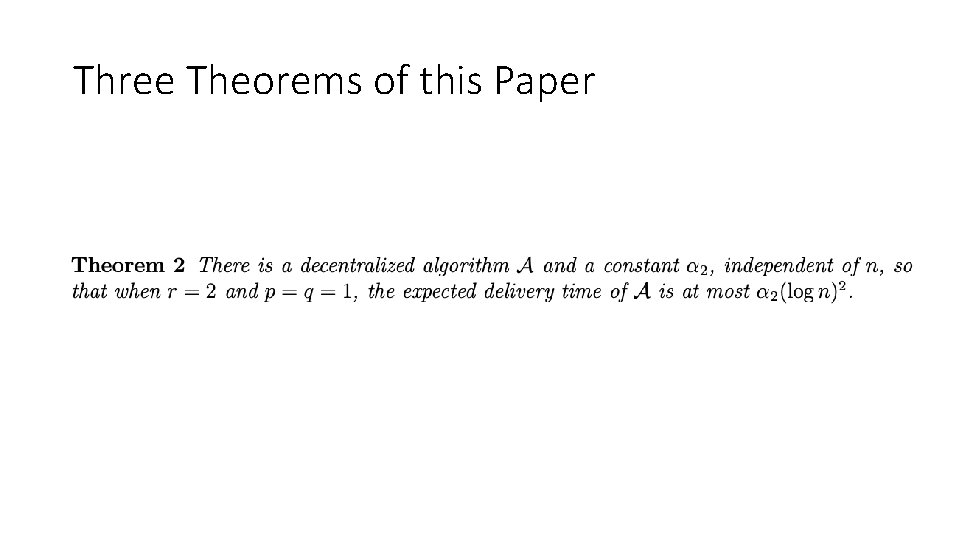
Three Theorems of this Paper
Three Theorems of this Paper
Upper Bound for r = 2 •
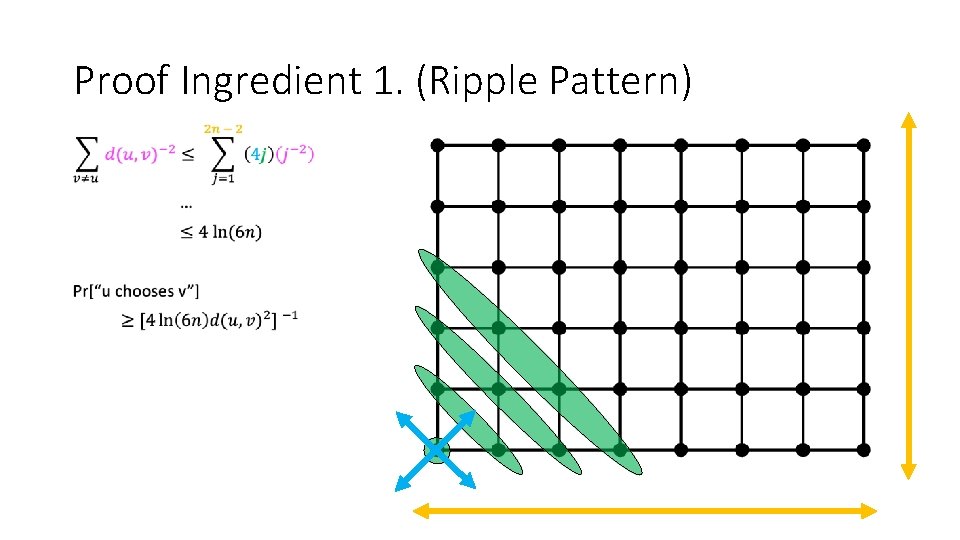
Proof Ingredient 1. (Ripple Pattern) •
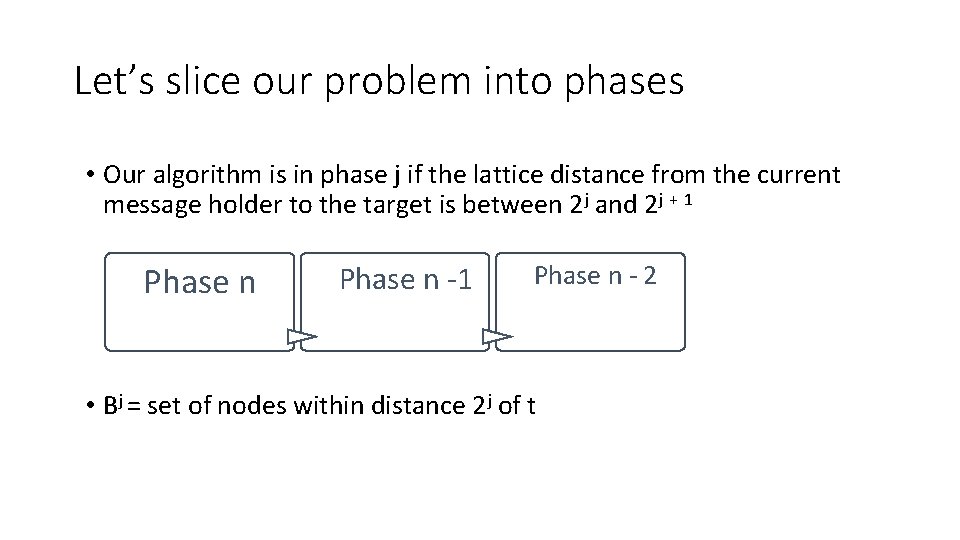
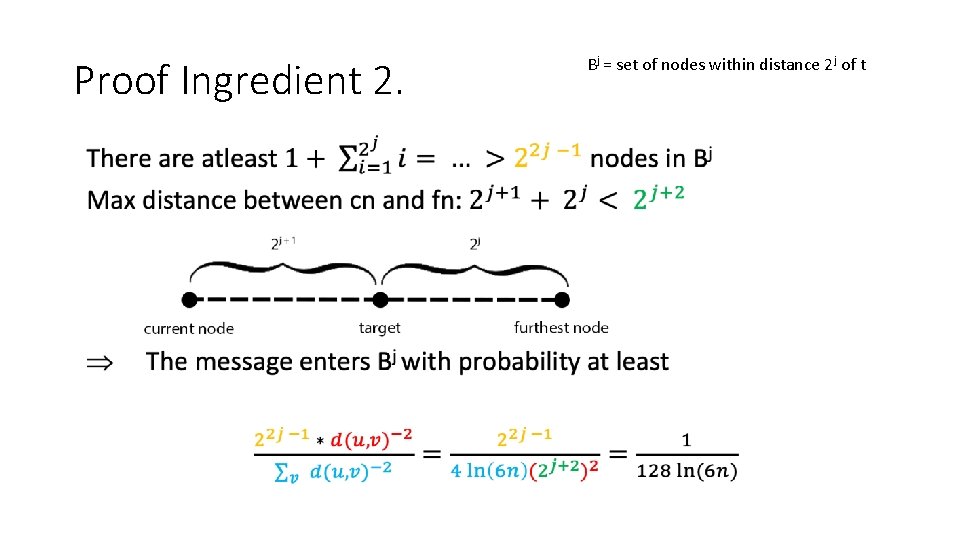
Let’s slice our problem into phases • Our algorithm is in phase j if the lattice distance from the current message holder to the target is between 2 j and 2 j + 1 Phase n -1 Phase n - 2 • Bj = set of nodes within distance 2 j of t
Proof Ingredient 2. Bj = set of nodes within distance 2 j of t
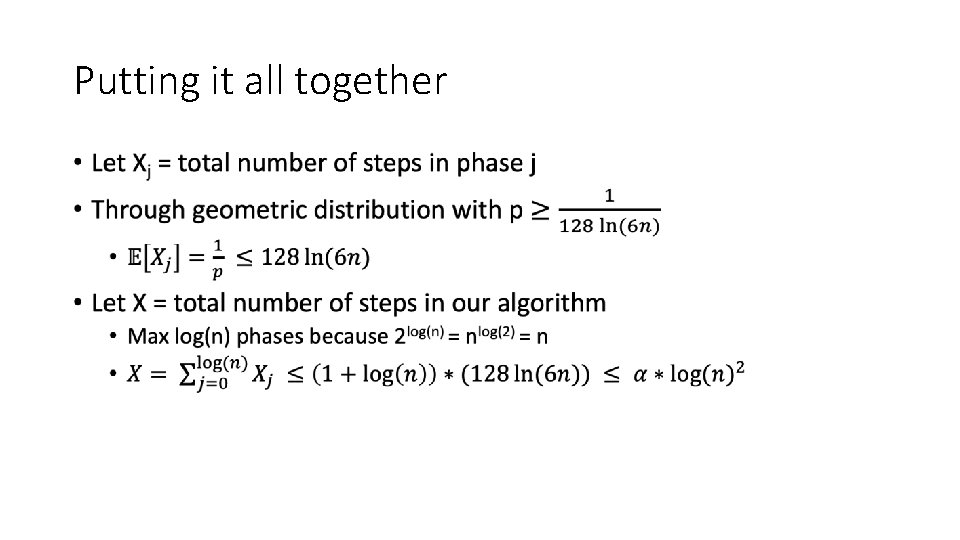
Putting it all together •
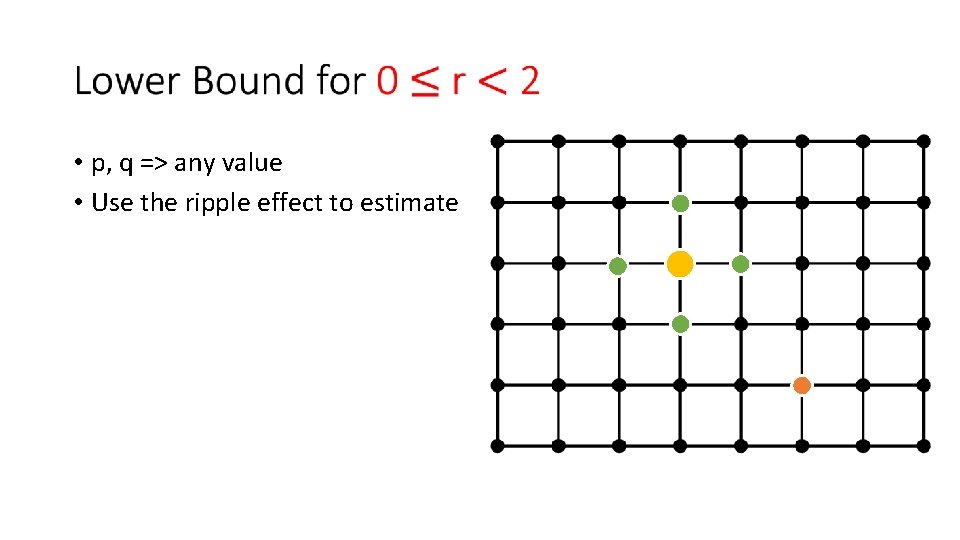
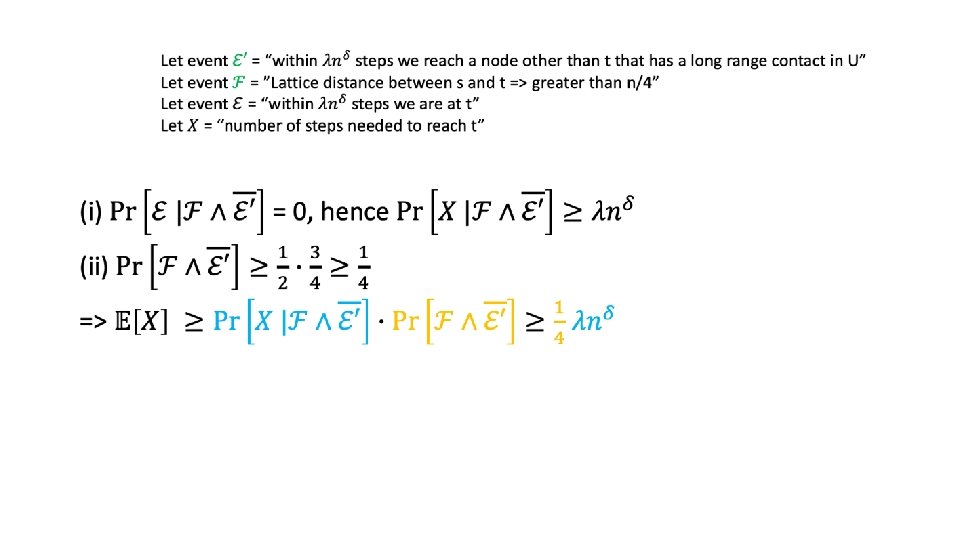
• p, q => any value • Use the ripple effect to estimate
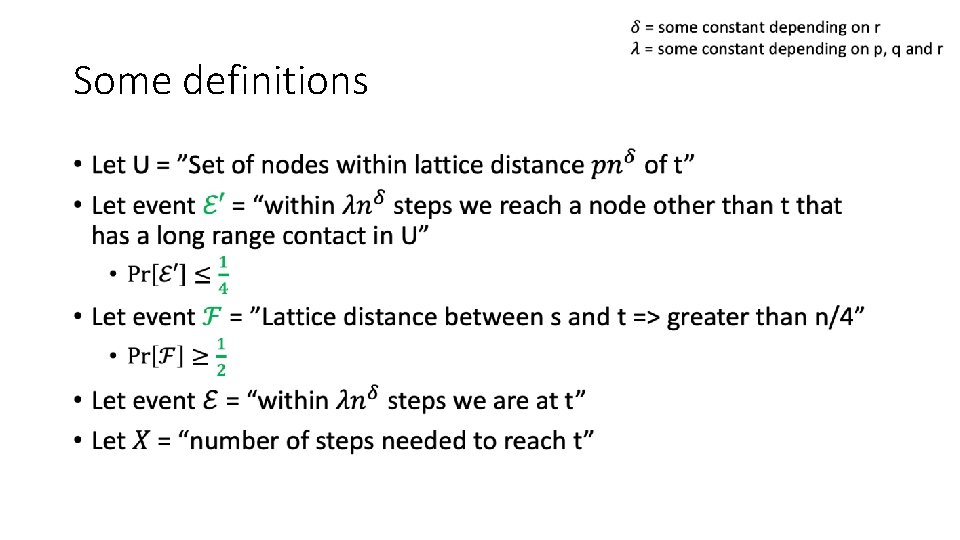
Some definitions •
Conclusion • The graph modeled in our analysis seems to be pervasive in many aspects of our life. The following networks have been shown to exhibit such a structure: • • World Wide Web Social Networks Neurons …