
THE SKULL SIMPLY AMAZING Most complex bony structure
THE SKULL SIMPLY, AMAZING!
• Most complex bony structure • 22 bones in all • Mostly flat bones, but not all!

Functions of Cranial Bones • Enclose and protect the fragile brain and furnish attachment sites for head and neck muscles
Functions of Facial Bones • 1. form framework of face • 2. contain cavities for special sense organs • 3. openings for food/air passage • 4. secure the teeth • 5. anchor the facial muscles of expression
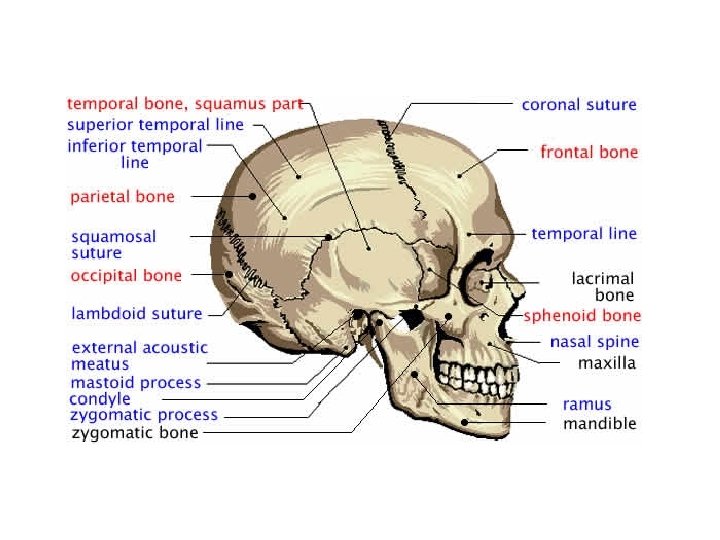
• ALL BONES OF THE SKULL ARE FIRMLY LOCKED IN PLACE BY JOINTS CALLED SUTURES • Four major sutures
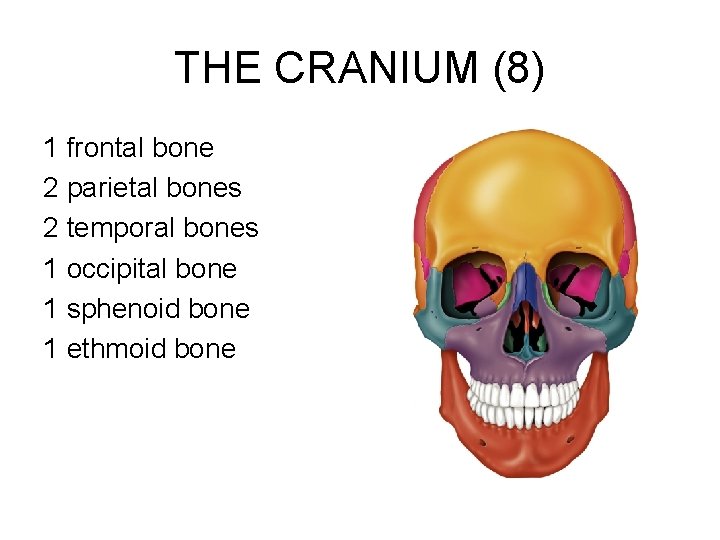
THE CRANIUM (8) 1 frontal bone 2 parietal bones 2 temporal bones 1 occipital bone 1 sphenoid bone 1 ethmoid bone
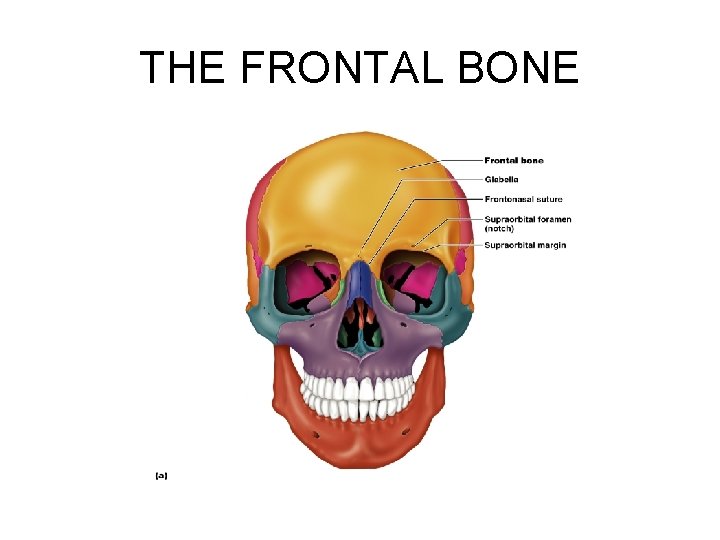
THE FRONTAL BONE
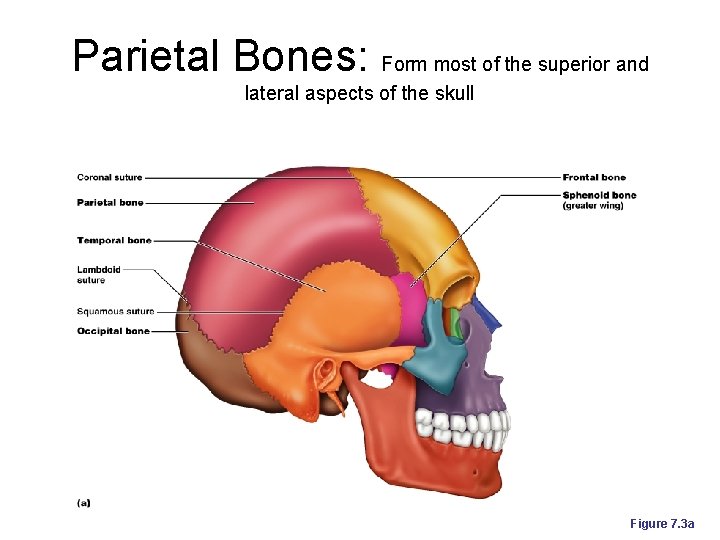
Parietal Bones: Form most of the superior and lateral aspects of the skull Figure 7. 3 a

Parietal Bones and Major Associated Sutures • Four sutures mark the articulations of the parietal bones – Coronal suture – articulation between parietal bones and frontal bone anteriorly – Sagittal suture – where right and left parietal bones meet superiorly – Lambdoid suture – where parietal bones meet the occipital bone posteriorly – Squamosal or squamous suture – where parietal and temporal bones meet

Occipital Bone and Its Major Markings • Forms most of skull’s posterior wall and base • Major markings include the posterior cranial fossa, foramen magnum, occipital condyles, and the hypoglossal canal Figure 7. 2 b

Temporal Bones • Form the inferolateral aspects of the skull and parts of the cranial floor • Divided into four major regions – squamous, tympanic, mastoid, and petrous • Major markings include the zygomatic, styloid, and mastoid processes, and the mandibular and middle cranial fossae
Temporal Bones • Major openings include the stylomastoid and jugular foramina, the external and internal auditory meatuses, and the carotid canal

Temporal Bones Figure 7. 5

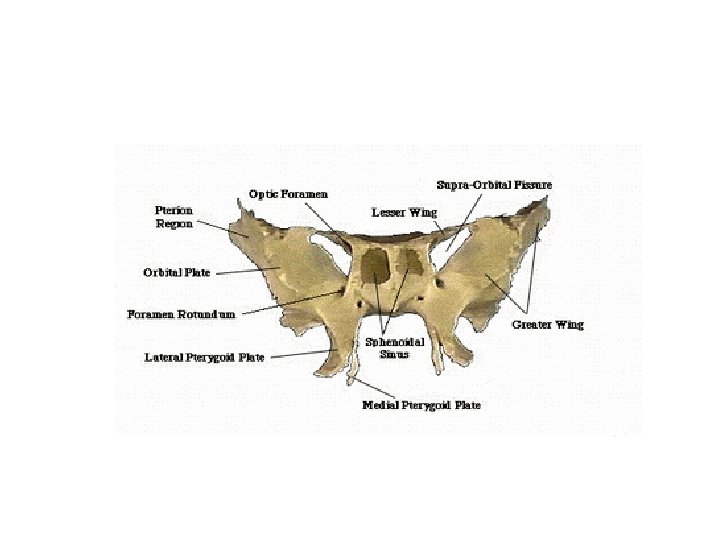
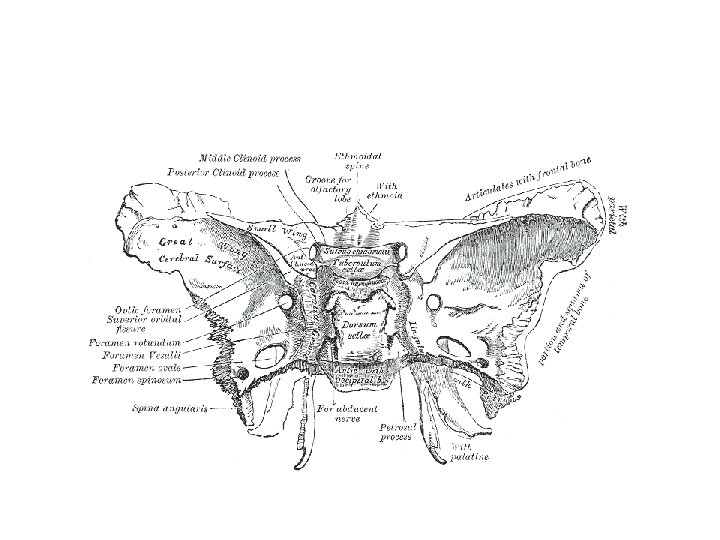
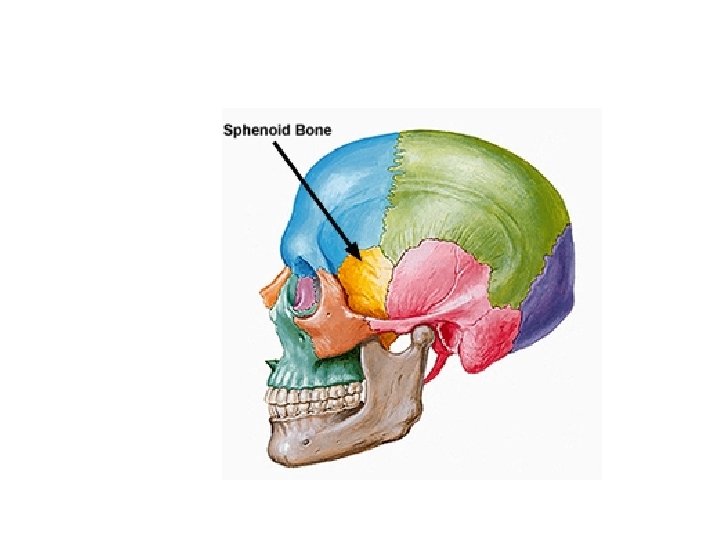
Sphenoid Bone • Spans the width of the middle cranial fossa. Has a butterfly like shape. • Articulates with all other cranial bones.
• Markings and regions to know: • Sphenoid sinuses • Hypophyseal fossa: a snug enclosure for the pituitary gland. • Greater and Lesser Wings • Optic Canals: (opening for optic nerves) • Superior Orbital fissures: long slit between greater and lesser wings, allows cranial nerves to control eye movement. • Pterygoid processes: anchors muscles used in chewing • Foramen rotundum and Foramen ovale

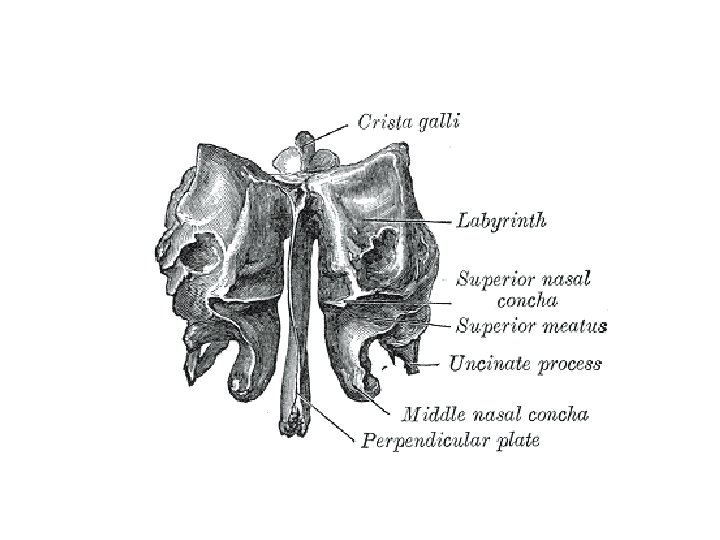
Ethmoid Bone • Lies between the sphenoid and nasal bones of the face. Most deeply situated. • Markings/Regions • Cribriform plates: help form roof of nasal cavities and cranial fossa. • Olfactory foramina: allow olfactory nerves to pass from nasal cavities to the brain. • Crista galli • Ethmoid sinuses
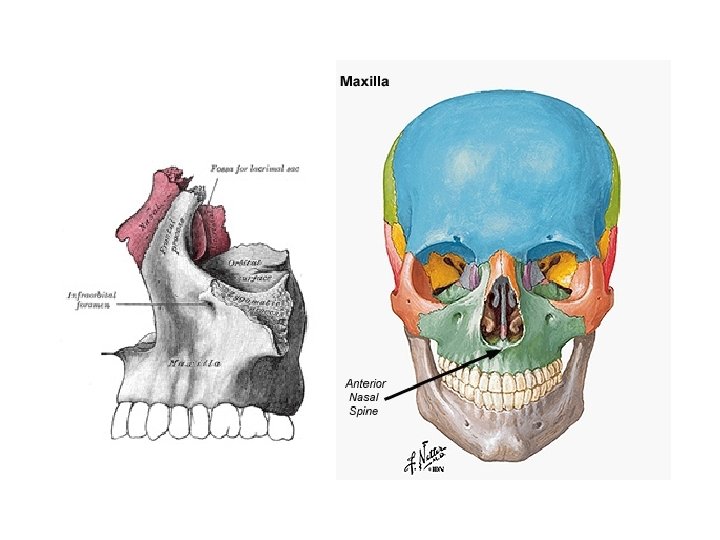
Maxillary Bones • Medially fused bones that make up the upper jaw and the central portion of the facial skeleton • Facial keystone bones that articulate with all other facial bones except the mandible • Their major markings include palatine, frontal, and zygomatic processes, the alveolar margins, inferior orbital fissure, and the maxillary sinuses
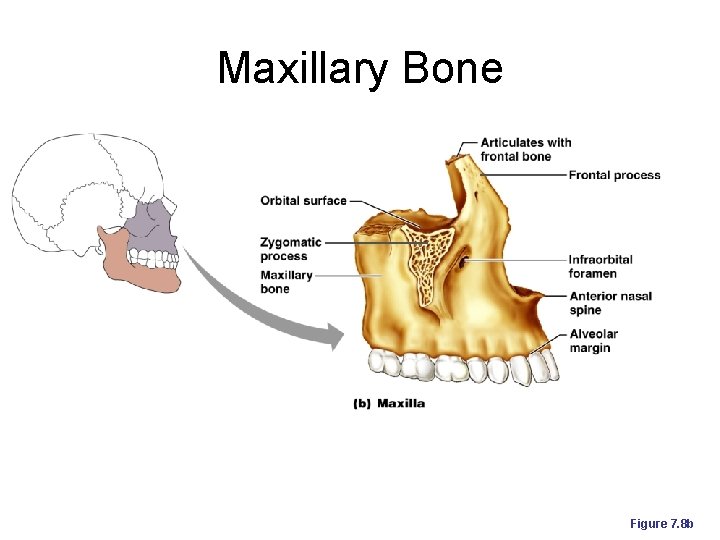
Maxillary Bone Figure 7. 8 b

Zygomatic bones • Paired bones aka Cheek bones • Form prominences of the cheeks and parts of the inferolateral margins of orbits. • Articulates with temporal, frontal, and maxillary bones.
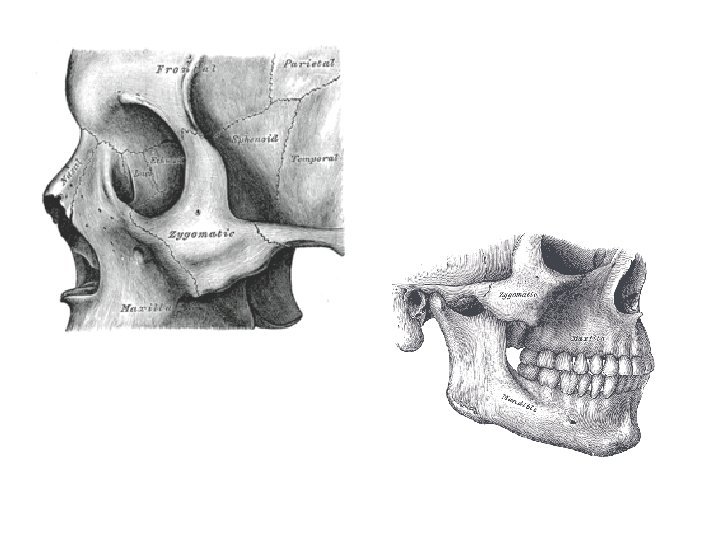
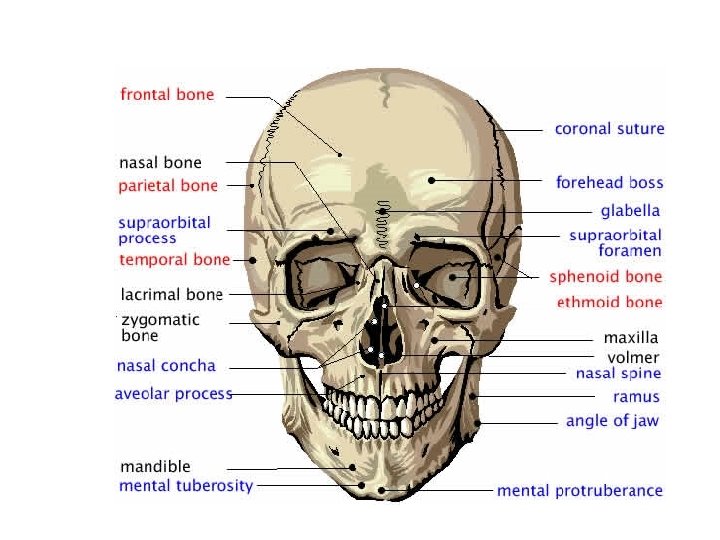

Nasal Bones • Form bridge of nose • Articulates with frontal, maxillary, and ethmoid bones.
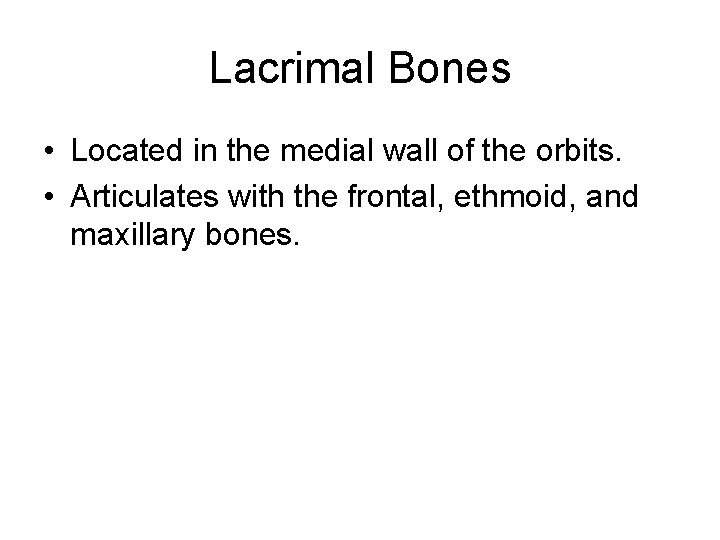
Lacrimal Bones • Located in the medial wall of the orbits. • Articulates with the frontal, ethmoid, and maxillary bones.
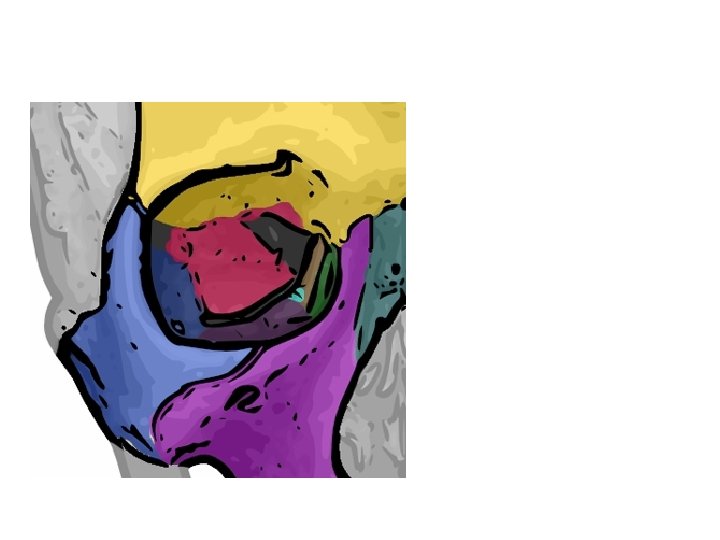
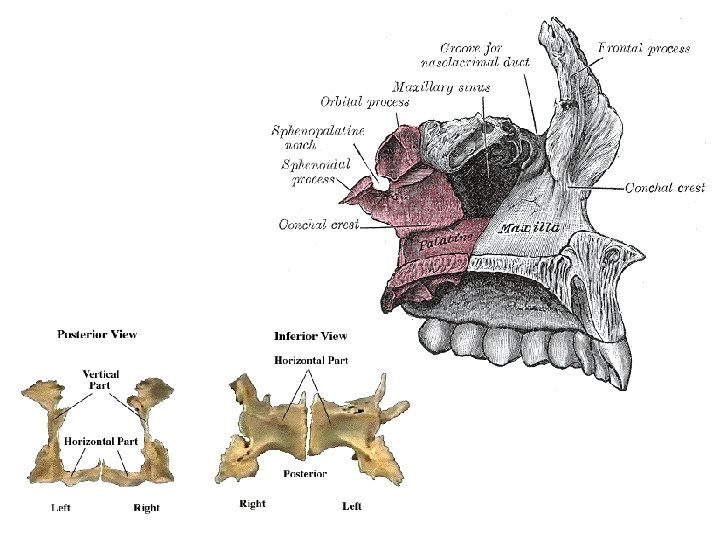
Palatine Bones • Complete the posterior part of the hard palate. • Forms part of the posterolateral walls of the nasal cavity. • Small part of the orbits.

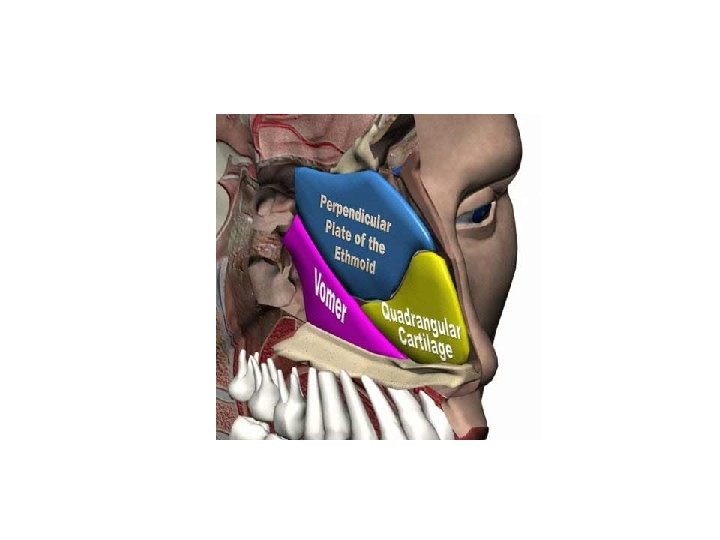
The Vomer • Forms part of the nasal septum dividing the nasal cavity in left and right halves.
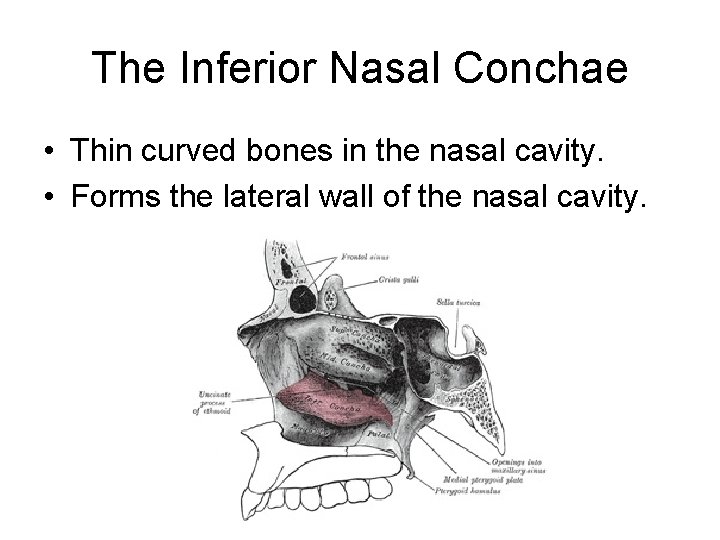
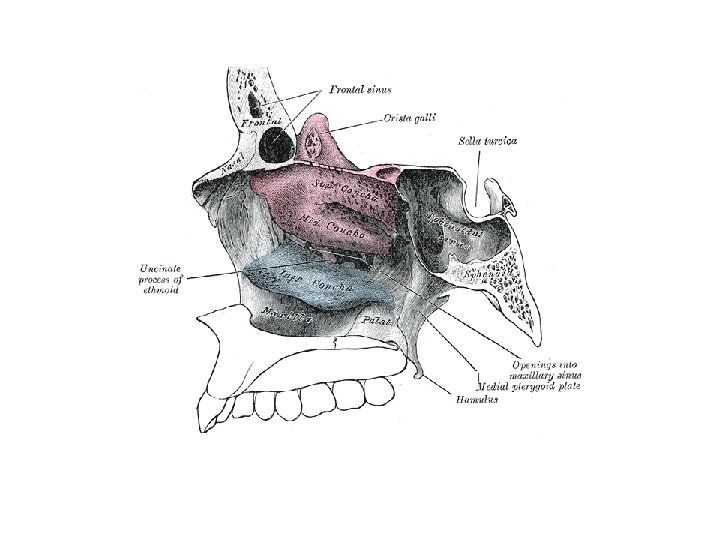
The Inferior Nasal Conchae • Thin curved bones in the nasal cavity. • Forms the lateral wall of the nasal cavity.

Application Question • Mr. and Mrs. Walkabots have recently given birth to a beautiful baby girl, Zeplin. After a few months of great joy they notice that their daughter vomits often, sleeps a lot, is irritable all the time and cannot look them in the eye. Zeplin does not meet developmental milestones over the next six months. HELP!
- Slides: 39