
The Skin touch heat pain sensors The skin
- Slides: 12
The Skin (touch, heat, pain sensors) • The skin, the largest organ, is about 7% of our body mass. • The skin contains numerous specialized nerve endings that enable it to receive different sensations: *Tactile sensations (touch & pressure) *Thermal sensations (heat & cold) *Pain sensations
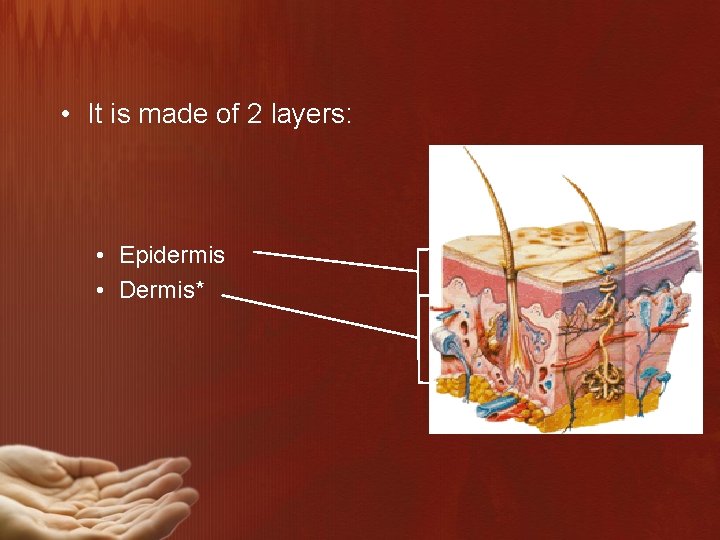
• It is made of 2 layers: • Epidermis • Dermis*
The Epidermis • Is the waterproof outer skin layer, made of dead cells with a living layer of cells beneath it • varying in thickness depending where they are found • Dead cells replaced by cells from underneath • At the bottom of the epidermal layer is a layer of basal cells • Among these basal cells are melanocytes containing melanin *
• Melanin is the brown pigment that protects us from the sun’s harmful radiation • The more sun exposure the more melanin is produced, “tanning” • Over exposure to these harmful rays can cause mutations in the melanocytes causing melanoma (a deadly form of skin cancer) or basal cell carcinoma • The epidermis is the main line of defence against the invasion by bacteria and other environmental dangers. *
The Dermis: the second layer of the skin • This layer contains many structures like: • • • blood vessels - to supply nutrients and O 2 sweat glands - ending in pores on skin surface Hair follicles - where the hair starts to grow Sebaceous glands - oil glands to protect hair and skin Muscles – connected to hair follicles to erect hairs Nerve endings - made up of structures called corpuscules which detect pressure, pain and temperature • **more nerve endings in your lips and hands than in your elbows and heels
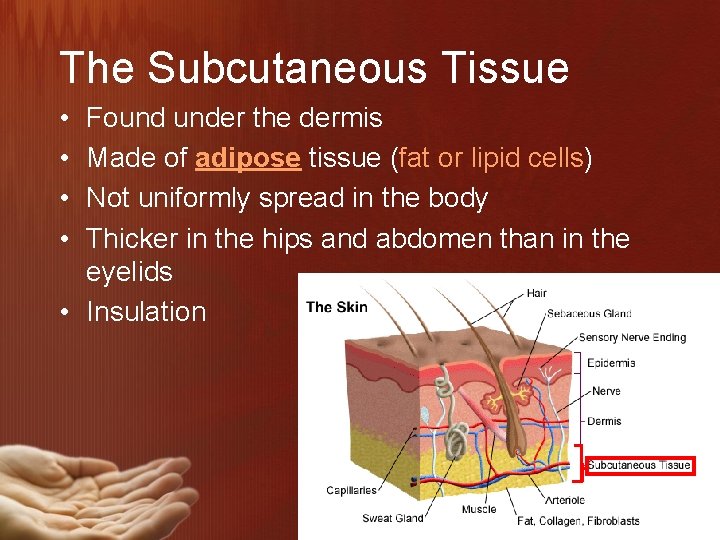
The Subcutaneous Tissue • • Found under the dermis Made of adipose tissue (fat or lipid cells) Not uniformly spread in the body Thicker in the hips and abdomen than in the eyelids • Insulation *
Skin Physiology Tactile function of the skin • Different structures in the skin layers permit humans to have the sense of touch. • In the dermis there are sensors that detect light pressure and change it into a nerve impulse • Free nerve endings detect temp and pain • The touch receptors are not spread out evenly over the body
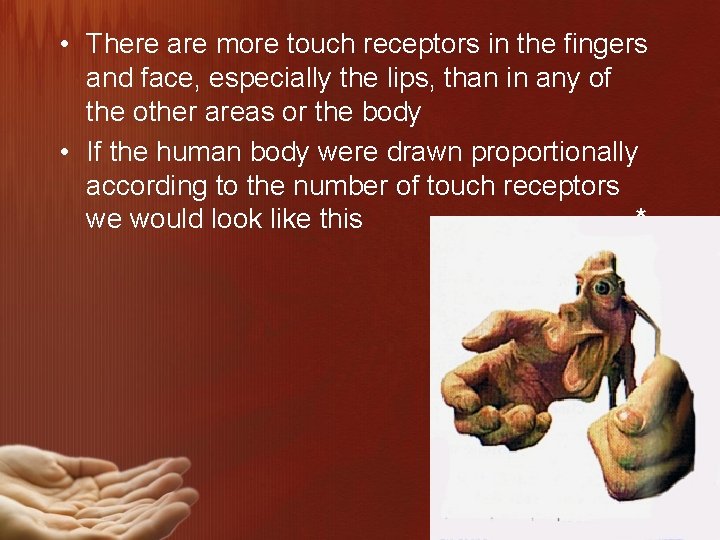
• There are more touch receptors in the fingers and face, especially the lips, than in any of the other areas or the body • If the human body were drawn proportionally according to the number of touch receptors we would look like this *
Non-Tactile Function of the skin • Protect your body against UV rays • Excretory function (gets rid of waste produced by cellular metabolism) • Produces vitamin-D via sun rays (necessary to deposit calcium in bones) • First line of defence against bacteria (circulatory system notes) • Thermal regulation of body
Thermal regulation (see excretion notes) • When the body temp reaches a certain level the blood vessels under the skin dilate (open up) allowing more blood to flow and give off body heat. • Sweat glands produce sweat that evaporates from the skin producing a cooling effect. • When the body temp drops below a certain level the blood vessels under the skin constrict slowing down the blood flow and conserving the body heat. *
Excretion of certain substances (see excretion notes) • The sweat glands are involved with maintaining the mineral balance in the blood by excreting sweat, which contains urea, water and minerals. (similar to dilute urine) Production of vitamin D • The skin contains cholesterol which when exposed to the sun’s radiation is converted to Vitamin D. • *
• Vitamin D is needed for the absorption of calcium and phosphorus essential for proper bone development • in the winter when we are not exposed to the sun’s radiation, it is important to drink milk enriched with Vitamin D or take cod liver oil which is also rich in vitamin D. *