
The Skin Skin is the organ functions Integument


- Slides: 21
The Skin
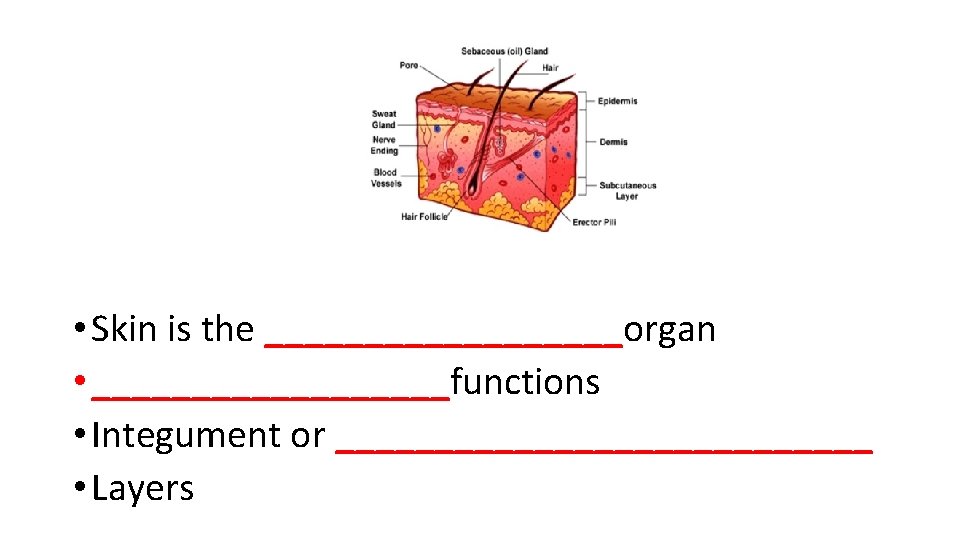
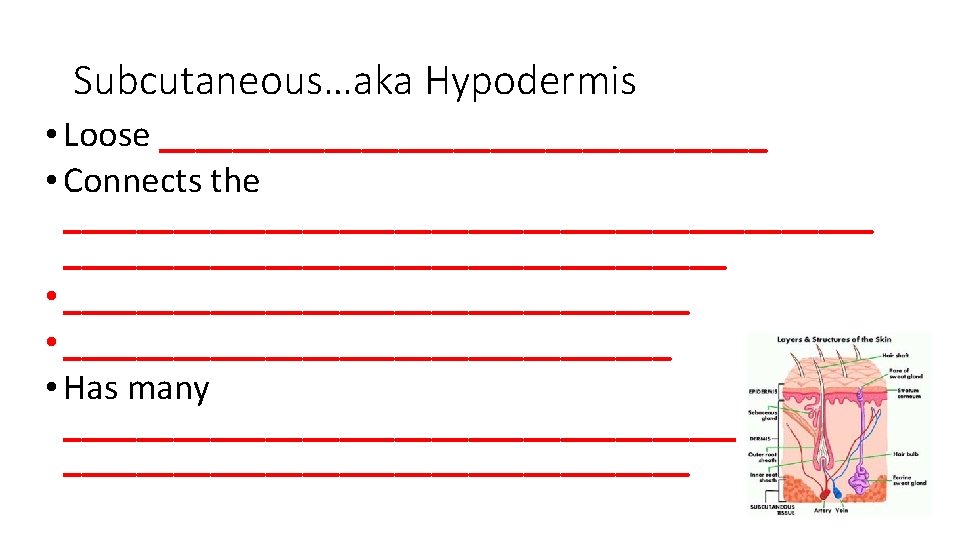
• Skin is the _________organ • _________functions • Integument or ______________ • Layers
Vocabulary • ____________= Skin • Dermatology • Study of skin • Dermatitis • Inflammation of skin • ____________= upon • Epidermis • Top layer of skin • ____________= pertaining to blood or lots of blood supply
Function of Skin • _________- protects from germs, dehydration, injury. ______________of defense. • Regulates ________________ • Manufactures ______________ • Site of many ______________
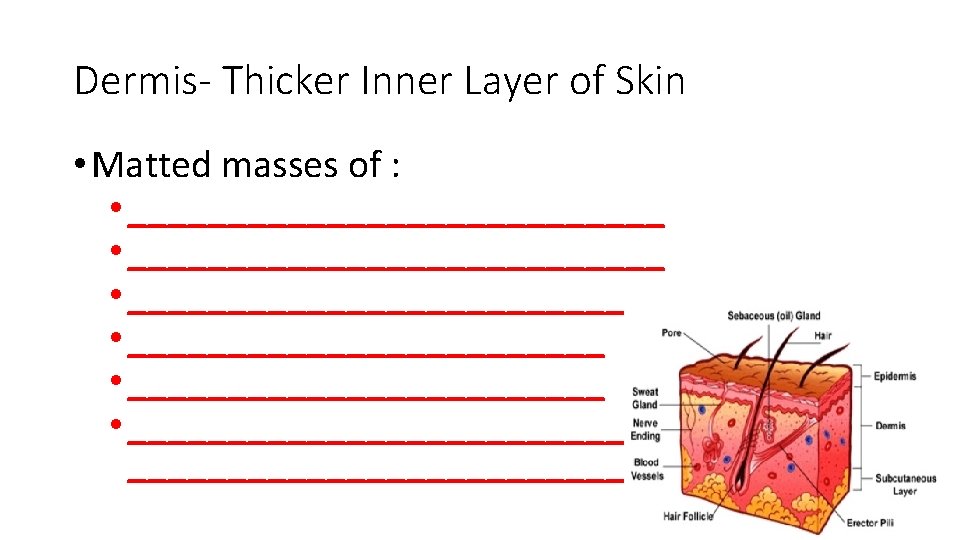
Skin- 3 Basic Layers • _______________- epithelial cells with no blood • Avascular • _______________- true skin made of connective tissue and is vascular • _______________-aka subcutaneous. Attaches integument to muscle.
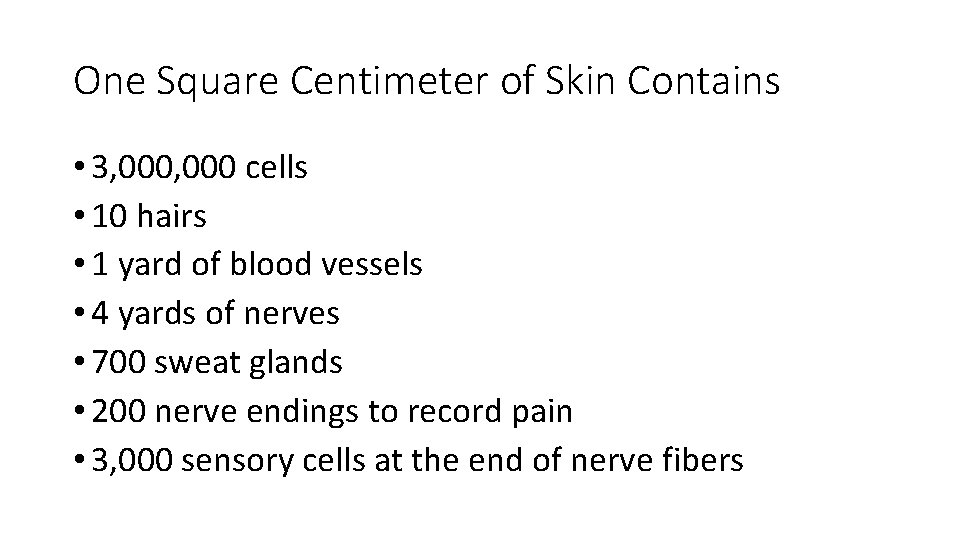
One Square Centimeter of Skin Contains • 3, 000 cells • 10 hairs • 1 yard of blood vessels • 4 yards of nerves • 700 sweat glands • 200 nerve endings to record pain • 3, 000 sensory cells at the end of nerve fibers
Epidermis-the layer on top • Even the epidermis has ___________! • Very __________layer is dead skin cells. Called __________________. • _____________you. • Every minute of the day we lose about 30, 000 to 40, 000 dead skin cells off the surface of our skin. • Very ______________layer of the epidermis ________________by undergoing continuous cell division. Called _____________________
• Dermis contains lots of ___________ • Heat, cold, pain, and pressure • ______________ regulate body temperature • Expand or contract • __________________ • Lubricated, protected, waterproof • ____________________ • Cools, protects • Collagen and elastin • ____________cells
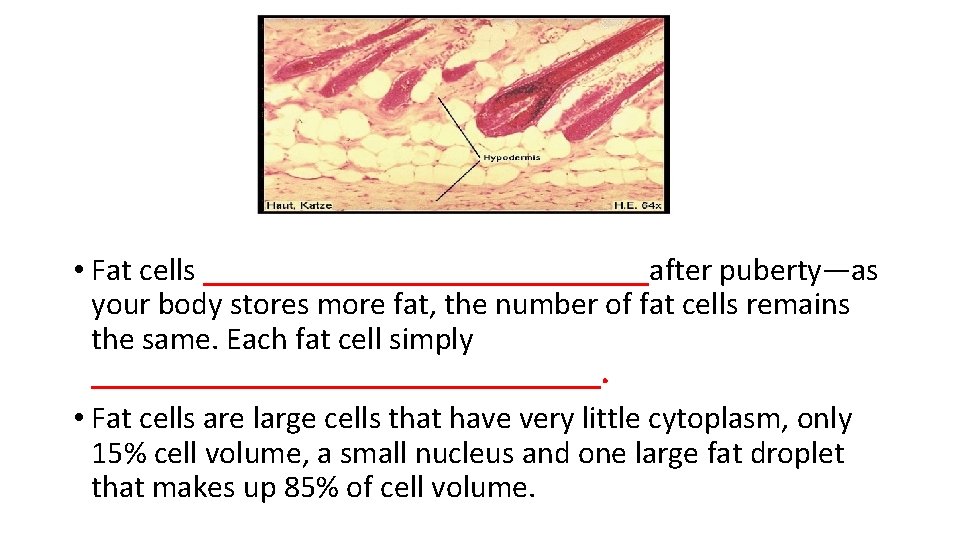
• Fat cells ______________after puberty—as your body stores more fat, the number of fat cells remains the same. Each fat cell simply ________________. • Fat cells are large cells that have very little cytoplasm, only 15% cell volume, a small nucleus and one large fat droplet that makes up 85% of cell volume.
Diseases of the Skin
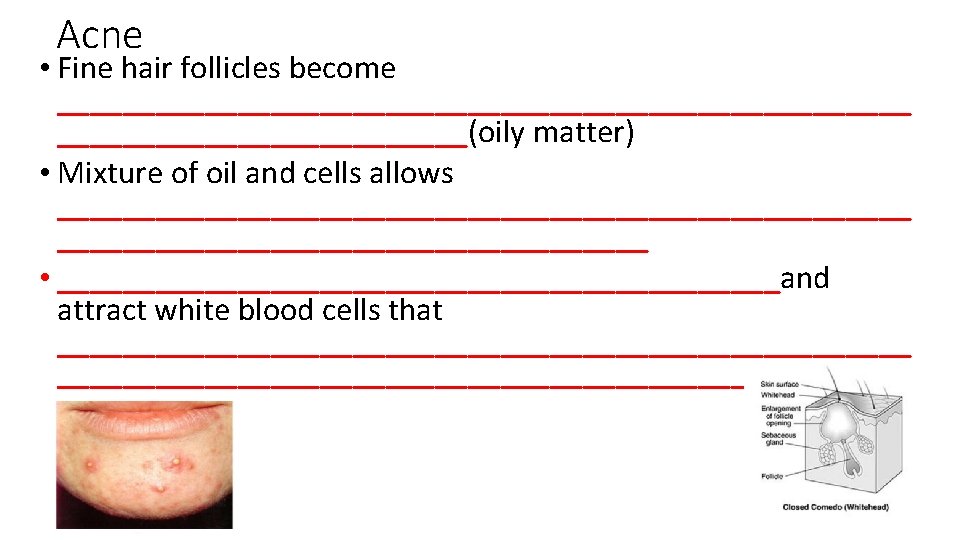
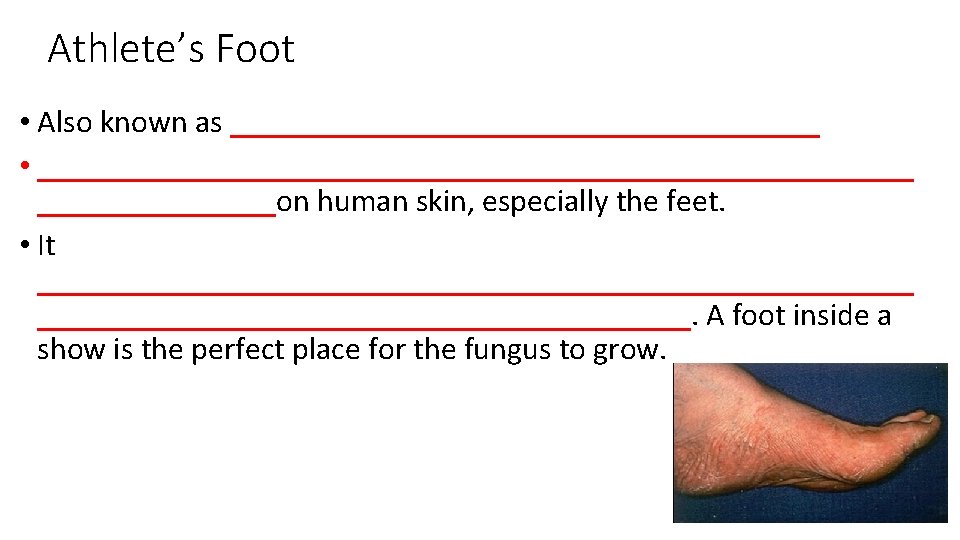
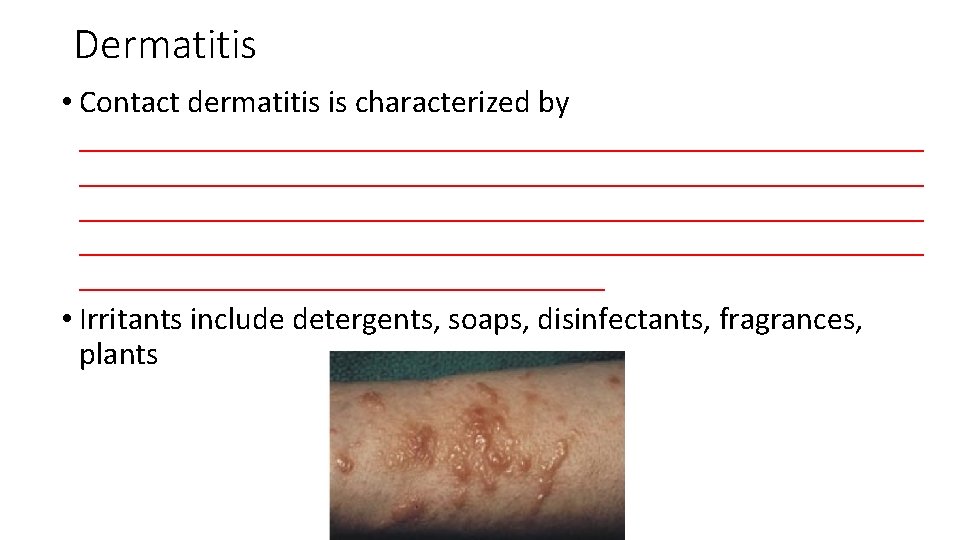
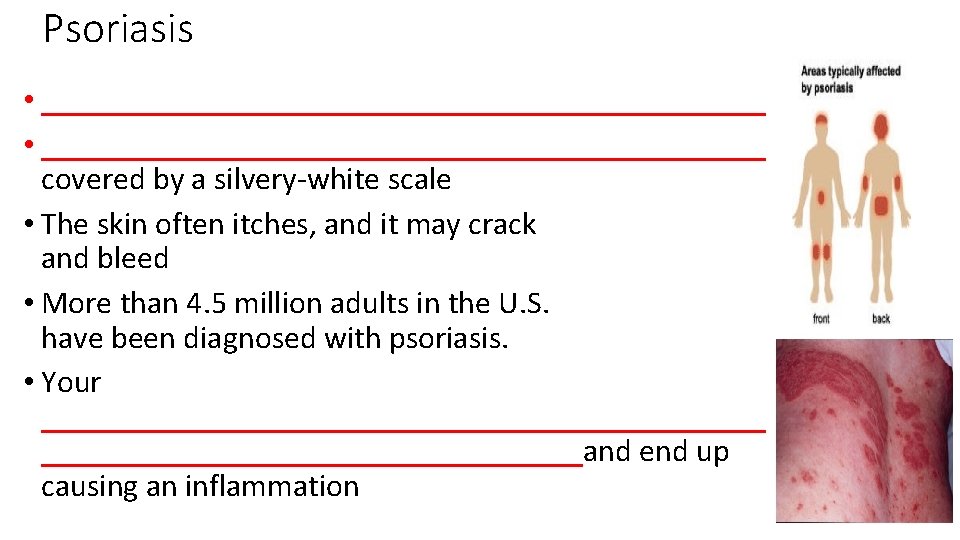
Diseases of the Skin • 1. ) ____________-a common and chronic disorder of the sebaceous glands • 2. ) _________________- a contagious fungal infection of the epidermis • 3. ) ______________- a nonspecific inflammation of the skin • 4. ) _______________- the chronic inflammatory skin disease. Cause unknown. No definitive treatment.
Acne • Fine hair follicles become __________________________(oily matter) • Mixture of oil and cells allows __________________________ • ______________________and attract white blood cells that __________________________
Athlete’s Foot • Also known as ___________________ • ____________________________on human skin, especially the feet. • It ____________________________. A foot inside a show is the perfect place for the fungus to grow.
Dermatitis • Contact dermatitis is characterized by _____________________________________________________ _________________ • Irritants include detergents, soaps, disinfectants, fragrances, plants
Psoriasis • ______________________________________________ covered by a silvery-white scale • The skin often itches, and it may crack and bleed • More than 4. 5 million adults in the U. S. have been diagnosed with psoriasis. • Your __________________________and end up causing an inflammation
Types of skin cancer • _____________________Most common, least dangerous. Starts in the epidermis and extends to the dermis or subcutaneous later. 99% recover. • ______________________Starts in the epidermis. Occurs most frequently on scalp and lower lip. Grows quickly, can spread to lymph nodes. Chances of recovery are good if caught early.
• _______________________– occurs in pigmented cells of the skin called melanocytes • Spreads quickly to other areas. _______________________. Treatment is surgical removal and chemotherapy.