
The Skeleton and Muscles The Human Skeleton Functions
- Slides: 12
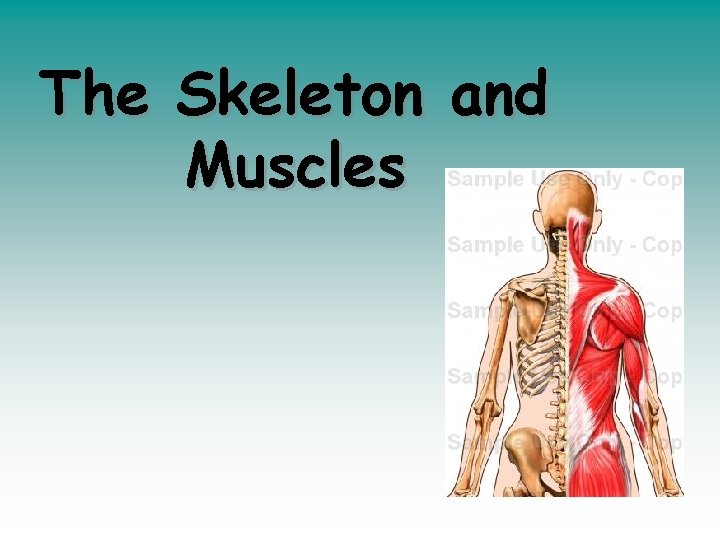
The Skeleton and Muscles
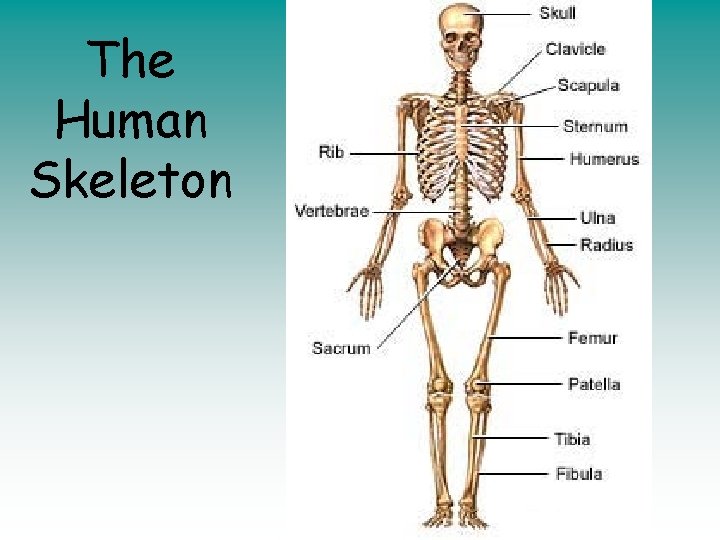
The Human Skeleton
Functions of the Skeleton • Support • Protection • Movement
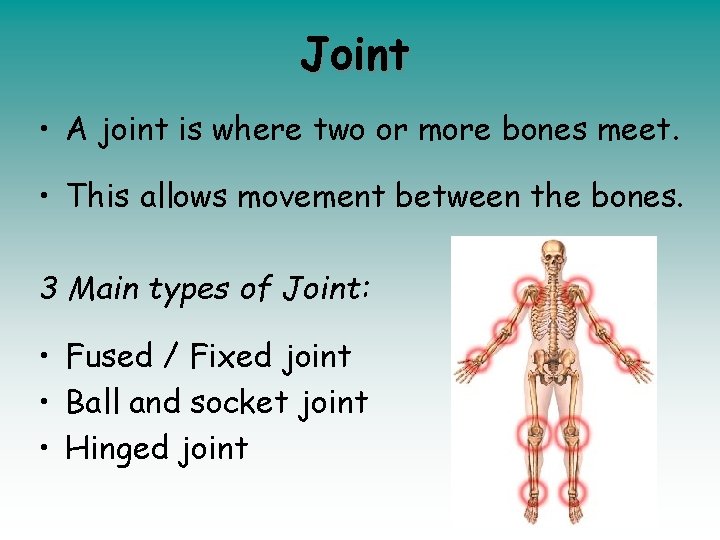
Joint • A joint is where two or more bones meet. • This allows movement between the bones. 3 Main types of Joint: • Fused / Fixed joint • Ball and socket joint • Hinged joint
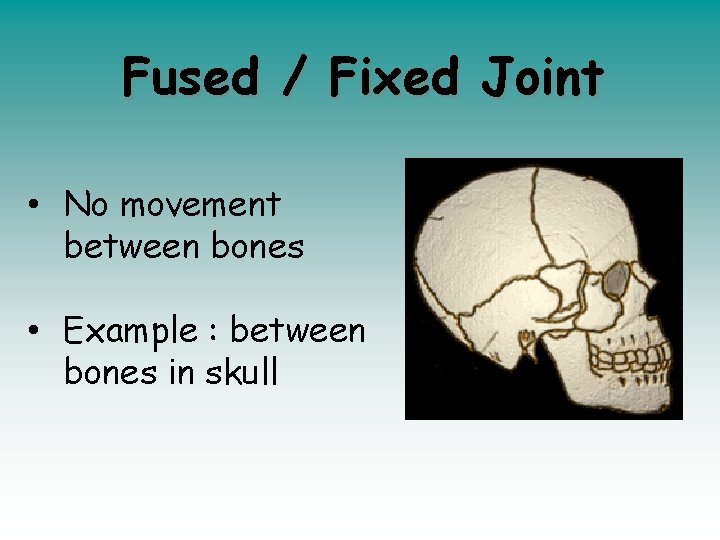
Fused / Fixed Joint • No movement between bones • Example : between bones in skull
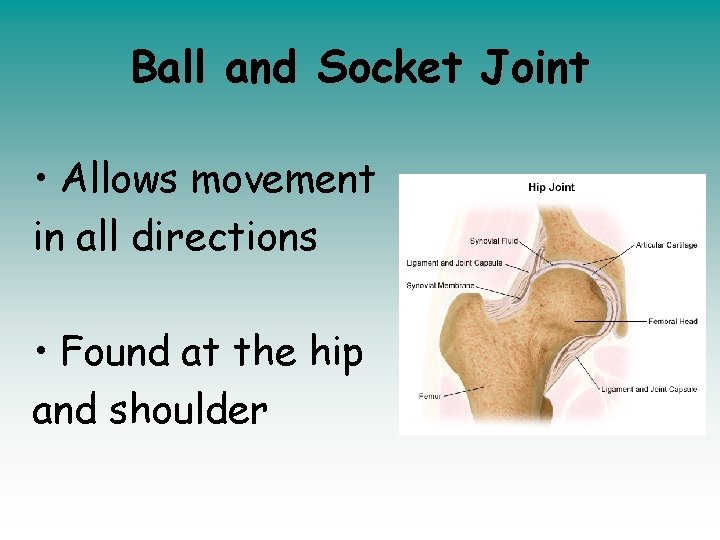
Ball and Socket Joint • Allows movement in all directions • Found at the hip and shoulder
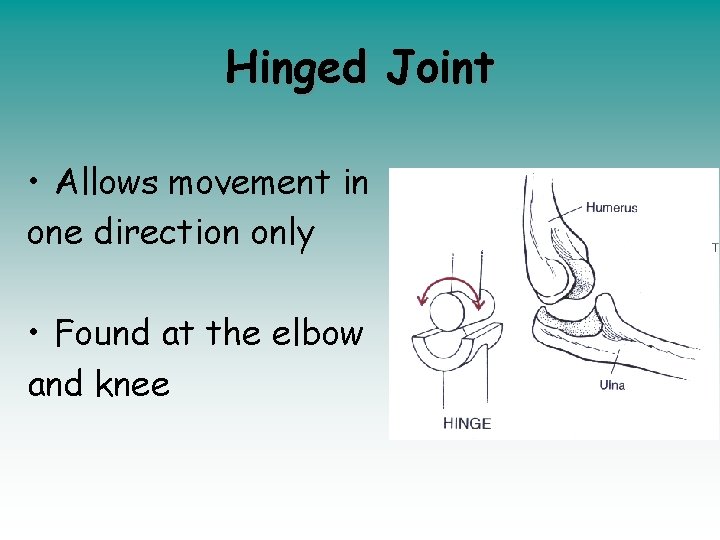
Hinged Joint • Allows movement in one direction only • Found at the elbow and knee
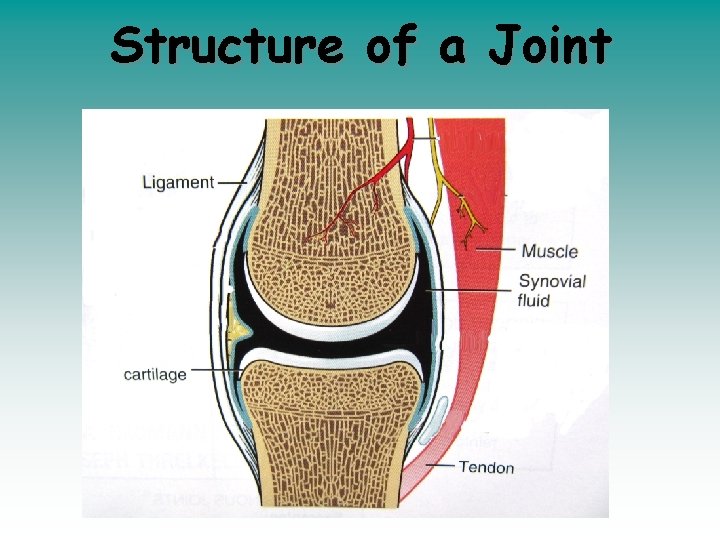
Structure of a Joint
Structure of a Joint • Cartilage: acts as shock absorber • Synovial fluid: acts as a lubricant, prevents friction between bones • Ligament: connects one bone to another bone • A tendon connects a bone to a muscle.
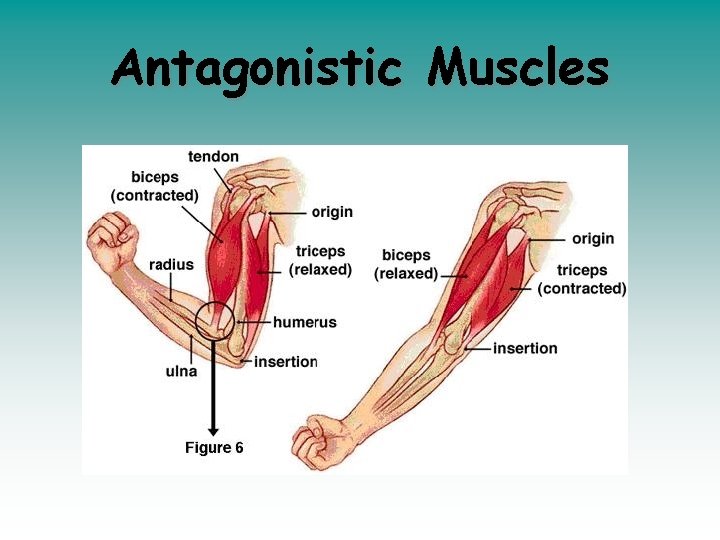
Antagonistic Muscles
What are antagonistic muscles? Antagonistic muscles are muscles that work in pairs and that contract in opposite directions. Example: Biceps and Triceps • When forearm is raised biceps contracts and triceps relaxes. • When forearm is lowered triceps contracts and biceps relaxes.
What I need to know: ü give the functions of the human skeleton (support, protection, movement) ü name and located all the main bones of the human skeleton ü describe the structure and action of the three main types of joint (fused, ball & socket, hinged) and be able to gives examples of where you would find each (skull, shoulder, hip, elbow & knee) ü give the function of joints (movement) and muscles (movement) ü give the function of ligaments, synovial fluid, cartilage & tendons ü explain how antagonistic pairs of muscle work giving an example