
The SkeletalMuscular System 5 Main Functions Gives shape
- Slides: 11
The Skeletal/Muscular System
5 Main Functions § § § Gives shape and support Creates blood cells Allows you to move Protects your inner organs Stores calcium and phosphorus
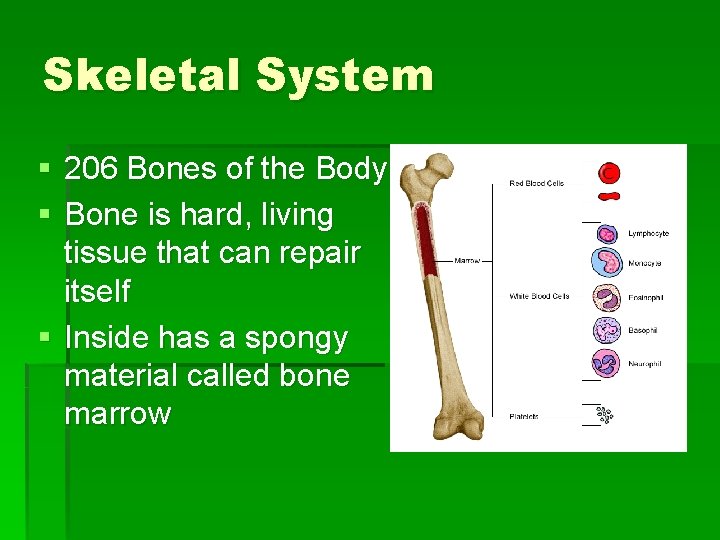
Skeletal System § 206 Bones of the Body § Bone is hard, living tissue that can repair itself § Inside has a spongy material called bone marrow
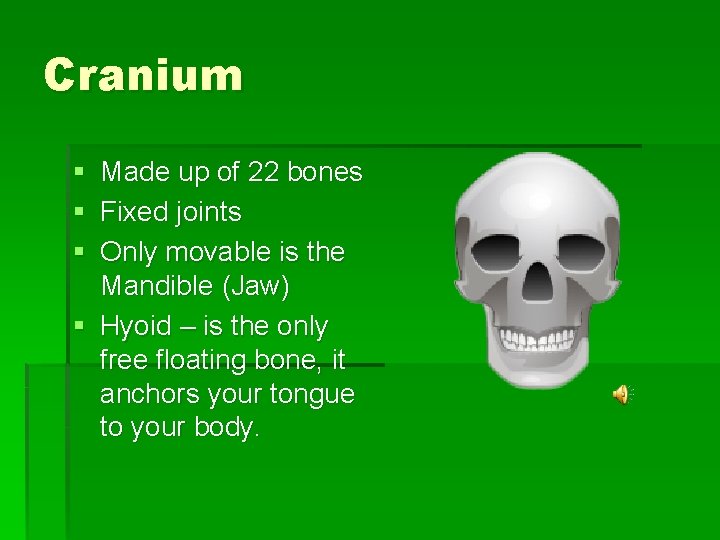
Cranium § Made up of 22 bones § Fixed joints § Only movable is the Mandible (Jaw) § Hyoid – is the only free floating bone, it anchors your tongue to your body.
Bones of the Arm § Upper arm bone – Humerus § Lower arm bones – Radius (thumb) and Ulna (pinky) § Wrist – carpals § Palm – metacarpals § Fingers – phalanges § You don’t have a funny bone, it’s just the ulnar nerve.
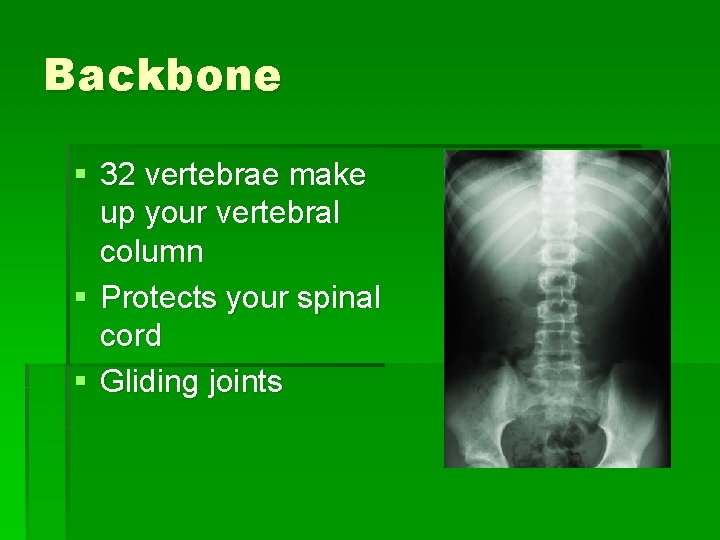
Backbone § 32 vertebrae make up your vertebral column § Protects your spinal cord § Gliding joints
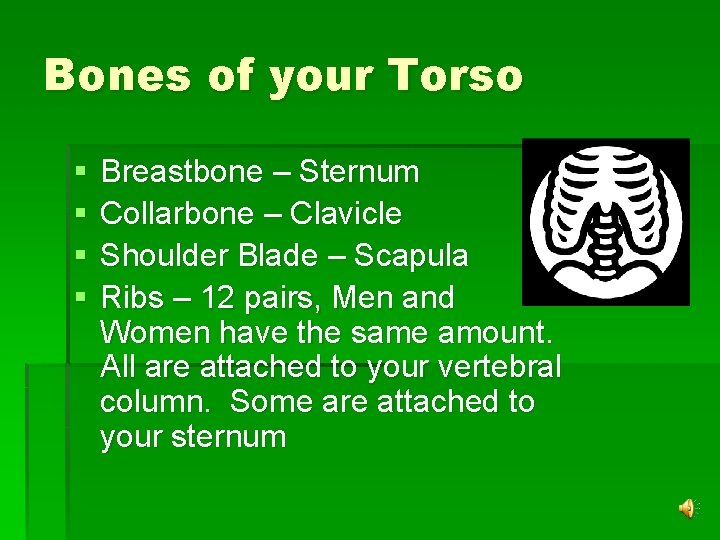
Bones of your Torso § § Breastbone – Sternum Collarbone – Clavicle Shoulder Blade – Scapula Ribs – 12 pairs, Men and Women have the same amount. All are attached to your vertebral column. Some are attached to your sternum
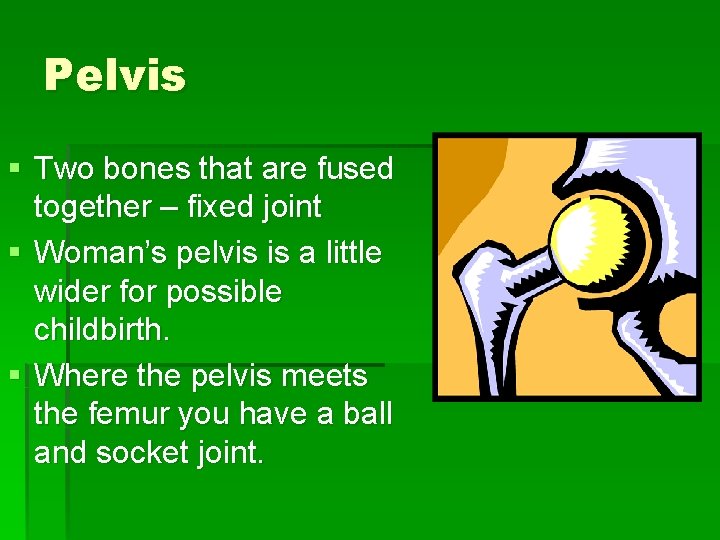
Pelvis § Two bones that are fused together – fixed joint § Woman’s pelvis is a little wider for possible childbirth. § Where the pelvis meets the femur you have a ball and socket joint.
Bones of the Leg § § § § Upper leg bone – Femur Knee cap – Patella Lower leg bone (front) – Tibia Lower leg bone (back) – Fibula (told a fib) Ankle bones – tarsals Bones leading to the toes – metatarsals Toes - phalanges
Joints – place where two bones meet and allow you flexibility. § Ball and Socket – greatest range of movement § Hinge – back and forth § Gliding – bones slide on top of each other § Fixed – bones don’t move § Pivot – one bone turns on another
3 Types of Muscle § Cardiac Muscle – only found in the heart and involuntary § Smooth Muscle – found in digestive, respiratory, and excretory systems – involuntary § Skeletal Muscle – attached to bone - voluntary