
The Skeletal System Two skeletons Axial bones of
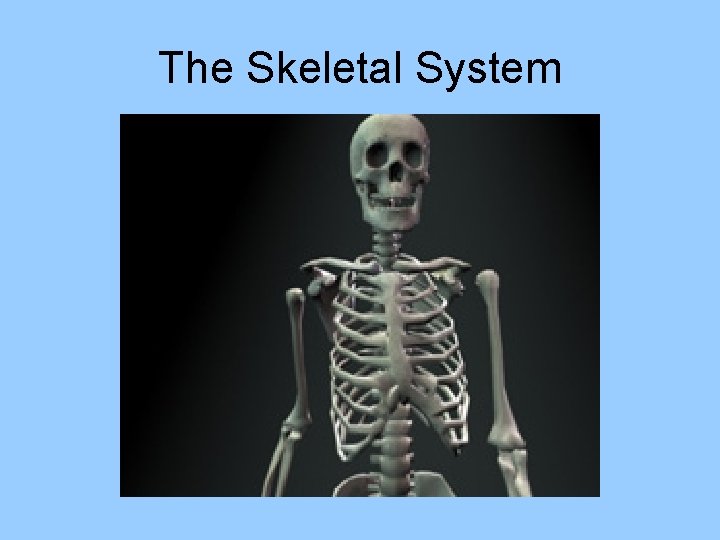
The Skeletal System
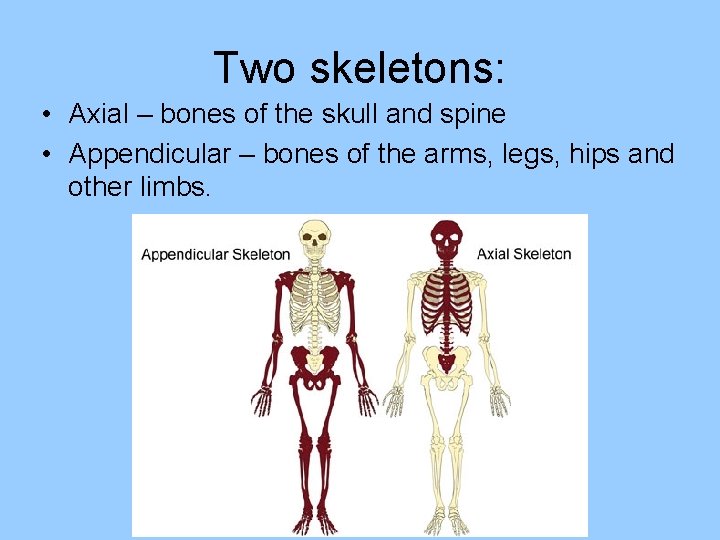
Two skeletons: • Axial – bones of the skull and spine • Appendicular – bones of the arms, legs, hips and other limbs.
Did you know? • The human hand has 19 bones but your face only has 14. • Although bones seem really hard, they are ¾ water which makes them spongy. • The longest bone in your body is your thigh bone (the femur). It's about 1/4 of your height. • The smallest bone is the stirrup bone in the ear which can measure 1/10 of an inch. • Did you know that humans and giraffes have the same number of bones in their necks? Giraffe neck vertebrae are just much, much longer! • You have over 230 moveable and semimoveable joints in your body.
Skeletal System • Functions: Supports the body, gives it shape, protects organs, attachment for muscles. • Bones are alive – growing and changing. • Calcium is the major part or component of bone tissue. • You are born with about 350 bones in your body. • The average person has 206 bones in their body. • The number is not exact because some people have an extra pair of ribs or more bones in their hands and feet.
Why didn’t the skeleton cross the road?

Because it didn’t have the guts!
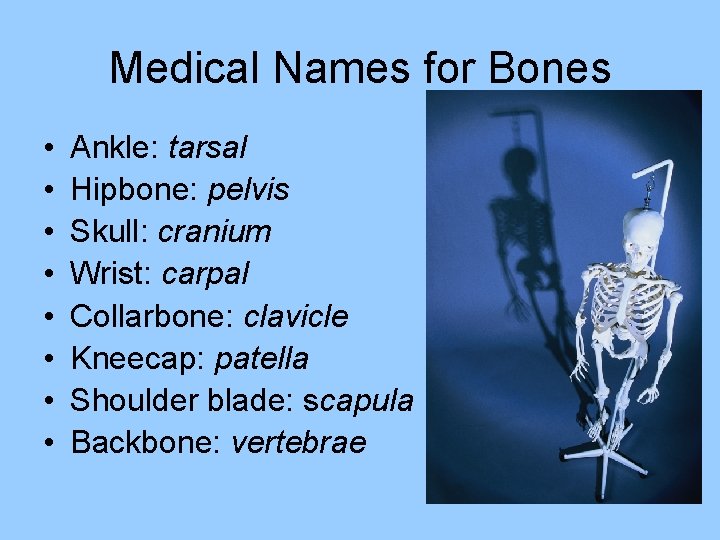
Medical Names for Bones • • Ankle: tarsal Hipbone: pelvis Skull: cranium Wrist: carpal Collarbone: clavicle Kneecap: patella Shoulder blade: scapula Backbone: vertebrae

More medical terms! Read this slide… Each common bone in the body has a medical name!
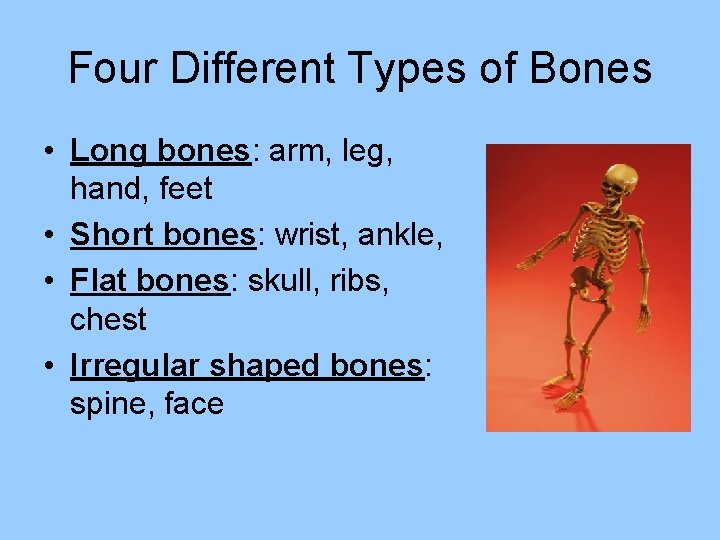
Four Different Types of Bones • Long bones: arm, leg, hand, feet • Short bones: wrist, ankle, • Flat bones: skull, ribs, chest • Irregular shaped bones: spine, face
Parts of a Bone • Periosteum: active, living membrane that covers a bone. When a bone breaks, the periosteum cells multiply and grow over the break. • Compact Bone: hard outer surface; hardest part of the bone • Spongy Bone: very porous (lots of holes); nerves and blood vessels are found in the spongy bone • Marrow: middle or center of bone; helps manufacture or make blood cells.
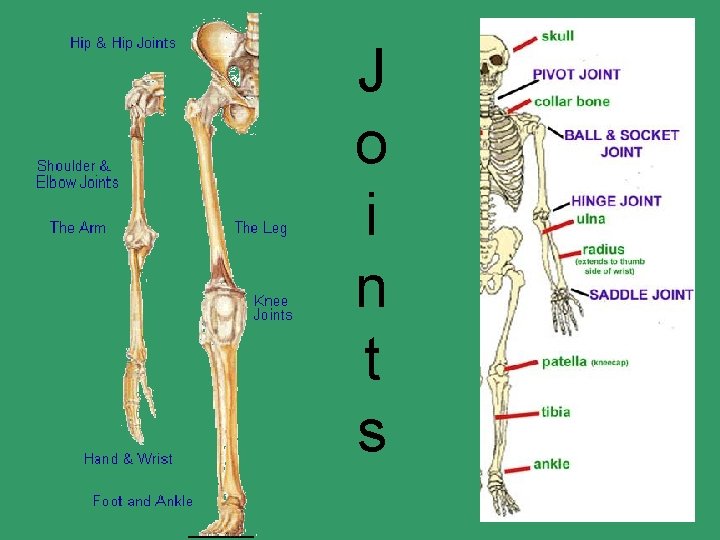
J o i n t s
Kinds of Joints • A joint is the part of the skeletal system where 2 or more bones meet. • Joints make it possible for the body to have a wide range of motion like twisting and bending. • Joints are padded with a rubbery tissue called cartilage. • Nobody knows why joints crack. It may be from tiny air bubbles that form in the joint, or from a tight tendon and ligament snapping over a bone when moving. • Cracking your joints on purpose can damage the joint surface.

Gliding or Sliding Joint: allows the wrist and spine to twist and bend. Hinge Joint: allows the knee, knuckle, ankle, finger, & toe to bend. Ball & Socket Joint: allows the hip & shoulder to swivel. Pivot Joint: allows the elbow and neck to twist. Brainpop: Joint RMA

15. Draw diagram • Hinge joint
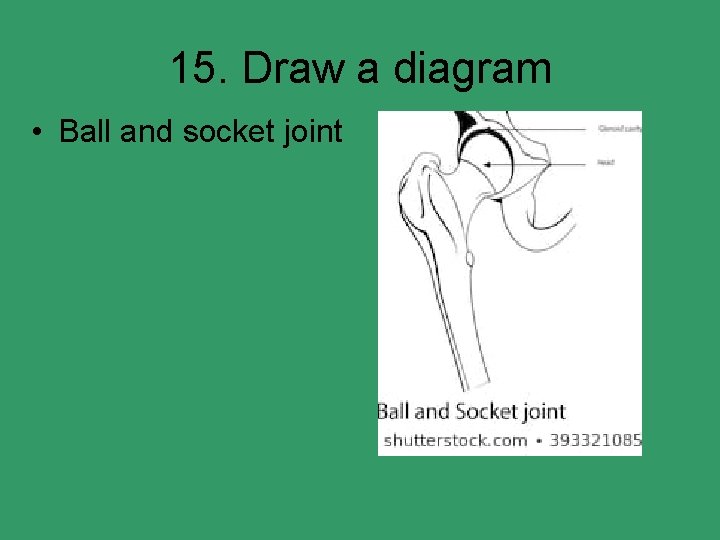
15. Draw a diagram • Ball and socket joint
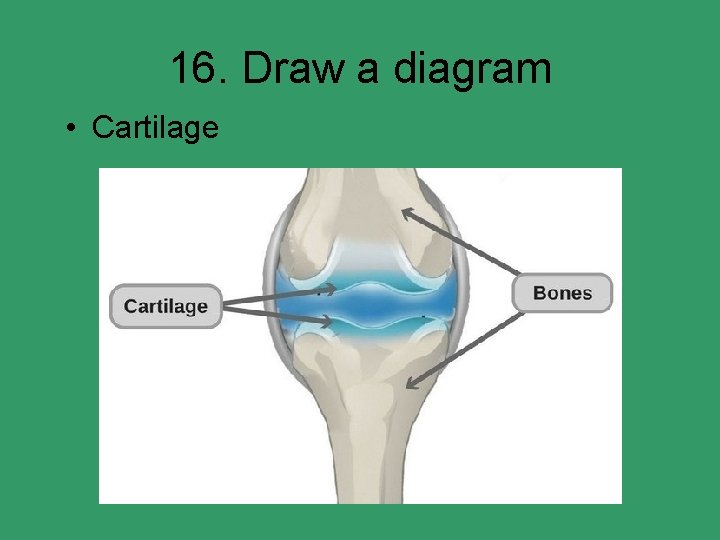
16. Draw a diagram • Cartilage
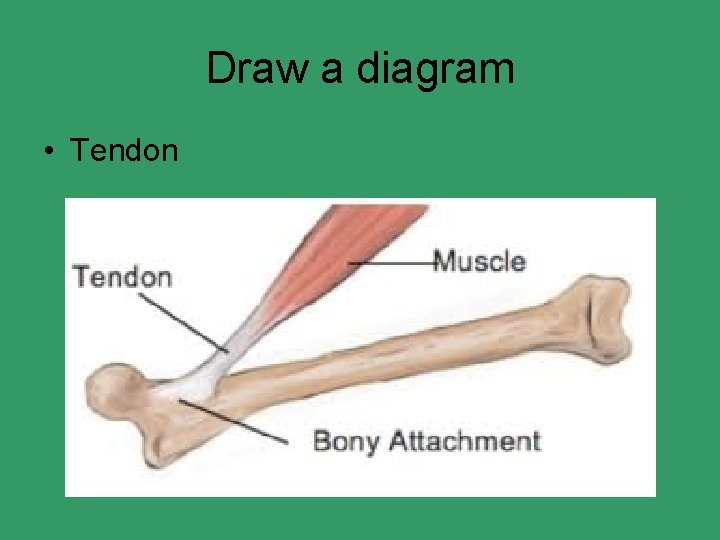
Draw a diagram • Tendon
If you are done… • Watch the following video clips in Discovery Education. • Log in with usual Kyrene info. • Type the following title into the search box: Video #1 – Science in Progress: Overview of the Digestive System Video #2 - The Human Immune System Video #3 - Types of Blood Cells Video #4 - Components of Food: Macronutrients If you are done with these, you may use your Chromebook to do research on any topics about the human body systems we have learned about. Write down interesting facts in your notebook!
- Slides: 18