
The Skeletal System The Human Skeleton Composed of
- Slides: 24
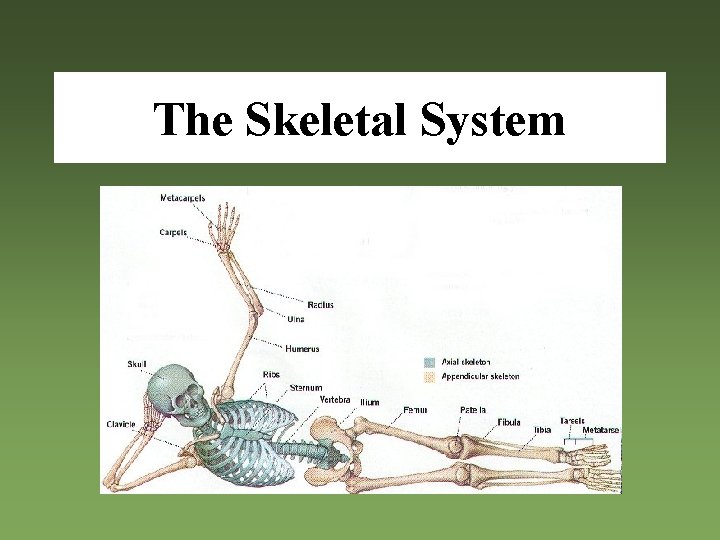
The Skeletal System
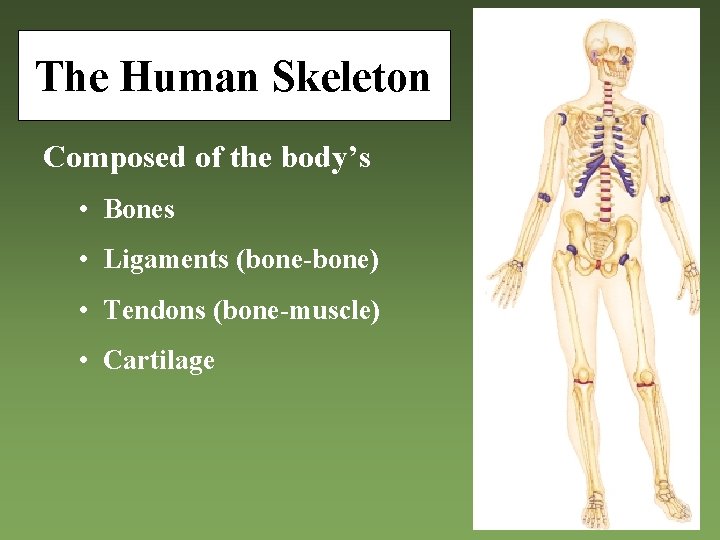
The Human Skeleton Composed of the body’s • Bones • Ligaments (bone-bone) • Tendons (bone-muscle) • Cartilage
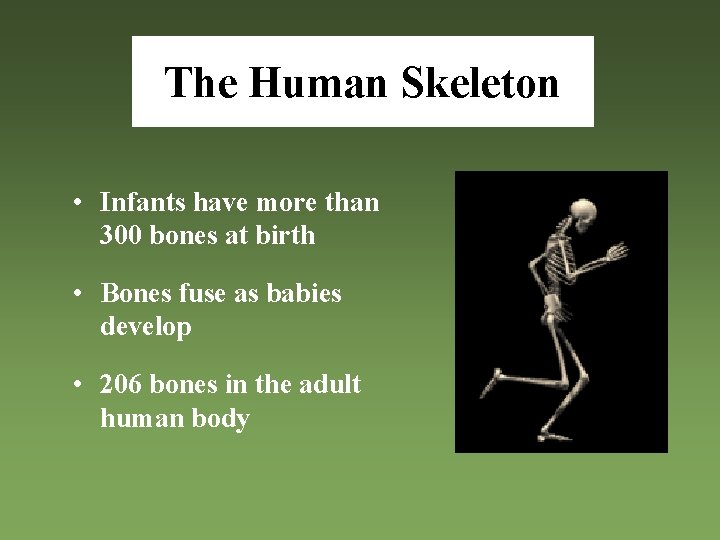
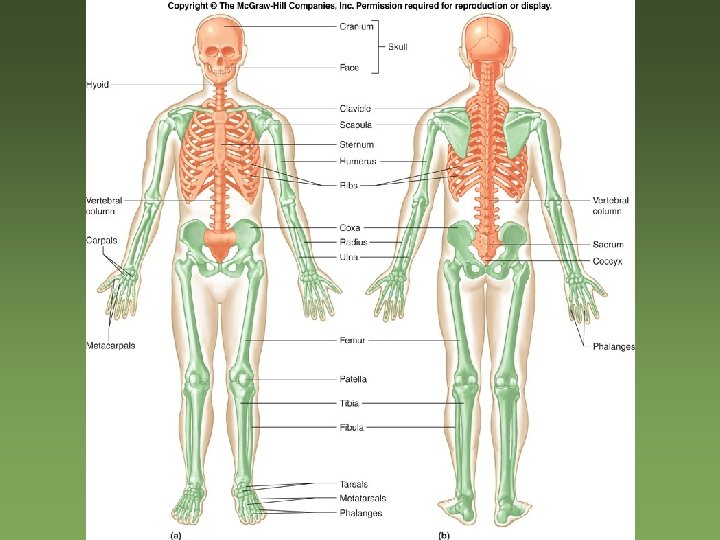
The Human Skeleton • Infants have more than 300 bones at birth • Bones fuse as babies develop • 206 bones in the adult human body
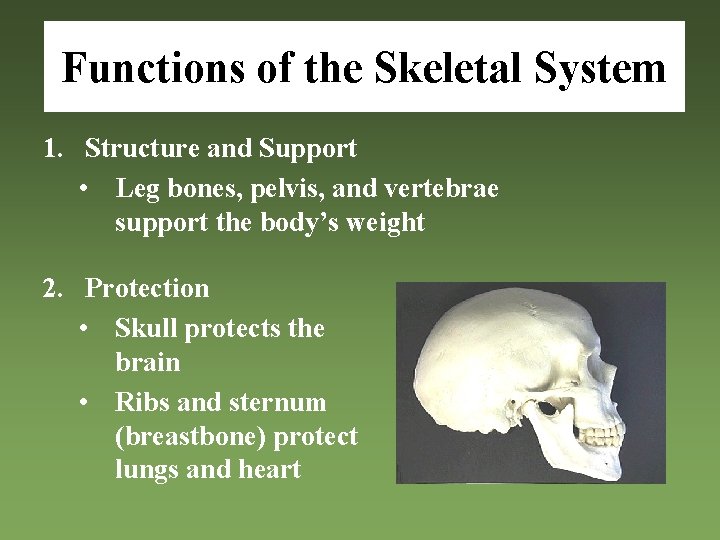
Functions of the Skeletal System 1. Structure and Support • Leg bones, pelvis, and vertebrae support the body’s weight 2. Protection • Skull protects the brain • Ribs and sternum (breastbone) protect lungs and heart the
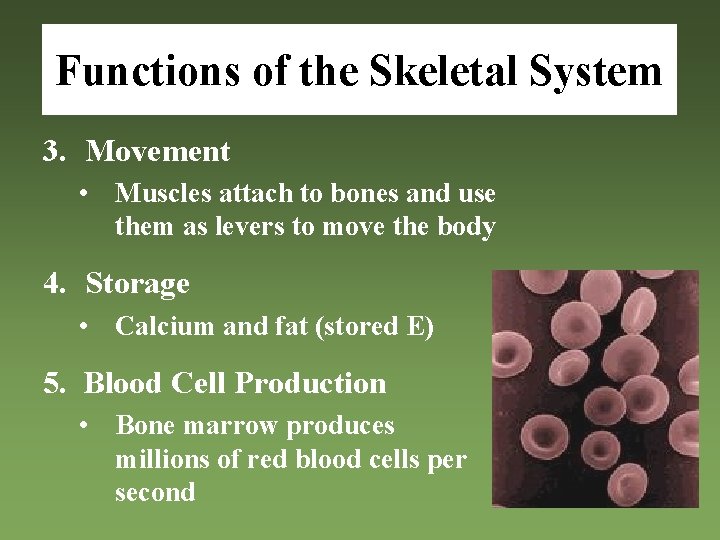
Functions of the Skeletal System 3. Movement • Muscles attach to bones and use them as levers to move the body 4. Storage • Calcium and fat (stored E) 5. Blood Cell Production • Bone marrow produces millions of red blood cells per second
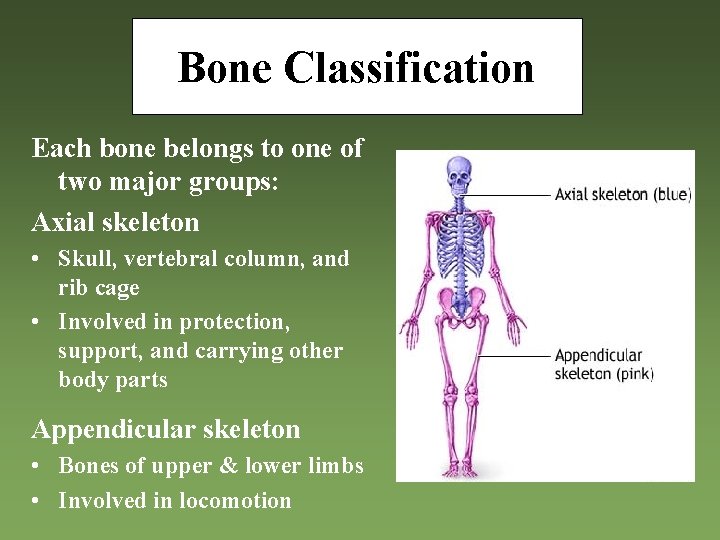
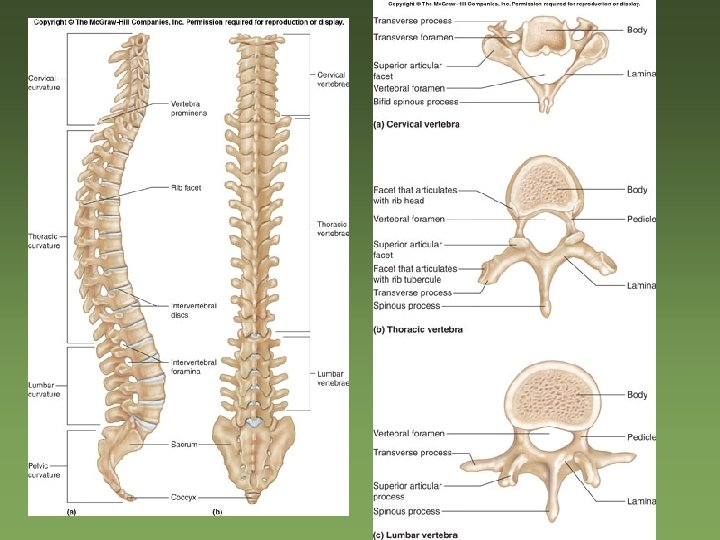
Bone Classification Each bone belongs to one of two major groups: Axial skeleton • Skull, vertebral column, and rib cage • Involved in protection, support, and carrying other body parts Appendicular skeleton • Bones of upper & lower limbs • Involved in locomotion
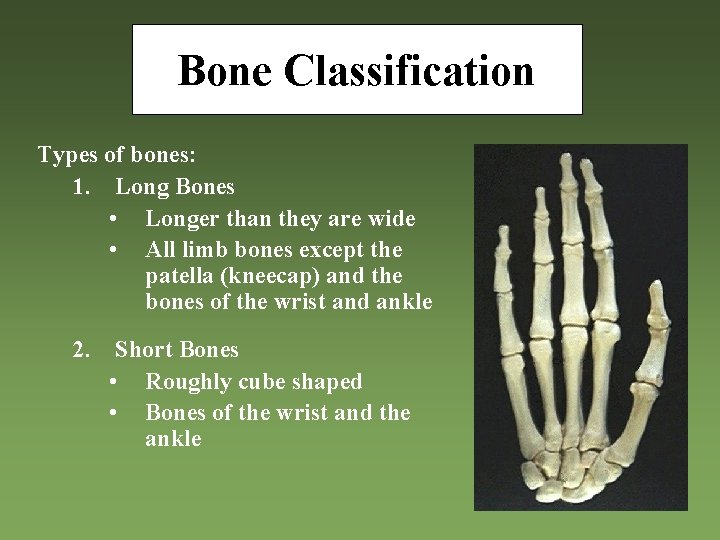
Bone Classification Types of bones: 1. Long Bones • Longer than they are wide • All limb bones except the patella (kneecap) and the bones of the wrist and ankle 2. Short Bones • Roughly cube shaped • Bones of the wrist and the ankle
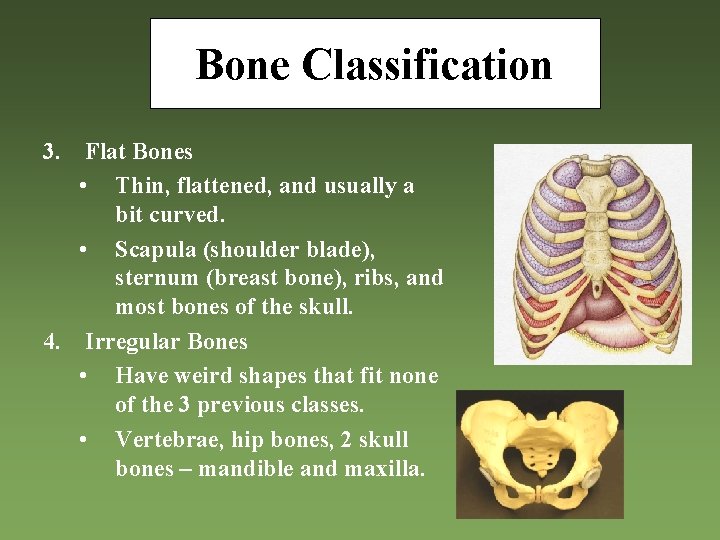
Bone Classification 3. Flat Bones • Thin, flattened, and usually a bit curved. • Scapula (shoulder blade), sternum (breast bone), ribs, and most bones of the skull. 4. Irregular Bones • Have weird shapes that fit none of the 3 previous classes. • Vertebrae, hip bones, 2 skull bones – mandible and maxilla.
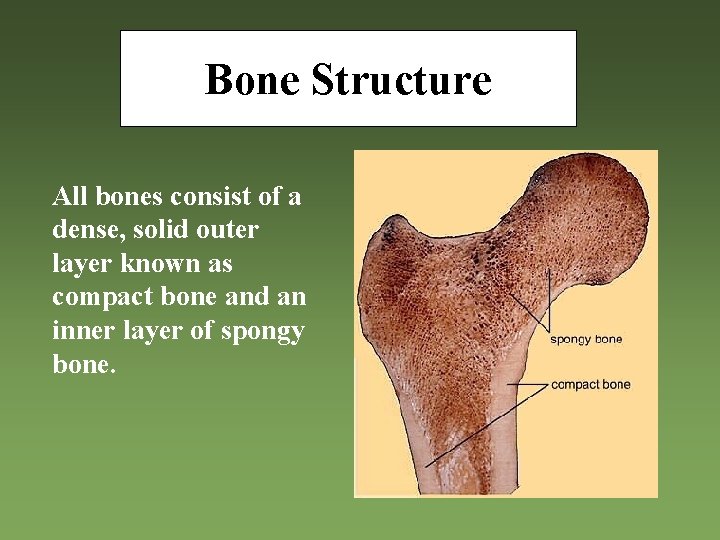
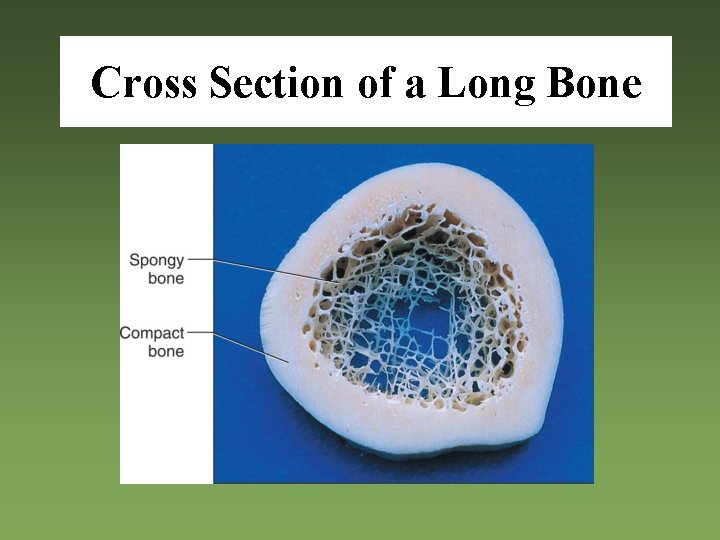
Bone Structure All bones consist of a dense, solid outer layer known as compact bone and an inner layer of spongy bone.
Cross Section of a Long Bone
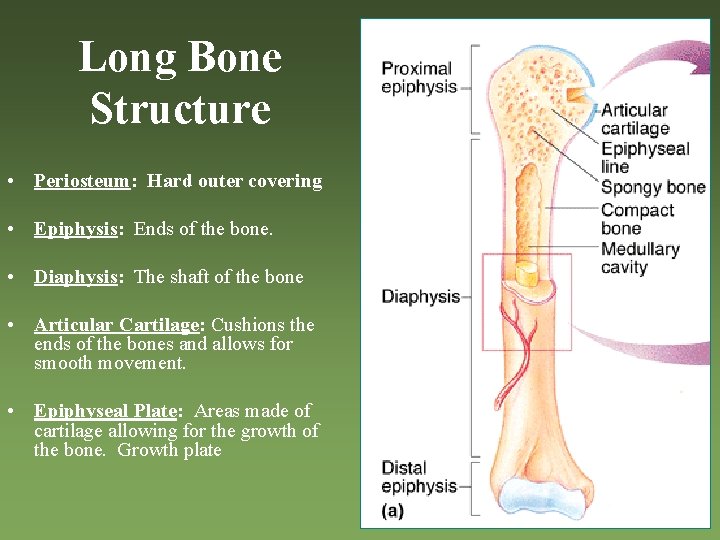
Long Bone Structure • Periosteum: Hard outer covering • Epiphysis: Ends of the bone. • Diaphysis: The shaft of the bone • Articular Cartilage: Cushions the ends of the bones and allows for smooth movement. • Epiphyseal Plate: Areas made of cartilage allowing for the growth of the bone. Growth plate
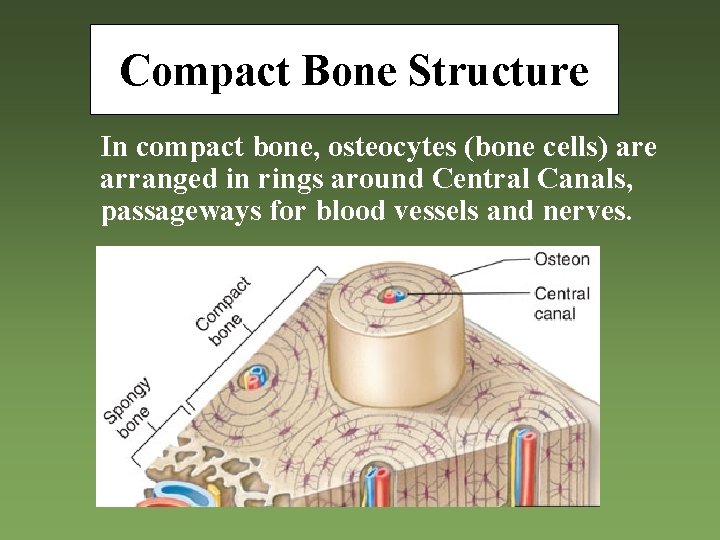
Compact Bone Structure In compact bone, osteocytes (bone cells) are arranged in rings around Central Canals, passageways for blood vessels and nerves. R
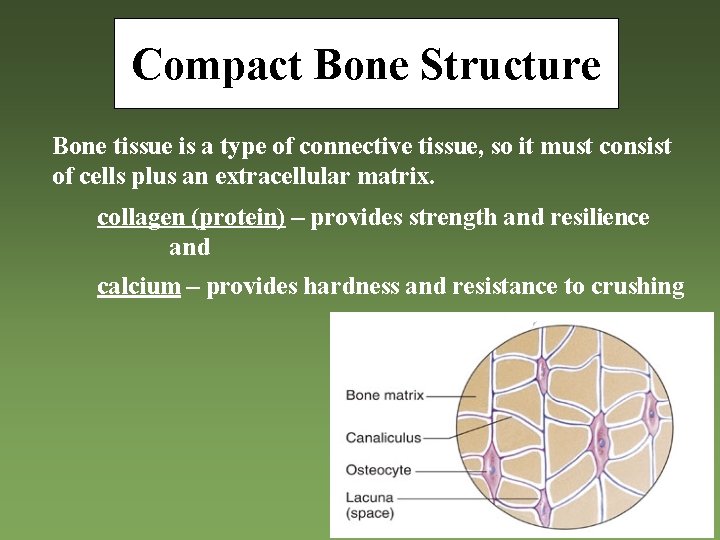
Compact Bone Structure Bone tissue is a type of connective tissue, so it must consist of cells plus an extracellular matrix. collagen (protein) – provides strength and resilience and calcium – provides hardness and resistance to crushing
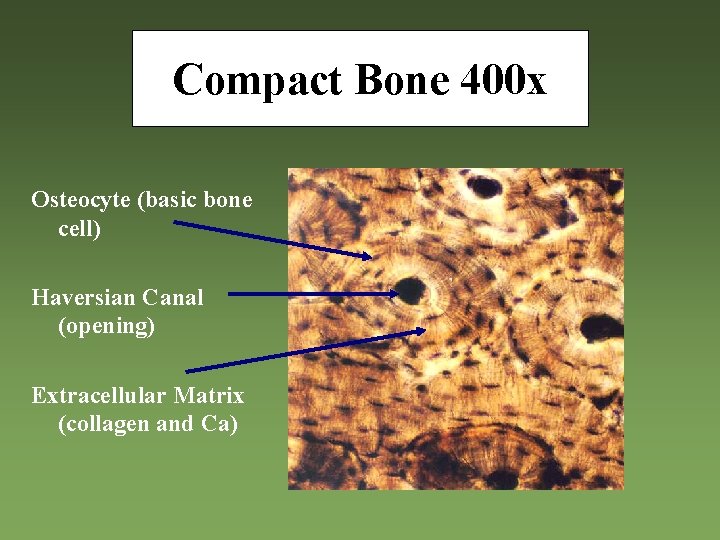
Compact Bone 400 x Osteocyte (basic bone cell) Haversian Canal (opening) Extracellular Matrix (collagen and Ca)
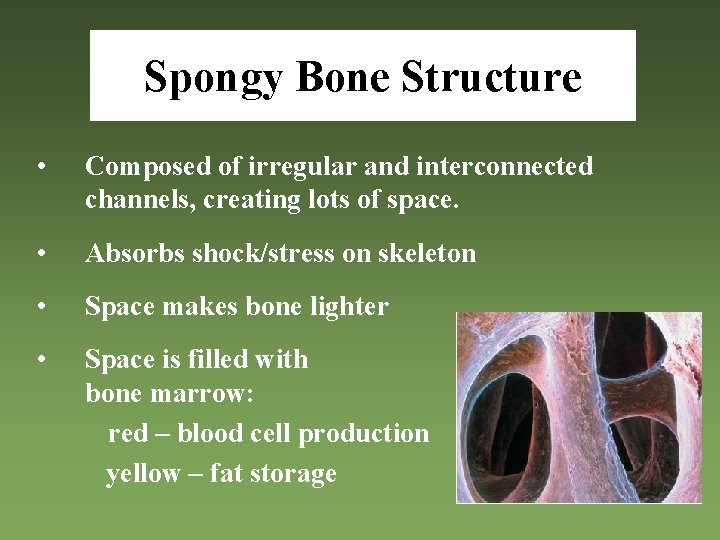
Spongy Bone Structure • Composed of irregular and interconnected channels, creating lots of space. • Absorbs shock/stress on skeleton • Space makes bone lighter • Space is filled with bone marrow: red – blood cell production yellow – fat storage
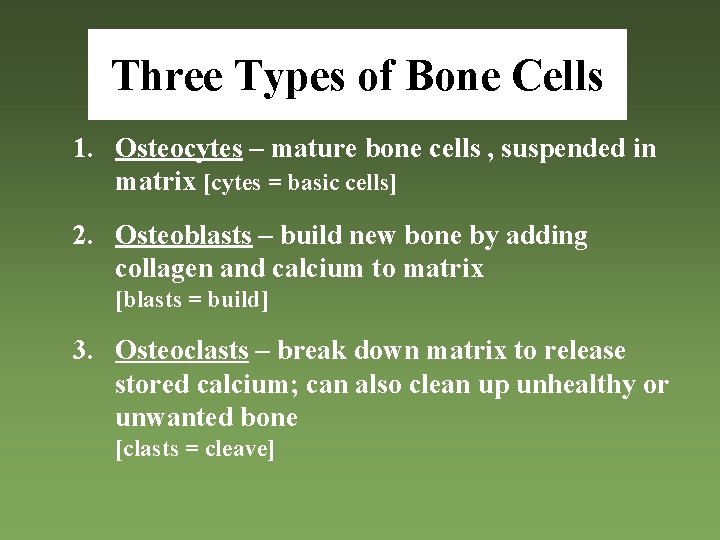
Three Types of Bone Cells 1. Osteocytes – mature bone cells , suspended in matrix [cytes = basic cells] 2. Osteoblasts – build new bone by adding collagen and calcium to matrix [blasts = build] 3. Osteoclasts – break down matrix to release stored calcium; can also clean up unhealthy or unwanted bone [clasts = cleave]
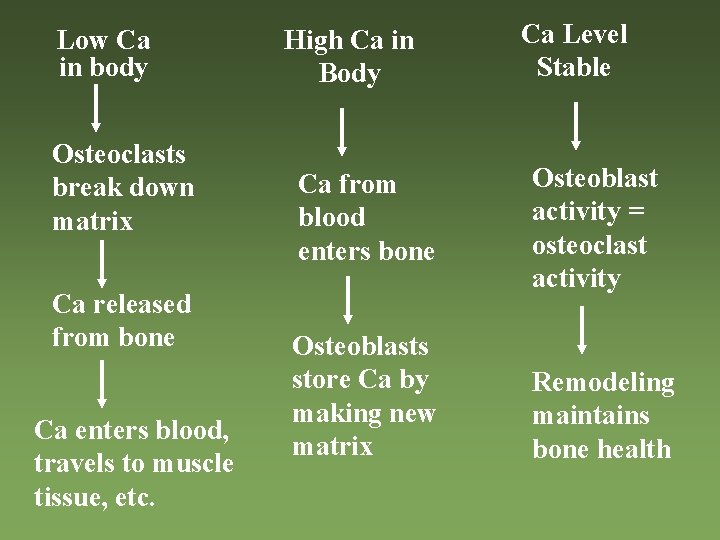
Low Ca in body Osteoclasts break down matrix Ca released from bone Ca enters blood, travels to muscle tissue, etc. High Ca in Body Ca from blood enters bone Osteoblasts store Ca by making new matrix Ca Level Stable Osteoblast activity = osteoclast activity Remodeling maintains bone health
Bone Features • Projections that are sites of tendon and ligament attachment • Projections that help to form joints • Depressions and openings allowing blood vessels and nerves to pass
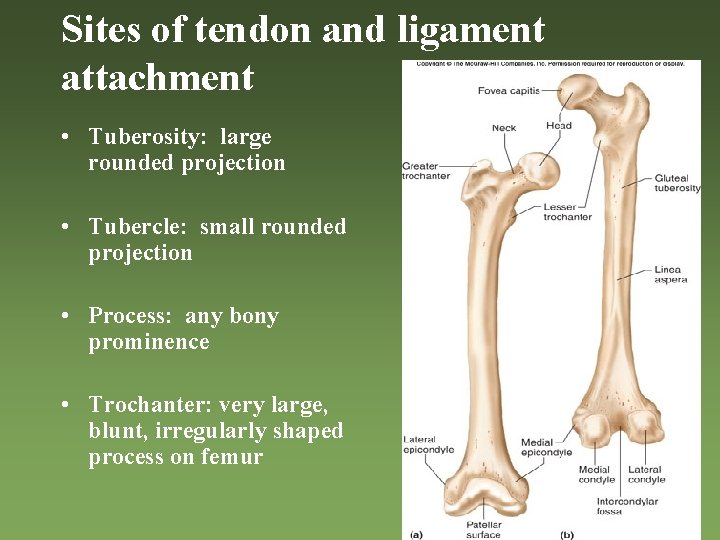
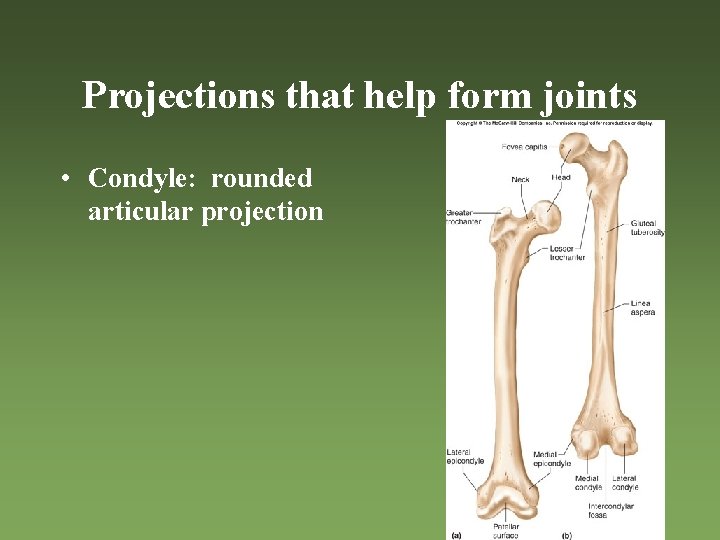
Sites of tendon and ligament attachment • Tuberosity: large rounded projection • Tubercle: small rounded projection • Process: any bony prominence • Trochanter: very large, blunt, irregularly shaped process on femur
Projections that help form joints • Condyle: rounded articular projection
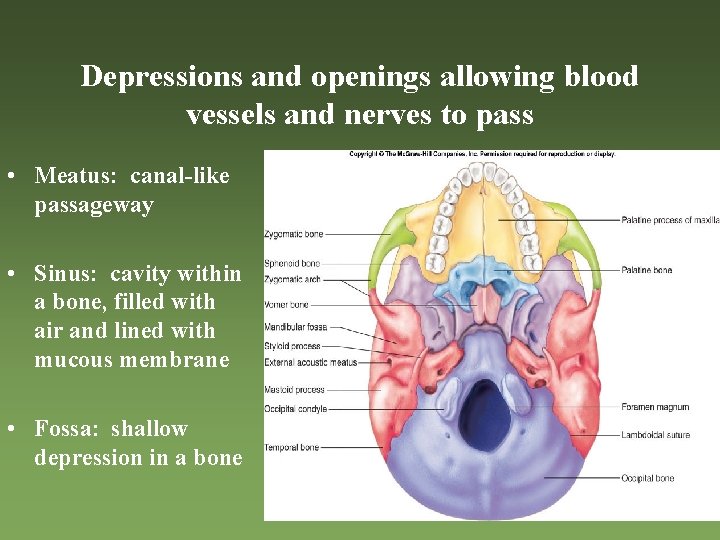
Depressions and openings allowing blood vessels and nerves to pass • Meatus: canal-like passageway • Sinus: cavity within a bone, filled with air and lined with mucous membrane • Fossa: shallow depression in a bone
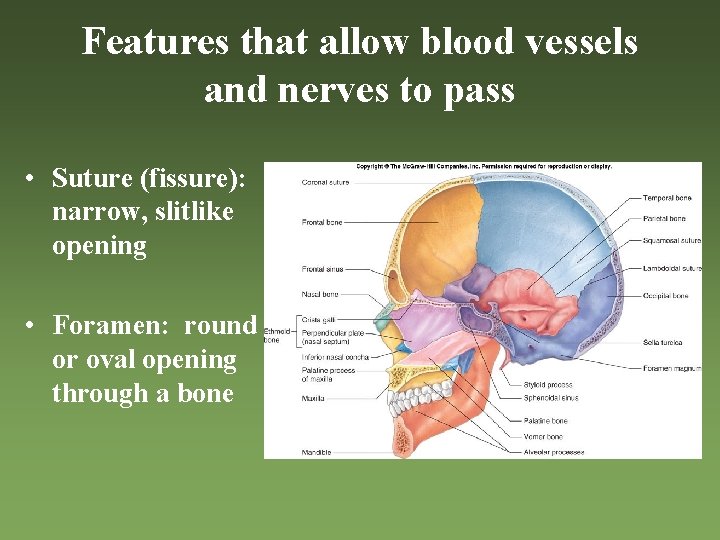
Features that allow blood vessels and nerves to pass • Suture (fissure): narrow, slitlike opening • Foramen: round or oval opening through a bone