
The Skeletal System The Construction of the Skeletal


- Slides: 50
The Skeletal System
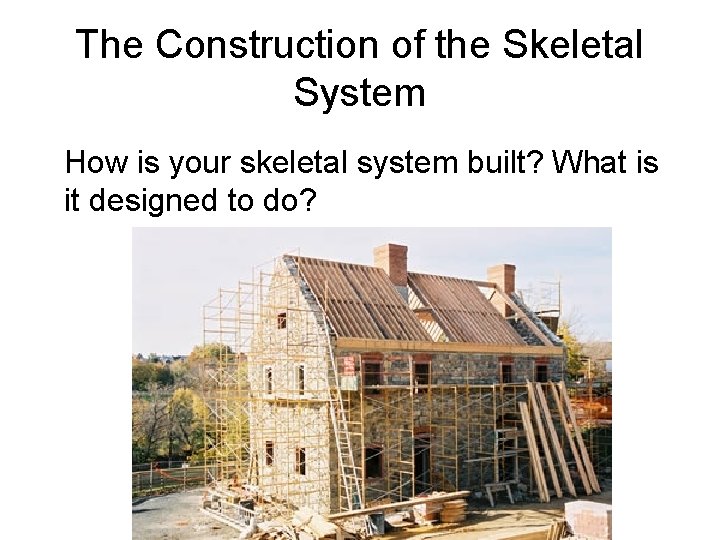
The Construction of the Skeletal System How is your skeletal system built? What is it designed to do?
Just like a house, the human body… ~has framework that is strong, sturdy, and connected ~protects what is inside ~stores material
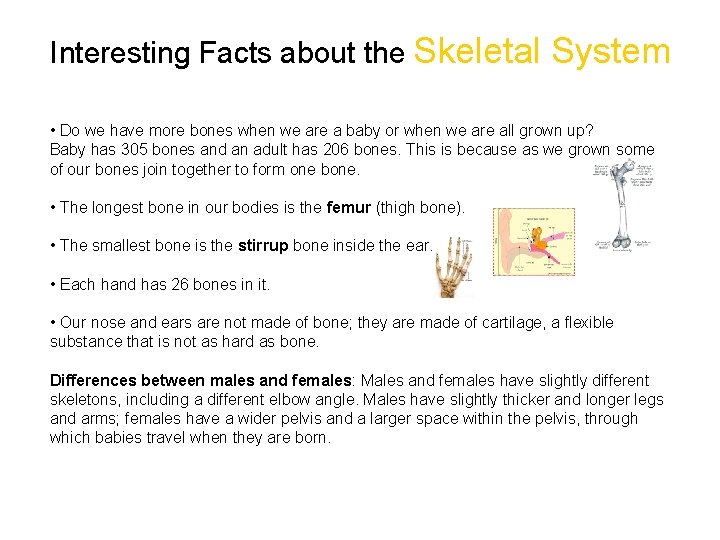
Interesting Facts about the Skeletal System • Do we have more bones when we are a baby or when we are all grown up? Baby has 305 bones and an adult has 206 bones. This is because as we grown some of our bones join together to form one bone. • The longest bone in our bodies is the femur (thigh bone). • The smallest bone is the stirrup bone inside the ear. • Each hand has 26 bones in it. • Our nose and ears are not made of bone; they are made of cartilage, a flexible substance that is not as hard as bone. Differences between males and females: Males and females have slightly different skeletons, including a different elbow angle. Males have slightly thicker and longer legs and arms; females have a wider pelvis and a larger space within the pelvis, through which babies travel when they are born.
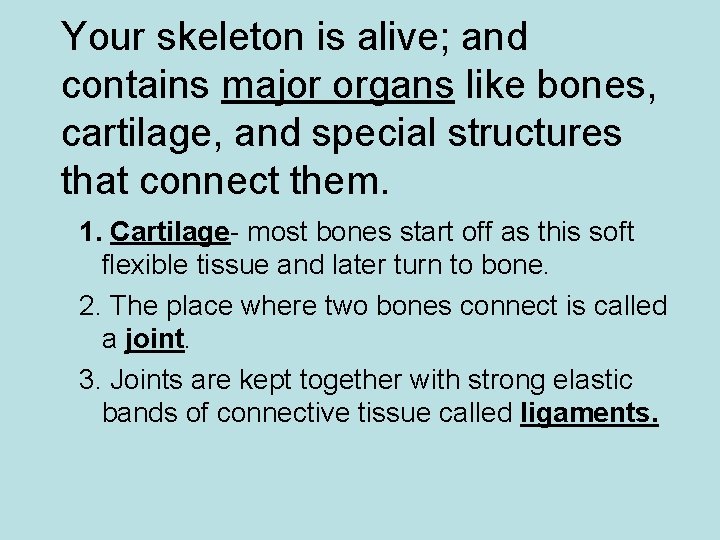
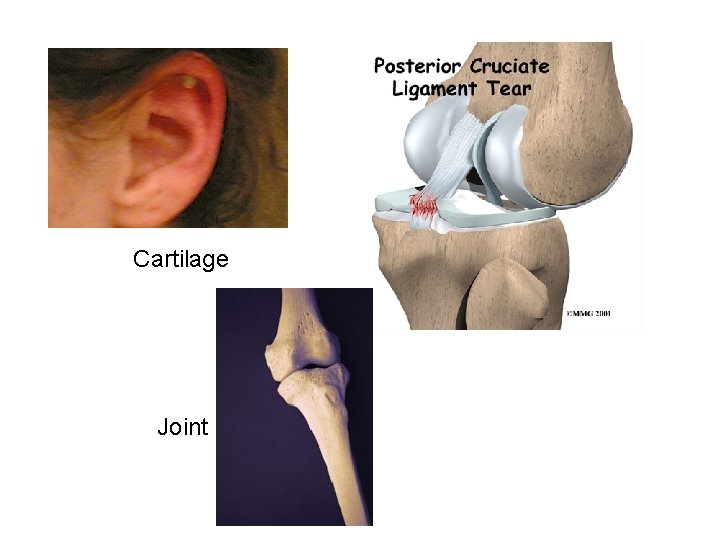
Your skeleton is alive; and contains major organs like bones, cartilage, and special structures that connect them. 1. Cartilage- most bones start off as this soft flexible tissue and later turn to bone. 2. The place where two bones connect is called a joint. 3. Joints are kept together with strong elastic bands of connective tissue called ligaments.
Cartilage Joint
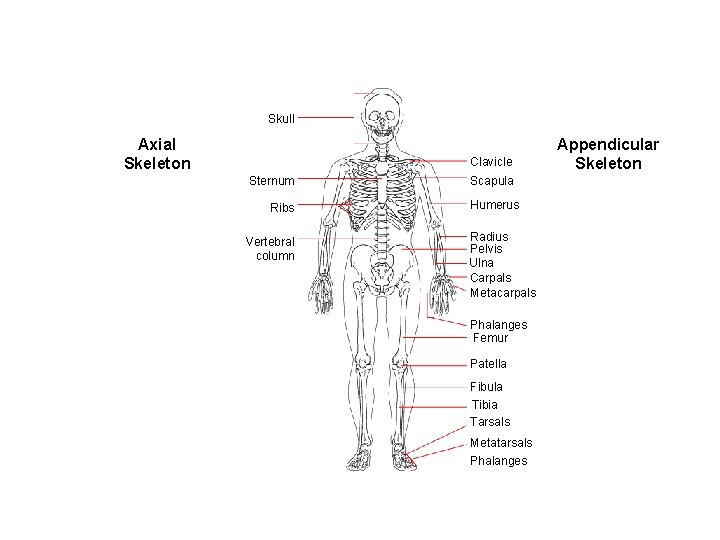
The Skeletal System Section 36 -1 Skull Axial Skeleton Clavicle Sternum Ribs Vertebral column Scapula Humerus Radius Pelvis Ulna Carpals Metacarpals Phalanges Femur Patella Fibula Tibia Tarsals Metatarsals Phalanges Appendicular Skeleton
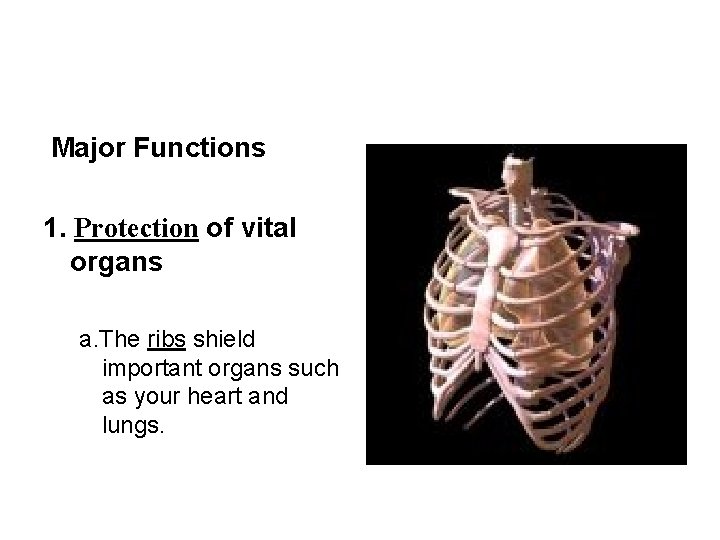
Major Functions 1. Protection of vital organs a. The ribs shield important organs such as your heart and lungs.
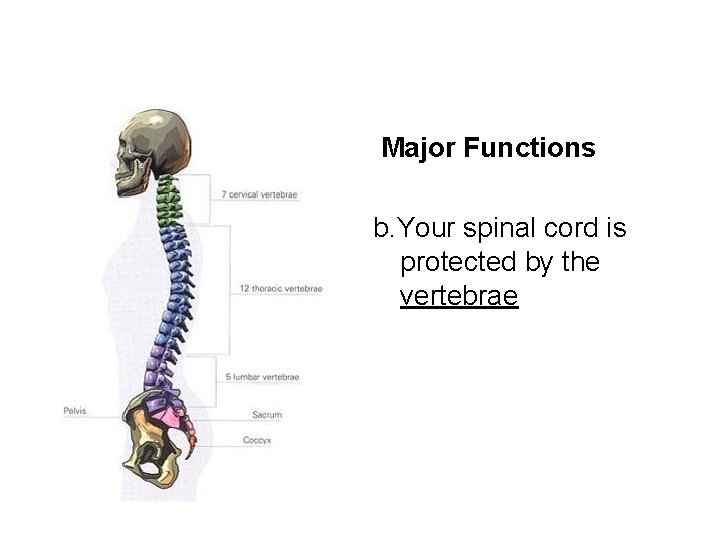
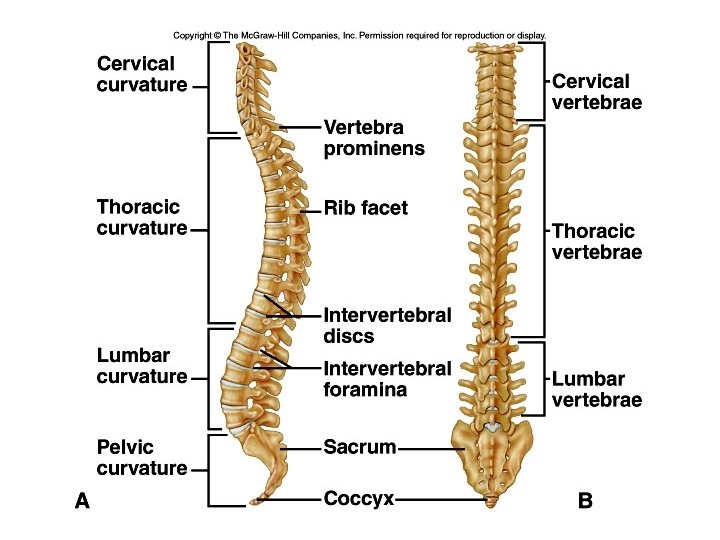
Major Functions b. Your spinal cord is protected by the vertebrae
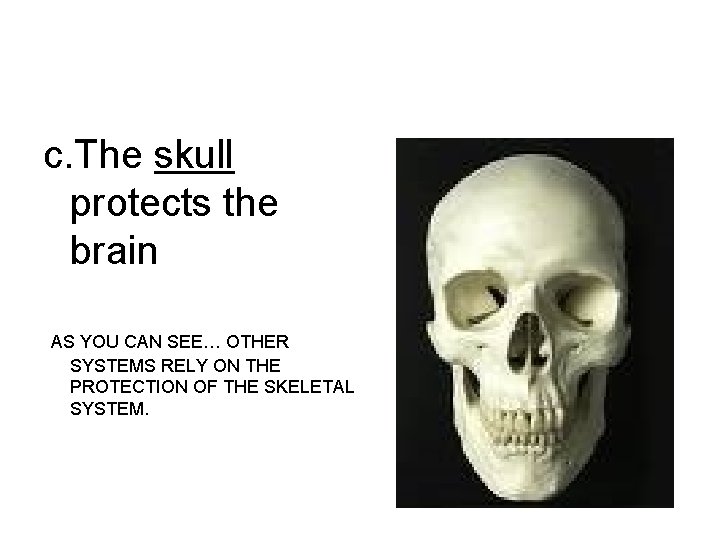
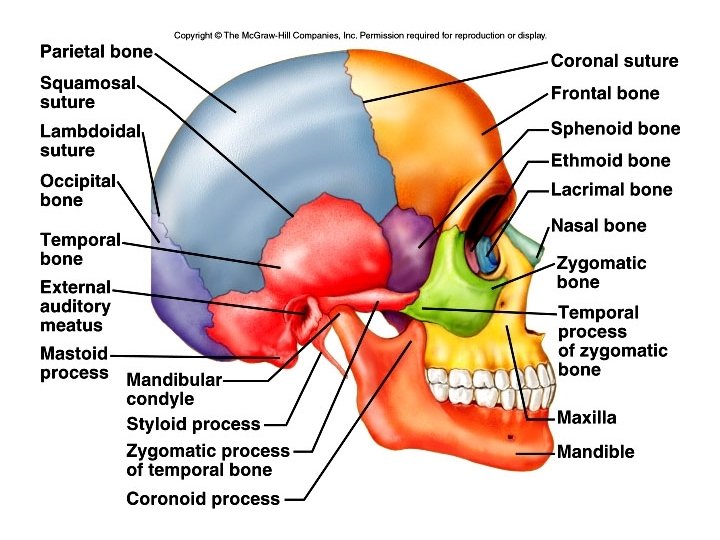
c. The skull protects the brain AS YOU CAN SEE… OTHER SYSTEMS RELY ON THE PROTECTION OF THE SKELETAL SYSTEM.
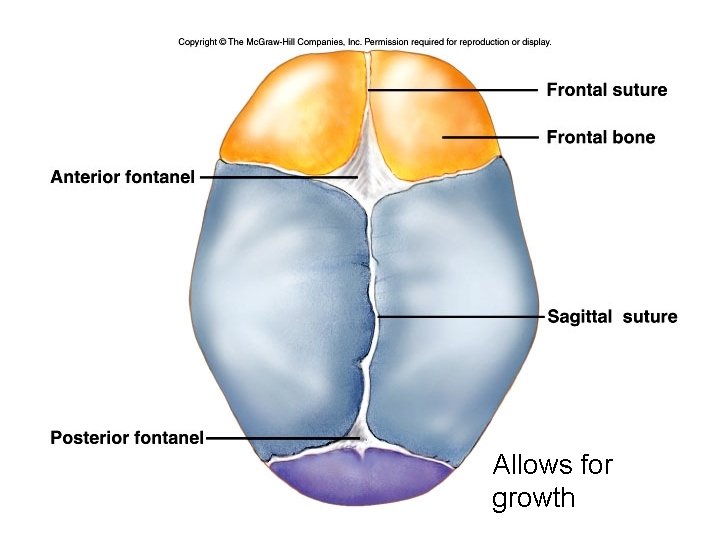
Allows for growth
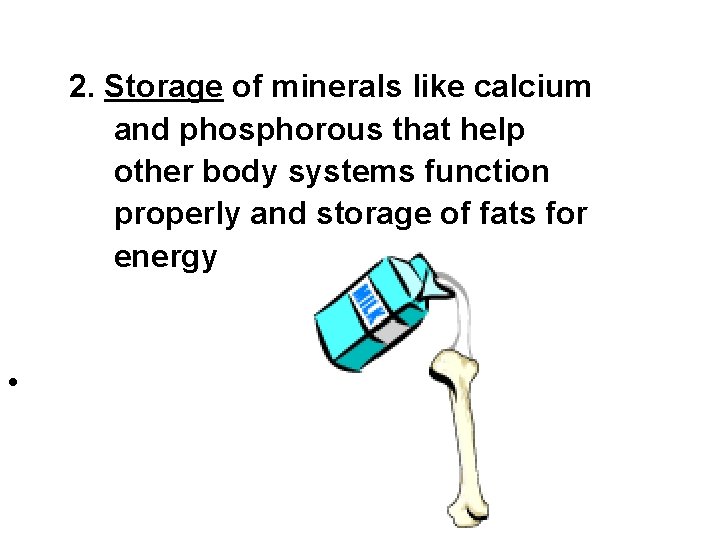
2. Storage of minerals like calcium and phosphorous that help other body systems function properly and storage of fats for energy •
3. Movement – bones work with muscles to produce movement
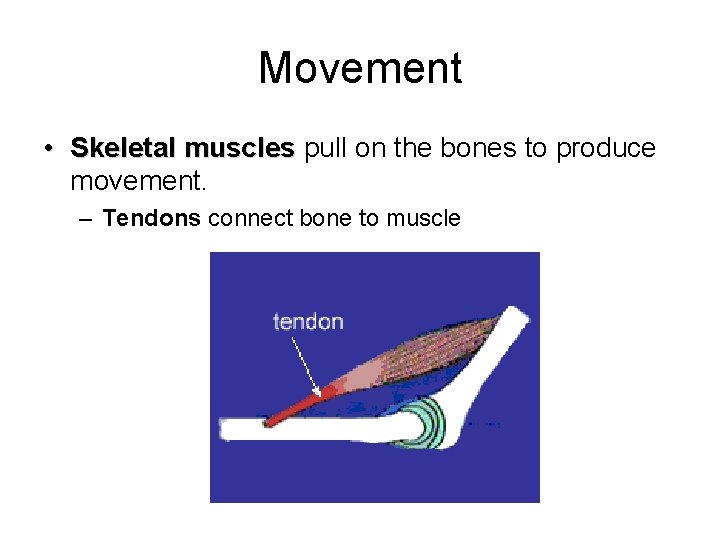
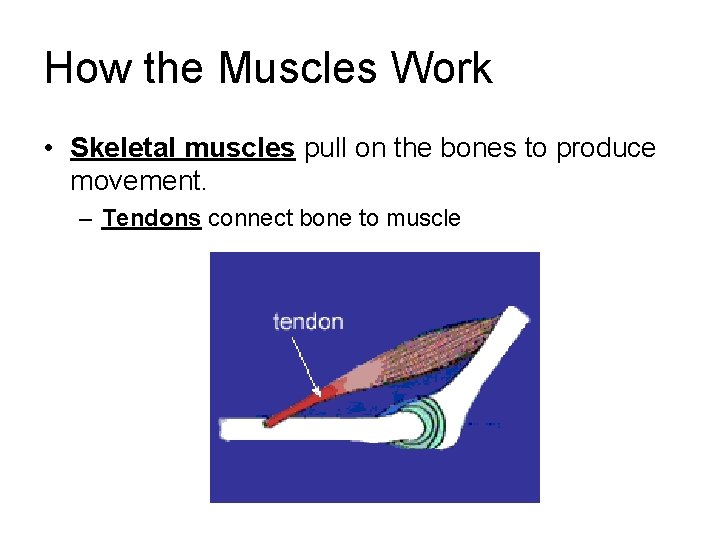
Movement • Skeletal muscles pull on the bones to produce movement. – Tendons connect bone to muscle
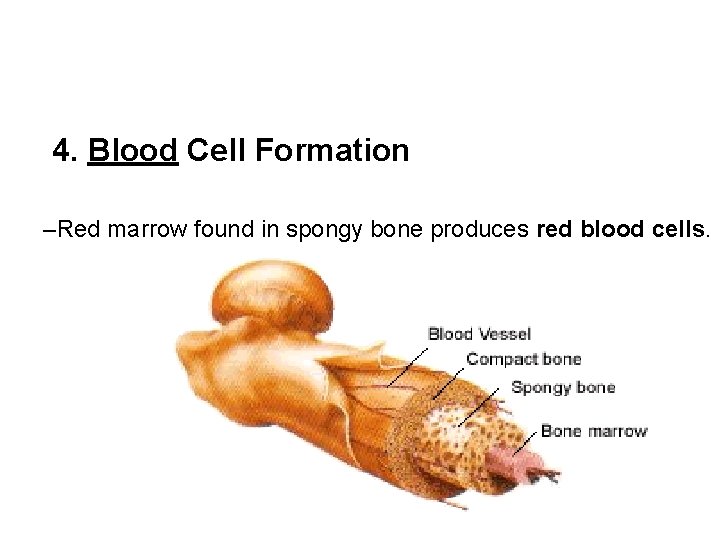
4. Blood Cell Formation –Red marrow found in spongy bone produces red blood cells.
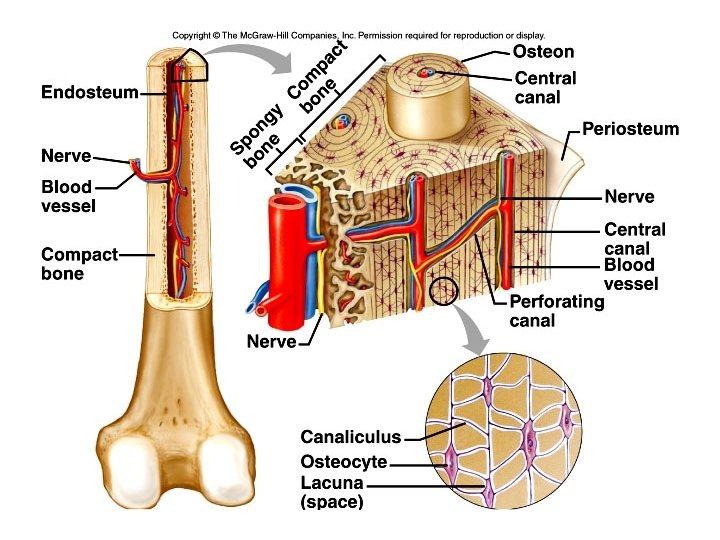
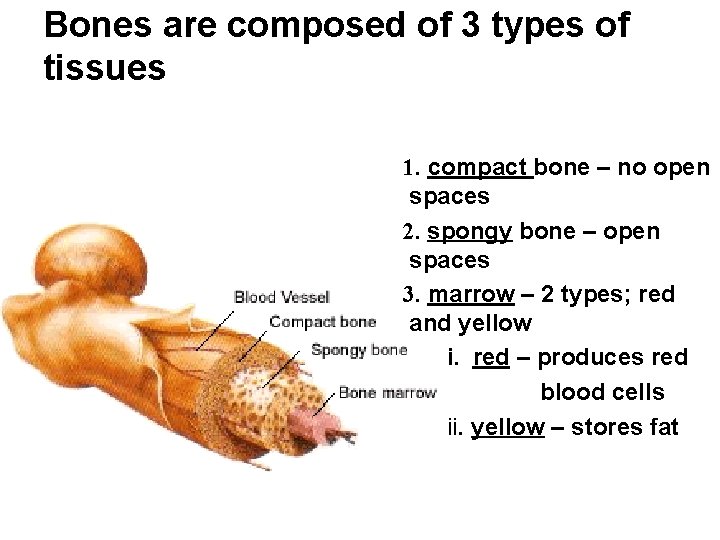
Bones are composed of 3 types of tissues 1. compact bone – no open spaces 2. spongy bone – open spaces 3. marrow – 2 types; red and yellow i. red – produces red blood cells ii. yellow – stores fat
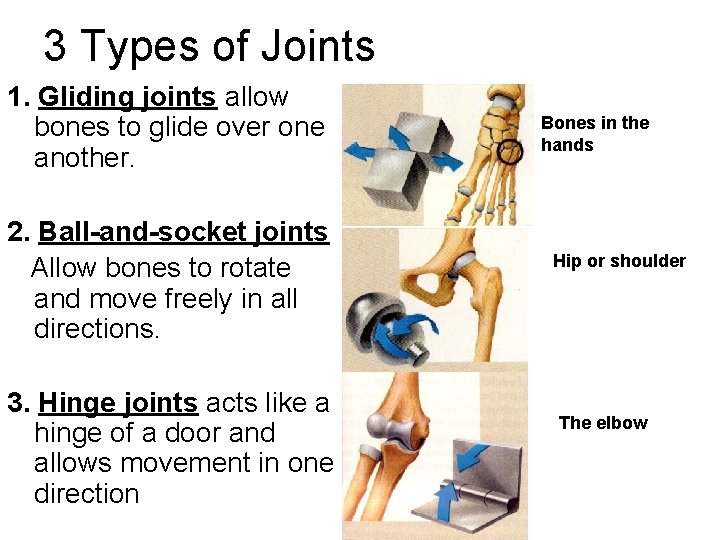
3 Types of Joints 1. Gliding joints allow bones to glide over one another. 2. Ball-and-socket joints Allow bones to rotate and move freely in all directions. 3. Hinge joints acts like a hinge of a door and allows movement in one direction Bones in the hands Hip or shoulder The elbow
Ball & Socket
Ball & Socket Hinge
Ball & Socket Hinge Gliding
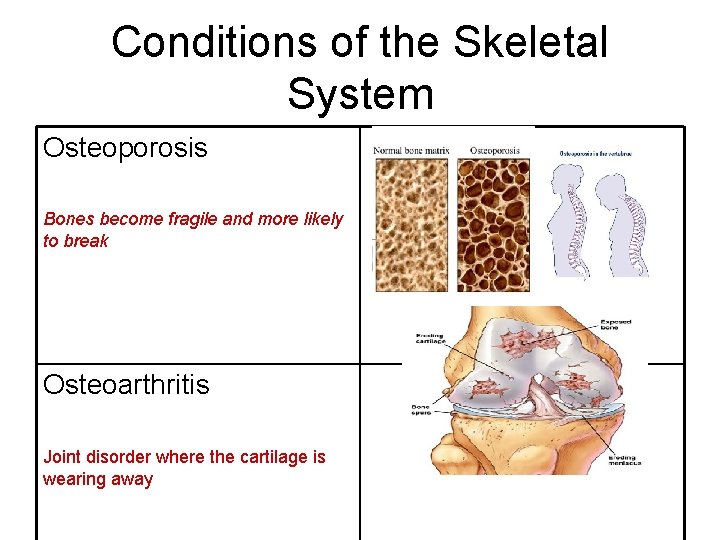
Conditions of the Skeletal System Osteoporosis Bones become fragile and more likely to break Osteoarthritis Joint disorder where the cartilage is wearing away
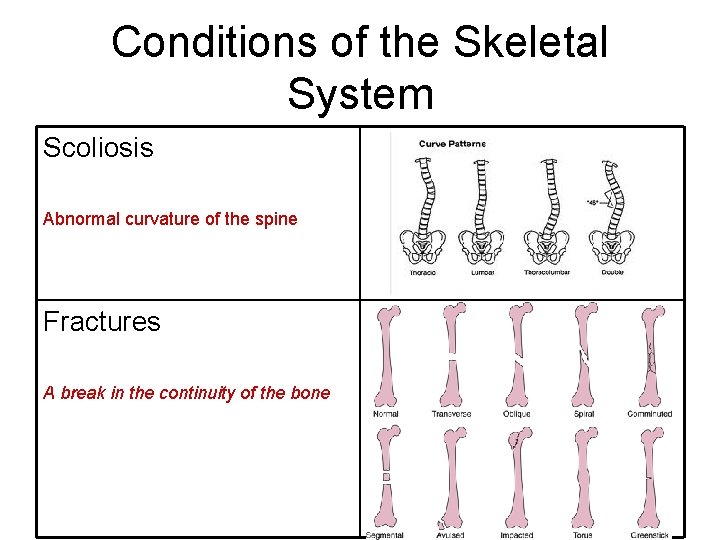
Conditions of the Skeletal System Scoliosis Abnormal curvature of the spine Fractures A break in the continuity of the bone
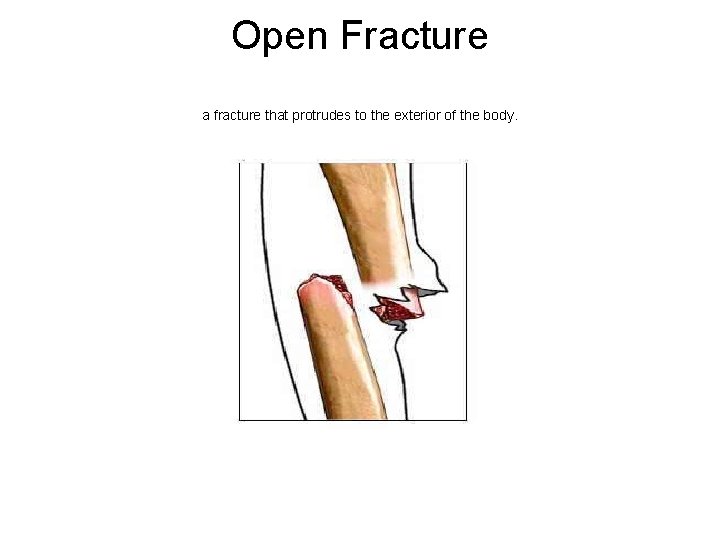
Open Fracture a fracture that protrudes to the exterior of the body.
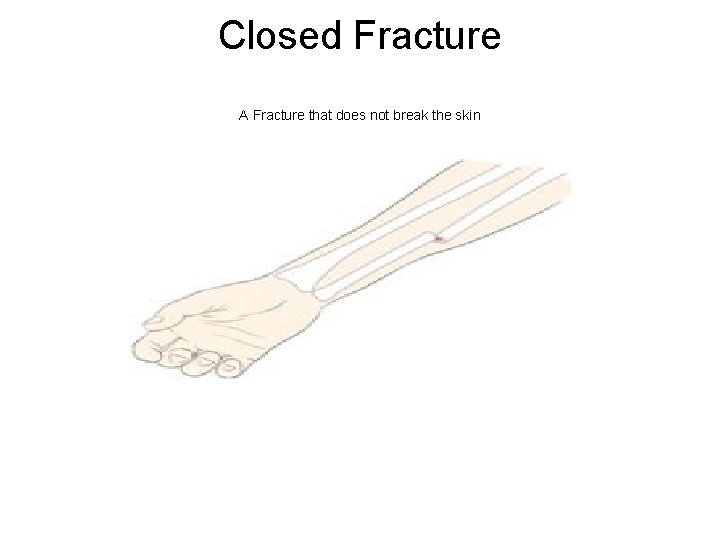
Closed Fracture A Fracture that does not break the skin
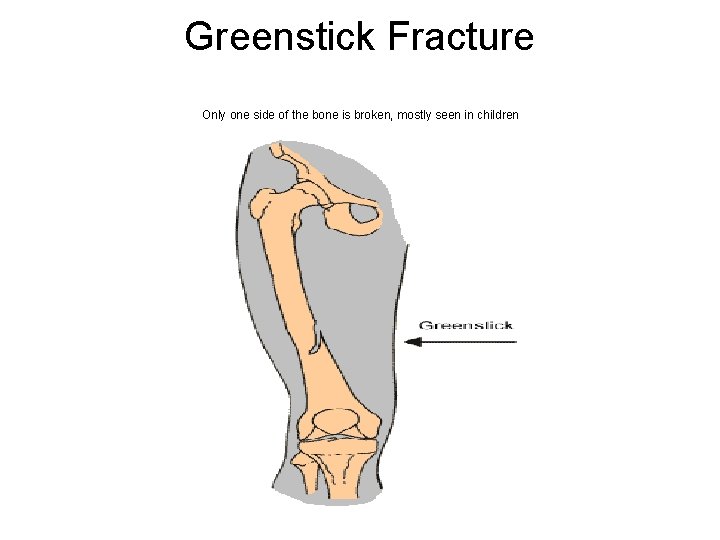
Greenstick Fracture Only one side of the bone is broken, mostly seen in children
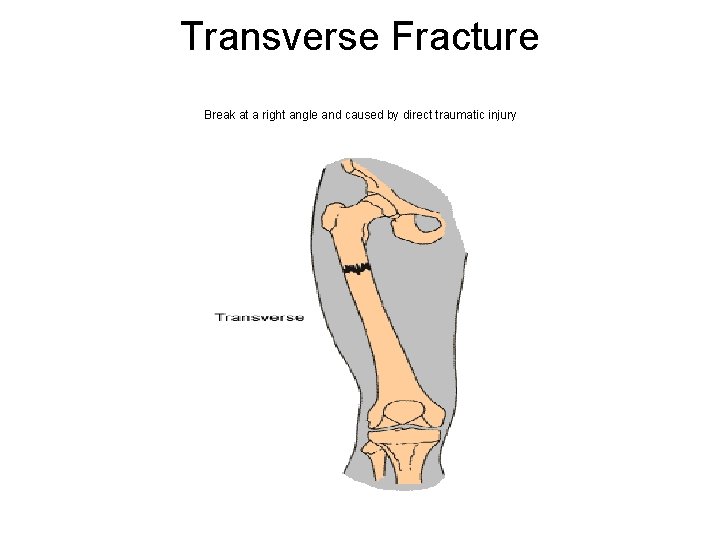
Transverse Fracture Break at a right angle and caused by direct traumatic injury
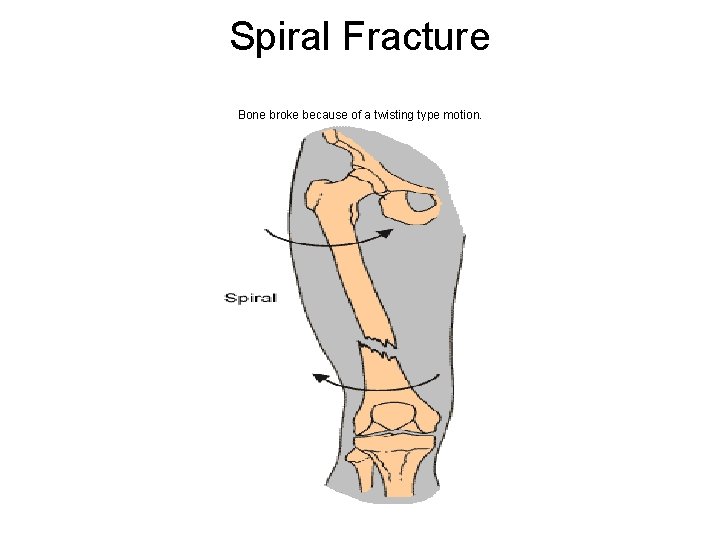
Spiral Fracture Bone broke because of a twisting type motion.
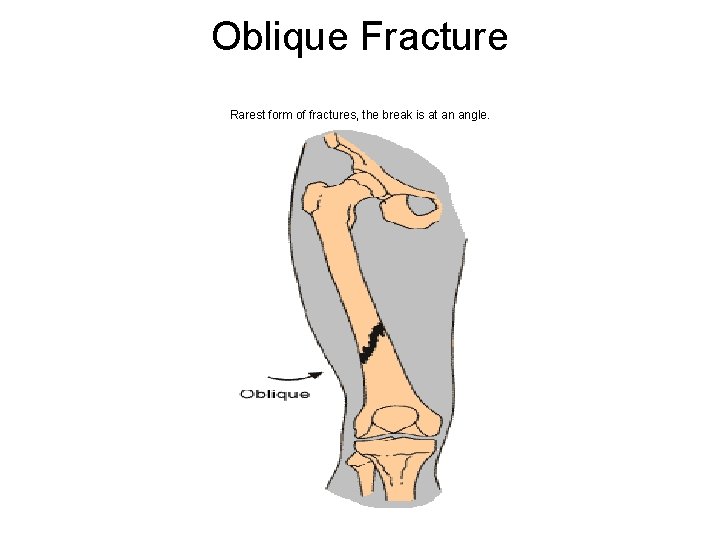
Oblique Fracture Rarest form of fractures, the break is at an angle.
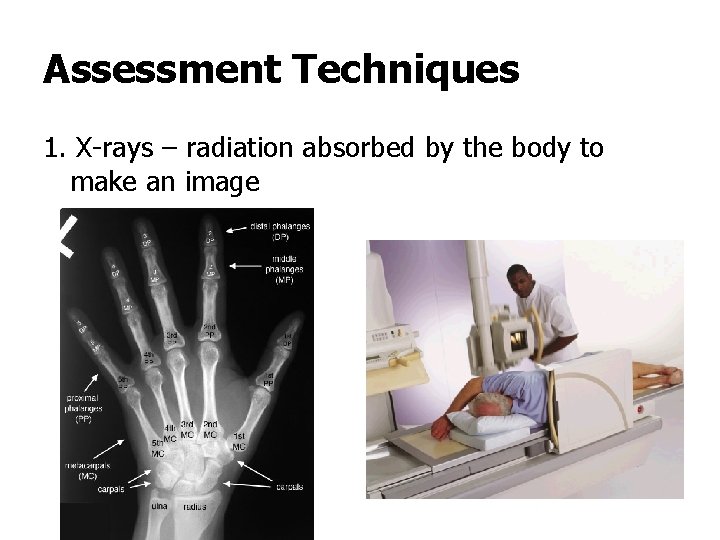
Assessment Techniques 1. X-rays – radiation absorbed by the body to make an image
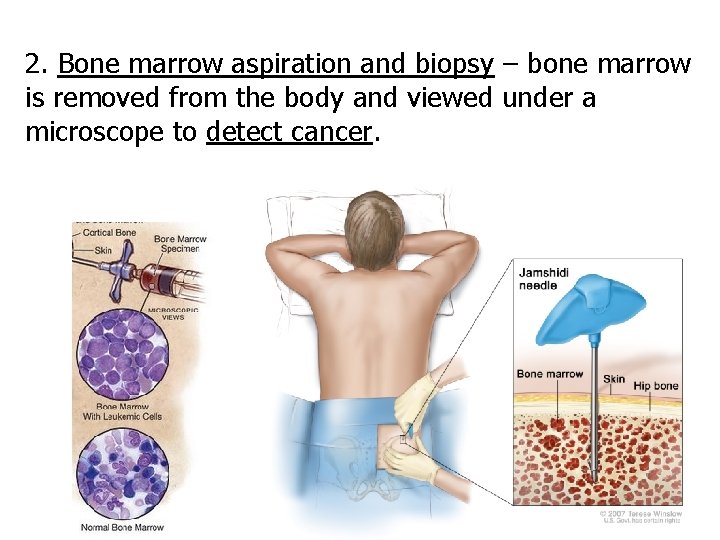
2. Bone marrow aspiration and biopsy – bone marrow is removed from the body and viewed under a microscope to detect cancer.
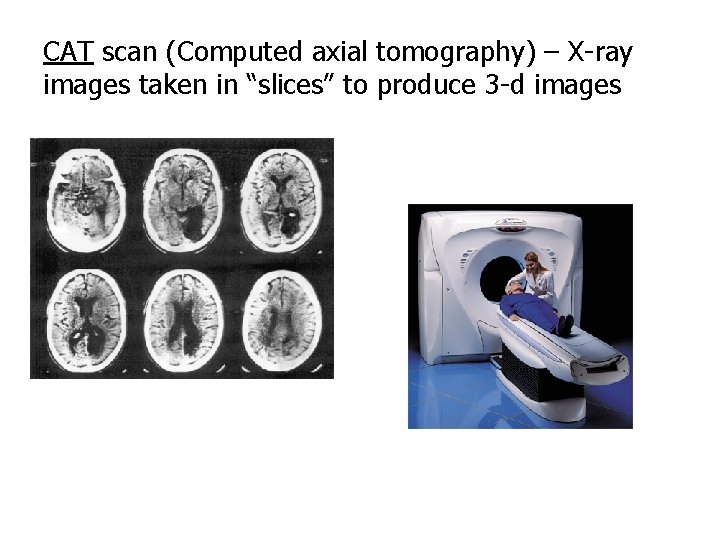
CAT scan (Computed axial tomography) – X-ray images taken in “slices” to produce 3 -d images
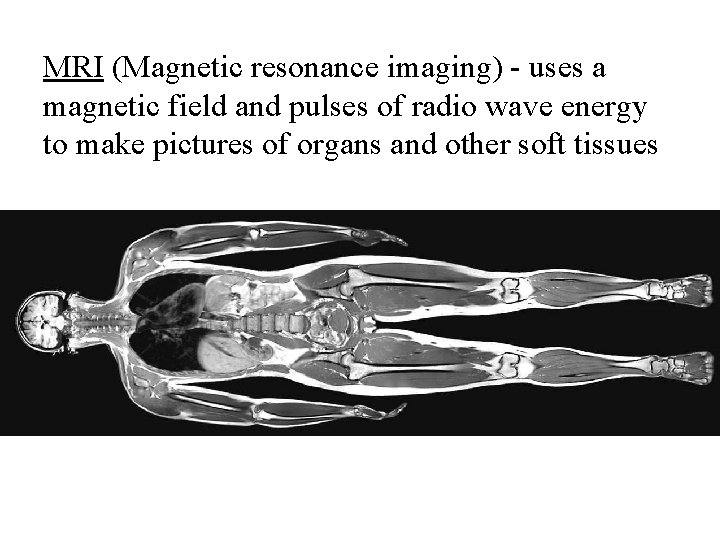
MRI (Magnetic resonance imaging) - uses a magnetic field and pulses of radio wave energy to make pictures of organs and other soft tissues
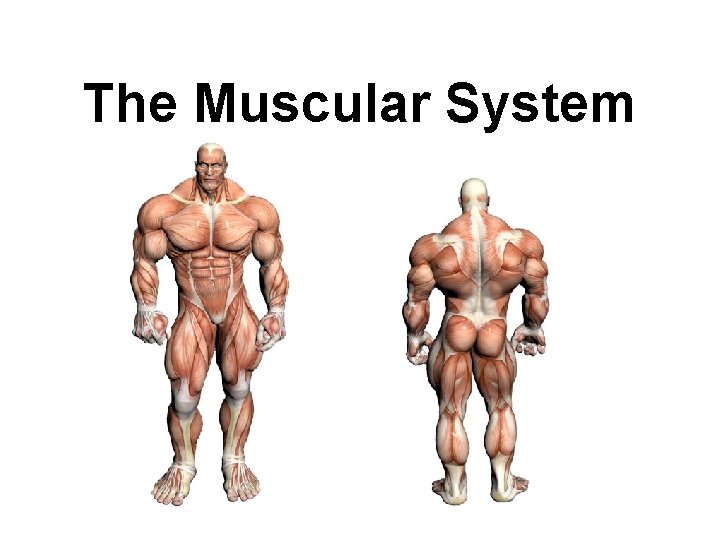
The Muscular System
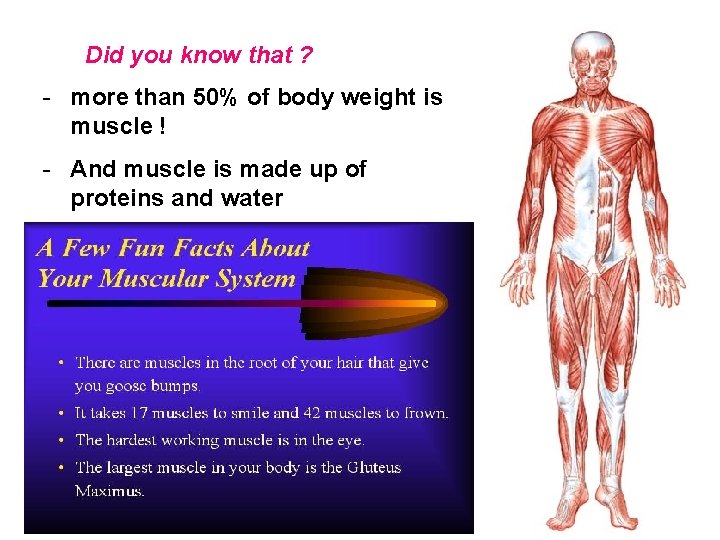
Did you know that ? - more than 50% of body weight is muscle ! - And muscle is made up of proteins and water
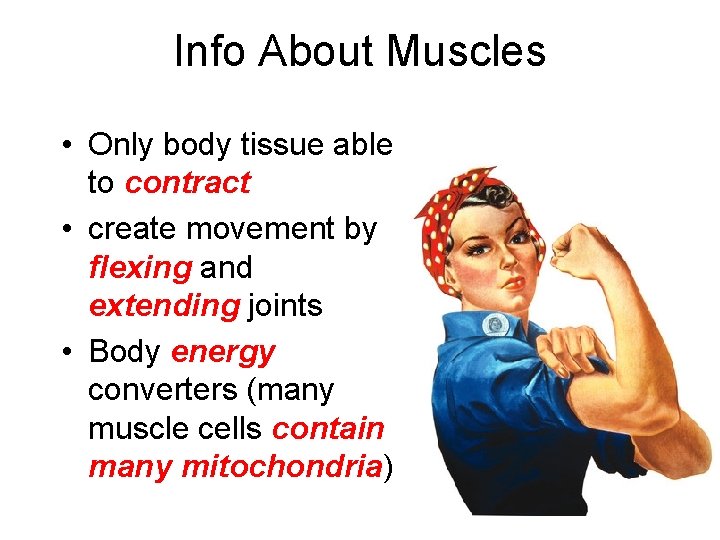
Info About Muscles • Only body tissue able to contract • create movement by flexing and extending joints • Body energy converters (many muscle cells contain many mitochondria)
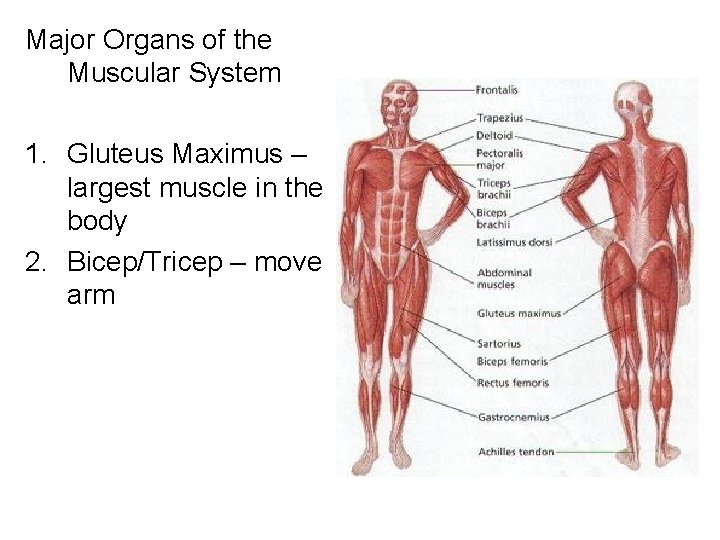
Major Organs of the Muscular System 1. Gluteus Maximus – largest muscle in the body 2. Bicep/Tricep – move arm
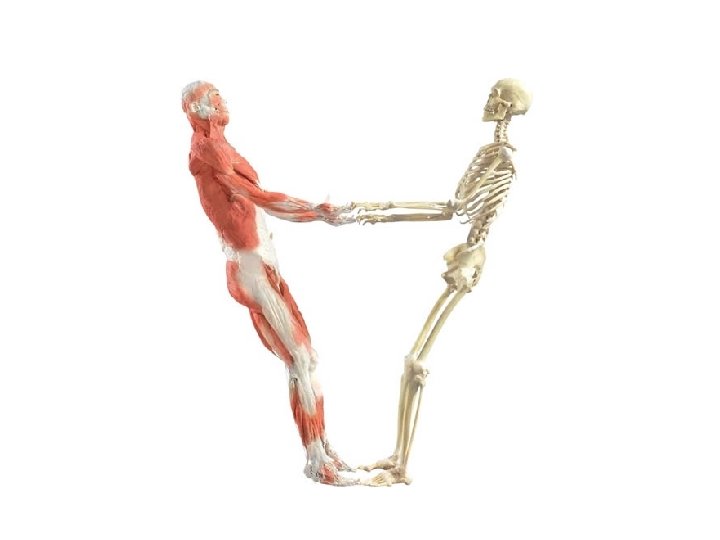
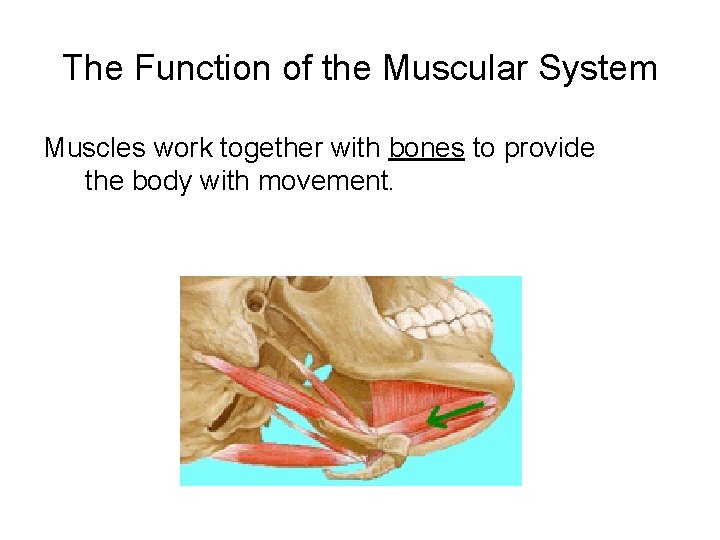
The Function of the Muscular System Muscles work together with bones to provide the body with movement.
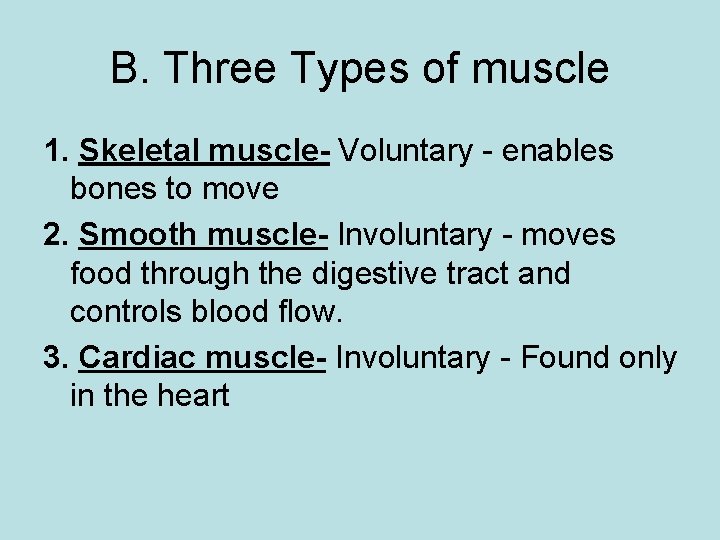
B. Three Types of muscle 1. Skeletal muscle- Voluntary - enables bones to move 2. Smooth muscle- Involuntary - moves food through the digestive tract and controls blood flow. 3. Cardiac muscle- Involuntary - Found only in the heart
How the Muscles Work • Skeletal muscles pull on the bones to produce movement. – Tendons connect bone to muscle
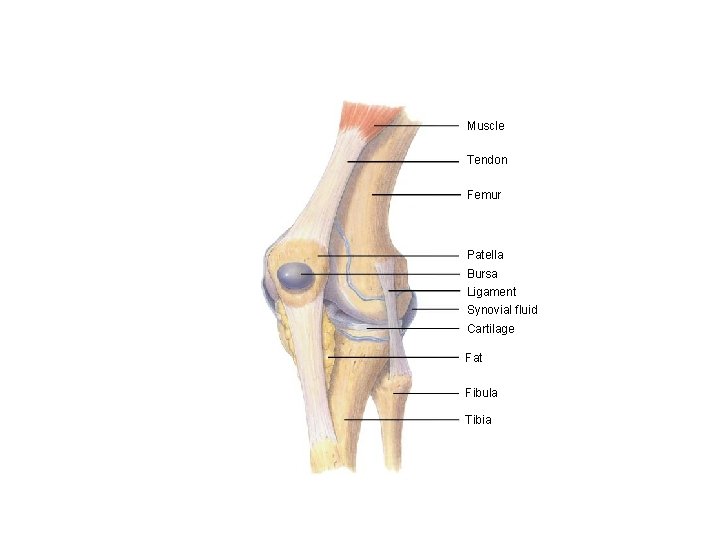
Figure 36 -5 Knee Joint Section 36 -1 Muscle Tendon Femur Patella Bursa Ligament Synovial fluid Cartilage Fat Fibula Tibia
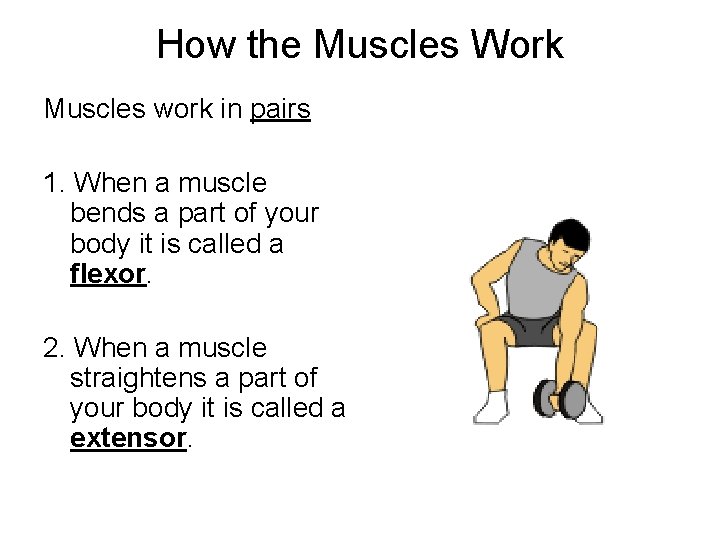
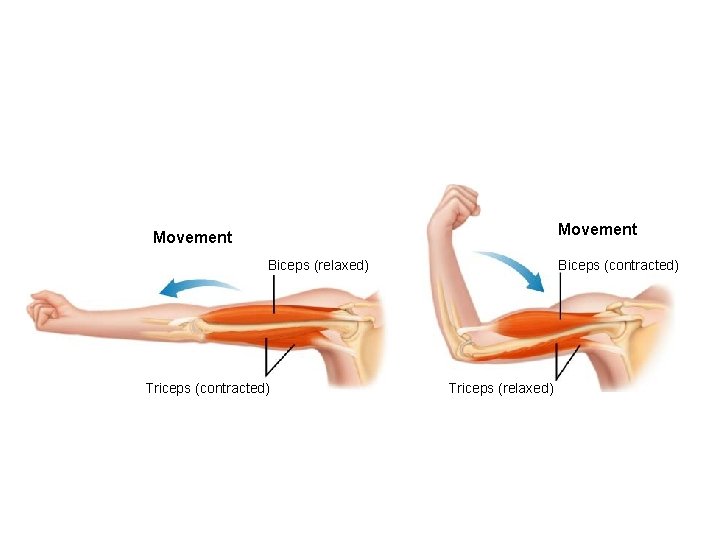
How the Muscles Work Muscles work in pairs 1. When a muscle bends a part of your body it is called a flexor. 2. When a muscle straightens a part of your body it is called a extensor.
Figure 36 -11 Opposing Muscle Pairs Section 36 -2 Movement Biceps (relaxed) Triceps (contracted) Biceps (contracted) Triceps (relaxed)
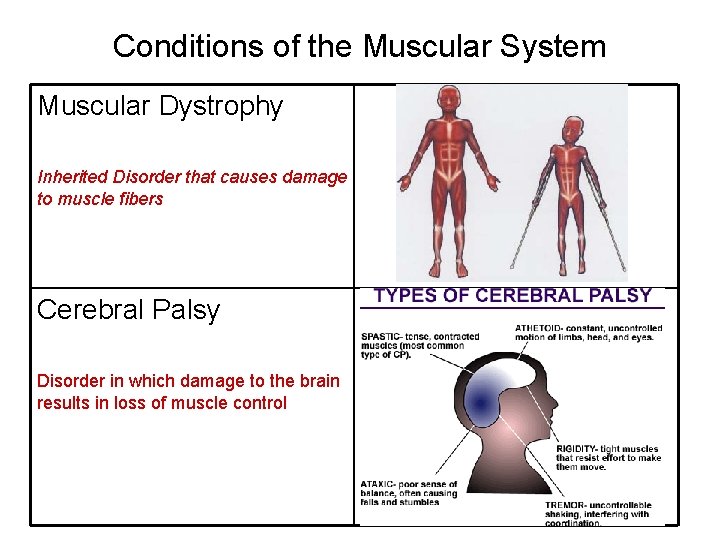
Conditions of the Muscular System Muscular Dystrophy Inherited Disorder that causes damage to muscle fibers Cerebral Palsy Disorder in which damage to the brain results in loss of muscle control
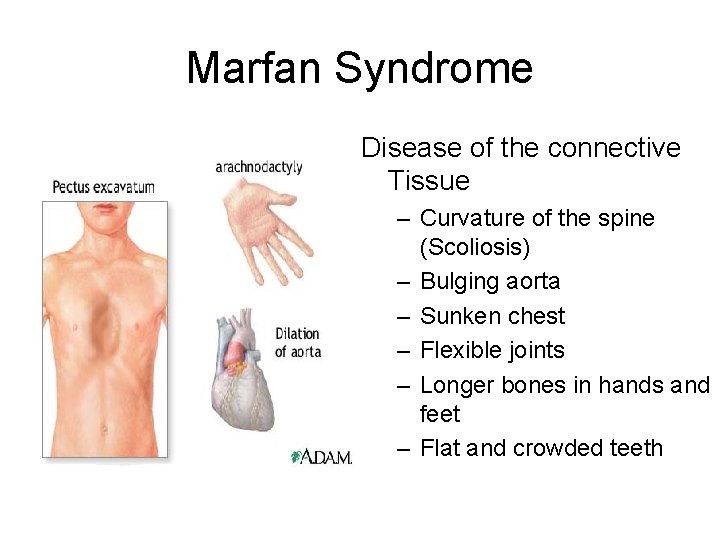
Marfan Syndrome Disease of the connective Tissue – Curvature of the spine (Scoliosis) – Bulging aorta – Sunken chest – Flexible joints – Longer bones in hands and feet – Flat and crowded teeth
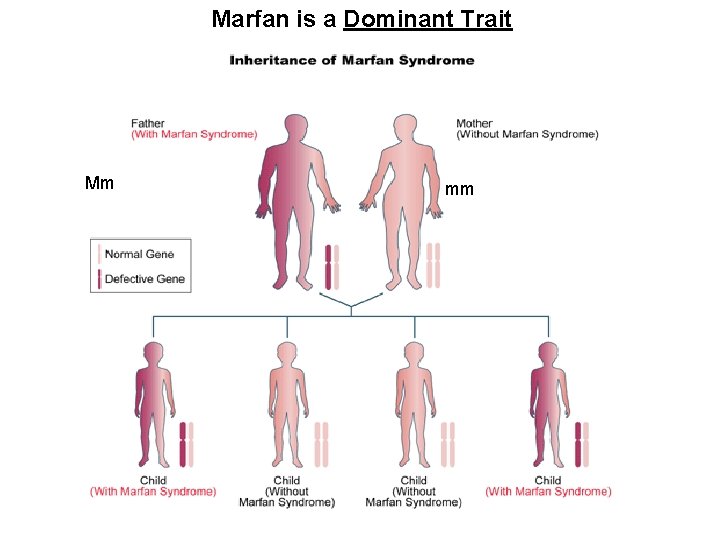
Marfan is a Dominant Trait Mm mm