
The Skeletal System Functions of Bones 1 support
The Skeletal System
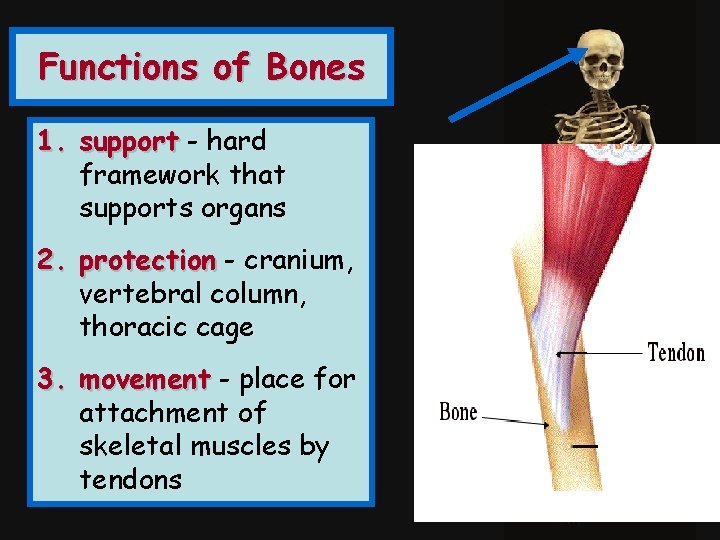
Functions of Bones 1. support - hard framework that supports organs 2. protection - cranium, vertebral column, thoracic cage 3. movement - place for attachment of skeletal muscles by tendons

3. storage - fat in marrow, calcium, phosphorus, and other minerals (K, Na, S, Mg, Cu) 4. blood cell formation hematopoiesis - occurs in red marrow of certain bones adults - mostly in flat bones ex: ribs, pelvis, femur (flat and long bones)
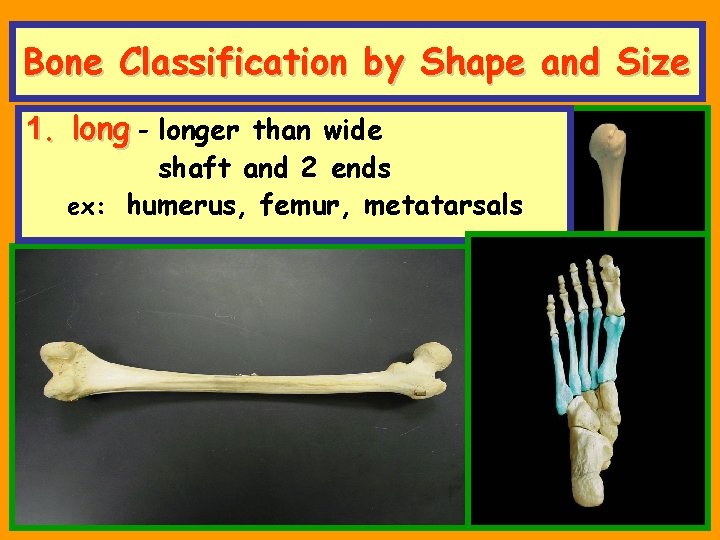
Bone Classification by Shape and Size 1. long - longer than wide shaft and 2 ends ex: humerus, femur, metatarsals
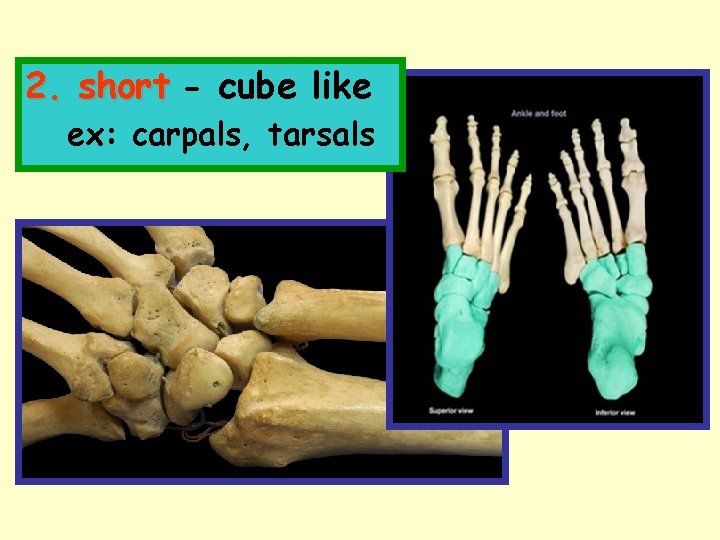
2. short - cube like ex: carpals, tarsals

3. flat - thin, flat, usually curved ex: ribs, most cranial, scapula, sternum
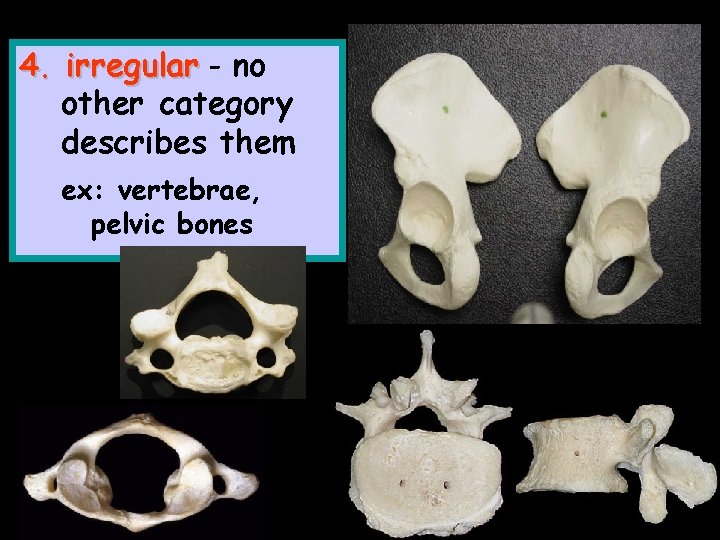
4. irregular - no other category describes them ex: vertebrae, pelvic bones
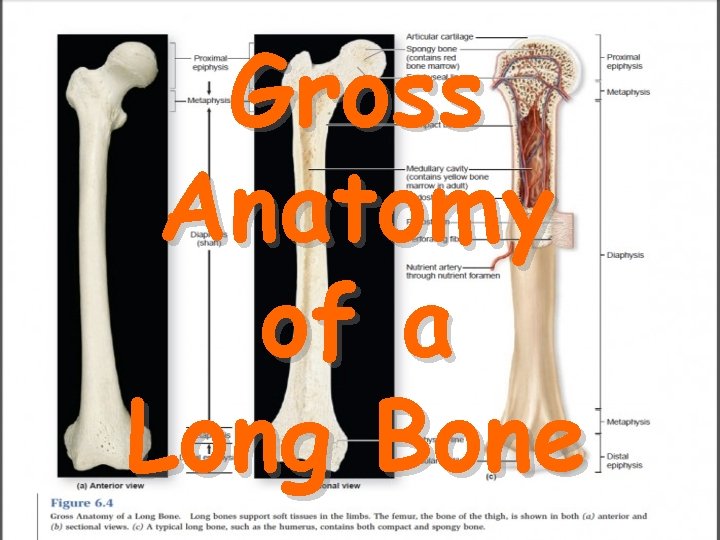
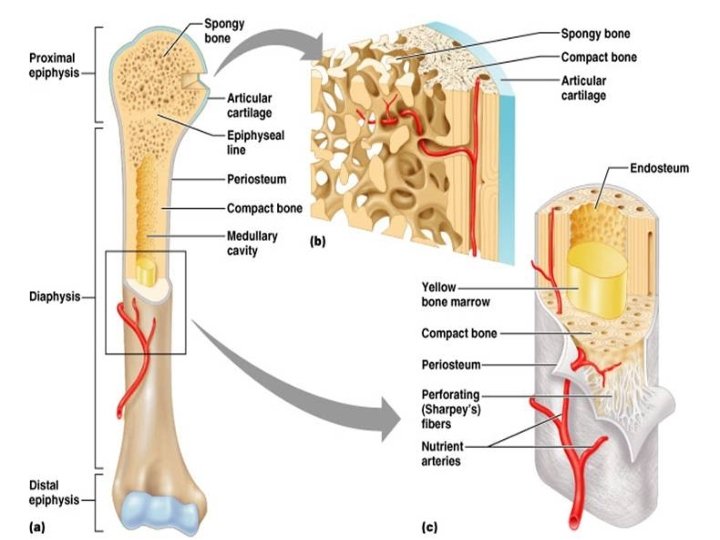
Gross Anatomy of a Long Bone
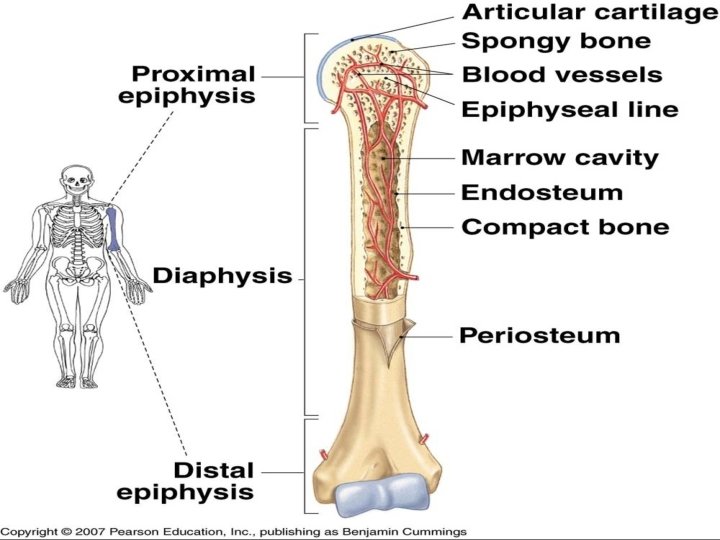
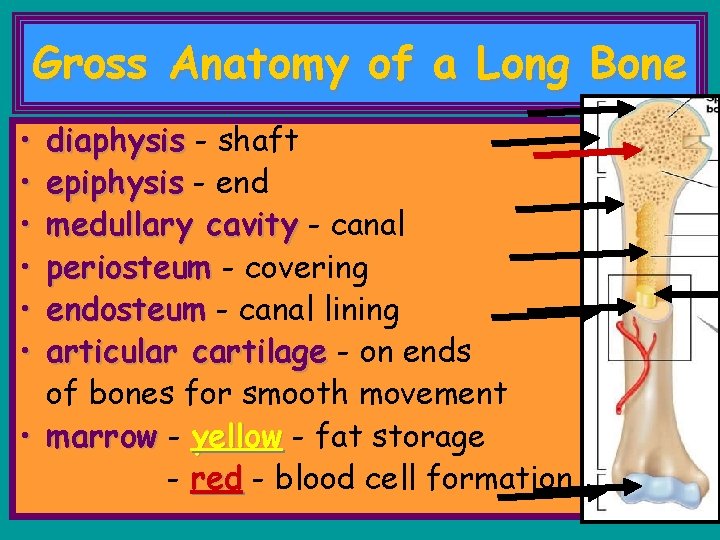
Gross Anatomy of a Long Bone • • • diaphysis - shaft epiphysis - end medullary cavity - canal periosteum - covering endosteum - canal lining articular cartilage - on ends of bones for smooth movement • marrow - yellow - fat storage - red - blood cell formation
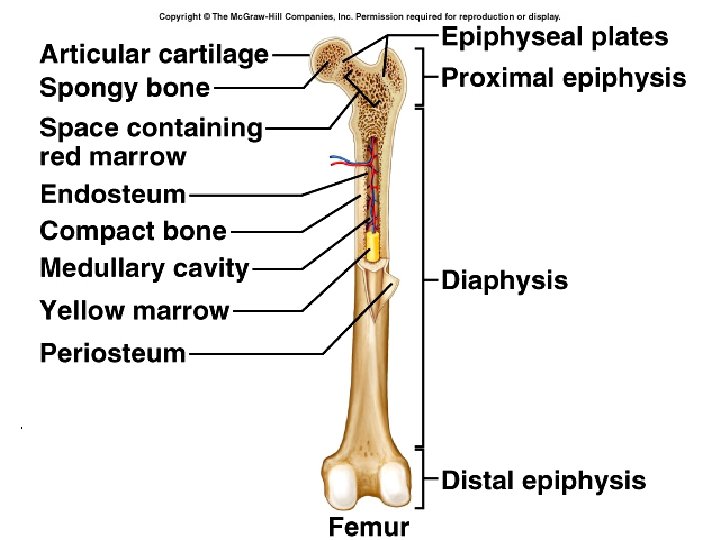
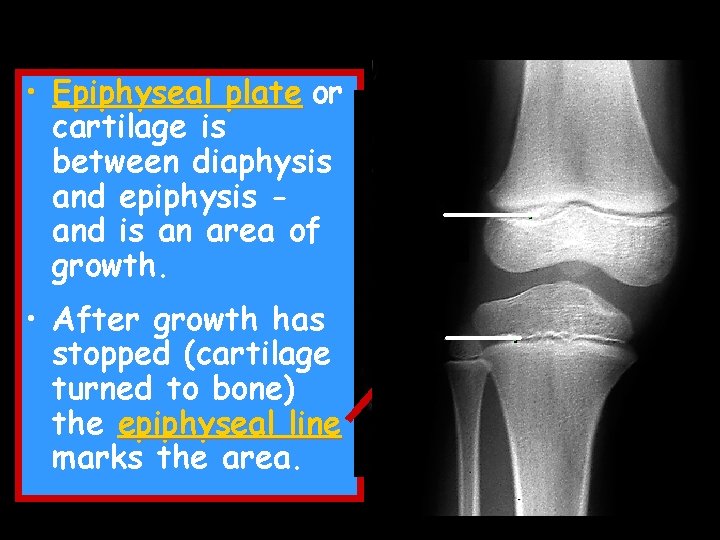
• Epiphyseal plate or cartilage is between diaphysis and epiphysis and is an area of growth. • After growth has stopped (cartilage turned to bone) the epiphyseal line marks the area.
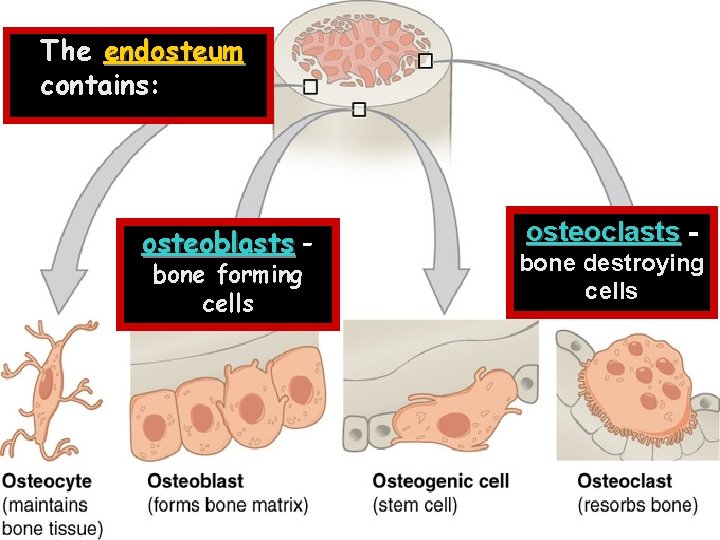
The endosteum contains: osteoblasts bone forming cells osteoclasts bone destroying cells
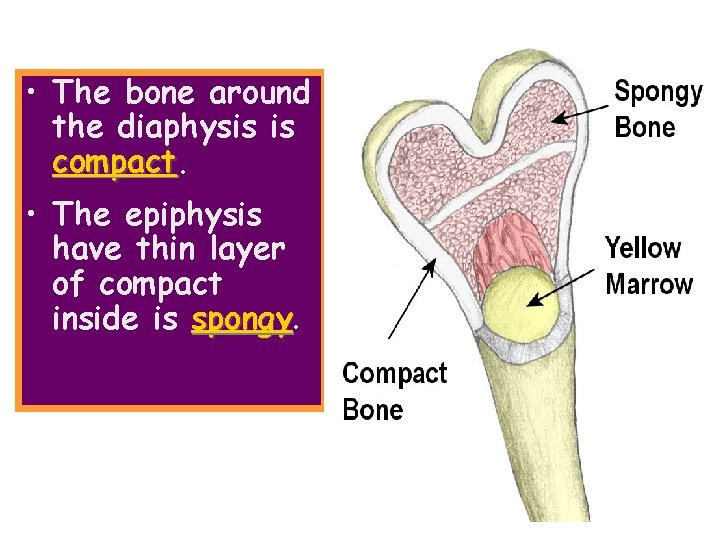
• The bone around the diaphysis is compact • The epiphysis have thin layer of compact inside is spongy
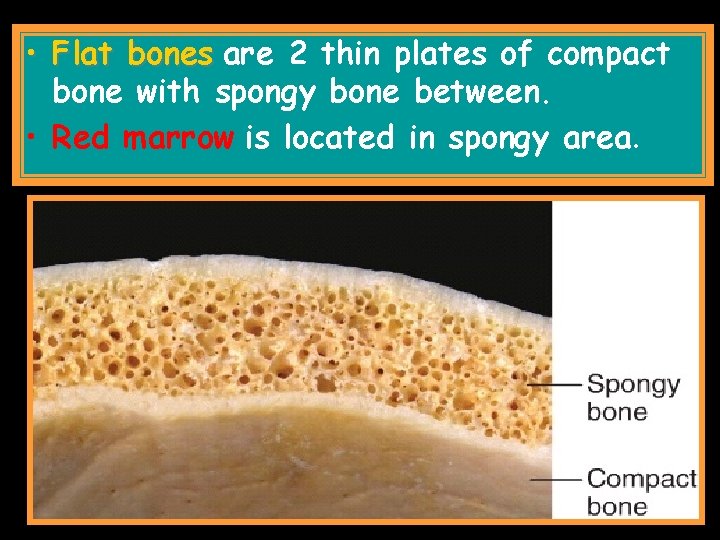
• Flat bones are 2 thin plates of compact bone with spongy bone between. • Red marrow is located in spongy area.
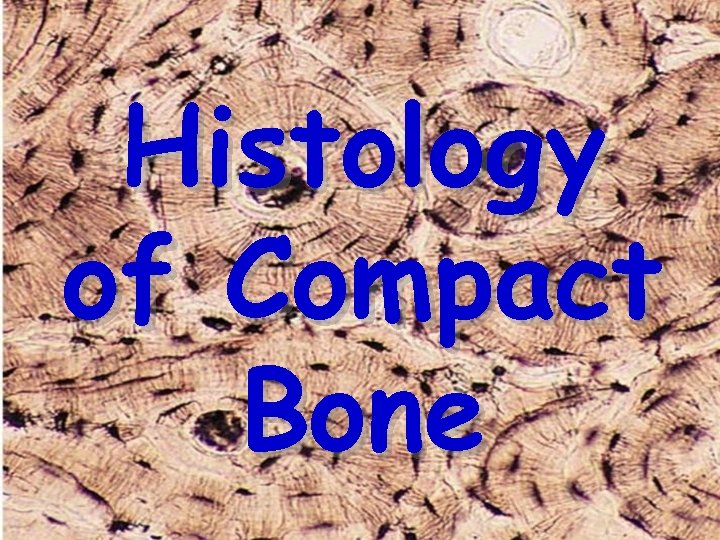
Histology of Compact Bone
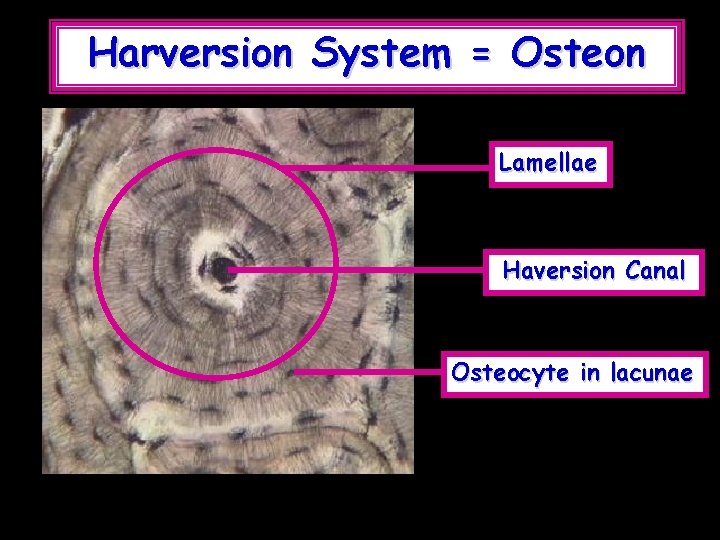
Harversion System = Osteon Lamellae Haversion Canal Osteocyte in lacunae
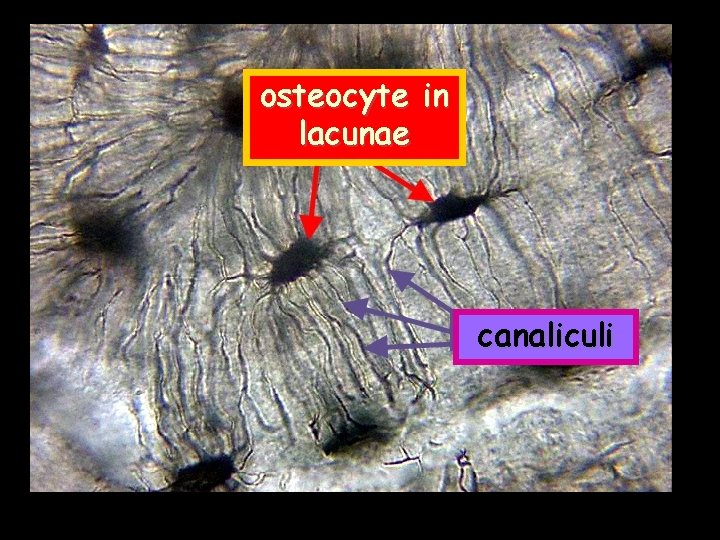
osteocyte in lacunae canaliculi
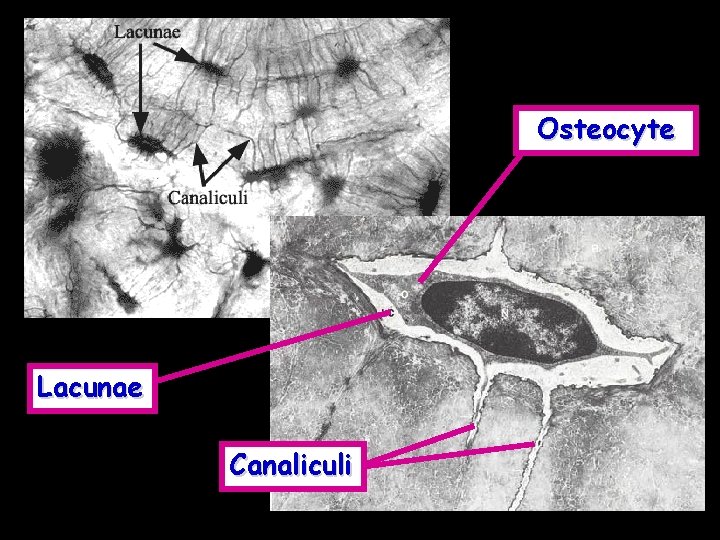
Osteocyte Lacunae Canaliculi
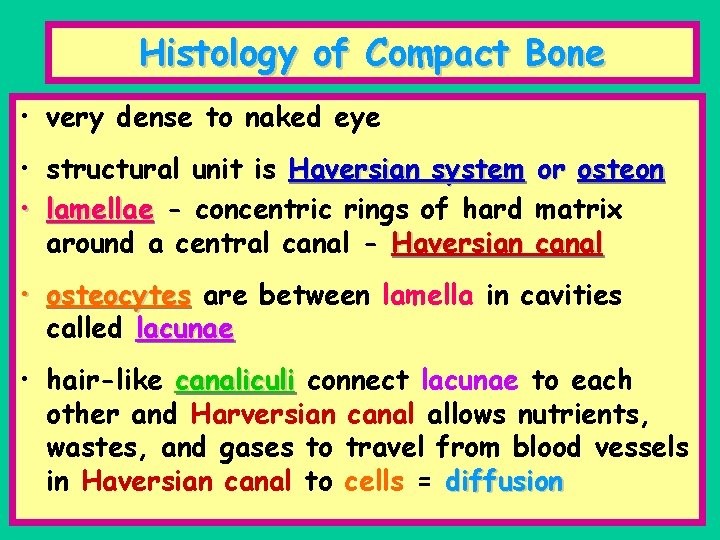
Histology of Compact Bone • very dense to naked eye • structural unit is Haversian system • lamellae - concentric rings of hard around a central canal - Haversian or osteon matrix canal • osteocytes are between lamella in cavities called lacunae • hair-like canaliculi connect lacunae to each other and Harversian canal allows nutrients, wastes, and gases to travel from blood vessels in Haversian canal to cells = diffusion
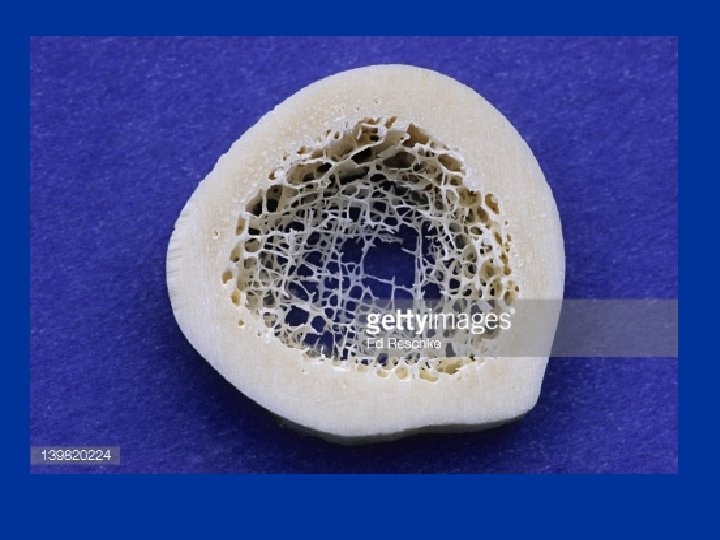
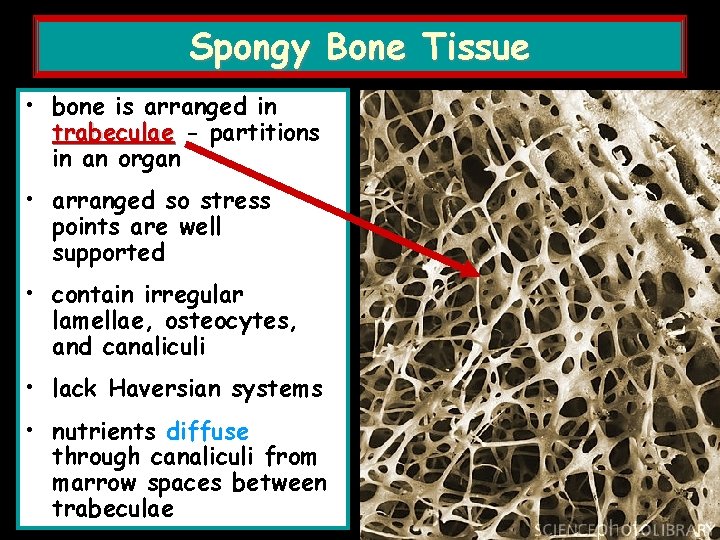
Spongy Bone Tissue • bone is arranged in trabeculae - partitions in an organ • arranged so stress points are well supported • contain irregular lamellae, osteocytes, and canaliculi • lack Haversian systems • nutrients diffuse through canaliculi from marrow spaces between trabeculae
Chemical Composition of Bone • organic - 1/3 of mass - cells (blast, cytes, clasts) - organic matrix - tensile strength • inorganic - 2/3 of mass - inorganic mineral salts calcium phosphate calcium hydroxide calcium carbonate - provides hardness - bone is extremely strong but not brittle
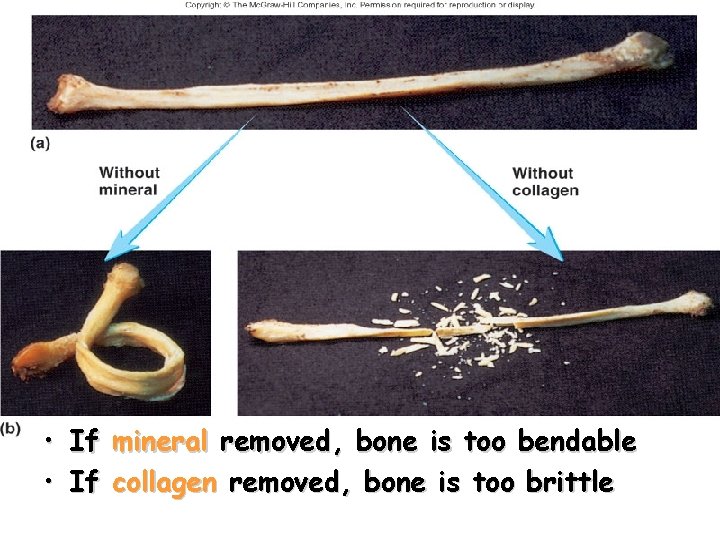
• If mineral removed, bone is too bendable • If collagen removed, bone is too brittle
- Slides: 25