
The Skeletal System Chapter 6 The Skeletal System
- Slides: 33
The Skeletal System Chapter 6
The Skeletal System The skeletal system includes: ¨ Bones ¨ Cartilages ¨ Joints (articulations) ¨ Ligaments ¨ Other connective tissues
The Skeletal System Functions of the Skeletal System ¨ Support ¨ Protection ¨ Movement (Leverage) ¨ Storage n __________ ¨ Blood cell production
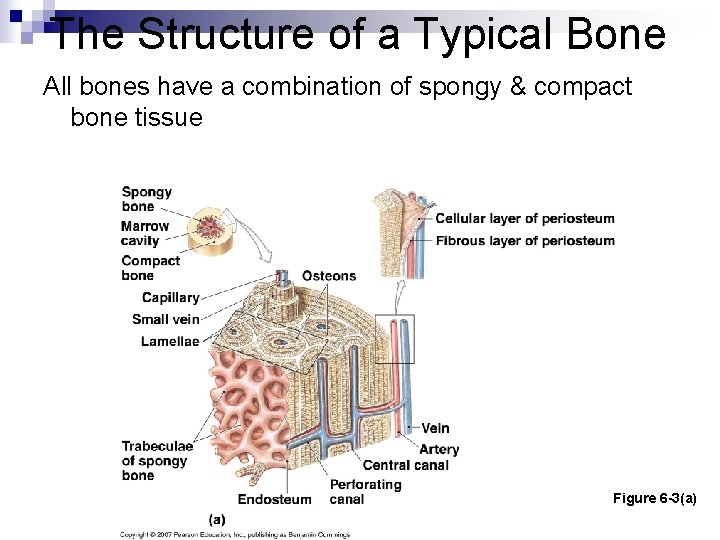
The Structure of a Typical Bone All bones have a combination of spongy & compact bone tissue Figure 6 -3(a)
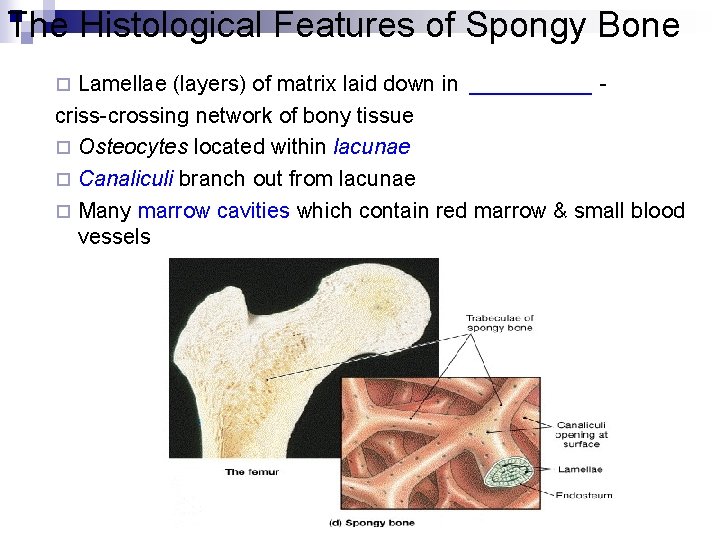
The Histological Features of Spongy Bone Lamellae (layers) of matrix laid down in _____ criss-crossing network of bony tissue ¨ Osteocytes located within lacunae ¨ Canaliculi branch out from lacunae ¨ Many marrow cavities which contain red marrow & small blood vessels ¨
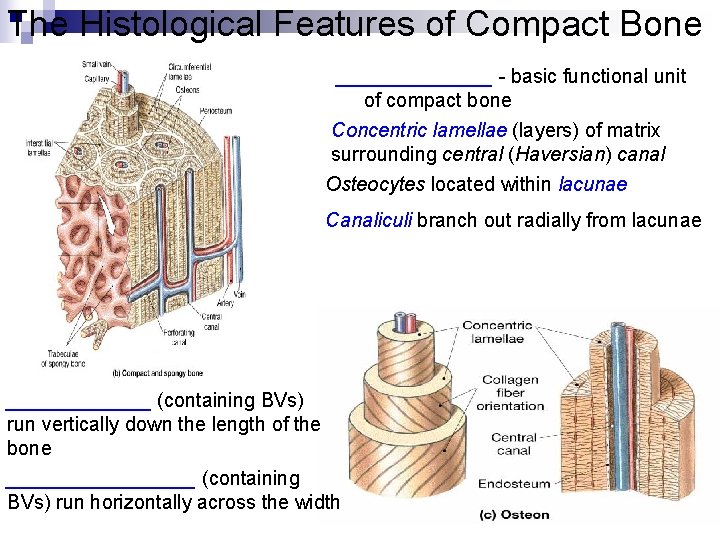
The Histological Features of Compact Bone _______ - basic functional unit of compact bone Concentric lamellae (layers) of matrix surrounding central (Haversian) canal Osteocytes located within lacunae Canaliculi branch out radially from lacunae _______ (containing BVs) run vertically down the length of the bone _________ (containing BVs) run horizontally across the width
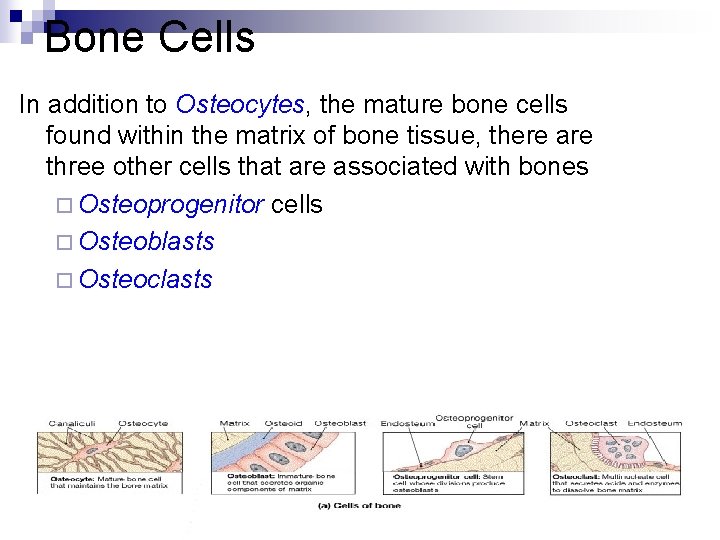
Bone Cells In addition to Osteocytes, the mature bone cells found within the matrix of bone tissue, there are three other cells that are associated with bones ¨ Osteoprogenitor cells ¨ Osteoblasts ¨ Osteoclasts
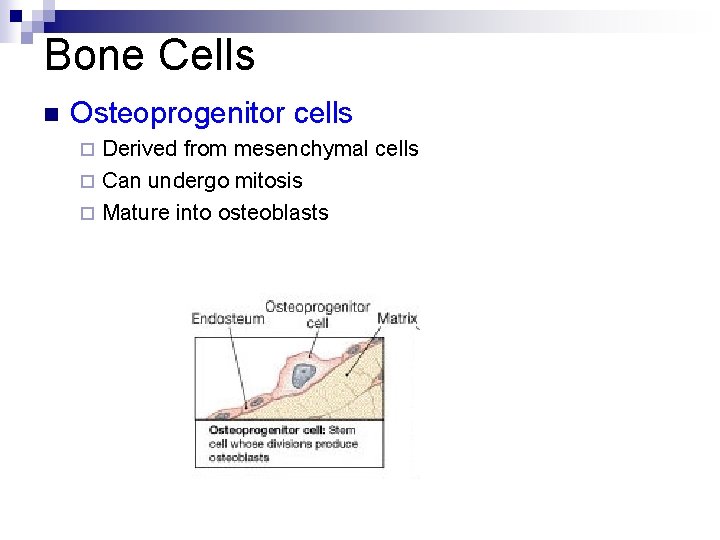
Bone Cells n Osteoprogenitor cells Derived from mesenchymal cells ¨ Can undergo mitosis ¨ Mature into osteoblasts ¨
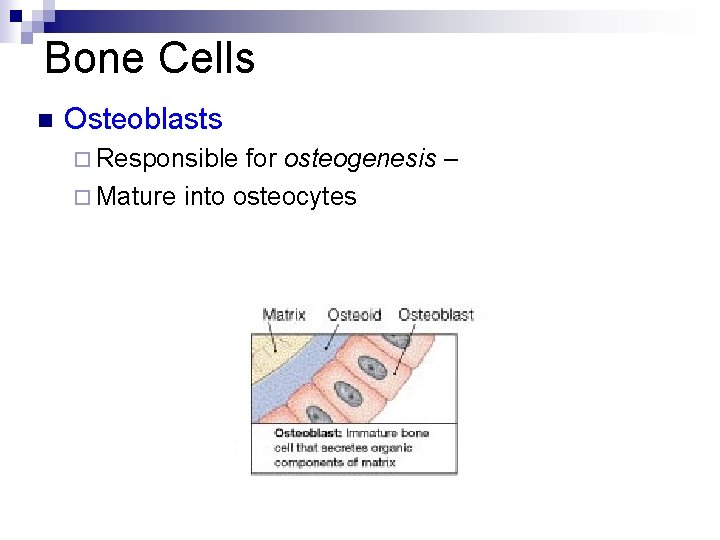
Bone Cells n Osteoblasts ¨ Responsible for osteogenesis – ¨ Mature into osteocytes
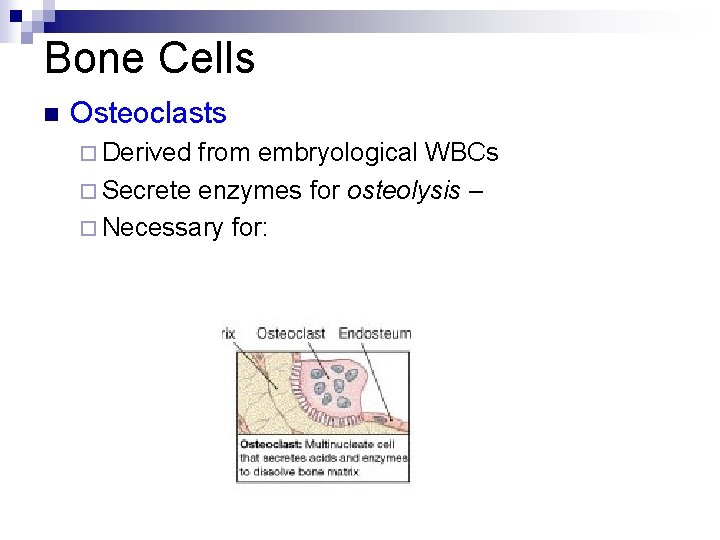
Bone Cells n Osteoclasts ¨ Derived from embryological WBCs ¨ Secrete enzymes for osteolysis – ¨ Necessary for:
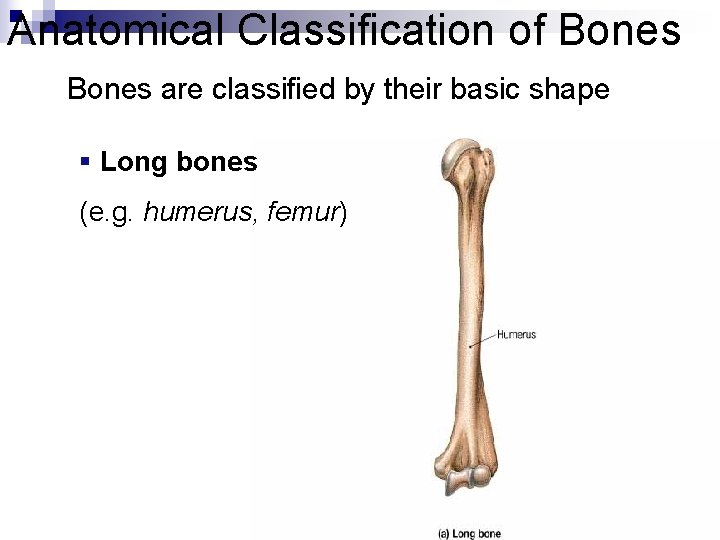
Anatomical Classification of Bones are classified by their basic shape § Long bones (e. g. humerus, femur)
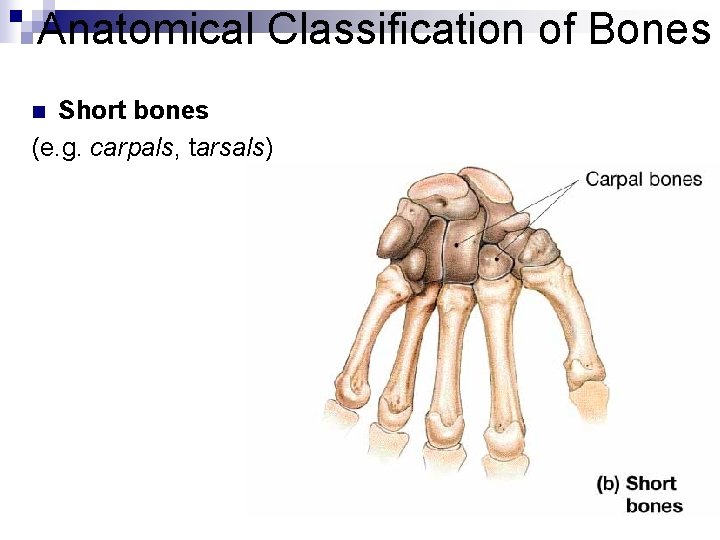
Anatomical Classification of Bones Short bones (e. g. carpals, tarsals) n
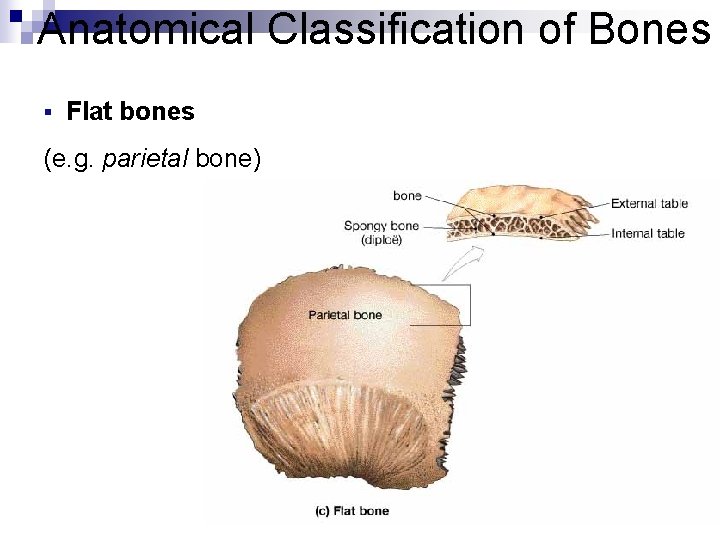
Anatomical Classification of Bones § Flat bones (e. g. parietal bone)
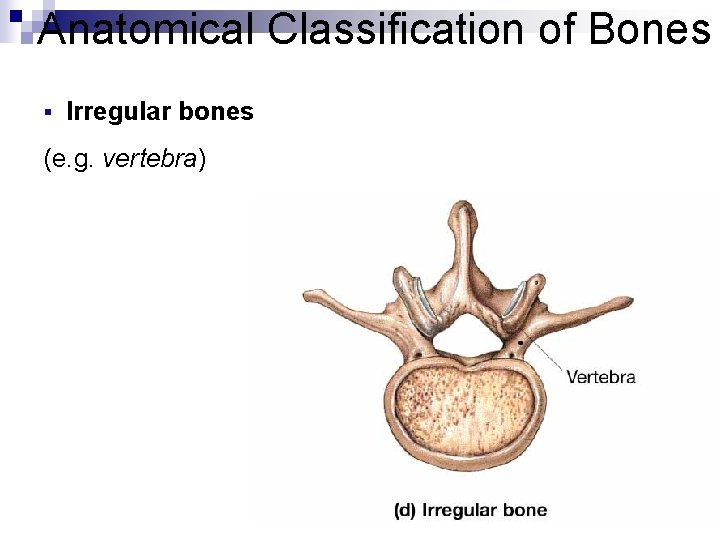
Anatomical Classification of Bones § Irregular bones (e. g. vertebra)
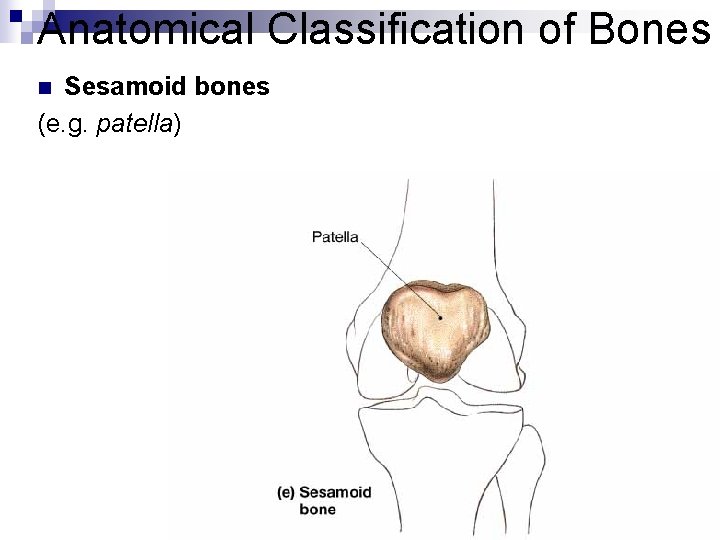
Anatomical Classification of Bones Sesamoid bones (e. g. patella) n
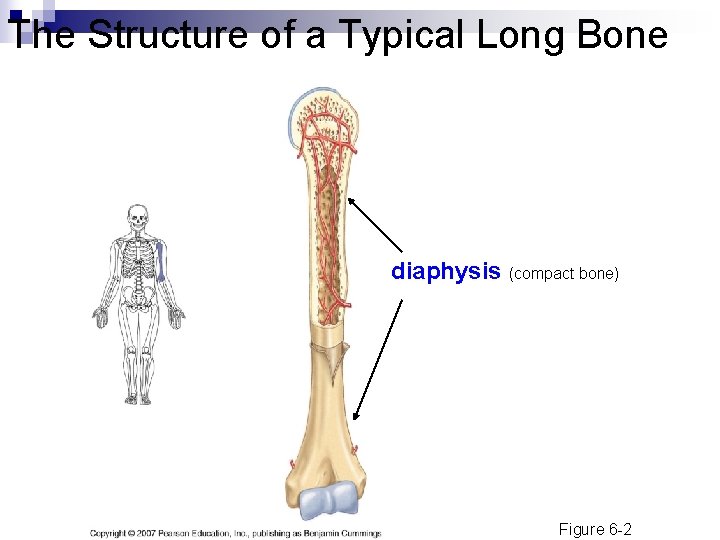
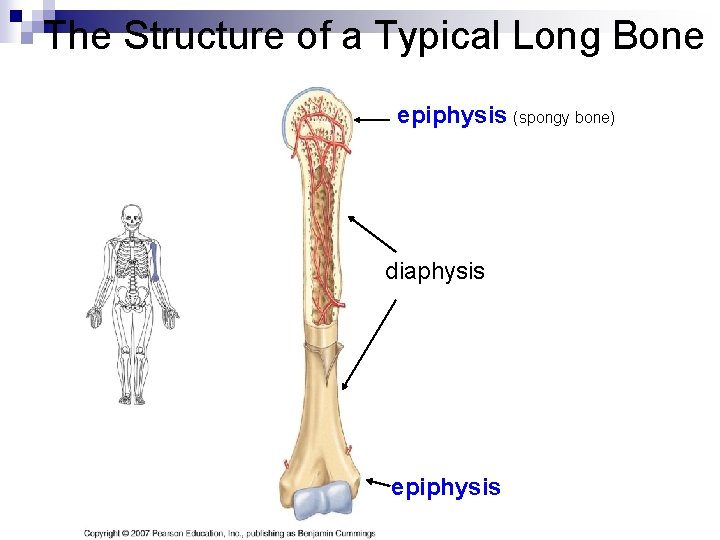
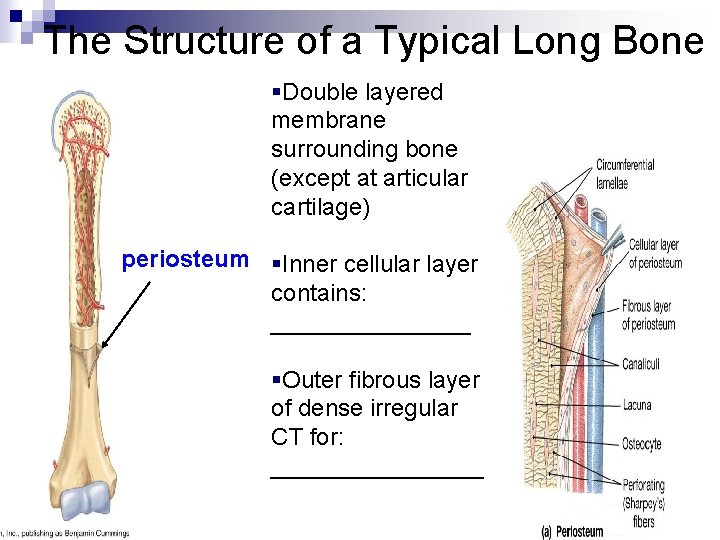
The Structure of a Typical Long Bone diaphysis (compact bone) Figure 6 -2
The Structure of a Typical Long Bone epiphysis (spongy bone) diaphysis epiphysis
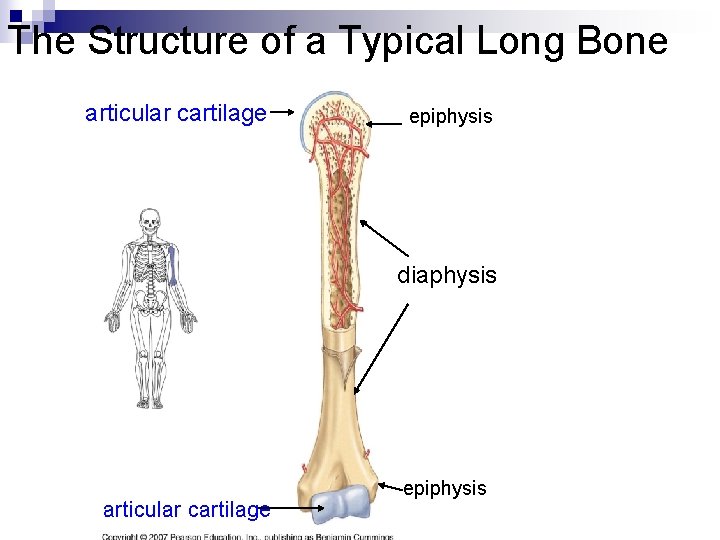
The Structure of a Typical Long Bone articular cartilage epiphysis diaphysis articular cartilage epiphysis
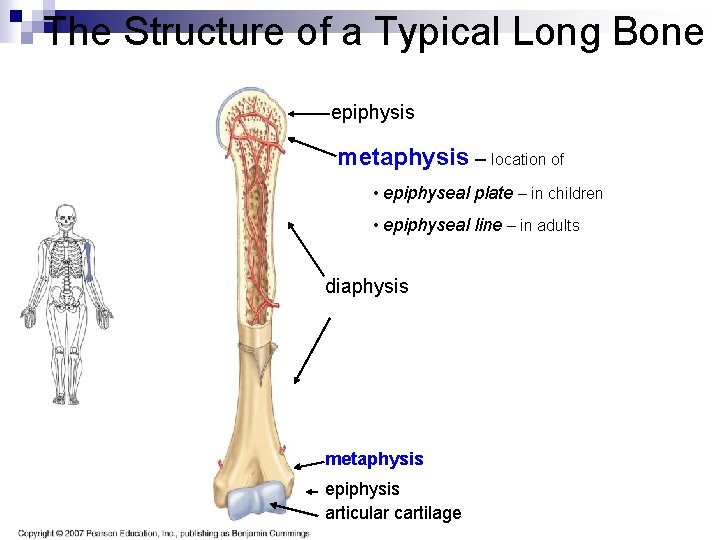
The Structure of a Typical Long Bone epiphysis metaphysis – location of • epiphyseal plate – in children • epiphyseal line – in adults diaphysis metaphysis epiphysis articular cartilage
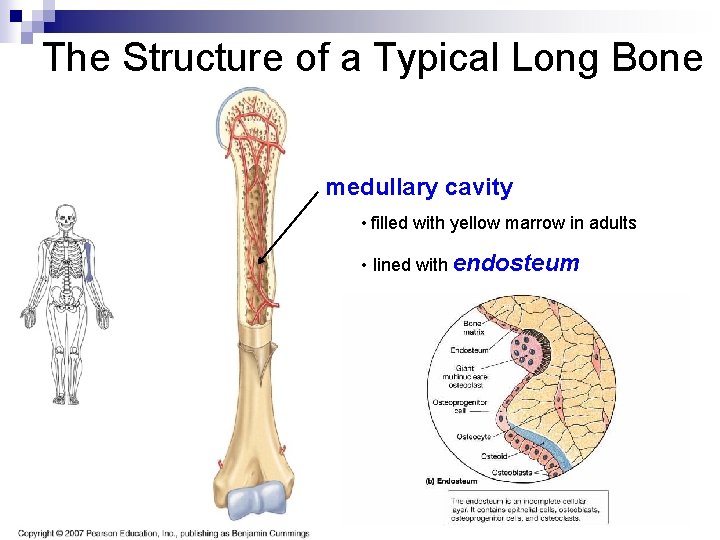
The Structure of a Typical Long Bone medullary cavity • filled with yellow marrow in adults • lined with endosteum
The Structure of a Typical Long Bone §Double layered membrane surrounding bone (except at articular cartilage) periosteum §Inner cellular layer contains: ________ §Outer fibrous layer of dense irregular CT for: ________
Bone Formation and Growth Ossification - Process of converting other tissues to bone Two types of ossification processes occur during embryological formation: § Intramembranous § Endochondral
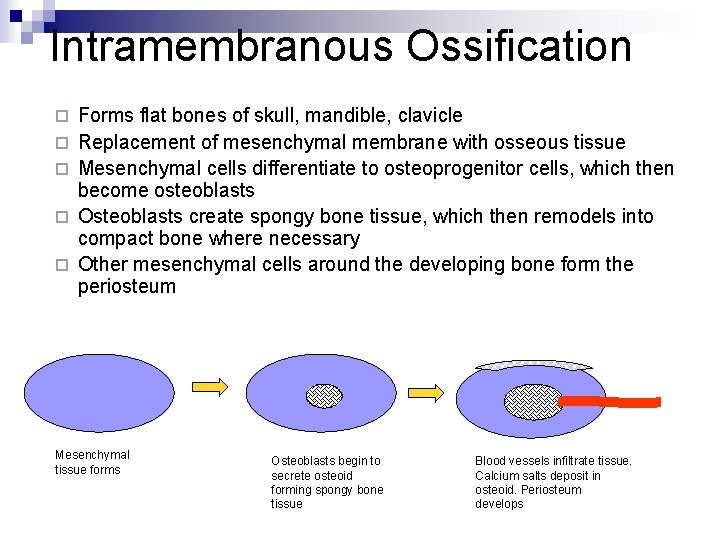
Intramembranous Ossification ¨ ¨ ¨ Forms flat bones of skull, mandible, clavicle Replacement of mesenchymal membrane with osseous tissue Mesenchymal cells differentiate to osteoprogenitor cells, which then become osteoblasts Osteoblasts create spongy bone tissue, which then remodels into compact bone where necessary Other mesenchymal cells around the developing bone form the periosteum Mesenchymal tissue forms Osteoblasts begin to secrete osteoid forming spongy bone tissue Blood vessels infiltrate tissue. Calcium salts deposit in osteoid. Periosteum develops
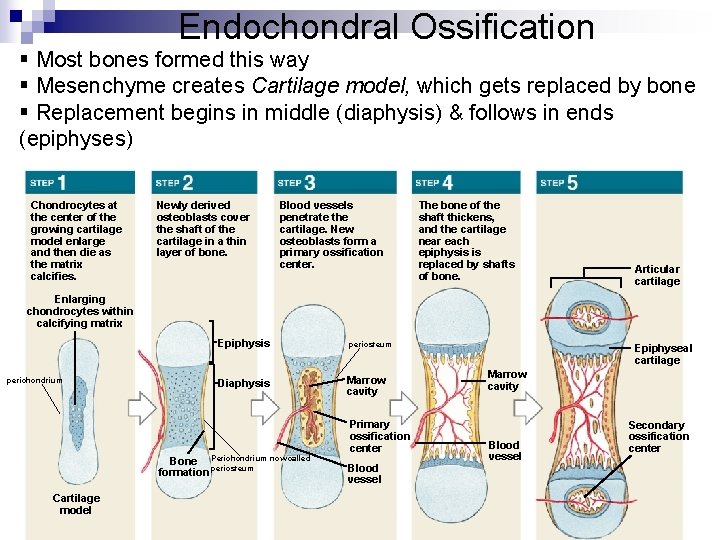
Endochondral Ossification § Most bones formed this way § Mesenchyme creates Cartilage model, which gets replaced by bone § Replacement begins in middle (diaphysis) & follows in ends (epiphyses) Chondrocytes at the center of the growing cartilage model enlarge and then die as the matrix calcifies. Newly derived osteoblasts cover the shaft of the cartilage in a thin layer of bone. Blood vessels penetrate the cartilage. New osteoblasts form a primary ossification center. The bone of the shaft thickens, and the cartilage near each epiphysis is replaced by shafts of bone. Articular cartilage Enlarging chondrocytes within calcifying matrix perichondrium Epiphysis periosteum Diaphysis Marrow cavity Primary ossification center Bone formation Cartilage model Perichondrium now called periosteum Blood vessel Epiphyseal cartilage Marrow cavity Blood vessel Secondary ossification center
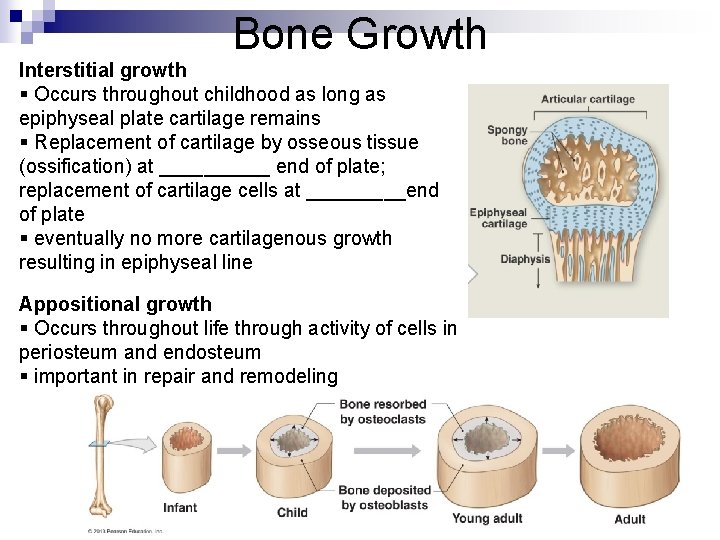
Bone Growth Interstitial growth § Occurs throughout childhood as long as epiphyseal plate cartilage remains § Replacement of cartilage by osseous tissue (ossification) at _____ end of plate; replacement of cartilage cells at _____end of plate § eventually no more cartilagenous growth resulting in epiphyseal line Appositional growth § Occurs throughout life through activity of cells in periosteum and endosteum § important in repair and remodeling
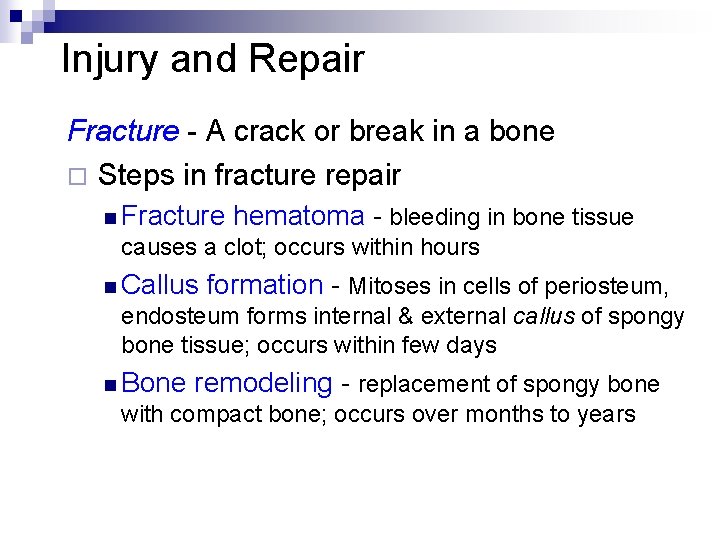
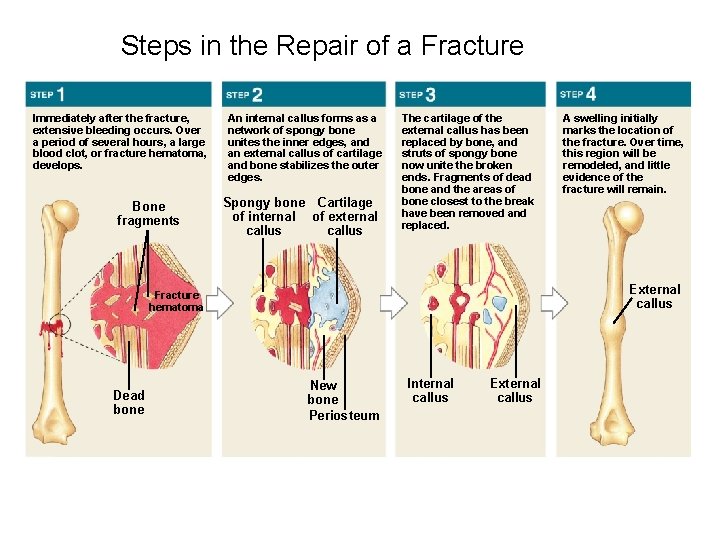
Injury and Repair Fracture - A crack or break in a bone ¨ Steps in fracture repair n Fracture hematoma - bleeding in bone tissue causes a clot; occurs within hours n Callus formation - Mitoses in cells of periosteum, endosteum forms internal & external callus of spongy bone tissue; occurs within few days n Bone remodeling - replacement of spongy bone with compact bone; occurs over months to years
Steps in the Repair of a Fracture Immediately after the fracture, extensive bleeding occurs. Over a period of several hours, a large blood clot, or fracture hematoma, develops. Bone fragments An internal callus forms as a network of spongy bone unites the inner edges, and an external callus of cartilage and bone stabilizes the outer edges. Spongy bone Cartilage of internal of external callus The cartilage of the external callus has been replaced by bone, and struts of spongy bone now unite the broken ends. Fragments of dead bone and the areas of bone closest to the break have been removed and replaced. External callus Fracture hematoma Dead bone A swelling initially marks the location of the fracture. Over time, this region will be remodeled, and little evidence of the fracture will remain. New bone Periosteum Internal callus External callus
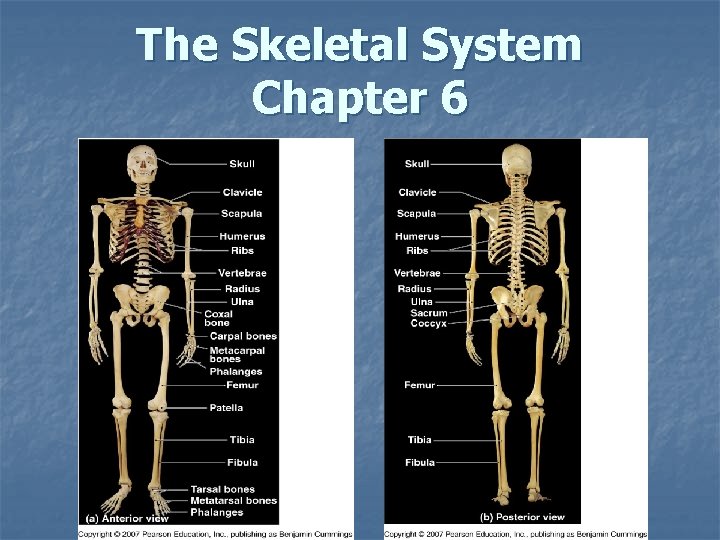
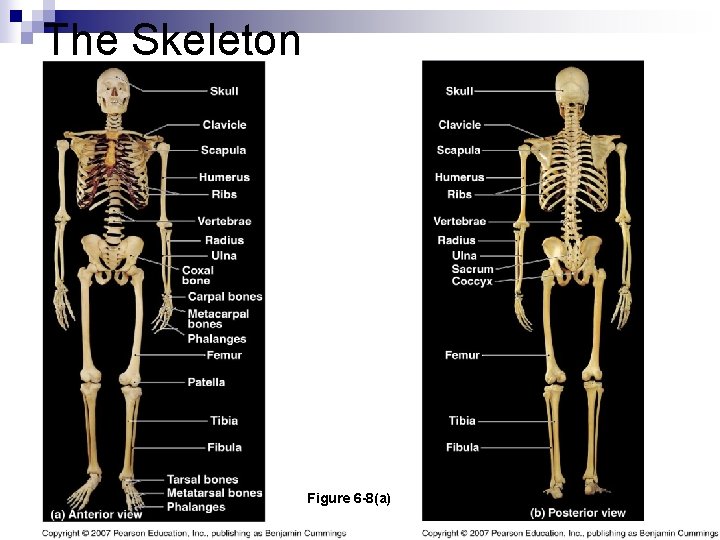
The Skeleton Figure 6 -8(a)
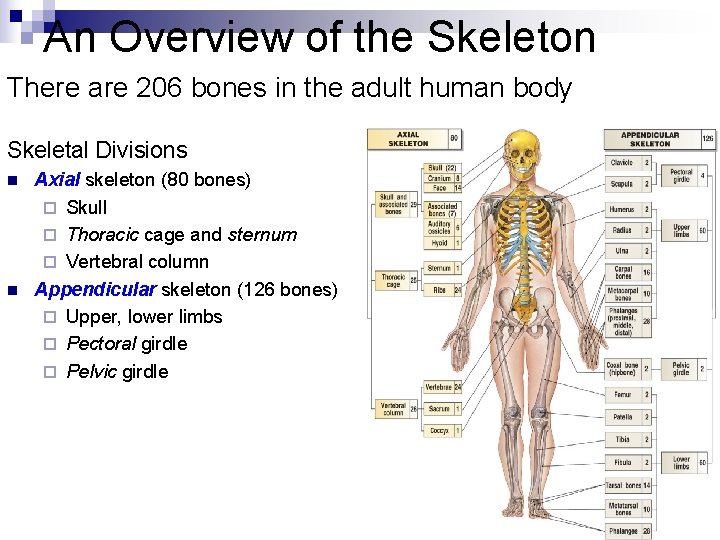
An Overview of the Skeleton There are 206 bones in the adult human body Skeletal Divisions n n Axial skeleton (80 bones) ¨ Skull ¨ Thoracic cage and sternum ¨ Vertebral column Appendicular skeleton (126 bones) ¨ Upper, lower limbs ¨ Pectoral girdle ¨ Pelvic girdle
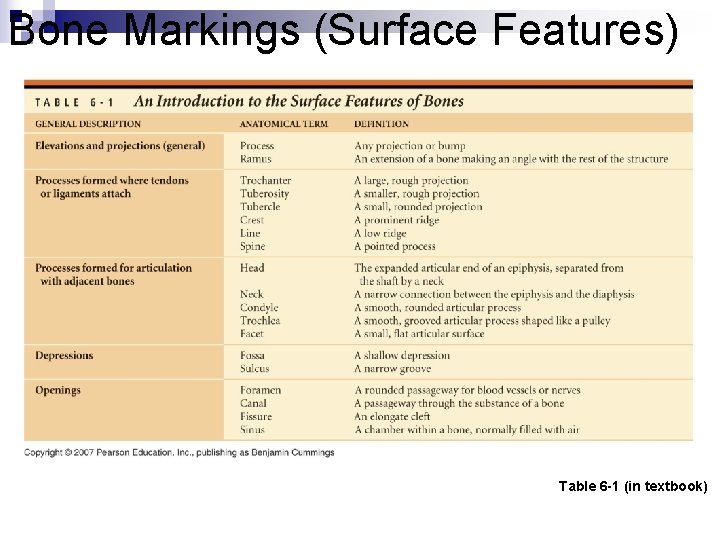
Bone Markings (Surface Features) n Surface Features of Bones Table 6 -1 (in textbook)
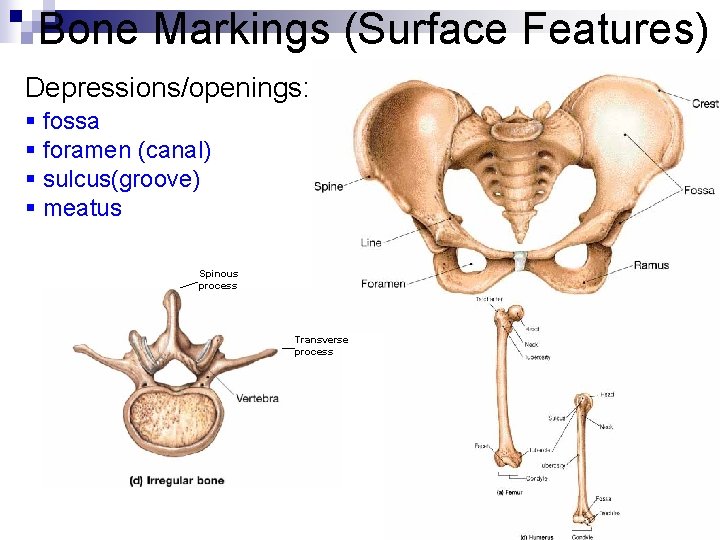
Bone Markings (Surface Features) Depressions/openings: § fossa § foramen (canal) § sulcus(groove) § meatus Spinous process Transverse process
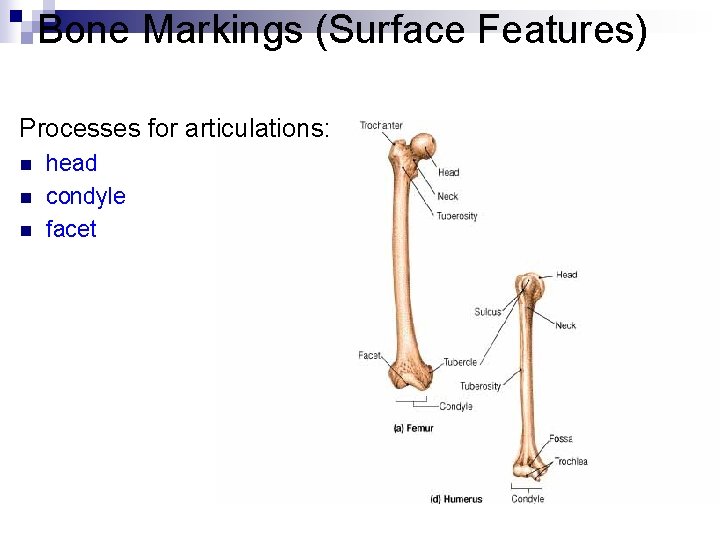
Bone Markings (Surface Features) Processes for articulations: n n n head condyle facet
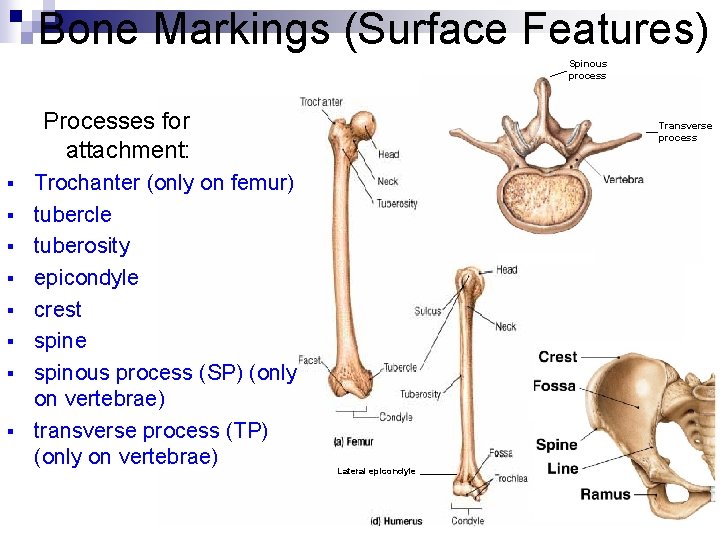
Bone Markings (Surface Features) Spinous process Processes for attachment: § § § § Trochanter (only on femur) tubercle tuberosity epicondyle crest spine spinous process (SP) (only on vertebrae) transverse process (TP) (only on vertebrae) Transverse process Lateral epicondyle