
THE SKELETAL SYSTEM By Valentina Cross and Sandro
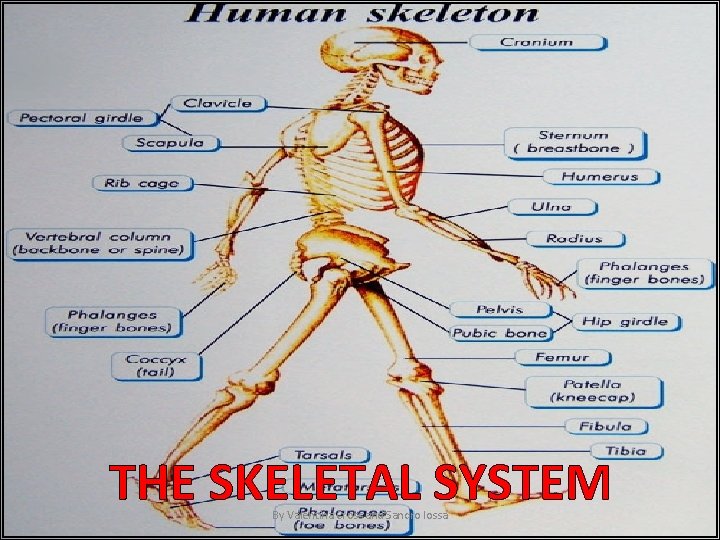
THE SKELETAL SYSTEM By Valentina Cross and Sandro Iossa
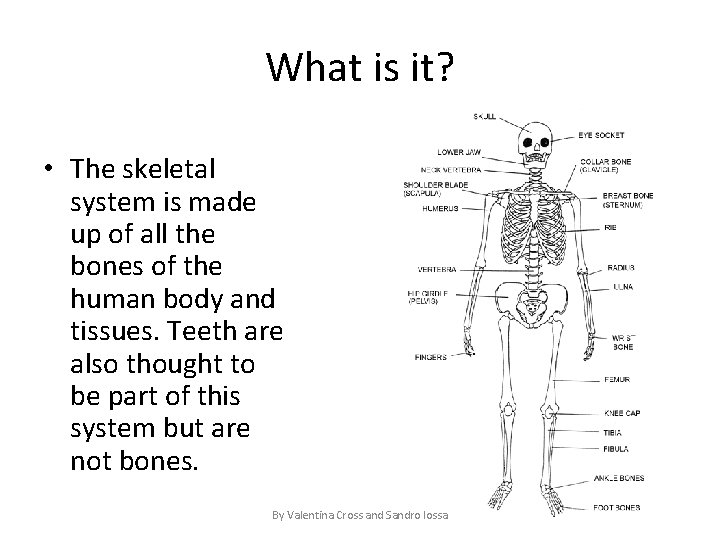
What is it? • The skeletal system is made up of all the bones of the human body and tissues. Teeth are also thought to be part of this system but are not bones. By Valentina Cross and Sandro Iossa
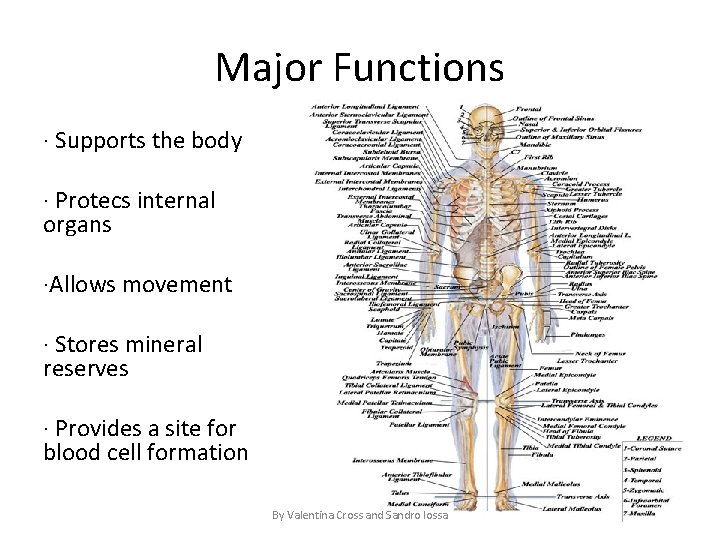
Major Functions · Supports the body · Protecs internal organs ·Allows movement · Stores mineral reserves · Provides a site for blood cell formation By Valentina Cross and Sandro Iossa
Major components • Bones: calcified connective major portion of the skeleton of most vertebrates. • Cartilage: A strong, flexible connective tissue. • Ligaments: connecting bones or cartilages at a joint. • Tendons: a muscle bone or some other part. By Valentina Cross and Sandro Iossa
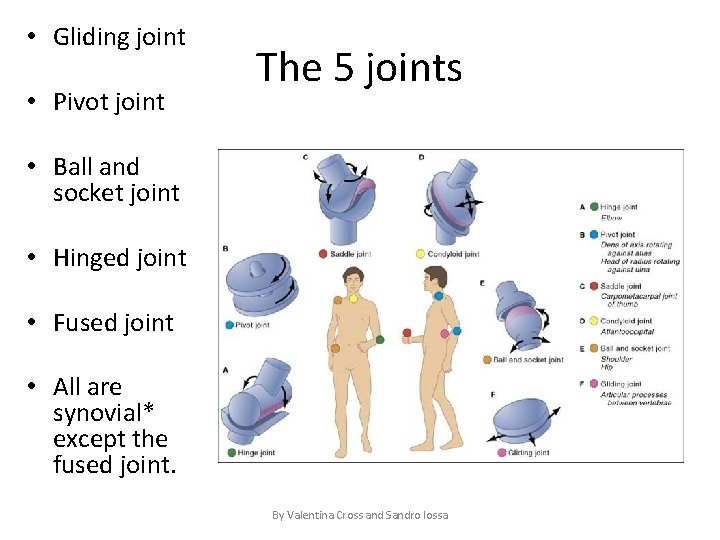
• Gliding joint • Pivot joint The 5 joints • Ball and socket joint • Hinged joint • Fused joint • All are synovial* except the fused joint. By Valentina Cross and Sandro Iossa

Gliding/Plane Joint • surfaces are slightly curved or flat • bones slide against each other in limited way. • e. g. the wrist and ankle joints. By Valentina Cross and Sandro Iossa

Pivot Joint • Permits pivotal movement of the parts of body. • The rotation of the skull. By Valentina Cross and Sandro Iossa
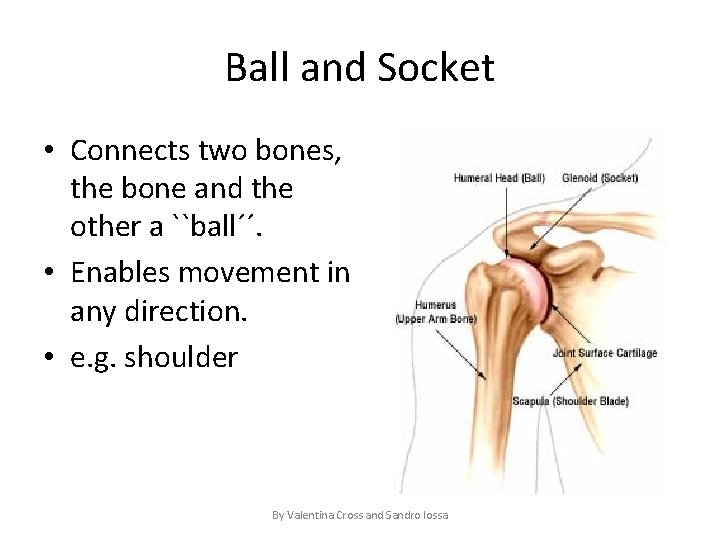
Ball and Socket • Connects two bones, the bone and the other a ``ball´´. • Enables movement in any direction. • e. g. shoulder By Valentina Cross and Sandro Iossa
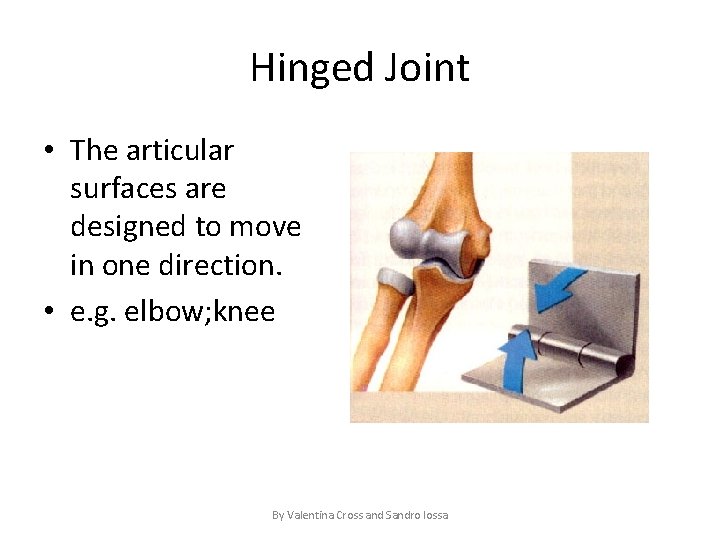
Hinged Joint • The articular surfaces are designed to move in one direction. • e. g. elbow; knee By Valentina Cross and Sandro Iossa
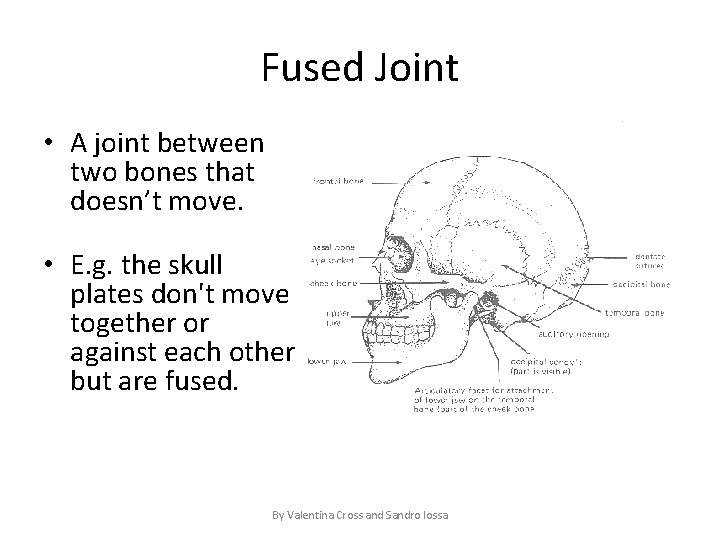
Fused Joint • A joint between two bones that doesn’t move. • E. g. the skull plates don't move together or against each other but are fused. By Valentina Cross and Sandro Iossa
Bone Fractures • Typically caused when too much pressure is applied in a bone, eventually many type of fractures may occur. • Types of fractures: http: //video. about. com/orthopedics/Fractures 1. htm By Valentina Cross and Sandro Iossa
- Slides: 11