
The Skeletal System Bone Tissue Histology Objectives Know
The Skeletal System Bone Tissue Histology Objectives: -Know basic bone tissues and cells -Identify structures in bone tissue Agenda: 1) Quick Read 2) Histology presentation 3) Hands on tissue identification Reminders: HW due TODAY; Stem quiz Tomorrow Believe you can and you’re halfway there. – Theodore Roosevelt
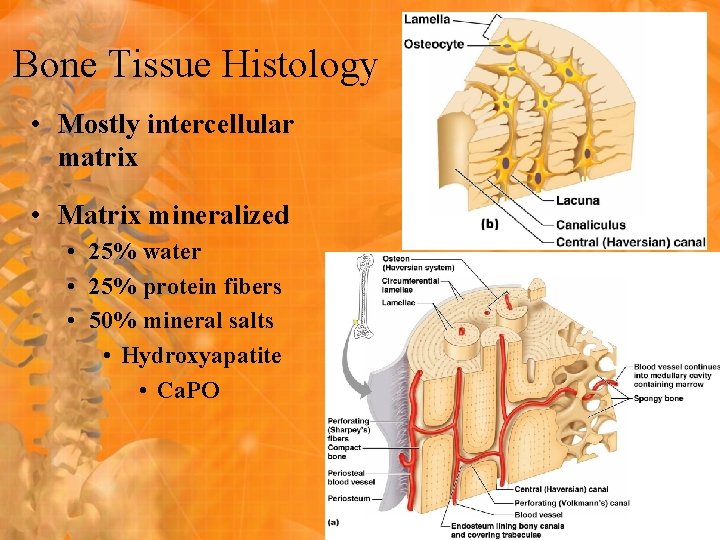
Bone Tissue Histology • Mostly intercellular matrix • Matrix mineralized • 25% water • 25% protein fibers • 50% mineral salts • Hydroxyapatite • Ca. PO
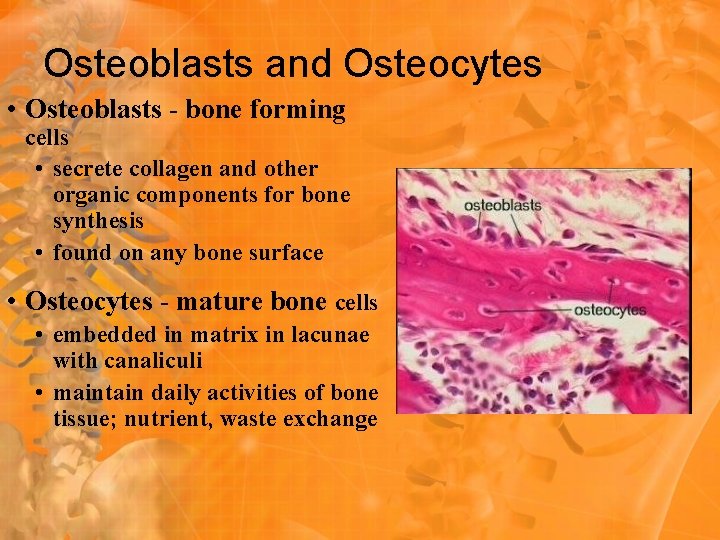
Osteoblasts and Osteocytes • Osteoblasts - bone forming cells • secrete collagen and other organic components for bone synthesis • found on any bone surface • Osteocytes - mature bone cells • embedded in matrix in lacunae with canaliculi • maintain daily activities of bone tissue; nutrient, waste exchange
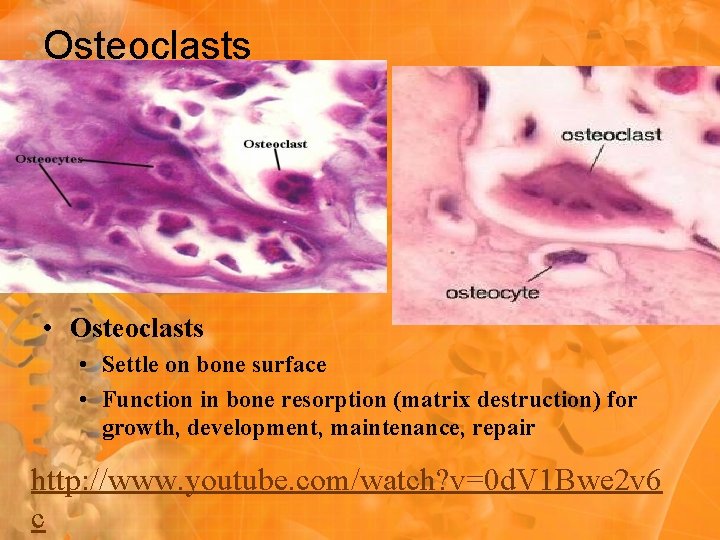
Osteoclasts • Osteoclasts • Settle on bone surface • Function in bone resorption (matrix destruction) for growth, development, maintenance, repair http: //www. youtube. com/watch? v=0 d. V 1 Bwe 2 v 6 c
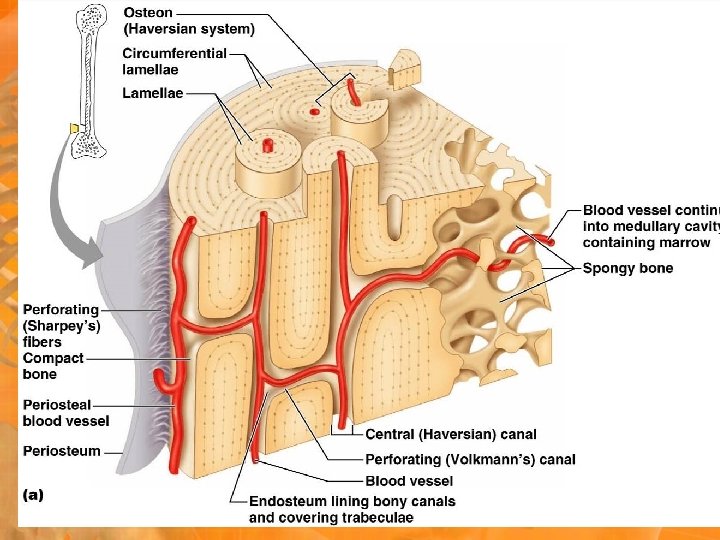
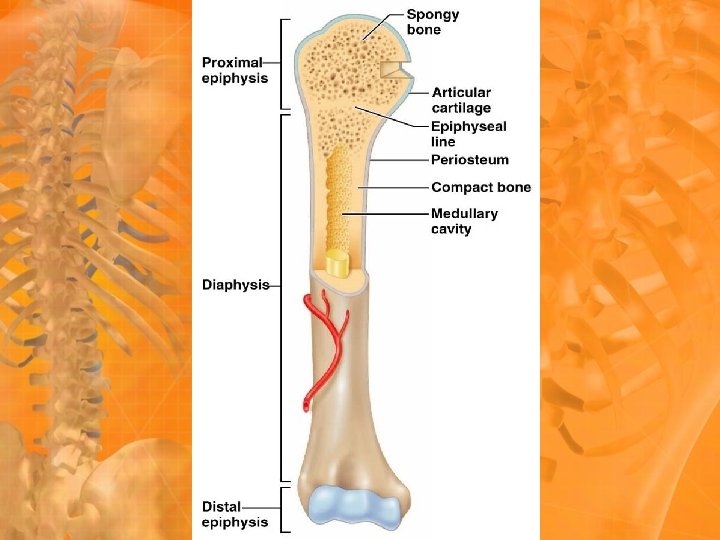
• Histology of Bone Tissue Maturation • Matrix secretes ground substance & collagen • Crystallization = calcification = mineralization • hydroxyapatite (calcium phosphate salt) • other salts • Hardness vs. flexibility • collagen fibers • mineralization • crystallization develops around collagen fibers • stronger than egg shells which have no collagen • Matrix is not continuous, because many vascular passageways penetrate the mineralized matrix • Size and distribution of these vascular channels determines the type of bone - spongy or compact
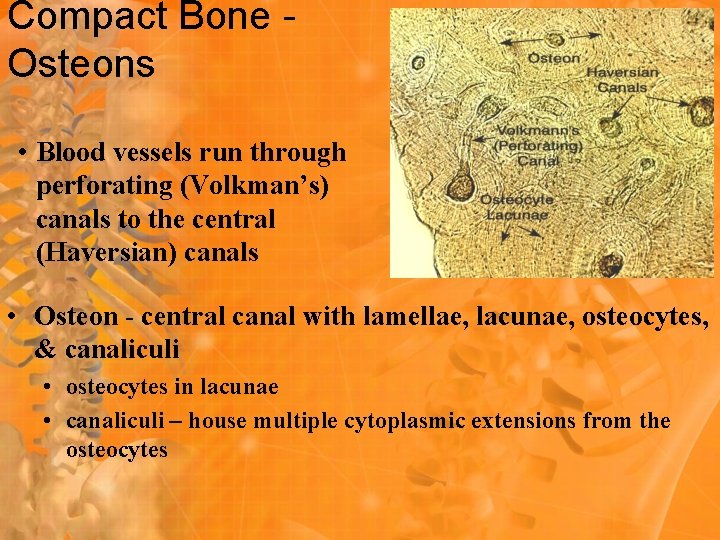
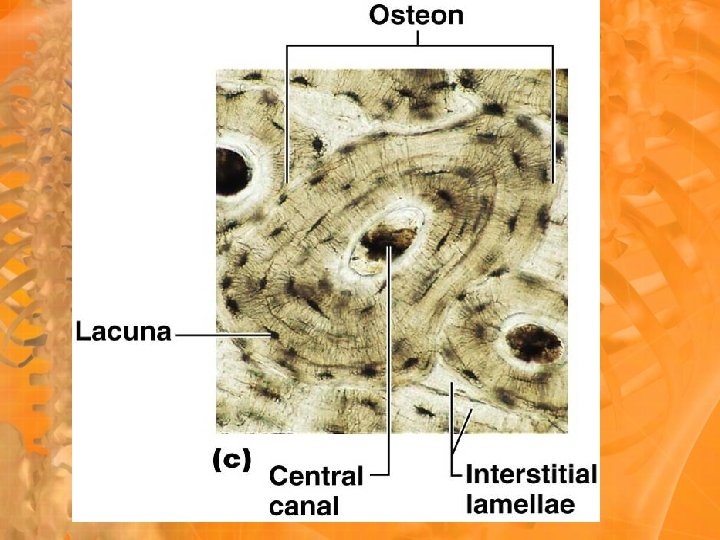
Compact Bone Osteons • Blood vessels run through perforating (Volkman’s) canals to the central (Haversian) canals • Osteon - central canal with lamellae, lacunae, osteocytes, & canaliculi • osteocytes in lacunae • canaliculi – house multiple cytoplasmic extensions from the osteocytes
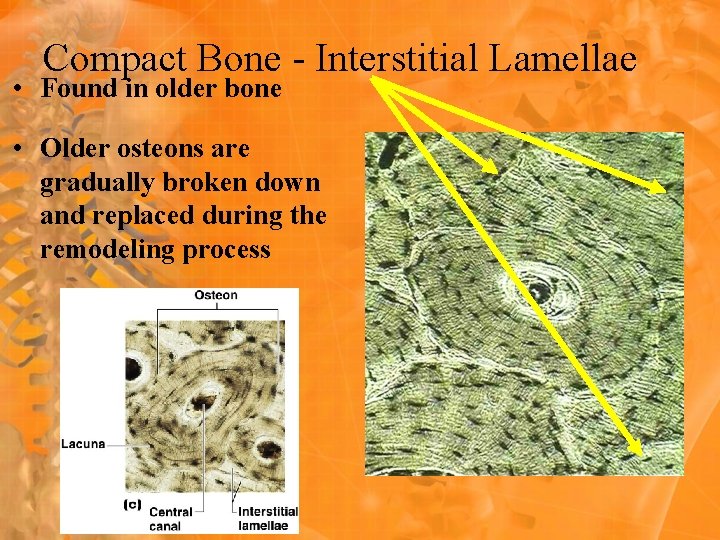
Compact Bone - Interstitial Lamellae • Found in older bone • Older osteons are gradually broken down and replaced during the remodeling process
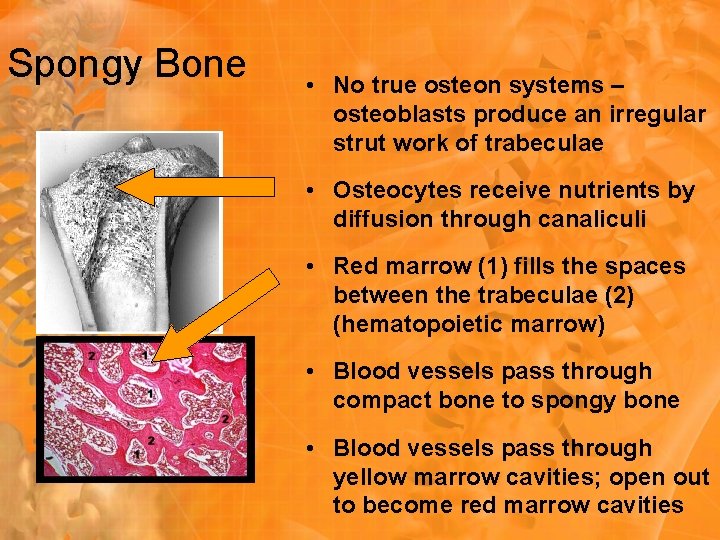
Spongy Bone • No true osteon systems – osteoblasts produce an irregular strut work of trabeculae • Osteocytes receive nutrients by diffusion through canaliculi • Red marrow (1) fills the spaces between the trabeculae (2) (hematopoietic marrow) • Blood vessels pass through compact bone to spongy bone • Blood vessels pass through yellow marrow cavities; open out to become red marrow cavities
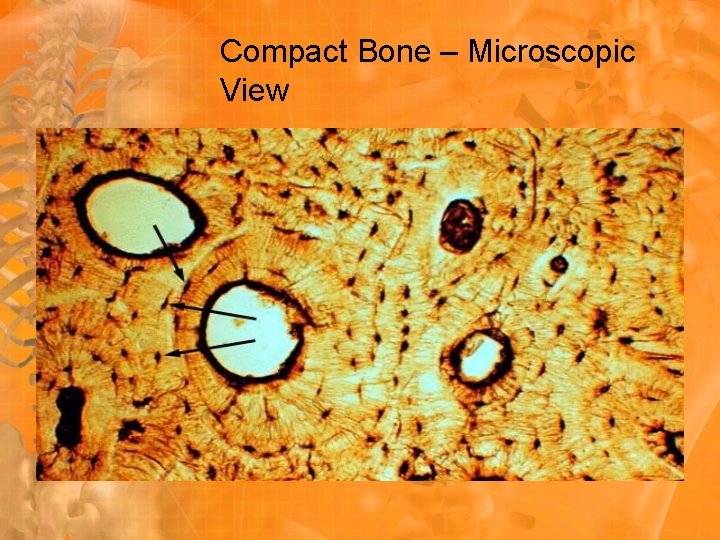
Compact Bone – Microscopic View
- Slides: 12