
The Skeletal System A Bones of the Human
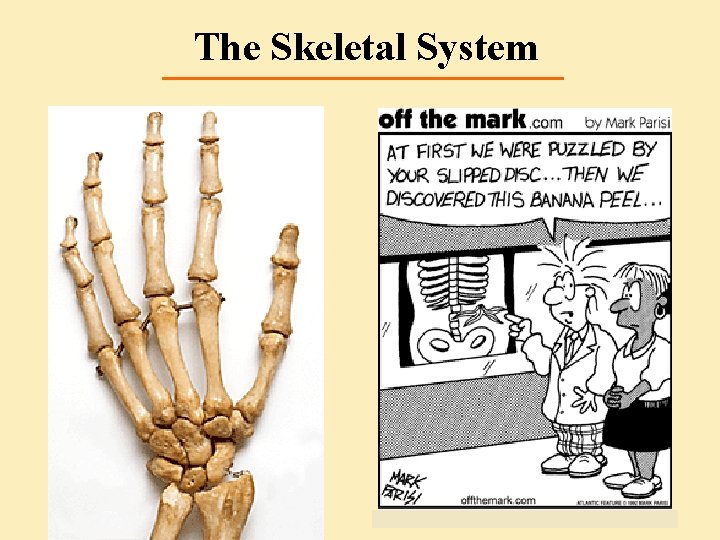
The Skeletal System
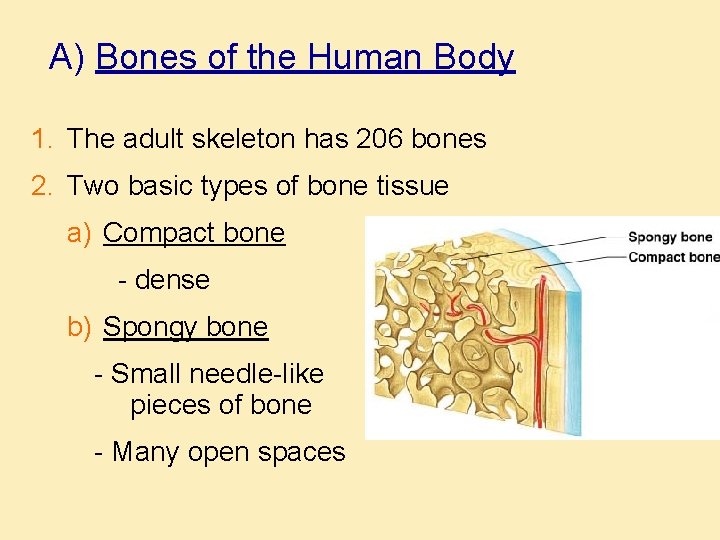
A) Bones of the Human Body 1. The adult skeleton has 206 bones 2. Two basic types of bone tissue a) Compact bone - dense b) Spongy bone - Small needle-like pieces of bone - Many open spaces
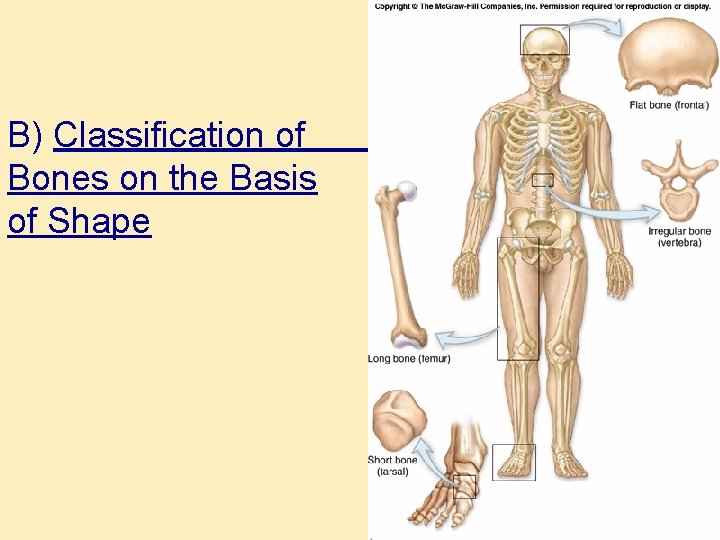
B) Classification of Bones on the Basis of Shape Figure 5. 1
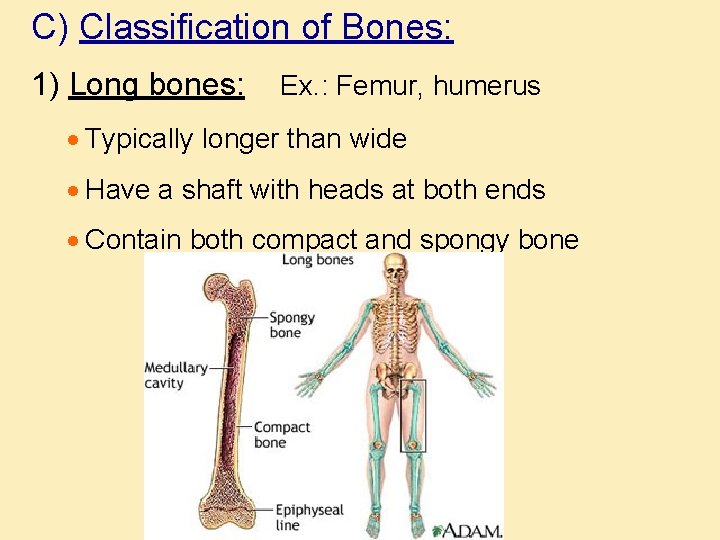
C) Classification of Bones: 1) Long bones: Ex. : Femur, humerus · Typically longer than wide · Have a shaft with heads at both ends · Contain both compact and spongy bone
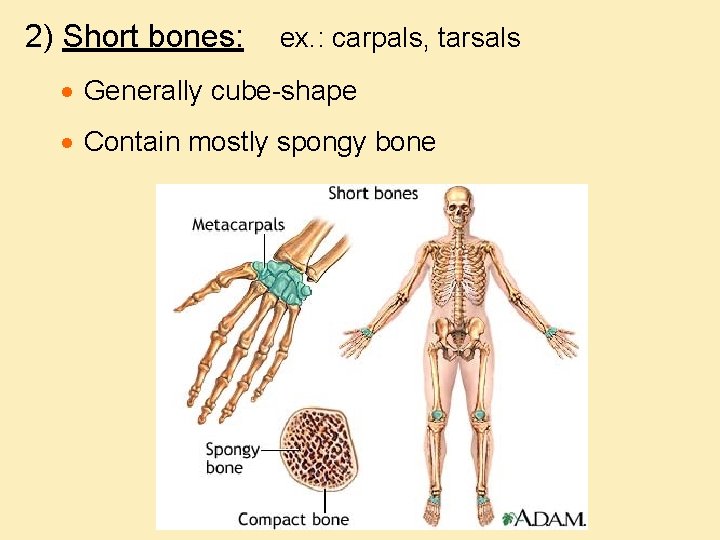
2) Short bones: ex. : carpals, tarsals · Generally cube-shape · Contain mostly spongy bone
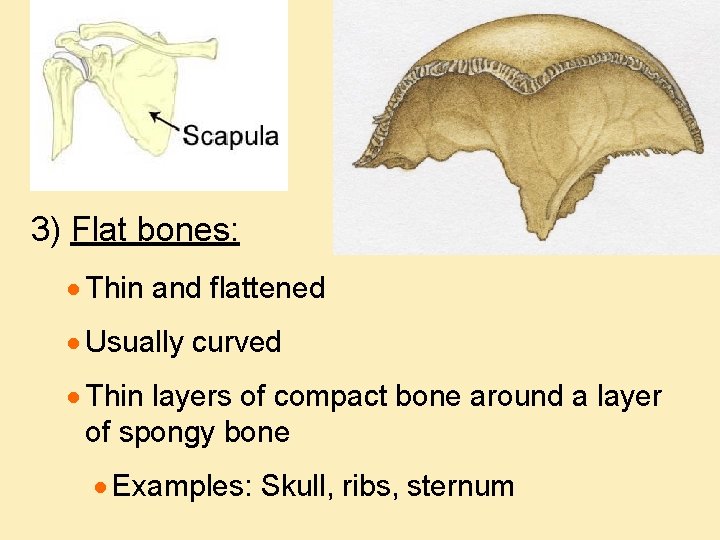
3) Flat bones: · Thin and flattened · Usually curved · Thin layers of compact bone around a layer of spongy bone · Examples: Skull, ribs, sternum
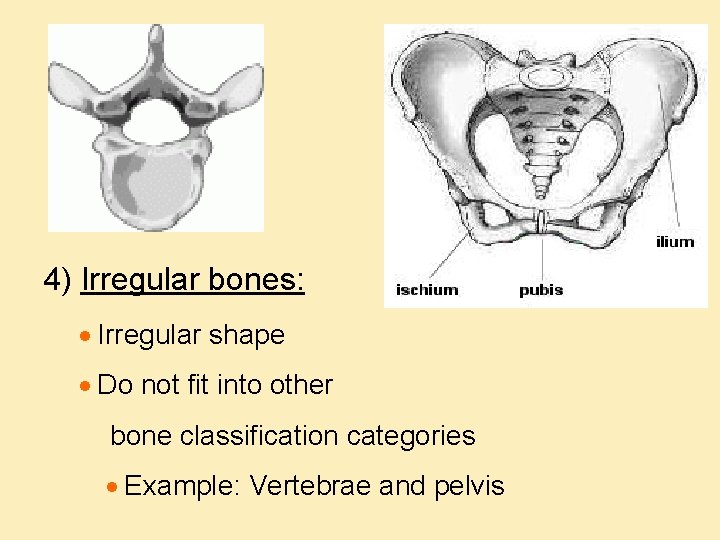
4) Irregular bones: · Irregular shape · Do not fit into other bone classification categories · Example: Vertebrae and pelvis
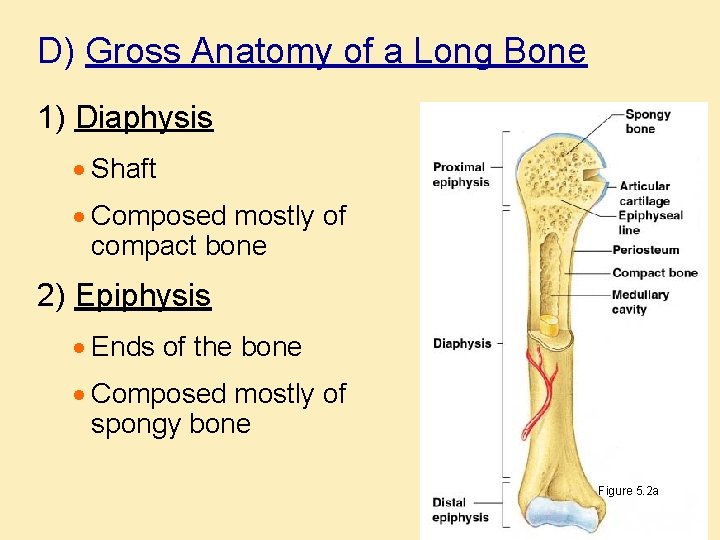
D) Gross Anatomy of a Long Bone 1) Diaphysis · Shaft · Composed mostly of compact bone 2) Epiphysis · Ends of the bone · Composed mostly of spongy bone Figure 5. 2 a Slide 5. 6
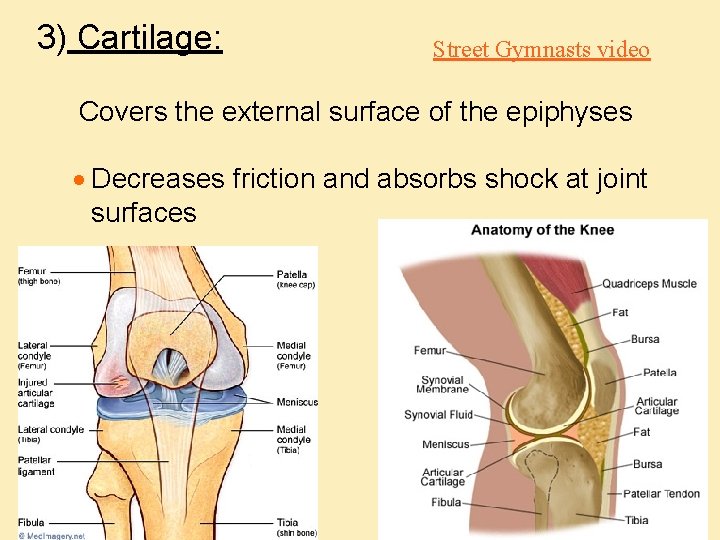
3) Cartilage: Street Gymnasts video Covers the external surface of the epiphyses · Decreases friction and absorbs shock at joint surfaces Figure 5. 2 a Slide 5. 8 a
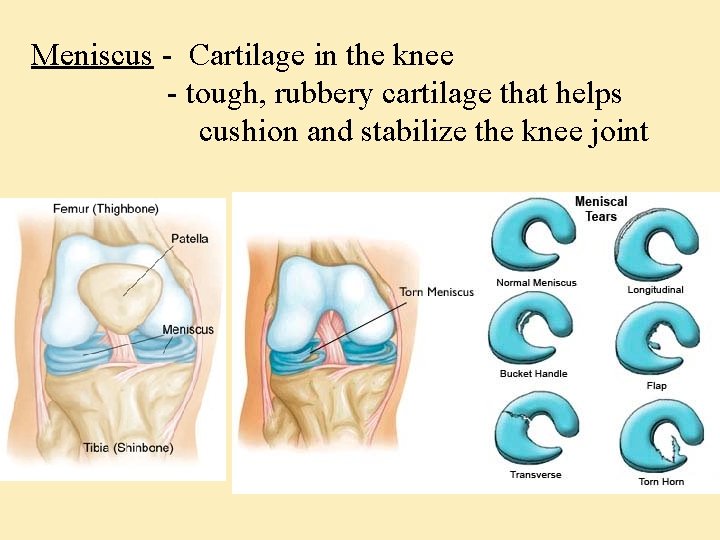
Meniscus - Cartilage in the knee - tough, rubbery cartilage that helps cushion and stabilize the knee joint
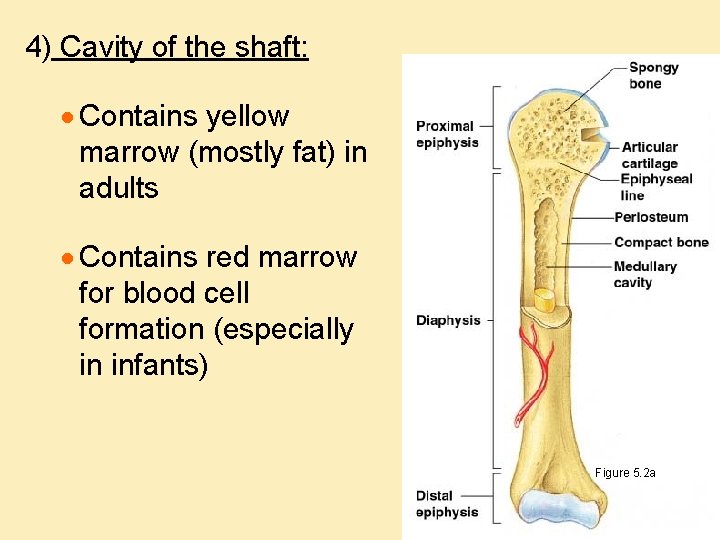
4) Cavity of the shaft: · Contains yellow marrow (mostly fat) in adults · Contains red marrow for blood cell formation (especially in infants) Figure 5. 2 a Slide 5. 8 b
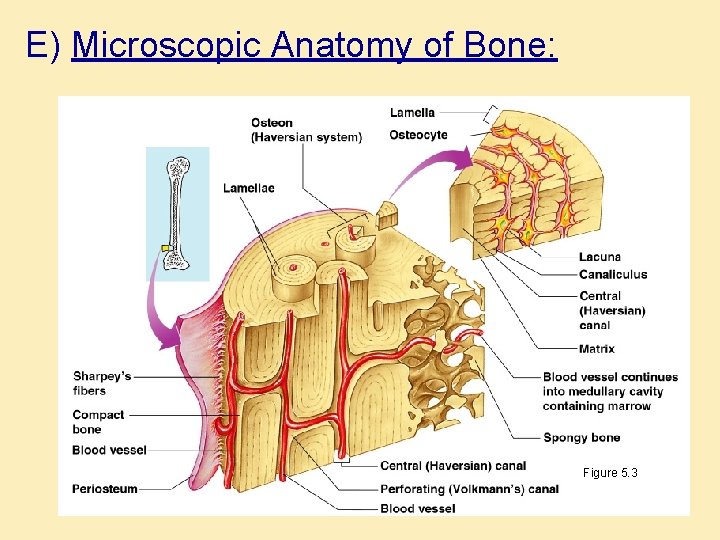
E) Microscopic Anatomy of Bone: Figure 5. 3
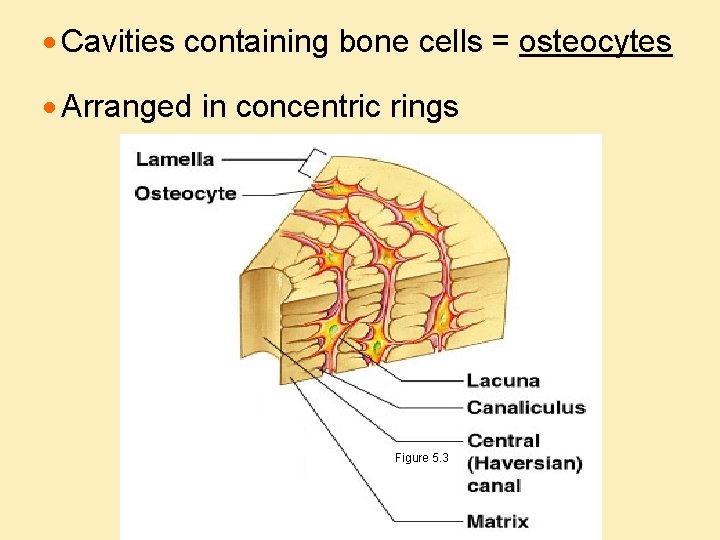
· Cavities containing bone cells = osteocytes · Arranged in concentric rings Figure 5. 3
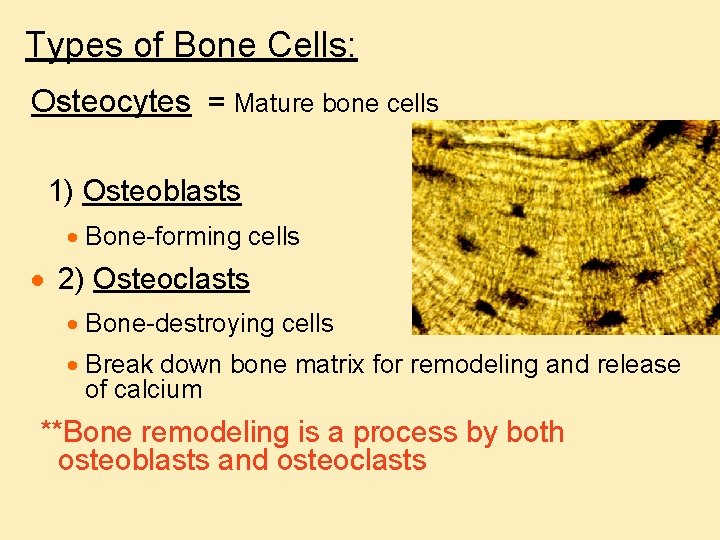
Types of Bone Cells: Osteocytes = Mature bone cells 1) Osteoblasts · Bone-forming cells · 2) Osteoclasts · Bone-destroying cells · Break down bone matrix for remodeling and release of calcium **Bone remodeling is a process by both osteoblasts and osteoclasts
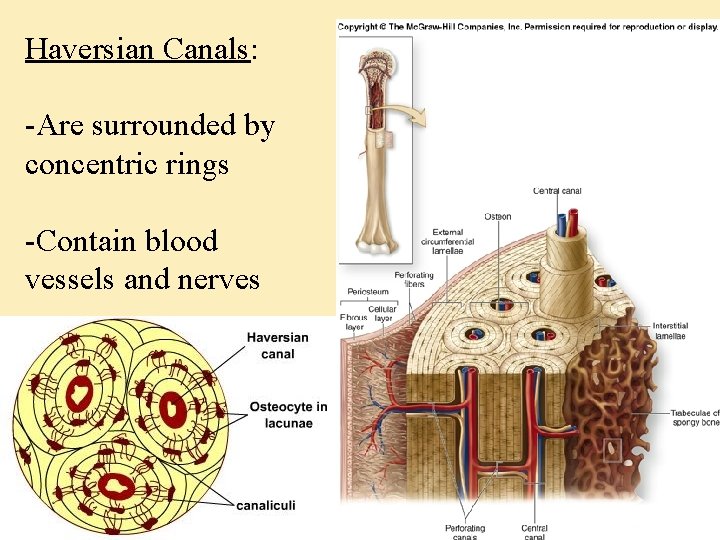
Haversian Canals: -Are surrounded by concentric rings -Contain blood vessels and nerves
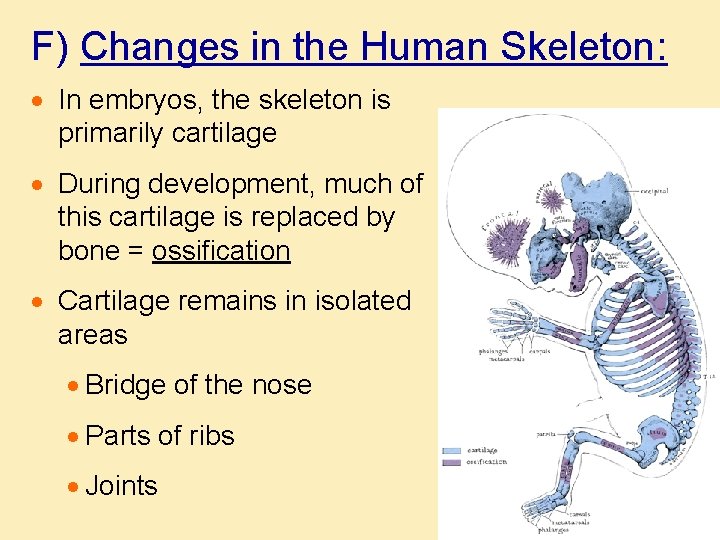
F) Changes in the Human Skeleton: · In embryos, the skeleton is primarily cartilage · During development, much of this cartilage is replaced by bone = ossification · Cartilage remains in isolated areas · Bridge of the nose · Parts of ribs · Joints Slide 5. 12
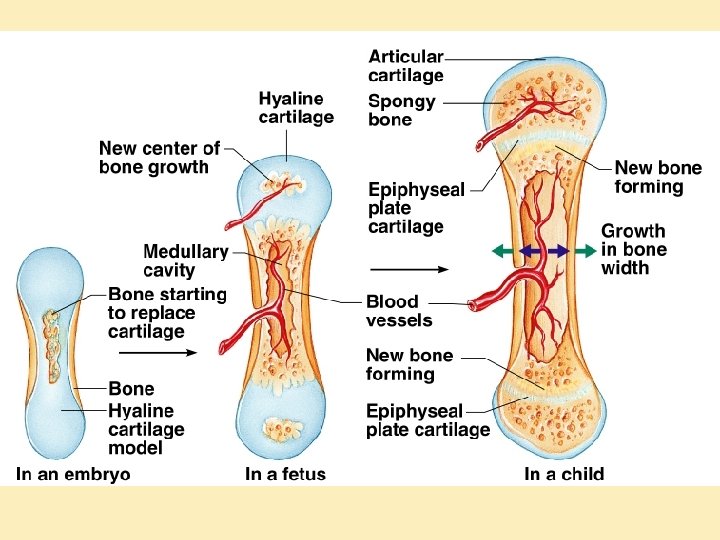
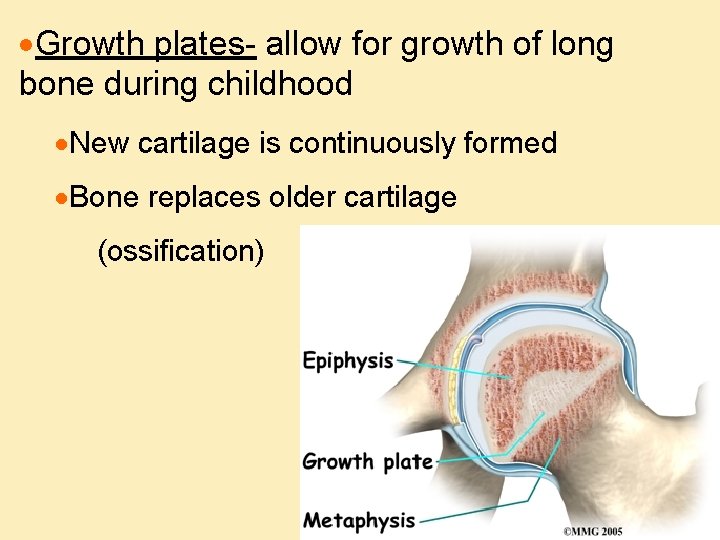
·Growth plates- allow for growth of long bone during childhood ·New cartilage is continuously formed ·Bone replaces older cartilage (ossification)
- Slides: 19