
The Six Simple Machines What is a Simple

- Slides: 29
The Six Simple Machines
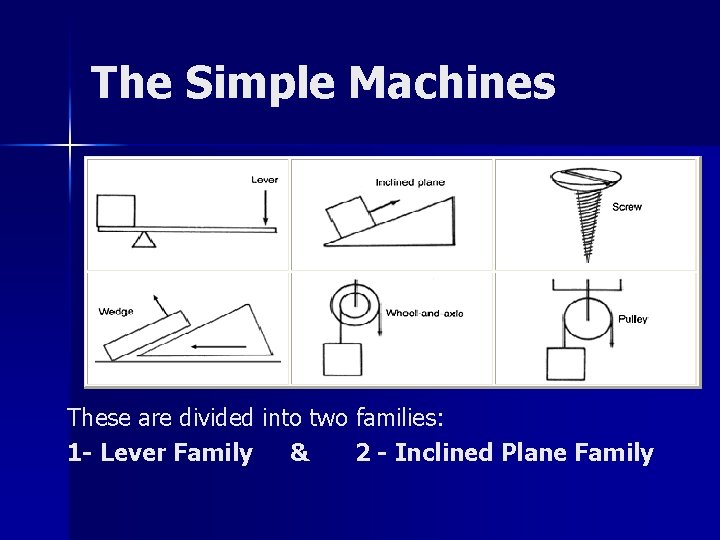
What is a Simple Machine? n n n Machines make work easier. Six types of simple machines make work easier. Machines can change the size, distance or direction of a force. • Six Simple Machines: Lever, Inclined Plane, Wedge, Screw, Wheel and Axle, and Pulley • Simple machines can be combined to make complex machines.
How Machines work Machines do not reduce the amount of work done. Machines can be powered by different kinds of energy. Machines can change either: n Direction of the force n Distance the force is applied n Size of the Force
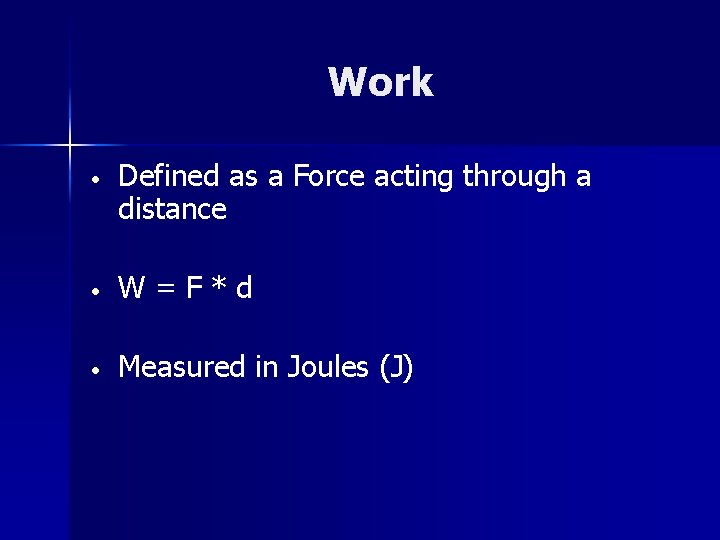
Work • Defined as a Force acting through a distance • W=F*d • Measured in Joules (J)
Work • Work is done only when • Object moves, and • Object’s motion is in the direction of applied Force
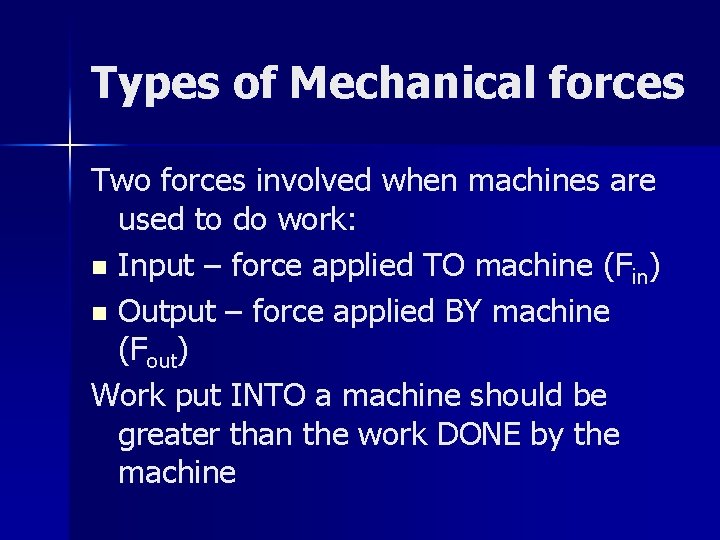
Types of Mechanical forces Two forces involved when machines are used to do work: n Input – force applied TO machine (Fin) n Output – force applied BY machine (Fout) Work put INTO a machine should be greater than the work DONE by the machine
The Simple Machines These are divided into two families: 1 - Lever Family & 2 - Inclined Plane Family
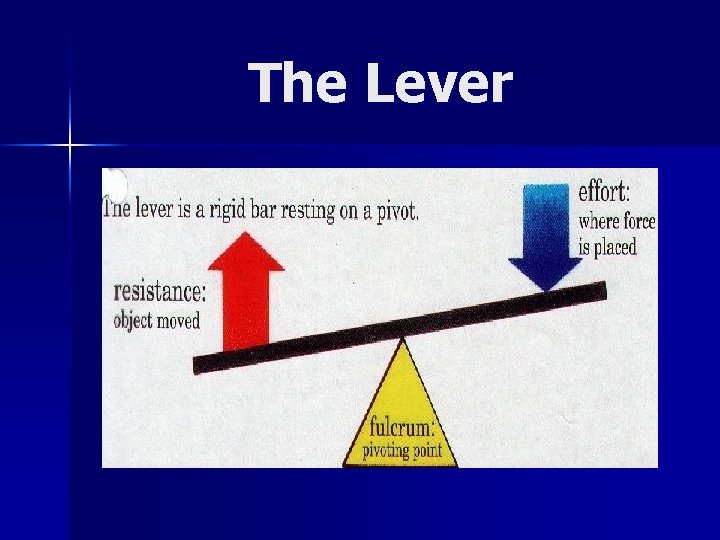
The Lever
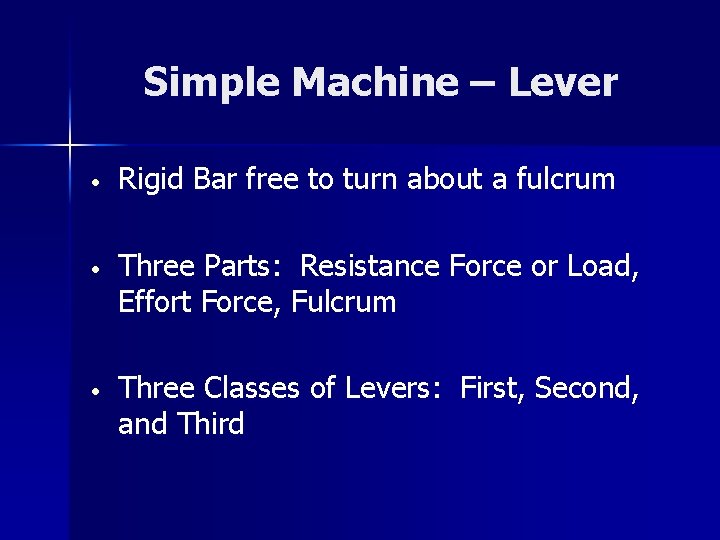
Simple Machine – Lever • Rigid Bar free to turn about a fulcrum • Three Parts: Resistance Force or Load, Effort Force, Fulcrum • Three Classes of Levers: First, Second, and Third
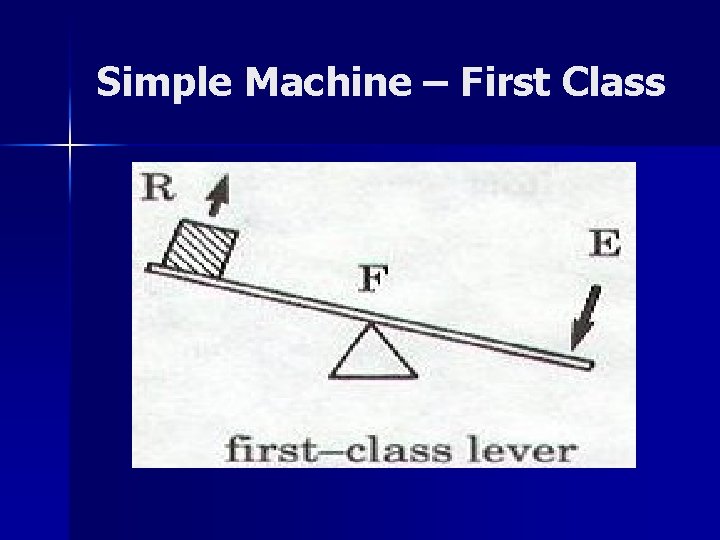
Simple Machine – First Class
Simple Machine – First Class • Fulcrum located between Resistance and Effort Forces • Resistance and Effort Forces are in opposite directions • Examples: Seesaw, Crowbars, Scissors, Claw Hammers
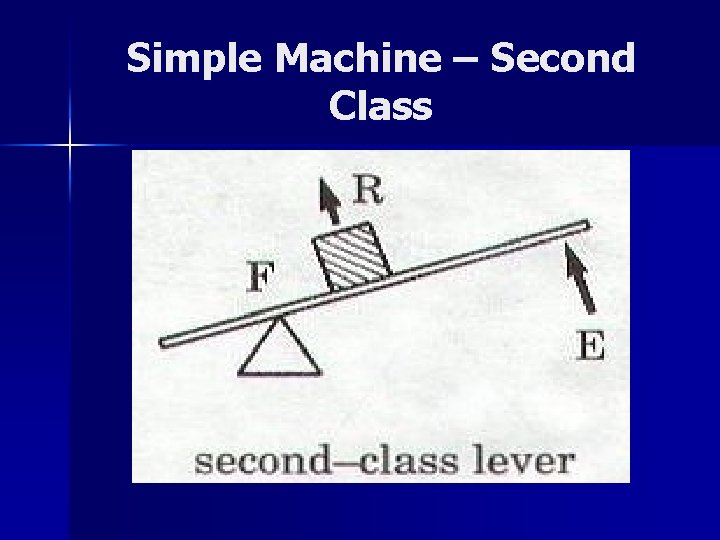
Simple Machine – Second Class
Simple Machine – Second Class • Resistance Force is between the Effort Force and the Fulcrum • Resistance and Effort Forces are in same direction • Examples: Wheelbarrow, Bottle openers, and Nutcrackers
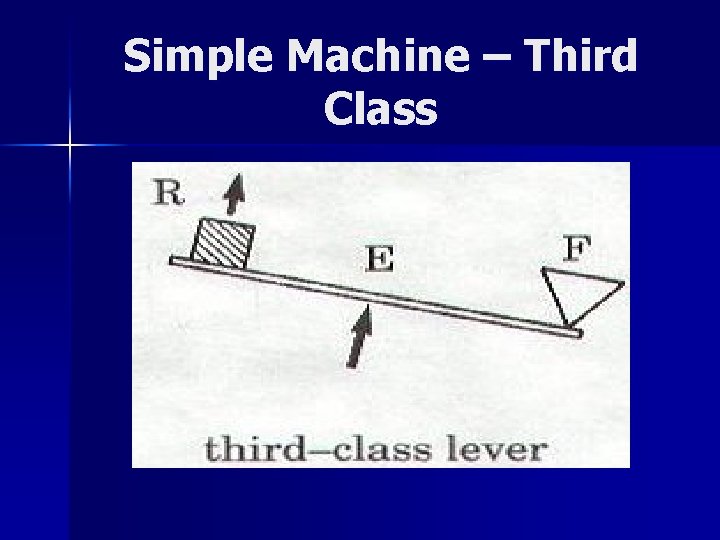
Simple Machine – Third Class
Simple Machine – Third Class • Effort Force is between the Resistance Force and the fulcrum • Resistance and Effort Forces are in same direction • Examples: Broom, Shovel, Fishing Pole, Baseball Bat, and Tongs
The Inclined Plane
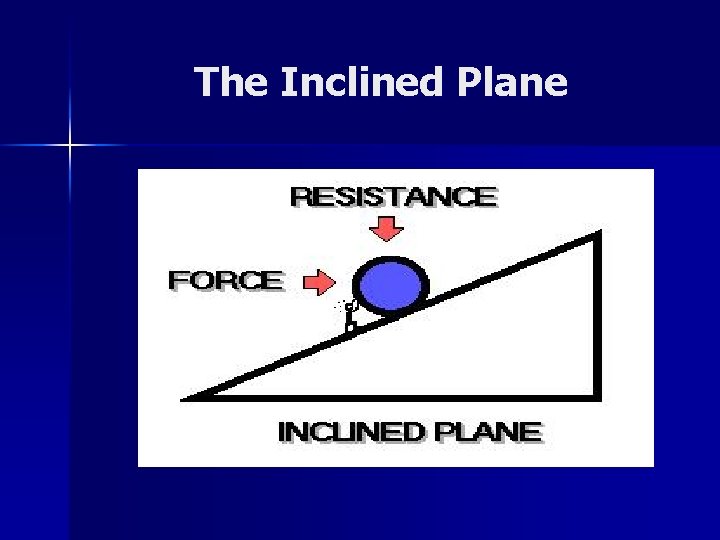
Simple Machine – Inclined Plane • Sloping surface allowing the lifting of heavy loads with less effort than directly lifting the load • Examples: Simple Ramp, Escalator, Stairs, Ship Plank, Ladder
The Wedge
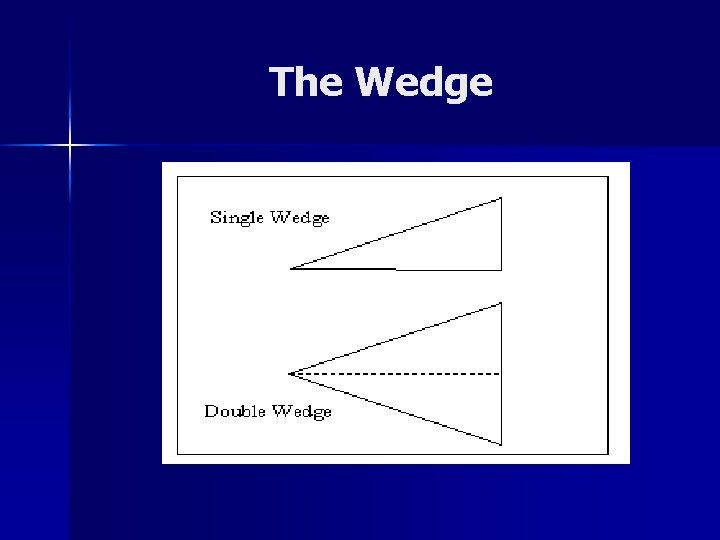
Simple Machine - Wedge • Form of an Inclined Plane tapering to a sharp edge • Can be used to split, fasten, or cut • Examples: Ax Head, Screwdriver, Nails, Doorstop, Chisel, Plows
The Screw
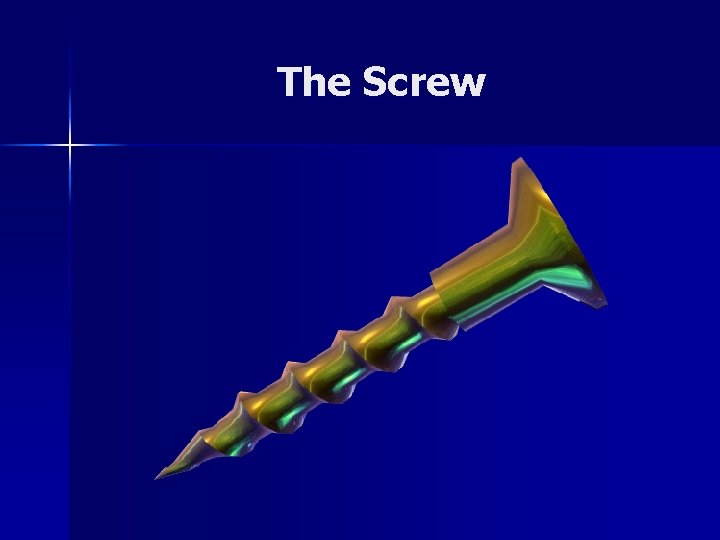
Simple Machine - Screw • Form of an Inclined Plane wrapped in a spiral around a cylindrical post to fasten things • Two parts: Body and Thread • Examples: Drill Bits, Jackscrew, Fan Blades, Propellers, Screw, Nuts & Bolts
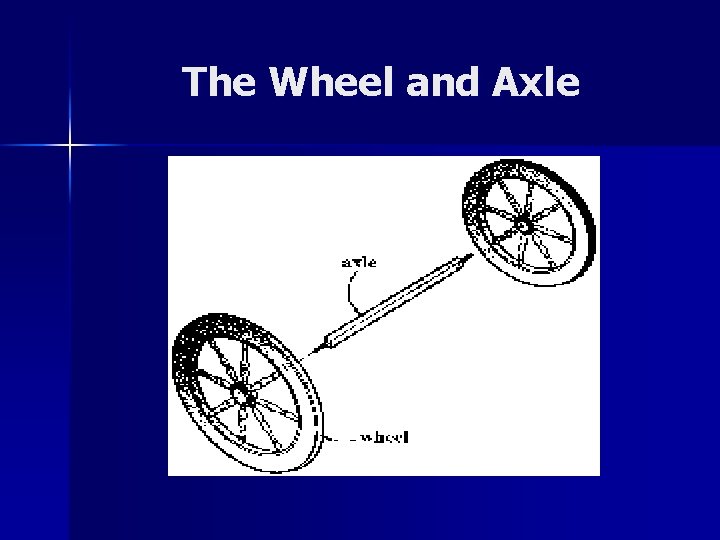
The Wheel and Axle
Simple Machine – Wheel and Axle • Wheel connected to a rigid pole • Modified Lever and center of axle serves as Fulcrum • Examples: Door Knobs, Handle Bars on Bike, Wheels on car, Roller Conveyor
Simple Machine – Wheel and Axle • Gears are modified forms of Wheel and Axle • Wheel has teeth along circumference • Effort Force exerted on larger gear to turn the smaller gear • Examples: Bike Sprockets, Can Opener, Machine Gears
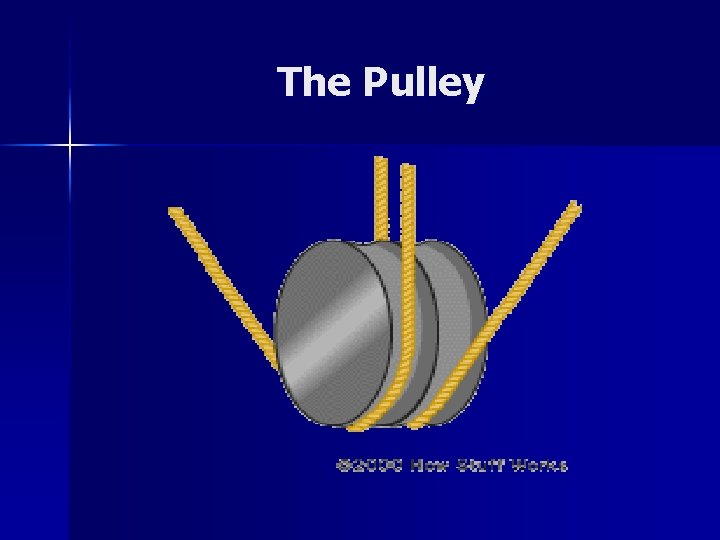
The Pulley
Simple Machine - Pulley • Grooved wheel turning around a fulcrum to lift heavy objects • Rope or Chain used in groove • Can be fixed, movable, or combination of both • Examples: Flag Pole to raise Flag, Hoisting a Sail, Open Curtains or Mini Blinds,
Compound Machine Compound machines are two or more simple machines working together. n A wheelbarrow is an example of a complex machine that uses a lever and a wheel and axle. n
Mechanical Advantage The benefit of doing work with a machine means less force is needed to do work The number of times a machine multiples the input force is called the machine’s MECHANICAL ADVANTAGE MA = Wout / Win x 100%
Mechanical Advantage Machines that allow less force over greater distance (ramp) have a MA of greater than 1 n Machines that allow more force over shorter distance (rake) have a MA of less than one n Machines that change the direction of the force (crowbar), but not the amount, have a MA of one n