
THE SIX MAIN NUTRIENTS AN INTRODUCTION All graphics
- Slides: 12
THE SIX MAIN NUTRIENTS: AN INTRODUCTION All graphics in this resource have been attributed CC 0 1. 0 Universal (CC 0 1. 0) Public Domain Dedication, waiving all of his/her rights to the work worldwide under copyright law.
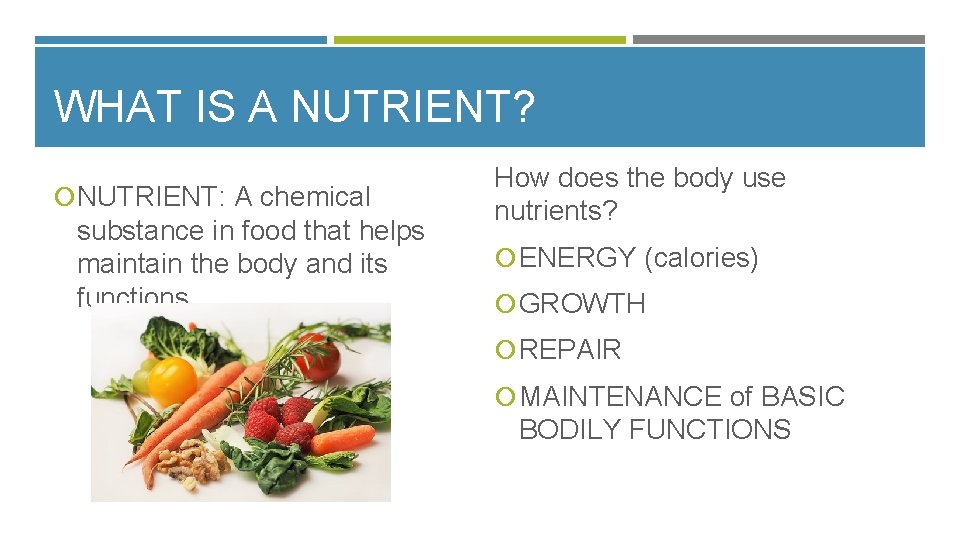
WHAT IS A NUTRIENT? NUTRIENT: A chemical substance in food that helps maintain the body and its functions How does the body use nutrients? ENERGY (calories) GROWTH REPAIR MAINTENANCE of BASIC BODILY FUNCTIONS
THE 6 ESSENTIAL NUTRIENTS CARBOHYDRATE S PROTEINS FATS (LIPIDS) VITAMINS MINERALS WATER
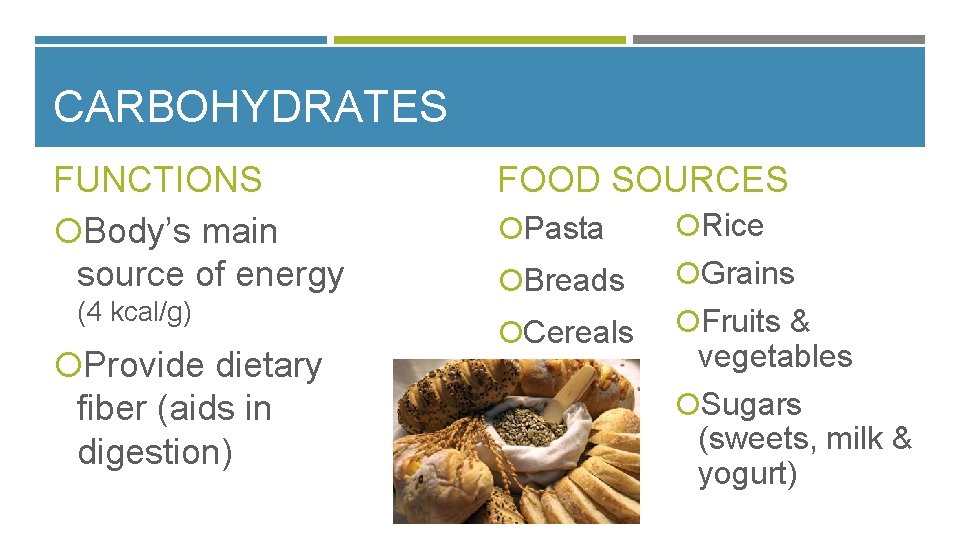
CARBOHYDRATES FUNCTIONS Body’s main source of energy (4 kcal/g) Provide dietary fiber (aids in digestion) FOOD SOURCES Pasta Rice Breads Grains Cereals Fruits & vegetables Sugars (sweets, milk & yogurt)
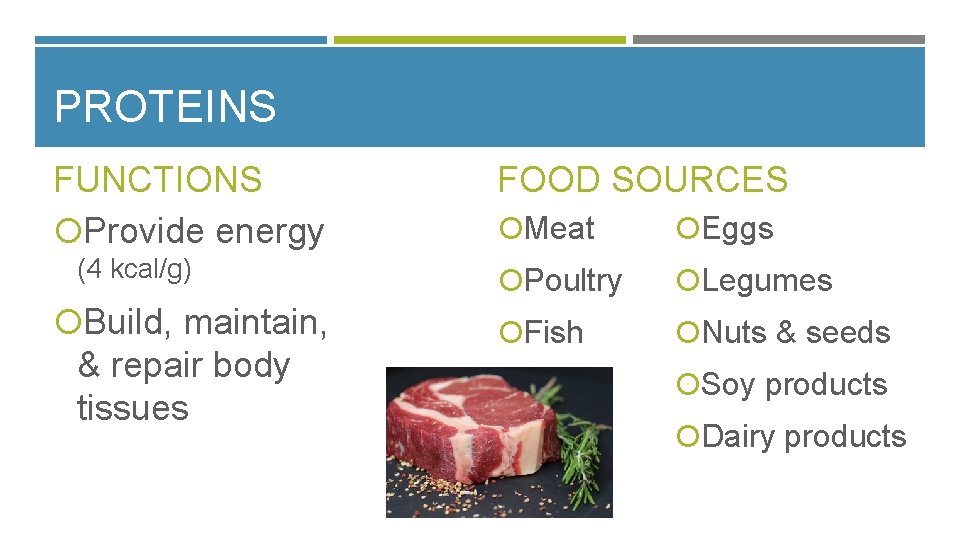
PROTEINS FUNCTIONS Provide energy (4 kcal/g) Build, maintain, & repair body tissues FOOD SOURCES Meat Eggs Poultry Legumes Fish Nuts & seeds Soy products Dairy products
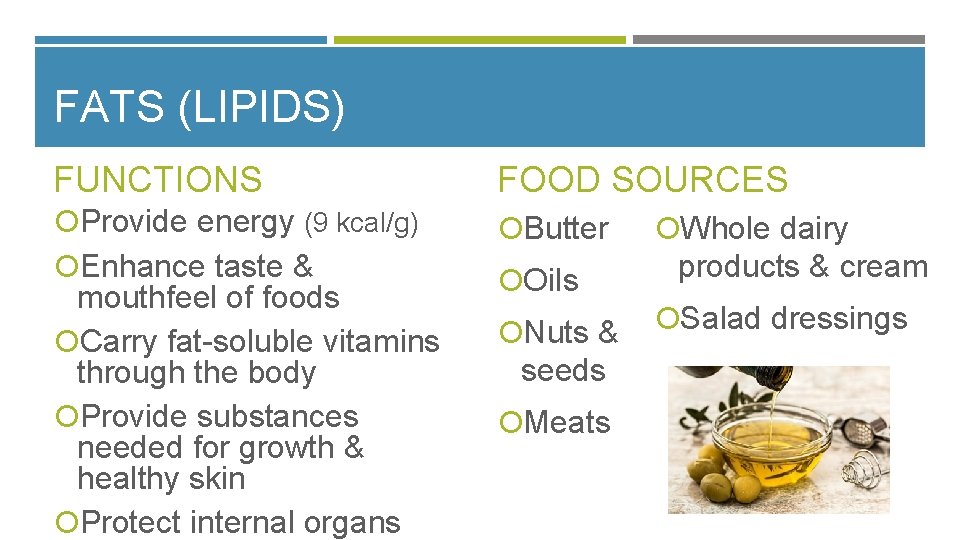
FATS (LIPIDS) FUNCTIONS FOOD SOURCES Provide energy (9 kcal/g) Enhance taste & Butter mouthfeel of foods Carry fat-soluble vitamins through the body Provide substances needed for growth & healthy skin Protect internal organs Oils Nuts & seeds Meats Whole dairy products & cream Salad dressings
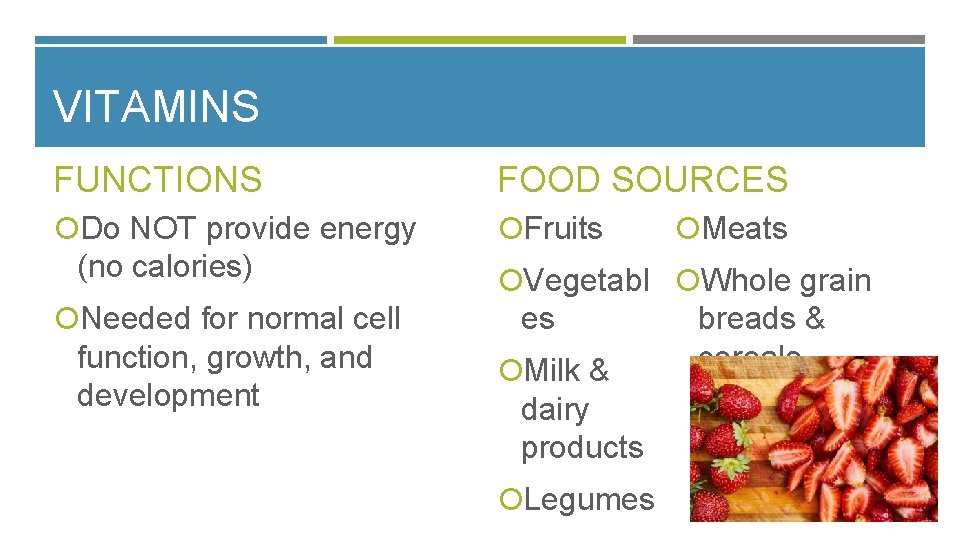
VITAMINS FUNCTIONS FOOD SOURCES Do NOT provide energy Fruits (no calories) Needed for normal cell function, growth, and development Meats Vegetabl Whole grain es Milk & dairy products Legumes breads & cereals
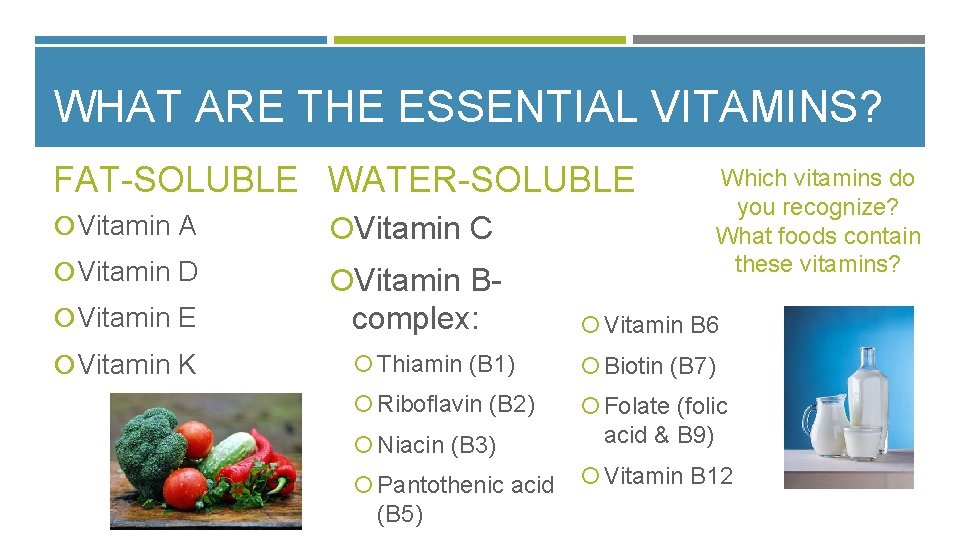
WHAT ARE THE ESSENTIAL VITAMINS? FAT-SOLUBLE WATER-SOLUBLE Which vitamins do you recognize? What foods contain these vitamins? Vitamin A Vitamin C Vitamin D Vitamin B- Vitamin E complex: Vitamin B 6 Vitamin K Thiamin (B 1) Biotin (B 7) Riboflavin (B 2) Folate (folic Niacin (B 3) Pantothenic acid (B 5) acid & B 9) Vitamin B 12
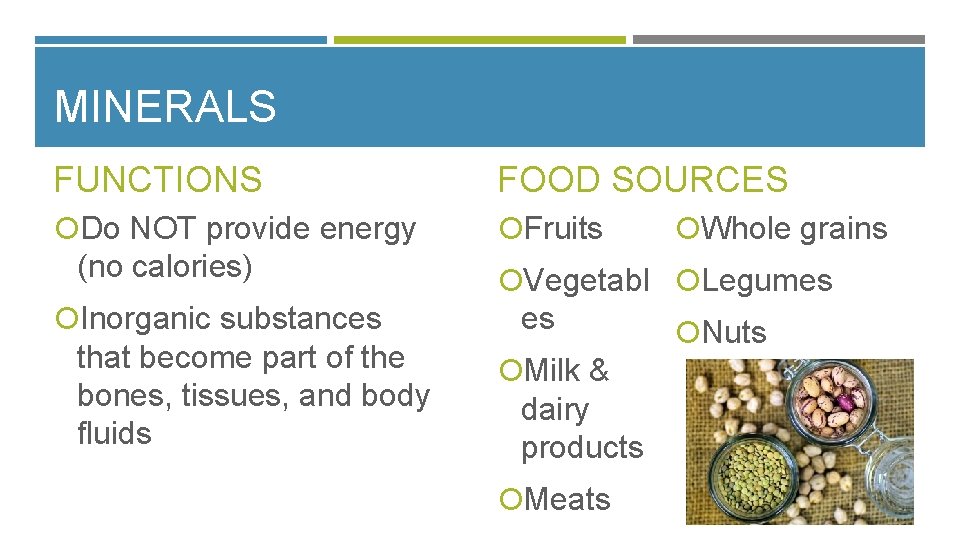
MINERALS FUNCTIONS FOOD SOURCES Do NOT provide energy Fruits (no calories) Inorganic substances that become part of the bones, tissues, and body fluids Whole grains Vegetabl Legumes es Milk & dairy products Meats Nuts
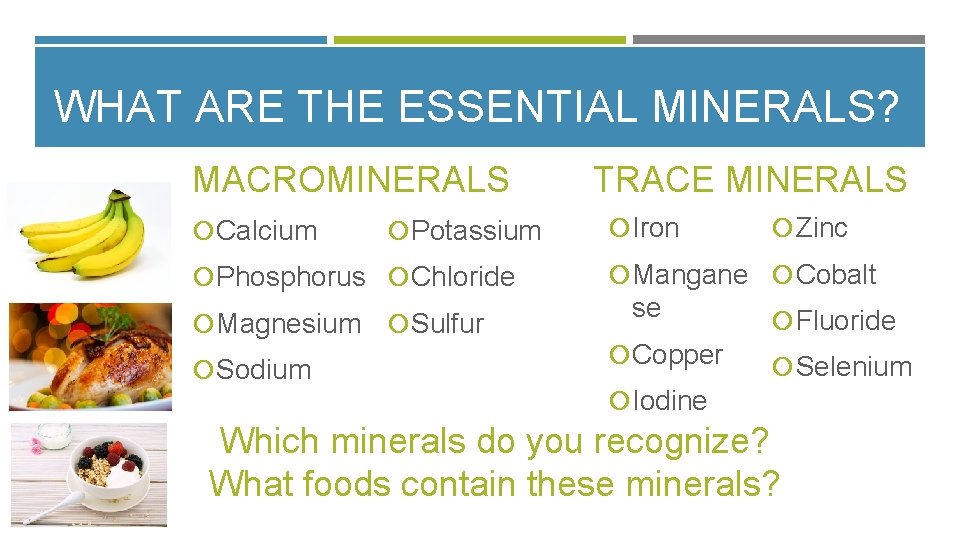
WHAT ARE THE ESSENTIAL MINERALS? MACROMINERALS Calcium Potassium Phosphorus Chloride Magnesium Sulfur Sodium TRACE MINERALS Iron Zinc Mangane Cobalt se Copper Fluoride Selenium Iodine Which minerals do you recognize? What foods contain these minerals?
WATER FUNCTIONS FOOD SOURCES Does NOT provide energy Water & other (no calories) Carries nutrients throughout the body Regulates body temp. Lubricates joints Dissolves vitamins, minerals, amino acids, etc. beverages Fruits & vegetables Milk & dairy products Soups
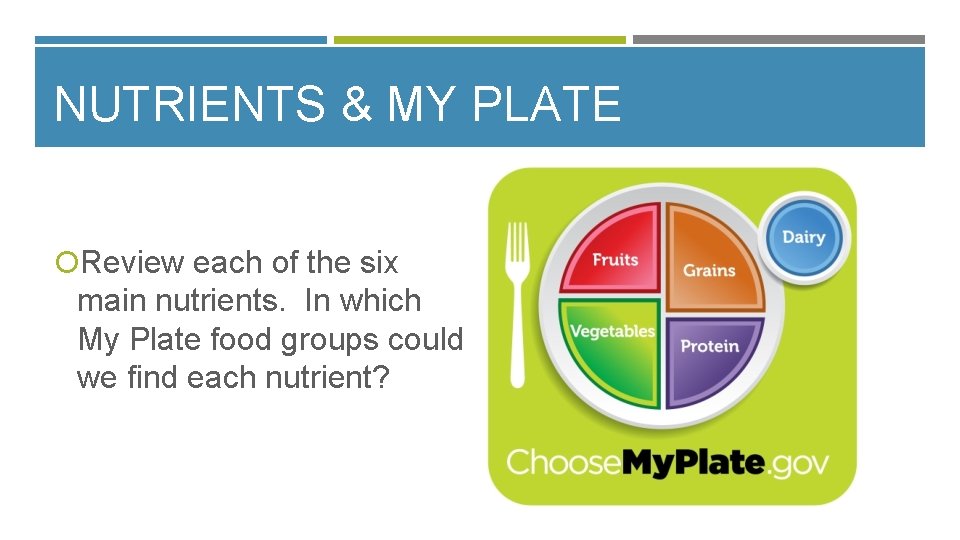
NUTRIENTS & MY PLATE Review each of the six main nutrients. In which My Plate food groups could we find each nutrient?