
THE SIX KINGDOMS REVIEW What is Taxonomy Who

- Slides: 19
THE SIX KINGDOMS
REVIEW • • What is Taxonomy? Who invented Binomial Nomenclature? What are the naming rules? What is a dichotomous key? What are the 6 characteristics of all living things? What are the chemicals of life? What are the requirements of all living things?
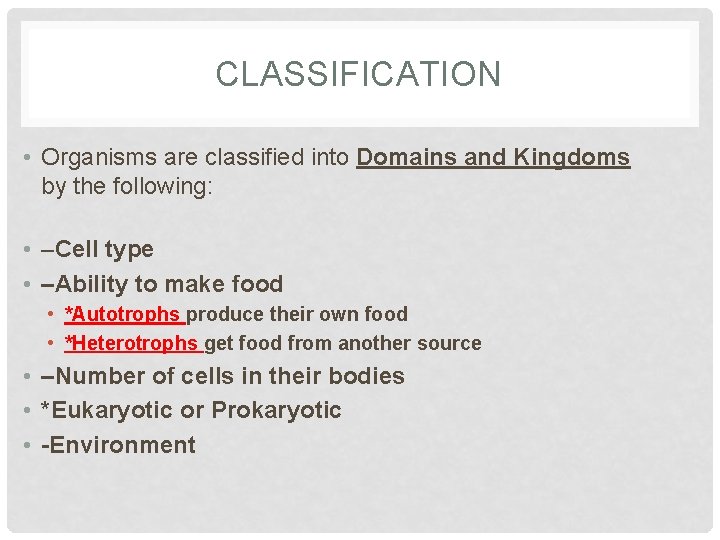
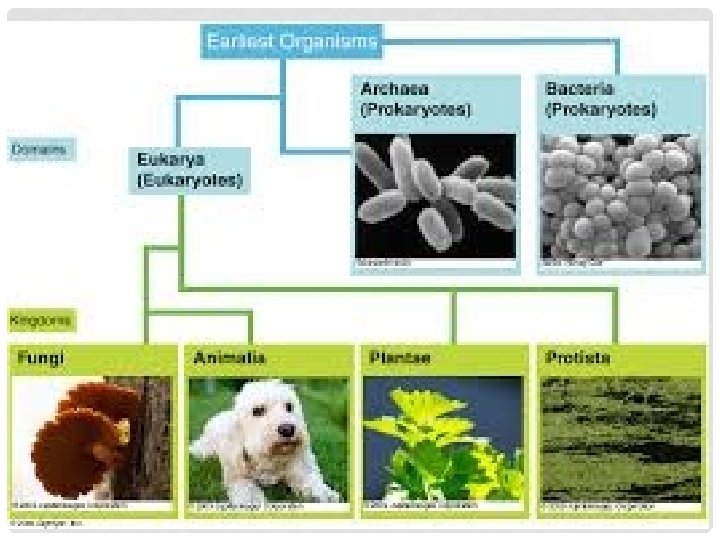
CLASSIFICATION • Organisms are classified into Domains and Kingdoms by the following: • –Cell type • –Ability to make food • *Autotrophs produce their own food • *Heterotrophs get food from another source • –Number of cells in their bodies • *Eukaryotic or Prokaryotic • -Environment
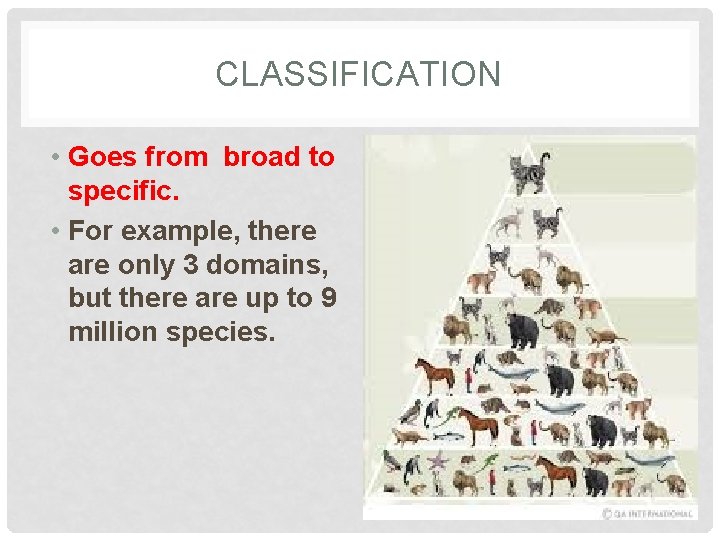
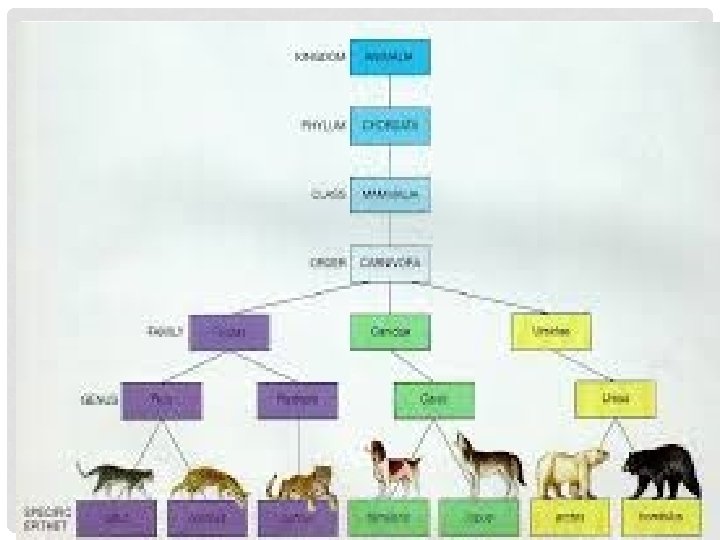
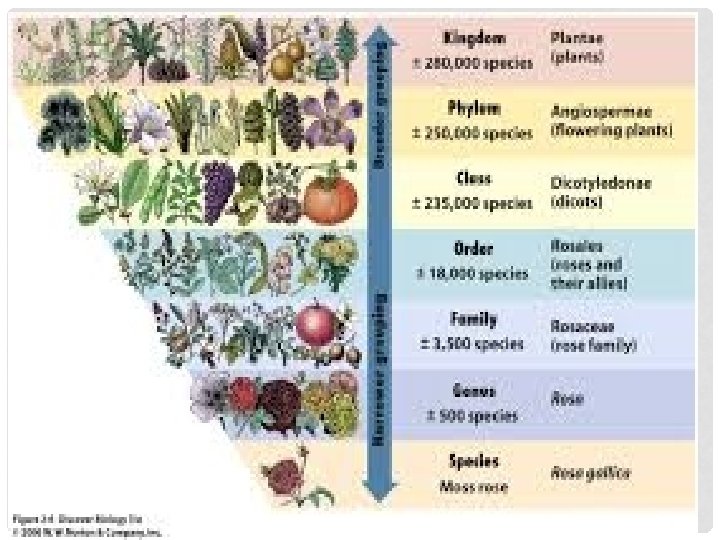
CLASSIFICATION • Goes from broad to specific. • For example, there are only 3 domains, but there are up to 9 million species.
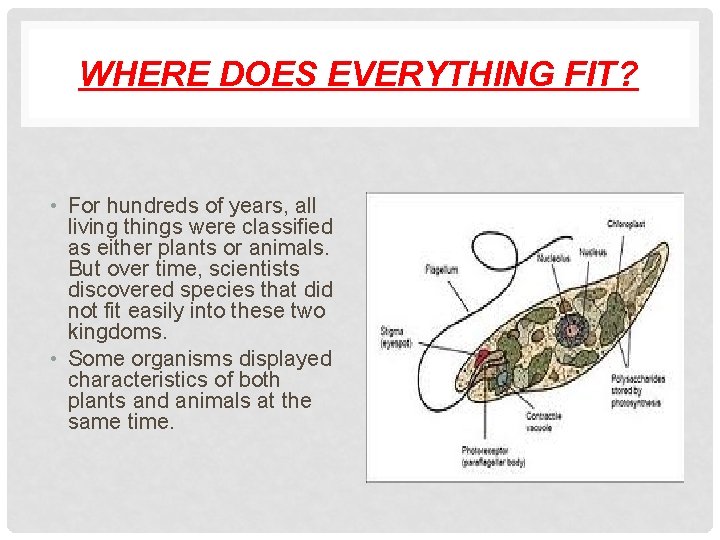
WHERE DOES EVERYTHING FIT? • For hundreds of years, all living things were classified as either plants or animals. But over time, scientists discovered species that did not fit easily into these two kingdoms. • Some organisms displayed characteristics of both plants and animals at the same time.
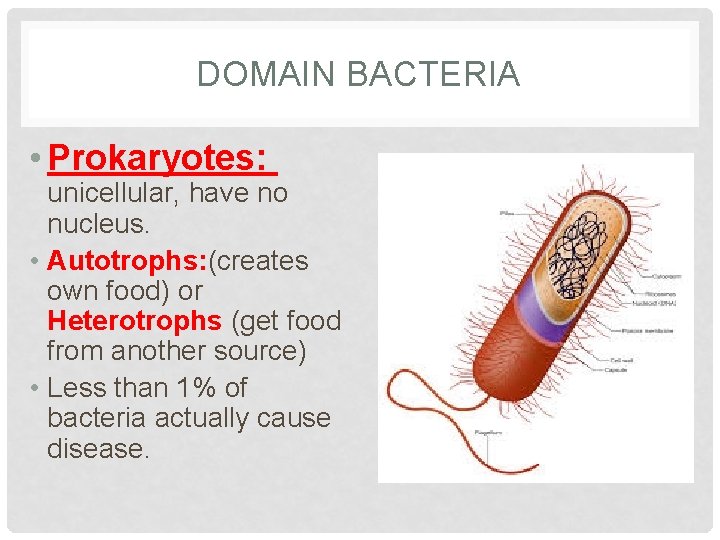
DOMAIN BACTERIA • Prokaryotes: unicellular, have no nucleus. • Autotrophs: (creates own food) or Heterotrophs (get food from another source) • Less than 1% of bacteria actually cause disease.
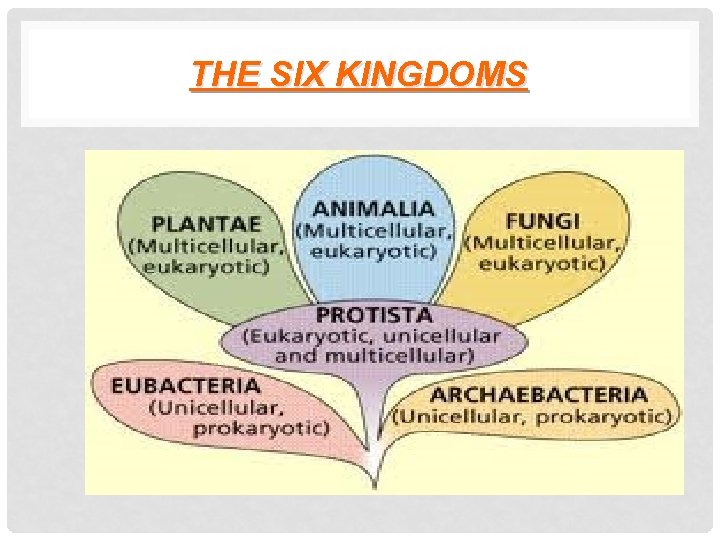
DOMAIN EUKARYA • Eukaryotes: Organisms w/ cells that contain a nucleus. • Eukarya is classified into 4 main Kingdoms: • Protists • Fungi • Animals • Plants
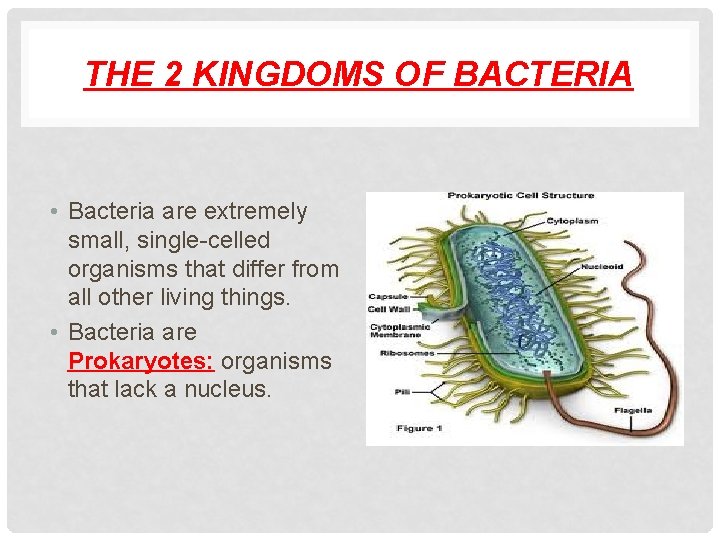
THE 2 KINGDOMS OF BACTERIA • Bacteria are extremely small, single-celled organisms that differ from all other living things. • Bacteria are Prokaryotes: organisms that lack a nucleus.
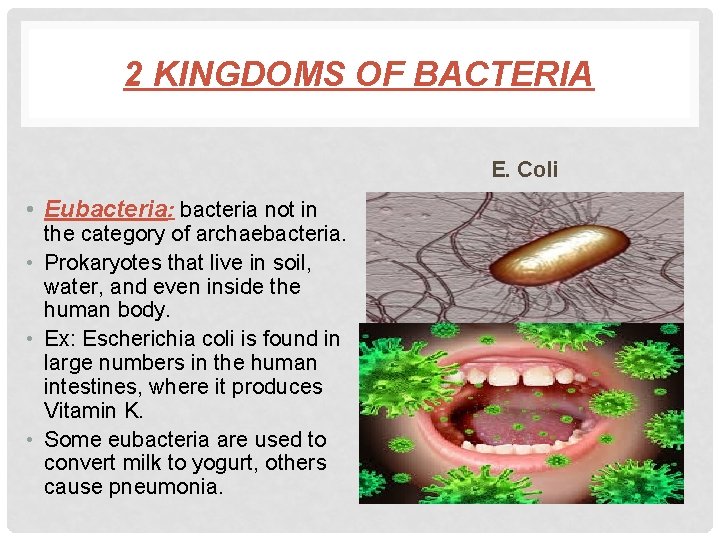
2 KINGDOMS OF BACTERIA E. Coli • Eubacteria: bacteria not in the category of archaebacteria. • Prokaryotes that live in soil, water, and even inside the human body. • Ex: Escherichia coli is found in large numbers in the human intestines, where it produces Vitamin K. • Some eubacteria are used to convert milk to yogurt, others cause pneumonia.
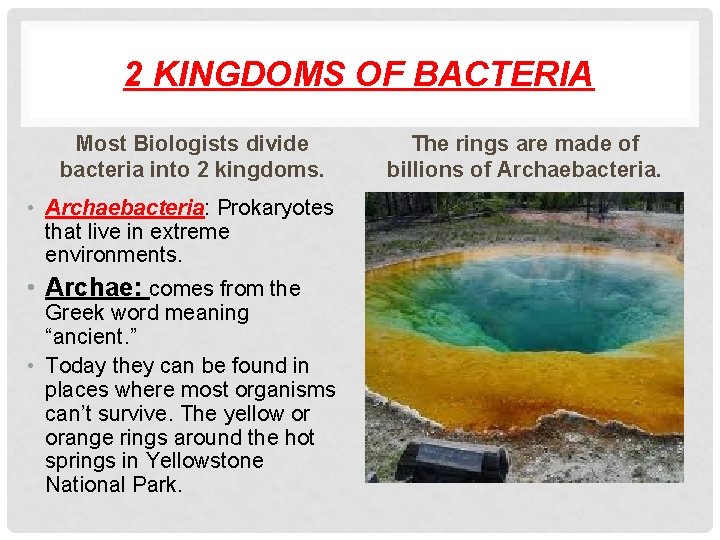
2 KINGDOMS OF BACTERIA Most Biologists divide bacteria into 2 kingdoms. • Archaebacteria: Prokaryotes that live in extreme environments. • Archae: comes from the Greek word meaning “ancient. ” • Today they can be found in places where most organisms can’t survive. The yellow or orange rings around the hot springs in Yellowstone National Park. The rings are made of billions of Archaebacteria.
BACTERIA FUN FACTS • More bacteria live in your mouth than there are people on the Earth. • 500 -1000 different species in your body. • 2 -5 lbs. Of your body mass
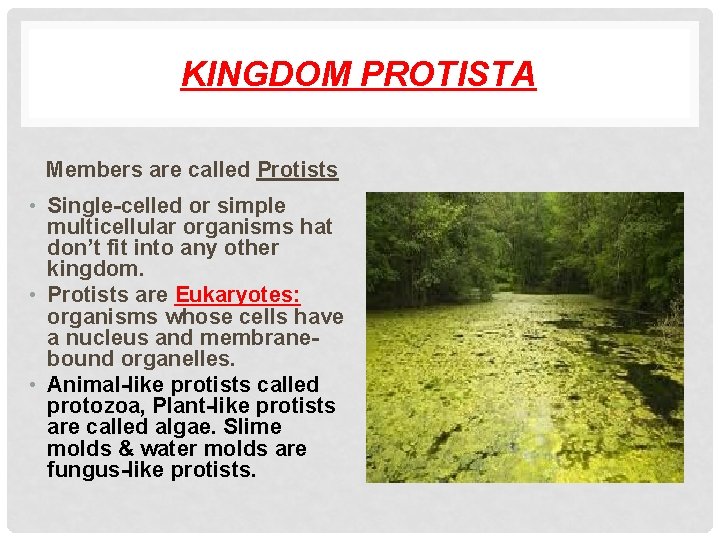
KINGDOM PROTISTA Members are called Protists • Single-celled or simple multicellular organisms hat don’t fit into any other kingdom. • Protists are Eukaryotes: organisms whose cells have a nucleus and membranebound organelles. • Animal-like protists called protozoa, Plant-like protists are called algae. Slime molds & water molds are fungus-like protists.
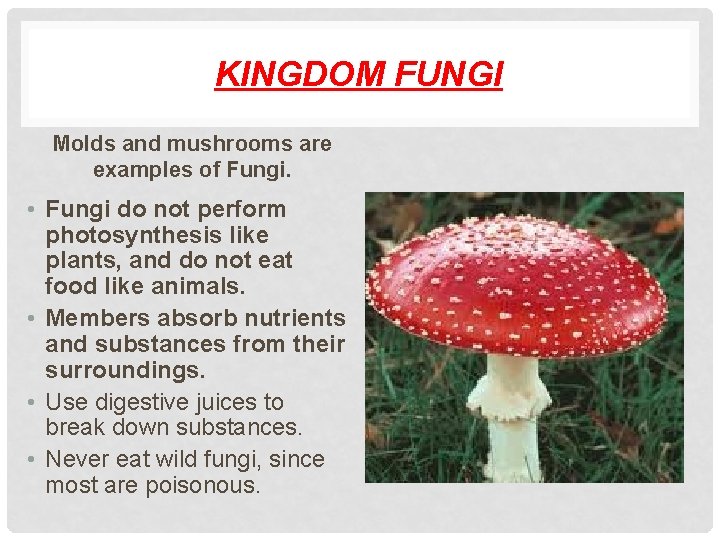
KINGDOM FUNGI Molds and mushrooms are examples of Fungi. • Fungi do not perform photosynthesis like plants, and do not eat food like animals. • Members absorb nutrients and substances from their surroundings. • Use digestive juices to break down substances. • Never eat wild fungi, since most are poisonous.
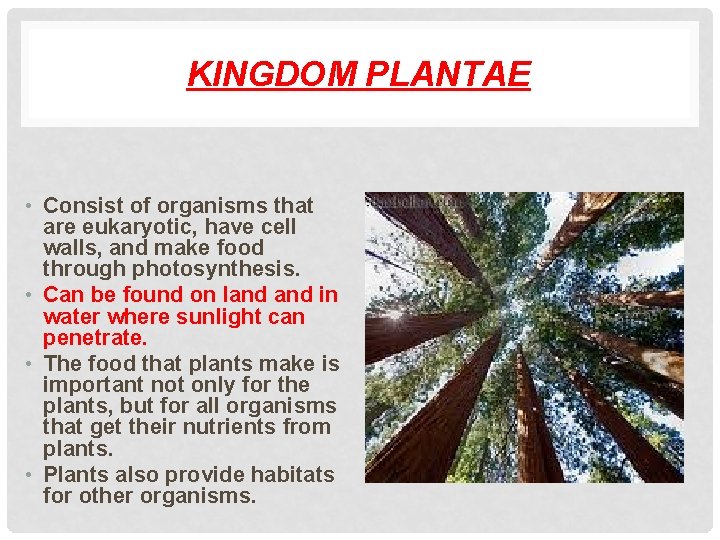
KINGDOM PLANTAE • Consist of organisms that are eukaryotic, have cell walls, and make food through photosynthesis. • Can be found on land in water where sunlight can penetrate. • The food that plants make is important not only for the plants, but for all organisms that get their nutrients from plants. • Plants also provide habitats for other organisms.
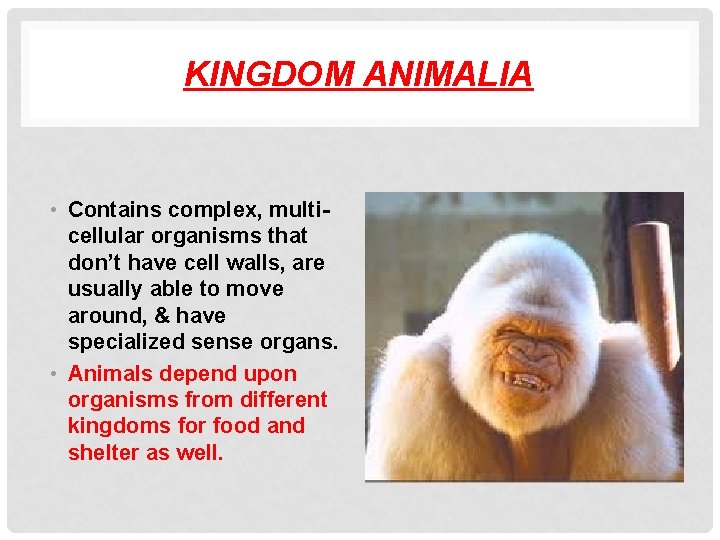
KINGDOM ANIMALIA • Contains complex, multicellular organisms that don’t have cell walls, are usually able to move around, & have specialized sense organs. • Animals depend upon organisms from different kingdoms for food and shelter as well.