
THE SIX CLASSES OF NUTRIENTS Foods and Nutrition


- Slides: 10
THE SIX CLASSES OF NUTRIENTS Foods and Nutrition
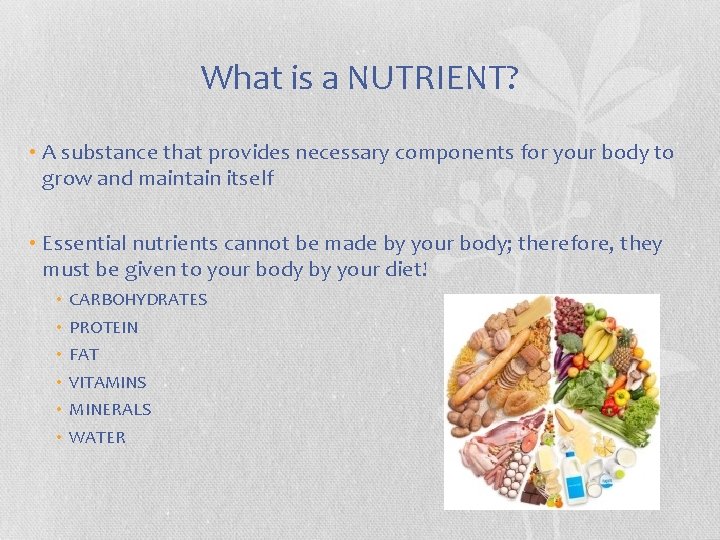
What is a NUTRIENT? • A substance that provides necessary components for your body to grow and maintain itself • Essential nutrients cannot be made by your body; therefore, they must be given to your body by your diet! • • • CARBOHYDRATES PROTEIN FAT VITAMINS MINERALS WATER
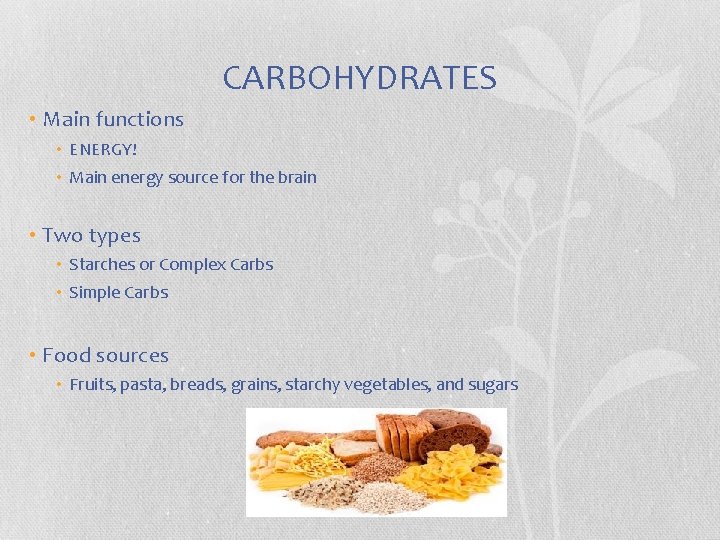
CARBOHYDRATES • Main functions • ENERGY! • Main energy source for the brain • Two types • Starches or Complex Carbs • Simple Carbs • Food sources • Fruits, pasta, breads, grains, starchy vegetables, and sugars
PROTEIN • Functions • Major structural component of cells • Builds and repairs body tissues • Broken down into amino acids. There are 20 amino acids. • Two types • Complete proteins • Found in animal sources • Incomplete proteins • Found in plant sources • Food sources • Meat, fish, eggs, poultry, dairy products, legumes, nuts, and seeds
FAT • Most concentrated form of food energy (calories) • Functions • • Provide components necessary for growth and healthy skin Enhance the taste and texture of food Provide energy Increase absorption of certain vitamins like A, D, E, and K • Saturated Fats (solid at room temperature) • Food sources: animal products and certain oils • Increase risk of high cholesterol and heart disease • Unsaturated Fats (liquid at room temperature) • Vegetable oils, fish oils, olive oil, canola oil, nuts, seeds • Reduce risk of heart disease
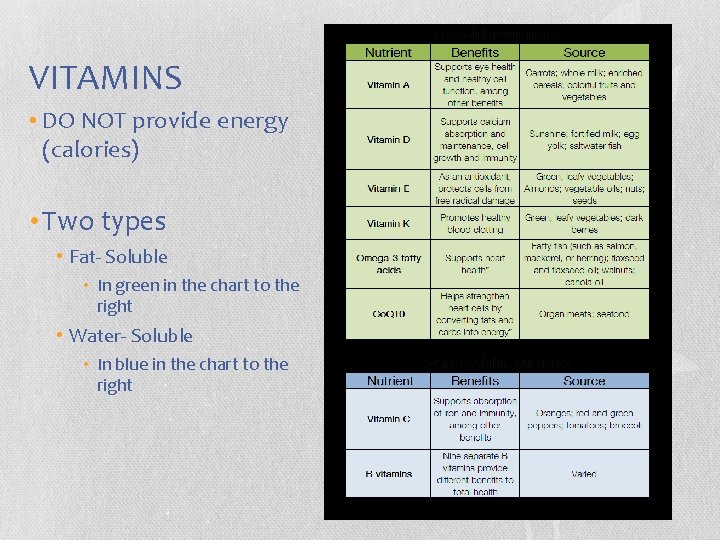
VITAMINS • DO NOT provide energy (calories) • Two types • Fat- Soluble • In green in the chart to the right • Water- Soluble • In blue in the chart to the right
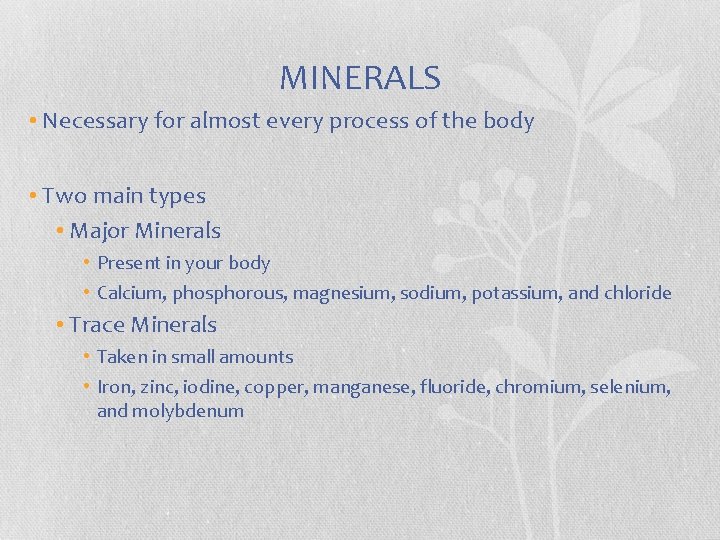
MINERALS • Necessary for almost every process of the body • Two main types • Major Minerals • Present in your body • Calcium, phosphorous, magnesium, sodium, potassium, and chloride • Trace Minerals • Taken in small amounts • Iron, zinc, iodine, copper, manganese, fluoride, chromium, selenium, and molybdenum
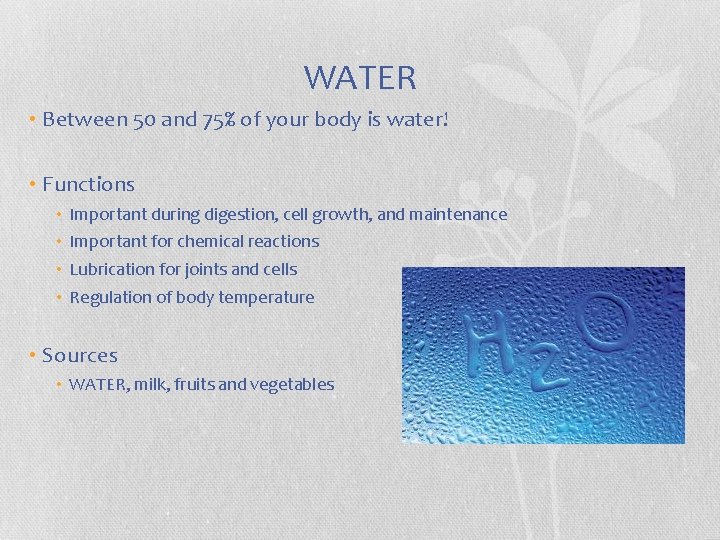
WATER • Between 50 and 75% of your body is water! • Functions • • Important during digestion, cell growth, and maintenance Important for chemical reactions Lubrication for joints and cells Regulation of body temperature • Sources • WATER, milk, fruits and vegetables
VIDEO • https: //youtu. be/Z_2 QE 6 -Imzs
ACTIVITY! • Make a list of what foods you ate yesterday • Sort each food item into the category of nutrients it would fall under • Turn in list by end of period for possible 20 points • HOMEWORK: complete nutrient worksheet