
The Single Cancer Pathway Background and Case for
The Single Cancer Pathway
Background and Case for Change
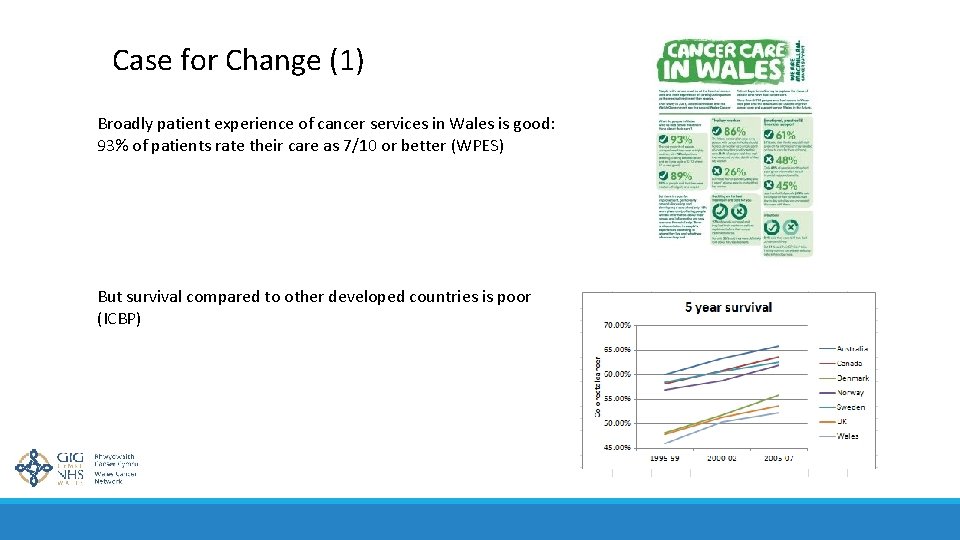
Case for Change (1) Broadly patient experience of cancer services in Wales is good: 93% of patients rate their care as 7/10 or better (WPES) But survival compared to other developed countries is poor (ICBP)
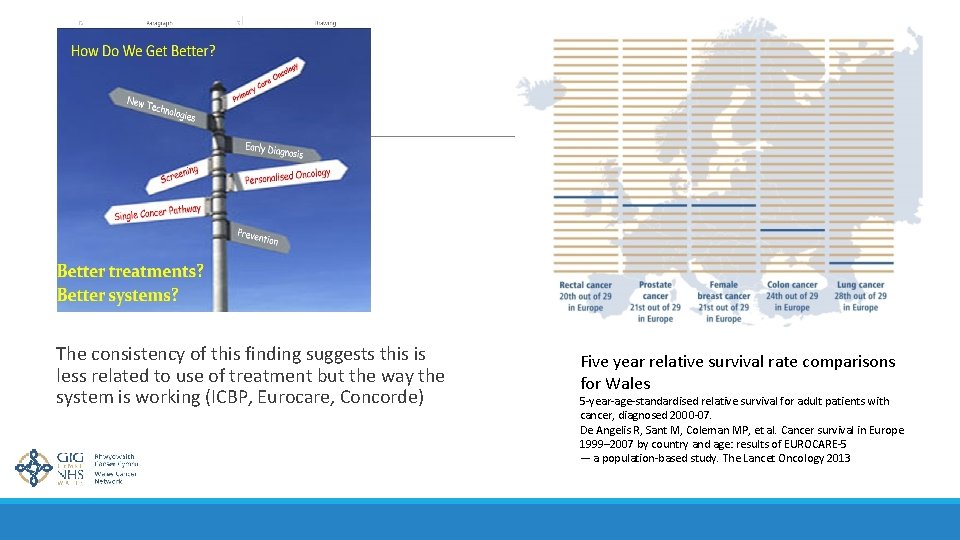
The consistency of this finding suggests this is less related to use of treatment but the way the system is working (ICBP, Eurocare, Concorde) Five year relative survival rate comparisons for Wales 5 -year-age-standardised relative survival for adult patients with cancer, diagnosed 2000 -07. De Angelis R, Sant M, Coleman MP, et al. Cancer survival in Europe 1999– 2007 by country and age: results of EUROCARE-5 — a population-based study. The Lancet Oncology 2013
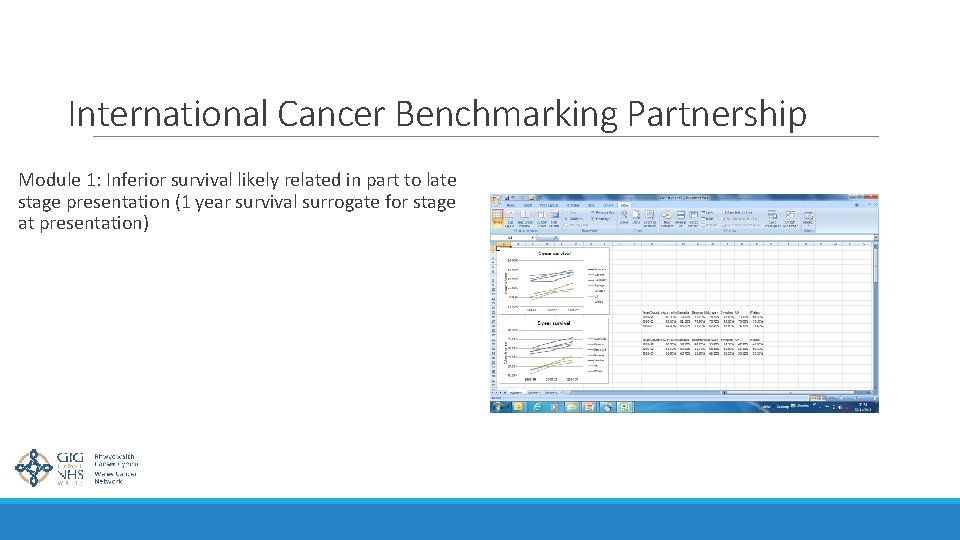
International Cancer Benchmarking Partnership Module 1: Inferior survival likely related in part to late stage presentation (1 year survival surrogate for stage at presentation)
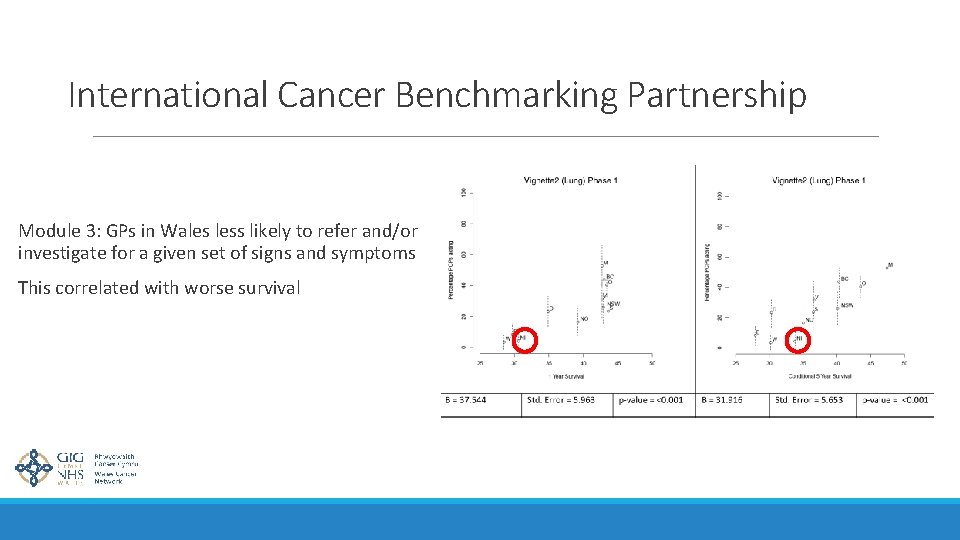
International Cancer Benchmarking Partnership Module 3: GPs in Wales less likely to refer and/or investigate for a given set of signs and symptoms This correlated with worse survival
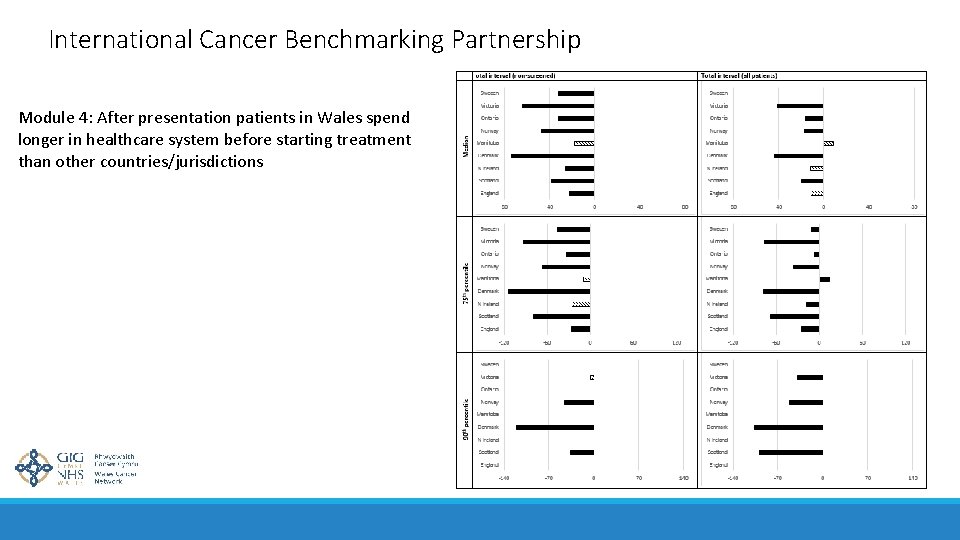
International Cancer Benchmarking Partnership Module 4: After presentation patients in Wales spend longer in healthcare system before starting treatment than other countries/jurisdictions
State of Diagnostic Services in Wales 9 -10% increase in CT, MR, Endoscopy year on year 10 -50% posts vacant in Wales, all HBs outsourcing 30% of workforce could retire in next 5 years >50% current workforce >10 (many >12), unable to attract trainees, <50% primary care timely direct access to NICE recommended diagnostics 7 radiologists per 100, 000 compared to European average 12. 7 7 CT scanners per million, compared with 35 in Denmark Situation similar or worse across primary care and pathology
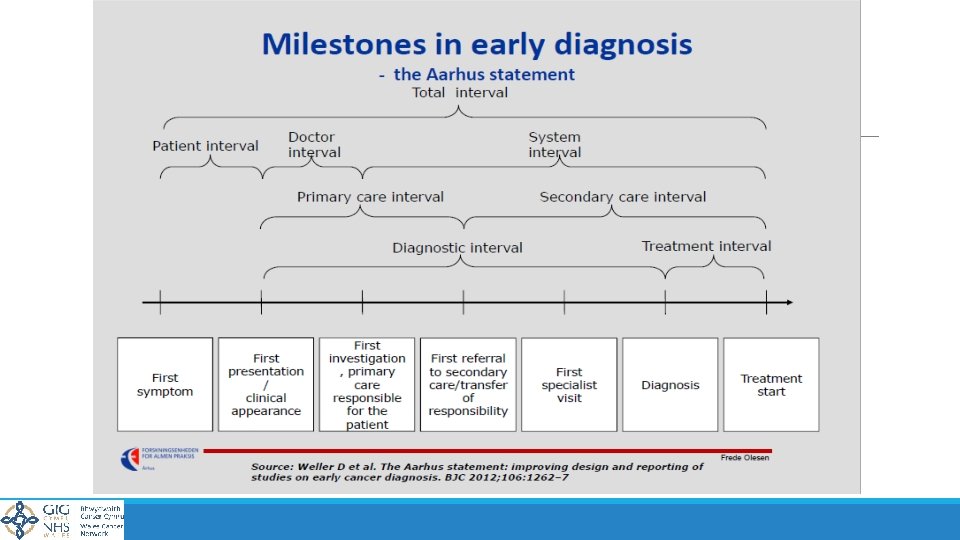
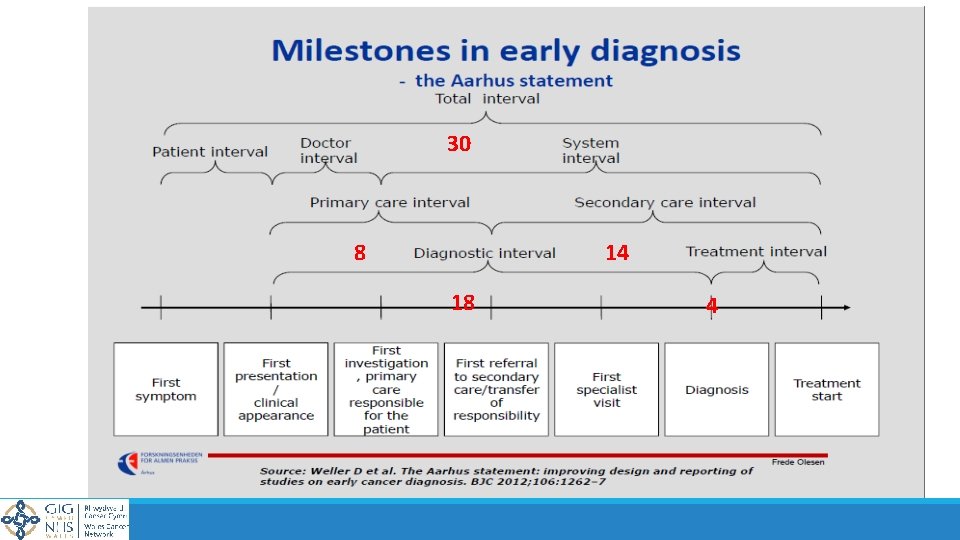
30 8 14 18 4
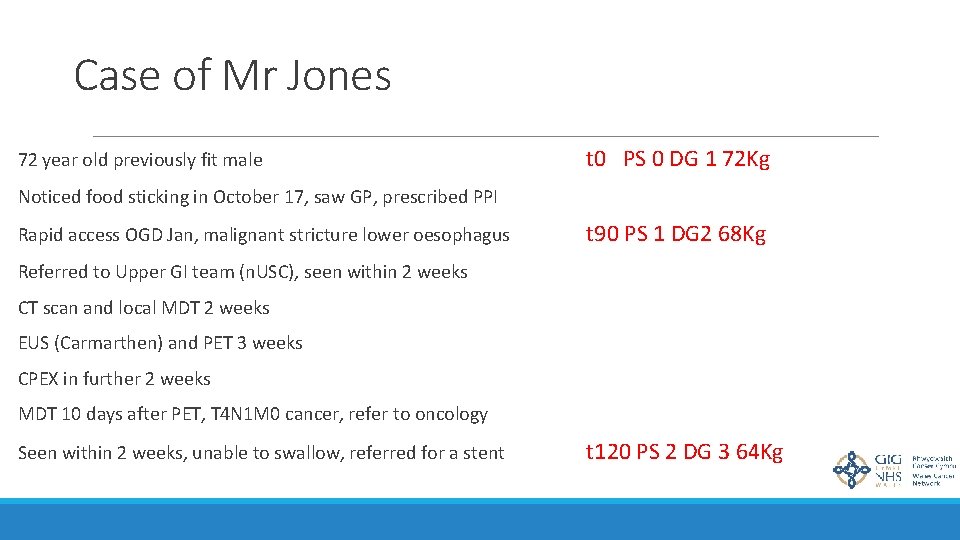
Case of Mr Jones 72 year old previously fit male t 0 PS 0 DG 1 72 Kg Noticed food sticking in October 17, saw GP, prescribed PPI Rapid access OGD Jan, malignant stricture lower oesophagus t 90 PS 1 DG 2 68 Kg Referred to Upper GI team (n. USC), seen within 2 weeks CT scan and local MDT 2 weeks EUS (Carmarthen) and PET 3 weeks CPEX in further 2 weeks MDT 10 days after PET, T 4 N 1 M 0 cancer, refer to oncology Seen within 2 weeks, unable to swallow, referred for a stent t 120 PS 2 DG 3 64 Kg
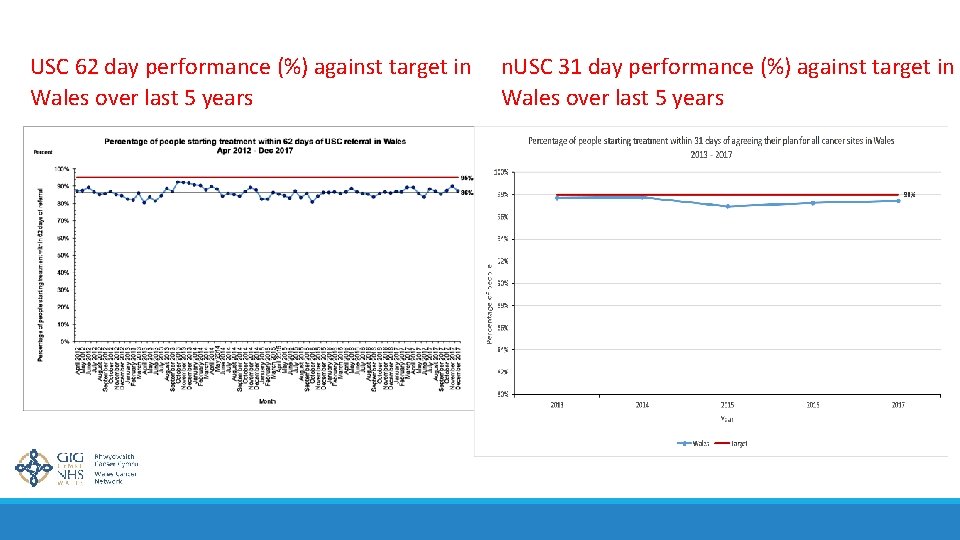
USC 62 day performance (%) against target in Wales over last 5 years n. USC 31 day performance (%) against target in Wales over last 5 years
Variation in the System
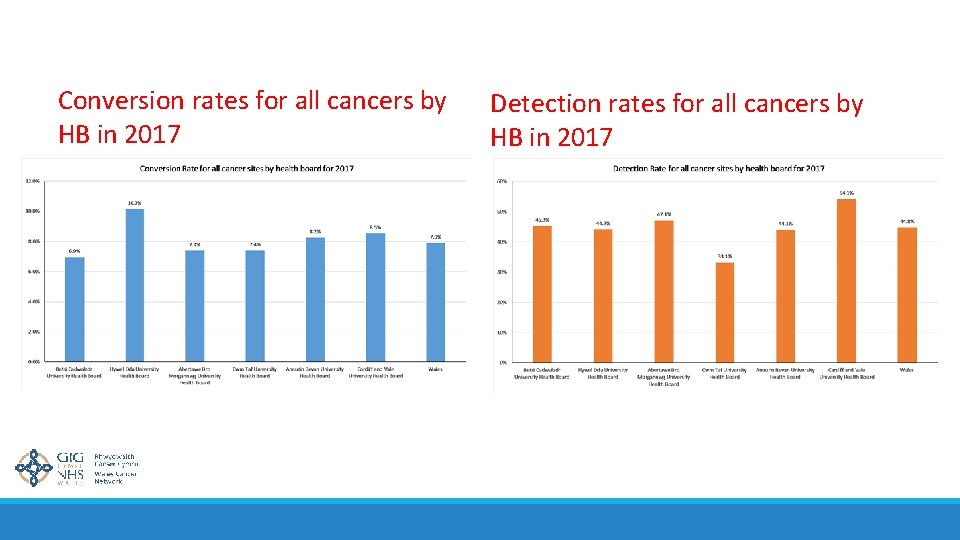
Conversion rates for all cancers by HB in 2017 Detection rates for all cancers by HB in 2017
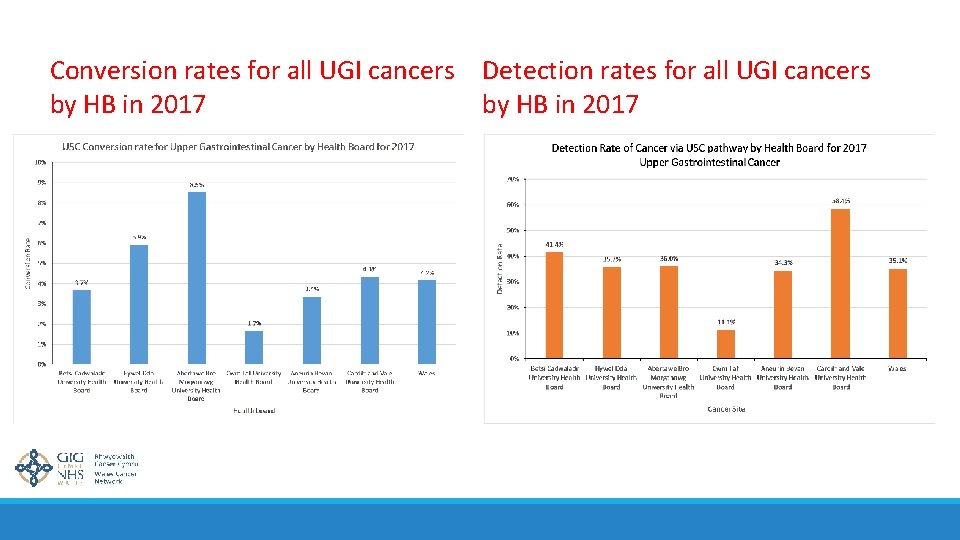
Conversion rates for all UGI cancers Detection rates for all UGI cancers by HB in 2017
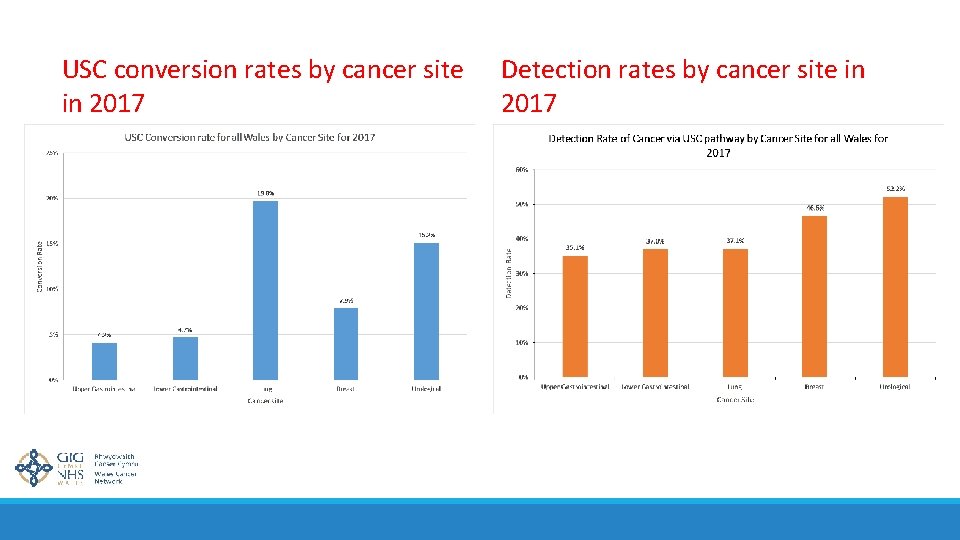
USC conversion rates by cancer site in 2017 Detection rates by cancer site in 2017
The Single Cancer Pathway
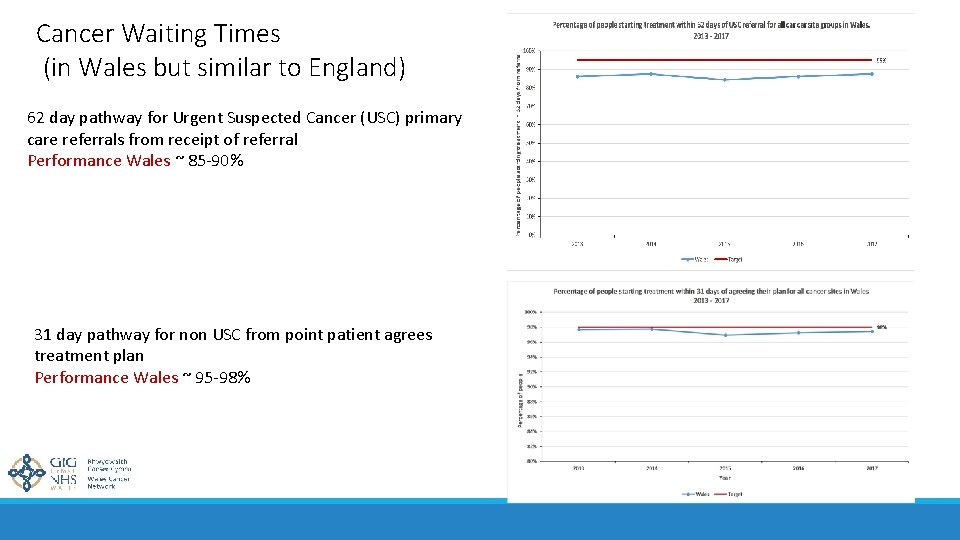
Cancer Waiting Times (in Wales but similar to England) 62 day pathway for Urgent Suspected Cancer (USC) primary care referrals from receipt of referral Performance Wales ~ 85 -90% 31 day pathway for non USC from point patient agrees treatment plan Performance Wales ~ 95 -98%
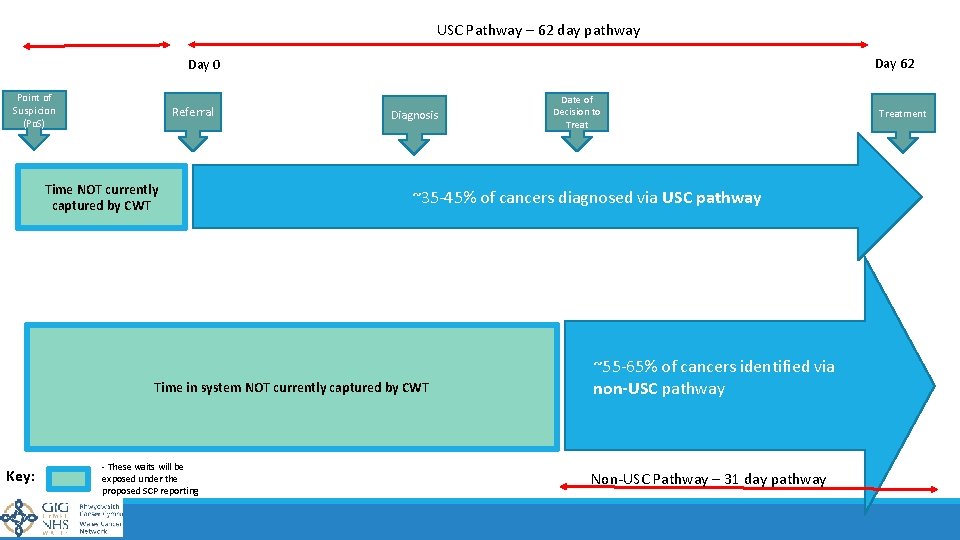
USC Pathway – 62 day pathway Day 62 Day 0 Point of Suspicion (Po. S) Referral Time NOT currently captured by CWT Diagnosis ~35 -45% of cancers diagnosed via USC pathway Time in system NOT currently captured by CWT Key: - These waits will be exposed under the proposed SCP reporting Date of Decision to Treat ~55 -65% of cancers identified via non-USC pathway Non-USC Pathway – 31 day pathway Treatment
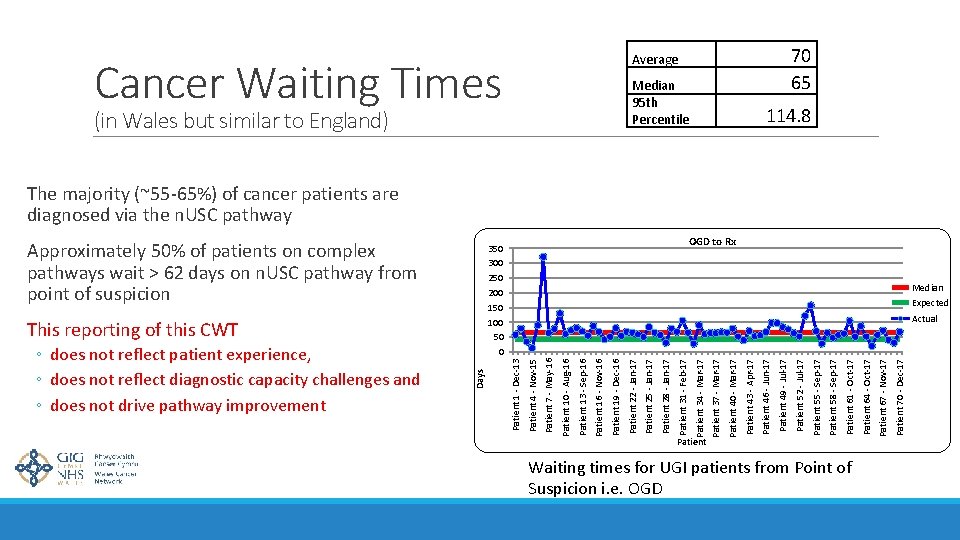
70 65 Average Cancer Waiting Times Median 95 th Percentile (in Wales but similar to England) 114. 8 The majority (~55 -65%) of cancer patients are diagnosed via the n. USC pathway Median Expected Waiting times for UGI patients from Point of Suspicion i. e. OGD Patient 70 - Dec-17 Patient 67 - Nov-17 Patient 64 - Oct-17 Patient 61 - Oct-17 Patient 58 - Sep-17 Patient 55 - Sep-17 Patient 52 - Jul-17 Patient 49 - Jul-17 Patient 46 - Jun-17 Patient 43 - Apr-17 Patient 40 - Mar-17 Patient 37 - Mar-17 Patient 34 - Mar-17 Patient 28 - Jan-17 Patient 25 - Jan-17 Patient 22 - Jan-17 Patient 19 - Dec-16 Patient 16 - Nov-16 Patient 13 - Sep-16 Patient 10 - Aug-16 Patient 7 - May-16 Patient 4 - Nov-15 Actual Patient 1 - Dec-13 Days This reporting of this CWT ◦ does not reflect patient experience, ◦ does not reflect diagnostic capacity challenges and ◦ does not drive pathway improvement OGD to Rx 350 300 250 200 150 100 50 0 Patient 31 - Feb-17 Approximately 50% of patients on complex pathways wait > 62 days on n. USC pathway from point of suspicion
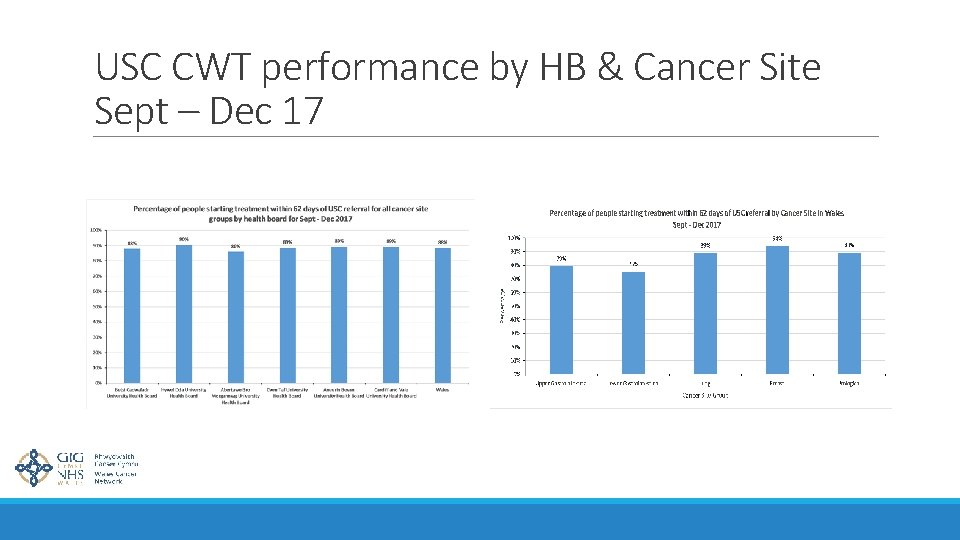
USC CWT performance by HB & Cancer Site Sept – Dec 17
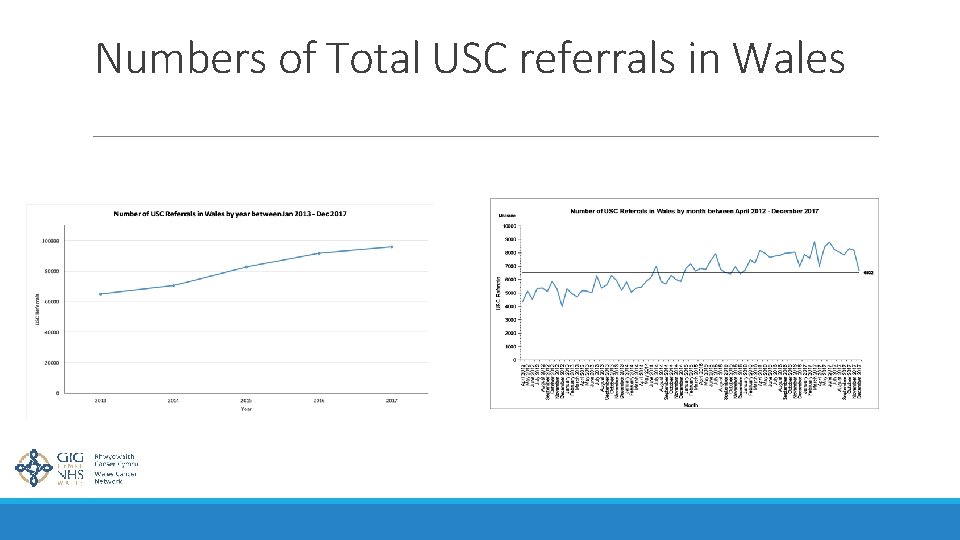
Numbers of Total USC referrals in Wales
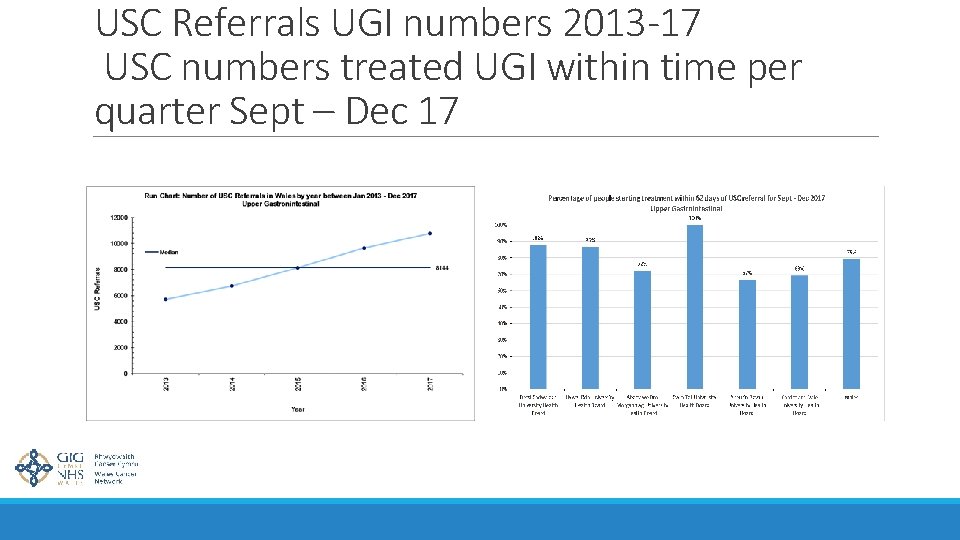
USC Referrals UGI numbers 2013 -17 USC numbers treated UGI within time per quarter Sept – Dec 17
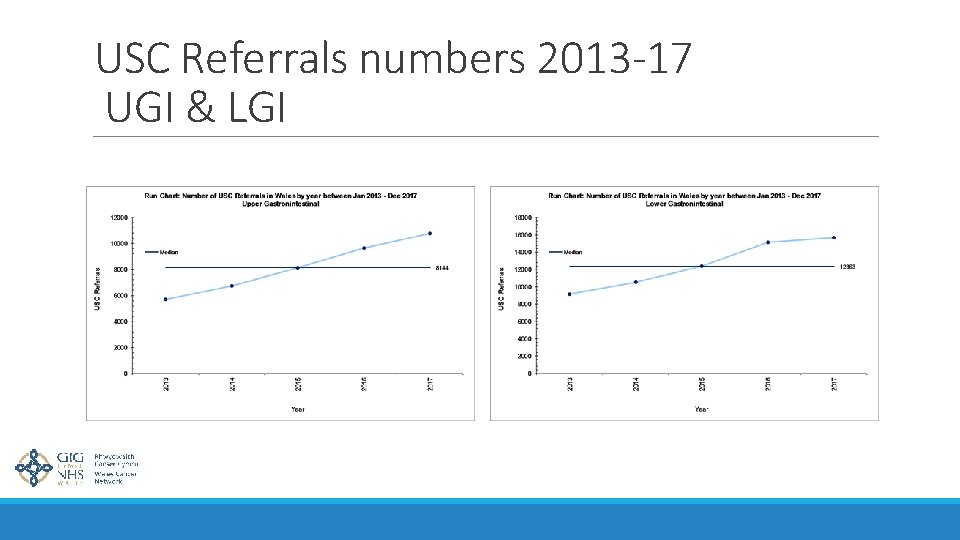
USC Referrals numbers 2013 -17 UGI & LGI
Ministerial and CIG response Pressure on system to comply with current CWT targets 2015 asked for clinical review of CWT targets Clinical view ◦ Waiting times important for patients and clinicians ◦ System should work better and 62 days max time ◦ Not in favour of exclusions 2016/17 WG/Network response ◦ Pilot new suspected cancer (SC) pathway starting at Po. S (where nec as defined by NG 12) ◦ Pilot suggested 20% increased demand in diagnostics but requirement for improved pathways and not including required increase for NG 12 Autumn 2017 ◦ Cabinet secretary indicated support for move to SCP ◦ Urged NHS Wales to prepare to be compliant with a 62 day SCP target
Summary Patients have relatively poor survival in Wales with stage at diagnosis a key factor in this Patients are waiting too long in the healthcare system before receiving treatment The current system of CWT reports contains hidden waits, does not reflect patient experience, does not report inadequate diagnostic and treatment capacity and does not drive improvement CEOs, Chairs, CIG, CSG, WCN, HB/Trusts agree: ◦ A single suspected cancer pathway that reports waiting times for all patients from the point of suspicion is…. . THE RIGHT THING TO DO The benefits should lead to better patient outcomes (survival, experience), better patient support and less costly treatment No one underestimates the challenge but we must work together, share best practice and be open to change
Achievements to Date Briefing document for Cab Sec and CEOs Suite of best practice Peer review of HB SCP Plans 8 site specific optimum pathways Received and reviewed HB Implementation Plans Worked with NWIS to define Po. S, impact assessment for DSCN Worked with DU to determine capacity and demand model Worked with 1000 lines re improvement approach and 5 workshops Meetings with Cab Sec and WG
Plans Meeting with CEOs, Chairs and Cab Sec Oct 22 nd Submit advice re requirement for increased funding for diagnostics and national SCP Programme HB to use C&D to inform IMTPs (meet current gap and forecast demand) Q 4 2018 Implement new Tracker 7 and embed in HB PAS systems by May 2019 Likely to publish SCP performance from April/May 2019 Continuous improvement work in 2019 ? 95% compliance by April 2020
SCP Performance
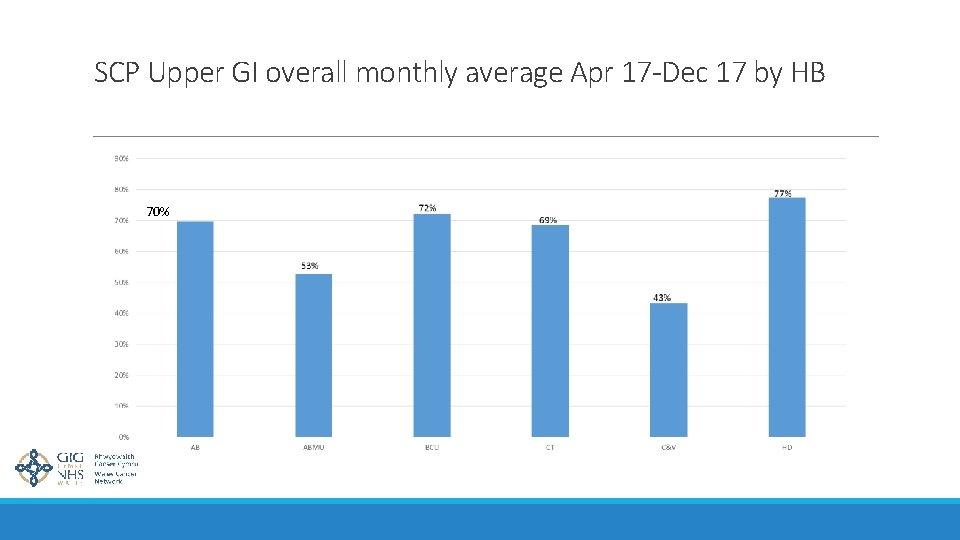
SCP Upper GI overall monthly average Apr 17 -Dec 17 by HB 70%
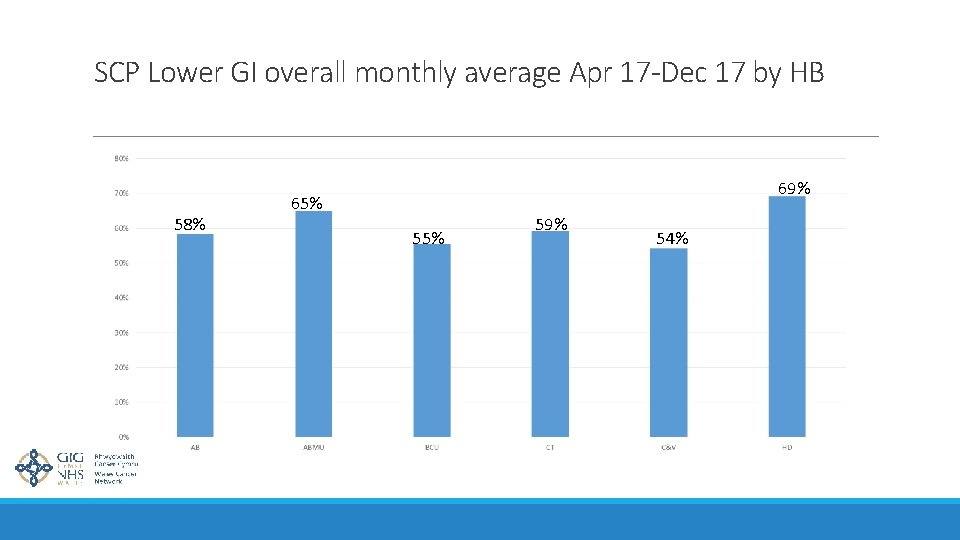
SCP Lower GI overall monthly average Apr 17 -Dec 17 by HB 58% 69% 65% 59% 54%
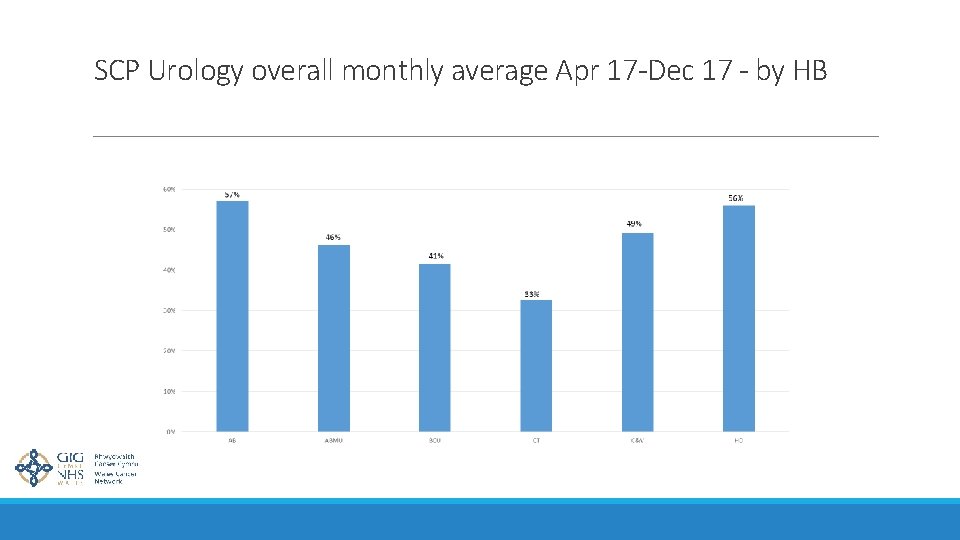
SCP Urology overall monthly average Apr 17 -Dec 17 - by HB
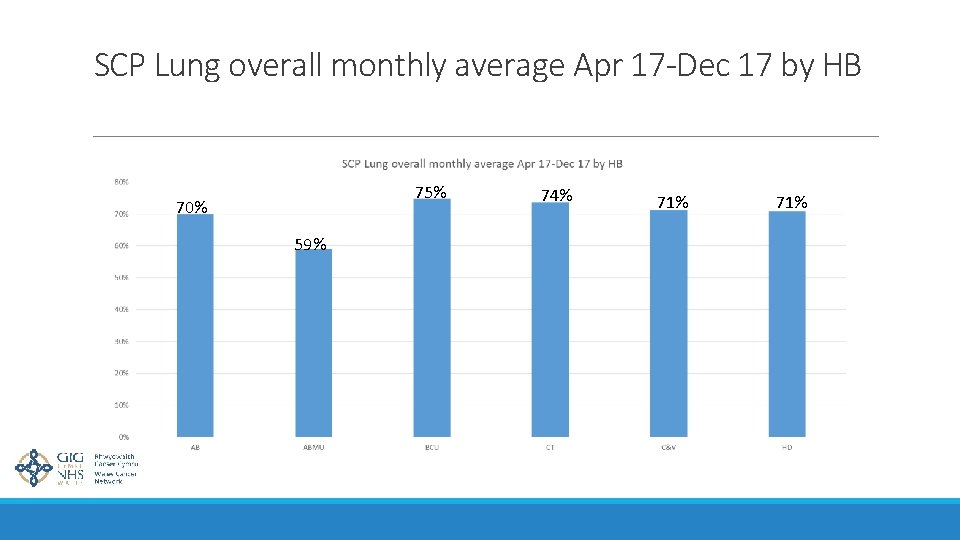
SCP Lung overall monthly average Apr 17 -Dec 17 by HB 75% 70% 59% 74% 71%
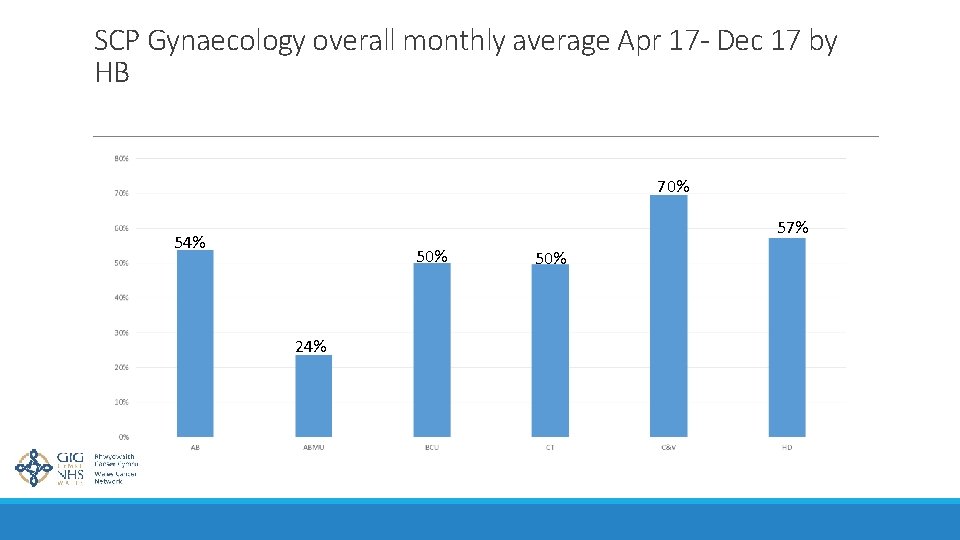
SCP Gynaecology overall monthly average Apr 17 - Dec 17 by HB 70% 57% 54% 50% 24% 50%
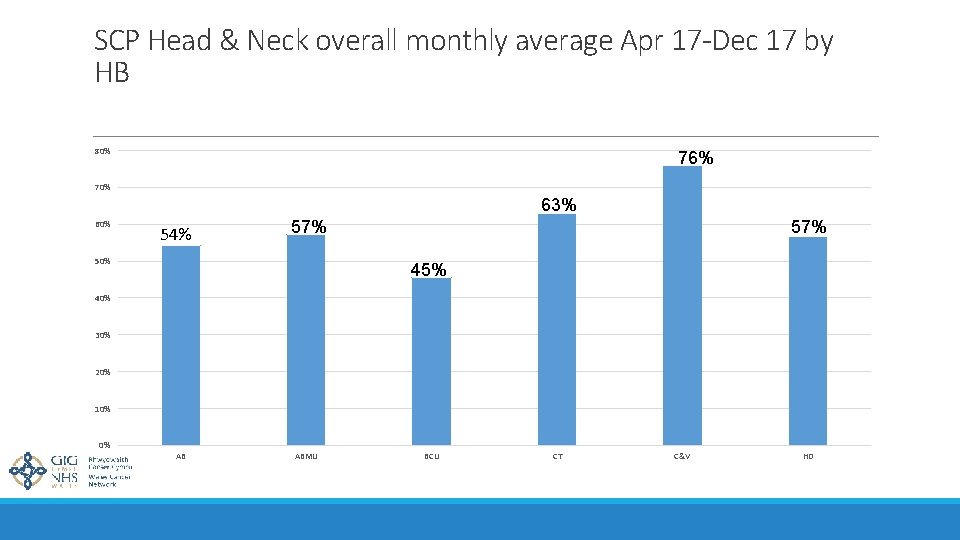
SCP Head & Neck overall monthly average Apr 17 -Dec 17 by HB 80% 76% 70% 63% 60% 54% 57% 50% 57% 45% 40% 30% 20% 10% 0% AB ABMU BCU CT C&V HD
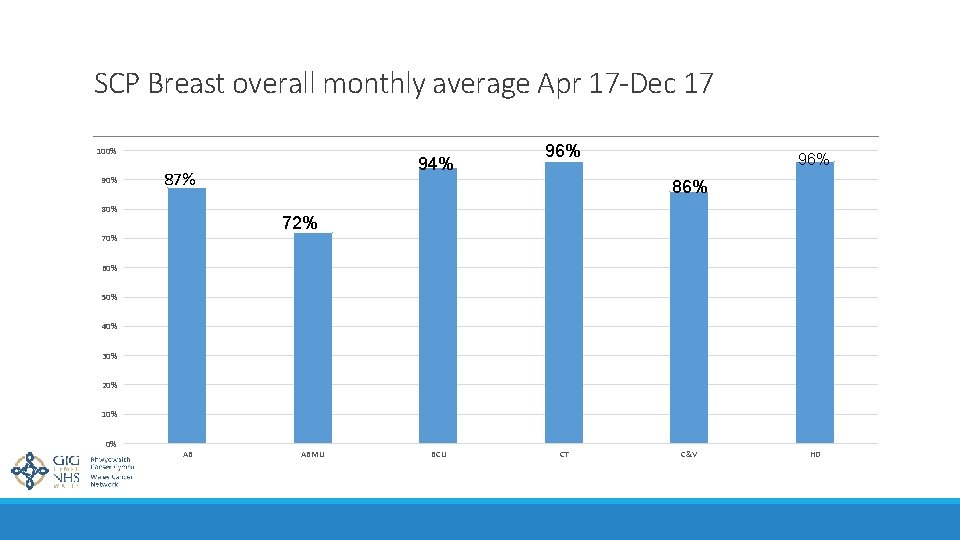
SCP Breast overall monthly average Apr 17 -Dec 17 100% 94% 87% 80% 96% 86% 72% 70% 60% 50% 40% 30% 20% 10% 0% AB ABMU BCU CT C&V HD
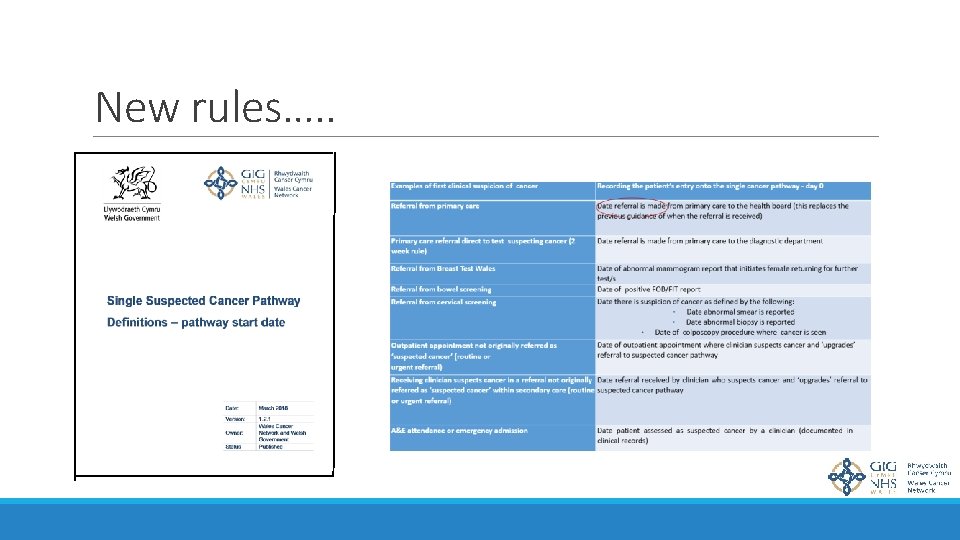
New rules…. .
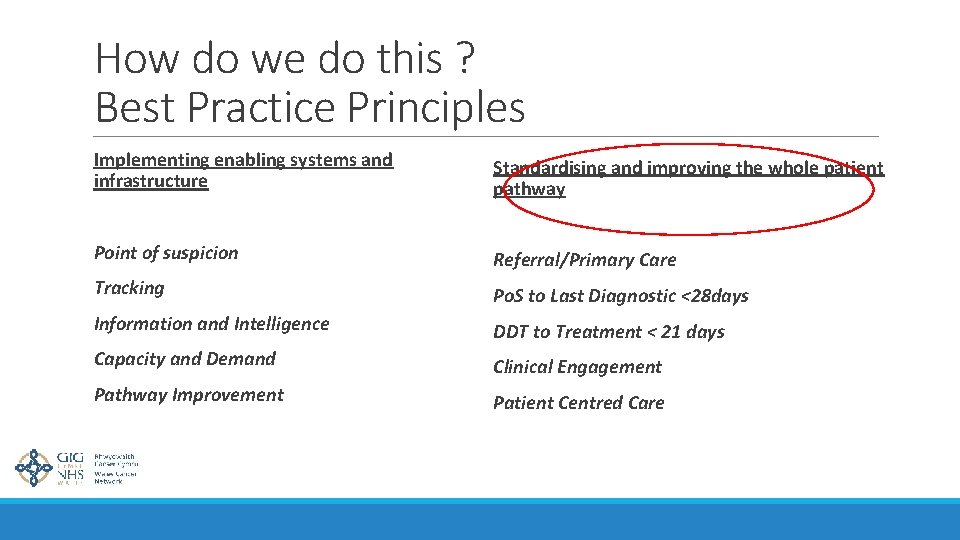
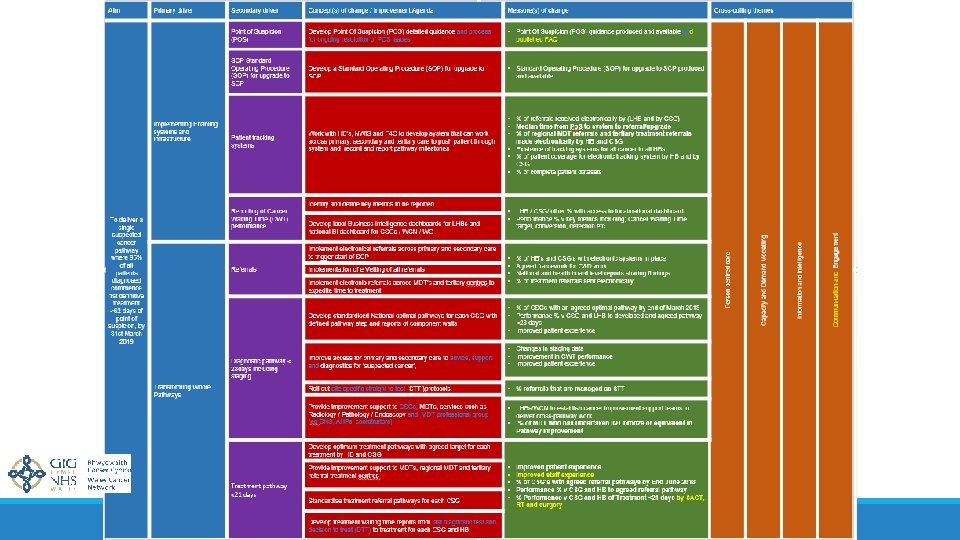
How do we do this ? Best Practice Principles Implementing enabling systems and infrastructure Standardising and improving the whole patient pathway Point of suspicion Referral/Primary Care Tracking Po. S to Last Diagnostic <28 days Information and Intelligence DDT to Treatment < 21 days Capacity and Demand Clinical Engagement Pathway Improvement Patient Centred Care
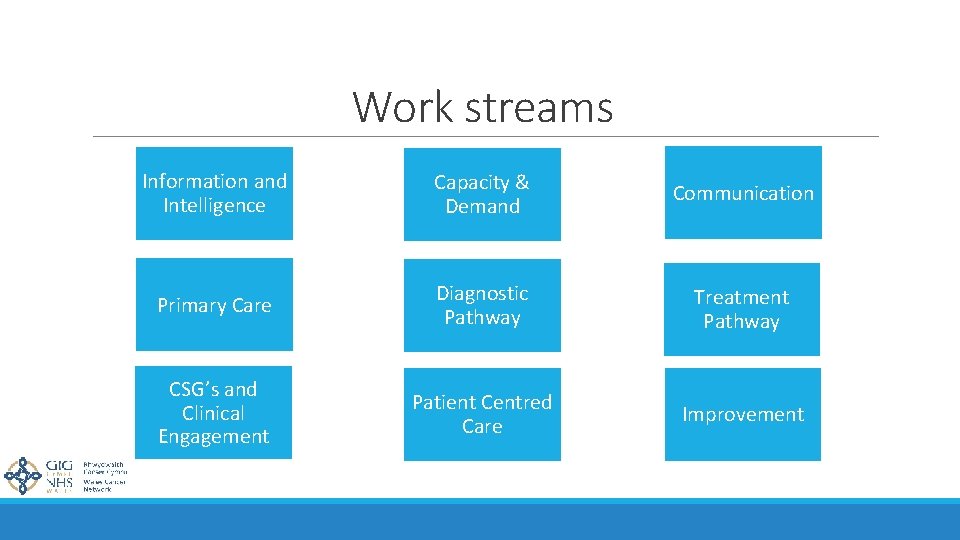
Work streams Information and Intelligence Capacity & Demand Communication Primary Care Diagnostic Pathway Treatment Pathway CSG’s and Clinical Engagement Patient Centred Care Improvement
Priorities To understand the additional capacity required for the NHS to be able to treat all patients from the Po. S within 62 days ◦ or 95% of patients to be diagnosed and staged < 28 days and treated < 21 days from decision to treat ◦ To understand where capacity required eg OPA, imaging, endoscopy, treatment ◦ Understand whether increased capacity due to rising referrals, improved USC performance or accelerated n. USC pathway To standardise pathways across Wales consistently using best practice principles such as use of NG 12 and entry points into system eg straight to test
Priorities To establish informatics systems to link with HB PAS systems that can receive e-referrals, can be easily started on clinical suspicion of cancer, can make system aware patient on accelerated pathway, track patient and record component and total waiting times To understand better where support systems should be introduced eg patient information, prehabilitation, holistic needs support and research To undertake a set of improvement workshops within HBs and across boundaries in Cancer Site Groups to reduce delays due to decision making in MDTs or weekly clinics or introduce accelerated steps such as ‘same day/next day to CT’ from endoscopy or CXR
Priorities To establish a set of local and National reports that highlight variation between HBs and Cancer Sites and specific pathway steps, to understand the causes of this variation and share best practice across Wales To compare and contrast HB SCP Delivery Plans to help a local and National understanding of what required to achieve compliance with an SCP (assuming 95% compliance with 62 day target)
Summary Patients have relatively poor survival in Wales with stage at diagnosis a key factor in this Patients are waiting too long in the healthcare system before receiving treatment The current system of CWT reports contains hidden waits, does not reflect patient experience, does not report inadequate diagnostic and treatment capacity and does not drive improvement CEOs, Chairs, CIG, CSG, WCN, HB/Trusts agree: ◦ A single suspected cancer pathway that reports waiting times for all patients from the point of suspicion is…. . THE RIGHT THING TO DO!
Summary The benefits should lead to better patient outcomes (survival, experience), better patient support and less costly treatment Benefits beyond accelerated pathway, more structured and standardised pathways allow for better information and holistic support, access to research and capacity/demand modelling No one underestimates the challenge but NHS Wales, WG, 3 rd sector and cancer services stakeholders are working together, sharing best practice and are open to change
- Slides: 47