
The simple solution for postpartum hemorrhage POSTPARTUM HAEMORRHAGE










- Slides: 29
The simple solution for postpartum hemorrhage.
POSTPARTUM HAEMORRHAGE • Primary PPH refers to a blood loss from the genital tract of (500 -1000) ml or more within 24 h of delivery • further sub-classified into ‘moderate PPH’ (1000 e 2000 ml) and • ‘severe PPH’ (>2000 ml) • However, clinicians should appreciate that even a smaller blood loss (i. e. <1000 ml) may result in haemo-dynamic instability in a patient who is anaemic prior to delivery. • Similarly, a woman with a low body mass index (BMI) may not be able to withstand even a moderate blood loss (1000 e 2000 ml)
POSTPARTUM HAEMORRHAGE • Postpartum haemorrhage (PPH) is a potential killer around the world • Increasing caesarean section rates, maternal obesity, increasing childbearing age with associated obstetric and medical conditions are likely to cause an increase in the rate of PPH.
POSTPARTUM HAEMORRHAGE • Emergency caesarean sections were associated with an approximately three fold increase in postpartum haemorrhage as compared to elective caesarean section or spontaneous vaginal births. • Up to 40% of cases of PPH occur in women are initially classified as ‘low risk’
Maternal resuscitation during PPH • The principles of maternal resuscitation are to restore intravascular volume and then maximize oxygen carrying capacity and coagulability of blood. • Airway, Breathing and Circulation (ABC) should be maintained High flow oxygen (10 e 15 L/min) should be administered via a face mask. Circulation is assessed by examining the pulse rate blood pressure and capillary filling time. • Whilst assessing circulation, two large bore (14 G) cannulae should be inserted and blood should be taken for FBC, urgent cross match of at least 4 units, coagulation screen and urea and electrolytes.
Maternal resuscitation during PPH • maternal signs of haemorrhagic shock include tachycardia, tachypnoea, falling oxygen saturation • , confusion or unresponsiveness and biochemical evidence of metabolic acidosis. • Signs of ‘peripheral shut down’ include cold extremities and oliguria. • Clinicians should be aware that ‘young, fit and healthy’ pregnant women are able to compensate for significant blood loss prior to developing hypotens
POSTPARTUM HAEMORRHAGE
UPDATED STEPS IN THE MANAGEMENT OF SEVERE PPH PREVENTION AMTSL UTERINE MASSAGE / MORE OXYTOCICS Establish Cause TEARS RETAINED PLACENTA ATONY (90%) COAGULOPATH Y BIMANUAL COMPRESSION / AORTIC COMPRESSION /ANTI-SHOCK GARMENT UTERINE BALLOON TAMPONADE-UBT SURG COMPRESSION SUTURING; B-LYNCH PROCEDURE LIGATION OF UTERINE & OVARIAN ARTERIES HYSTERECTOMY !!
POSTPARTUM HAEMORRHAGE
Introduction Various management measures are used to control bleeding. Uterotonics Packing Manual compression Embolization Laparotomy Hysterectomy
Medical Uterotonics
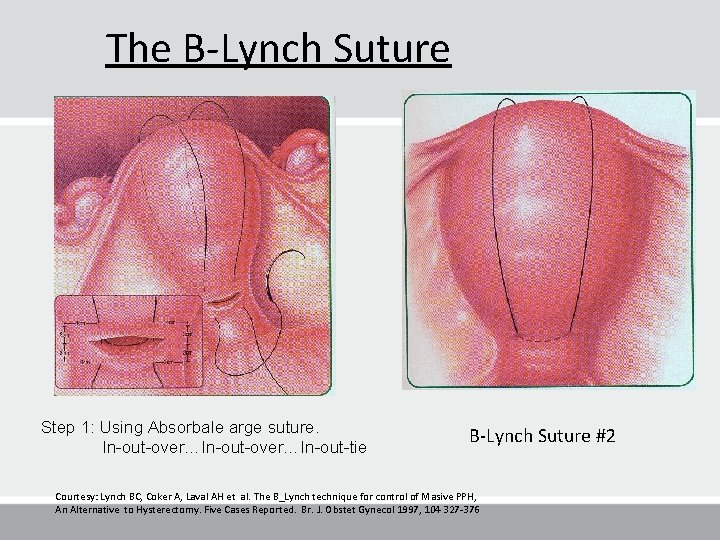
The B-Lynch Suture Step 1: Using Absorbale arge suture. In-out-over…In-out-tie B-Lynch Suture #2 Courtesy: Lynch BC, Coker A, Laval AH et al. The B_Lynch technique for control of Masive PPH, An Alternative to Hysterectomy. Five Cases Reported. Br. J. Obstet Gynecol 1997, 104 327 -376
B-Lynch Suture #3 Modifications of this procedure also available: Example Suture is “fixed” by taking bites through Myometrium at the fundus
UTERINE COMPRESSION SUTURES • SQUARE VERTICAL A Straight needle is passed anterior to posterior and passed over fundus and ligated anteriorly. Multiple square sutures are Passed intramurally and tied at Cho JH, Jun HS, Lee CN: Haemostatic Suturing Technique For uterine Bleeding during Cesarean Section delivery. Obstet Gynecol 200 0 96: 129 -131 Various points.
Success rates of the new Technological measures in the management of PPH Method B-Lynch/compression sutures Arterial embolization Number of Success 95% CI Cases Rates (%) 108 91. 7 84. 9– 95. 5 193 90. 7 85. 7– 94. 0 Arterial ligation/pelvic 501 devascularization Uterine balloon tamponade 162 84. 6 81. 2– 87. 5 84. 0 77. 5– 88. 8 There was no statistically significant difference between the four groups (P = 0. 06).
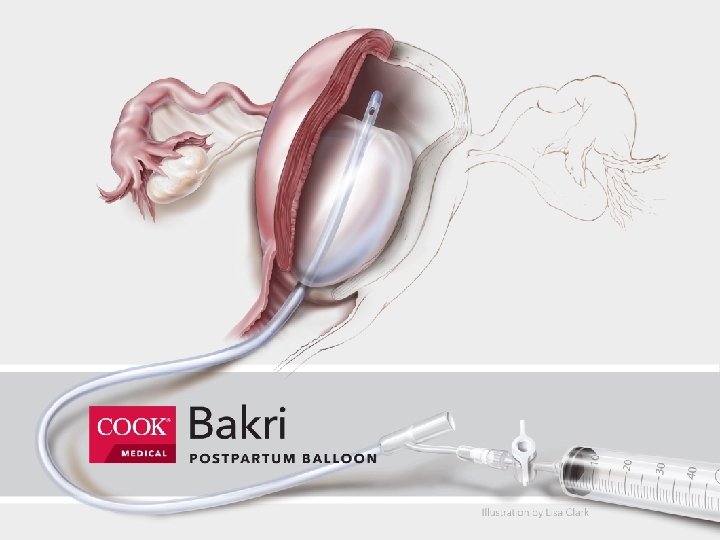
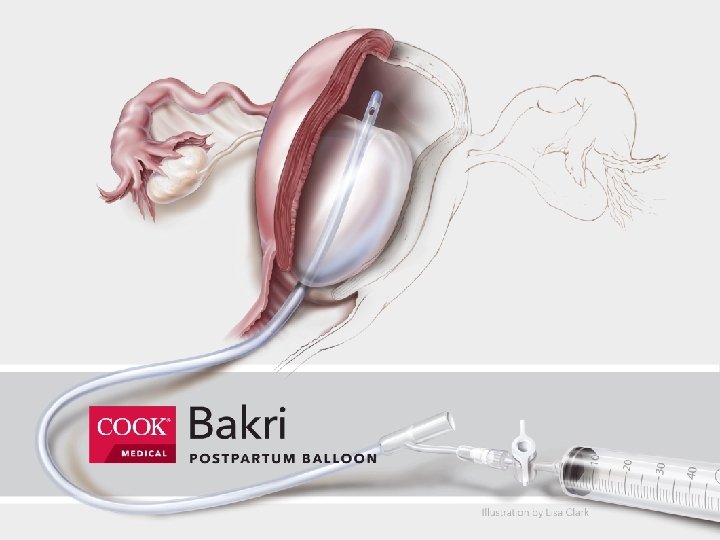
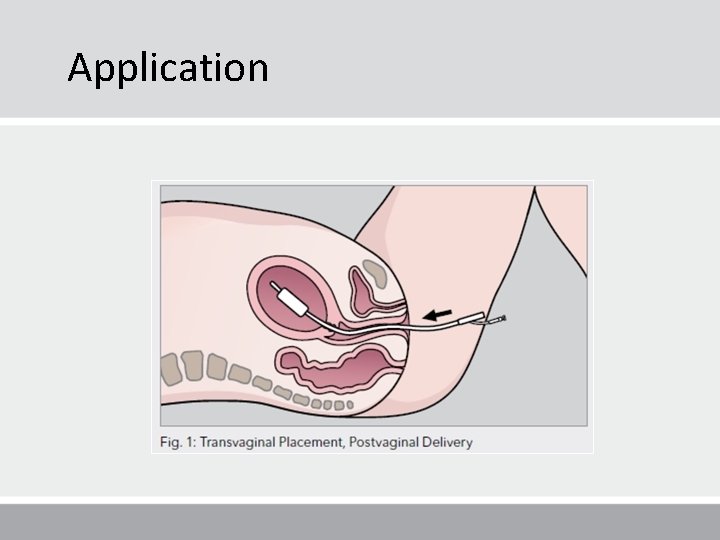
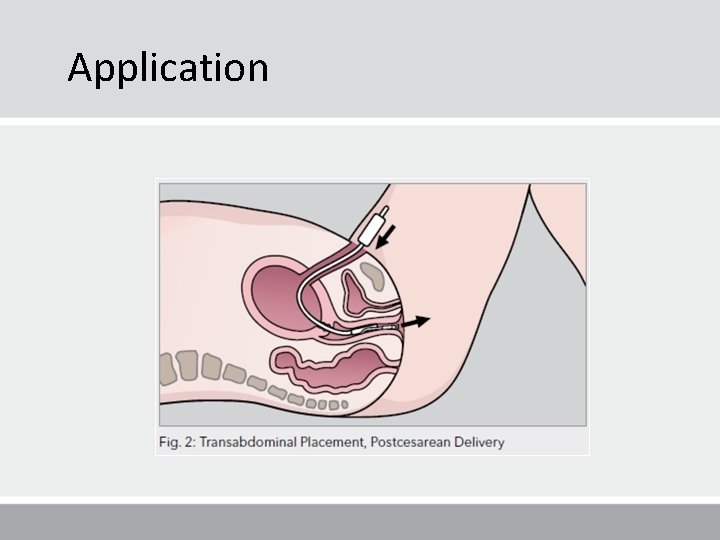
Introduction The Bakri Postpartum Balloon: Effectiveness can be quickly ascertained Tamponade may be quickly ascertained when the balloon is placed If not effective, it may be easily removed May help temporize a patient while preparations for more aggressive treatments are made
Application
Application
Application
Application
Application
Management Challenges of Obstetric Bleeding • It accounts for more maternal deaths than any other cause (about 25%). More than half occur within 24 hours of childbirth. • It is difficult to predict who will experience PPH on the basis of risk factors. • Recognizing promptly the emergency can sometimes be difficult as blood loss is difficult to measure accurately. • The estimated time to death from start of a bleeding complication is often very short due to rapidity of blood loss and therefore delays can be “costly”. • Rapid, Aggressive, Timely and Skilled interventions action are critical for survival.
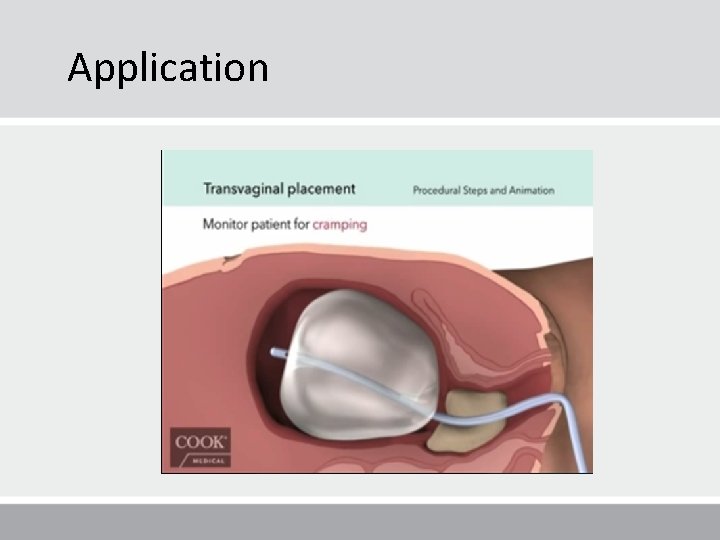
Stopping the Bleeding: Balloon Tamponade • A balloon (inflated with saline/water) exerts pressure to stop bleeding from within the uterus in 5 -15 mins. • Is very effective (≥ 85%) when uterotonics fail. Can prevent need for laparotomy and hysterectomy. (Reported success rates for the control and management of PPH with uterine tamponade are quite high and range between 70 -100%. ) • Easy to use • Can effectively be used in low resource settings • Safer alternative to uterine packing
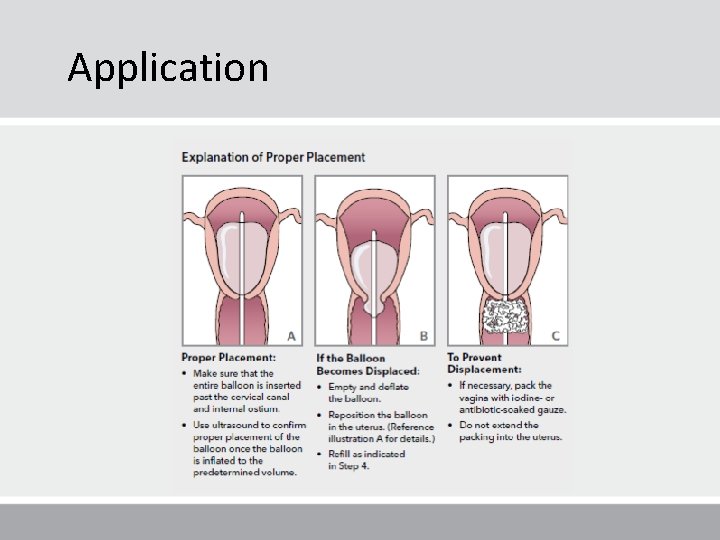
Notes 1. Inflate Balloon with saline to about 300 - 400 mls (or to amount at which no further bleeding is observed). 2. Maintain In-situ for 6 -12 hours if bleeding controlled and patient is stable. 3. Give Broad spectrum antibiotic cover 4. Continue to monitor patient closely, resuscitate and/or treat shock necessary 5. When patient is stable ( after 6 hours) slowly deflate by letting out 20 -50 ml of water/saline every hour. 6. Re-inflate to previous level if bleeding reoccurs whilst deflating. 7. May be kept in place for up to 24 hours 8. If Bleeding is not controlled within 15 Mins of initial insertion abandon procedure and seek surgical intervention immediately.
Contraindications To Use When should we not use the balloon? • Arterial bleeding requiring exploration and ligation or angiographic embolization. • Cases indicating hysterectomy. • Where uterine rupture is suspected • Cervical cancer. • Disseminated Intravascular Coagulation (DIC) *.
Thank you for your attention Tasnim Gostar Co. ﺩکﺘﺮ ﺑﻬﻨﺎﻡ ﺳیﺎﻩ کﻼﻩ
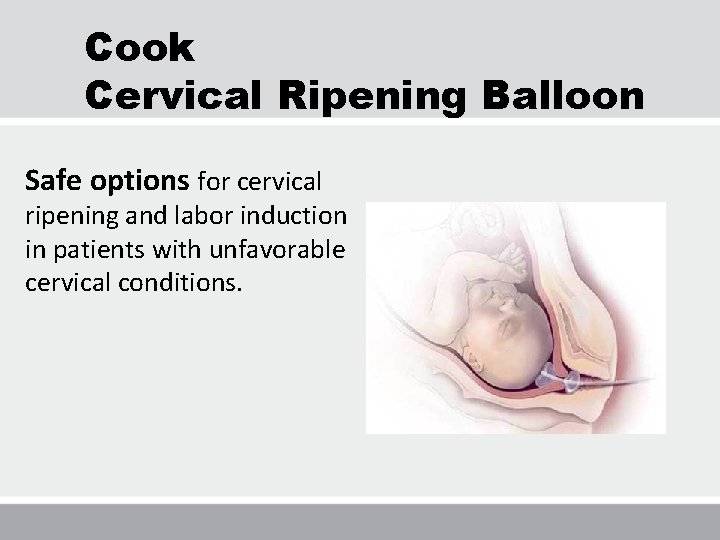
Cook Cervical Ripening Balloon Safe options for cervical ripening and labor induction in patients with unfavorable cervical conditions.