
The Silver Bullet of Coors TCE Theory of
The Silver Bullet of Coors: TCE Theory of Contracting Michelle Mullins Jane Njuguna Andrea Woolverton
Overview z Which of the three New Institutional Economic theories of the firm best describes Coors’ malt barley contracting program? z Theory Overview z Coors’ Strategic Focus z Theoretical Evidence z Conclusion

Theory Overview Agency Incomplete Contracting z. Incentive Alignment through contract through Asset terms Ownership (Saussier & Masten, 2002) (Sykuta & Chaddad, 1999) (Williamson, 2000) Transaction Cost Economics z. Asset Specificity z. Minimize transaction costs (Williamson, 2000) (Furubotn & Richter, 1998)
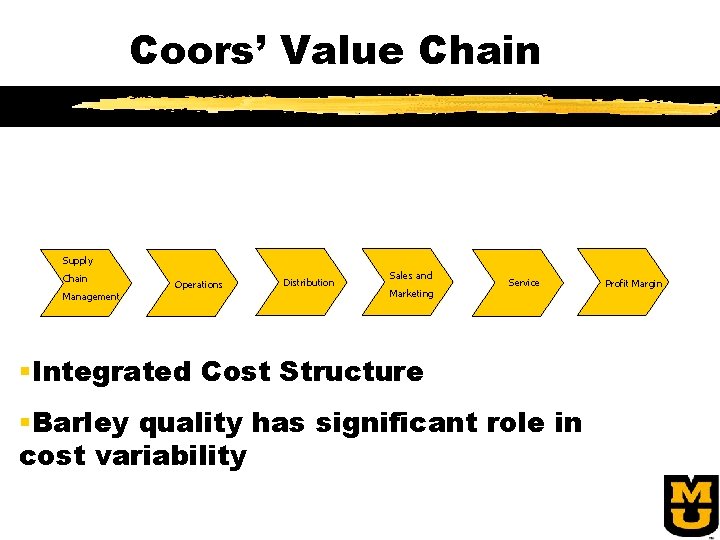
Coors’ Value Chain Supply Chain Management Operations Distribution Sales and Marketing Service §Integrated Cost Structure §Barley quality has significant role in cost variability Profit Margin
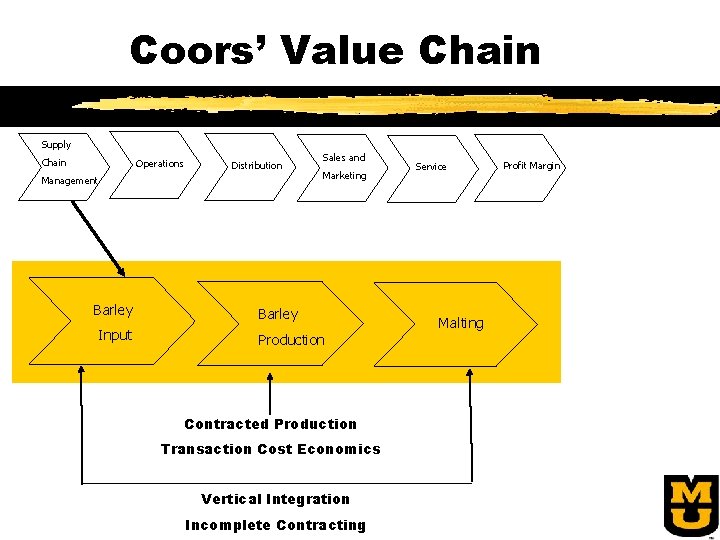
Coors’ Value Chain Supply Chain Operations Distribution Management Barley Input Sales and Marketing Barley Production Contracted Production Transaction Cost Economics Vertical Integration Incomplete Contracting Service Malting Profit Margin
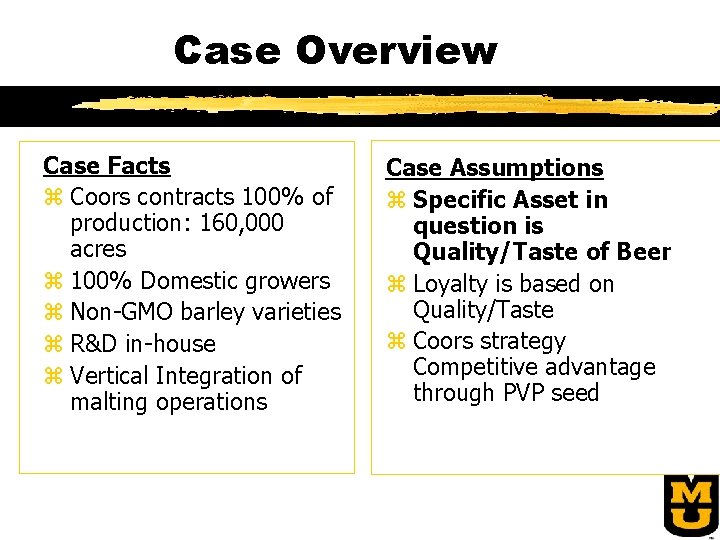
Case Overview Case Facts z Coors contracts 100% of production: 160, 000 acres z 100% Domestic growers z Non-GMO barley varieties z R&D in-house z Vertical Integration of malting operations Case Assumptions z Specific Asset in question is Quality/Taste of Beer z Loyalty is based on Quality/Taste z Coors strategy Competitive advantage through PVP seed
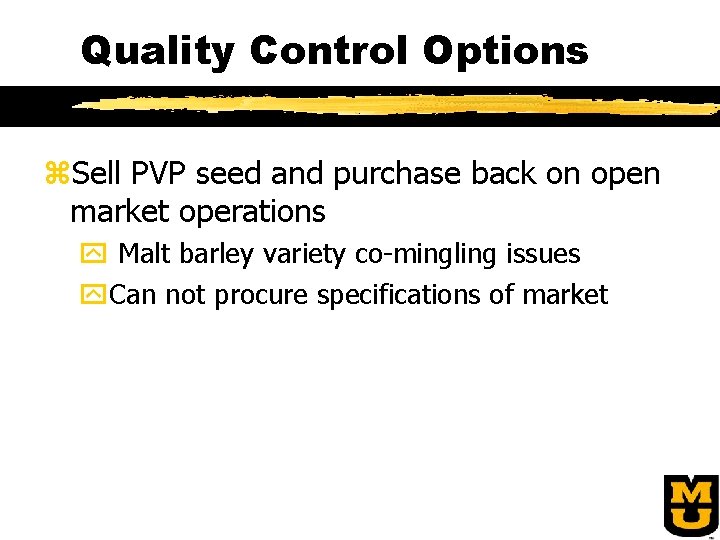
Quality Control Options z. Sell PVP seed and purchase back on open market operations y Malt barley variety co-mingling issues y. Can not procure specifications of market
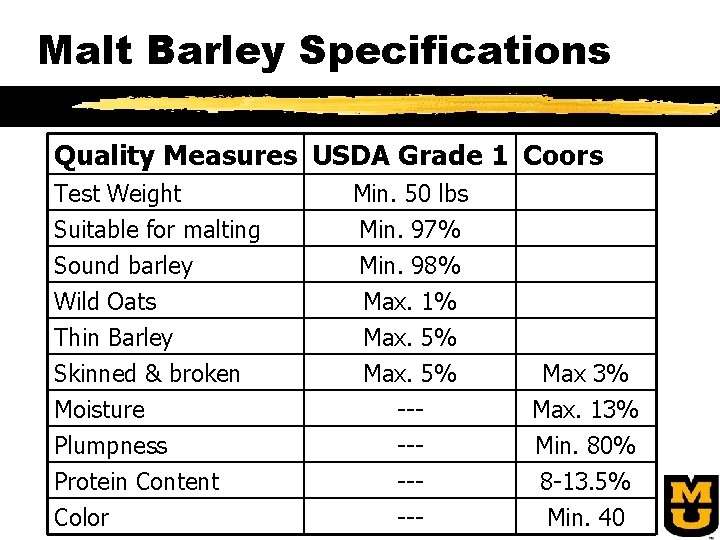
Malt Barley Specifications Quality Measures USDA Grade 1 Coors Test Weight Suitable for malting Sound barley Wild Oats Thin Barley Skinned & broken Moisture Plumpness Protein Content Color Min. 50 lbs Min. 97% Min. 98% Max. 1% Max. 5% ----- Max 3% Max. 13% Min. 80% 8 -13. 5% Min. 40
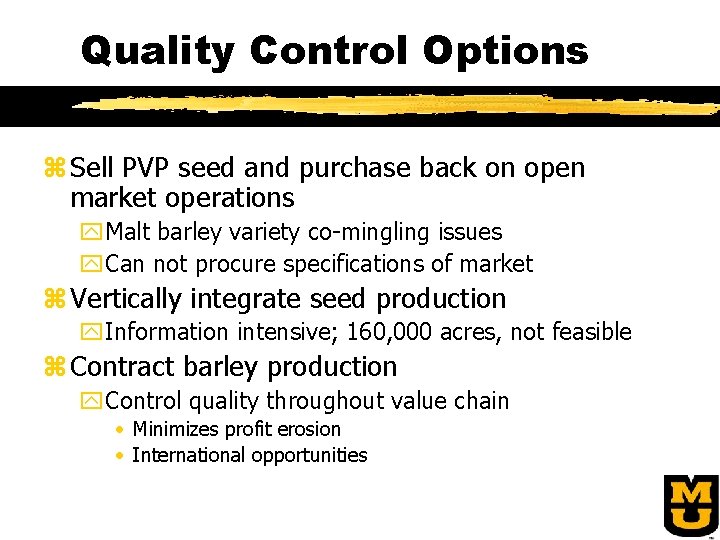
Quality Control Options z Sell PVP seed and purchase back on open market operations y. Malt barley variety co-mingling issues y. Can not procure specifications of market z Vertically integrate seed production y. Information intensive; 160, 000 acres, not feasible z Contract barley production y. Control quality throughout value chain • Minimizes profit erosion • International opportunities
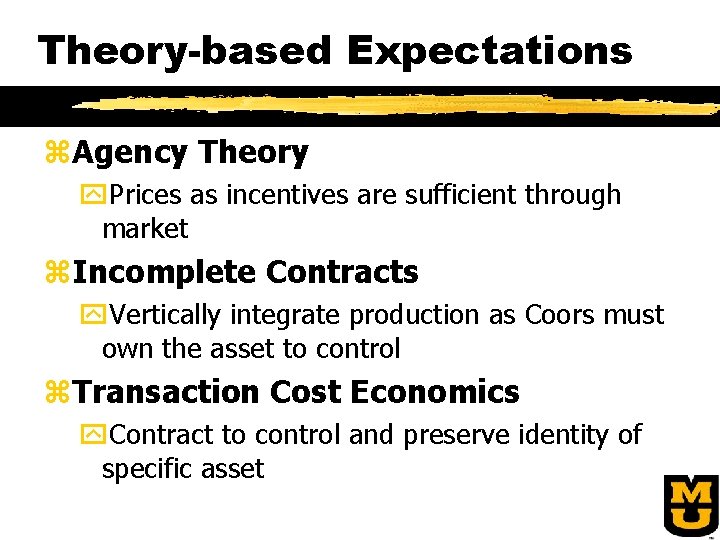
Theory-based Expectations z. Agency Theory y. Prices as incentives are sufficient through market z. Incomplete Contracts y. Vertically integrate production as Coors must own the asset to control z. Transaction Cost Economics y. Contract to control and preserve identity of specific asset
Justification of TCE z. Focus of Transaction Cost Economics is on ex post costs and contractual hazards associated with a specific asset z. A potential holdup situation is eliminated through contract terms y. PVP barley = Quality of beer (specific asset)
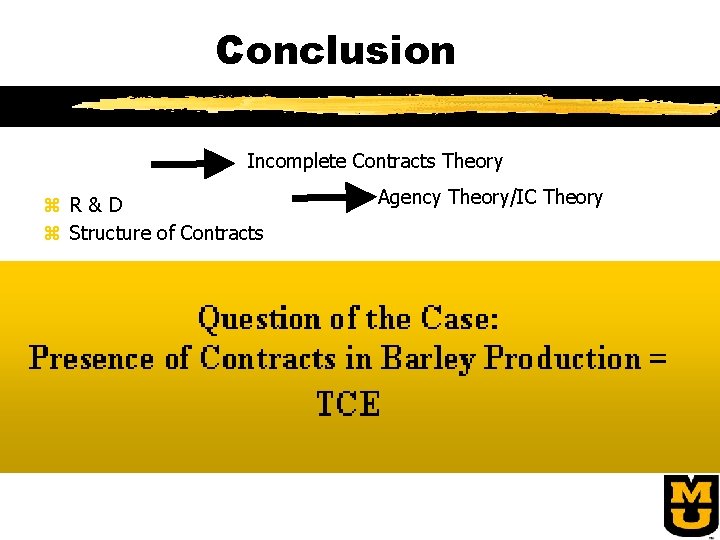
Conclusion Incomplete Contracts Theory z R&D z Structure of Contracts Agency Theory/IC Theory

Thank you from Mizzou!
- Slides: 13