
The Silencing James Pelosi a West Point cadet










- Slides: 65
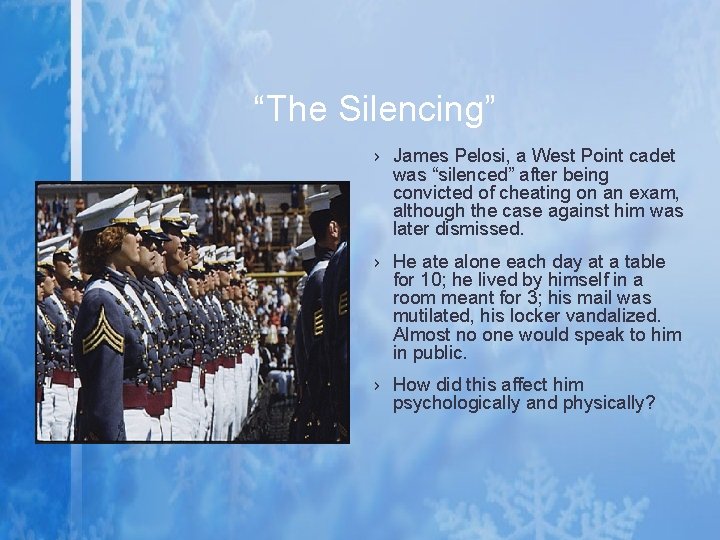
“The Silencing” › James Pelosi, a West Point cadet was “silenced” after being convicted of cheating on an exam, although the case against him was later dismissed. › He ate alone each day at a table for 10; he lived by himself in a room meant for 3; his mail was mutilated, his locker vandalized. Almost no one would speak to him in public. › How did this affect him psychologically and physically?
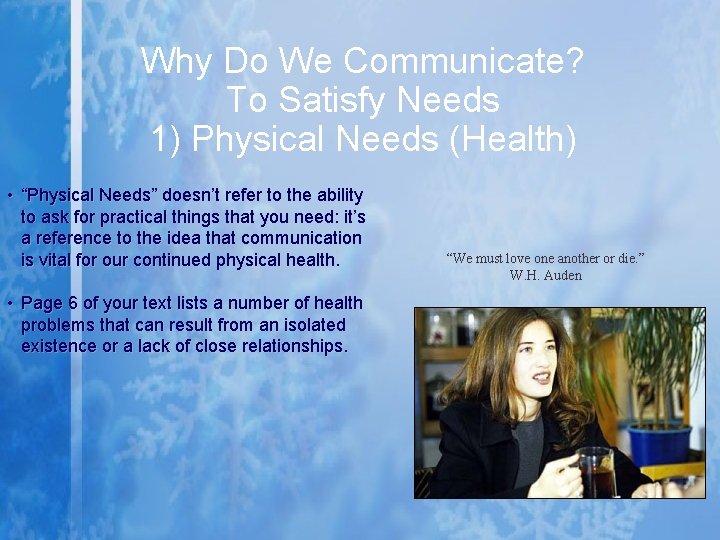
Why Do We Communicate? To Satisfy Needs 1) Physical Needs (Health) • “Physical Needs” doesn’t refer to the ability to ask for practical things that you need: it’s a reference to the idea that communication is vital for our continued physical health. • Page 6 of your text lists a number of health problems that can result from an isolated existence or a lack of close relationships. “We must love one another or die. ” W. H. Auden
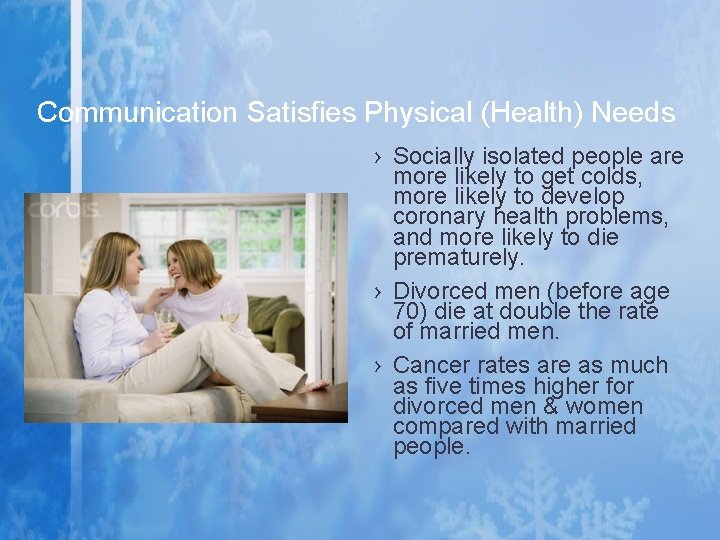
Communication Satisfies Physical (Health) Needs › Socially isolated people are more likely to get colds, more likely to develop coronary health problems, and more likely to die prematurely. › Divorced men (before age 70) die at double the rate of married men. › Cancer rates are as much as five times higher for divorced men & women compared with married people.
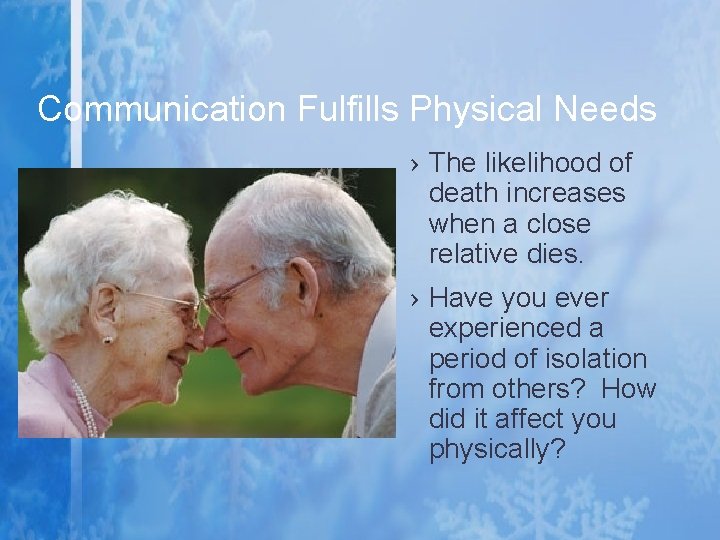
Communication Fulfills Physical Needs › The likelihood of death increases when a close relative dies. › Have you ever experienced a period of isolation from others? How did it affect you physically?
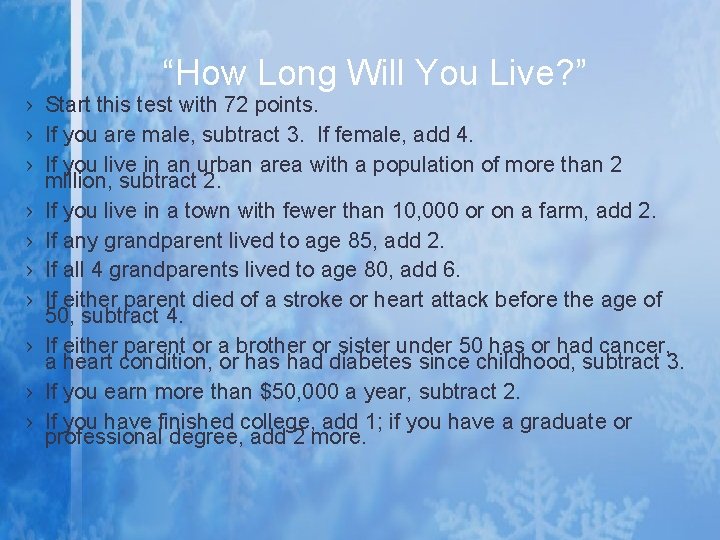
“How Long Will You Live? ” › Start this test with 72 points. › If you are male, subtract 3. If female, add 4. › If you live in an urban area with a population of more than 2 million, subtract 2. › If you live in a town with fewer than 10, 000 or on a farm, add 2. › If any grandparent lived to age 85, add 2. › If all 4 grandparents lived to age 80, add 6. › If either parent died of a stroke or heart attack before the age of 50, subtract 4. › If either parent or a brother or sister under 50 has or had cancer, a heart condition, or has had diabetes since childhood, subtract 3. › If you earn more than $50, 000 a year, subtract 2. › If you have finished college, add 1; if you have a graduate or professional degree, add 2 more.
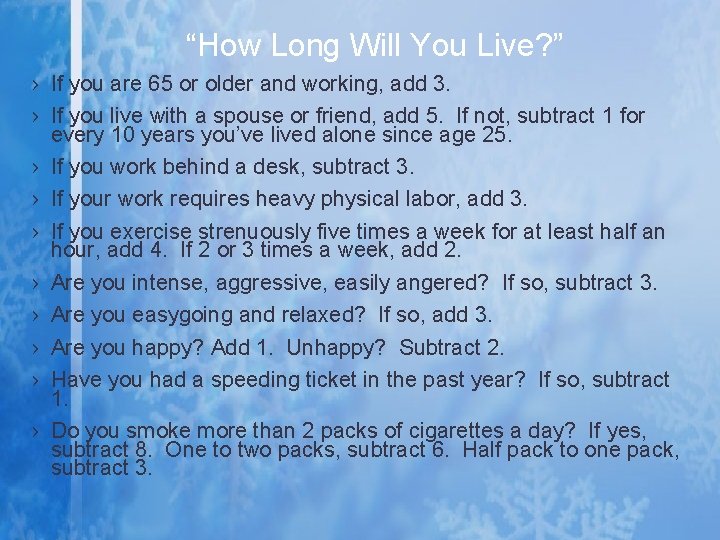
“How Long Will You Live? ” › If you are 65 or older and working, add 3. › If you live with a spouse or friend, add 5. If not, subtract 1 for every 10 years you’ve lived alone since age 25. › If you work behind a desk, subtract 3. › If your work requires heavy physical labor, add 3. › If you exercise strenuously five times a week for at least half an hour, add 4. If 2 or 3 times a week, add 2. › Are you intense, aggressive, easily angered? If so, subtract 3. › Are you easygoing and relaxed? If so, add 3. › Are you happy? Add 1. Unhappy? Subtract 2. › Have you had a speeding ticket in the past year? If so, subtract 1. › Do you smoke more than 2 packs of cigarettes a day? If yes, subtract 8. One to two packs, subtract 6. Half pack to one pack, subtract 3.
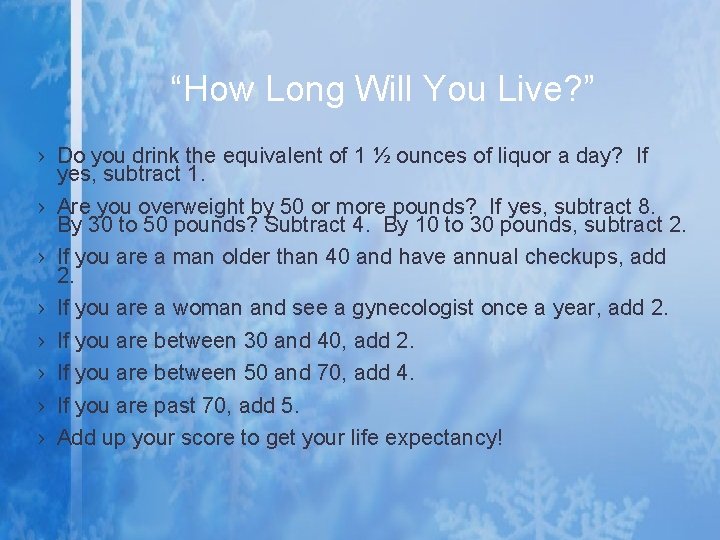
“How Long Will You Live? ” › Do you drink the equivalent of 1 ½ ounces of liquor a day? If yes, subtract 1. › Are you overweight by 50 or more pounds? If yes, subtract 8. By 30 to 50 pounds? Subtract 4. By 10 to 30 pounds, subtract 2. › If you are a man older than 40 and have annual checkups, add 2. › If you are a woman and see a gynecologist once a year, add 2. › If you are between 30 and 40, add 2. › If you are between 50 and 70, add 4. › If you are past 70, add 5. › Add up your score to get your life expectancy!
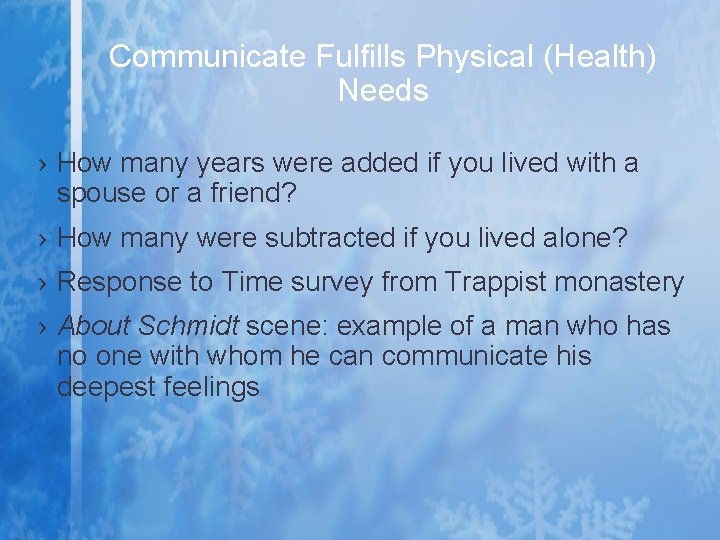
Communicate Fulfills Physical (Health) Needs › How many years were added if you lived with a spouse or a friend? › How many were subtracted if you lived alone? › Response to Time survey from Trappist monastery › About Schmidt scene: example of a man who has no one with whom he can communicate his deepest feelings
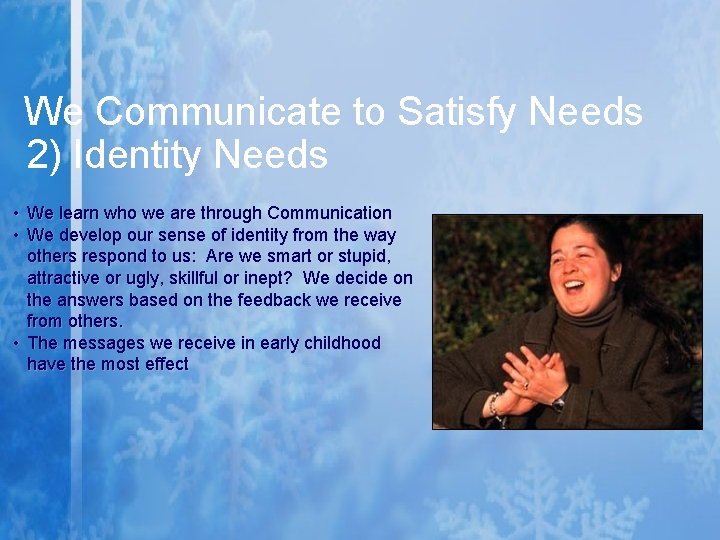
We Communicate to Satisfy Needs 2) Identity Needs • We learn who we are through Communication • We develop our sense of identity from the way others respond to us: Are we smart or stupid, attractive or ugly, skillful or inept? We decide on the answers based on the feedback we receive from others. • The messages we receive in early childhood have the most effect
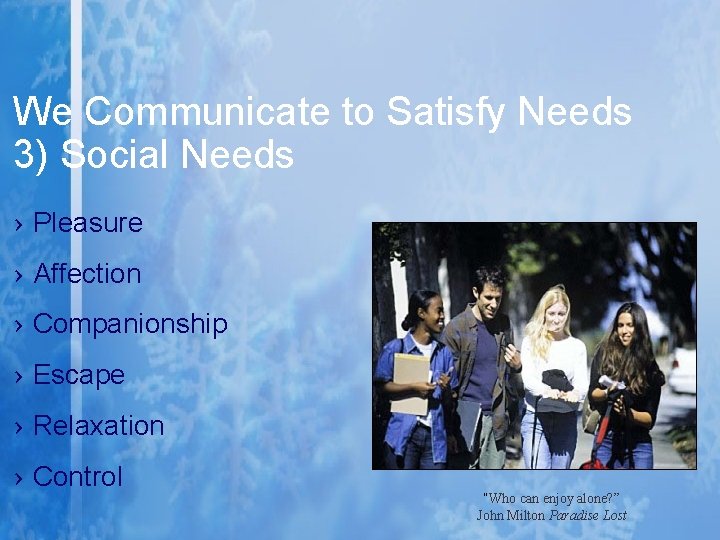
We Communicate to Satisfy Needs 3) Social Needs › Pleasure › Affection › Companionship › Escape › Relaxation › Control “Who can enjoy alone? ” John Milton Paradise Lost
Communication to fulfill Social Needs › Mary is working at her first real job, teaching high school. She is in an unfamiliar city where she has no friends or family and she is finding her new job stressful and difficult. › Other newly-hired teachers invite Mary to join them for Friday-night outings where they can have fun and share problems, gripes, and ideas. › How many of the “social needs” is Mary fulfilling by joining this group? › We have a lot of new tools for communicating efficiently with others. Are people in the 21 st century doing better at initiating, maintaining, and managing relationships?
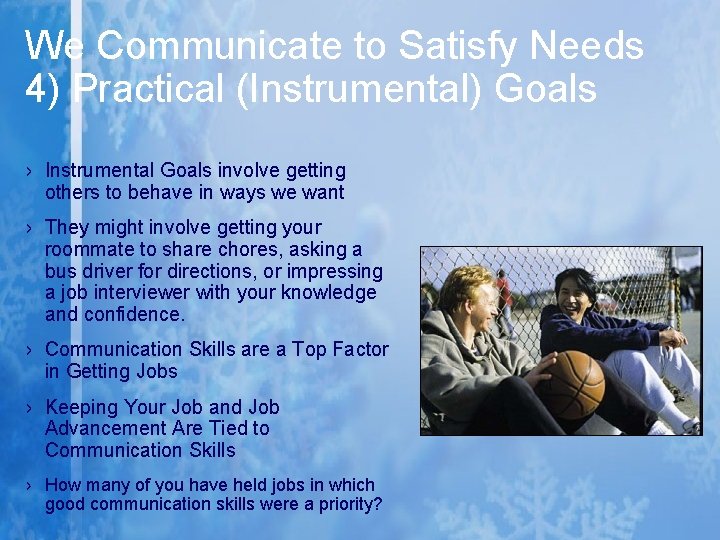
We Communicate to Satisfy Needs 4) Practical (Instrumental) Goals › Instrumental Goals involve getting others to behave in ways we want › They might involve getting your roommate to share chores, asking a bus driver for directions, or impressing a job interviewer with your knowledge and confidence. › Communication Skills are a Top Factor in Getting Jobs › Keeping Your Job and Job Advancement Are Tied to Communication Skills › How many of you have held jobs in which good communication skills were a priority?
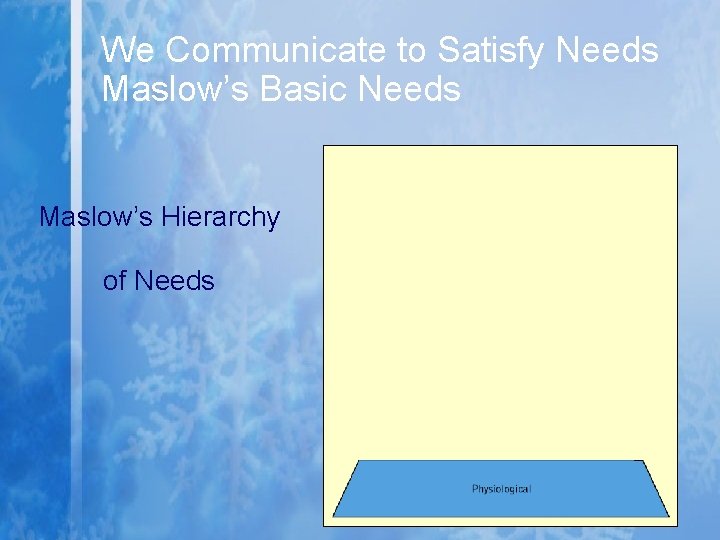
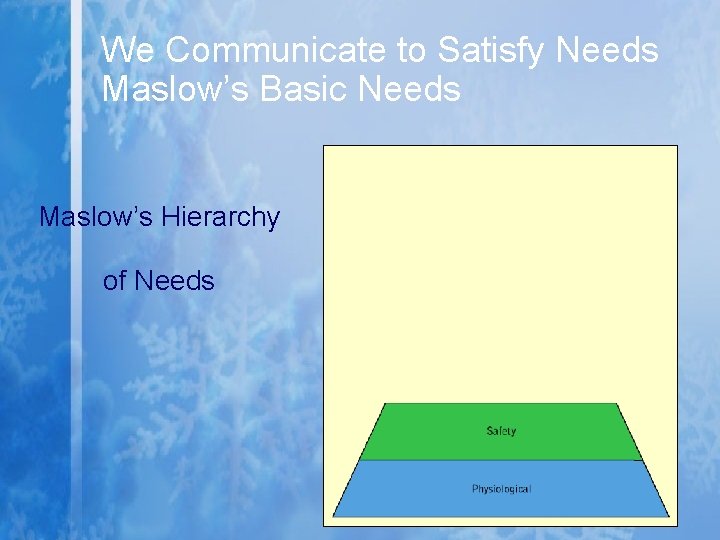
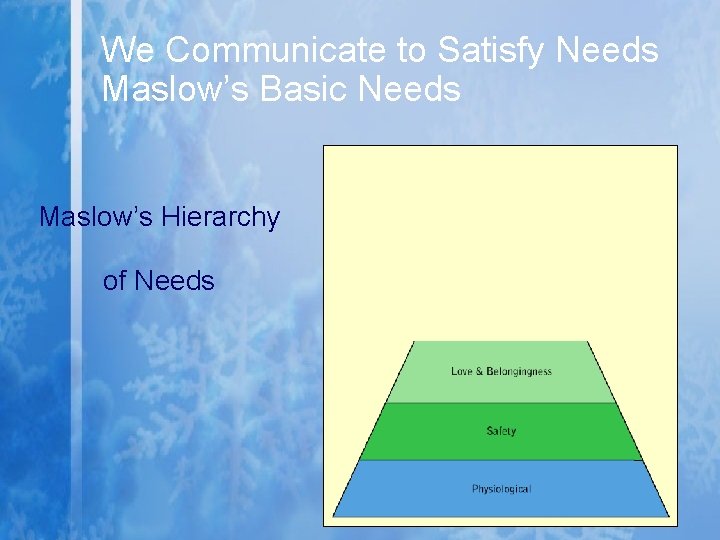
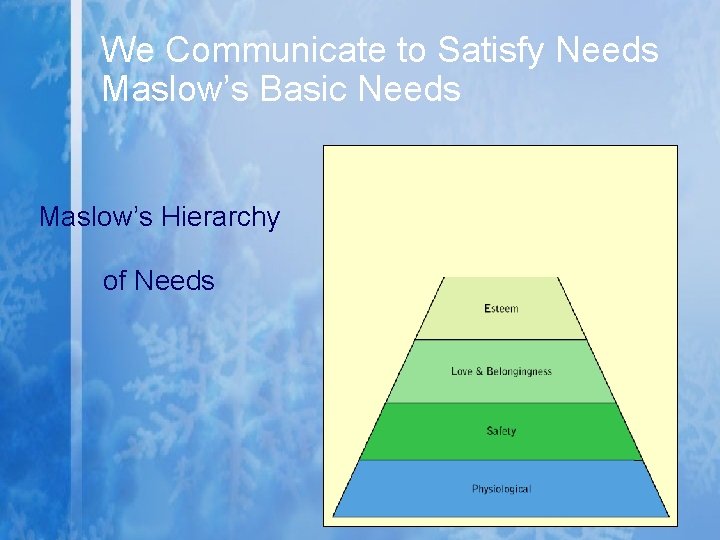
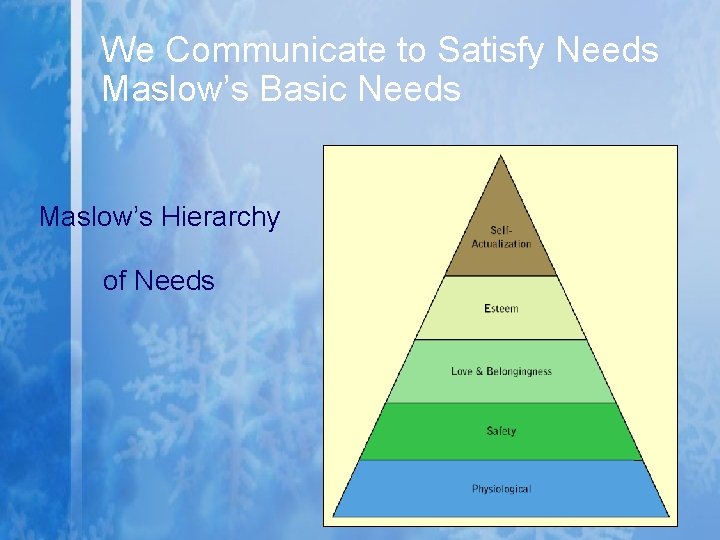
We Communicate to Satisfy Needs Maslow’s Basic Needs Maslow’s Hierarchy of Needs
We Communicate to Satisfy Needs Maslow’s Basic Needs Maslow’s Hierarchy of Needs
We Communicate to Satisfy Needs Maslow’s Basic Needs Maslow’s Hierarchy of Needs
We Communicate to Satisfy Needs Maslow’s Basic Needs Maslow’s Hierarchy of Needs
We Communicate to Satisfy Needs Maslow’s Basic Needs Maslow’s Hierarchy of Needs
The Four Needs Satisfied by Communication › What encounters have you had with others that actually affected your health in a positive or negative way? › What messages have you received that shaped your identity or self-image? › What communication experiences have satisfied your need for affection? Pleasure? Escape? Relaxation? Control? › What practical needs have you met by communicating with others?
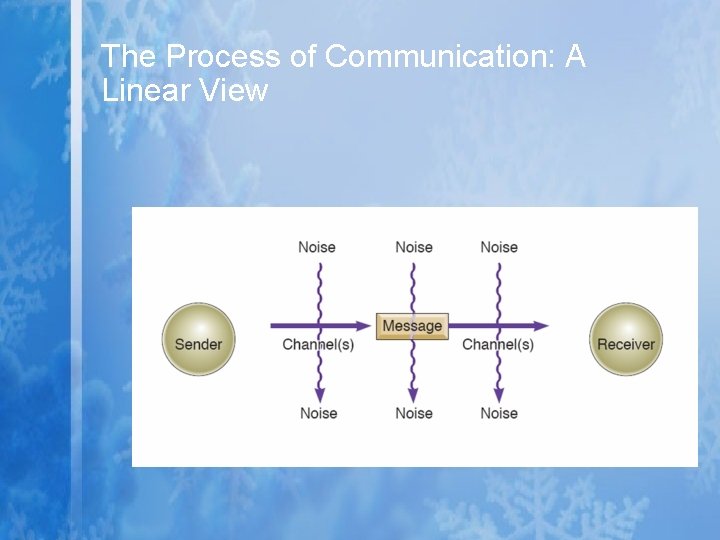
The Process of Communication: A Linear View
The Process of Communication A Linear View › Sender – Encoding – Message – Channel › Receiver -- Decoding – Noise › External (physical)
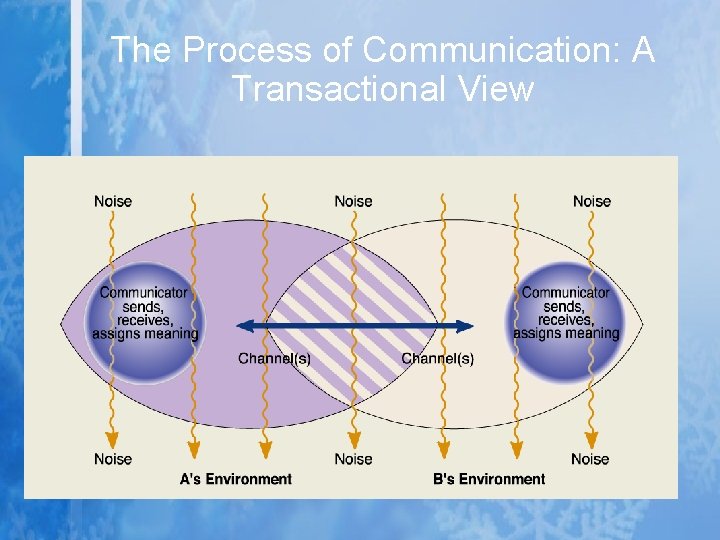
The Process of Communication: A Transactional View
The Process of Communication A Transactional View › Communicator Replaces Sender › We Send and Receive Messages Simultaneously › Communicators Often Occupy Different Environments › Channels Make a Difference › Noise affects Communication
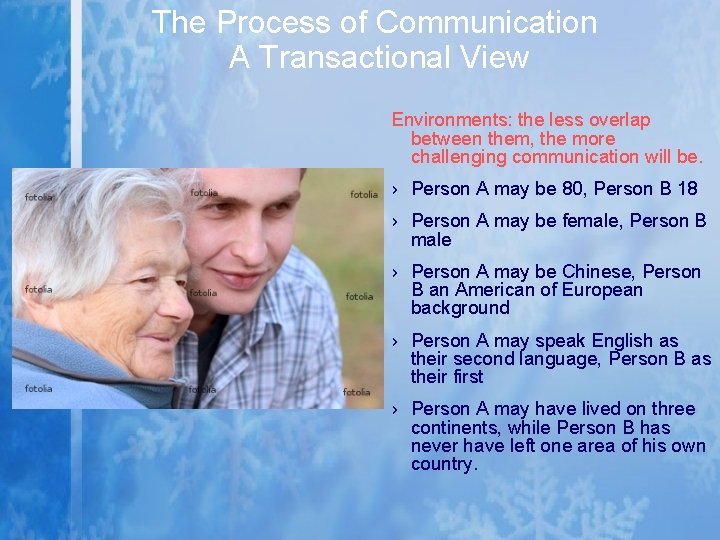
The Process of Communication A Transactional View Environments: the less overlap between them, the more challenging communication will be. › Person A may be 80, Person B 18 › Person A may be female, Person B male › Person A may be Chinese, Person B an American of European background › Person A may speak English as their second language, Person B as their first › Person A may have lived on three continents, while Person B has never have left one area of his own country.
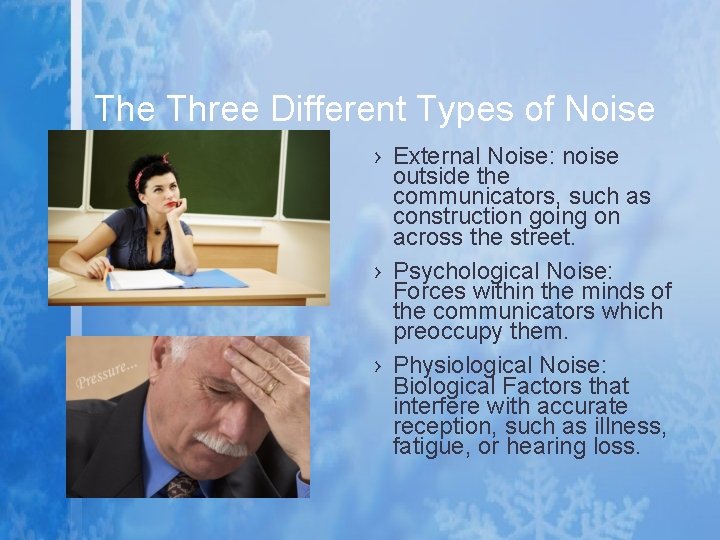
The Three Different Types of Noise › External Noise: noise outside the communicators, such as construction going on across the street. › Psychological Noise: Forces within the minds of the communicators which preoccupy them. › Physiological Noise: Biological Factors that interfere with accurate reception, such as illness, fatigue, or hearing loss.
Question: When Tomas failed his calculus exam, he was so upset that he couldn’t understand the explanations provided by his professor. This example best illustrates: a. external noise b. physiological noise c. psychological noise d. feedback noise
Communication: What makes it Interpersonal or Impersonal? – – – Uniqueness Irreplaceability Interdependence Self-Disclosure Intrinsic Rewards
Communication Principles › Communication is Transactional › Communication has a Content & a Relational Dimension › Communication Can Be Intentional or Unintentional › Communication is Irreversible › Communication is Unrepeatable
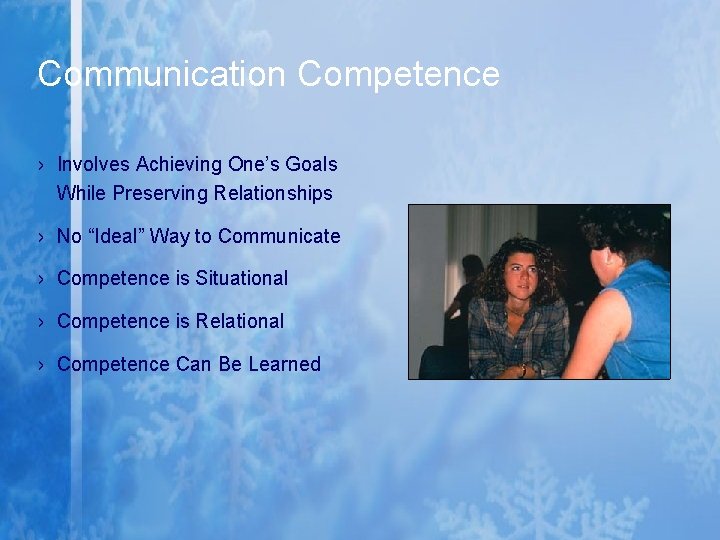
Communication Competence › Involves Achieving One’s Goals While Preserving Relationships › No “Ideal” Way to Communicate › Competence is Situational › Competence is Relational › Competence Can Be Learned
Characteristics of Competent Communicators › Wide Range of Behaviors › Ability to Choose Most Appropriate Behavior – Context – Your Goal – Your Knowledge of the Other › Skill at Performing Behaviors
Characteristics of Competent Communicators › Cognitive Complexity › Empathy › Self-Monitoring › Commitment
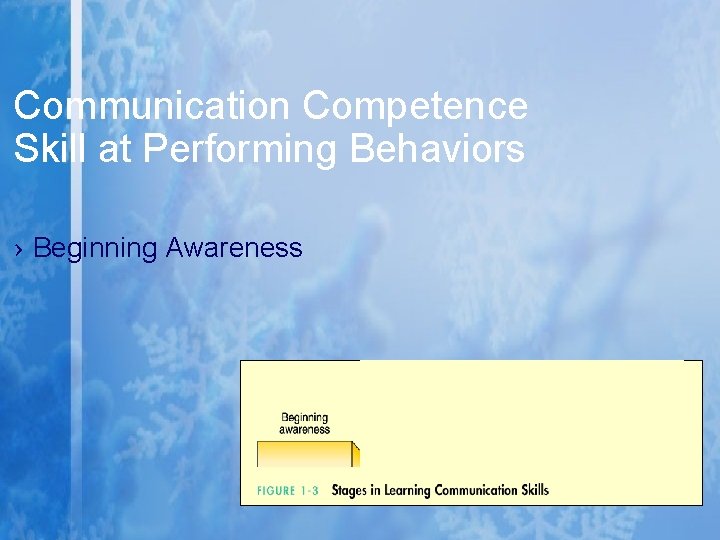
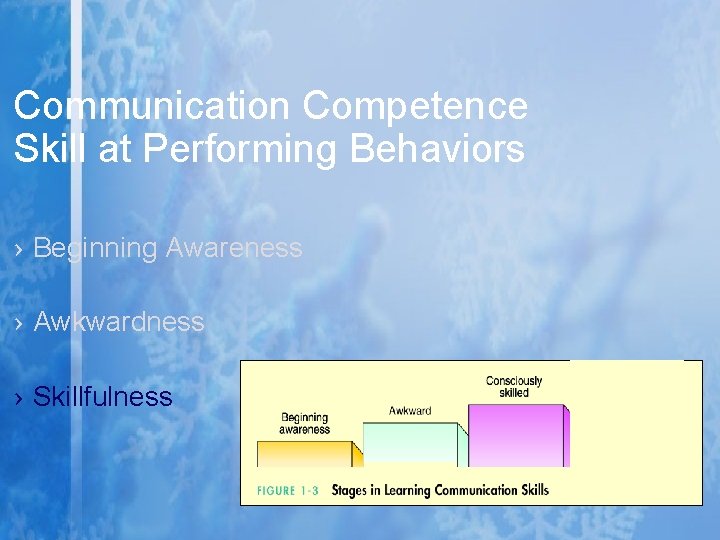
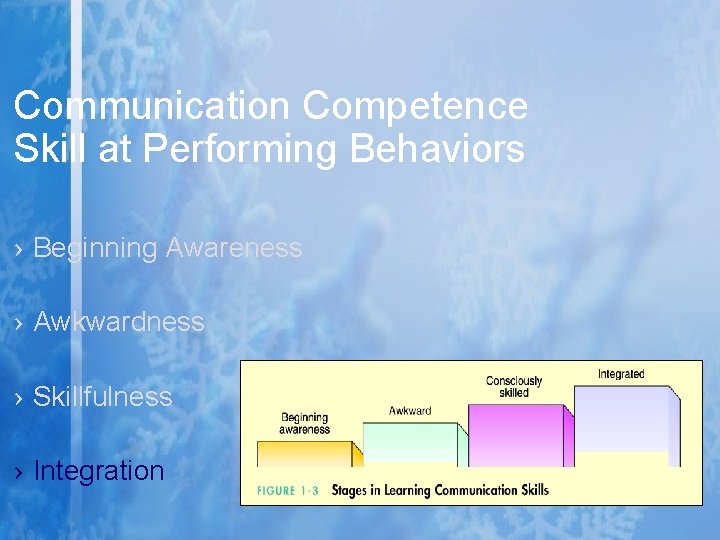
Communication Competence Skill at Performing Behaviors › Beginning Awareness
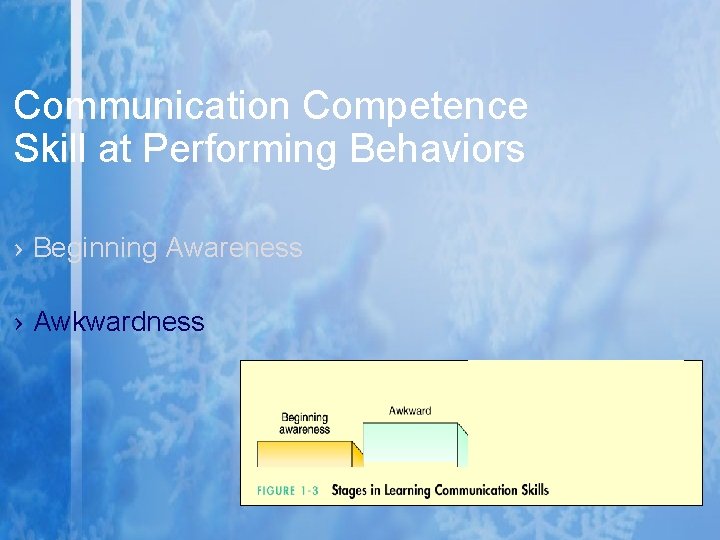
Communication Competence Skill at Performing Behaviors › Beginning Awareness › Awkwardness
Communication Competence Skill at Performing Behaviors › Beginning Awareness › Awkwardness › Skillfulness
Communication Competence Skill at Performing Behaviors › Beginning Awareness › Awkwardness › Skillfulness › Integration
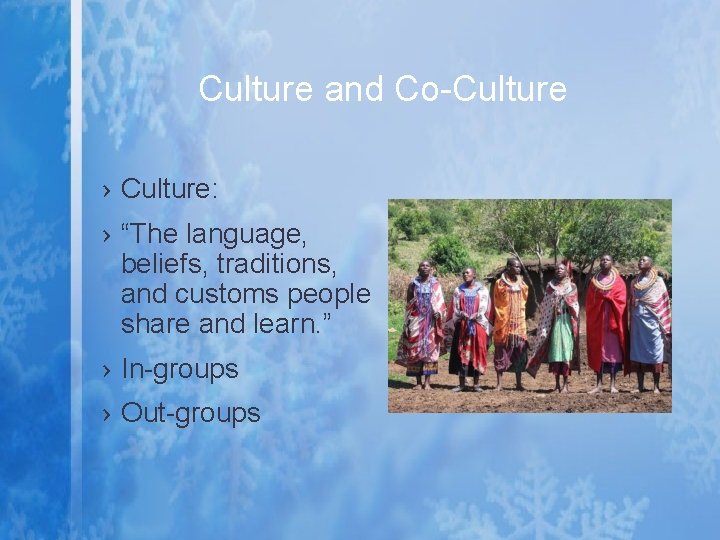
Culture and Co-Culture › Culture: › “The language, beliefs, traditions, and customs people share and learn. ” › In-groups › Out-groups
Our Guide in the Masai Mara
The Welcome
The Welcome
The Masai Women Greet Us
Dancing with the Masai
Masai Jumping Dance
Doing the Jumping Dance
Masai Schoolchildren
The Children with Gifts
Milking the Goat
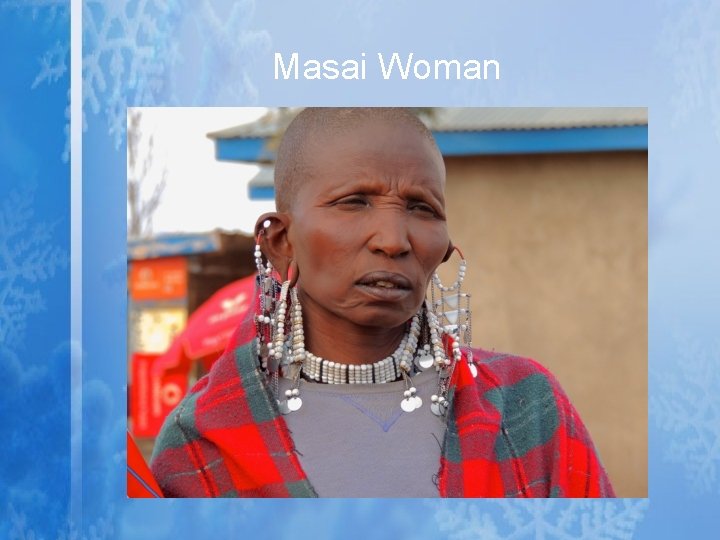
Masai Woman
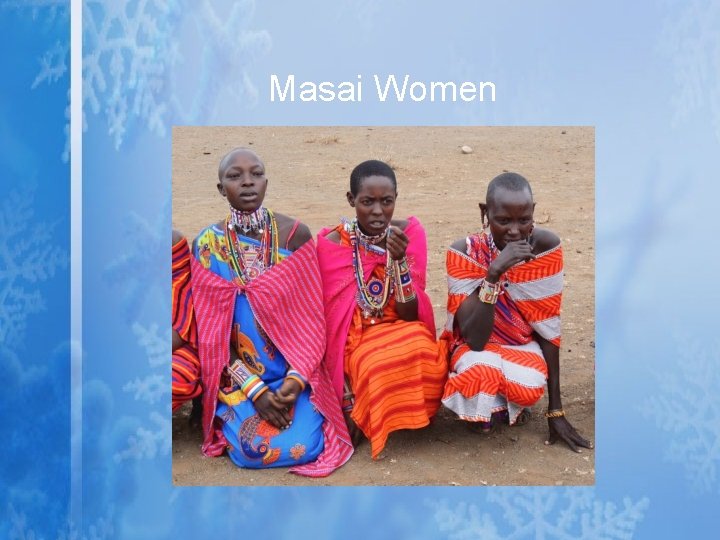
Masai Women
Social Identity: Co-Culture › Co-Culture: › Nationality Membership in a Group › Geographic Region that is part of a larger culture › Physical Disability › In North American Society this may include: › Age › Race › Sexual Orientation › Religion › Activity
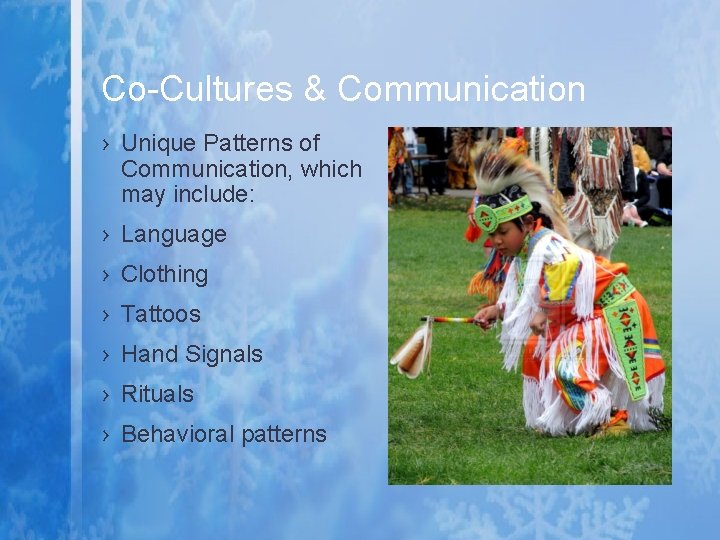
Co-Cultures & Communication › Unique Patterns of Communication, which may include: › Language › Clothing › Tattoos › Hand Signals › Rituals › Behavioral patterns
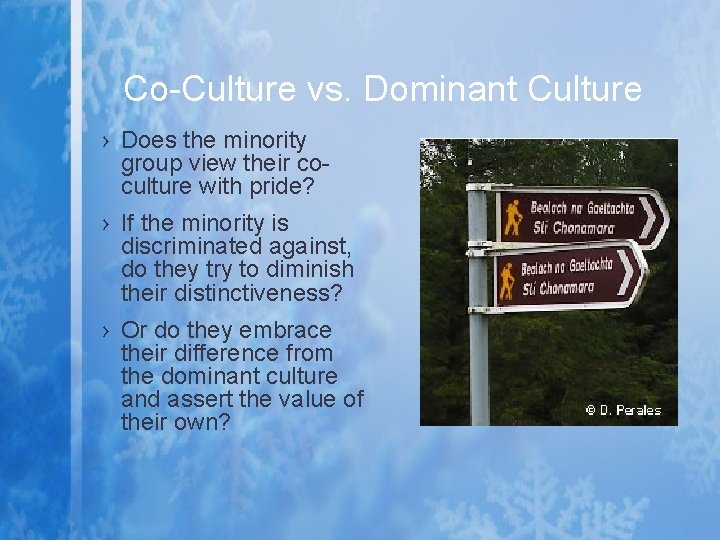
Co-Culture vs. Dominant Culture › Does the minority group view their coculture with pride? › If the minority is discriminated against, do they try to diminish their distinctiveness? › Or do they embrace their difference from the dominant culture and assert the value of their own?
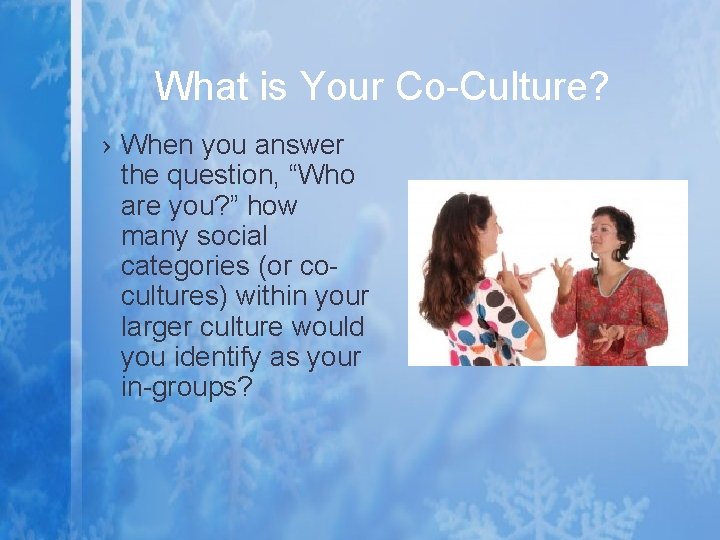
What is Your Co-Culture? › When you answer the question, “Who are you? ” how many social categories (or cocultures) within your larger culture would you identify as your in-groups?
Intercultural Communication › The process that › Even with many of us occurs when belonging to so many members of two or different groups, more cultures or co› there are degrees of cultures exchange cultural significance messages in a in our communication. manner influenced by Some exchanges will their different cultural be more intercultural perceptions & symbol than others. systems (both verbal & nonverbal)
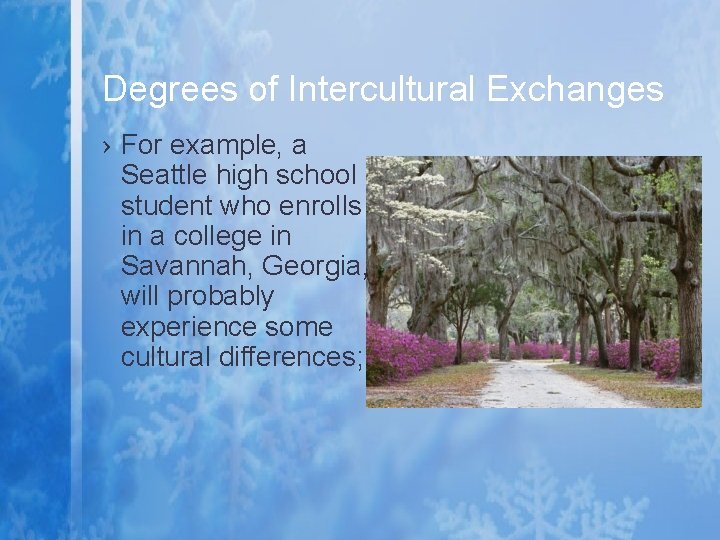
Degrees of Intercultural Exchanges › For example, a Seattle high school student who enrolls in a college in Savannah, Georgia, will probably experience some cultural differences;
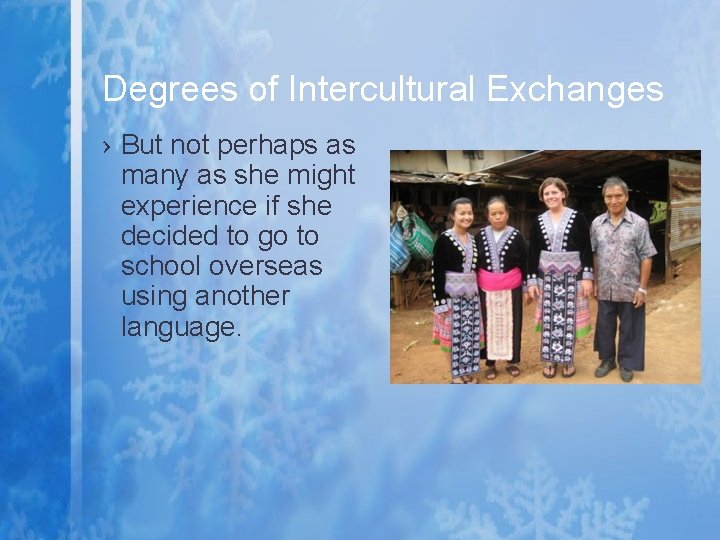
Degrees of Intercultural Exchanges › But not perhaps as many as she might experience if she decided to go to school overseas using another language.
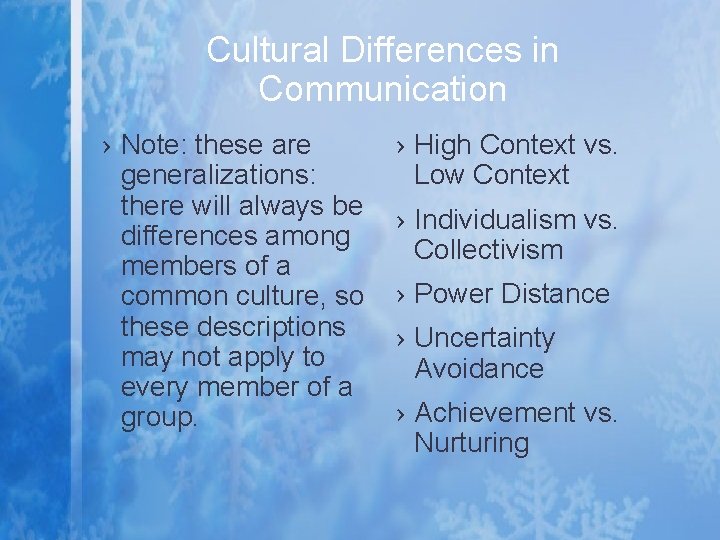
Cultural Differences in Communication › Note: these are generalizations: there will always be differences among members of a common culture, so these descriptions may not apply to every member of a group. › High Context vs. Low Context › Individualism vs. Collectivism › Power Distance › Uncertainty Avoidance › Achievement vs. Nurturing
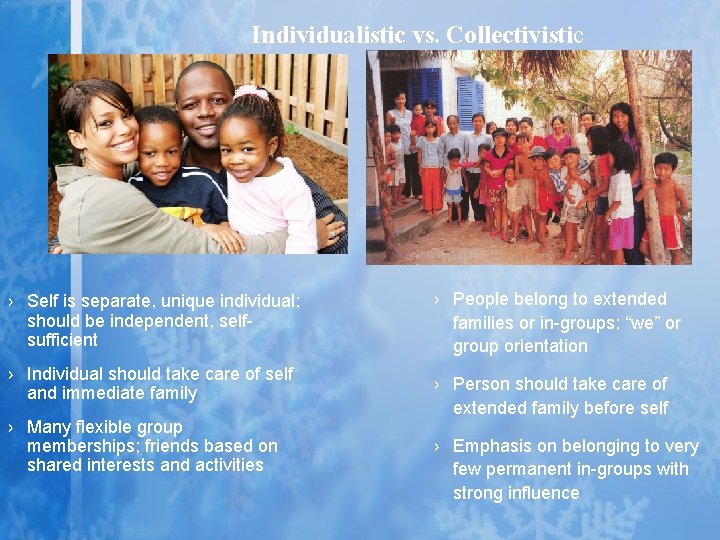
Individualistic vs. Collectivistic › Self is separate, unique individual; should be independent, selfsufficient › Individual should take care of self and immediate family › Many flexible group memberships; friends based on shared interests and activities › People belong to extended families or in-groups; “we” or group orientation › Person should take care of extended family before self › Emphasis on belonging to very few permanent in-groups with strong influence
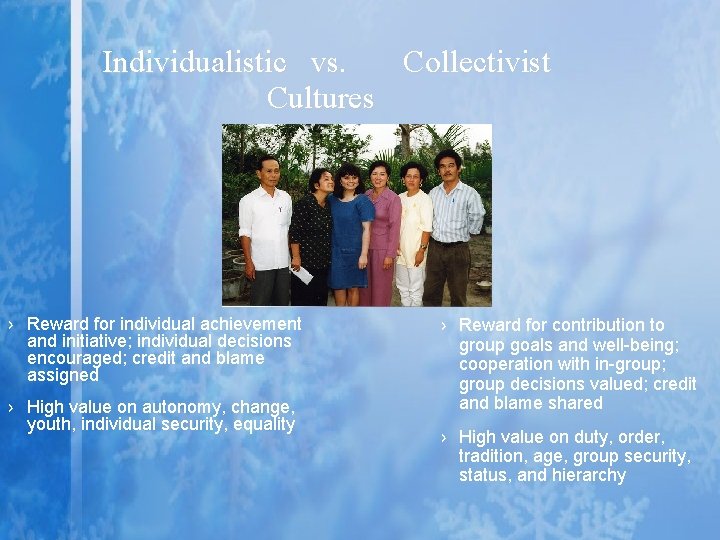
Individualistic vs. Collectivist Cultures › Reward for individual achievement and initiative; individual decisions encouraged; credit and blame assigned › High value on autonomy, change, youth, individual security, equality › Reward for contribution to group goals and well-being; cooperation with in-group; group decisions valued; credit and blame shared › High value on duty, order, tradition, age, group security, status, and hierarchy
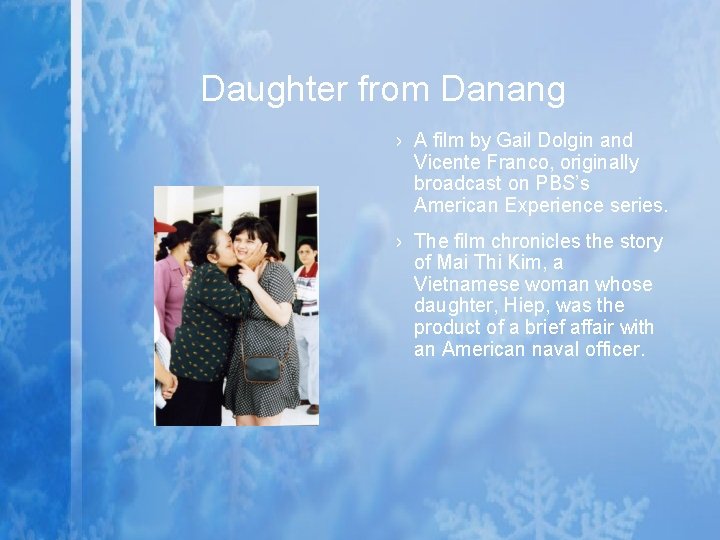
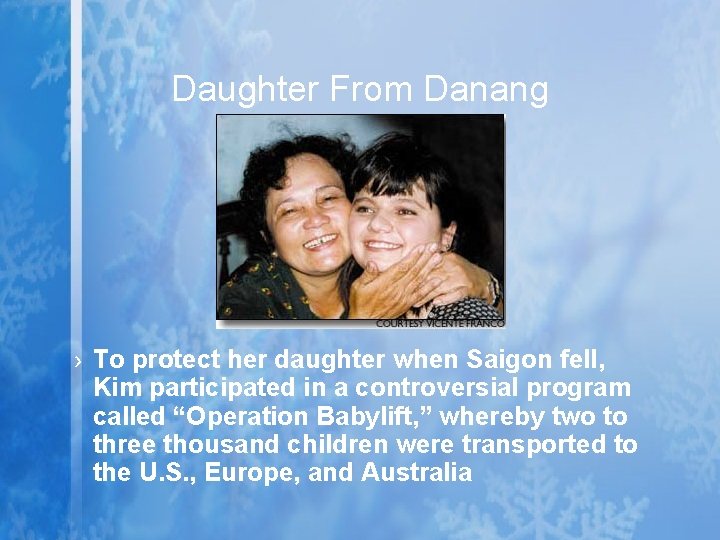
Daughter from Danang › A film by Gail Dolgin and Vicente Franco, originally broadcast on PBS’s American Experience series. › The film chronicles the story of Mai Thi Kim, a Vietnamese woman whose daughter, Hiep, was the product of a brief affair with an American naval officer.
Daughter From Danang › To protect her daughter when Saigon fell, Kim participated in a controversial program called “Operation Babylift, ” whereby two to three thousand children were transported to the U. S. , Europe, and Australia
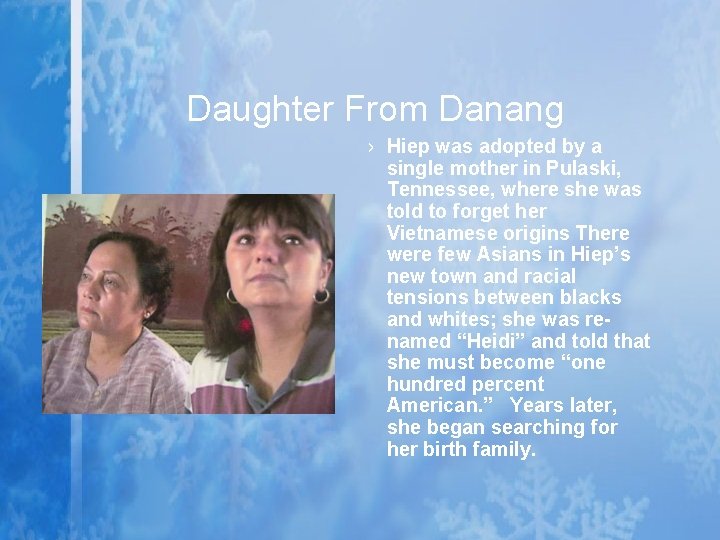
Daughter From Danang › Hiep was adopted by a single mother in Pulaski, Tennessee, where she was told to forget her Vietnamese origins There were few Asians in Hiep’s new town and racial tensions between blacks and whites; she was renamed “Heidi” and told that she must become “one hundred percent American. ” Years later, she began searching for her birth family.
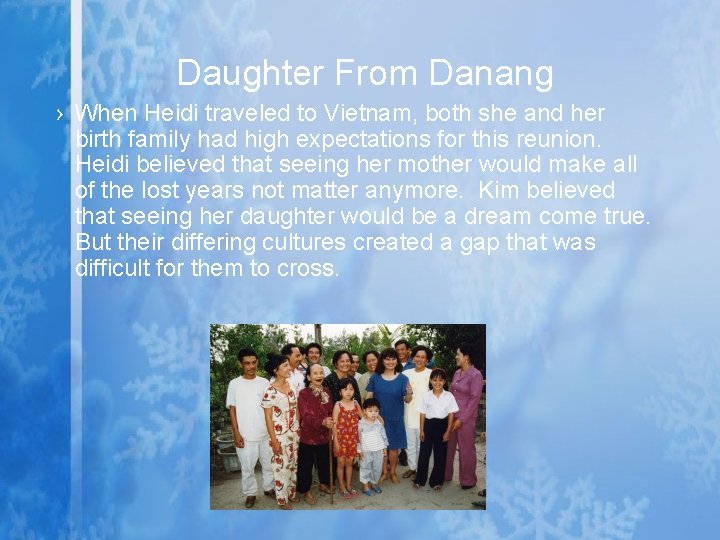
Daughter From Danang › When Heidi traveled to Vietnam, both she and her birth family had high expectations for this reunion. Heidi believed that seeing her mother would make all of the lost years not matter anymore. Kim believed that seeing her daughter would be a dream come true. But their differing cultures created a gap that was difficult for them to cross.
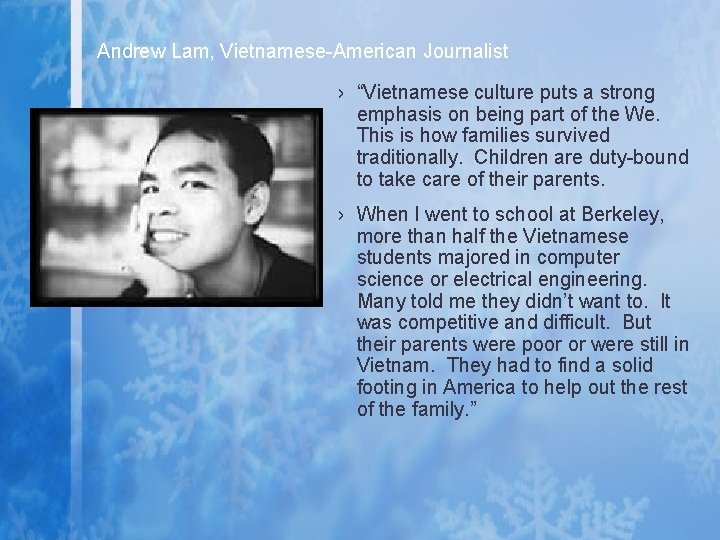
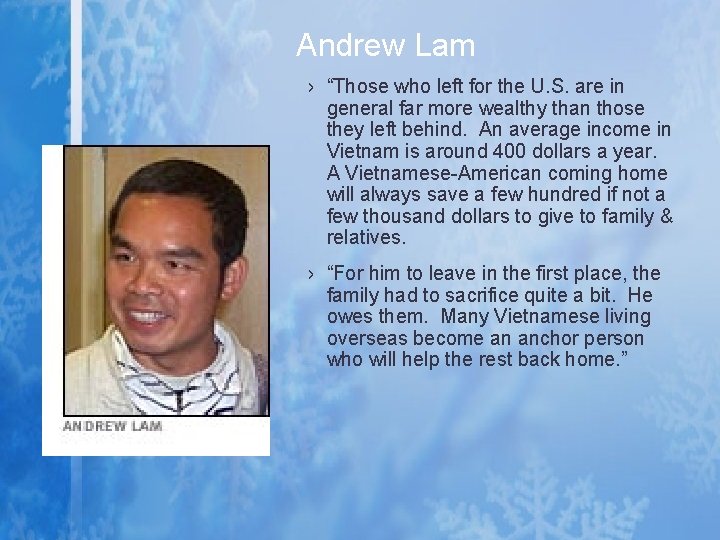
Andrew Lam, Vietnamese-American Journalist › “Vietnamese culture puts a strong emphasis on being part of the We. This is how families survived traditionally. Children are duty-bound to take care of their parents. › When I went to school at Berkeley, more than half the Vietnamese students majored in computer science or electrical engineering. Many told me they didn’t want to. It was competitive and difficult. But their parents were poor or were still in Vietnam. They had to find a solid footing in America to help out the rest of the family. ”
Andrew Lam › “Those who left for the U. S. are in general far more wealthy than those they left behind. An average income in Vietnam is around 400 dollars a year. A Vietnamese-American coming home will always save a few hundred if not a few thousand dollars to give to family & relatives. › “For him to leave in the first place, the family had to sacrifice quite a bit. He owes them. Many Vietnamese living overseas become an anchor person who will help the rest back home. ”
Andrew Lam › “The ties that bind a Vietnamese family are love, a shared belief system, and, in many ways, poverty. You don’t leave home at 18 just because you reach 18. You live with your family until you’re married and even then you might not have enough money to buy a house for yourself and your spouse. › So you create a 3 -generational family and to do so you learn to suppress your own individualism. You cannot get everything you want because you have to share resources to survive. You learn to live well together and you learn to suppress your own desire. You learn to sacrifice a lot to live in harmony with a large family. › But in return, you get a kind of insularity that many Americans don’t have. You know you’ll never be alone. You know that you will be taken care of, no matter what. You make that kind of promise to each other. ”
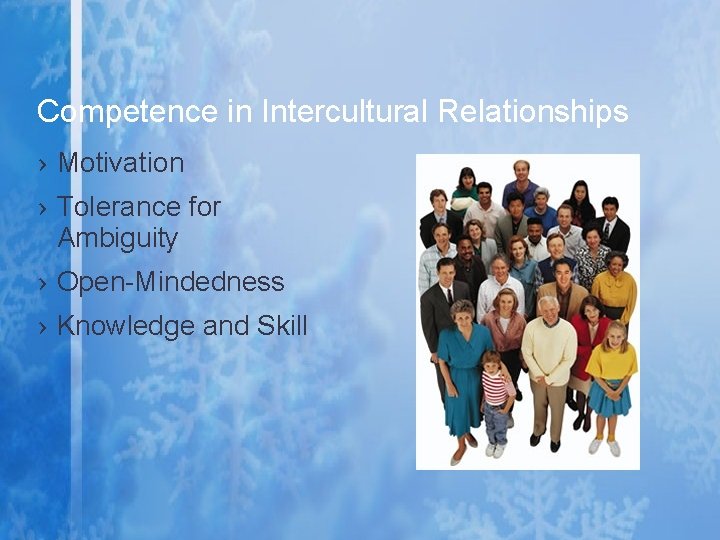
Competence in Intercultural Relationships › Motivation › Tolerance for Ambiguity › Open-Mindedness › Knowledge and Skill