
The significance of noble gas structures in covalent
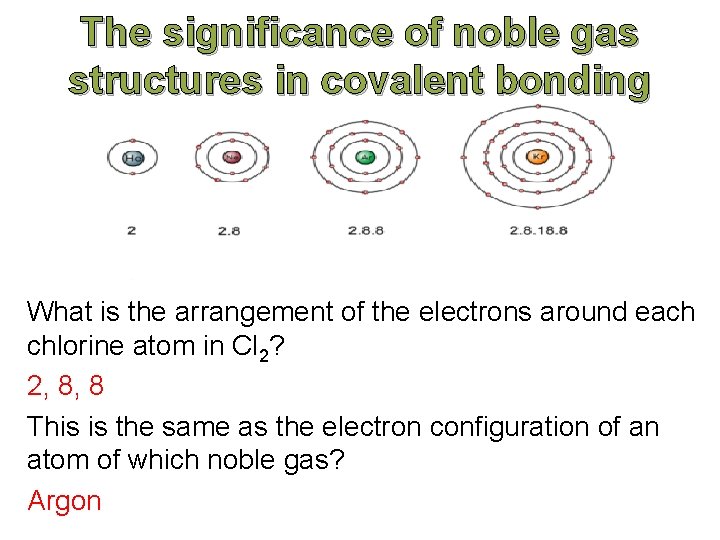
The significance of noble gas structures in covalent bonding What is the arrangement of the electrons around each chlorine atom in Cl 2? 2, 8, 8 This is the same as the electron configuration of an atom of which noble gas? Argon
When atoms bond covalently, they often produce outer electronic structures the same as noble gases – in other words, with four pairs of electrons (or one pair in the case of helium). There are, however, lots of examples where different numbers of pairs are formed, producing structures which are quite unlike noble gases.
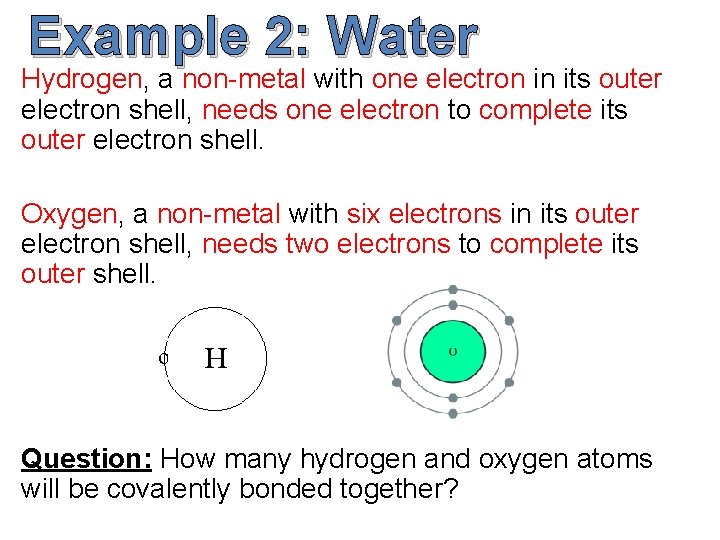
Example 2: Water Hydrogen, a non-metal with one electron in its outer electron shell, needs one electron to complete its outer electron shell. Oxygen, a non-metal with six electrons in its outer electron shell, needs two electrons to complete its outer shell. Question: How many hydrogen and oxygen atoms will be covalently bonded together?
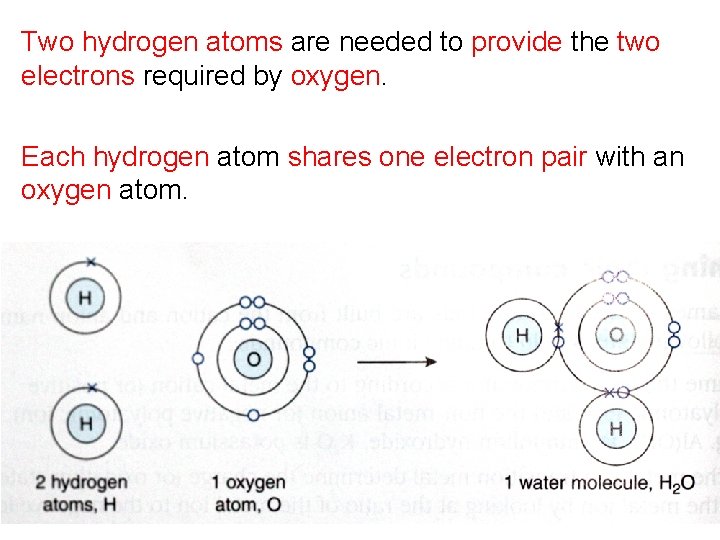
Two hydrogen atoms are needed to provide the two electrons required by oxygen. Each hydrogen atom shares one electron pair with an oxygen atom.
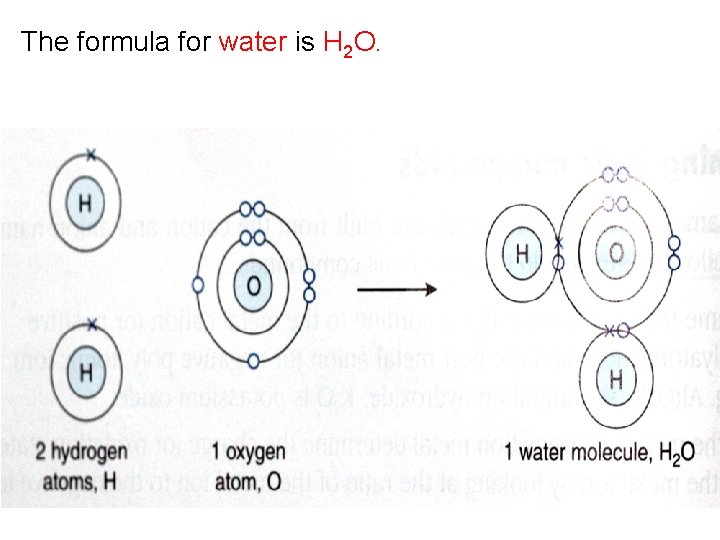
The formula for water is H 2 O.
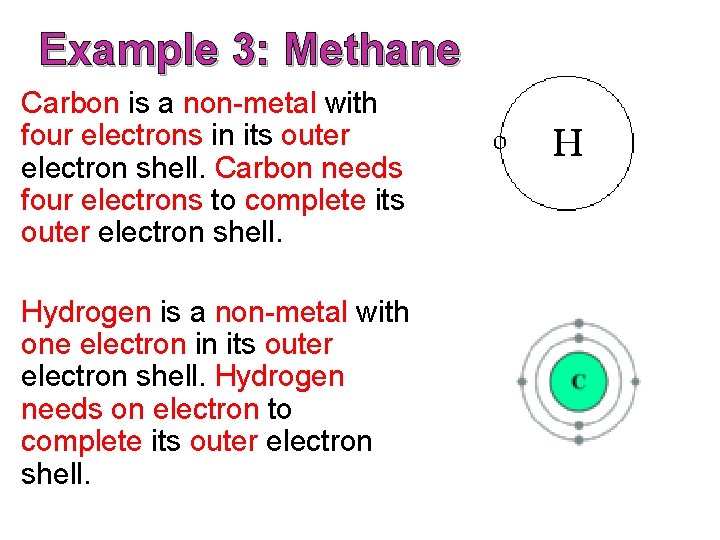
Example 3: Methane Carbon is a non-metal with four electrons in its outer electron shell. Carbon needs four electrons to complete its outer electron shell. Hydrogen is a non-metal with one electron in its outer electron shell. Hydrogen needs on electron to complete its outer electron shell.
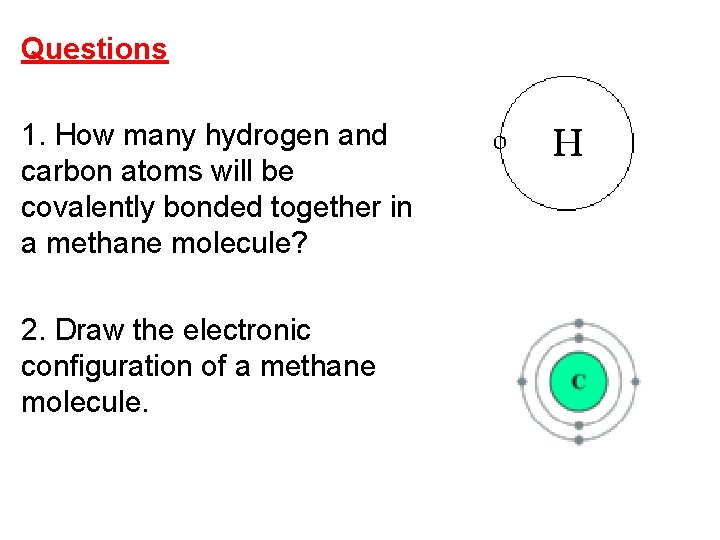
Questions 1. How many hydrogen and carbon atoms will be covalently bonded together in a methane molecule? 2. Draw the electronic configuration of a methane molecule.
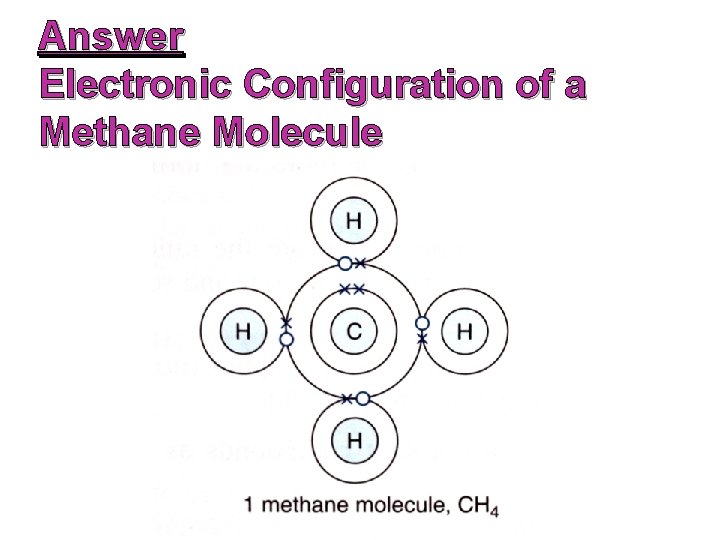
Answer Electronic Configuration of a Methane Molecule
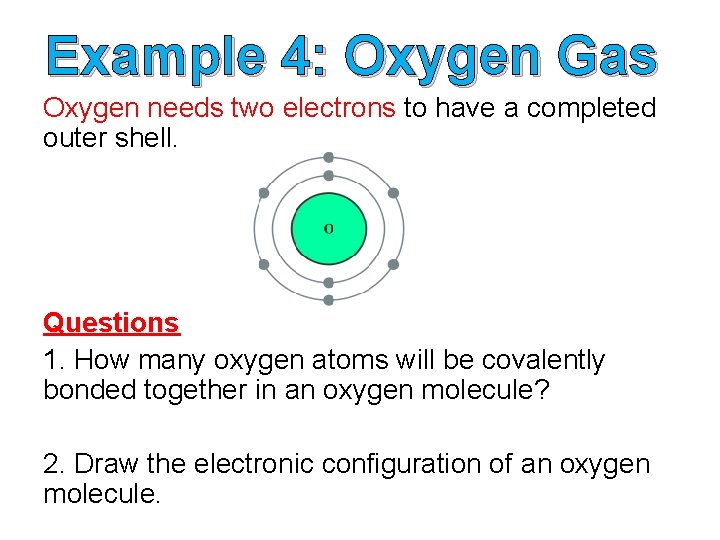
Example 4: Oxygen Gas Oxygen needs two electrons to have a completed outer shell. Questions 1. How many oxygen atoms will be covalently bonded together in an oxygen molecule? 2. Draw the electronic configuration of an oxygen molecule.
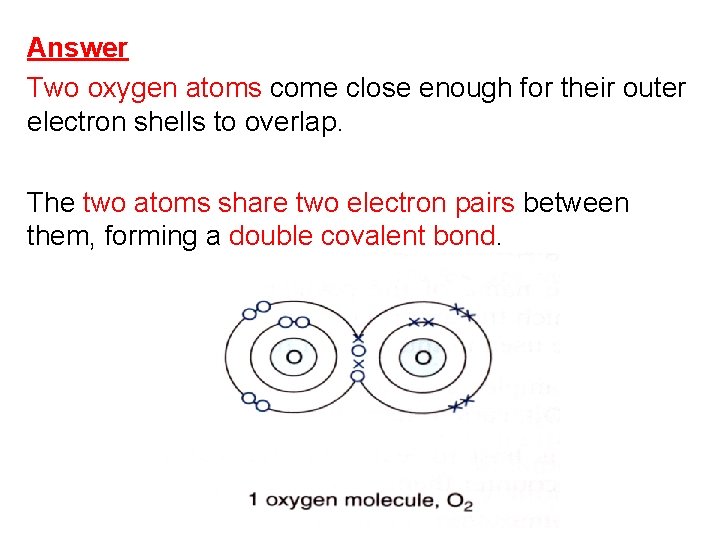
Answer Two oxygen atoms come close enough for their outer electron shells to overlap. The two atoms share two electron pairs between them, forming a double covalent bond.
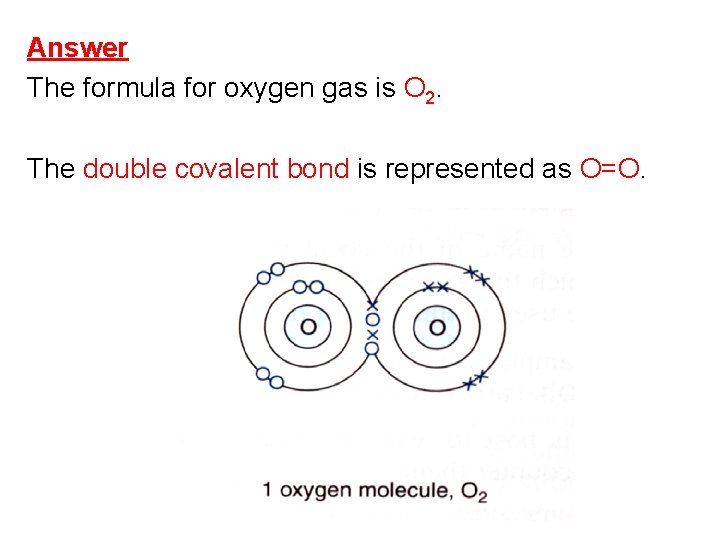
Answer The formula for oxygen gas is O 2. The double covalent bond is represented as O=O.
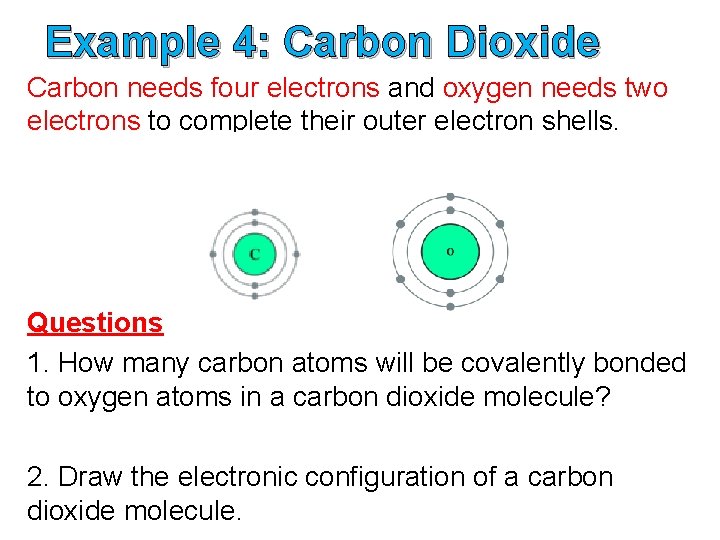
Example 4: Carbon Dioxide Carbon needs four electrons and oxygen needs two electrons to complete their outer electron shells. Questions 1. How many carbon atoms will be covalently bonded to oxygen atoms in a carbon dioxide molecule? 2. Draw the electronic configuration of a carbon dioxide molecule.
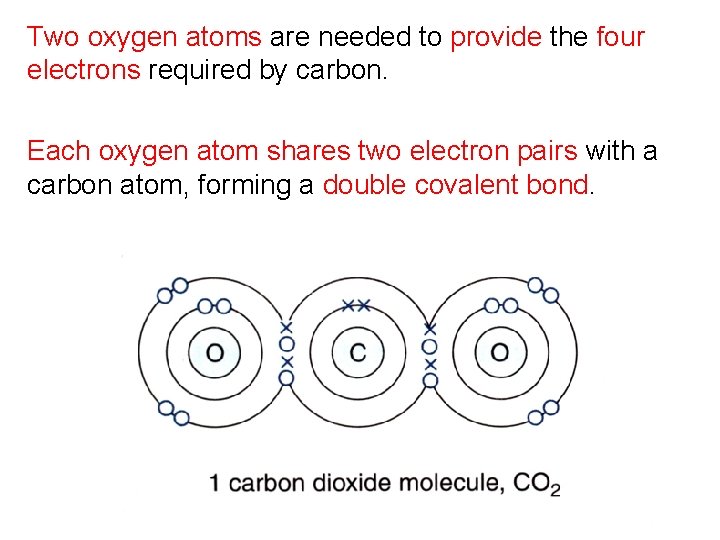
Two oxygen atoms are needed to provide the four electrons required by carbon. Each oxygen atom shares two electron pairs with a carbon atom, forming a double covalent bond.

The formula for carbon dioxide is CO 2. The double covalent bonds are represented as O=C=O
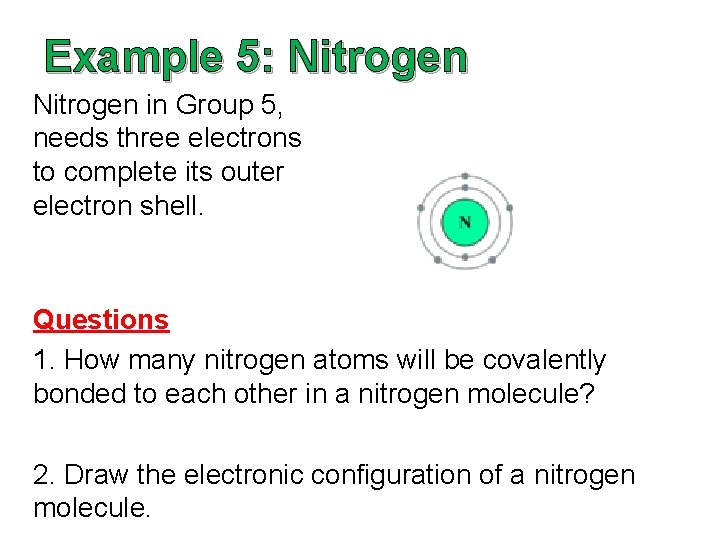
Example 5: Nitrogen in Group 5, needs three electrons to complete its outer electron shell. Questions 1. How many nitrogen atoms will be covalently bonded to each other in a nitrogen molecule? 2. Draw the electronic configuration of a nitrogen molecule.
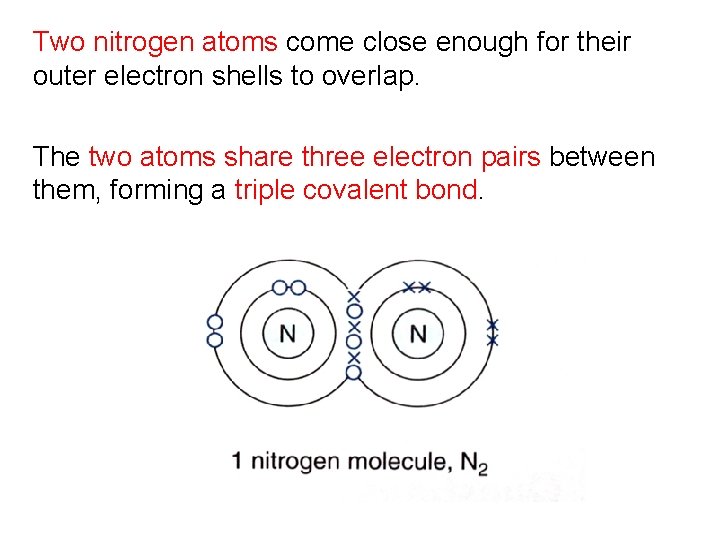
Two nitrogen atoms come close enough for their outer electron shells to overlap. The two atoms share three electron pairs between them, forming a triple covalent bond.
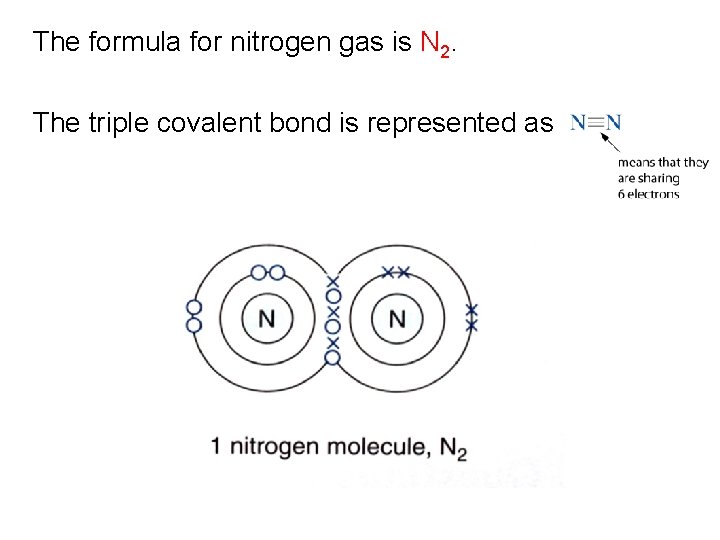
The formula for nitrogen gas is N 2. The triple covalent bond is represented as
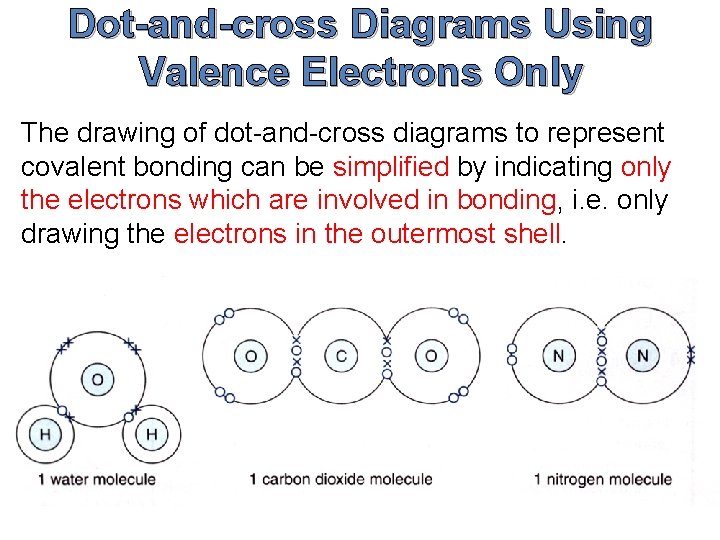
Dot-and-cross Diagrams Using Valence Electrons Only The drawing of dot-and-cross diagrams to represent covalent bonding can be simplified by indicating only the electrons which are involved in bonding, i. e. only drawing the electrons in the outermost shell.
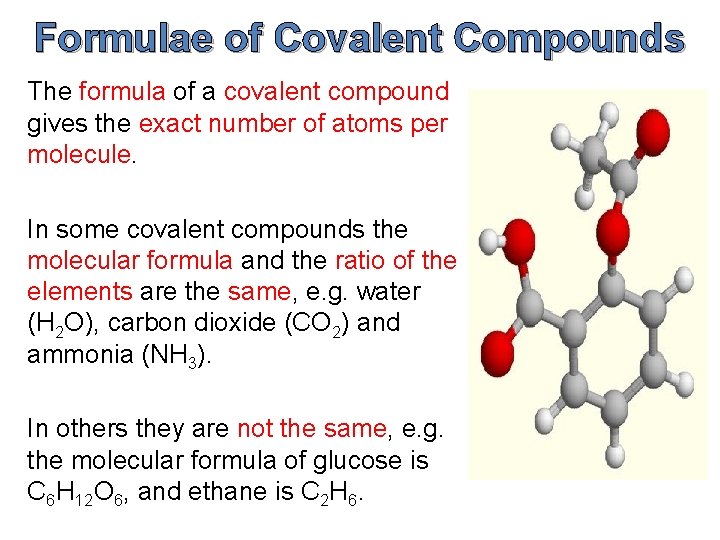
Formulae of Covalent Compounds The formula of a covalent compound gives the exact number of atoms per molecule. In some covalent compounds the molecular formula and the ratio of the elements are the same, e. g. water (H 2 O), carbon dioxide (CO 2) and ammonia (NH 3). In others they are not the same, e. g. the molecular formula of glucose is C 6 H 12 O 6, and ethane is C 2 H 6.
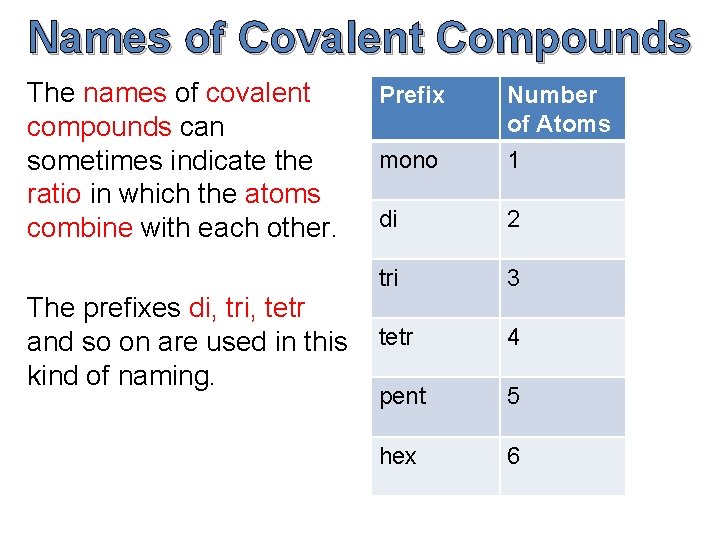
Names of Covalent Compounds The names of covalent compounds can sometimes indicate the ratio in which the atoms combine with each other. The prefixes di, tri, tetr and so on are used in this kind of naming. Prefix mono Number of Atoms 1 di 2 tri 3 tetr 4 pent 5 hex 6
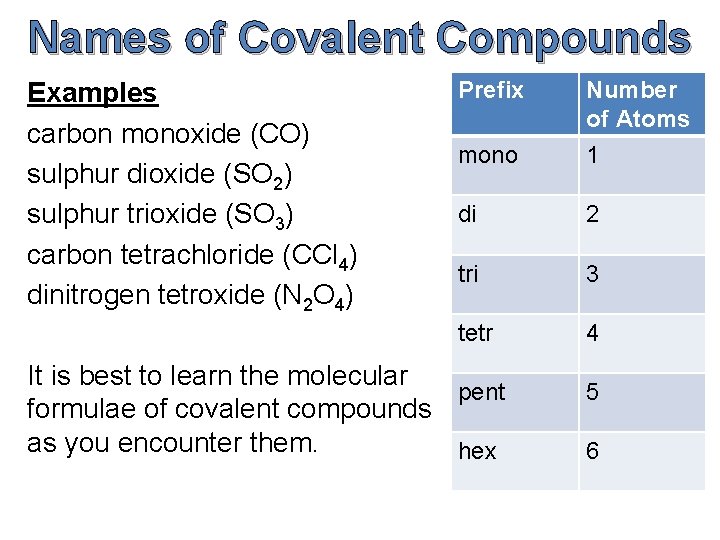
Names of Covalent Compounds Examples carbon monoxide (CO) sulphur dioxide (SO 2) sulphur trioxide (SO 3) carbon tetrachloride (CCl 4) dinitrogen tetroxide (N 2 O 4) Prefix mono Number of Atoms 1 di 2 tri 3 tetr 4 It is best to learn the molecular pent formulae of covalent compounds as you encounter them. hex 5 6
Differences Between Ionic and Covalent Bonds
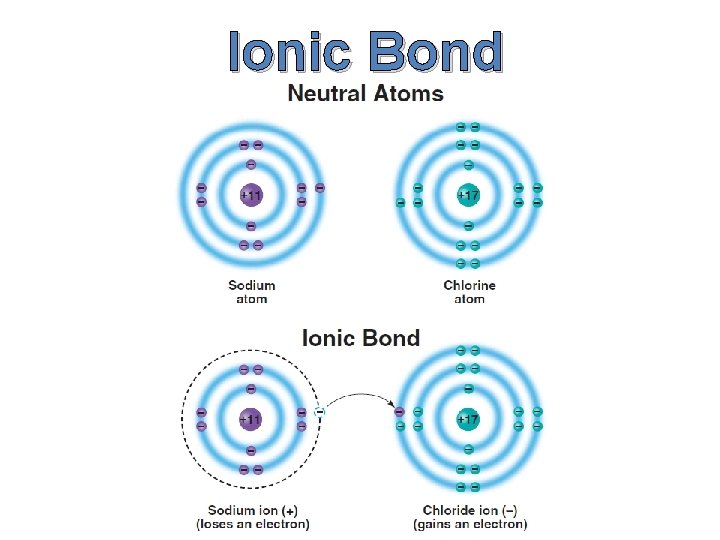
Ionic Bond
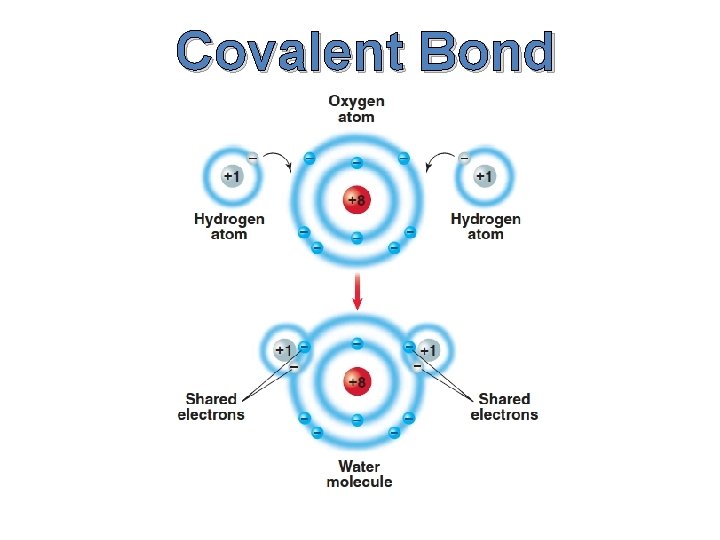
Covalent Bond
Summary In this lesson we learnt about: • Reaction of non-metals with non-metals • Covalent bonding: sharing of electrons • The octet rule • Dot and Cross representations of covalent bonds • Formulae of covalent compounds
- Slides: 25