
The Shoulder Anatomy Injuries and Assessment Bones of
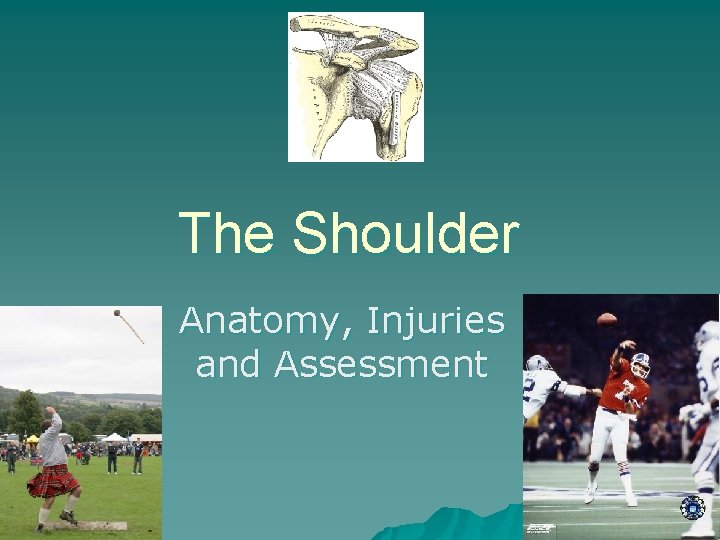
The Shoulder Anatomy, Injuries and Assessment
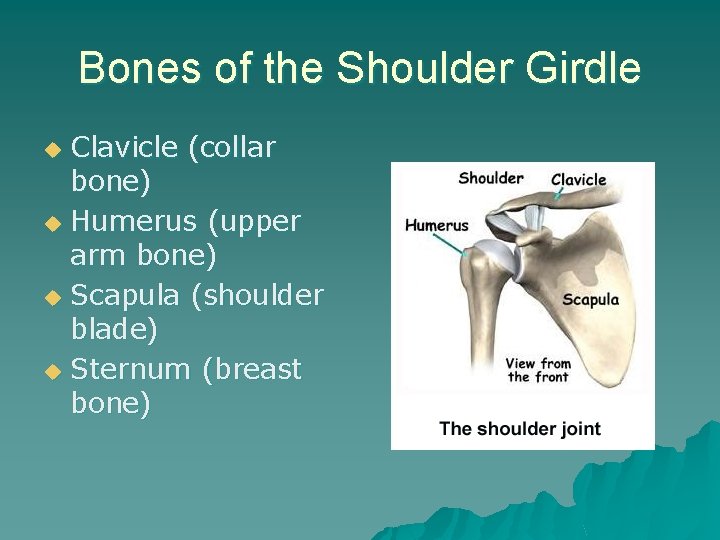
Bones of the Shoulder Girdle Clavicle (collar bone) u Humerus (upper arm bone) u Scapula (shoulder blade) u Sternum (breast bone) u
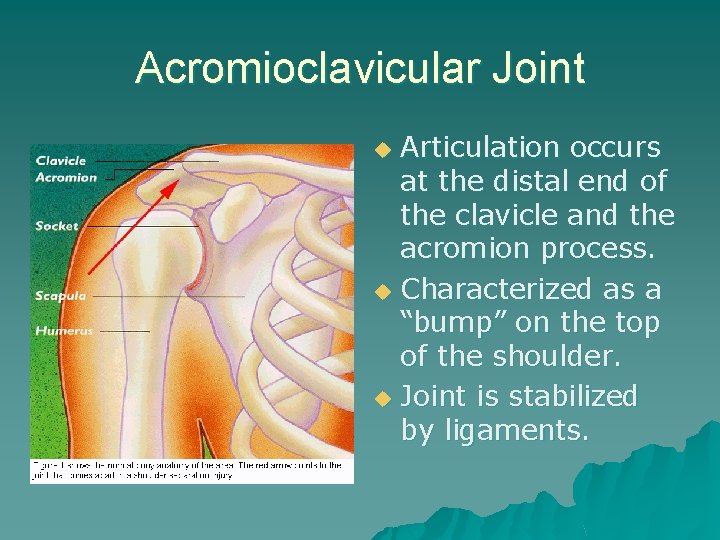
Acromioclavicular Joint Articulation occurs at the distal end of the clavicle and the acromion process. u Characterized as a “bump” on the top of the shoulder. u Joint is stabilized by ligaments. u
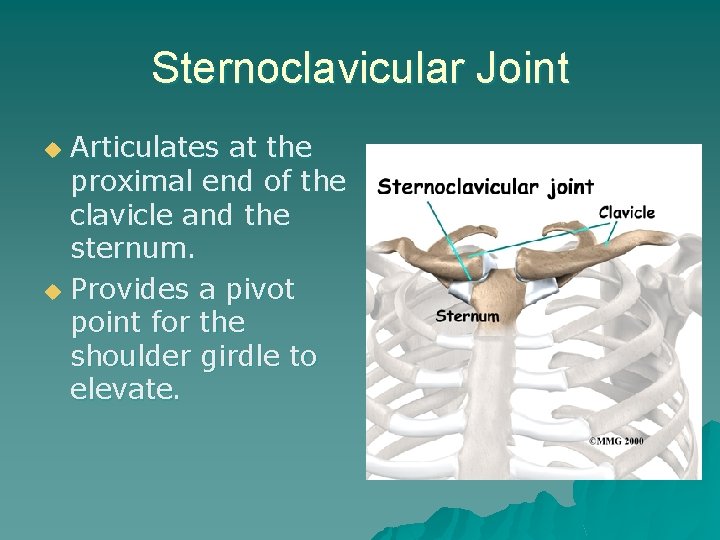
Sternoclavicular Joint Articulates at the proximal end of the clavicle and the sternum. u Provides a pivot point for the shoulder girdle to elevate. u
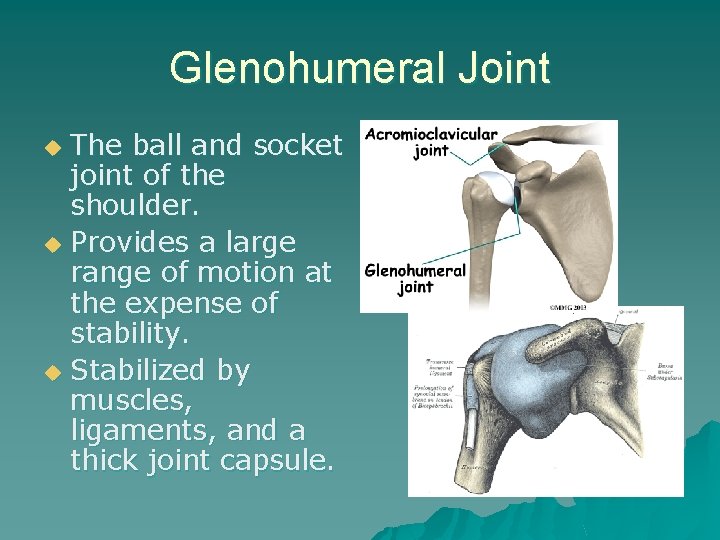
Glenohumeral Joint The ball and socket joint of the shoulder. u Provides a large range of motion at the expense of stability. u Stabilized by muscles, ligaments, and a thick joint capsule. u
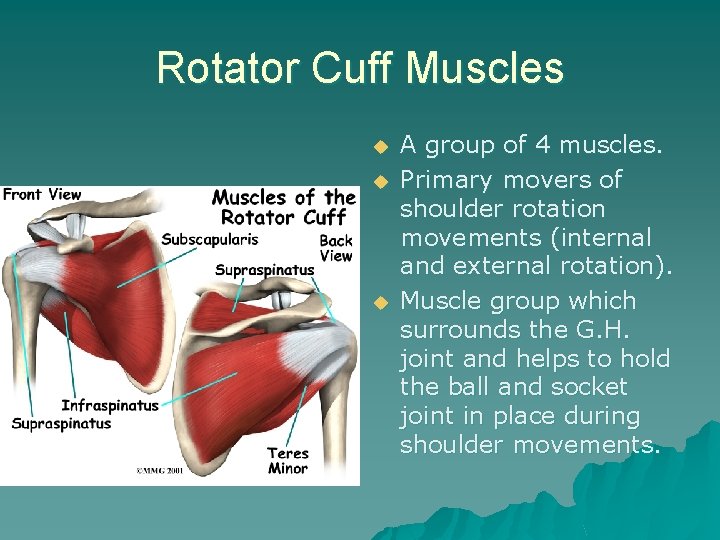
Rotator Cuff Muscles u u u A group of 4 muscles. Primary movers of shoulder rotation movements (internal and external rotation). Muscle group which surrounds the G. H. joint and helps to hold the ball and socket joint in place during shoulder movements.
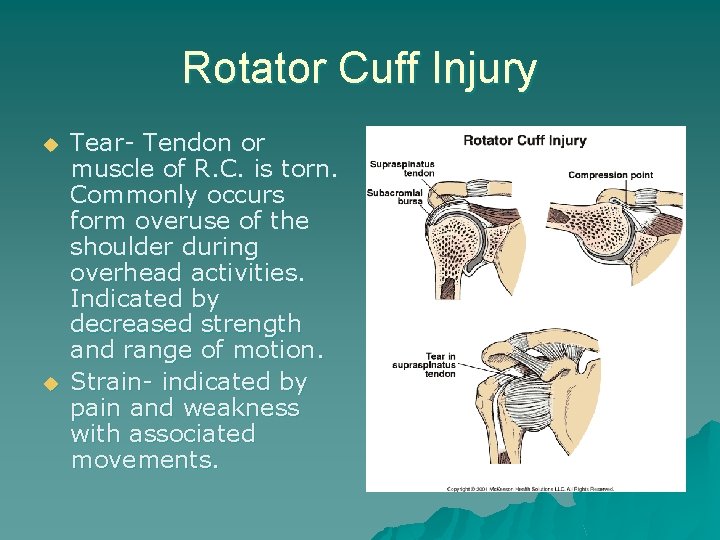
Rotator Cuff Injury u u Tear- Tendon or muscle of R. C. is torn. Commonly occurs form overuse of the shoulder during overhead activities. Indicated by decreased strength and range of motion. Strain- indicated by pain and weakness with associated movements.
QUICK QUIZ 1. A. 2. A. 3. A. 4. A. Name the 4 bones which make up the shoulder girdle. Clavical, humerus, sternum, and scapula Name the shoulder joint which is characterized by the “bump” on the top of the shoulder. Acromioclavicular What benefit arises from the glenohumeral joint’s lack of stability? A large range of motion. Which joint forms a pivot point for shoulder elevation? Sternoclavicular joint
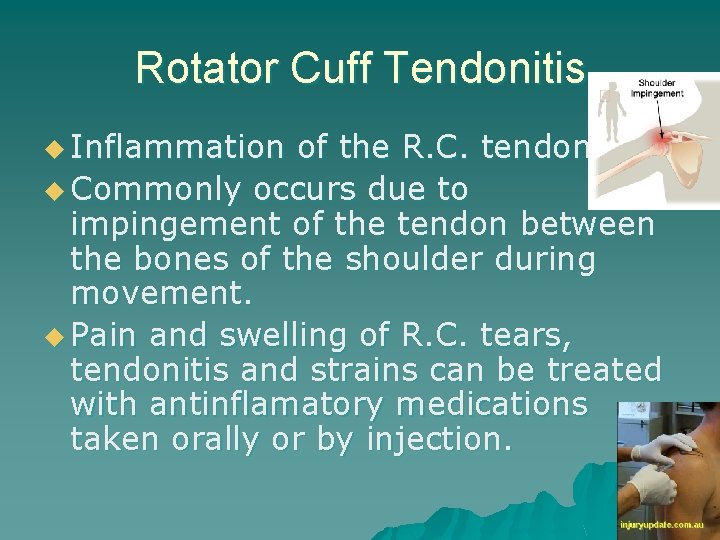
Rotator Cuff Tendonitis u Inflammation of the R. C. tendon. u Commonly occurs due to impingement of the tendon between the bones of the shoulder during movement. u Pain and swelling of R. C. tears, tendonitis and strains can be treated with antinflamatory medications taken orally or by injection.
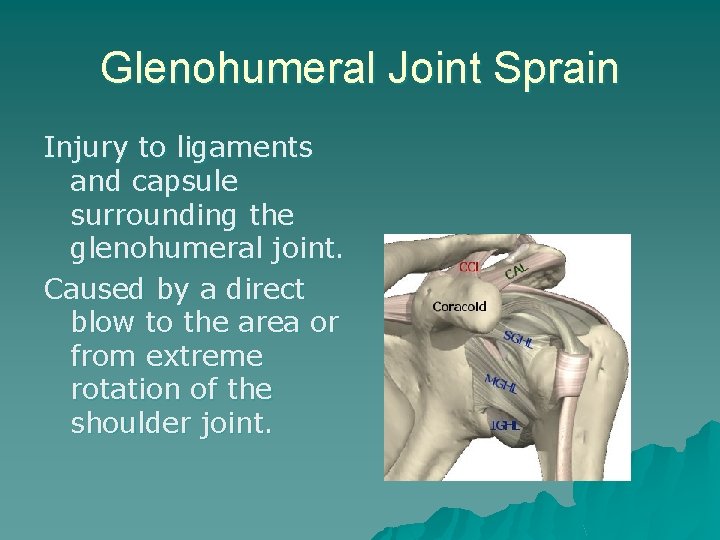
Glenohumeral Joint Sprain Injury to ligaments and capsule surrounding the glenohumeral joint. Caused by a direct blow to the area or from extreme rotation of the shoulder joint.
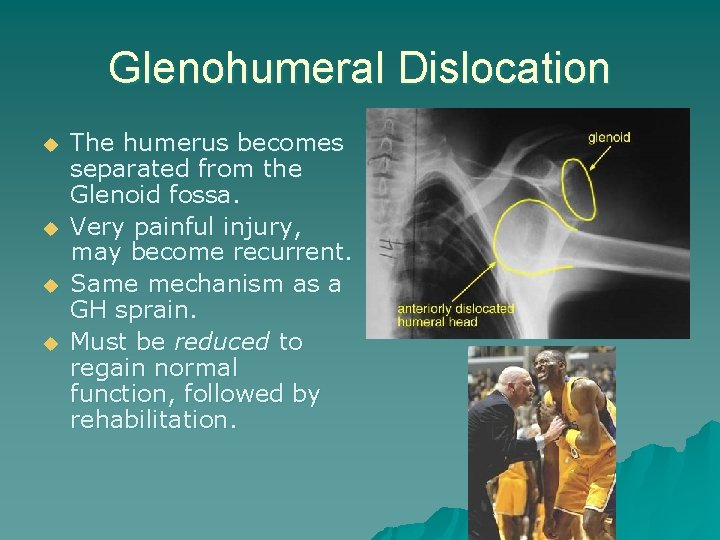
Glenohumeral Dislocation u u The humerus becomes separated from the Glenoid fossa. Very painful injury, may become recurrent. Same mechanism as a GH sprain. Must be reduced to regain normal function, followed by rehabilitation.
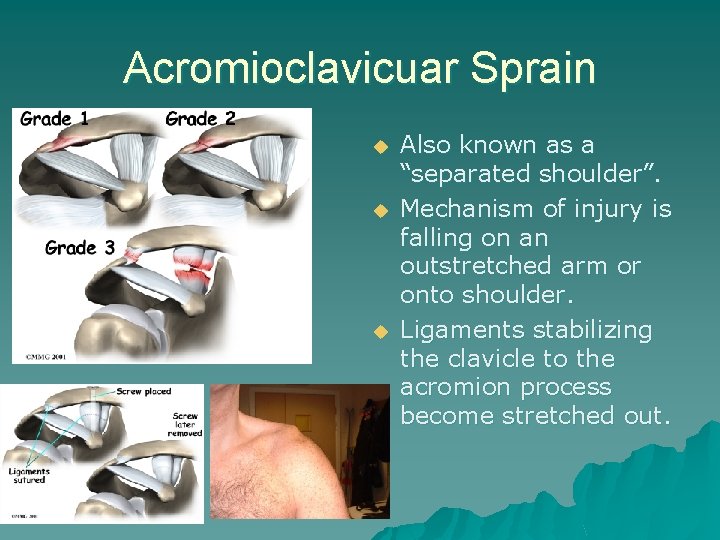
Acromioclavicuar Sprain u u u Also known as a “separated shoulder”. Mechanism of injury is falling on an outstretched arm or onto shoulder. Ligaments stabilizing the clavicle to the acromion process become stretched out.
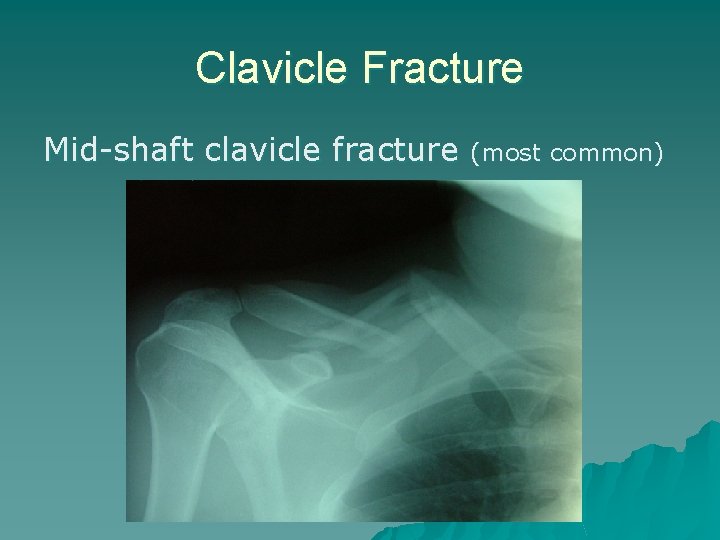
Clavicle Fracture Mid-shaft clavicle fracture (most common)
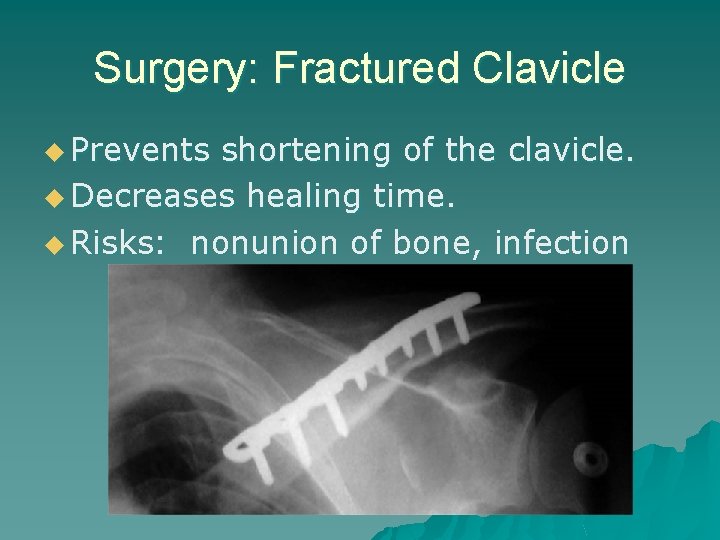
Surgery: Fractured Clavicle u Prevents shortening of the clavicle. u Decreases healing time. u Risks: nonunion of bone, infection
- Slides: 14