
The ShortRun Trade Off between Inflation and Unemployment
The Short-Run Trade -Off between Inflation and Unemployment Copyright © 2010 Cengage Learning 10
Unemployment and Inflation • What are the determinants of the natural rate of unemployment? • The natural rate of unemployment is determined by minimum wage laws, the market power of unions, the role of efficiency wages, and the effectiveness of job search. • What is the determinant of the inflation rate? • The inflation rate depends primarily on growth in the quantity of money, controlled by the central bank. Copyright © 2010 Cengage Learning
Unemployment and Inflation • Society faces a short-run trade-off between unemployment and inflation. • If policymakers expand aggregate demand, they can lower unemployment, but only at the cost of higher inflation. • If they contract aggregate demand, they can lower inflation, but at the cost of temporarily higher unemployment. This lecture considers the following issues: • Why policymakers face the short-run trade-off between unemployment and inflation? Why it disappears in the long run? • How can supply shocks shift the trade-off? • What is the short-run cost of reducing the rate of inflation? • How the policy-makers’ credibility affects the cost of reducing inflation? Copyright © 2010 Cengage Learning
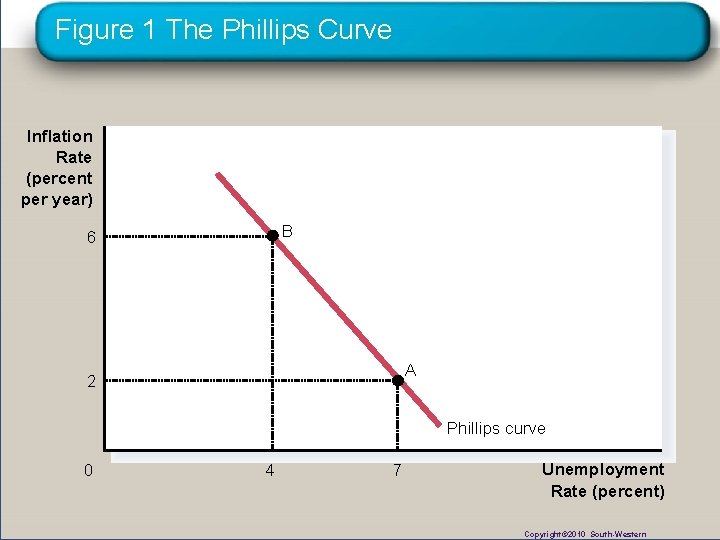
Figure 1 The Phillips Curve Inflation Rate (percent per year) B 6 A 2 Phillips curve 0 4 7 Unemployment Rate (percent) Copyright© 2010 South-Western
Aggregate Demand, Aggregate Supply, and the Phillips Curve • The Phillips curve illustrates the short-run relationship between inflation and unemployment. • The Phillips curve shows the short-run combinations of unemployment and inflation that arise as shifts in the aggregate demand curve move the economy along the short-run aggregate supply curve. • The greater the aggregate demand for goods and services, the greater is the economy’s output, and the higher is the overall price level. • A higher level of output results in a lower level of unemployment. Copyright © 2010 Cengage Learning
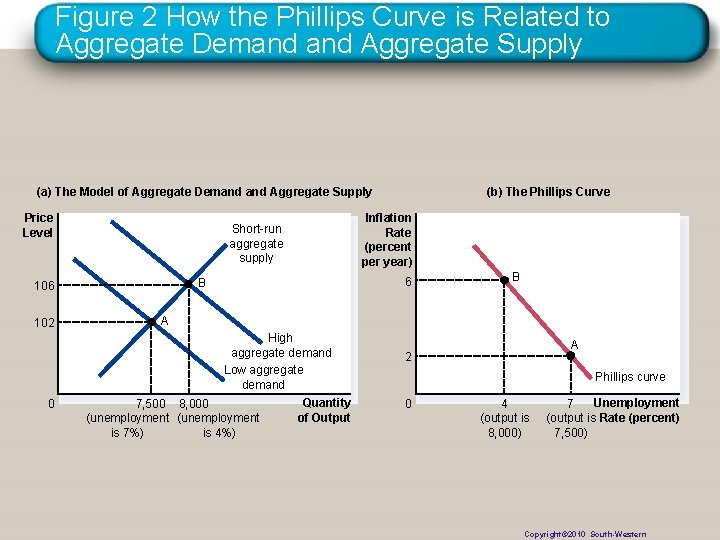
Figure 2 How the Phillips Curve is Related to Aggregate Demand Aggregate Supply (a) The Model of Aggregate Demand Aggregate Supply Price Level 102 Inflation Rate (percent per year) Short-run aggregate supply 6 B 106 B A High aggregate demand Low aggregate demand 0 (b) The Phillips Curve 7, 500 8, 000 (unemployment is 7%) is 4%) Quantity of Output A 2 Phillips curve 0 4 (output is 8, 000) Unemployment 7 (output is Rate (percent) 7, 500) Copyright© 2010 South-Western
The Long-Run Phillips Curve • The Phillips curve seems to offer policy makers a menu of possible inflation and unemployment outcomes. • In the 1960 s, Friedman and Phelps concluded that inflation and unemployment are unrelated in the long run. • As a result, the long-run Phillips curve is vertical at the natural rate of unemployment. • Monetary policy could be effective in the short run but not in the long run. Copyright © 2010 Cengage Learning
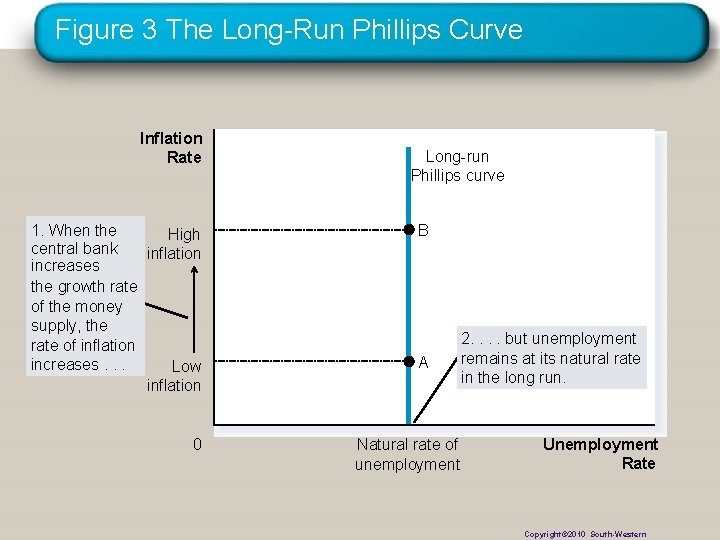
Figure 3 The Long-Run Phillips Curve Inflation Rate 1. When the High central bank inflation increases the growth rate of the money supply, the rate of inflation increases. . . Low inflation 0 Long-run Phillips curve B A Natural rate of unemployment 2. . but unemployment remains at its natural rate in the long run. Unemployment Rate Copyright© 2010 South-Western
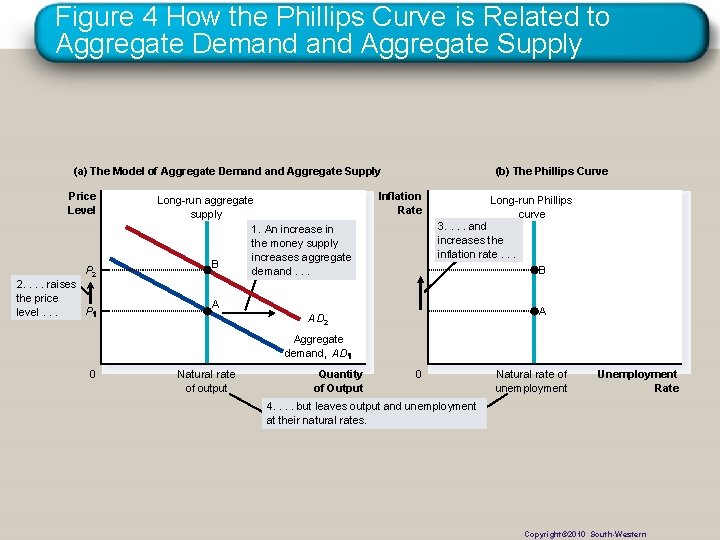
Figure 4 How the Phillips Curve is Related to Aggregate Demand Aggregate Supply (a) The Model of Aggregate Demand Aggregate Supply Price Level P 2 2. . raises the price P level. . . Long-run aggregate supply 1. An increase in the money supply increases aggregate B demand. . . (b) The Phillips Curve Inflation Rate Long-run Phillips curve 3. . and increases the inflation rate. . . B A A AD 2 Aggregate demand, AD 0 Natural rate of output Quantity of Output 0 Natural rate of unemployment Unemployment Rate 4. . but leaves output and unemployment at their natural rates. Copyright© 2010 South-Western
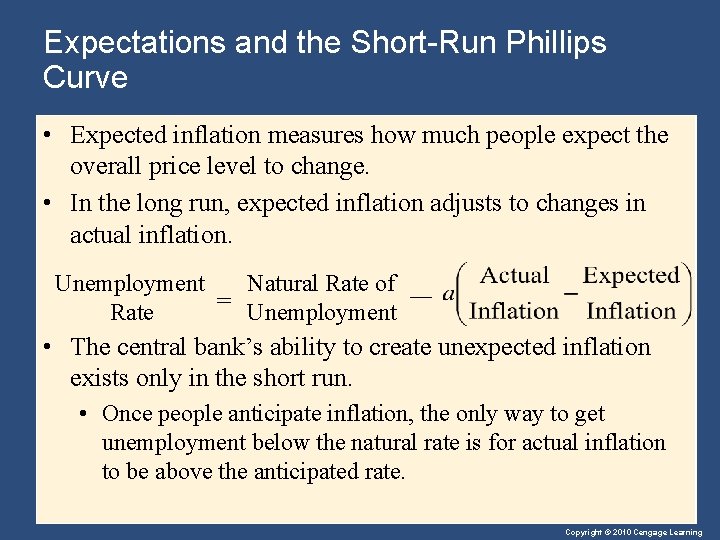
Expectations and the Short-Run Phillips Curve • Expected inflation measures how much people expect the overall price level to change. • In the long run, expected inflation adjusts to changes in actual inflation. Unemployment Natural Rate of ― = Unemployment Rate • The central bank’s ability to create unexpected inflation exists only in the short run. • Once people anticipate inflation, the only way to get unemployment below the natural rate is for actual inflation to be above the anticipated rate. Copyright © 2010 Cengage Learning
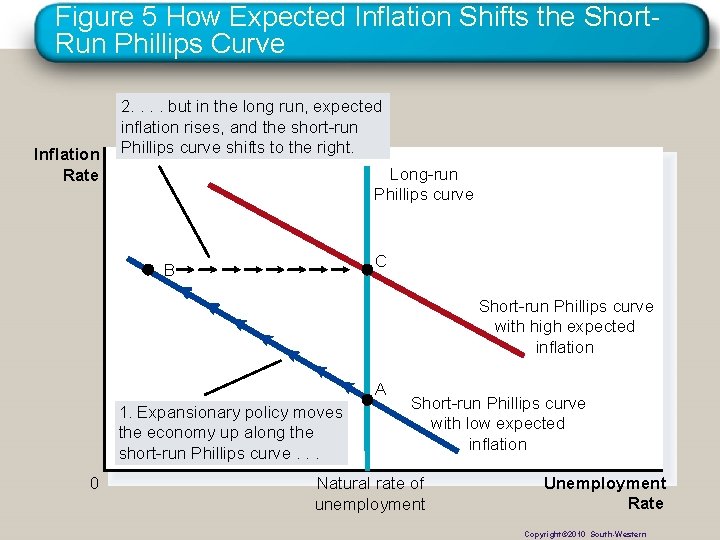
Figure 5 How Expected Inflation Shifts the Short. Run Phillips Curve Inflation Rate 2. . but in the long run, expected inflation rises, and the short-run Phillips curve shifts to the right. Long-run Phillips curve C B Short-run Phillips curve with high expected inflation A 1. Expansionary policy moves the economy up along the short-run Phillips curve. . . 0 Short-run Phillips curve with low expected inflation Natural rate of unemployment Unemployment Rate Copyright© 2010 South-Western
The Natural Experiment for the Natural-Rate Hypothesis • The view that unemployment eventually returns to its natural rate, regardless of the rate of inflation, is called the natural-rate hypothesis. • Historical observations support the natural-rate hypothesis. • The stable Phillips curve relationship between inflation and unemployment broke down in the early ’ 70 s. • During the ’ 70 s and ’ 80 s, many economies experienced high inflation and high unemployment simultaneously. Copyright © 2010 Cengage Learning
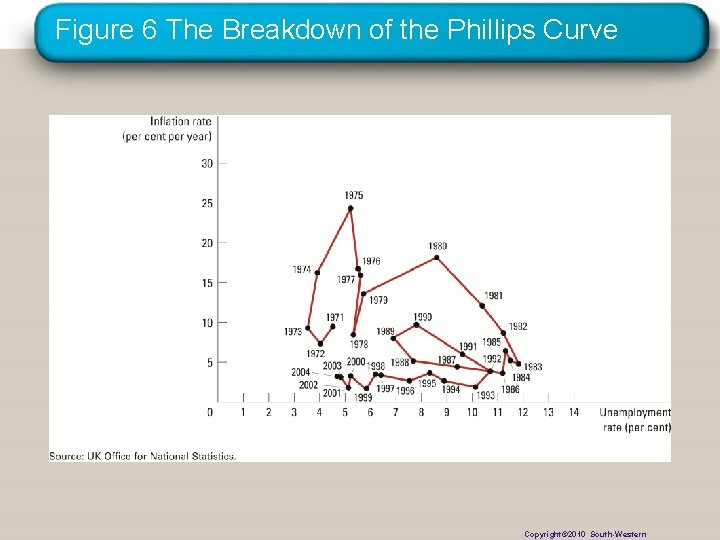
Figure 6 The Breakdown of the Phillips Curve Copyright© 2010 South-Western
SHIFTS IN THE PHILLIPS CURVE: THE ROLE OF SUPPLY SHOCKS • Historical events have shown that the short-run Phillips curve can shift due to changes in expectations. • The short-run Phillips curve also shifts because of shocks to aggregate supply. • Major adverse changes in aggregate supply can worsen the short-run trade-off between unemployment and inflation. • An adverse supply shock gives policy makers a less favourable trade-off between inflation and unemployment. Copyright © 2010 Cengage Learning
SHIFTS IN THE PHILLIPS CURVE: THE ROLE OF SUPPLY SHOCKS • A supply shock is an event that directly alters the firms’ costs, and, as a result, the prices they charge. • This shifts the economy’s aggregate supply curve. . . • . . . and as a result, the Phillips curve. Copyright © 2010 Cengage Learning
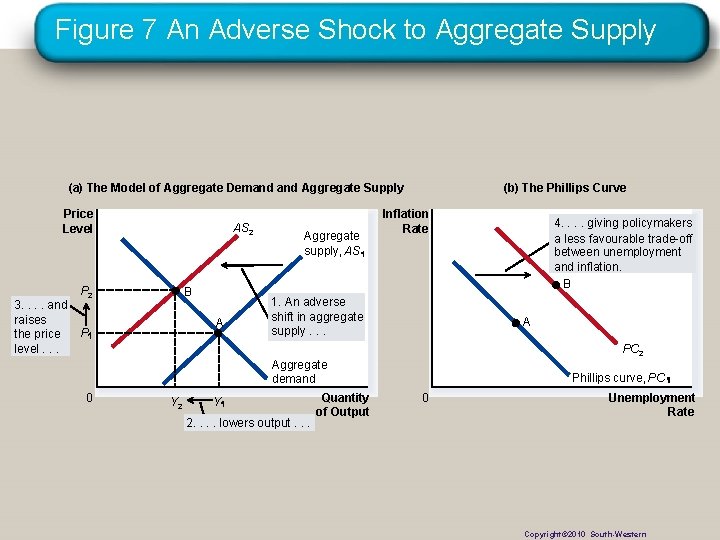
Figure 7 An Adverse Shock to Aggregate Supply (a) The Model of Aggregate Demand Aggregate Supply Price Level 3. . and raises the price level. . . AS 2 P 2 B A P Aggregate supply, AS (b) The Phillips Curve Inflation Rate 1. An adverse shift in aggregate supply. . . 4. . giving policymakers a less favourable trade-off between unemployment and inflation. B A PC 2 Aggregate demand 0 Y 2. . lowers output. . . Quantity of Output Phillips curve, P C 0 Unemployment Rate Copyright© 2010 South-Western
SHIFTS IN THE PHILLIPS CURVE: THE ROLE OF SUPPLY SHOCKS • In the 1970 s, policymakers faced two choices when OPEC cut output and raised worldwide prices of oil. • Fight the unemployment battle by expanding aggregate demand accelerate inflation. • Fight inflation by contracting aggregate demand endure even higher unemployment. Copyright © 2010 Cengage Learning
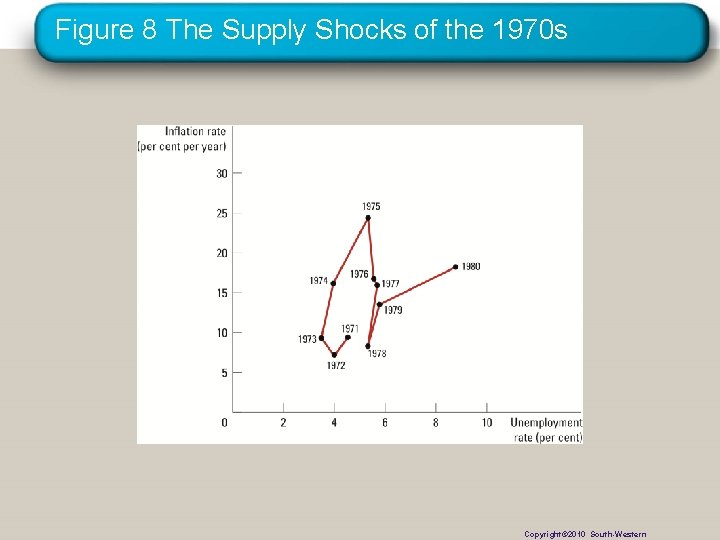
Figure 8 The Supply Shocks of the 1970 s Copyright© 2010 South-Western
THE COST OF REDUCING INFLATION • To reduce inflation, the central bank has to pursue contractionary monetary policy • When the central bank slows the rate of money growth, it contracts aggregate demand. • This reduces the quantity of goods and services that firms produce. • This leads to a rise in unemployment. Copyright © 2010 Cengage Learning
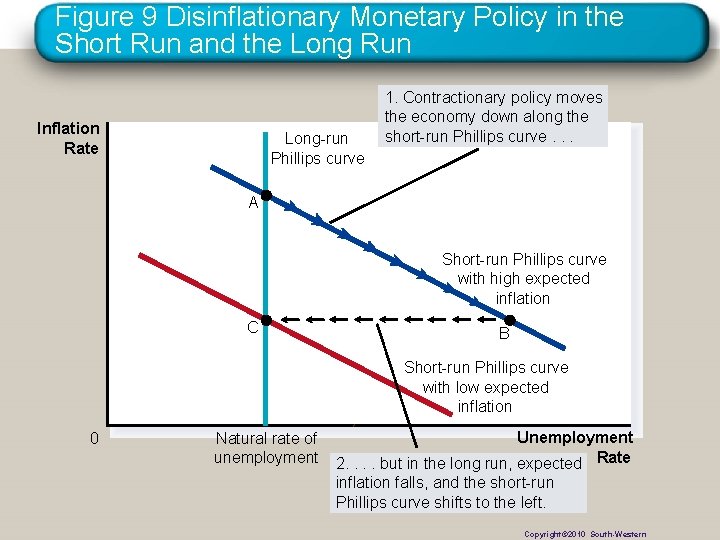
Figure 9 Disinflationary Monetary Policy in the Short Run and the Long Run Inflation Rate Long-run Phillips curve 1. Contractionary policy moves the economy down along the short-run Phillips curve. . . A Short-run Phillips curve with high expected inflation C B Short-run Phillips curve with low expected inflation 0 Natural rate of unemployment Unemployment 2. . but in the long run, expected Rate inflation falls, and the short-run Phillips curve shifts to the left. Copyright© 2010 South-Western
THE COST OF REDUCING INFLATION • To reduce inflation, an economy must endure a period of high unemployment and low output. • When the central bank combats inflation, the economy moves down the short-run Phillips curve. • The economy experiences lower inflation but at the cost of higher unemployment. • The sacrifice ratio is the number of percentage points of annual output that is lost in the process of reducing inflation by one percentage point. • A typical estimate of the sacrifice ratio is around 3 to 5. • To reduce inflation from about 22% in early 1980 to 5% would have required an estimated sacrifice of more than 40% of annual output! Copyright © 2010 Cengage Learning
Rational Expectations and the Possibility of Costless Disinflation • The theory of rational expectations suggests that people optimally use all the information they have, including information about government policies, when forecasting the future. • Expected inflation explains why there is a tradeoff between inflation and unemployment in the short run but not in the long run. • How quickly the short-run trade-off disappears depends on how quickly expectations adjust. • The theory of rational expectations suggests that the sacrifice-ratio could be much smaller than estimated. Copyright © 2010 Cengage Learning
The Thatcher Disinflation • When Margaret Thatcher was elected Prime Minister of the UK in 1979, inflation was widely viewed as one of the nation’s foremost problems. • Inflation was reduced from almost 20 per cent in 1980 to about 5 per cent in 1983, but at the cost of high unemployment (about 11 per cent in 1982 and 1983 ). Copyright © 2010 Cengage Learning
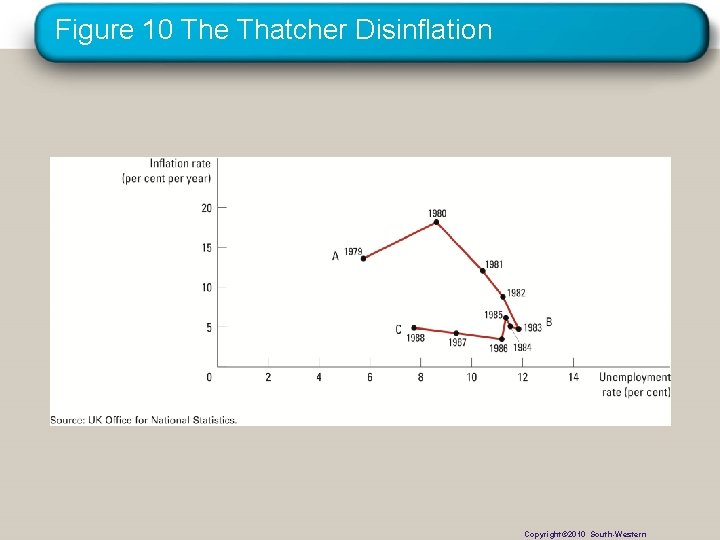
Figure 10 The Thatcher Disinflation Copyright© 2010 South-Western
INFLATION TARGETING • The Thatcher government in the early 1980 s announced a credible commitment to achieving targets for the growth of money supply. • However, a series of financial sector reforms that the government introduced at the same time made the achievement of these targets much more difficult than anticipated. • Towards the end of the 1980 s the government began to think of other indicators of the tightness of monetary policy, such as the exchange rate. In 1990 the UK joined the exchange rate mechanism (ERM). • In 1992, the UK was forced to withdraw from the ERM, following a massive speculative attack on the pound. • As a result, the government had to re-assess the tools and indicators of monetary policy it should use. Copyright © 2010 Cengage Learning

INFLATION TARGETING • The level of the money supply and the exchange rate can be thought of as intermediate targets of monetary policy. • The only final target of monetary policy is inflation. • Neither the money supply or the exchange rate are under the direct control of the government. • The implication is that the government should target the rate of inflation directly and use interest rates to achieve the target. Copyright © 2010 Cengage Learning
INFLATION TARGETING • Because it takes time for a change in interest rates to affect the rate of inflation, the future rate of inflation must be forecast and interest rate changes made in advance of rises in inflation. • This is the approach adopted in the UK in late 1992. Copyright © 2010 Cengage Learning
Summary • The Phillips curve describes a negative relationship between inflation and unemployment. • By expanding aggregate demand, policy makers can choose a point on the Phillips curve with higher inflation and lower unemployment. • By contracting aggregate demand, policy makers can choose a point on the Phillips curve with lower inflation and higher unemployment. • The trade-off between inflation and unemployment described by the Phillips curve holds only in the short run. • The long-run Phillips curve is vertical at the natural rate of unemployment. Copyright © 2010 Cengage Learning
Summary • The short-run Phillips curve also shifts because of shocks to aggregate supply. • An adverse supply shock gives policy makers a less favorable trade-off between inflation and unemployment. • When the central bank contracts growth in the money supply to reduce inflation, it moves the economy along the short-run Phillips curve. • This results in temporarily high unemployment. • The cost of disinflation depends on how quickly expectations of inflation fall. Copyright © 2010 Cengage Learning
- Slides: 29