
The Short Child Occupational Profile SCOPE Lauren Stevenson

- Slides: 21
The Short Child Occupational Profile (SCOPE) Lauren Stevenson and Brandy White
Purpose • Initial evaluation and/or outcome measure • Broad overview of child’s occupational participation • Identify occupational strengths and areas to address • Guide occupation-based goals and interventions
Key Characteristics • Age range: birth to 21 years • Frame of Reference: MOHO • Very simple and flexible • Multiple means of gathering data • Includes intervention planning ideas
Test Development • Pediatric therapists attempted to use MOHOST, but found it did not meet the needs of pediatric evaluation. • First draft: based on team of expert pediatric occupational therapists • Four years of research and revisions based on therapist and other professional input • Standardization: This is not a standardized assessment.
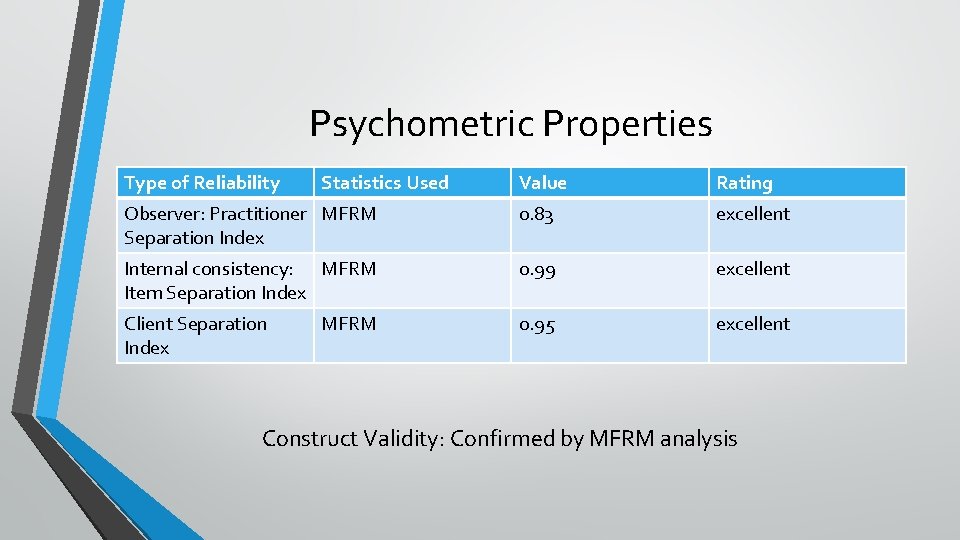
Psychometric Properties Type of Reliability Statistics Used Value Rating Observer: Practitioner MFRM Separation Index 0. 83 excellent Internal consistency: MFRM Item Separation Index 0. 99 excellent Client Separation Index 0. 95 excellent MFRM Construct Validity: Confirmed by MFRM analysis
Test Length and Cost • Length: • • Consists of 25 items Experienced therapists may complete this assessment in 10+ min depending on methods used to gather information. • Test Cost: $40 • Rating and summary forms are reproducible
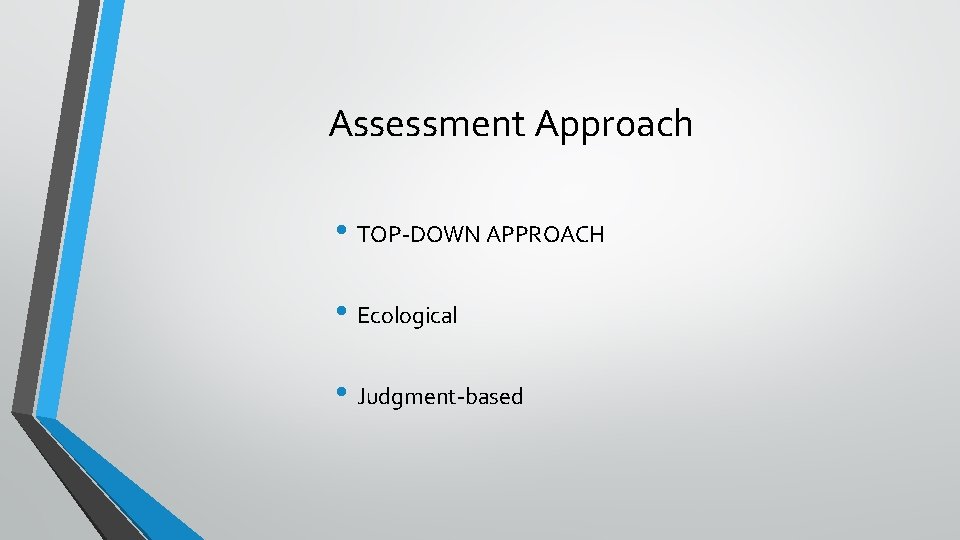
Assessment Approach • TOP-DOWN APPROACH • Ecological • Judgment-based
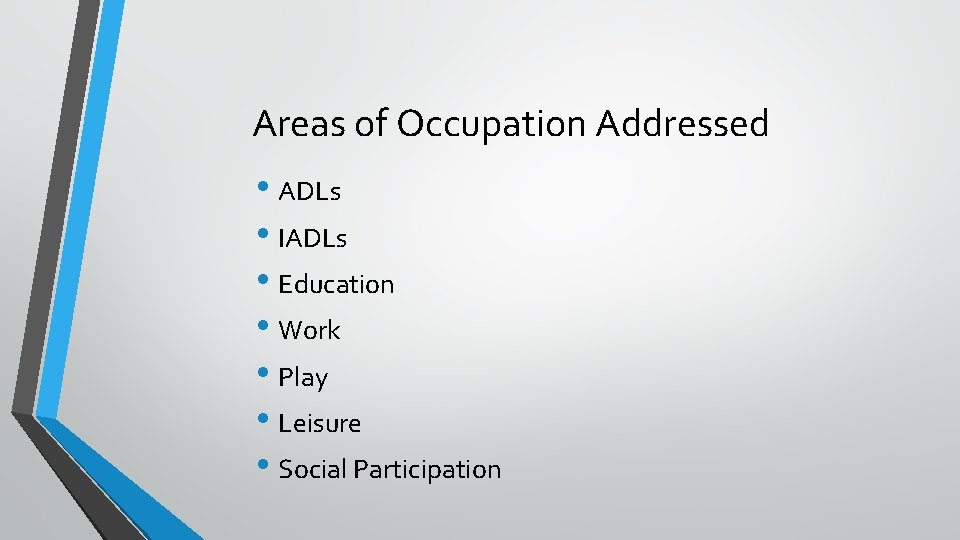
Areas of Occupation Addressed • ADLs • IADLs • Education • Work • Play • Leisure • Social Participation
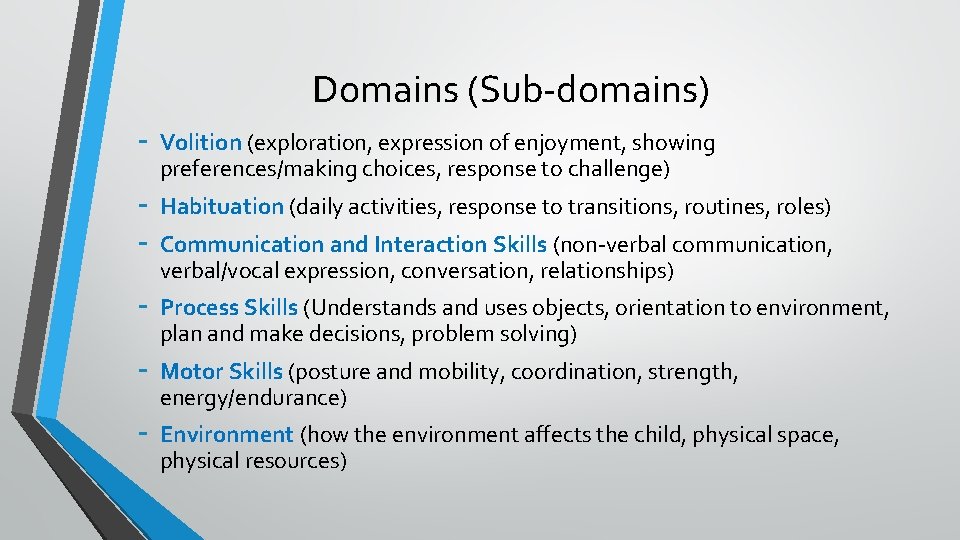
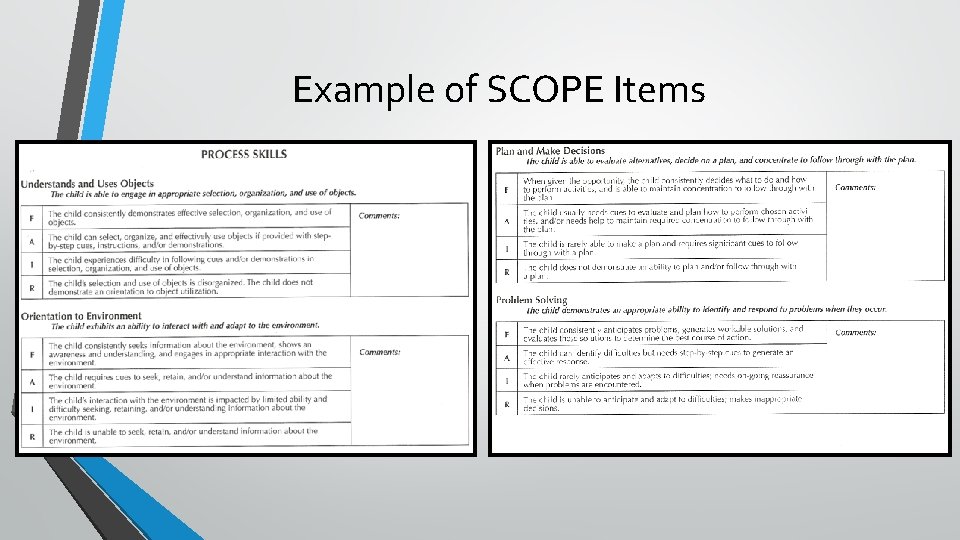
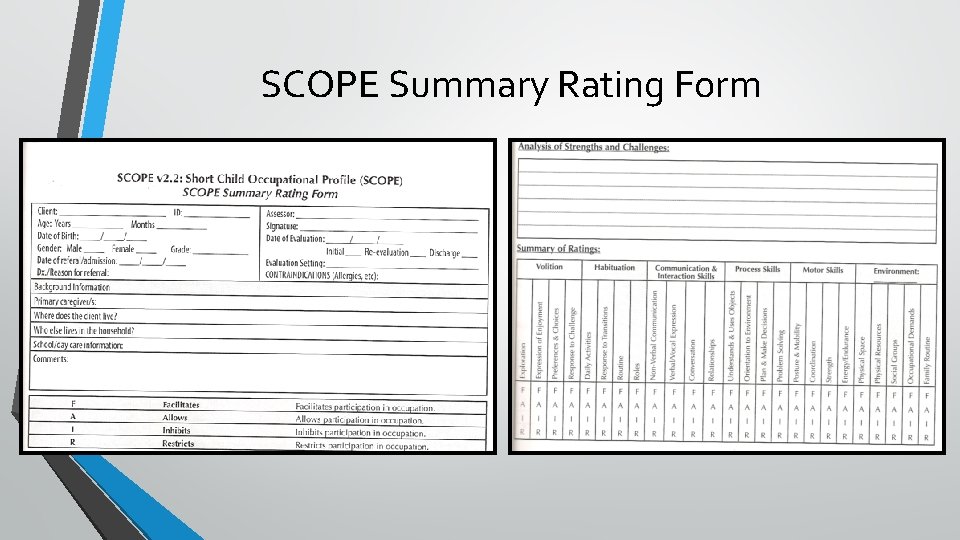
Domains (Sub-domains) - Volition (exploration, expression of enjoyment, showing preferences/making choices, response to challenge) Habituation (daily activities, response to transitions, routines, roles) Communication and Interaction Skills (non-verbal communication, verbal/vocal expression, conversation, relationships) Process Skills (Understands and uses objects, orientation to environment, plan and make decisions, problem solving) Motor Skills (posture and mobility, coordination, strength, energy/endurance) Environment (how the environment affects the child, physical space, physical resources)
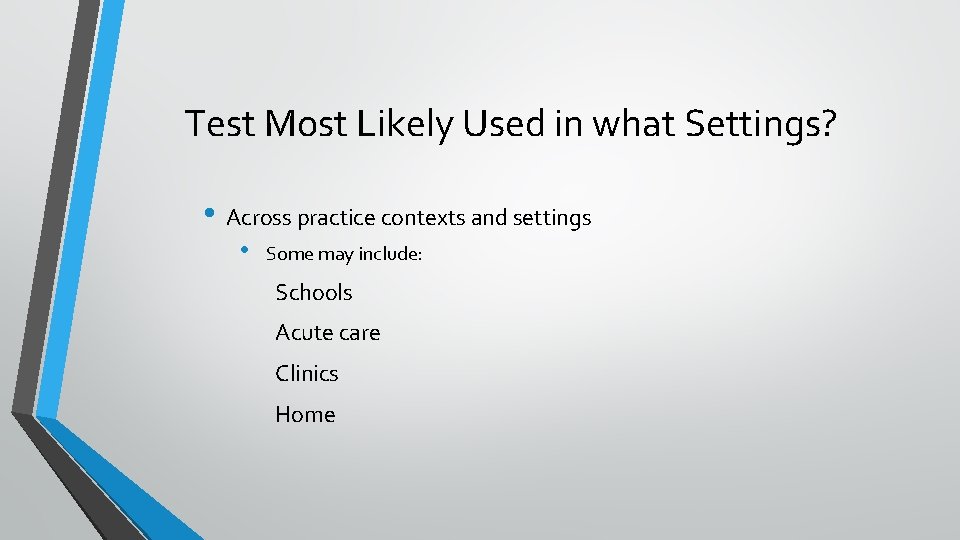
Test Most Likely Used in what Settings? • Across practice contexts and settings • Some may include: Schools Acute care Clinics Home
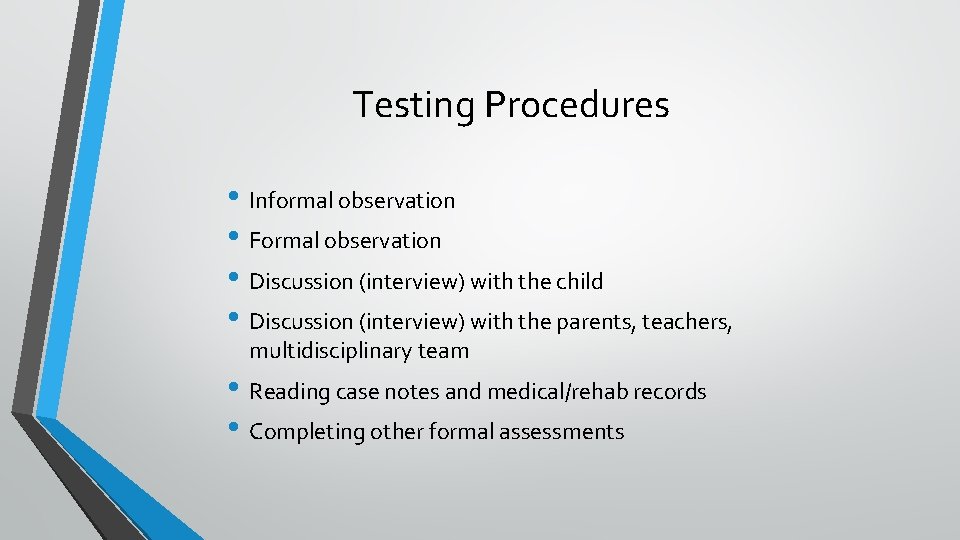
Testing Procedures • Informal observation • Formal observation • Discussion (interview) with the child • Discussion (interview) with the parents, teachers, multidisciplinary team • Reading case notes and medical/rehab records • Completing other formal assessments
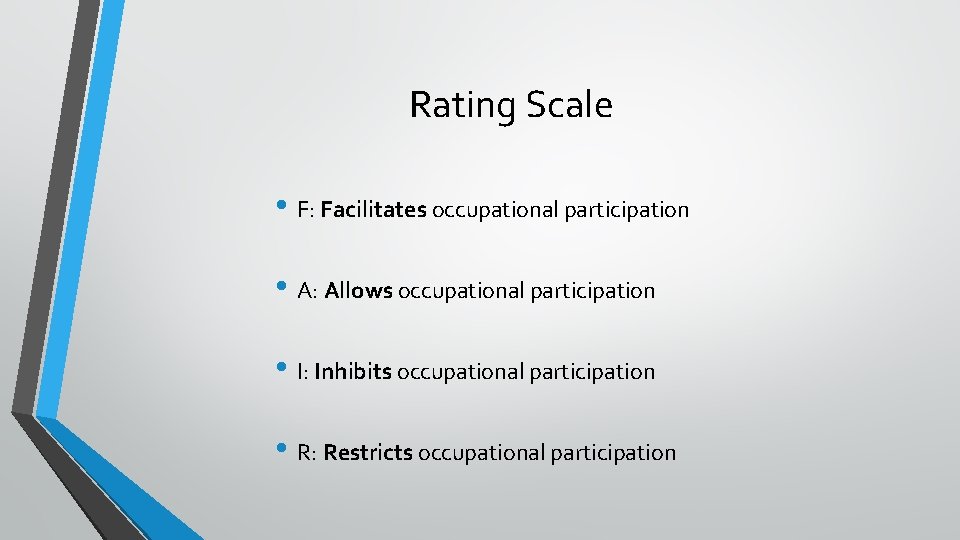
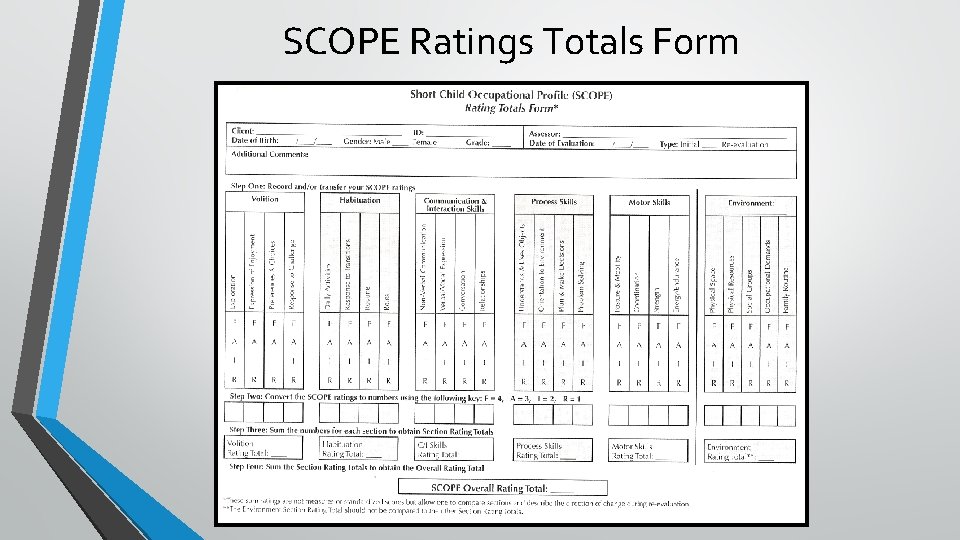
Rating Scale • F: Facilitates occupational participation • A: Allows occupational participation • I: Inhibits occupational participation • R: Restricts occupational participation
Example of SCOPE Items
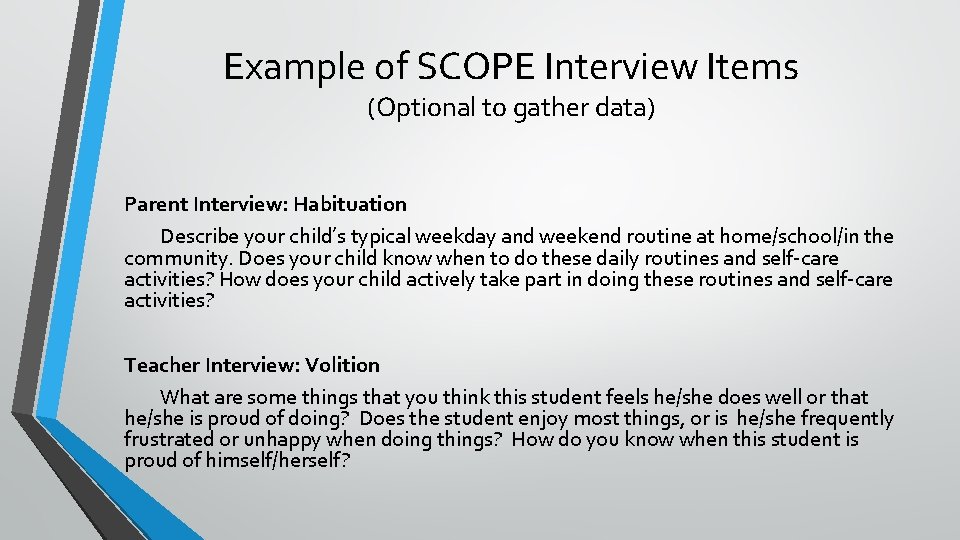
Example of SCOPE Interview Items (Optional to gather data) Parent Interview: Habituation Describe your child’s typical weekday and weekend routine at home/school/in the community. Does your child know when to do these daily routines and self-care activities? How does your child actively take part in doing these routines and self-care activities? Teacher Interview: Volition What are some things that you think this student feels he/she does well or that he/she is proud of doing? Does the student enjoy most things, or is he/she frequently frustrated or unhappy when doing things? How do you know when this student is proud of himself/herself?
Demonstrations • Brandy observe Lauren (child) • Response to transitions A • Lauren interview Brandy (parent) • Response to transitions R
SCOPE Summary Rating Form
SCOPE Ratings Totals Form
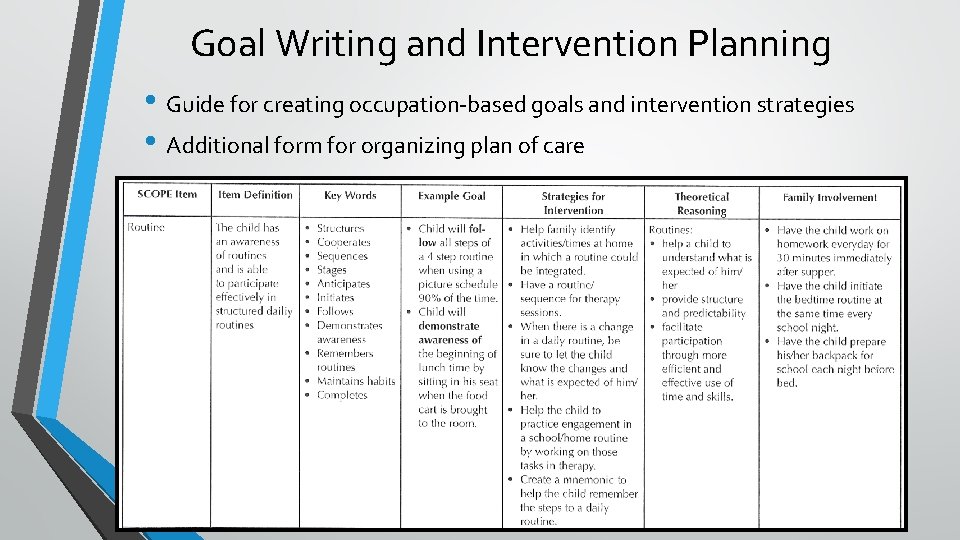
Goal Writing and Intervention Planning • Guide for creating occupation-based goals and intervention strategies • Additional form for organizing plan of care
Measurement Concerns • Examiner error: Rating is subjective to therapist’s judgment • Some clients may be more difficult to rate
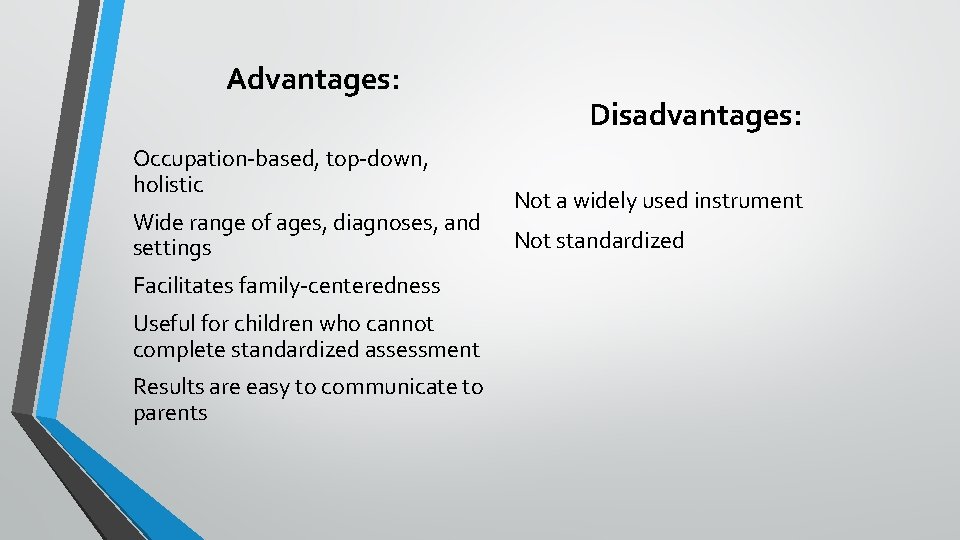
Advantages: Occupation-based, top-down, holistic Wide range of ages, diagnoses, and settings Facilitates family-centeredness Useful for children who cannot complete standardized assessment Results are easy to communicate to parents Disadvantages: Not a widely used instrument Not standardized
References • Bowyer, P. L. , Kramer, J. , Ploszaj, A. , Ross, M. , Schwartz, O. , Kielhofner, G. , Kramer, K. (2005). A User’s Manual for The Short Child Occupational Profile (SCOPE) (v. 2. 2). Chicago, IL: Model of Human Occupation Clearinghouse. • Bowyer, P. , Kramer, J. , Kielhofner, G. , Maziero-Barbosa, V. , & Girolami, G. (2007). Measurement properties of the SCOPE. Physical & Occupational Therapy in Pediatrics, 27(4), 67 -85. • Bowyer, P. , Lee, J. , Kramer, J. , Taylor, R. R. , Kielhofner, G. (2012). Determining the clinical utility of the Short Child Occupational Profile (SCOPE). British Journal of Occupational Therapy, 75(1), 19 -28. • Kramer, J. , Bowyer, P. , Kielhofner, G. , O’Brien, J. , & Maziero-Barbosa, V. (2009). Examining rater behavior on a revised version of the Short Child Occupational Profile (SCOPE). OJTR: Occupation, Participation, and Health, 29(2), 88 -96.